
Slice of Life Challenge Day 10
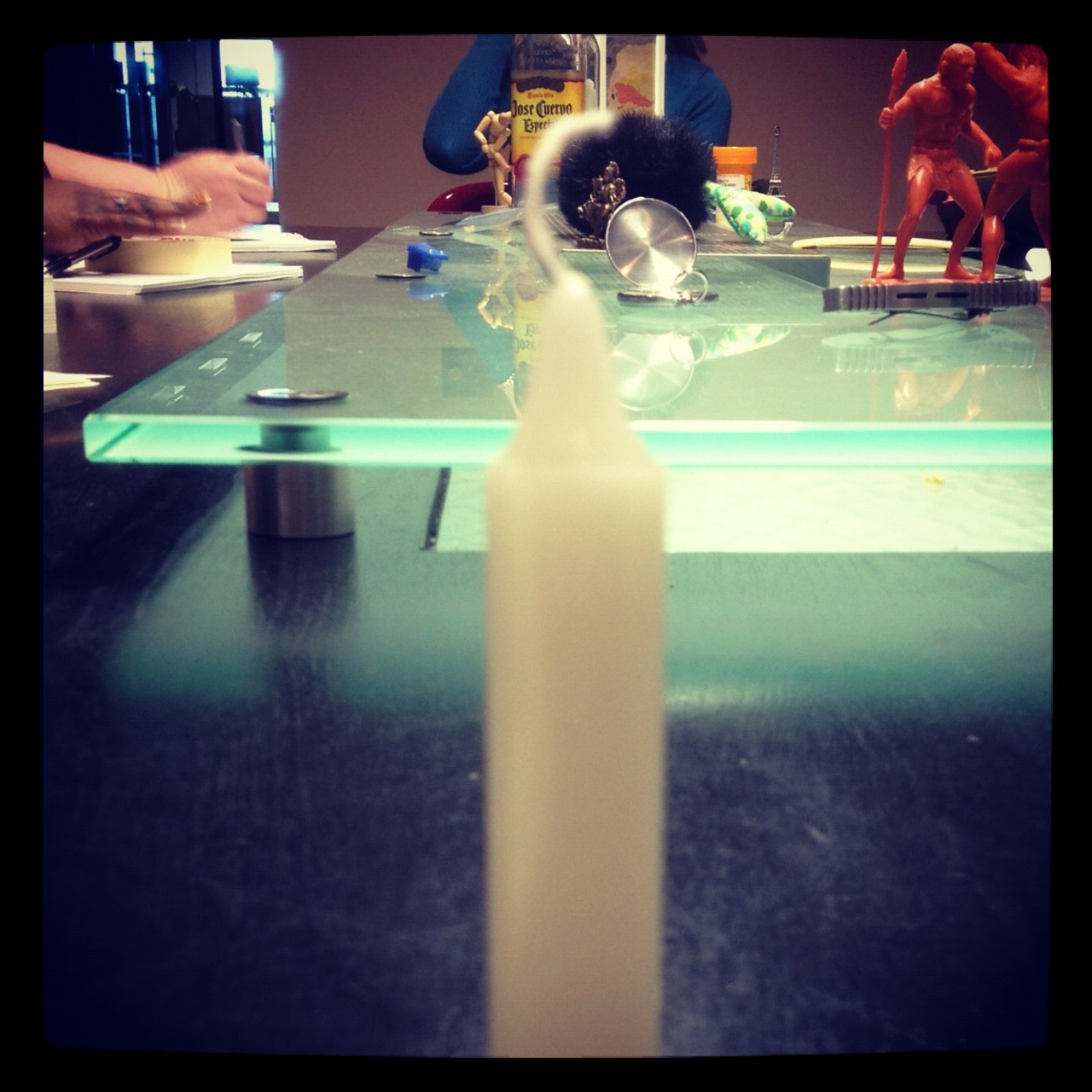
The candle
At the Acadiana Wordlab yesterday, Kelly Clayton put ordinary objects on the table. Actually, some of the objects were quite weird, like the two orange plastic Neanderthal men. She called this prompt “Object Lesson.” I think she got it from Writing Alone and with Others by Pat Schneider. We had to select an object and write 10 stanzas of three lines each. It reminded me of Thirteen Ways of Looking at a Blackbird by Wallace Stevens. My photo above is not the greatest, but you can see some of the other objects in the background.
I. Candle on a string
once you were two
and dipped.II. White wax
nondescript
unscented
waiting to be lit.III. Standing in a circle
side by side
sisters pass you around,
an ancient ritual.IV. Set in a wreath,
counting the days
until a Savior’s birth.V. Darkness is not dark
unless the light
knows it.VI. Melted and scripted
with a kistka* and a steady hand,
dying reveals patterns.VII. I will tuck you away
in my purse
in case the lights go out.VIII. Tasting with a lick,
smooth and waxy,
reminds me of waxed lips.IX. Wedged in a bottle
adorned with drippings,
you light our Italian meal.X. The slight wind
created by your flame
can lift a whole balloon.

Pysanky making
*After the wordlab, I attended Art Walk and met a Slavic woman who had a show of her Pysanky eggs. Her husband was demonstrating the process using a stylus called a kistka. I had to add that to my poem. Pysanky is the ancient Eastern European art of egg decorating. The name comes from the verb to write, as you use a stylus (called a kistka) to write with wax on the egg shell. The process is similar to batik.
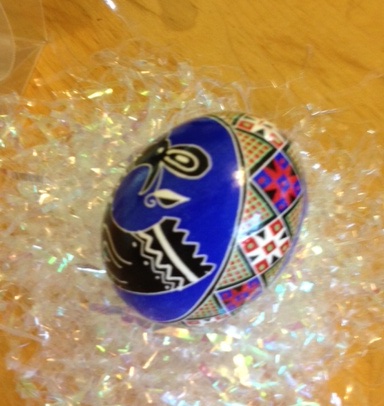
Pysanky egg by Nicole Holcombe


 Reflections on the Teche
What a great idea. Margaret you are always pushing yourself to improve your craft of writing. I so appreciate you sharing your experiences. My favorite:
“Darkness is not dark
unless the light
knows it.”
Beautiful.
This line came from my father who works in pointillism with black ink. He says the light is made brighter by the darkness around it.
Love your variety of words to show different roles of a candle! The pysanky egg is just beautiful!
I will never look at a candle the same way again. We light them every Friday night for Shabbat. I will be peering at them through a different lens this week. Thanks for sharing, Margaret.
Speaking of Pysanky eggs, have you ever read Chicken Sunday by Patricia Polacco?
I have Rechenka’s Eggs but not Chicken Sunday. Must look for it.
I love the idea of pushing yourself to look at an object in 10 different ways. Those kinds of exercises make us think more widely and deeply. Beautiful.
Margaret,
You always so inspirational with your new learning. Looking at the objects in 10 different ways gives such interesting perspectives. Thanks for sharing.
I was thinking of Chicken Sunday too when I was reading your post.
You ARE…I need to edit my comments better before I click publish! Sorry!
Well done, Margaret. It is like “13 Ways”. I used to have kids observe a candle without telling its real name, but see what actually is happening & describe. You did that very thing-love about the egg(s) too.
As a young Ukrainian-Canadian kid, making those eggs when we were kids was an Easter rite of passage. My parents have many of these, many inherited from previous generations, and they will be passed down.
Thirteen Ways of Looking at a Blackbird forms a great writing model for kids to imitate. Have done this with my AP kids for a few years, with neat results! Your #5 is an absolute gem–
[…] this weekend, our leader used a poetry prompt called “Object Lesson.” I wrote about it here. Today, I tried the prompt with my students. I collected objects from around the classroom. I was […]