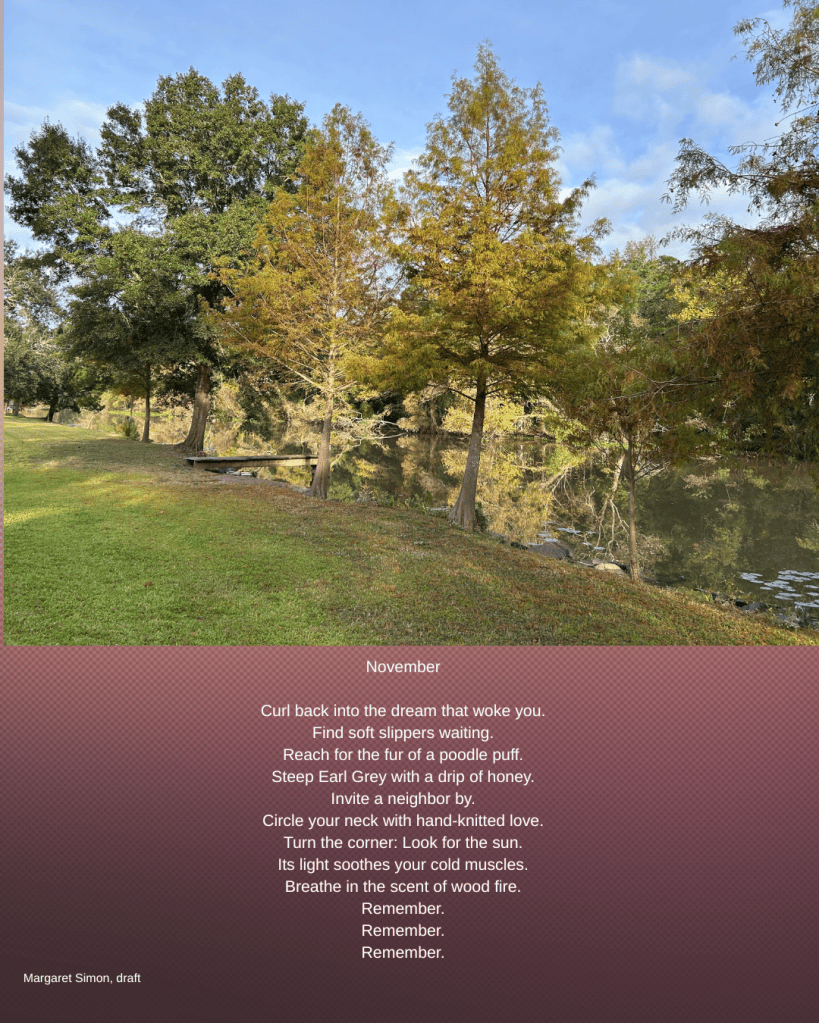
I get into a nostalgic mood in November. So many years of driving to Mississippi for Thanksgiving. Something about putting on a robe and slippers makes me think of my mother.
Yesterday I had an artist date to the museum to tour an exhibit alongside the artist who created the work. This kind of field trip fills my soul. A woman there looked so familiar. She looked at me and silently mouthed my name. Yes! I knew I knew her. We both have grey hair now, but it was as though no time had passed. We decided to go have a cup of coffee together. It’s not necessary for me to share the whole connection thing here, but you get the feeling. Nostalgia! The good ole days when we were teaching together. Where are we now? Where are our children? How many grandchildren do you have?
Today at Ethical ELA, Stefanie leads us in a prompt to write a list poem around the theme of wintering. There is a mood to this time of year. A gift of presence alongside nostalgia.
This week my teaching artist position has taken me to the Hilliard Museum with 5th graders. I was excited when the creative writing lesson was on poetry and about one of my favorite poetic tools, anaphora.
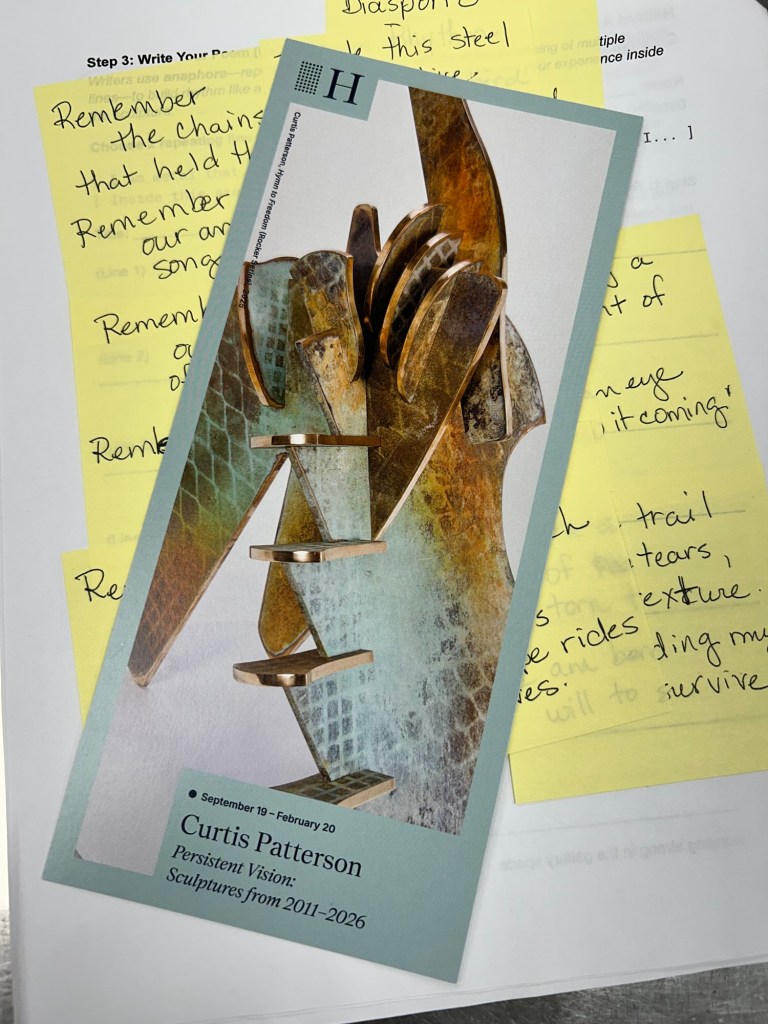
To prepare, I went to the exhibit at the museum and wrote anaphoric poems on sticky notes. The exhibit is a fascinating show by Curtis Patterson, a sculpture artist from Shreveport, LA. It surprised me to find out that this is his first museum exhibition in his home state. I will be attending an artist led tour next week.
His sculpture work is done in bronze and steel. He uses some repeated motifs that are said to reflect his connection to Jazz music. The show is titled “Persistent Vision” and is symbolic of the African diaspora that began in the 16th century.
Curtis Patterson at the Hilliard Art Museum, Lafayette, LA.
Today I am sharing one of my poems. I don’t have permission to share some of the students’ work, but within the structure of the repeated line, they were able to express metaphor and emotions in their poems.
Diasporic Rhythm
Inside this steel, I imagine instruments. Inside this steel, an ancient song echoes.
Inside this steel, puzzle pieces arranged. Inside this steel, copper glows.
Inside this steel, friends reach out. Inside this steel, hope rides on waves.
Poetry Friday is hosted by Joyce Uglow at Storied Ink.
Happy November! A month designed for a change in the weather and gratitude. As the first Friday approaches, my attention is on the Inklings challenge for this month. Heidi’s turn to share. She invited us to “Automatic Writing”.
“Try a thing that I do from time to time which always produces surprising and often striking results: close your eyes and type a poem. Keep going until you’re done. There will always be little typos to deal with afterwards, but something about not watching what’s coming out (and immediately proofing/editing/revising/critiquing/arranging it) is extremely freeing. It’s not really automatic writing at all, but sort of paranormal anyway!”
I clicked on the Wikipedia link and saw “Spirit Writing”: “Spirit writing, later called fuji (扶乩/扶箕), has a long tradition in China, where messages from various deities and spirits were received by mediums.”
When you close your eyes to write, draw, create, you open to a spirit of creativity dwelling within. This kind of writing differs from my usual process of looking, observing, noticing.
Spirit Writing
Sitting, saving space for presence, spiritual me internally shifting perspectives & goals holding me safe and precious— A palm of a hand, warm golden light in my heart.
Hold still and be in this simplicity.
Margaret Simon, draft
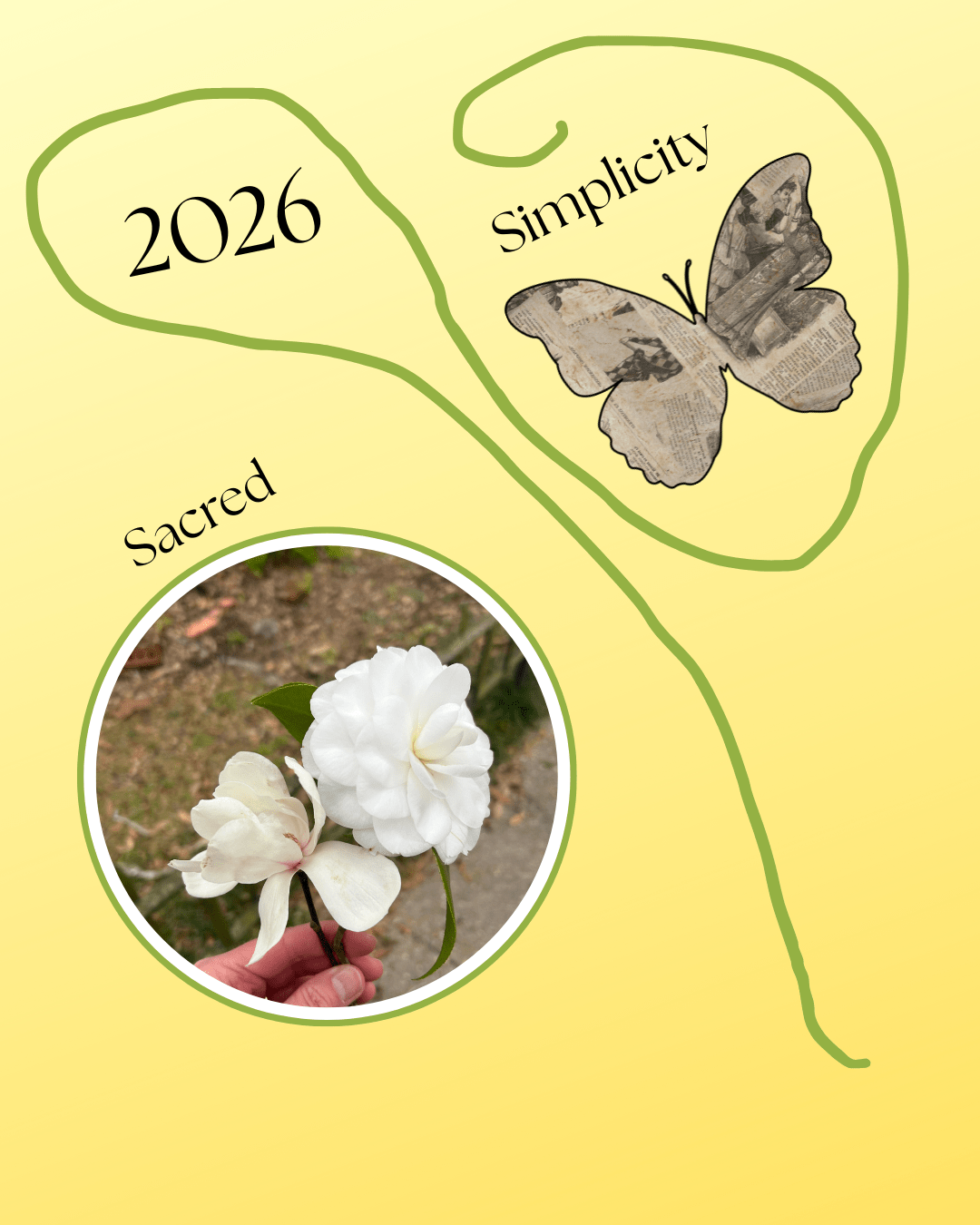
*simplicity is my one little word for 2026. I’d almost forgotten about it until I revised my automatic writing and found it waiting to be added.
I recently read in 64 Parishes, a Louisiana Endowment for the Humanities journal, that Darrell Bourque, former Louisiana Poet Laureate and a writing mentor to me, is going blind. In the article, he talks about how he thought losing his sight would keep him from writing, but he’s still writing. He has a book forthcoming in 2027. I went back to my notebook, closed my eyes, and wrote another poem.
Blind Contour Poeming
If I don’t look at the page, am I really here writing?
Or is my hand an automatic pilot jarring, jotting turbulence making nonsense?
We are guided by our vision, but my poetry mentor is losing his sight while still writing brilliant poems.
Words don’t require sight. Vision is in me, who I am, blind.
Margaret Simon, draft
Check out other Inklings and how they approached this challenge.
The Poetry Sisters challenged the Poetry Friday peeps to write a terzanelle. I wasn’t going to do it. Such a difficult form with all its rules and rhymes. Mary Lee and Heidi inspired me to give it a go.
Yesterday I practiced some self-care and treated myself to a massage. It led to a quite silly poem. If you’re interested in the form, hop onto Poetry Friday gathering by Jone today and read them all.
Self Care
After the massage, I felt like Jello covered in a sauce of pleasure, A Swedish massage of all my Jello.
Under a warm blanket wholly demure, I gave into relaxation and slept covered in a sauce of pleasure.
Massage for healing is not a new concept. In ignorance of muscles and pressure points, I gave into relaxation and slept.
I’ve heard at this age, I could lose my joints challenging my daily resolve to survive. In ignorance of muscles and pressure points,
I left rejuvenated and alive. I took myself out into the world challenging my daily resolve to survive—
Tender, vulnerable, sensitive, yet bold— After the massage, feeling like Jello, I took myself out into the world. After the massage, I’m mellow as Jello.
Margaret Simon, draft
Collage created in my art class this week, another form of self-care.
As we finish the two wonderful weeks of #writeout with the National Writing Project and the National Parks, I offer two poems I wrote during the week. The first was inspired by Kim Douillard’s poem “Wishing”.
Wishing
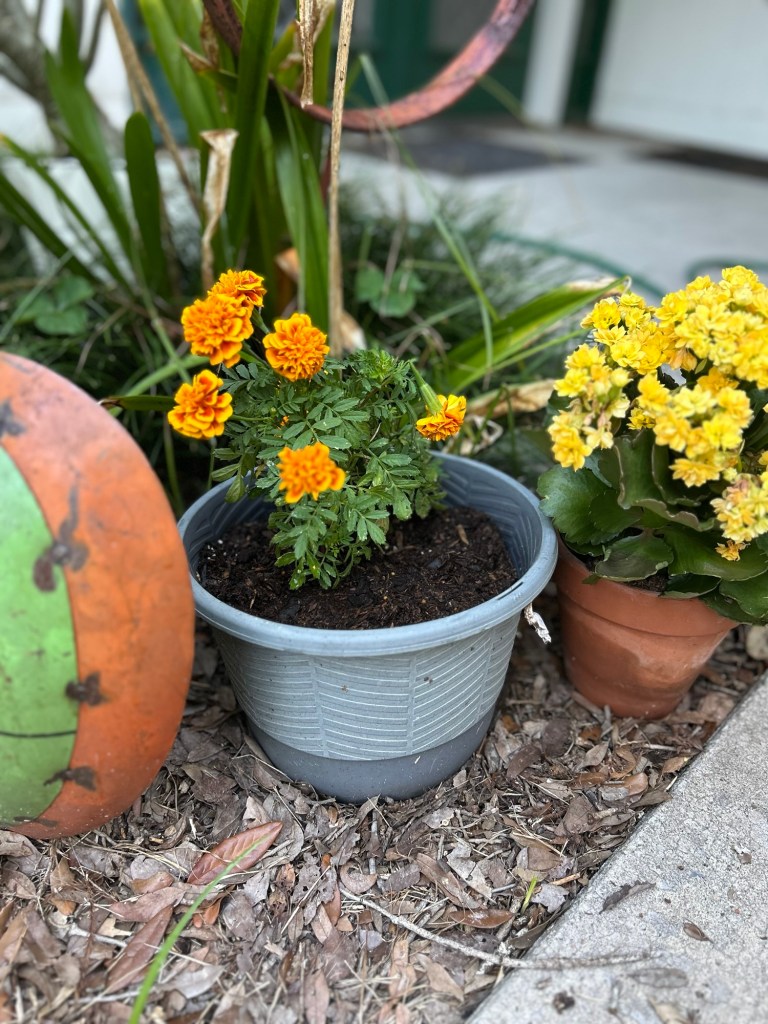
On butterfly wings, flutters around marigolds while white chrysalises line the doorway, waiting.
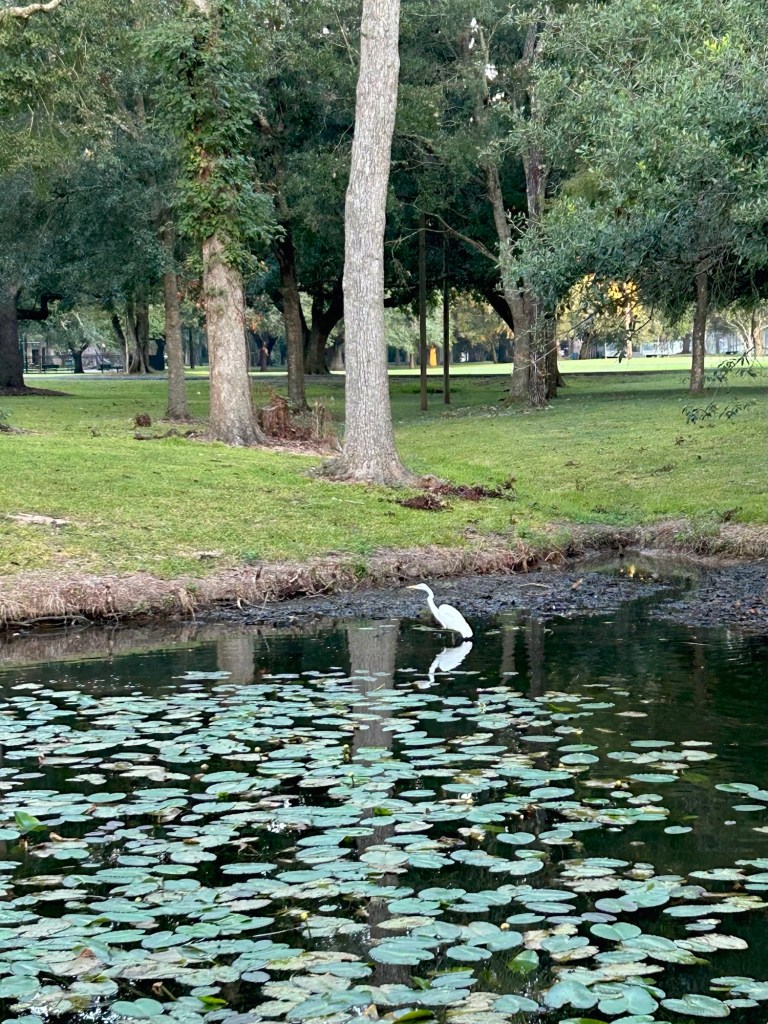
Wishing on egret’s silhouette for fresh water, open, untouched by empty styrofoam and sinking plastic bags.
Wishing for a future of ecological awareness, more scout heroes, preservation of the wild ones we love.
Margaret Simon, draft
I also wrote a poem to this photo on Substack here.
This second poem was inspired by a prompt from Audrey Gidman. I chose 6 words from a poetry book by my friend/ fellow Louisiana poet Liz Burk, “Learning to Love Louisiana.”
Look
In the window, a reflection— rippling golden light, mossy dank threads spun like crepe paper careening haphazardly over branches building a scene of an old steel mirror of autumn’s grace.
When I was teaching, my students and I looked forward to the National Writing Project’s Write Out. It’s a yearly event in cooperation with the National Parks. We would make special “Write Out” journals and spend more time writing outside. I miss those days, but I enjoy the luxury of a long walk through the park each morning. I enjoy having time with a cup of coffee and my notebook. I enjoy sharing coffee with a friend. Retirement is wonderful, but I miss writing in community.
Write Out leader Christina Cantrell has created a community online for us to share our writing in the NWP teacher studio. Every other day there is a prompt/ writing challenge. Kim Douillard of the San Diego Writing Project’s is posting on her blog. So I am finding a virtual community to write alongside.
Tuesday’s challenge was to write from kilo, a Hawaiian traditional practice of observation. You can see a short video here.
Kim suggested we share a Google doc of prompts. I have been reading Rosemerry Wahtola Trommer’s book The Wonderment. I added a prompt using her poem “For This I Walk Outside.” I love the conversational tone and accessible language of Rosemerry’s poetry. I borrowed a line from her poem as the title for mine.
Outside Everything is Teacher*
Setting into soil a golden marigold,
I noticed a white chrysalis hanging on the edge of the pot.
I spoke to it in a whisper, “Sorry to disturb your rest.”
As I gently placed the pot near a metal pumpkin,
the chrysalis moved, bent toward the edge
as if hiding, curling into protection.
I don’t think I’ve ever seen a chrysalis move, shape-shift, be alive.
Tomorrow I hope to witness an emerging butterfly.
Proof that magic still lives.
Margaret Simon, draft *line from Rosemerry Wahtola Trommer
On Saturday I attended Jone MacCulloch’s Poetry Pop-up Salon by Zoom. We were all familiar with each other through our poetry blogging and easily settled in to write. Something about writing in community creates magic. Everyone had a poem to share around Jone’s chosen word prompt, “harvest.”
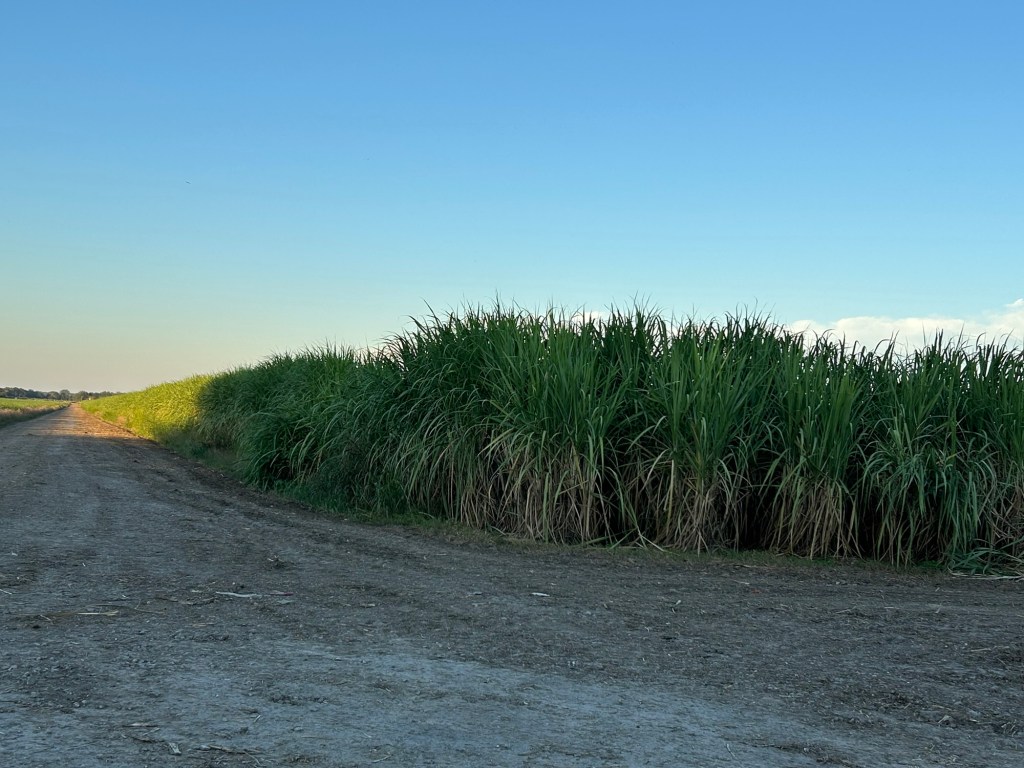
At this time of year in New Iberia, sugarcane is being harvested and ground. Many people don’t like this season. The sugarcane trucks slow down traffic flow. The smoke from the mills and the burning of the fields aggravates allergies. And there’s the bagasse smell that makes you think you stepped in dog poop. But to me, it means fall. Cooler temperatures and sweet air.
Yesterday as the sun was going down, I was delivering food to a friend down the country roads, so I stopped to take some photos of the cane fields. I didn’t get a shot of the big dinosaur-like harvesters, and I was swatting at swarming gnats, but I loved the light of the autumn sun falling down the fields.
Sugarcane fields, New Iberia, LA
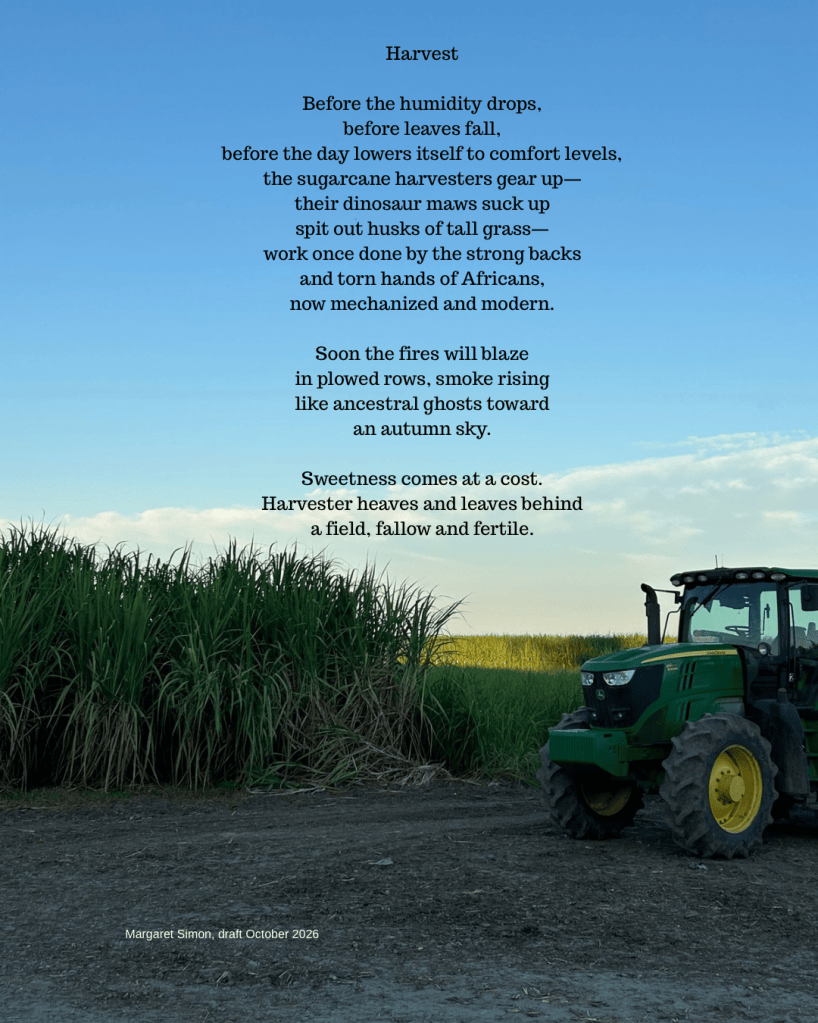
Harvest
Before humidity drops, before leaves fall, before the day lowers itself to comfort levels, sugarcane harvesters gear up— their dinosaur maws suck up spit out husks of tall grass— work once done by strong backs and torn hands of Africans, now mechanized and modern.
Soon fires will blaze in plowed rows, smoke rising like ancestral ghosts toward an autumn sky.
Sweetness comes at a cost. Harvester heaves and leaves behind a field, fallow and fertile.
The Poetry Friday Roundup is here today. Scroll down to add your links with Inlinkz.
Each first Friday of the month the Inklings write to a challenge from one of us. This month Linda Mitchell offered the challenge from a post she saw on Instagram: “‘Find a poem you like, or one you don’t like. Write the first 6 lines of the poem. Under each line write your own response. Delete the original lines, use what you have as a beginning for your poem.’ Tusiata Avia #30in30 writing prompt.”
Once I started doing this, I couldn’t stop. Recently I bought The Selected Poems of Wendell Berry. What a wonderful mentor, nature writer, poet. On Substack for “This Photo Wants to be a Poem,” I wrote after “To the Unseeable Animal” my side by side version “To the Shadow Moving.”
The most satisfying thing about writing like this is you can remove the original poem because your new poem is unique to you.
To What Flies
(after To What Listens by Wendell Berry)
I see it again lonely
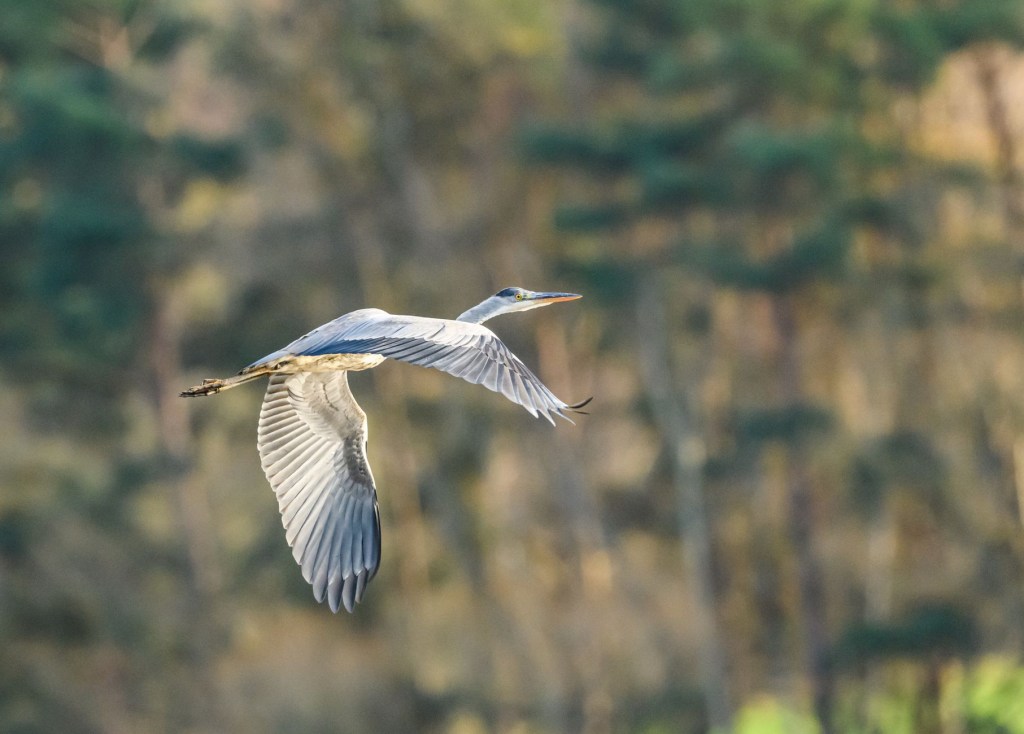
and alone, the image of the heron
opening his wings wide
to fly to the other side,
no mate will follow,
no nest to call home.
From WordPress Free Photo library
I subscribe to Rosemerry Wahtola Trommer’s daily poem. (I also highly recommend her new book Wonderment.) On Sept. 26, she sent out a poem “Sometimes When I am Stuck.”
Sometimes When I am Dwelling
When I feel as if my body is slowly shutting down, and my spirit is made of jelly, when my feelings go deep as if darkness dwells within me, that is when I awake to an inner peace, ever waiting my notice, my voice. That peace is longing as if whispering words.
Margaret Simon, draft (after Rosemerry Wahtola Trommer)
Please consider visiting other Inklings posts. Link to your own Poetry Friday posts using InLinkz below.
At the end of every month, the Poetry Sisters put out a challenge for their group as well as any others who may want to give it a shot.
Today’s call came from Mary Lee Hahn. She borrowed the prompt from Colby Sharp’s collection The Creativity Project. “It was all my fault.”
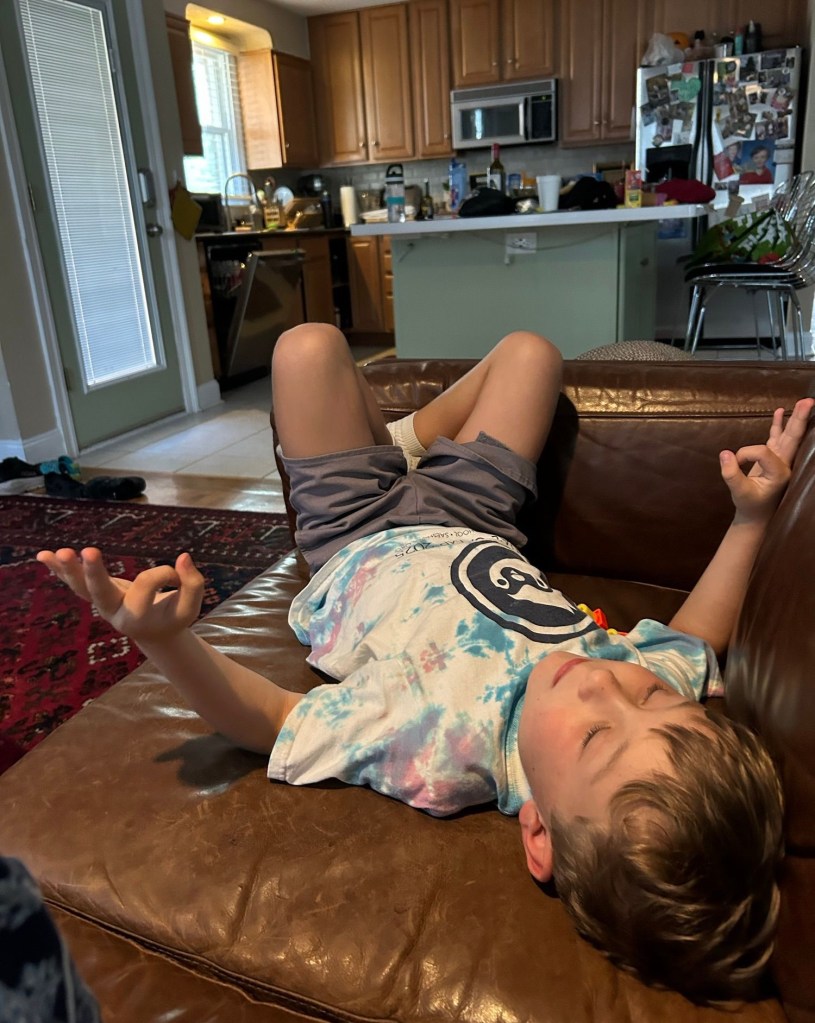
There are hard things as well as joyful things when taking responsibility for a seven year old. My daughter is on a work trip, so I am responsible for getting Thomas up, fed, dressed, and to school by 7:35 sharp each morning. I wished I could have written a note to his teacher. “This is Just to say…”
Dearest First Grade Teacher,
This is just to say it’s all my fault he has no water bottle today, his hair is misaligned, his shirt untucked.
We were in a rush, you see. The dogs needed feeding, homework reading, and of course, the nerf gun reloading.
Please forgive me if he is a little off his rhythm. We did text his mom “I love you” and I pecked a kiss in carpool line.
We are both doing the best we can.
Sincerely, Mamére
Thomas trying to remember what happened in school. Om!
Today is the first day of Open Write at Ethical ELA. Today’s prompt was offered by Mo Daley.
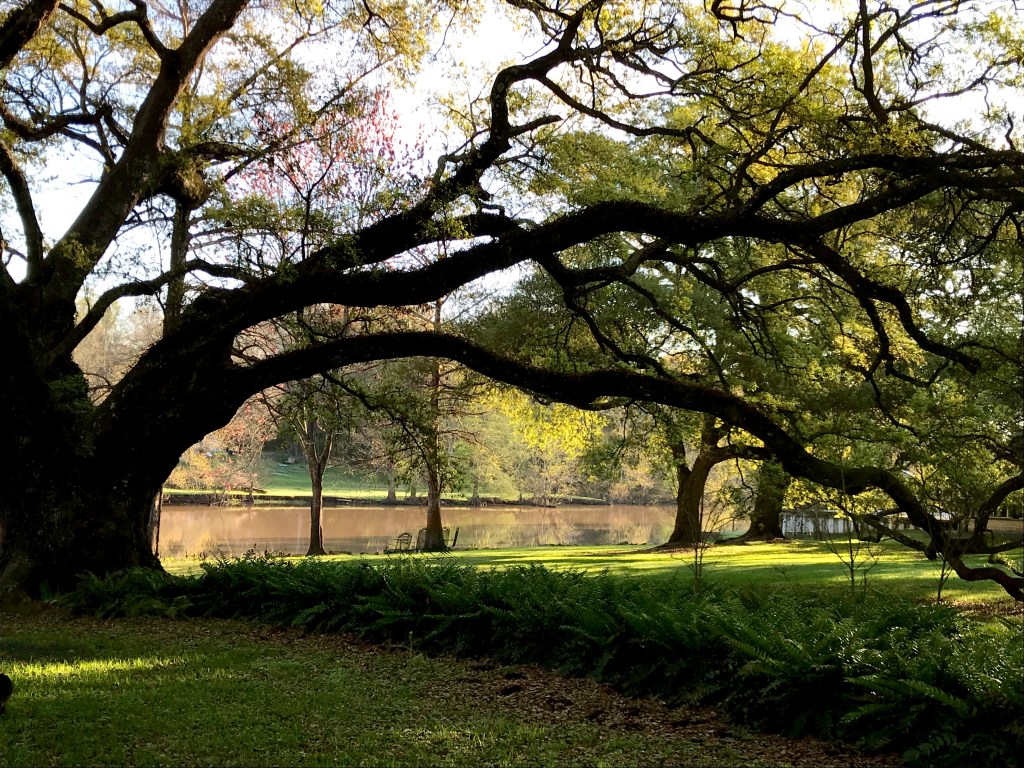
Mo asks us to consider our place in the world, where we are, and who may have come before. I went to one of my favorite topics, the grandmother oak in my backyard.
I am also thinking about the upcoming Write Out from the National Writing Project in partnership with the National Parks. The theme this year is “Where We Stand”. Please consider writing outside this fall between Oct. 11-25, 2026. There are many student resources available.
Grandmother Oak
To enrich this earth, I have planted my feet in the solid arms of grandmother oak planted three hundred years ago. Chitimacha women prayed over the sapling.
I do not wish to escape her history scarred into her flesh.
Let me feel it, stroke her old skin worn and strong—single survivor.
I praise her hold of the sunrise where I rise to be blessed.
Margaret Simon lives on the Bayou Teche in New Iberia, Louisiana. She is a retired elementary gifted teacher who writes poetry and children's books. Welcome to a space of peace, poetry, and personal reflection. Walk in kindness.