Poetry Friday is hosted today by Irene Latham at Live Your Poem.
National Poetry Month has been a whirlwind. It’s hard to believe we are nearing the end. Our Progressive Poem is progressing along with another line; See Mary Lee’s post here to catch up. Tabatha will end it for us on April 28th.
I accepted a challenge from Joyce Uglow to write among other poets at her Substack, Storied Ink. I’m also writing with Ethical ELA and having a dickens of a time memorizing the New York Times poem “The More Loving One” by W. H. Auden. It’s all good but sometimes overwhelming. I think I’ll take a break in May!
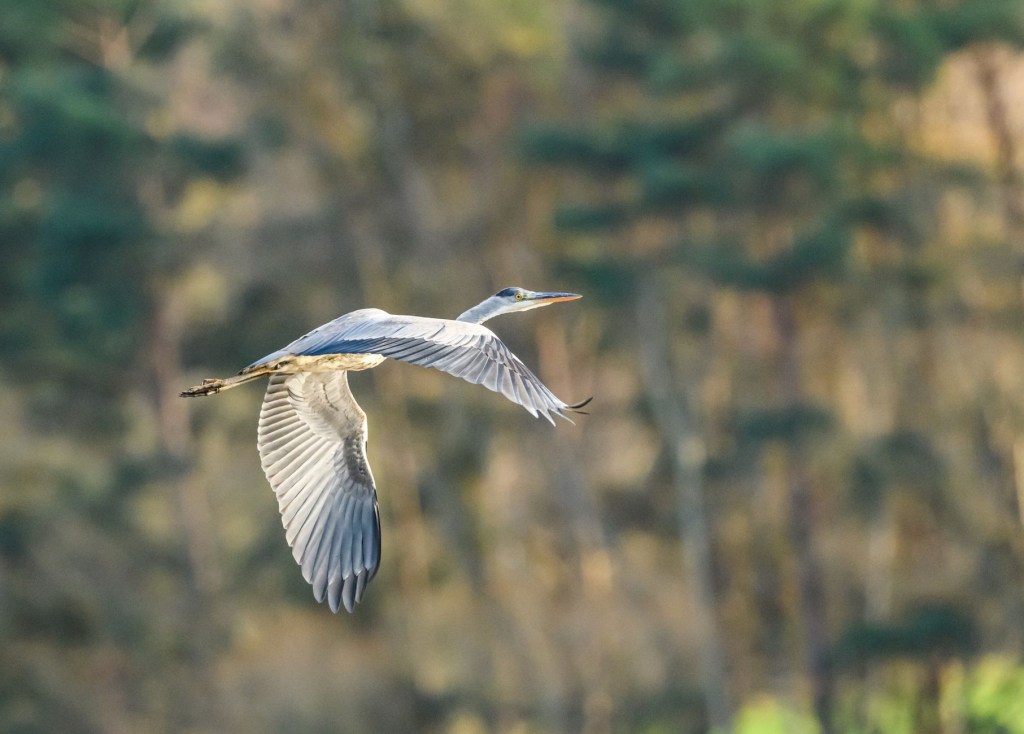
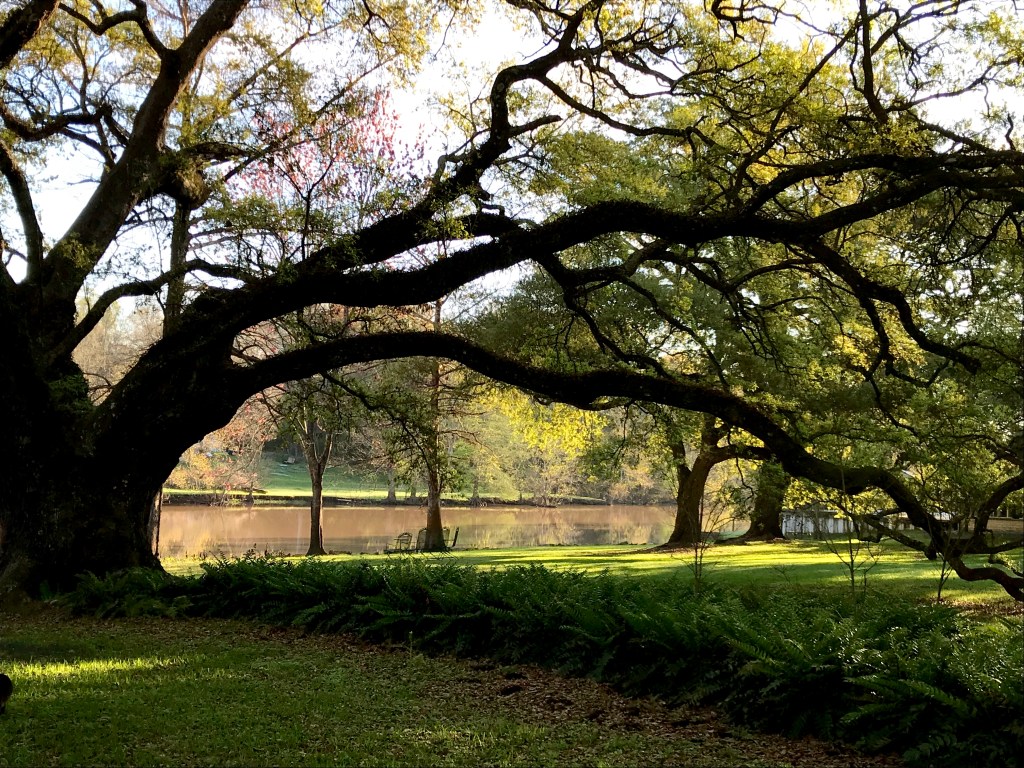
On Day 3, poet Kathy Halsey challenged us with a haiku image and the words extinct and giraffe. I thought about how the cypress trees of the Atchafalaya Swamp were near extinction from over-harvesting. These trees are made to survive high winds of hurricanes. I love my cypress trees, especially in early spring as the green is so vivid.
Tall swamp giraffes Cypress grass tickles the sky Extinct no more (Photos from my bayou backyard cypress trees)
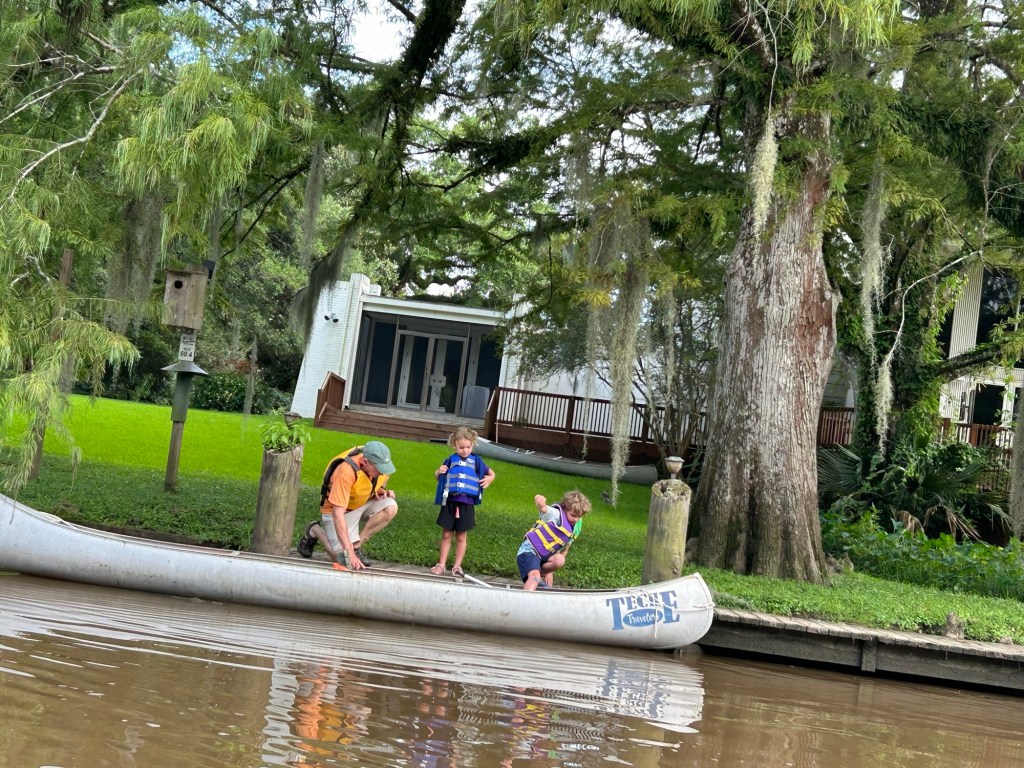
I love April! The days start out cool and warm up, but a gentle breeze keeps the heat tolerable. On Sunday, we canoed with friends to the park where there was a symphony concert. The paddling to get there was made harder by the breeze, but we were able to make it just in time for the concert.
On the way, we spotted this Muscovy duck and her babies. The Muscovy is a domestic duck with a warty red bill. Her littles were adorable scrambling around her so quickly that I couldn’t count them.
My quick internet research said, “Aztec rulers wore cloaks made from the feathers of the Muscovy duck, which was considered the totem animal of the Wind God, Ehecatl.” (All about Birds)
At Ethical ELA, Erica Johnson is leading us in writing a “Playful Cascade” which is a poem form that takes each line of the first stanza making them the last line of the next stanzas. I decided to use tercets, 3 lines per stanza.
Muscovy Ducklings Play
Scrambling fluffs navigate water hyacinth staying in sight of mother duck— gymnasts in a bayou playground.
We slowly push along stroke by stroke keeping watch for new spring life, see scrambling fluffs navigate water hyacinth.
Whose waters are these, I think I know: these tiny ducklings move so quick staying in sight of mother duck.
This journey we share is not all ease. Time and patience required, we are all gymnasts in a bayou playground.
Margaret Simon, draft
Please join me in writing about this little miracle of life. Be sure to leave encouraging words for other writers.
Rose Cappelli has the line from the Land of Poetry Progressive Poem today. She used her secret favorite devise of alliteration. It’s my favorite, too. As I tell students, it just sounds good.
At Ethical ELA, Luke Bensing prompted us to use alliteration in our first and last lines. The photo today is from my visit to the butterfly exhibit in New Orleans at the Audubon Aquarium and Insectarium. I wrote a septercet, which is a small three lined poem of 7 syllables each.
Purple pops of salvia nectar-seeking flutter by season for saving scents
If you wish to write a poem today, please leave it in the comments and respond to other writers with encouragement.
Today is the first Friday of April, of National Poetry Month. Please check out the progress of the Kidlit Progressive Poem with Patricia Franz. The journey to Poetry Land has begun and Patricia added a spice of alliteration. There are three days open at the end of the month. Please let me know in the comments or by email if you would like to participate.
Today I am supposed to be posting a poem alongside my Inklings prompted by Linda Mitchell. Ars Poetica which is poetry about poetry. I failed at the assignment because my week was full of teaching teens. Did I hear an audible sigh?
As a teaching artist, I want to accept whatever gigs come my way, but on Monday when I walked into the middle school where the secretary left me in a chemistry lab alone to prepare for 6th, 7th, and 8th graders, I felt like I had been dropped back in time to my high school which, frankly, terrified me. Chemistry was not my best subject.
I made the decision to use a “higher level” lesson plan rather than read the picture book “How to Write a Poem” by Kwame Alexander. So not only did I feel strange in a strange land, I was trying to get teens to come up with symbols to match an emotion. They stared at me with their evil eyes that said, “You want me to do what?”
On Tuesday, after a wise lunch with some friends, I went back to my tried and true lesson plan that begins with “How to Write a Poem.” Things went much better. I told Azul that I would share his poem and painting on my blog. He was beaming! Even eighth graders just want to be seen.
Painting by Azul
Original poem by Azul, 8th grade
When I was wandering around the room during writing time, Azul had not written anything. He had a title because I asked them to write a title for each of their paintings. But he just couldn’t get started. I whispered to him, “Start with the word imagine.” He was too shy to read it out loud, so I asked if I could read it. He agreed, and his pride was palpable when I read with confidence and expression.
Sometimes when we teach in a foreign land, we have to take the small wins. Not every teen got a poem they were proud of. One boy handed me his paintings and poem and said, “What do I do with these?”
I said, “Take them home!” In my singsong elementary teacher voice.
He said, “I’m embarrassed.”
“Then I will take them! Thank you for sharing!”
On the third day of my work with middle schoolers, I drove home by way of a rookery on Jefferson Island.
I watched the egrets and roseate spoonbills swoop in and out of their nests, listened to croaking frogs, and was eyed by two small alligators. I wrote this poem in my car before heading home.
After the School Visit
I went to pray in the rookery to breathe to leave the scratchy spunk of teens resisting to just be with God
There I found praise praise for the awkward ones hiding their paper from my onlooking eyes their fear of failure like an odor on their skin.
I sigh and realize their prize was recognized after the teaching artist left as they shared their paintings and poems walking back to class.
I stand in the field of dragonflies and watch egrets rise.
Today is the first day on National Poetry Month and already the communities I am tapped into have connected with a map. For the first day of our Kidlit Progressive Poem, Tabatha Yeats has offered a map and a line to get us started on our monthlong journey.
The poetry book sitting next to me is “Map to the Stars” by Adrian Matejka. I am sensing a theme emerging.
My poem today is in response to Sarah’s prompt.
Bayou-Side
Inside me there is a sycamore, a tall pine, a draping grandmother oak. I can draw a map from Purple Creek to Bayou Teche. I’ve spent a lifetime walking near water watching for herons, turtles, and honeysuckle.
When it’s time for me to leave this land, place me in a boat without a motor. Let me float for eternity.
(Margaret Simon, draft)
Louisiana blue irises and a brood of ducks near Bayou Teche.
Thank you to Two Writing Teachers for creating an amazing community of writers and a safe, welcoming space to write and share.
Native blue flag iris planted along the Bayou Teche.
Good hands, what will you do with this new trust rising out of what looked like failure?
Rosemerry Wahtola Trommer
This weekend is the inaugural Iris Festival in New Iberia and Lafayette, Louisiana. The festival is celebrating the native blue flag iris that have been planted along the Bayou Teche in New Iberia and in Moncus Park in Lafayette. I’m learning more and more about the native plants in our area and how they are successful because they are planted where they belong.
Sitting with the Irises.
If you talk to any gardener, they say right spot, right time when it comes to blooming. Last week these lovely blues were not blooming. They looked like failure. Today they are thriving.
The Iris Festival is just another excuse to have a festival. Louisiana is a state of festivals. I sat at the Teche Project booth and talked to friends and passers by while layering jackets and even wrapping myself in a tie-dye table cloth. It was a chilly morning under the oaks.
Sitting in the sun to warm up and enjoy the wild irises, I felt gratitude for the weather, for the planters who trudged into the mud to plant these swamp-loving beauties, and to God for teaching me through nature that I must trust what may look like failure.
Thank you to Two Writing Teachers for creating an amazing community of writers and a safe, welcoming space to write and share.
When I don’t know what to write, I take a walk. Yesterday, Albert (“Al-bear”) and I set out for our neighborhood walk, but there was a stray dog roaming around. Albert could not focus. He wanted to go play with this new friend. I’m wary when it’s a dog I don’t know, so I dragged him back home and decided to drive to City Park.
A whole new playground for my 2 year old doodle with many new smells to investigate and large ducks to chase.
I love a morning where the sun is refracted by fog. I spotted a wood duck perched in a tree above the pond. I could hear their distinct call of warning, “Dog. Dog. Dog.” “Eek. Eek. Eek.”
I felt rejuvenated. Who knows? I may take this route more often.
Thank you to Two Writing Teachers for creating an amazing community of writers and a safe, welcoming space to write and share.
For years now, we have watched nesting in the wood duck house my husband built for the bayou bank. This time of year beginning in late February a female hen comes to the box to lay a clutch of eggs.
We invested in a Ring doorbell camera, not to watch for criminal activity, but to see the comings and goings of a resident wood duck hen.
View from the camera when another hen came in to gossip.
These days my phone alerts me constantly. “There is motion at the wood duck house.”
The eggs are due at the end of the month. She usually sits for 28-31 days. We had a cool snap, so I’m worried that all the eggs won’t hatch. But that is the nature of nature, right?
Once the eggs hatch, all on the same day, the little ones will jump from the house 24 hours later. It is a wonder to watch. A few years ago we caught it on video.
Last year I released a small chapbook of poems about the wood duck nesting season, Wood Duck Diary. The funds from the sales benefit the Teche Project. This is a book of tanka poems in English and in French.
March 11
Feathering the Clutch
Hen stitches feathers one by one. Woven blanket
clutch-cover of down. Her beak a knitting needle. Eggs safe and snug below.
Thank you to Two Writing Teachers for creating an amazing community of writers and a safe, welcoming space to write and share.
Poetry Friday is hosted today by Linda Baie at Teacher Dance.
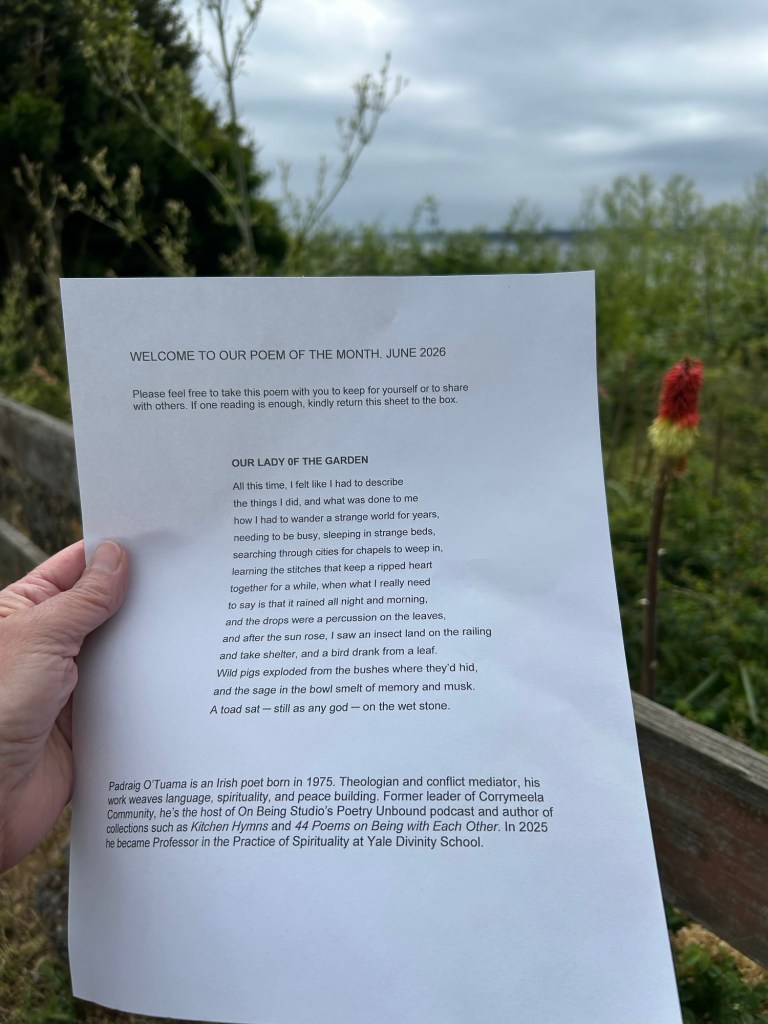
Inspiration for writing a poem can come from anywhere. I have learned to pay attention to the signs and thank the universe when words become poems. This week I read Eleanor Wilner’s poem “Of a Sun She can Remember”. This poem is a renga poem in which she took the last line of another poem to become her title.
I used the last line of Wilner’s poem, along with other ideas, lines, words from my daily reading to create a poem.
The Golden Net of Meaning in the Light after Eleanor Wilner
When a missile misses its mark, children die. When channels are closed, prices rise. Choose your trouble. Turn your blinded eyes toward the sun. Pace the meadow filled with butterweed. Give your heart-swift to the clouds hovering. We are all connected as the golden cross-hatched web tethered between rose bushes. What I need to say— After the rain, birds sing a glorious chorus.
Margaret Simon, drafted
Pádraig Ó Tuama
If you would like to participate in the Kidlit Progressive Poem in April, please go to this link to sign up.
This month the Poetry Sisters challenge was to write a tricube. The tricube form is 3 syllables, 3 lines, 3 stanzas.
Molly Hogan sent me the list of prompts from the MoSt Poetry Center. The prompt I used was this:
“Write a poem of presence, in terms of being in a particular place and time, or of having a dynamic demeanor (such as in “stage presence”) or a feeling of an unseen spirit. Here’s an example by Arthur Sze, our new U. S. Poet Laureate:
Every year as I begin to set intentions, I get the universal message of presence. I feel presence is essential to peace of mind, but it is difficult to find.
I have a new kayak. Taking the kayak out took some initiative and help from my husband hero. Jeff had the grandkids in the canoe. When I wanted to try to get the kayak out of the water by myself, my grandson Leo said, “Prove it.” That was all the challenge I needed to pull the 60 pound vessel onto the dock. I did it.
First kayak adventure in “Chrysalis.”
Here after Arthur Sze
Be here now Here frog croaks Here wren calls
Be here now Here stalk grows Here tea steams
Be here now Here oar strokes Here strength comes
Margaret Simon
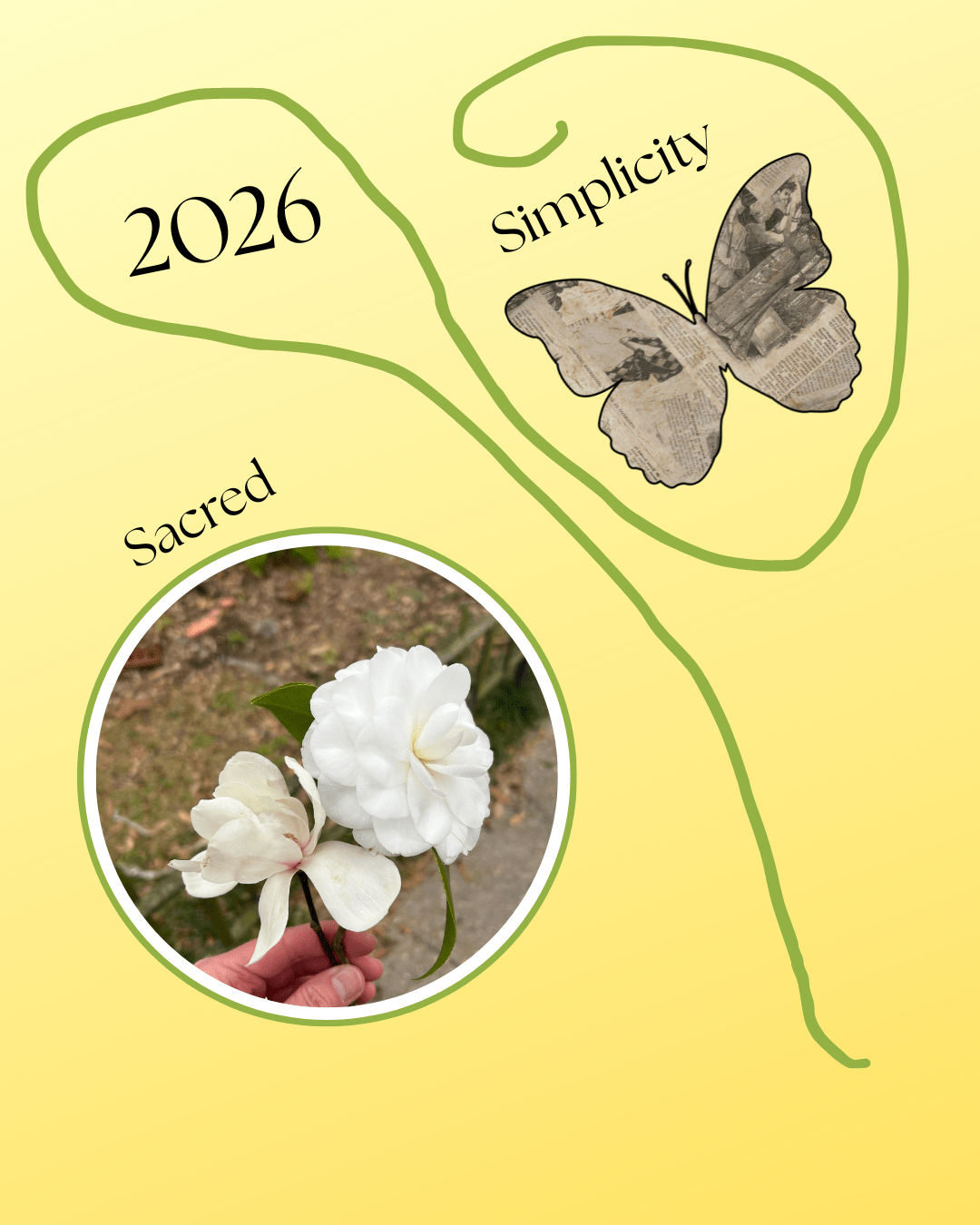
I want to thank Tabatha Yeatts who offered on Poetry Friday last week to do an art piece for our 2026 words. I took her up on the offer. I’m touched and amazed at how this speaks to my intention for the year as well as the tricube I wrote.
Margaret Simon lives on the Bayou Teche in New Iberia, Louisiana. She is a retired elementary gifted teacher who writes poetry and children's books. Welcome to a space of peace, poetry, and personal reflection. Walk in kindness.