
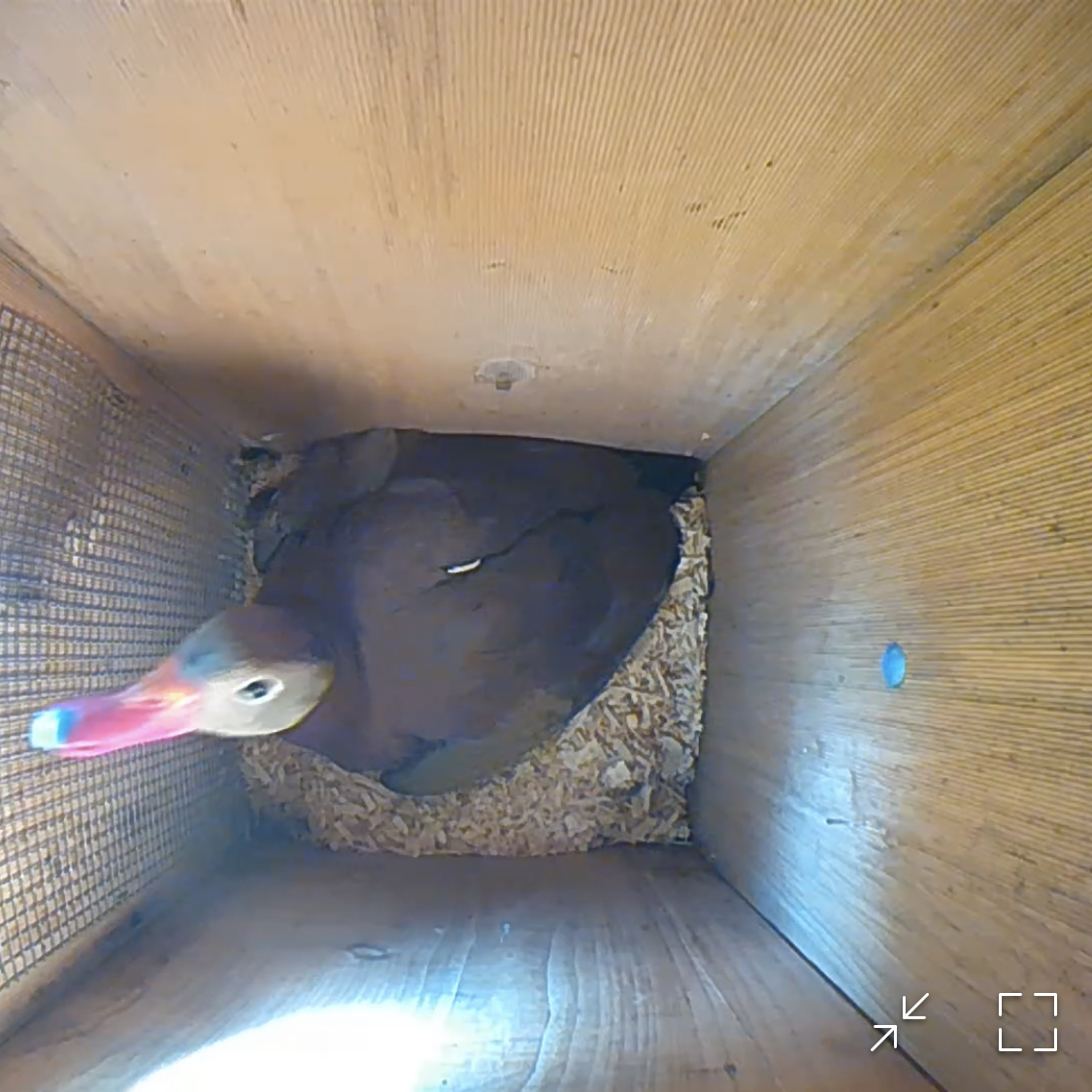
If you have read my blog through the years, you may already know that we raise wood ducks. Actually, we have a wood duck house that has a Ring doorbell camera inside. In February and March of this year we watched a mother wood duck dutifully attend to a dozen eggs and successfully hatch 8 of them. We missed actually witnessing Jump Day because it was a school day. I even missed watching the little ducklings climbing out on my phone video because I was out at recess.
In the past we have had two clutches, one in March and another in May or June. But this year the duck house remained empty for weeks after the first mother left with her eight little ducklings. We waited.
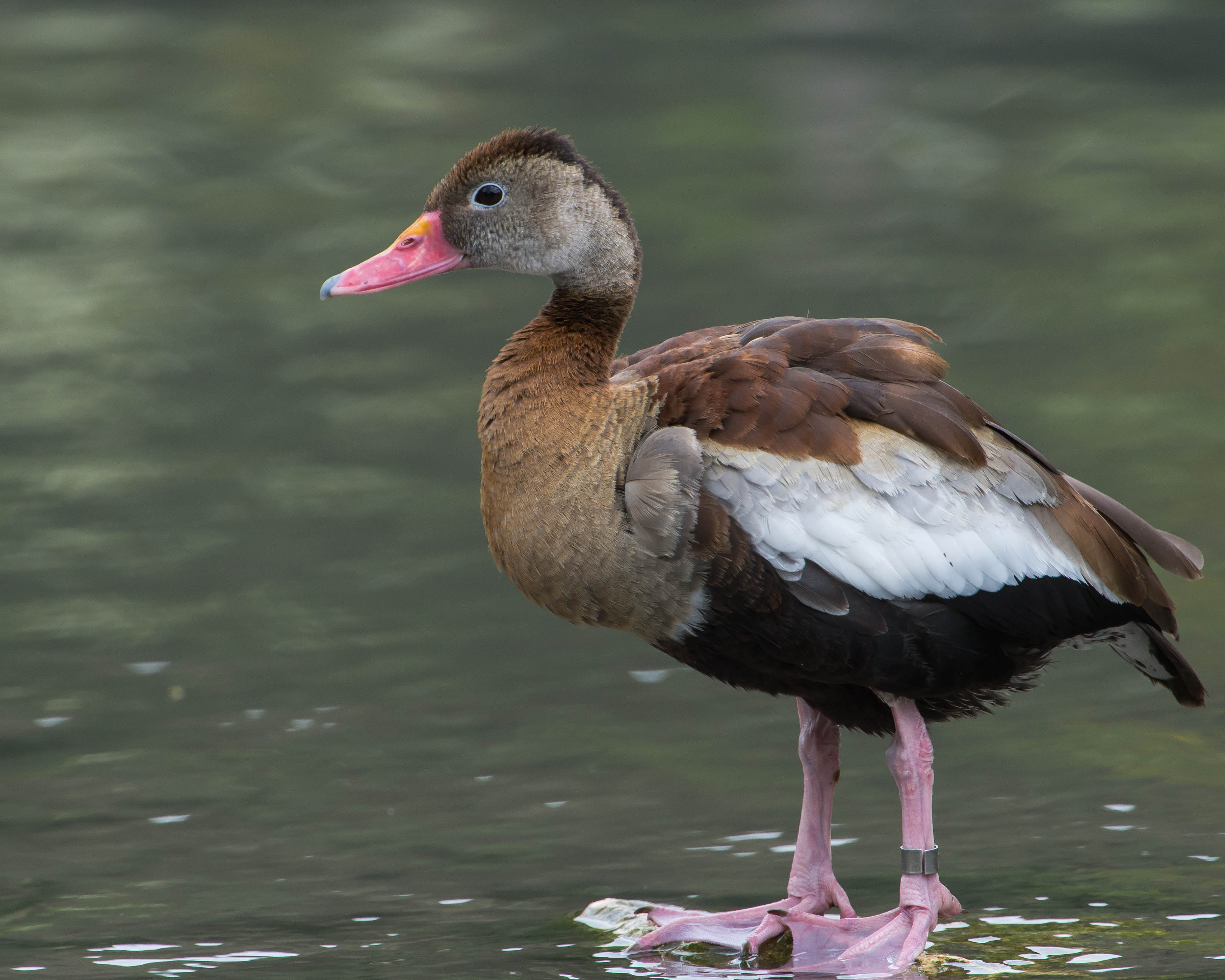
Once again we have a tenant duck, but not a wood duck. It’s a Mexican squealer or black-bellied whistling duck. At first we were disappointed, but as the weeks have gone back, this weird orange-billed duck has won over our hearts. We’ve had to learn about this breed.
The first thing we noticed in the description were the not-so-favorable adjectives, words like “boisterous” and “gaudy”.
Fun Facts about Black-Bellied Whistling Ducks
- Known as tree ducks because they hang out in trees.
- “Sexual dimorphism”: both male and female look alike.
- They form lifelong pair bonds. Both male and female tend to the hatchlings.
- There are plenty of them, low-conservation concern.
Egg incubation is 25-30 days. I marked that the first night of sitting was on May 5th, so we should see hatching in the next week or so. The babies are colored like bumblebees, yellow and black feathering. Whether wood ducks or whistlers, our nest box continues to entertain us.


 Reflections on the Teche