A few weeks ago I received an email from Laura Shovan introducing me to a new poetry form, the Pythagorean Poem created by middle grade author Shari Green. For anyone who loves a good challenging form, this is for you. I haven’t tried it with my students…Yet.
Similar to a Fibonacci poem, the form is based on a mathematical truth, the Pythagorean theorem. This theorem for you non-math nerds like me is the rule for a right triangle:
Shari took this rule to a poetry level: Using the triple, the poetic form works like this:
1st stanza: 3 lines of 3 words each
2nd stanza: 4 lines of 4 words each
3rd stanza: 5 lines of 5 words each*
* The third stanza must be composed of all the words found in stanzas one and two (in any order; variations okay). The third stanza should be a progression of sorts, a product of the first two in thought or theme or meaning.
I think you could change the numbers of a and b, but the final stanza must use a combination of words from the first two stanzas.
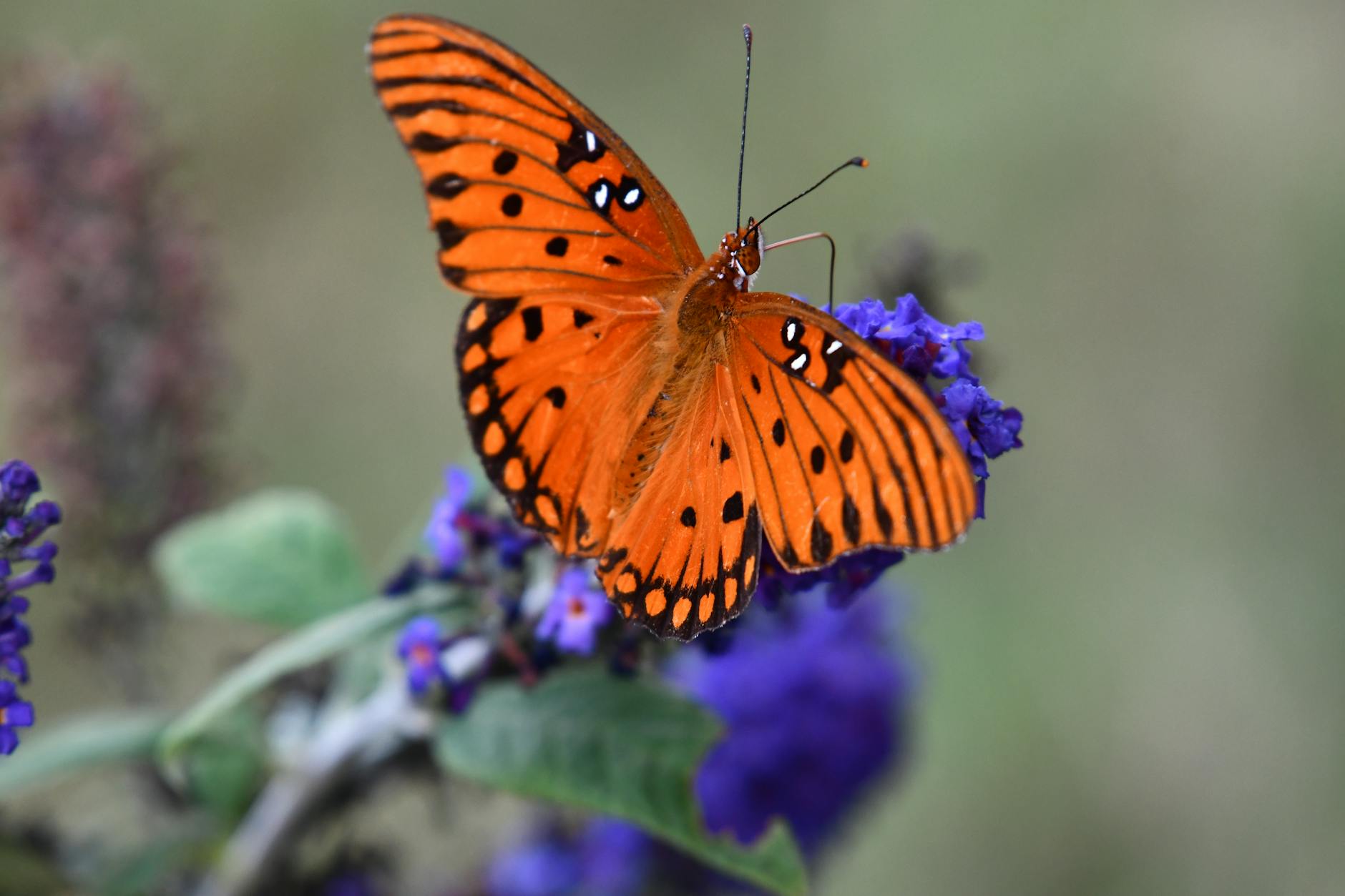
In my classroom and at home, I am keeping caterpillars in safe enclosures. The caterpillars are Gulf fritillaries that hatch and feed on passion vine. I tried this topic for my first ever Pythagorean Poem.
Hidden in wood chrysalis of safety rest for weary
hardworking caterpillars climb munching passion vine leaves grow longer each day prepare for enclosed transformation
Passion caterpillars grow, prepare for weary rest enclosed in safety. Each hardworking, munching vine leaves. Climb into wood-hidden chrysalis– Transformation for longer days.
Oh, well, THIS form is brilliant. I’m going to have to play with it a bit!! I love that you worked in ‘passion’ with dual meanings – in a way, caterpillars truly are passionate about the work that they do, preparing to cocoon themselves away and change entirely… Lovely.
Tanita, thanks for your comment. WordPress is being finicky and won’t let me comment on your post, so I hope this reply reaches you. I love your alliteration in your poem this week. Ah, “summer’s dizzy draft” is such a wonderful description.
Wow! Your poem reads like a newly hatched butterfly. I love that you tackled this new form with such a great subject. The last line in each stanza is its own poem…lovely and giving great structure to the pretty words like leaves & safety and utilitarian words like munch and rest. Well done!
Yay for your Gulf fritillaries! Such a fun and miraculous thing to witness. And your poem! Brava! (I am not fond of forms with so many rules and instantly want to create a “variation” ! What’s great about poetry is that anyone can do just that!) xo
Wow, it’s complicated but a wonderful new idea, Margaret! And you managed it beautifully! I love the idea you wrote that they “prepare for enclosed transformation”, “enclosed in safety”. A poetic science lesson!
It is interesting how you mixed up the words to create your last stanza. It is like a newly minted caterpillar, the form accentuating a natural process. The poem and the butterfly evolve. A new form to think about! Thanks!
Oh, this is a challenge. I enjoyed reading your poem, learning more about the Gulf fritillaries and seeing the magic you did with stanza 1 and 2 words. You did manage to use those same words and progress the thoughts. I like that first stanza so much. It invites us into the poem:
Wow! Both beauty and perfection in form and praise for the frittilary. I like how you worked in some of the words with slight changes in phrasing. Very creative, Linda. I’ll look forward to trying this.
I was drawn by the name of this new poem form and you created such a marvelous poem with it, we see the fritillary transforming. You pulled off that third stanza with added twists and turns, thanks Margaret, I look forward to trying it!
Wow, Margaret, what an accomplishment! I’m happy for your students and you raising gulf fritillaries-such a treat for kids. I love the progression in your poem. I especially love your first stanza that says so much with so few words. Over the years, I have seen some beautiful fritillaries in my garden. Enjoy!
[…] trickery comes when writing the third stanza. I wrote one about butterflies here. As I tried to write another one, I thought I should have saved that first one for this post. I […]
Mmm…munching passion and transformation for longer days — my favorite phrases (and how beautiful that it touches on our SJT theme, too). Here’s to munching passion!
We have a different species of fritillaries here, Margaret & I’m fascinated by that passion vine. It’s so interesting to me that certain animals eat only one thing, like koalas with eucalyptus leaves. You did great with your challenge! As I’ve written to others who’ve done it, the circular effect is fascinating, like the slightly differing use of ‘longer’. You’ve shown a lot in these brief words.
Well, Margaret, you transformed this poetic form into a thing of beauty. ❤️
For some of us (ahem, me), the mere mention of math would have sent us running. But my head (if not my heart or natural inclination) knows that there is immense beauty in math and all these Pythagorean poems are proof positive. I even feel tempted to play with it. 🙂
Margaret, What a wonderful integrated lesson of math and language! I love your poem about raising butterflies and am so glad you are doing it with your students. I know it is such a gratifying experience for all. I’ll have to give this form a try! Thank you!
Margaret Simon lives on the Bayou Teche in New Iberia, Louisiana. She is a retired elementary gifted teacher who writes poetry and children's books. Welcome to a space of peace, poetry, and personal reflection. Walk in kindness.




 Reflections on the Teche
Oh, well, THIS form is brilliant. I’m going to have to play with it a bit!! I love that you worked in ‘passion’ with dual meanings – in a way, caterpillars truly are passionate about the work that they do, preparing to cocoon themselves away and change entirely… Lovely.
Tanita, thanks for your comment. WordPress is being finicky and won’t let me comment on your post, so I hope this reply reaches you. I love your alliteration in your poem this week. Ah, “summer’s dizzy draft” is such a wonderful description.
(Thank-you!)
You did a remarkable job with the new form, Margaret. I will have to give it a try sometime, and I hope you get lots of butterflies!
Wow! Your poem reads like a newly hatched butterfly. I love that you tackled this new form with such a great subject. The last line in each stanza is its own poem…lovely and giving great structure to the pretty words like leaves & safety and utilitarian words like munch and rest. Well done!
Yay for your Gulf fritillaries! Such a fun and miraculous thing to witness. And your poem! Brava! (I am not fond of forms with so many rules and instantly want to create a “variation” ! What’s great about poetry is that anyone can do just that!) xo
Thanks for showing us how it’s done! What a fun form, and you chose just the right topic for it!
Wow, it’s complicated but a wonderful new idea, Margaret! And you managed it beautifully! I love the idea you wrote that they “prepare for enclosed transformation”, “enclosed in safety”. A poetic science lesson!
It is interesting how you mixed up the words to create your last stanza. It is like a newly minted caterpillar, the form accentuating a natural process. The poem and the butterfly evolve. A new form to think about! Thanks!
Oh, this is a challenge. I enjoyed reading your poem, learning more about the Gulf fritillaries and seeing the magic you did with stanza 1 and 2 words. You did manage to use those same words and progress the thoughts. I like that first stanza so much. It invites us into the poem:
Congratulations for this beautiful and complex poem, Margaret. “Prepare for rest enclosed in safety”: what an incredible image!
Oh this form sounds so interesting (and hard)! I will have to try it. Just beautiful!
Wow! Both beauty and perfection in form and praise for the frittilary. I like how you worked in some of the words with slight changes in phrasing. Very creative, Linda. I’ll look forward to trying this.
I was drawn by the name of this new poem form and you created such a marvelous poem with it, we see the fritillary transforming. You pulled off that third stanza with added twists and turns, thanks Margaret, I look forward to trying it!
Wow, Margaret, what an accomplishment! I’m happy for your students and you raising gulf fritillaries-such a treat for kids. I love the progression in your poem. I especially love your first stanza that says so much with so few words. Over the years, I have seen some beautiful fritillaries in my garden. Enjoy!
[…] trickery comes when writing the third stanza. I wrote one about butterflies here. As I tried to write another one, I thought I should have saved that first one for this post. I […]
Mmm…munching passion and transformation for longer days — my favorite phrases (and how beautiful that it touches on our SJT theme, too). Here’s to munching passion!
Great job! “Enclosed transformation” indeed.
We have a different species of fritillaries here, Margaret & I’m fascinated by that passion vine. It’s so interesting to me that certain animals eat only one thing, like koalas with eucalyptus leaves. You did great with your challenge! As I’ve written to others who’ve done it, the circular effect is fascinating, like the slightly differing use of ‘longer’. You’ve shown a lot in these brief words.
What beautiful butterflies! I’m glad you can keep them “enclosed in safety.”
Ooh, this is awesome, Margaret–that next to the last line is my favorite!
Well, Margaret, you transformed this poetic form into a thing of beauty. ❤️
For some of us (ahem, me), the mere mention of math would have sent us running. But my head (if not my heart or natural inclination) knows that there is immense beauty in math and all these Pythagorean poems are proof positive. I even feel tempted to play with it. 🙂
Thanks!
Margaret, What a wonderful integrated lesson of math and language! I love your poem about raising butterflies and am so glad you are doing it with your students. I know it is such a gratifying experience for all. I’ll have to give this form a try! Thank you!