Feeds:
Posts
Comments

Archive for the ‘Gifted Education’ Category

Join the Two Writing Teachers blog for the Slice of Life Challenge.

Join the Two Writing Teachers blog for the Slice of Life Challenge.

Please use this button on your site for DigiLit Sunday posts

Please use this button on your site for DigiLit Sunday posts

I was just informed that March is SOL challenge month. It’s a cruel, cruel world. We have to make SOL every single day. I don’t know if I will survive this deadly month. Okay, that was a little ( lot ) over the top of the ice cream cone. Yeah, that was a metaphor.

That’s kind of like saying over the mountain but in your mind picture a mountain sized ice cream cone with a ton of chocolate going right on the top and turning it into a chocolate avalanche. Did you do that? Good for you. Now I will grant you as many wishes as you want. NOT!! I am not a genie. But if I had one wish it would be not doing any Slice of Life challenge posts ever again. That is how bad I don’t want to do the Slice of Life challenge.

by Andrew, Feb. 21, 2017

“Andrew, the Slice of Life Challenge is voluntary. Are you saying you don’t want to try it this year? Should I make you a sticker chart?”

“I’m not making any promises. Yeah, go ahead, make me a chart.”

I teach my gifted students year to year throughout their elementary schooling. This is a blessing and a curse. I am blessed to know my students really well. I don’t have to pretest to find their reading levels. I don’t have to do writing prompts to see how well they write. I know all this.  They also know that when March rolls around it’s torture time. Time to write a Slice of Life every day!

Every year I try something new to motivate my students. Last year it was these buttons designed by Stacey Shubitz of the Two Writing Teachers. My students proudly collected badges until about March 15th when the newness wore off.

I also use incentives. One day of the month I hold a commenting challenge. The reward, one Skittle a comment. I soon ran out of Skittles.  I buy a book for each child who completes the challenge.  I usually buy 3-5 books.

Another thing we’ve done is connected with other classes doing the challenge. I’d like to do that again this year.  If your class is using Kidblogs, please request to follow by signing in to Kidblog and posting my URL, http://kidblog.org/class/mrs-simons-sea/. Click on the Follow button. Once I approve, I can follow you back. It’s fun and motivating to connect kids across the globe.

After seeing Holly Mueller’s students’ long slices, I implemented a word count rule. This has been both a blessing and a curse. The blessing is found when my students elaborate and expand their thoughts like you see in Andrew’s post above. The curse happens when they ramble on and type things like, “I’m up to 198 words, just 2 more to go!”

This is the nature of the beast that is SOLC! Blessings and curses! We are going to jump in despite the deep waters. Tomorrow we return from a break. Our challenge will begin. I wonder where this journey will take us.

I wrote a blog post for Kidblogs about the Slice of Life Classroom Challenge here.
If you wrote a DigiLit post, please link up with this button.

Read Full Post »

Please use this button on your site for DigiLit Sunday posts

Please use this button on your site for DigiLit Sunday posts

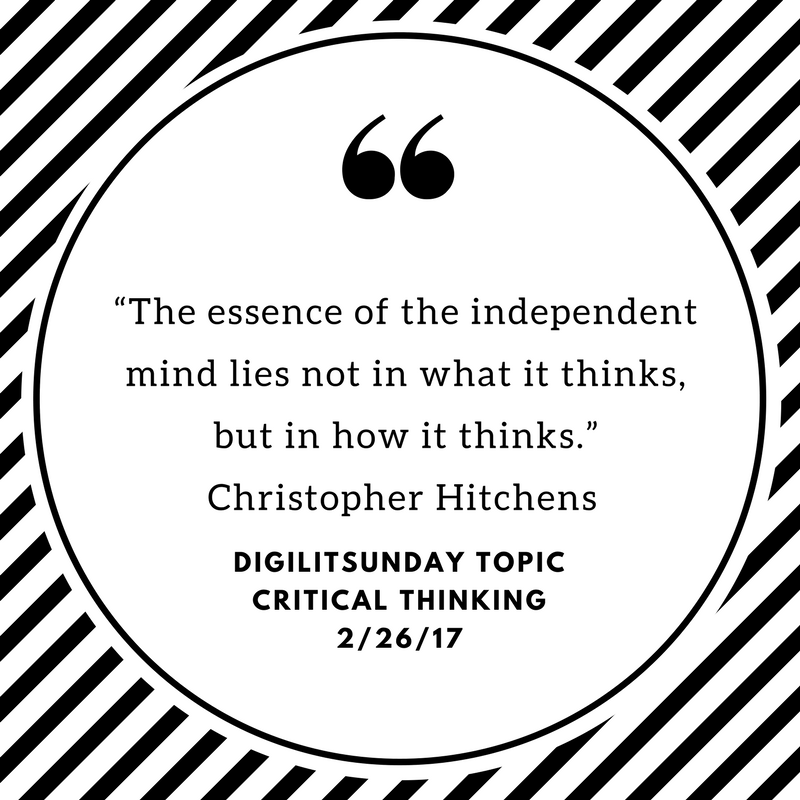
critical-thinking-digilit-sunday

Last week as I was reading DigiLitSunday posts, I found these questions on Fran McVeigh’s post.

Do we REALLY want students to be critical thinkers?

Then how are we encouraging “critical thinking” every day in our classrooms?

How are we REALLY encouraging independent thinkers and workers?

Tough questions that I contemplated all week.  Am I really encouraging critical thinking in my classroom every day?  To answer this question, I looked at my various assignments during the week.  On Monday, we watched a Flocabulary video on The Voting Rights Act and answered these questions:

1. Connection to other movements: Think of a historical event or movement that is similar to the Selma marches. How are these events similar?

2. Connection to current events: Are racial equality and voting rights still issues in the US today? How have these issues changed since 1965? In what ways are they the same?

3. Connection to civic participation: Why is the right to vote an important right to protect?

I have to credit Flocabulary because not one of these questions elicits the exact same answer from every student.  When we look for questions that encourage critical thinking, we must wonder if the answer will be the same for every student.  Granted these questions also depend on quite a bit of prior knowledge.  Not all of my students have a clear understanding of voting rights or what race relations are like today.  Some of them are quite sheltered from the news and that’s OK with me.  They’re young.  But my older students, those in 5th and 6th grade, really thought deeply about these questions and offered some thoughtful responses.

What is important to me as a teacher of gifted students is to open up the door for communication and for critical thinking.  I have to be willing to hear different responses, and not always ones I agree with.  Critical thinkers are active, and our challenge as their teachers is to keep them thinking and questioning and wondering.

One way I do this is assigning reader responses.  There is no one right way to respond to a book for my students.  We have a chart on the wall that lists multiple options.  These options include: write about the theme, relate to a character, connect the book to the larger world, etc.

This week a few of my students are reading Raina Telgemeier’s graphic novels, Smile, Sisters, and Drama.  One student was appalled that Drama was placed on the second grade shelf because it is at a second grade AR level.  “This book is not appropriate for second graders!”  She explained that the book deals with the sensitive subject of sexuality.  A selection from her reader response:

“This book can relate to the world because just like Jesse people know their sexuality, but can’t tell their friends or family because they’ll be teased or judged. In Jesse’s case his father doesn’t accept his older brother Justin because he’s gay, so Jesse is afraid to tell anyone because they might not accept him.”

She went on to rant about the recent controversy over transgender students and bathroom use.  Reading with a critical eye as well as having an open policy for student responses helped this student not only relate to the book, but also to express her own opinions about the subject.

My students are not just writing for an audience of one.  They write on a blog we share with other gifted classes.  When they write about their own thoughts, they trust that others will read them with the understanding that we are all trying to write in a way that best expresses our own thoughts.  A blog space is just right for experimenting with thinking and writing.    A critical thinker understands that others have different assumptions and different perspectives, so in the blog space, we must make it safe for those expressions.

Thanks, Fran, for posing those questions and for helping me realize that critical thinking is purposeful and intentional every day.

I am off to New Orleans Mardi Gras on Sunday, so I am posting early.  Please link up when you can.

Read Full Post »

Please use this button on your site for DigiLit Sunday posts

Please use this button on your site for DigiLit Sunday posts

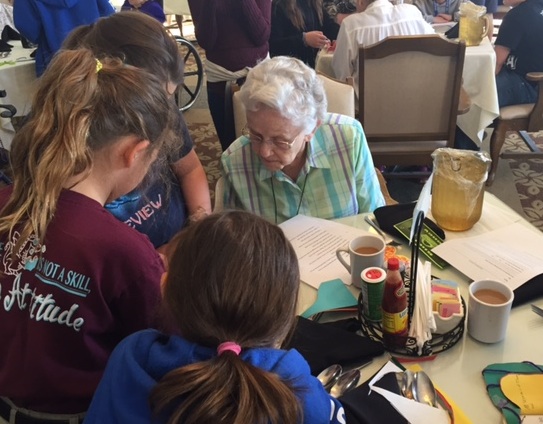
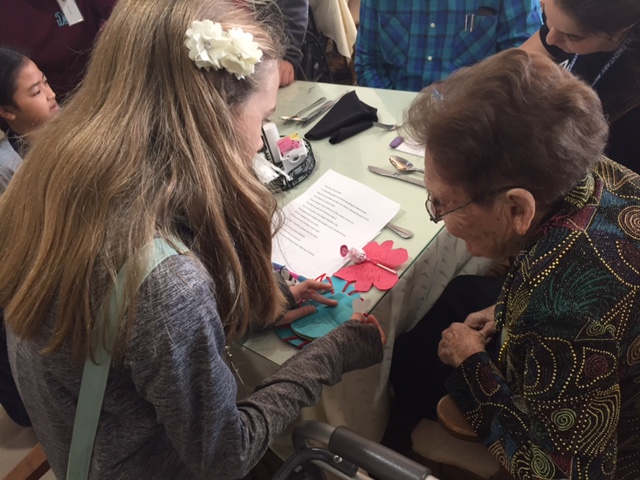
Years ago, my colleagues and I created a monthly enrichment day for our gifted 6th graders to combat underachievement. This year we selected the theme of Communication. Each student or group of students were charged with asking a question about something they were interested in communicating. Emily asked if elderly in resident homes are lonely. She assumed the answer was yes and followed her research to discover that loneliness can actually lead to death. She was moved to do something about it.

Emily decided to set up a field trip to a local retirement home. With a little direction, she called the retirement home activity director, contacted our gifted supervisor for permission, and created a Valentine’s Day activity. I have never seen her so empowered and so excited. The night before the field trip, she hand made 34 Valentines to give to the residents.

My colleagues were more than cooperative in getting their students to the retirement home. The students quickly found an elderly resident to spend time with. As I circled around taking pictures, I was pleased to see these young kids talking freely with their new friends.

garden-view-1

jaci-and-junie

On Wednesday at our monthly Wow (Way Out Wednesday) meeting, Emily compiled the surveys. She also put together a video of one of the residents talking about her life and how she liked living at Garden View. Emily’s presentation about this experience is coming together, but it’s taken on a new direction. She discovered that the elderly at Garden View are not lonely. They live in a community there. Activities are planned for them. People visit often. They are well cared for.

Beyond the original intent of Emily’s project, she has discovered that relationships at any age are important. She discovered that she can influence others and spread kindness. When we as teachers take the lessons out of our hands and put it into those of our students, they can be difference-makers.

If you are joining the DigiLit conversation today, please leave your link below.

Read Full Post »

Find more celebration posts at Ruth's blog.

Find more celebration posts at Ruth’s blog.


This week the flu made its way through my students.  I, thankfully, have remained healthy.  Today, I want to celebrate my student Andrew and his initiatives.  Before Christmas he became interested in the plight of orphaned elephants.  We read a Scholastic Scope magazine article that pointed to the David Sheldrick Wildlife Preserve.  Andrew wanted to raise funds to adopt an orphaned elephant at the preserve.  The adoption fee is $50 a year.  He decided to sell posters to classmates. I ordered Vista Print posters of a baby elephant picture from my trip to Tanzania, Africa.

baby-elephant-poster

Before the Christmas break, Andrew presented to his fourth grade classmates.  He raised about $32.  After Christmas break, he decided to present to third grade classes.  He raised the remaining funds he needed.  He crafted a letter to the David Sheldrick Wildlife Preserve explaining the project and selecting Malima as the baby elephant he wants to sponsor.  This video broke our hearts.  Andrew and I both already feel and love and affection for Malima.

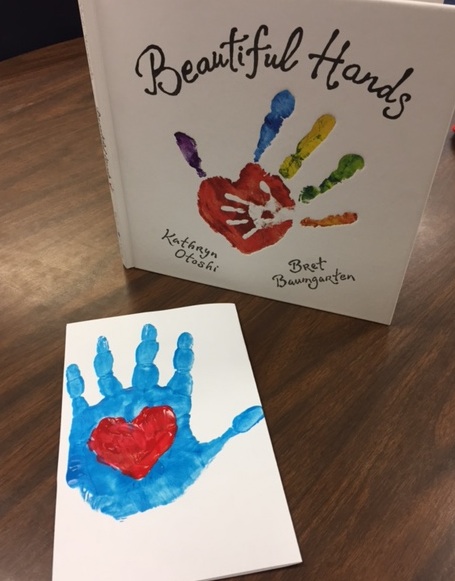
Andrew is one of those rare kids who wants to inspire and make a difference.  In January when preparing to choose our One Little Word, I read aloud the book Beautiful Hands.  The production of this book has a heartwarming story.  Kathryn Otoshi worked with Bret Baumgarten who was diagnosed with cancer to design this book from something he would say to his own children, “What will you do with your beautiful hands today?”

beautiful-hands


The artwork was created all with handprints and fingerprints, even a dog print from Bret’s dog.

“My hope that this story empowers love, creativity, compassion, and a 

connection to you and yours, in the fulfilling and remarkable way it has for me” 

~ Bret Baumgarten, 1970–2014

I think Bret would be proud to know what Andrew did with his inspiring words.  Andrew wanted to read the book to his sister’s first grade class and do a hand printing activity with them.  Some of Andrew’s gifted classmates helped him.  I was impressed with how smoothly the whole activity went.  I was not sure because we had to paint all the kids’ hands and help them print.  Andrew had selected some Valentine quotes for the kids to copy into their hand painted cards.  This creative service activity was a positive experience for all of us.


handprint


Read Full Post »

Please use this button on your site for DigiLit Sunday posts

Please use this button on your site for DigiLit Sunday posts

Digitally enhanced iPhone image

Digitally enhanced iPhone image

A few weeks ago, I set up a plan for the month of January DigiLit posts. I promised to tweet the topic on Thursdays. I have not fulfilled that plan. I have been barely making it with a tweet on Saturday. Forgive me. I’m adjusting the plan somewhat. I’ll place the topic for next week in the current DigiLit Sunday post and tweet a reminder on Saturday. If you are writing posts, or want to join us, please go to the Google doc to add your information and your topic ides.

I enjoy playing with photographs on my phone using various photo-enhancing apps. The technology available to us today allows for regular people like me to make cool, professional looking photos with a click.

My students have discovered that in their Kidblog, they can change, manipulate, add features, etc. to their avatars. While this is fun, it can take away time from focusing on the real stuff of blogging, the writing. What place does digital design have in our classrooms, if any?

I struggle with this question. I think it is important to encourage creativity in the classroom, but where does creativity end and just fooling around begin?

My answer has been in setting purposes for digital design and creativity. When my students work on blogging, the design for their posts must serve a purpose. The design should communicate. Setting backgrounds, changing fonts and font size, manipulating images should communicate a tone or theme.

What are some ways you encourage digital design in your classroom? Join the conversation with the link below.

I am blogging for Kidblog. To see my latest post on Tapping into the World of Wonder, click here.

Next week’s topic comes from Maria Caplin: Increasing student vocabulary beyond definitions.

digilitsundayfebruary-5-2017-copy

Read Full Post »

DigiLitSunday Logo

Please use this button on your site for DigiLit Sunday posts

stones-1372677_960_720

The image above makes me imagine metaphorically that I am that big green rock holding in balance the different colors of my students.  Teaching is a delicate balancing act.  As teachers, we must set goals for our students, individually and collectively.  Our job is to get on the train every morning and move down the tracks to that goal.  (Excuse the mix of metaphors.)

Sometimes one student can topple the whole balancing game.  We must stop whatever it is we are doing and pay attention.  Focus on needs rather than goals.

This week I had to call on a colleague for help.  I was not meeting a student’s need, and I wasn’t sure where to go next.  I had tried many directions, but none were working very well.  This is humbling.  However, I found strength and comfort in the shared experience.  Reaching out when you feel defeated is tough to do.  I am so grateful now that I did.  My student is better for it.  I am better for it.

My students write every day.  Writing is a brave act. So different from answering questions or working out a math problem.  Writing is personal and hard.

This week one of my goals was teaching essay.  The kind of essay that testing will require in which the student writes about a literary element (in this case, theme) comparing two texts.  We worked with a nonfiction article and a poem.

During a conference with one of my students, I read aloud to her what she had written.  “Blah, blah, blah” was her response.  “I can’t stand writing essays.  They’re so boring!”  After our chat, she typed up her boring essay.  I had to laugh when I read it.  She began with, “Hey, world. Listen here!”  And at a later point, she wrote, “Now that is awesome!”

My students need to be able to express themselves.  Sometimes these expressions come out in loud exclamations, quiet tears, or interjections. No matter the goal, needs may throw us out of balance, or may be the very thing to keep the balance.

Please join the conversation by leaving a link below:

Read Full Post »

Find more celebration posts at Ruth's blog.

Find more celebration posts at Ruth’s blog.


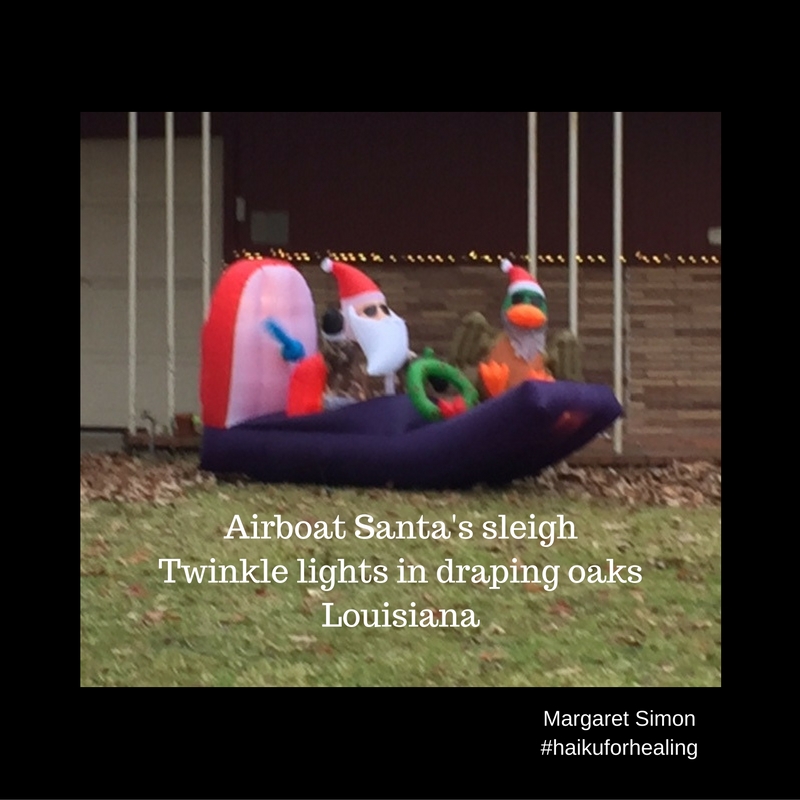
Taking a walk in my neighborhood this season, one sees all kinds of silly yard decorations.  In fact, we have a frog with a Santa hat in ours.  This Santa in an airboat with a duck driver caught my eye.  The propellor actually turns.   Here’s another haiku. Number 24 for haiku-a-day in December.

santa-in-airboatdisneyland-decorationslouisiana


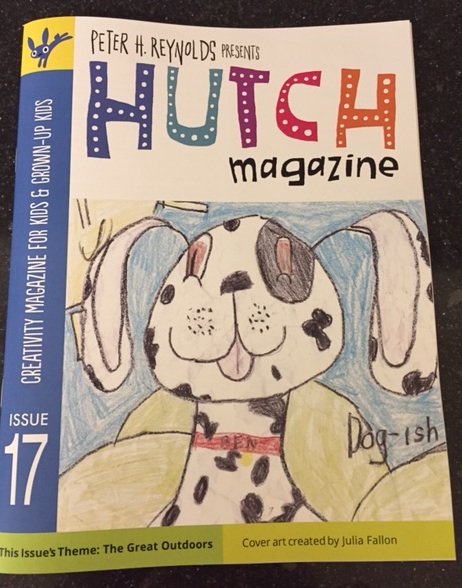
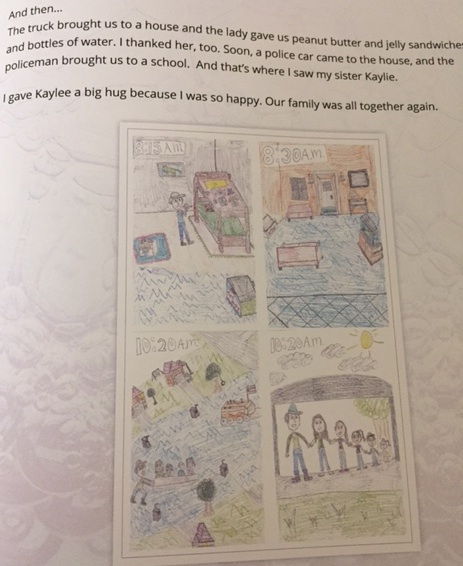
In the early fall, flood waters claimed many homes here in South Louisiana.  My third grade student Jacob’s was one of them.  He wrote a story about the flood.  I contacted Peter Reynolds about Jacob’s story, and he published it in his magazine for kid authors and illustrators, Hutch.  Jacob’s sister, Emily (6th grade), drew the illustrations.  An exciting collaboration!  I celebrate Jacob and Emily’s first publication!

Merry Christmas and Happy New Year to all!


hutch-magazinejacobs-story

Read Full Post »

Find more celebration posts at Ruth's blog.

Find more celebration posts at Ruth’s blog.

Please use this button on your site for DigiLit Sunday posts

Please use this button on your site for DigiLit Sunday posts

Celebration time is just around the corner. It’s moving in quickly with the cold front.  My dining table is full of gifts and wrapping paper.  Soon the gifts will be under the tree and my dining table will be clean and ready for family to gather.  How will I ever get it all done?  I ask myself this question every year, and every year, I manage to be ready for the celebration.

In our classrooms, the students are anxious and antsy.  They have more difficultly focusing.  When my colleagues and I began planning a field trip for December 16th, I thought we were nuts to do it so close to Christmas break when the weather (literally and figuratively) changes daily.  It turned out to be the perfect time.

On Friday, the weather was cool but not cold, cloudy but not raining as we set out at 6:30 AM on a charter bus heading to St. Francisville, Louisiana to the Myrtles Plantation, one of the top haunted mansions in the US.  The stories of the “little spirits” both intrigued and frightened my students.  I have to admit I was a little unsettled when I heard ticking coming from the old desk I was standing next to.

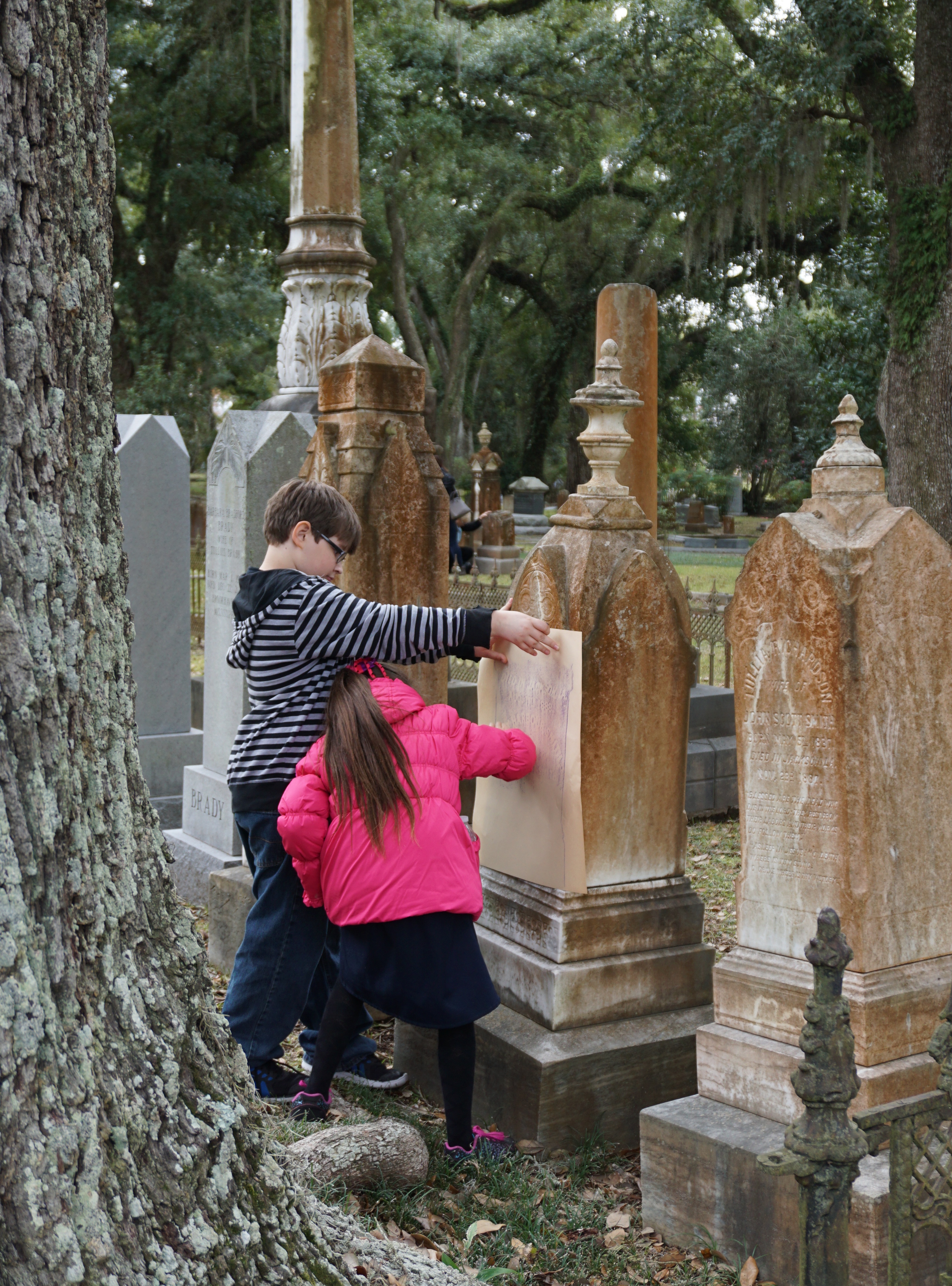
Our next stop was the cemetery of Grace Episcopal Church.  This cemetery is a beautiful place with draping oaks and old graves.  Our students made gravestone rubbings that we will later use for a research/writing project.

Gravestone rubbings at Grace Episcopal Cemetery, St. Francisville, LA.

Gravestone rubbings at Grace Episcopal Cemetery, St. Francisville, LA.

Grace Episcopal Cemetery

Grace Episcopal Cemetery

Taking students outside the classroom is an effort in planning, making reservations, arranging payment, yet every time we do it, I realize how important it is to get us outside and into the world. We traveled northeast to Natchez, MS. to visit the Grand Village of the Natchez Indians, run the mounds, and learn about the ways of the original Americans. We walked the old Natchez Trace and visited an old inn.

Indian mounds at the Grand Village, Natchez, MS.

Indian mounds at the Grand Village, Natchez, MS.

Walking the old Natchez Trace.

Walking the old Natchez Trace.

When we return from our winter break, we will revisit this field trip and turn our learning experience into digital posts and presentations. But, for now, I celebrate the opportunity to take students out of the classroom and into an earlier time and place to learn and play together.

I will be taking a holiday break from DigiLitSunday. Come back on January 8th.

Please add your own DigiLit posts with the link button below.

Read Full Post »

Please use this button on your site for DigiLit Sunday posts

Please use this button on your site for DigiLit Sunday posts


When I think of crafting in digital literacy, I think of those literary elements that make writing sing as well as design elements that give a project more meaning and audience appeal.  This week we worked on both aspects.

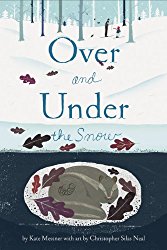
I read aloud two of Kate Messner’s picture books, Over and Under the Snow and Up in the Garden and Down in the Dirt.  Both of these books lead students on a journey of discovery about plants and animals.  We learned about the subnivean layer in the snow and which animals hibernate and which ones remain active in tunnels below.


over-and-under-the-snowupinthegarden_jacket_mech

Following the reading, we read the facts about the animals in the back of the book. We also looked back at Kate’s craft moves. On a few pages the words are spread out and down the page to show action in the words themselves. She also used alliteration and imagery and figurative language. The craft moves of a real author are ours to take and play with.

My students turned to old favorite PowerPoint, while a few tried out Emaze. Madison found an Emaze background with an ocean, the ecosystem she had chosen to write about. Jacob and Noah used the drawing tools in PowerPoint to illustrate their pages. I showed them how to group the pieces together and move them with animation. So cool to watch a fish that you made out of the shape tool actually move in the water.

Emaze has a variety of backgrounds for different ecosystems.

Emaze has a variety of backgrounds for different ecosystems.

Lynzee chose the bayou for her ecosystem to study. She didn’t know about the nutria, so we talked about them and looked up information. When I turned back to see what she had written, I was pleased to see such clever craft moves.


Nutrias scrabble, skitter, scratch away the dirt as they search for the root of a forgotten summer plant to feast on when they are rare.

Andrew's slide features the wildebeests of the African savanna with a connection to the ancient boabab trees.

Andrew’s slide features the wildebeests of the African savanna with a connection to the ancient boabab trees.

Andrew decided to research the African savanna. As he was researching, he found out about the plight of elephants from poaching. He decided he wanted to do something about it. This week he will present his findings to his classmates and try to raise funds to adopt an orphaned elephant. I suggested we make a poster out of the baby elephant picture I took this summer in Africa. He loved the idea. He will sell the poster at a profit. (Much discussion about how profit works.)

baby-elephant-poster

As a teacher of language arts, I feel drawn to the craft moves authors make. They become mentor texts for my students, but then my students amaze me with their own use of craft. They become authors (and difference makers) themselves in this digital world.

Join in the conversation with your link below:

Read Full Post »

Please use this button on your site for DigiLit Sunday posts

Please use this button on your site for DigiLit Sunday posts


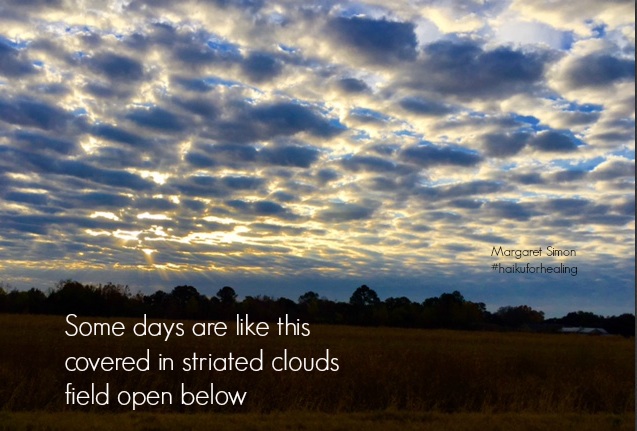
Gratitude takes many forms.  Gratitude for my online community means writing a haiku-a-day in December.  Mary Lee posted the challenge, and Michelle is curating all the bloggers participating. We are all using #haikuforhealing.

haiku-clouds


I also feel gratitude for poetry and for authors who promote poetry in the classroom.

Poetry has the power to transform a classroom environment.  On Friday I went off the lesson plan path and shared a new book that I received at NCTE16 from Sylvia Vardell and Janet Wong, the partnership behind Poetry Friday anthologies.  Just You Wait is their latest anthology.  I love the new way this one is designed with a poem from an outside poet, a response poem from Janet, and a poem writing activity from Sylvia.  The subtitle reads  “A Poetry Friday Power Book”, and it certainly packed a good punch in my classroom.

After showing my students a picture of Margarita Engle (by looking at her picture, we knew she was of a different race, but which one?), I read her poem “Who am I?”.  This poem speaks of the half Cuban she is and how there is no bubble on the form for being half.  I have bi-racial students, so we talked honestly about what this means.

We also discussed the mentor text poem and how the end is like a punch line that makes you think.  So my students and I wrote together using the form “Today I am someone who…” I could not have predicted the impact this exercise would have on my students.  They wrote from their hearts.  So much so that some do not want to share with the public, but they did feel safe enough to share with me and their classmates.  We were all moved.  And through connections and writing, we became closer, a stronger community of writers.

Some posted their poems on our kidblog site for the public.  You can read them here. I emailed Sylvia and Janet, and they both graciously left comments. I can’t wait to share these on Monday. #Gratitude for digital spaces that allow this immediate and authentic feedback.

Erin handed me her poem and asked that I publish it on my blog.  She is bi-racial.  Her mother is from the Philippines.  She is determined to fight the stereotypes.

Poetry Friday: Stereotypes

by Erin

Today
I am
not just another stereotypical Asian
I’m someone who doesn’t want to be a doctor
I’m someone who isn’t just a goody-two-shoes
I’m not someone who thinks studying is more important than friends
I’m someone who doesn’t always make good grades
I’m someone who will never be just another Asian
I’m someone who will crush these stereotypes and others like it

I write alongside my students.  When I wrote this last line, little did I know how true it was.  My students find poems and express their hearts.

Today
I am
someone who welcomes toe tickles from my dog, Charlie
someone who froths milk for coffee every day
someone who looks at nature for inspiration
someone who finds poems hiding in her junk drawer
someone who finds poems in the hearts of children

— Margaret Simon


Please join the conversation today with your link.

Read Full Post »

« Newer Posts - Older Posts »