I miss traveling. I usually have a trip or two planned for the summer. A few summers ago my husband and I took a trip to the Pacific Northwest. The beaches there are very different from Gulf Coast beaches. For one thing, the temperatures are colder. With our heat rising to 95 or more degrees these days, I wish for the cool breeze of a Northwest beach.
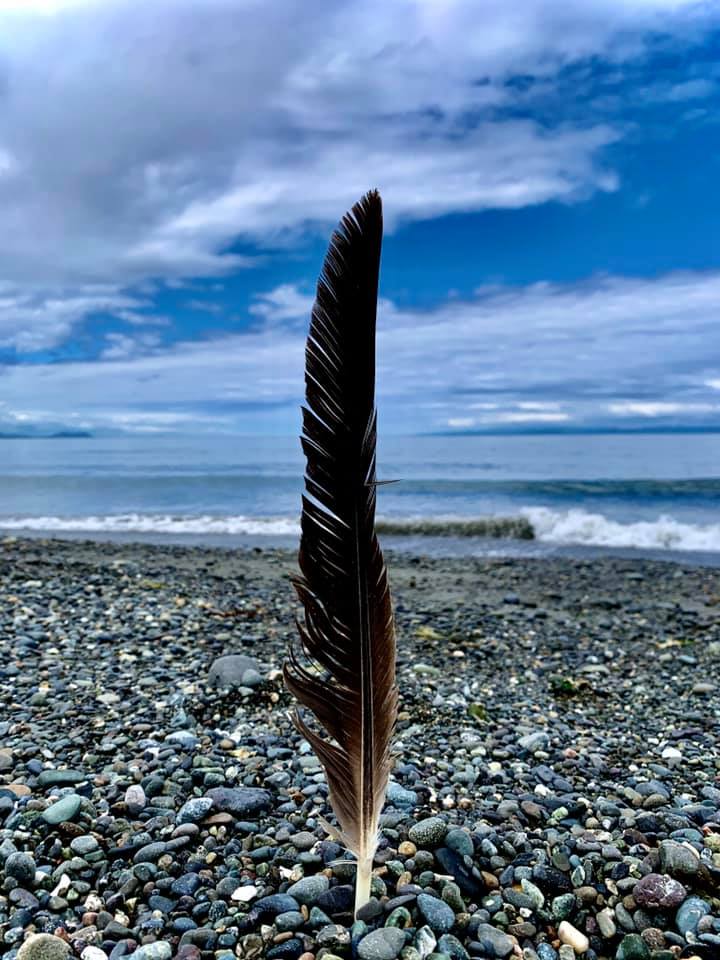
My friend, JoAnne Duncan lives in Washington state within driving distance of beautiful mountains and beaches. She’s traveling near Seattle this week. She’s been posting some gorgeous photos of her trip on Facebook. This one just begged to be a poem.
Feather at Sea by JoAnne Duncan.
I am a feather tethered to blue stones tossed from sea. Notice me before I fly.
Margaret Simon, draft
Take a minute to look outside at this image, look inside to your heart, and put down a few words, 16 or so, in the comments as a small poem. Please encourage other writers with your comments. Poetry is balm.
This photo is from the G. Eric and Edith Matson Photograph Collection, a set of 22,000 glass and film photographs and negatives taken in what was then called Palestine (present day Israel and the West Bank) from 1898 to 1946. The picture is part of a “Bedouin wedding series” but the caption on the negative just reads, “The bride.” That’s it. The Bedouins roamed the region as nomads, so there are any number of places the photograph might have been taken over the course of two decades.
Usually for the photo prompt I find a photo of my own or one from my Instagram or Facebook feed, but today I am using a photo from the Library of Congress. I signed up for emails from the Library of Congress blog, and this recent post made me want to know more.
Please write a small poem of 16 words or so in the comments and comment on other poems. I “found” a poem on the blog post. Maybe that’s cheating…
Still, eyes. Those hands. This woman knows work. She is there gazing into the future hoping…
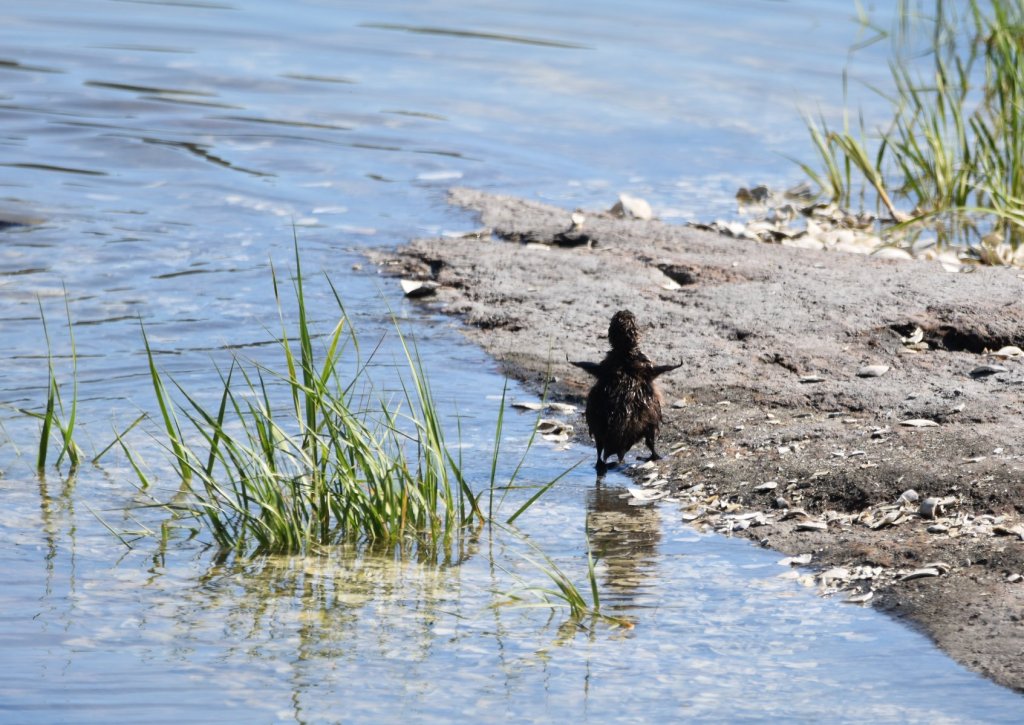
Once again, I am inspired by Molly Hogan’s photography. She starts each day with a blank canvas, or what would have been once called an empty roll of film. And she opens her lens for discoveries and wonder.
This photo appeared last week in my Facebook feed. The whimsy of it grabbed me. Molly thinks the duckling is a common eider, not a duck we have in the deep south.
Please join me in writing a small poem today, inspired by this image. Leave your poem in the comments. Read other poems and comment. Come back to read any comments you receive. Here there is no judgement; we hold each other up.
I was struggling over what to post today. I didn’t prepare my post ahead of time. I considered bailing out completely. But something was tugging at me.
That tug started with an email from poets.org that sent me into a rabbit hole of Black poets. Reading, clicking, texting, reading…
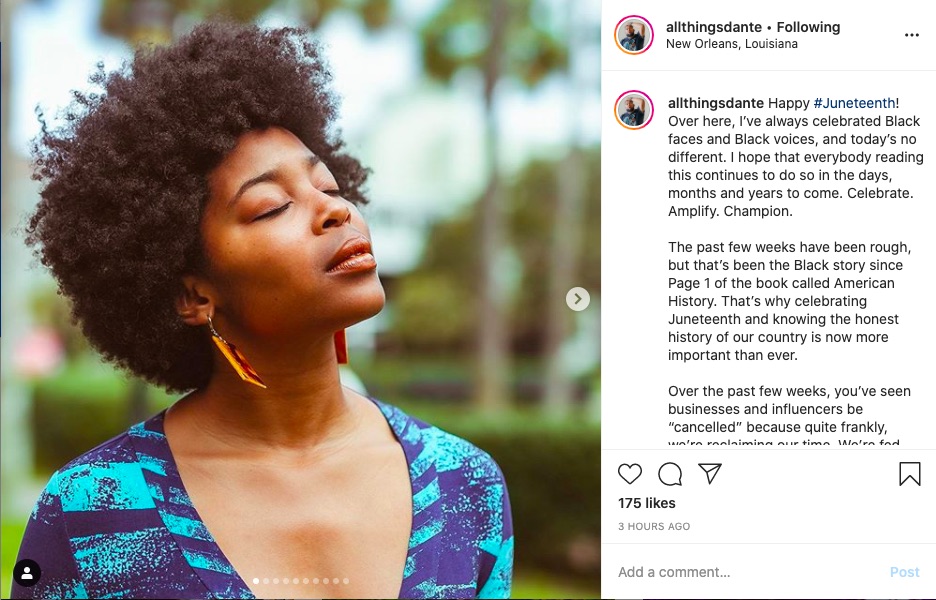
Then I was discussing my dilemma with my daughter, Katherine. She works for an ad agency in New Orleans. Her co-worker, Dante Nicholas, wrote an article on Later.com “How Brands Can Celebrate Juneteenth on Social Media.” In his article, Dante states “June 19, 1865 – Juneteenth – is the oldest nationally celebrated commemoration of the ending of slavery in the United States….At its heart, Juneteenth is a day of celebration.”
In my reading, I felt a kinship to Margaret Walker. Not only did she have my name, she also lived in my home town of Jackson, MS. for a time. I wish I could say I met her or saw her speak, but I didn’t. But her words spoke to me today. Dante’s image makes me think of poets like Margaret who said, “Let a new earth rise.”
Using words from Margaret Walker from For My People, I wrote a small found poem to celebrate the freedom of Juneteenth.
For playmates in the clay singing dirges, ditties, blues, Let a bloody peace be written.
It’s time, friends, it’s time!
Margaret Simon, found poem from Margaret Walker’s For My People.
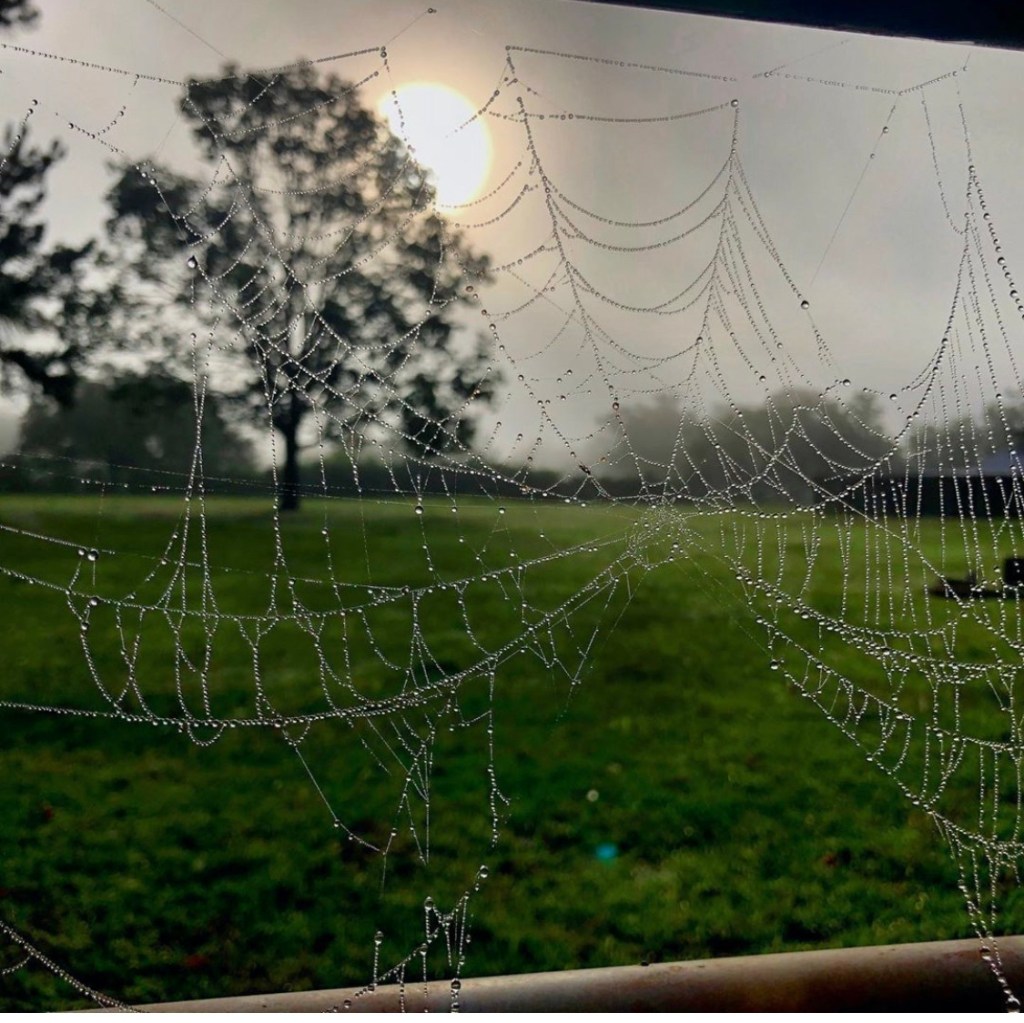
Summer is here with peaceful mornings before temperatures rise. This image popped up on my Instagram feed. My friend, Jen Gray, owns a farm in Breaux Bridge, LA where she rents two houses for artist retreats. Unfortunately, I haven’t made my usual retreat there this year. I miss this place.
Jen’s photographic eye fascinates me. This photo has so much to offer, a foggy sunrise and dewdrop spider web. What will you write about? Please leave a small poem in the comments and comment on other poems. Thanks for stopping by.
What remains from a slow walk in the field? Dewdrop tears for a peaceful world.
Margaret Simon, flash draft
A note about process: While writing my flash draft, I typed in about 21 words. In cutting it to 15, I found what the poem really wanted to say. There’s something to be said for small poems.
This week I chose one of my own photographs. I’ve struggled to put into words what I am feeling, but I can walk for peace. I can trace letters on a white board. I can be part of the change.
Whether you attended a march or not, I know your feelings run deep. Poets are like that. We feel things. We notice. We process. We write.
Take a minute, not too many, then pick up your pen and scribble 15 words or fewer, maybe more, in response to this photo. Go for your first thought. See where it takes you. Please do not leave without writing a few encouraging words to another writer. Thanks!
Before the storm, we listened to passionate words, a list of names, a prayer. Then we walked with each other.
Photographs fascinate me. How a beam of light can change a perspective. How switching to black and white (which can now be done with a click of a button) can focus on a single aspect.
My friend and writing group partner, Molly Hogan, loves taking photos in the early morning. I love the morning, too, but in Maine, I imagine mornings are quite cold. Molly embraces the cold and manages to capture amazing detail in her photographs. She often posts photos on her blog and will write a poem to them. For a treat, click on over and scroll.
This week she posted this photo on Facebook. It’s dandelion season and for Molly, that means lots of photo study of the fascinating flower. In this photo, she took a close up of the dandelion with dew still present and shifted it to black and white. The effect is perfect for a poem or two.
Dandelion by Molly Hogan, used with permission.
We are all stardust making our way to sparkling.
Margaret Simon, draft
Leave your own small poem in the comments. Please respond to other writers. We are all in this together.
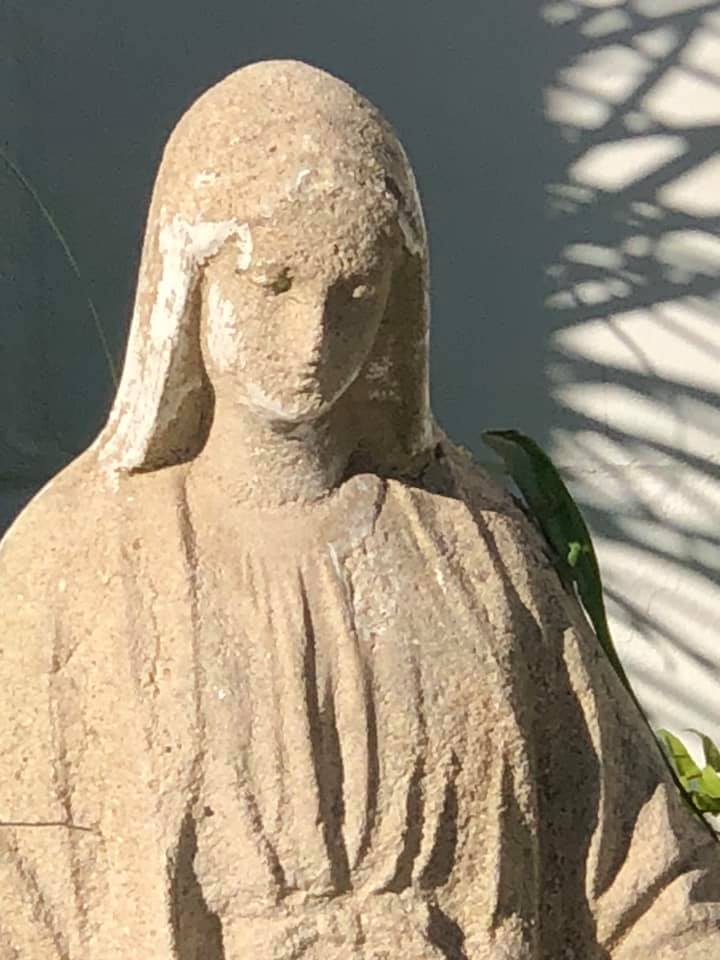
This photo appeared on my Facebook feed from local artist and children’s book author Paul Schexnayder. Paul has an ironic sense of humor, especially in the everyday. His photo reflects that sense.
Mary’s Lizard by Paul Schexnayder
When I asked Paul if I could use this photo for a poem, he said, “I was hoping you’d ask? I almost asked you to write one!!!”
Please consider leaving your own small poem in the comments. Leave a comment for a few participants. Fun writing practice to wake up your creative self. No pressure. No judgement. Thanks for coming by.
A lonely lizard seeks shade in the arms of Mary. She stoically abides.
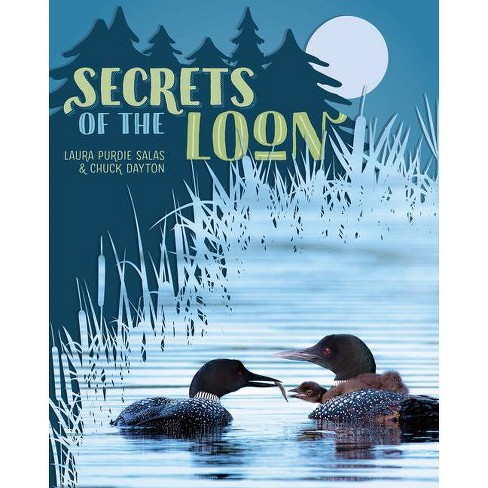
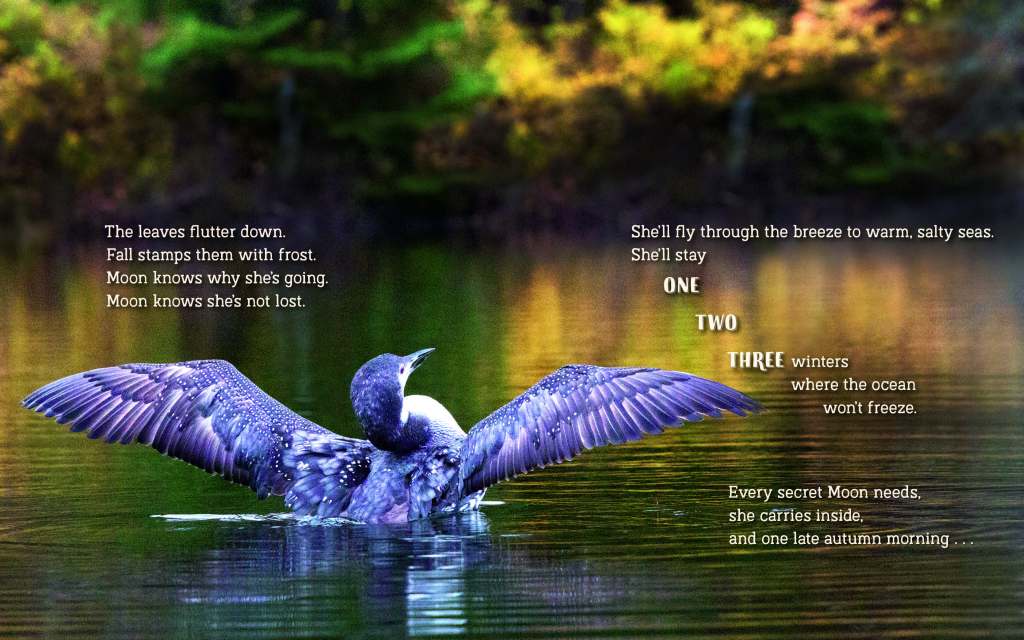
Today, I’d like to introduce Laura Purdie Salas’s new book Secrets of the Loon. Released in early May, this book is different in design from her others, yet still holds her amazing poetic voice. Beautifully designed with photographs by Chuck Dayton, Laura takes us on a journey with newborn loon, Moon Loon.
Loons do not live in the deep south. My experience is with wood ducks. Wood ducks will lay a clutch of a dozen or so eggs, while loons only lay two. But I gather that their survival rate is better because the baby loon will ride on its parent’s back to escape danger. On the bayou, wood ducks are prey to birds, alligators, and snakes. I’m not sure of the survival percentage, but it can’t be that great, or we would have wood ducks everywhere.
Secrets of the Loon is written in rhyming verse. I didn’t notice this at first. Other poetic elements jumped out at me; repetition, onomatopoeia, and imagery together create a delightful tour of the lake.
Secrets of the Loon, Minnesota Historical Society Press (5/1/20) ISBN: 9781681341583
These rocky shores, with trees tipped in gold. These ripples and currents, fishy and cold. This dazzling sky, a vivid blue dome. This spruce-scented bay offers comfort. It’s home.
Laura Purdie Salas, Secrets of the Loon
Being unfamiliar with loons, I also enjoyed reading the back matter of More Loon Secrets. I hope one day I will see a loon in real life. But for now, Laura’s book takes me to a beautiful lake full of natural sights and sounds.
Lagniappe (a little something extra) today is a video I saw on CNN’s Five Things to Know page. Believe me, it was the best thing there. One of my favorite hymns to sing. I first sang Jesu, Joy of Man’s Desiring in my high school choir. That is why I remember it so well. Ah, youth…
The weeks are whizzing by, even with staying at home every day. At first the pace was slow, but now a rhythm has set in, and it’s hard to believe that Thursday is here again.
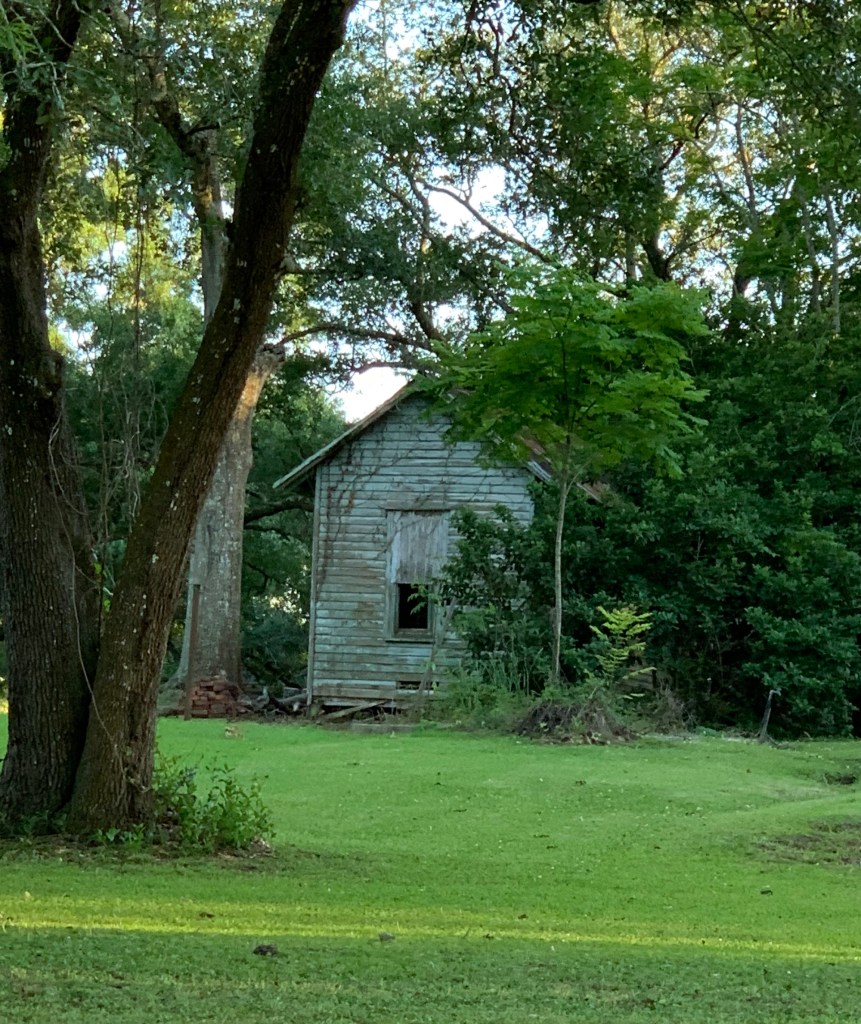
My husband usually has little to say about my writing life. But when we were canoeing on Mother’s Day, he saw an old cabin and commented, “This photo wants to be a poem.” Oh, yeah? I guess I better take the picture then.
Every time we go out on the bayou and paddle, something new draws our attention. I’m sure this old cabin, storage shed, whatever has been there a long time. We only just noticed. I’m inclined to think that this place may need a whole story, maybe even a ghost story. You can decide.
Leave a small poem in the comments and be sure to comment on a few other responders. Building a community of writers is a goal for this weekly prompt.
The place out back, one room, wood-slatted floors, straw broom for sweeping roaches… home.
Margaret Simon lives on the Bayou Teche in New Iberia, Louisiana. She is a retired elementary gifted teacher who writes poetry and children's books. Welcome to a space of peace, poetry, and personal reflection. Walk in kindness.







 Reflections on the Teche