The Sunday Night Swaggers are back to monthly challenges. This month Catherine Flynn has challenged us to write an In One Word poem created by April Halprin Wayland. See her introductory post here.
I know I am not alone in having a rough beginning to this school year. Foremost on my mind is what is best for kids. Unfortunately, there are many meetings and required gobbledygook to get to the fun part of teaching. Every year, my goal is to inspire explorers, writers, and scholars. Following April’s prompt, I went to Wordmaker to gather words that can be made with the letters in inspiration. Each line ends with a word I chose. Thinking about this exercise was just what I needed to block out the messiness.
Virtual Teacher
I didn’t warm-up for this sprint. Breathless; my hand anoints each name, a nonart list that rips into a class of sorts, a prison on screen, trap of pixels, brain strain. Who’s bringing the aspirin?
In the spirit of language, I rant. Yet, I don’t rant about you. You are the rain to my pain, showing me we can soar.
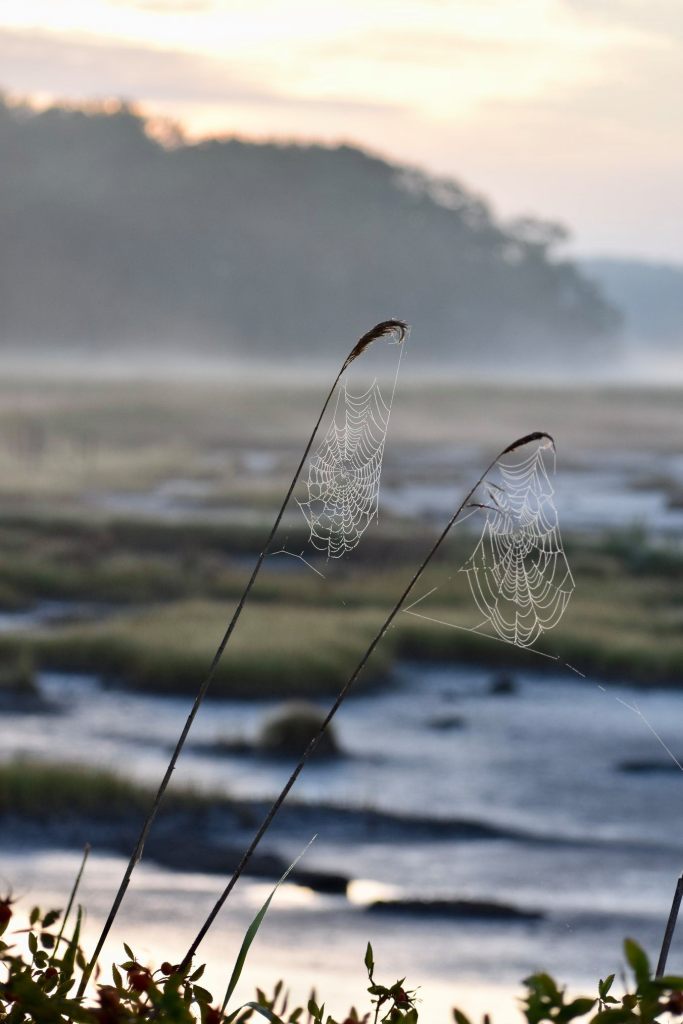
This week I feature another amazing photo by Molly Hogan. I know we’ve written about webs before, but this one caught my eye for its uniqueness. Find a detail to focus and meditate on, the punctum (See the quote below). Write a poem about this detail. Could our individual poems be put together to create the complete photograph?
In Roland Barthes’s 1981 book Camera Lucida, he introduces the concept of a photograph’s punctum, which can be defined as the sensory, intensely subjective effect of a photograph on the viewer, or as he puts it: “that accident which pricks me (but also bruises me, is poignant to me).” Barthes contrasts the punctum with the studium, which is the more general approach to a photograph informed by historical and cultural experiences. Choose a personal photograph and meditate on the specific conditions, feelings, and circumstances behind it. What do you feel and know from looking at it? Then, identify the precise detail in the photograph you are drawn to—what is it exactly? Using your senses, write a poem that centers and delves into the punctum, the precise detail. What does a detail reveal about the whole?
I chose to focus on the fulcrum that binds the web to the marsh grass.
Silk arrow, a fulcrum balance for delicate lace.
Margaret Simon, draft
Due to the aftermath (no power or internet) of Hurricane Laura, I am posting this for Poetry Friday. We fared well through the storm and have recovered for the most part. Please keep our friends in Lake Charles, LA in your prayers.
Welcome to This Photo Wants to be a Poem, a weekly poetry prompt modeled after Laura Purdie Salas’s 15 Words or Less. We invite you to write a small poem in the comments and write encouraging comments to other writers. No judgements here. Just playing with words.
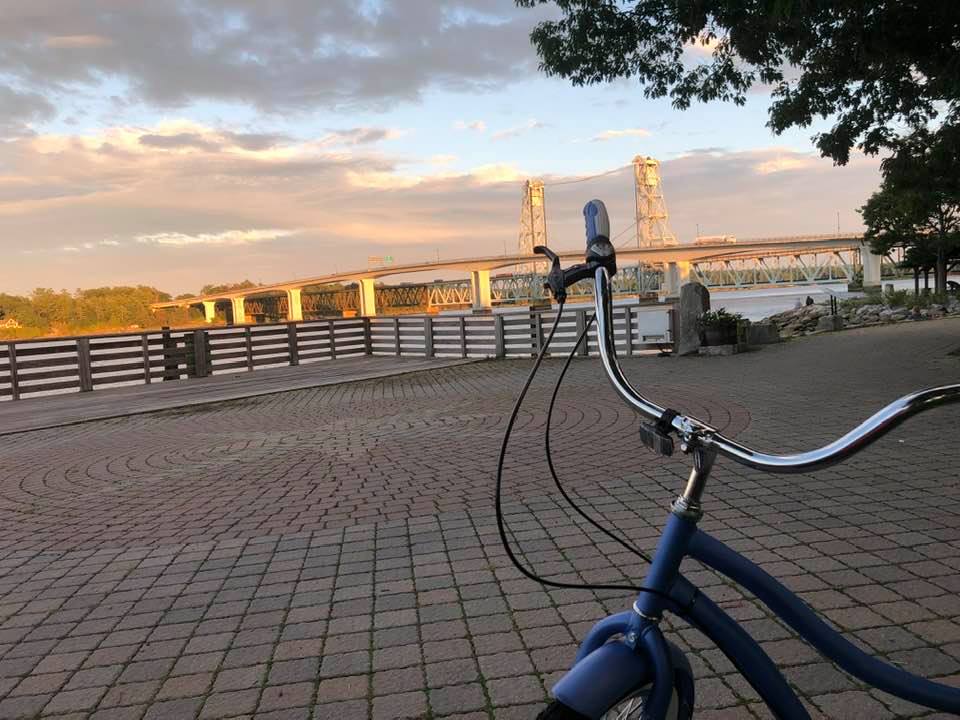
Today’s photo comes from poet Donna Smith. She lives in Maine and recently biked near the Kennebec River. Maine is a place I’ve never been, but I imagine summer is for outdoors. Not like in Louisiana where you can only tolerate short bursts outside. Donna has returned to Maine after spending some time in Pennsylvania. She is happy to be back. On Facebook she draws a squiggle and writes a poem each day. Here’s a recent one:
The Stairs
The stairs go up The stairs go down They also turn and Turn around They go from here And end up there Just when you think You know just where The stairs will lead You to a place You’ve never set your foot or face But don’t despair Don’t cry or mope The stairs mean that There’s always hope Hope for a place Of peace and love Of open doors And blue above I know it’s there And you can, too Step up, step down Keep stepping true. Then all at once You will arrive The steps lead you To full alive.
By Donna JT Smith, 8/18/2020
“Me and my bike relaxing by the Kennebec on a beautiful summer evening.” by Donna Smith
Welcome to This Photo Wants to be a Poem, a weekly poetry prompt modeled after Laura Purdie Salas’s 15 Words or Less. We invite you to write a small poem in the comments and write encouraging comments to other writers. No judgements here. Just playing with words.
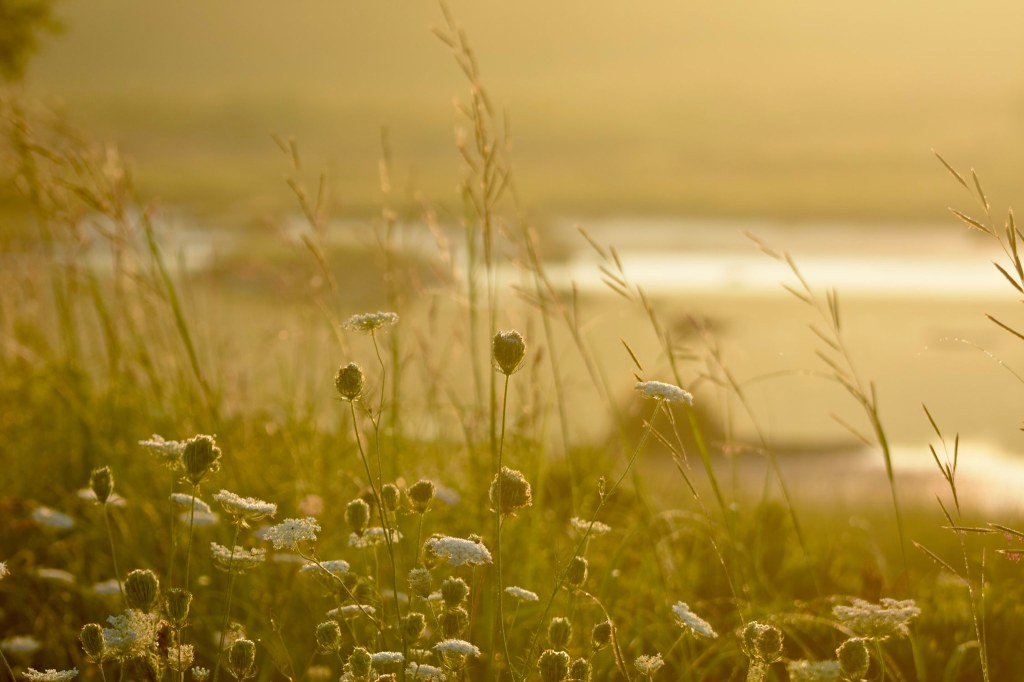
Today’s photo comes from teacher/poet/photographer Molly Hogan. She lives in Maine and recently photographed the marsh. This photo with its sepia tones attracted me. The soothing sway of nature keeps me sane these days, and I am grateful for Molly and others who post such wonderful natural landscapes.
Marsh by Molly Hogan
In this yellow light, an elegant ballet of marsh grasses shine.
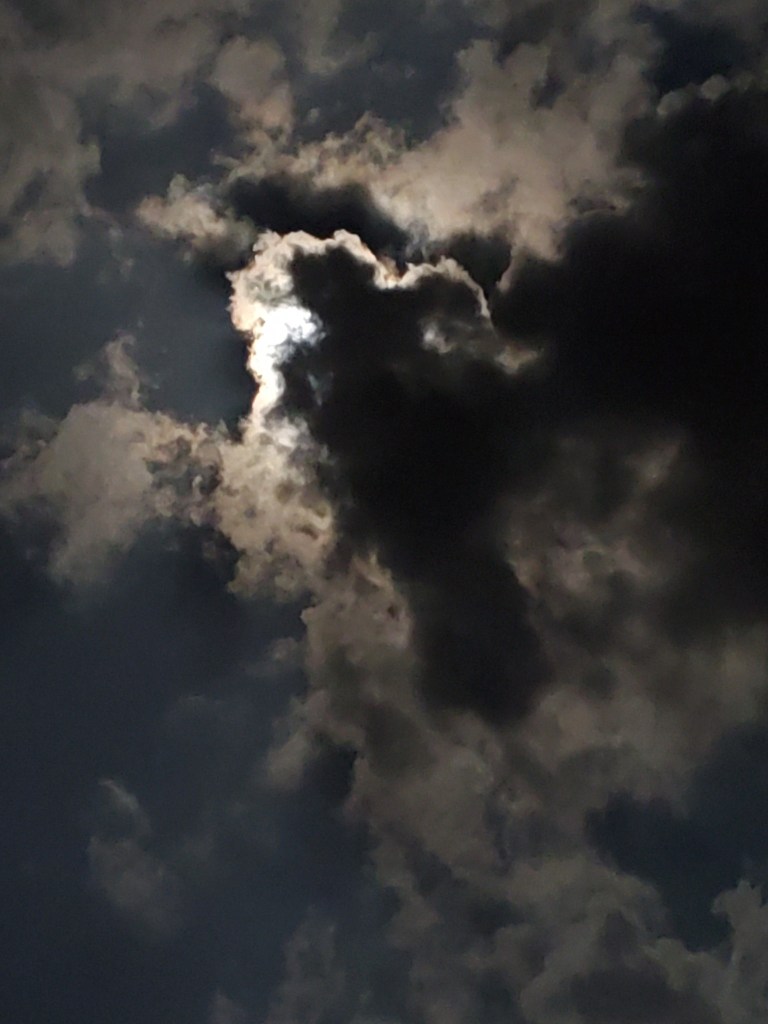
This photo is symbolic to me of our times, clouds masking light. It was taken by my brother, Hunter Gibson, on the night of the full moon. Each week I think I won’t find a photo, and something always appears. We find solace as well as mysticism in the moon.
Write a small poem of 16 words or so in response to this image. Place your poem in the comments and support a few writers with your encouraging comments. Low pressure. Open your imagination and write.
Jaded Moon by Hunter Gibson
Face your inner fright A silhouette by Master Moon Gator of the night
Welcome to my weekly photo writing prompt. Take a peaceful moment to lose yourself in words. Write a poem of 16 words or so and place it in the comments. Write encouraging words to others by commenting on their poems. This week we are writing with the hashtag poeticdiversion that Molly Hogan started on Twitter.
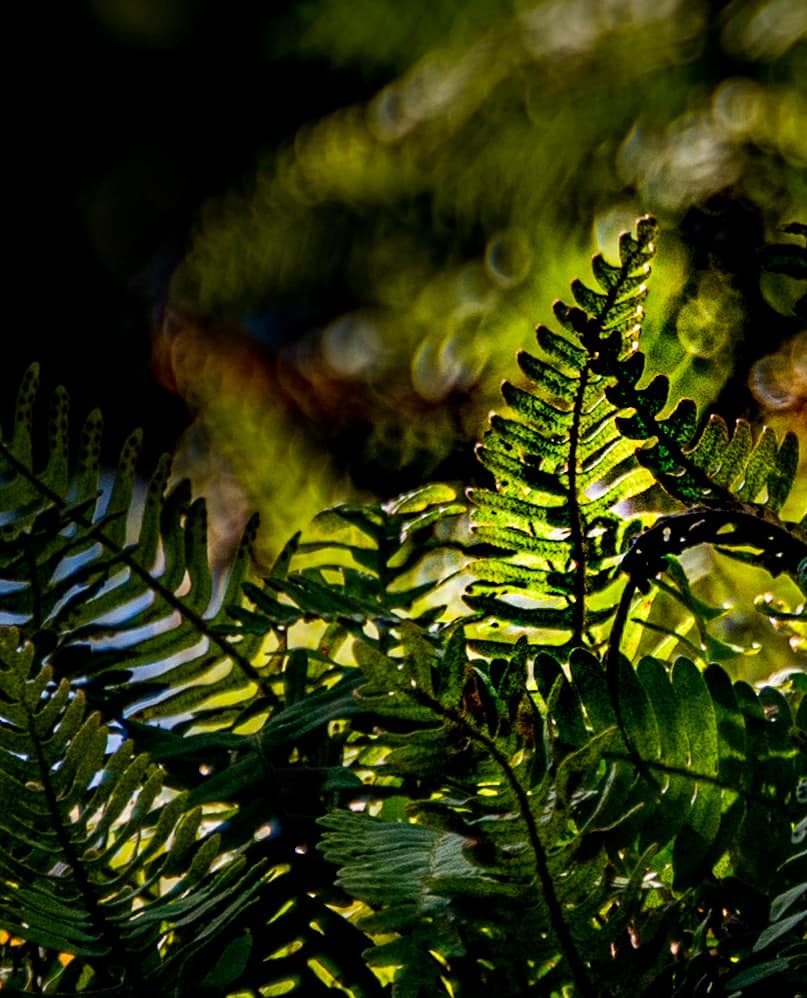
This week’s image comes from my friend and neighbor James Edmunds. James does a lot of creative work including photography. I once took a class from him about iPhone photography and learned some cool tricks. I don’t know if he took this picture with his phone, but I doubt it. James, if you stop by, let us know.
Way down south here we’ve been getting a great deal of rain lately. The resurrection fern loves rain, and it pops up in beautiful green carpets on our trees. In nature, there are small miracles like this every day.
Resurrection Fern by James Edmunds, all rights reserved
Inside the depths of fronds and rhizomes fairies twinkle & dance.
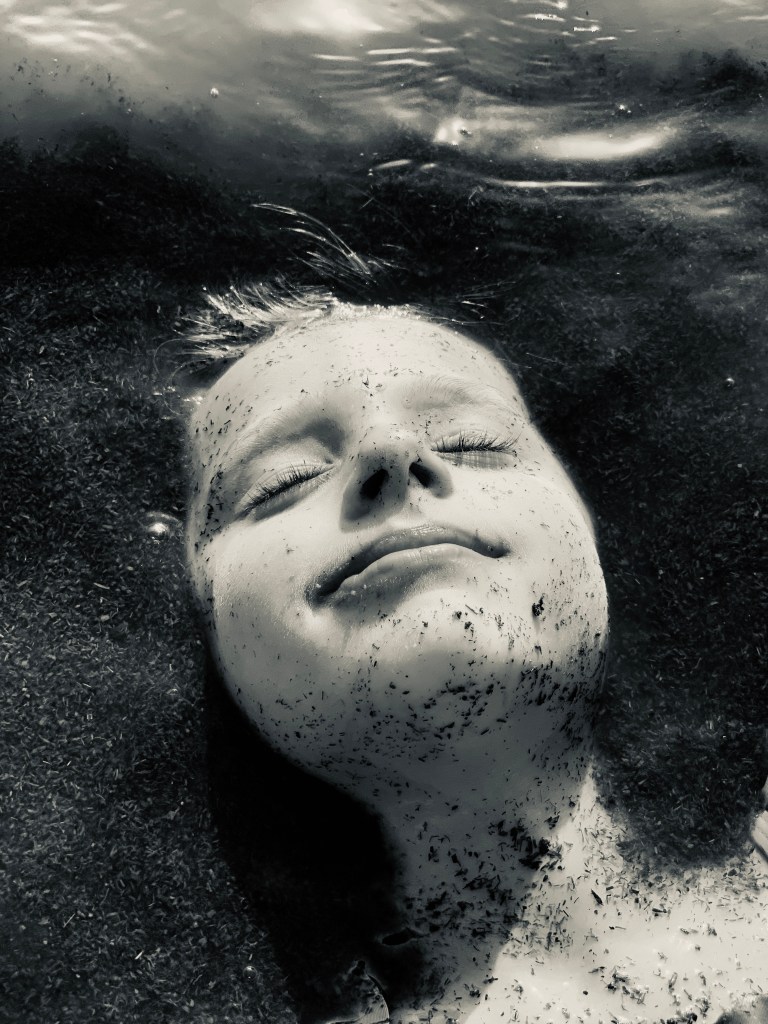
This week’s photo comes from an art teacher whose specialty is photography. Jennifer Graycheck (click to read an article I wrote about her family for our local newspaper) is a young mother of two adorable children. Her talents at capturing and sharing her experiences add light and love to my social media feed. Recently her family took a beach trip. That’s an ironic statement when you live in South Louisiana. Our coastline is marshy with spider-leg inlets cut to allow for boats carrying fish and oil. Not many beaches to speak of.
Jennifer’s family took a Sunday day-trip to “The Point.” Cypremort Point is a local state park where many families have camps. The man-made beach is a far cry from white sands of Alabama and Florida. But Jennifer and her family did not let that stop them from having a safe and fun day together.
Lorelei’s mud bath by Jennifer Graycheck, all rights reserved
This photo of Jennifer’s daughter, Lorelei, may take you somewhere else, and that’s the point. Be creative. Imagine you are the child. What is she dreaming? Write a poem of 16 words or so. Be sure to comment on other writers with encouraging support.
Cajun Queen senses sun in her soul becomes one with the mud whispers Follow me forever.
I miss traveling. I usually have a trip or two planned for the summer. A few summers ago my husband and I took a trip to the Pacific Northwest. The beaches there are very different from Gulf Coast beaches. For one thing, the temperatures are colder. With our heat rising to 95 or more degrees these days, I wish for the cool breeze of a Northwest beach.
My friend, JoAnne Duncan lives in Washington state within driving distance of beautiful mountains and beaches. She’s traveling near Seattle this week. She’s been posting some gorgeous photos of her trip on Facebook. This one just begged to be a poem.
Feather at Sea by JoAnne Duncan.
I am a feather tethered to blue stones tossed from sea. Notice me before I fly.
Margaret Simon, draft
Take a minute to look outside at this image, look inside to your heart, and put down a few words, 16 or so, in the comments as a small poem. Please encourage other writers with your comments. Poetry is balm.
Irene Latham is as charming and lovely in person as her poems are on the page. Her new release This Poem is a Nest opens with an invitation. In Part I, we read the poem “Nest.” This seedling is divided into 4 seasons of 3 stanzas each of free verse poetry. “Nest” has everything I love in a poem, lyrical language, alliteration and onomatopoeia, imagery of nature, and inquiry that touches my heart, “Won’t you climb inside?”
Nest is the seed poem for Irene’s creativity that grows into day poems, before & after poems, calendar poems, color poems, animal poems, feeling poems, and just when you think she could not possibly find any more poems in Nest, there is word play, alphabet, and ars poetica.
With all of these nestling poems, you would think the poems would lose magic, lose originality, or become repetitive, but the experience of them is quite the opposite. Each new poem needs to be held for a minute or two. Each one reveals a surprise, all the way to the last poem:
Last Poem
birdsong nothing more
Irene Latham, This Poem is a Nest
The end papers of this wonderful book offer writing advice to budding poets. Irene gives tools to me and teachers like me who want to inspire students to write. The art of “found poetry” has been elevated to “nest-poem” or “nestling.”
I wanted to try it out, so I went to a poem by Barbara Crooker that I had cut out and glued into my journal. “How the Trees on Summer Nights Turn Into a Dark River.”
Step one: Circle words that appeal to you. I circled drizzling, air, careening.
Then I looked up careening to check my understanding of the word. “move swiftly and in an uncontrolled way in a specified direction.”
Step two: Choose a subject. I thought a lot about this. Air, careening…a kite.
Unlike found poetry, nestlings do not have to follow the order in which you find the words, so I went back and grabbed “reach” from the first line, which led me to “wonder” and “for,” finishing my image of a flying kite.
Image poem created on Canva.
Now as I look again at the nestling I created, I think it would be better like this:
How to be a Kite Careen with drizzling air Reach for wonder.
By going through this process, I realize how much work went into Irene’s book of poems. Writing nestlings is a fun challenge. I had to use critical thinking skills that are imperative to teaching students to write. I encourage you to try writing nestling poems. Thanks, Irene!
This photo is from the G. Eric and Edith Matson Photograph Collection, a set of 22,000 glass and film photographs and negatives taken in what was then called Palestine (present day Israel and the West Bank) from 1898 to 1946. The picture is part of a “Bedouin wedding series” but the caption on the negative just reads, “The bride.” That’s it. The Bedouins roamed the region as nomads, so there are any number of places the photograph might have been taken over the course of two decades.
Usually for the photo prompt I find a photo of my own or one from my Instagram or Facebook feed, but today I am using a photo from the Library of Congress. I signed up for emails from the Library of Congress blog, and this recent post made me want to know more.
Please write a small poem of 16 words or so in the comments and comment on other poems. I “found” a poem on the blog post. Maybe that’s cheating…
Still, eyes. Those hands. This woman knows work. She is there gazing into the future hoping…
Margaret Simon lives on the Bayou Teche in New Iberia, Louisiana. She is a retired elementary gifted teacher who writes poetry and children's books. Welcome to a space of peace, poetry, and personal reflection. Walk in kindness.