Feeds:
Posts
Comments

Archive for the ‘Teaching’ Category

Please use this button on your site for DigiLit Sunday posts

Please use this button on your site for DigiLit Sunday posts

Unlike my outside plants that are dying from lack of water, my professional learning network (PLN) is healthy and growing. I have been nurturing my PLN this summer. I joined a group of teachers from around the states discussing writing about reading. We started a Voxer group.

I am totally new to Voxer. It’s novel and fun. Voxer is a phone app that acts like a text message or walkie-talkie. Within the conversation, you can leave a voice or text message. I love hearing the voices of my friends as we ruminate about the process of writing about reading. Now that school has started I am able to use this group to bounce ideas off of and to ask for help and guidance.

This week one of my students wrote about the book he was reading. I wasn’t familiar with the book, so I just sent a message in the Voxer group asking for help in analyzing his reader response. The help came immediately and we used Google docs to communicate further about the writing. How cool is that?

With another group, we’ve started a conversation about student blogging. We met yesterday by Google hangout. We are planning to connect students throughout the year using kidblogs. The connections are still in the planning stage. If you’d like to connect your middle grade kids (grades 4th-6th), let me know.

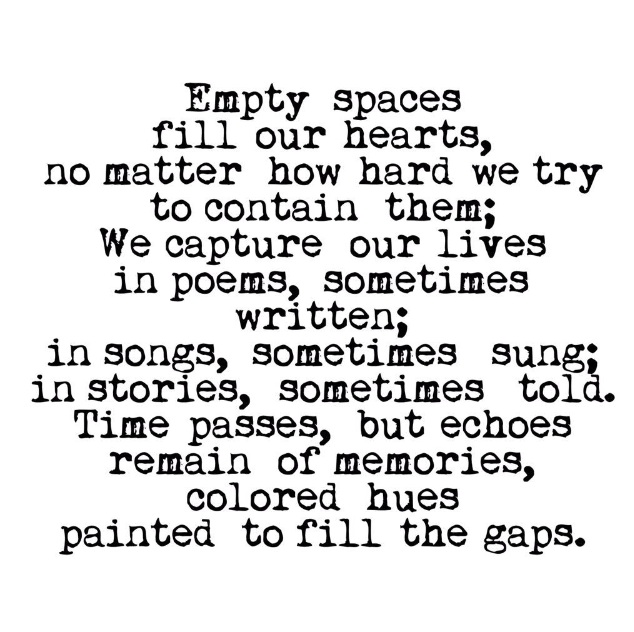
My PLN is becoming a group of friends. I can call on them with any kind of situation with my students. Last week I received many messages of support and love about the death of a former student. This meant so much to me. Kevin Hodgson responded with a poem. He posted this on Twitter.
Kevin Hodgson

Kevin Hodgson

My digital world is healthy and alive. We are working together to make positive choices about our work with kids. Julianne Harmatz is the pro who can connect you with our Voxer conversations. The Twitter hashtag is #WabtR. This is not a closed community. We are open to new friends, new ideas, and new connections.

If you have a digital literacy post, please link below.

Read Full Post »

Join the Two Writing Teachers blog for Tuesdays Slice of Life Challenge.

Join the Two Writing Teachers blog for Tuesdays Slice of Life Challenge.

Gifted students visit with Mr. Al.

Gifted students visit with Mr. Al.

I tend to be an optimistic person. I look for the good in everyone and every day. But sometimes life has other plans. Sometimes we just have to weep.

On the day school started, August 7th, one of our gifted students collapsed. She died two days later. This was one of those girls who was always laughing. She had a cheerfulness about her that was contagious. At a friend’s house after a sleep-over (and probably lots of laughter), her heart stopped. No explanation. The doctors suspect that it was a syndrome that occurs in athletes. Lauralyn was a normal 12 year old girl. She was not on the basketball court. It doesn’t make any sense.

With my gifted colleagues, we attended the funeral home. Kids were all around in purple shirts and purple ribbons. Since purple was her favorite color, her school had decided that Friday would be a day dedicated to her memory. There was a banner draped over a table celebrating that Lauralyn’s organs had been donated.

In between the sadness, students found hope. Amidst the loss, there was a gift of life.

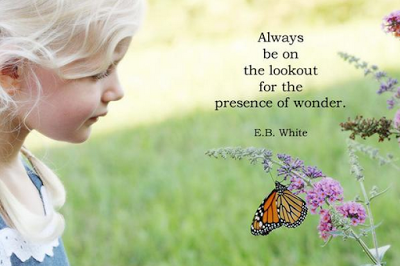
I started a blog on kidblogs for my students. For now it is private. (I would welcome connecting with other classes, though.) I’ve decided to post a quote of the week. My class theme is “Mrs. Simon’s Sea,” so I’m calling it “Snippets of the Sea.” Carol Varsalona’s inspirational images make great snippets. Last week I used the quote from E.B. White and this image Carol posted.

Childhood Wonder by @journeynorthed

Childhood Wonder by @journeynorthed

I think it is saying don’t ignore your curiosity. And to explore and discover new things. So if you go on a hike or a walk in the park try to look at the world around you. Most likely there are things you haven’t seen before. You just didn’t take the time to look. Like trees, flowers, and even places that you never even noticed were there!–Emily

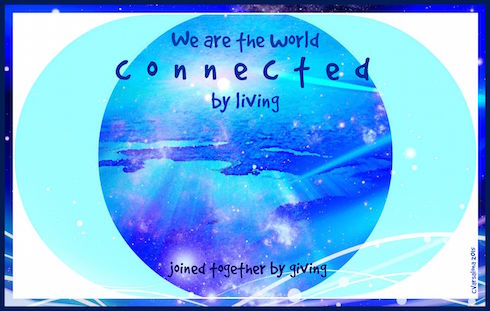
This week I have posted this image by Carol along with a video of Michael Jackson at the 1993 Super Bowl singing “We are the World.”

We are the World

I’ve asked my students to write a response to the snippet in the comments. I want to be intentional in making my students think about wonder, hope, and kindness. We don’t know how long we are here on this earth. We should turn each day into the sparkle of a child’s eye, the hope in a rainbow, the kindness of a teacher’s smile.

Read Full Post »

Please use this button on your site for DigiLit Sunday posts

Please use this button on your site for DigiLit Sunday posts

wonderopolis logo

Wonderopolis is a wonderful site for nonfiction reading. Last year I used the site once a week with my students. I picked out the “Wonder,” and created a Wonder worksheet for the week that included other language activities. While this method worked well for me as a teacher, it wasn’t so great for my students. They enjoyed the site, but they hated the other activities. And why not, they were teacher-created. They became a burden to them rather than a learning tool.

This summer I was thinking about how to change this plan and still take advantage of the Wonderopolis site. I read this post by Tara Smith. She talked about choice. She gave her students a form to fill in with a Wonder of their own choice. What a great idea!

Last week I started classes with my gifted students. I introduced the idea of Wonder Wednesday and choosing their own Wonders. For my birthday (on Tuesday), Lani had given me a small rubik’s cube. One of my boys, Tobie, couldn’t stop playing with it. He decided his Wonder would be about how to do a rubik’s cube. He found the question on Wonderopolis! Then he watched a video. He got other students excited about learning. (I could say he distracted others with his enthusiasm.)

cube-427897_640

After watching the excitement spread, I decided to give my students the option to present their Wonder learning using technology. I will present different tools in the coming weeks: Piktochart, Canva, Emaze, Powtoon, Animoto. One presentation each nine weeks will be required.

Teaching a variety of grade levels has its challenges. Wonderopolis has given me a way to differentiate nonfiction reading, empower students through presentation, and generate enthusiasm for learning. Here is a link to my student form.

Please join the DigiLit Sunday Round-up with your link.

Read Full Post »

Please use this button on your site for DigiLit Sunday posts

Please use this button on your site for DigiLit Sunday posts

I don’t think Sunday morning is the time to launch into a research project, but when I typed “Graphic Intelligence” into the title line, I wondered, “Is this a real thing?” A quick search in Google turned up a book with the title, “Graphic Intelligence: Possibilities for Assessment and Instruction” by Barrie Bennett. Looks like this is a book all about graphic organizers from the least complex to the most.

My use of the term is not related to graphic organizers. What I am questioning early this morning is the presence of an intelligence for graphics. Not the use of a graphic organizer. In my field of gifted education, I am always trying to think outside the box, away from constraints like graphic organizers and more toward creativity. Creative problem solving leads students to deeper thinking at a higher intelligence level. The revised version of Bloom’s taxonomy puts Creativity on the top rung. Create means to put elements together to form a coherent whole; reorganize into a new pattern or structure.

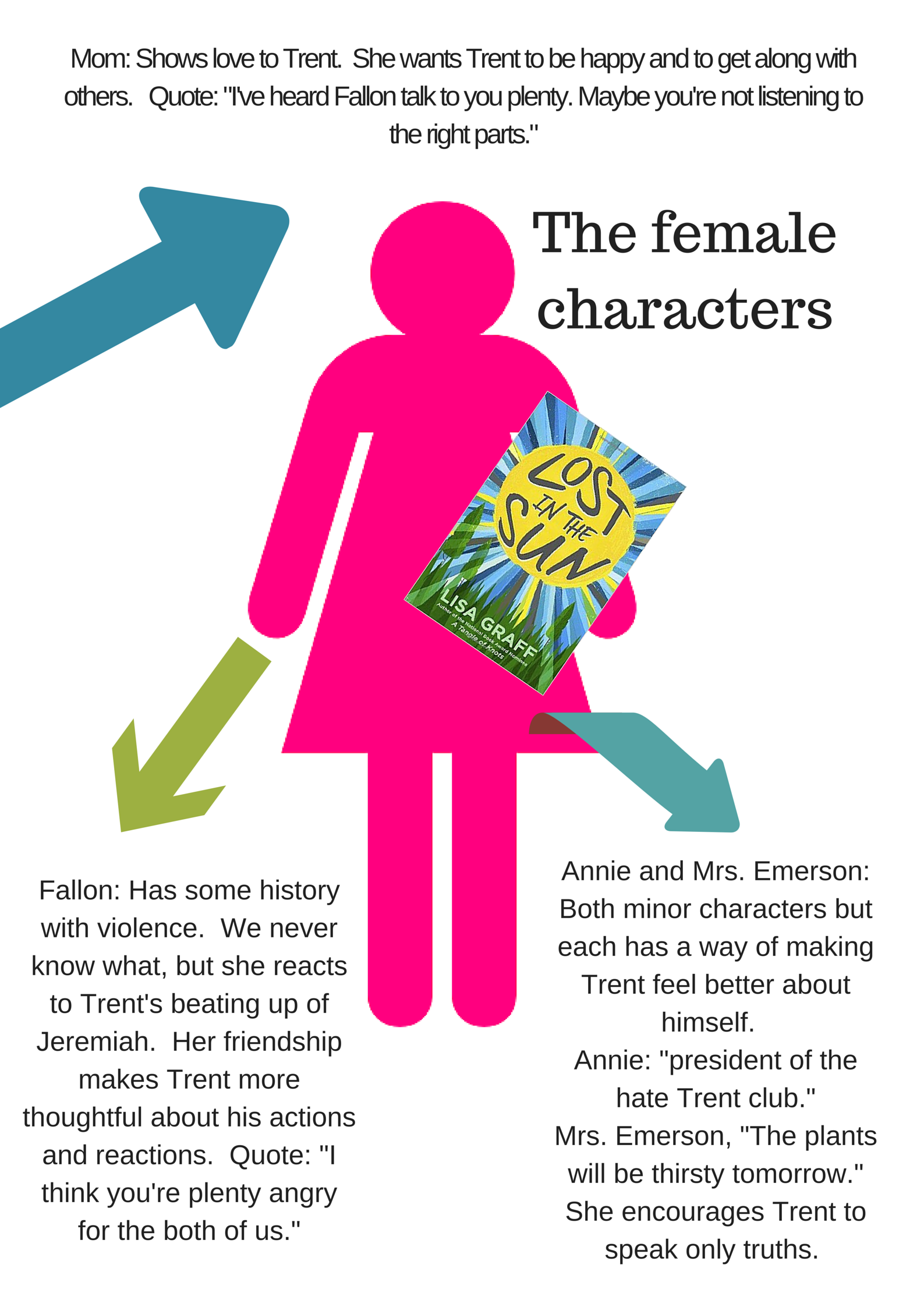
As I continue to explore writing about reading with an online group of teachers, I decided to try out using Canva to express my thoughts. Canva is a poster-making app. The site provides numurous images (many of which cost $1 to use). You can also upload your own image. I decided to use simple images and arrows. I don’t think my canva is a particulary brilliant construction, but I noted during the process that I had to synthesize my thoughts about the characters.

I could have used the well-used and time-tested Venn Diagram to compare the female characters. But if I give my students this tool, they don’t have to think beyond the comparison aspects. If I ask them to define characters in a new way using a graphic of their own making, I have now added the element of creativity to the assignment.

When I start working with my students in the next few weeks, I will show them the graphics I have made for response to reading. I hope to encourage and motivate them to try creative graphics to represent their thoughts about reading.

The female characters (1) copy

Please add your links to digital literacy posts with the button below:

Read Full Post »

Join the Two Writing Teachers blog for Tuesdays Slice of Life Challenge.

Join the Two Writing Teachers blog for Tuesdays Slice of Life Challenge.

Today is my first day back to school. The kids come on Friday. Ready or not?

This year our gifted team plans to focus on heroes. For one of our Summer Poem Swaps, Tabatha Yeatts sent a prompt to write a poem from the words of someone. I chose to look at Malala Yousafzai’s words with the theme of heroes in mind. I found this image and quote.

Malala-yousafzai

One child
can step by step
walk across stones
wobble, fall, rise
to hope.

One teacher
can line her shelves
with books, voices
pointing the way
to climb.

One book
can open young eyes
to injustice, prejudice, pain
so they can build a road
to peace.

One pen
can move a single hand
to create new lines, new words
new art, making a change
to the world.

–Margaret Simon

Who is your hero? Can you write a poem off his/her words?

Read Full Post »

Please use this button on your site for DigiLit Sunday posts

Please use this button on your site for DigiLit Sunday posts

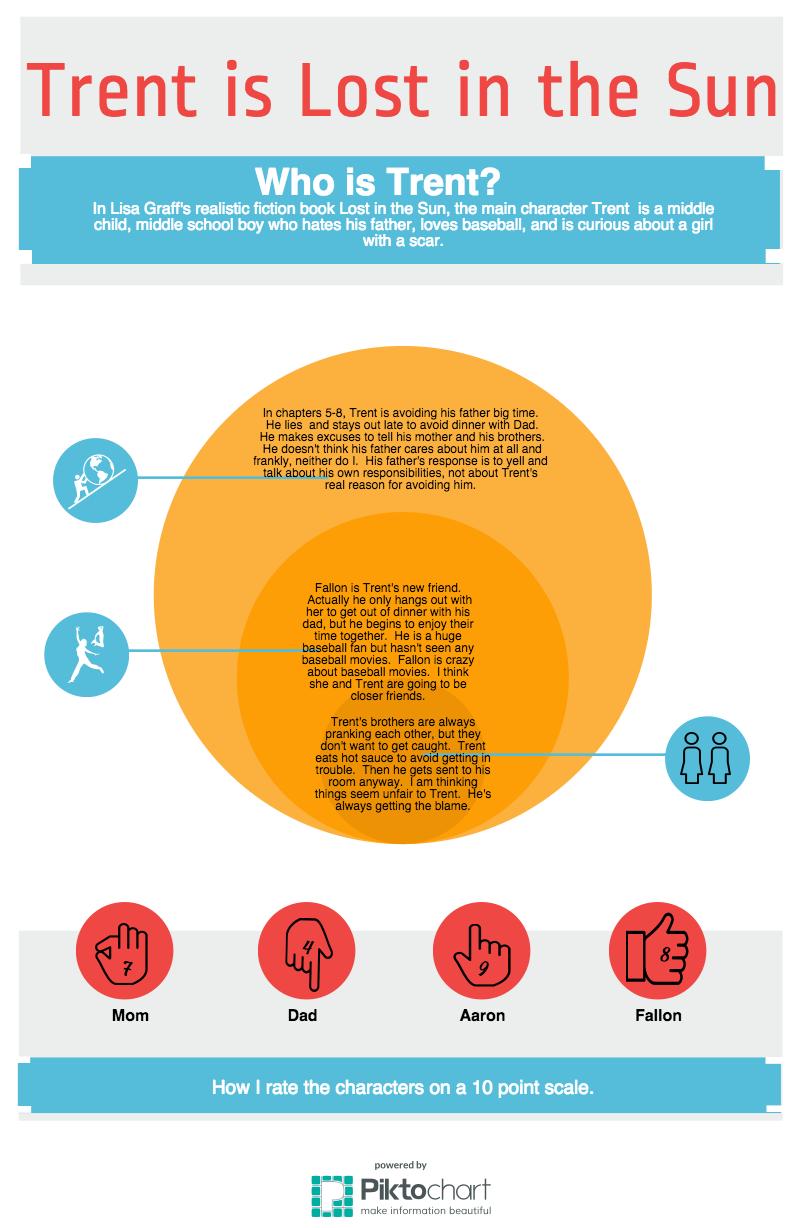
Once again I am playing around with apps to use with my students. For my reader response this week with my virtual book club, I tried using Piktochart. I have mixed feelings about the results.

Piktochart is designed for business presentations that include data. Data is not my thing. Reading and writing is. So how could I re-use this program to fit in with digital literacy?

I chose a report template from the few free ones provided. Adding in a text box was cumbersome. We have gotten so accustomed to apps reading our minds. The text box never appeared where I wanted it to go, so I struggled to move it and arrange it. I don’t think students would have as much difficulty. They tend to be more savy with a mouse.

The part I did like about this process was the motivation to graphically design the ideas. Design is becoming a big part of digital media. If we tap into design with our students, I believe we add another element to their learning and processing. Making a product to represent their response to reading is a way to authentically create digital media. I may be wrong, but I think it would take some of the chore out of reader response. I still believe strongly in choice, so Piktochart will go on my list of choices for responding to reading.

Lost in the Sun- Trent

Link up your digital literacy posts:

Read Full Post »

Please use this button on your site for DigiLit Sunday posts

Please use this button on your site for DigiLit Sunday posts

A few weeks ago I wrote about a virtual book club I joined led by Julianne Harmatz. We read A Handful of Stars and wrote using Google docs. The model worked well, so subgroups have broken off to read other books. My group is reading Lost in the Sun by Lisa Graff. Resources are popping up for teaching reading that I have not tuned in before. Something about doing what you ask students to do makes the teaching more authentic. If I write a page full of sketch notes about a book and show my students, they see that this is a practice of a reader, not an assignment by a teacher. Julianne started a padlet, and we are still adding to it. This padlet will be a go-to for me this year. I hope others will continue to add to it and build more and more resources for writing about reading. Using Google docs for teaching is new to me. It’s so easy and natural, like writing a note to a friend. In the document, we notice and note things about our reading. Everyone responds differently, and that is the beauty of it. Because I teach individual students in gifted, the accessability of a Google doc will allow them to communicate about reading beyond the walls of our classroom and our school. Using the #WabtR, we can continue the conversation and perhaps match up students book by book. The possibilities are exciting. If you are interesting in joining in on this virtual book club fun, let me know. Link up your digital literacy posts:

Read Full Post »

Discover. Play. Build.

Ruth Ayres invites us the celebrate each week. Click over to her site Discover. Play. Build. to read more celebrations.

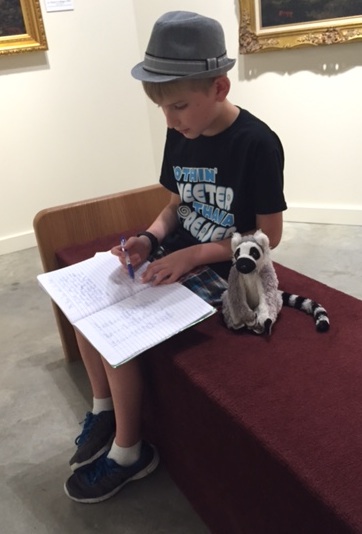
Hayden reads his story to Jack, the lemur.

Hayden reads his story to Jack, the lemur.

This week I am celebrating some great new writers. They attended Write Your Way writing camp with me. Above you see Hayden reading to Jack, the lemur. Jack took a tour of Main Street with us and especially enjoyed frolicking in the Bayou Teche Museum. He sat still long enough to listen to Hayden’s story about Al Hirt and Blue Dog.

Al Hirt and Blue Dog were getting ready for a wedding. Al was wearing a tuxedo and Blue Dog combed his fur. They were about to leave Al’s apartment .But before they could they heard a trumpet. They wanted to know where it came from. They looked and looked until they found it. A trumpet rested there. “Blow me and I’ll take you to the wedding,” it said. They were confused. But Hirt blew it anyway. They were then at the wedding. The End. –Hayden

Inspiration in Books along the Teche

Inspiration in Books along the Teche

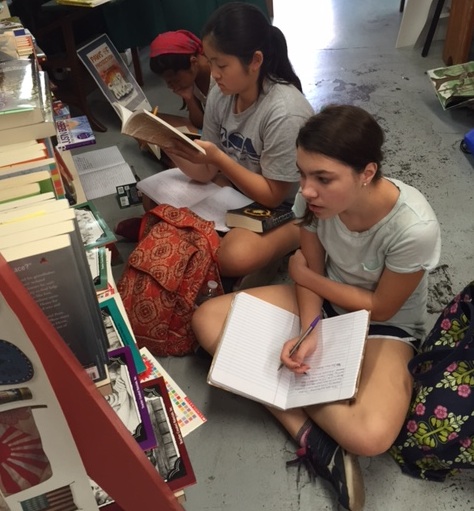
Inspiration for writing was waiting all along Main Street. We stopped in at the independent book store, Books along the Teche. Emery found a line in The Book Thief that jumpstarted a whole new story for her. I hope she will keep writing it. That’s the thing about writing camp. It’s always too short. We set up a blog on kidblog that I hope the kids will use, but I know how summer activities take over and then school will start again. It’s hard to keep their focus once you release them.

Yesterday, I asked my writers to tell me their favorite part of writing camp, what surprised them, and how they will continue to practice their writing. The blog, writing in different places, and meeting new friends were top favorites. The surprises included “I didn’t think I was a poet,” and “I usually plan out my writing before doing it, but I was able to write a story and I don’t know where it’s going.”

We ate lunch yesterday at Victor’s cafateria, a favorite place for Dave Robicheaux (James Lee Burke’s MC). The clerk who checked us out asked me, “Are you a writer?”
I answered, “Yes.” I asked her to ask the students that question. Each of them said, “Yes, I am a writer.” I celebrate young writers today.

Read Full Post »

Poetry Friday round up is hosted by Kimberley.

Poetry Friday round up is hosted by Kimberley.

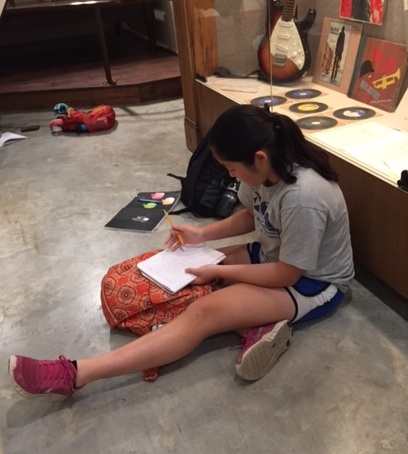
writing in the museum
This week I have had the privilege to host a writing camp for kids. I have a small group ranging in age from 10 to 17. I have taught many writing camps over the years, but this is the first time that everyone there is truly a writer. I feel like my job this week has been to open up a faucet and watch the water flow. They just know how to do it.

Since I am holding the camp at a school within my church on Main Street, I decided that each day we would venture out to places close by to write. We have written in a bakery/gelato shop, an art gallery, a museum,a church,  a bookstore, and a cafe.

One activity I enjoy doing with young writers is ekphrasis, writing to art. We are holding our meetings in the fine arts building. The art teacher is a folk art collector.  She has left parts of her collection in the building for art inspiration. We used it for writing inspiration. Emery wrote this piece to a painting of a woman holding paint brushes fanned out over her face. The insight of this 13 year old is amazing.

George said that he could paint anything. He said that he could even paint me. I protested, but he insisted. I put my dirty blonde hair into a messy ponytail, my bangs fell to the left side of my face. I asked if there was any way to hide my face. He said,”Hold these paintbrushes in front of your face.” He handed me his extra brushes and I fanned them out. I put my hand to my cheek, for I could feel myself blushing. When he told me he was done, I took a look. I found a beautiful girl in black and white. She had two sides of her face, one light and one dark. The darker side showed where I hid my blush. The lighter side showed my blemish free skin. I saw a beautiful girl with insecurities, hiding behind paintbrushes. George had shown me the way that I see myself, and the way other people see me. He told me to take it home and hang it on a wall. I hung it in my living room. Every time I saw it, I remembered my insecurities and the man who painted me. He showed me how beautiful I really am.
–Emery

In the gallery, Kaylie focused not on the art but the building itself. She found an old door to write about.

Tall wooden door.
Antique. Riddled with
cracks. Green vine,
hello, creeping up
the wall. Brick
covered by thin
layer of paint, chipping,
like the floor,
patterns of red and
gray. Ancient hinges
on door, probably
can’t even open.
Doesn’t matter–blocked
by drying racks, a
hat stand and a
dusty flowerpot. Not
to be opened, nailed
shut by a rusty bar.
Why? What are you
keeping out? Or
what are you locking in?
–Kaylie

I hope you will come back over the next few days as I publish more of their work.  This has been a pure pleasure to be with such wonderful writers.

Read Full Post »

Poetry Friday round up is hosted by Jama.

Poetry Friday round up is hosted by Jama.

In this wacky wonderful world of the Kidlitosphere, I have met so many awesome writers and teachers and teacher/writers. It becomes an even richer experience when we work together to teach and inspire students. When Leigh Anne Eck tweeted me about Skyping with her summer writing camp, I agreed, of course. I was actually flattered. As the day got closer, I worried that I didn’t have what I needed to adequately teach this workshop. We had a quick email exchange and decided to do haiku. All my books are packed away at school, so I turned to another online friend, Linda Baie. She had written a haiku every day in April and made a catalog of them all on her site. How perfect and convenient! Thanks, Linda!

These were the poems I selected and a few things we talked about.

snow shadows again
blossoms tighten their hold
no open window

(Note the use of the word shadows. Why do blossoms tighten? What does the last line tell you?)

That little boy
digs into warm earth –
wiggle in his hand

(What is in his hand? How do you know? Poets can tell you that it’s a worm without using the word.)

from snow to puddles
mother nature’s pasttime –
trees drink deeply

(What is happening? How do you know? Note the personification of trees. What is a pasttime?)

Following our discussion, we looked at this image from National Geographic. First we collected words and phrases that the students shared. Together we wrote this haiku.

Three pairs of flip-flops.
Shadows of three kids playing.
Puddle reflection.

We pulled up a Google image search of “summer days.” Each student chose their own image to write from. Sacred writing time for about 7 minutes. Then some wonderful sharing time. I had such a good time teaching from my living room, even if it was early in the morning. (two time zones)

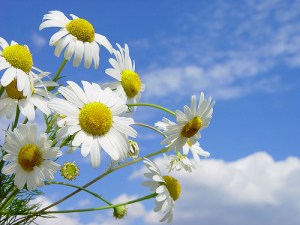
I wrote a haiku to an image of daisies. Teachers write, too, during workshop. I borrowed a line from Linda, “no open window,” and made it “open your window.” I talked about how poets get ideas from other poets.

Open your window
Summer daisies are here.
Golden sunshine smiles.
–Margaret Simon

quotes-about-summer

Read Full Post »

« Newer Posts - Older Posts »