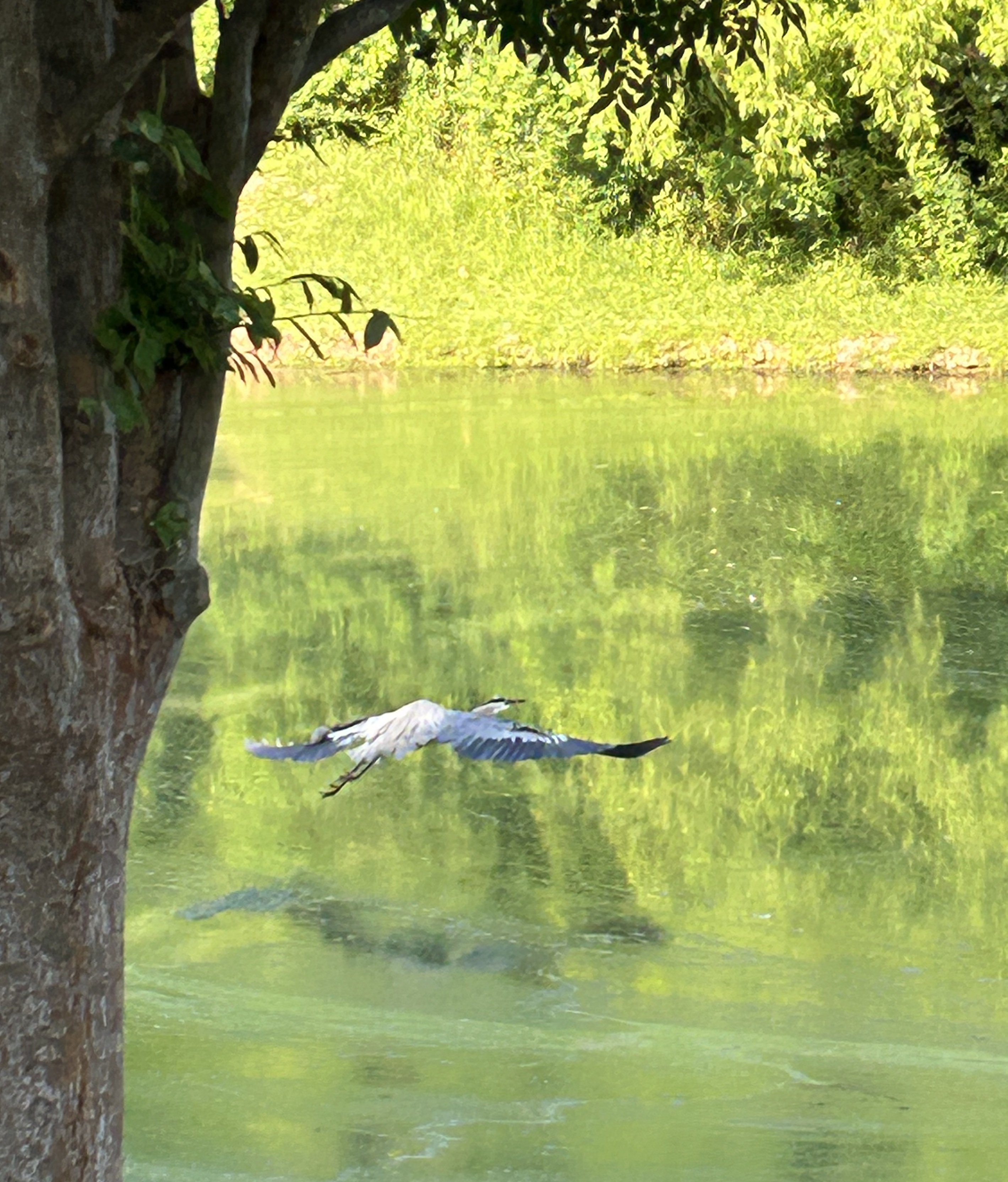
Great Blue Heron on Purple Creek, Ridgeland, Ms. by Margaret Simon
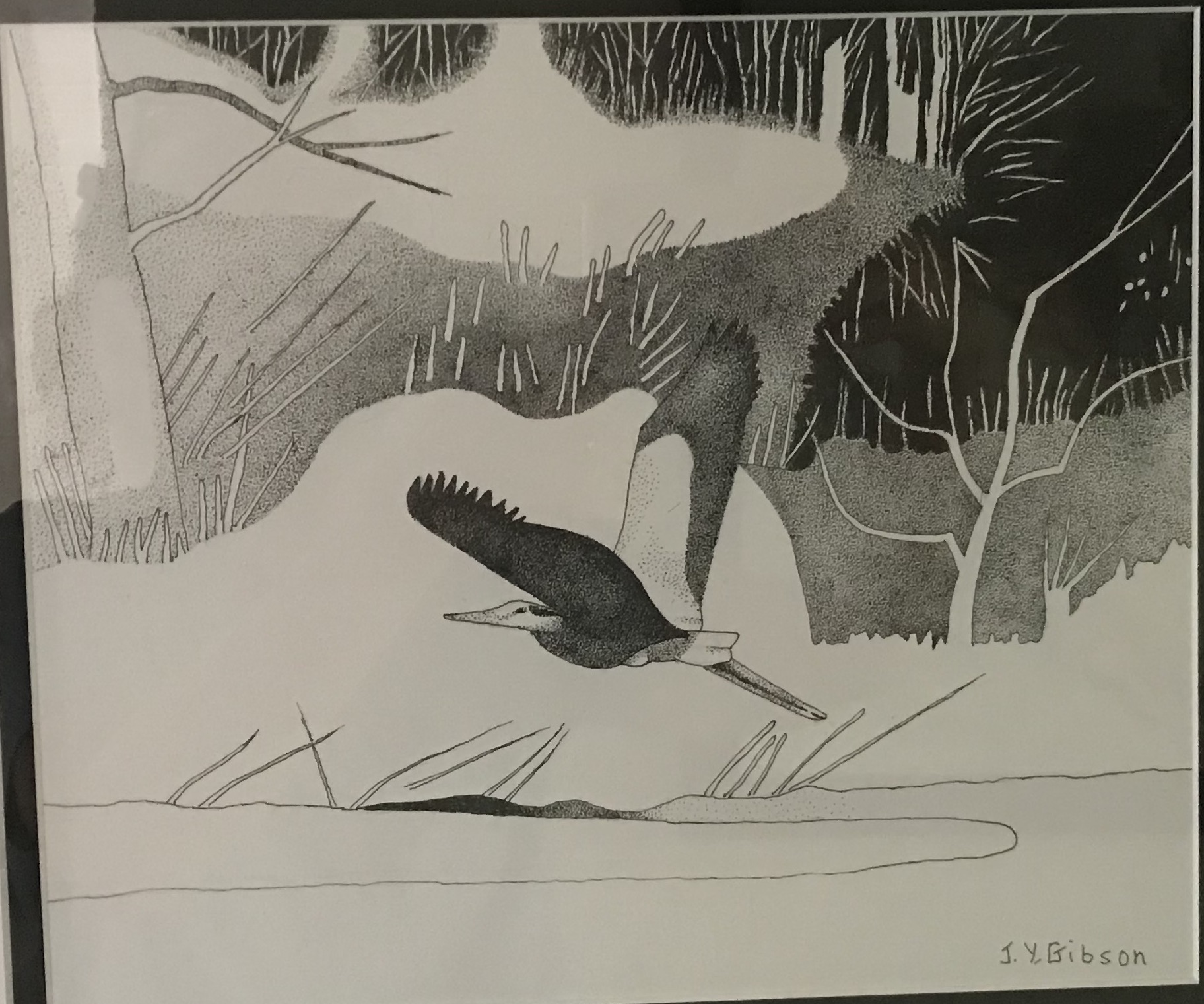
On a recent visit to Mississippi, I caught this flight of a great blue heron on my phone camera. The wingspan of these birds amazes me. They fly low across the water and perch near the water’s edge to forage for minnows and other small aquatics. This photo reminds me of a drawing my father did of a heron over the water.
Heron in Flight by John Gibson
I invite you to write today using these photos as inspiration. Leave a small poem in the comments and support other writers with your responses.
The Flight of the Great Blue Heron
Poised dawn glider Horizon solitude Regal wave to God
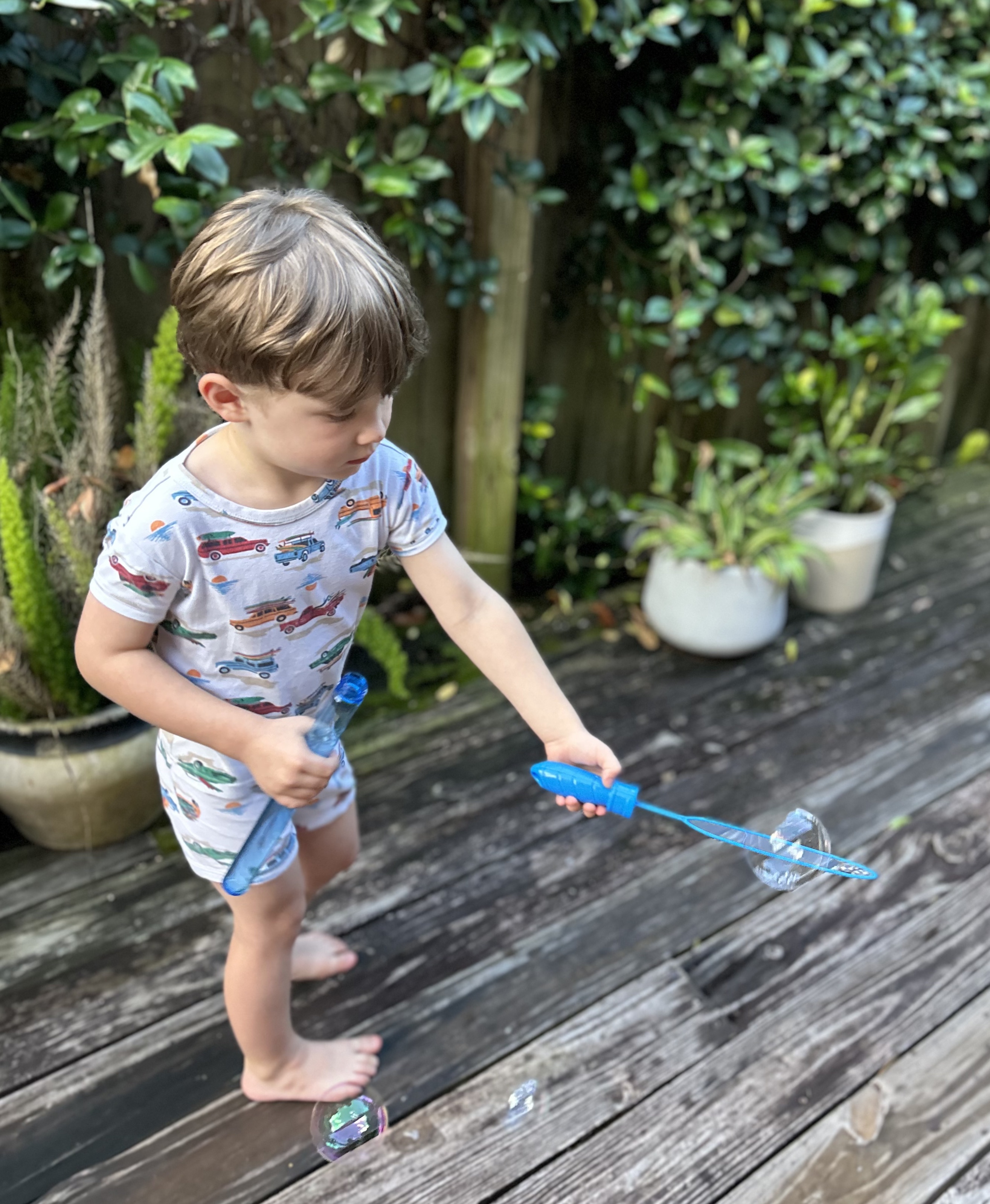
This morning I am waking up with Thomas. His mother is on a work trip, so I am being Mamére. Thomas is fascinated by bubbles. He has a bubble blower and a collection of bubble wands. Early in the morning, this is his outside play time in between bites of cereal.
I wrote 3 poems for Two Truths and a Fib, an anthology by Bridget Magee. In that book, I have a bubble metaphor poem, acrostic, and Fibonacci poem. Since another fascination of Thomas’s is numbers, I decided to write another Fib poem. The syllable count follows the sequence, 1, 1, 2, 3, 5, 8 (and so on, if you choose).
Bubbles
Trapped Air circles in the wind caught in a rainbow– A fascinating wonderland.
Margaret Simon, draft
I invite you to write a small poem today. Please respond to other writers with kind encouragement. Thanks for stopping by.
Last Friday as I read different Poetry Friday posts, I noticed the trinet form. Rose Cappelli wrote one about peonies. I have not tried this form yet, so I decided to offer it today. The form is 7 lines, 2 words in lines 1, 2, 5, 6, and 7, 6 words in lines 3 & 4.
I went on a swamp tour yesterday and dragonflies were flitting all around. Then I saw Julie Burchstead’s beautiful Facebook photo of this one, perfectly posed for a picture. Dragonflies are common insects. I found this on a dragonfly website:
“Dragonflies are similar to damselflies, but adults hold their wings away from, and perpendicular to the body when at rest. Their two sets of wings work independently, allowing dragonflies to maneuver through the air effortlessly. Their huge eyes give them incredible vision in almost every directions except directly behind them.” If you want to use some facts in your own poem, go here.
Dragonfly wings aerial lift flittering over stillness in sacred swamp summer days echoing of cicada song daring us to reflect light–shine!
Margaret Simon, draft
Please leave your own poems in the comments and respond to other writers with encouragement. Happy Summer!
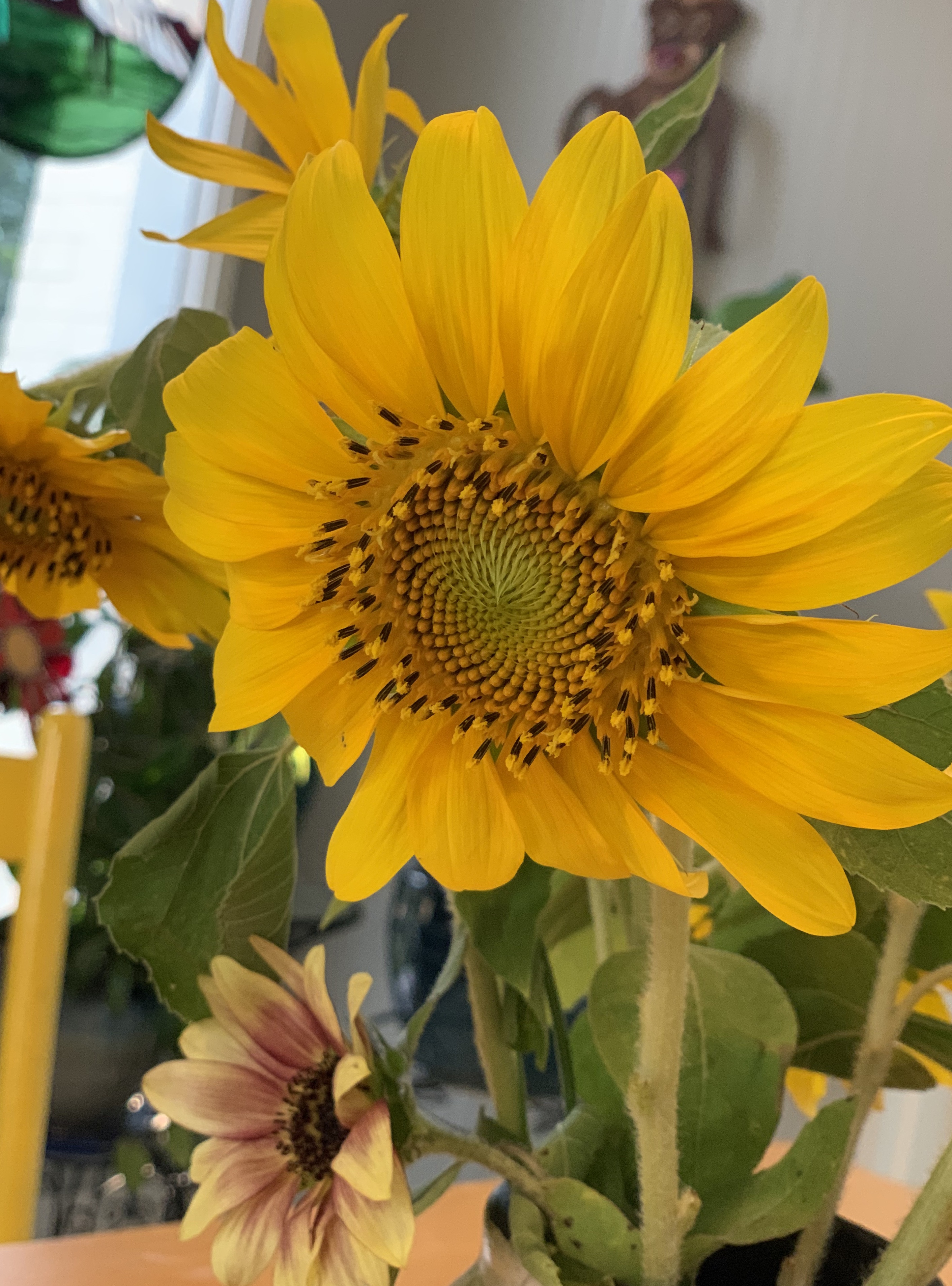
On Memorial Day, I visited a sunflower farm out in the country with my family. I brought a bucket load home and made 5 vases full. It was fun to give them away to neighbors. I kept this large one for myself. It made its happy face known in my kitchen. Since the sunflower seed head is a fibonacci sequence, I decided to write a fib poem. A fib poem is 20 syllables as each line follows the sequence, 1, 1, 2, 3, 5, 8.
Face it! I glow yellowbright on tables, in fields– Happiness grows if you let it.
Margaret Simon, draft
Please leave your own poem in the comments and encourage other writers with responses. Happy Summer!
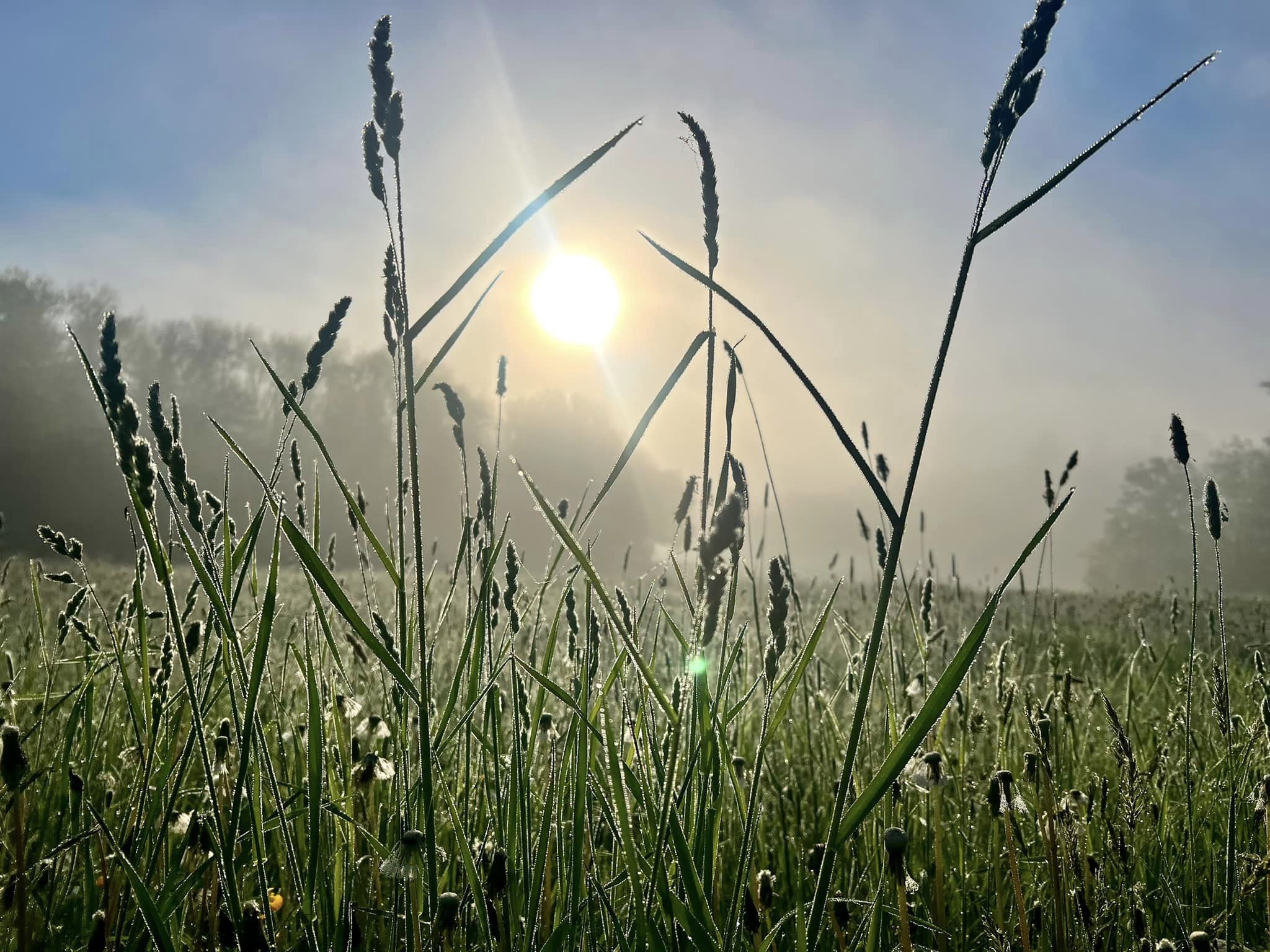
My one little word for 2024 is Peace, so when Paula Bourque posted a selection of photos with the comment “peaceful morning walk”, I asked permission to use one as a prompt. I think many of us are seeking peace at this time of the year. After the frantic slide to the end of the school year, I know that I am. I usually start dreaming of vacations, the beach, and late evenings of relaxation. Summer is a field of possibility.
Welcome Summer
You shine on through morning my waking dreams sunflower faces open to a new day sharing your inspiring light glowing fields of tall prairie grass welcoming peaceful dawn of summer
Today I practiced a nonet draft. Please add your own small poems in the comments. Encourage other responders with encouraging words. Thanks for stopping by.
I recently wrote a poem about the loss of an old oak for the sake of a new road. We discussed my poem in the Inklings writing group on Sunday. Molly texted this photo to the group. “I thought of our conversation when I was walking in a nearby town and discovered they’d cut down tons of trees as they repair the sidewalks. It made me so sad. Someone had placed these small cloth notes on the remains.”
I was considering a butterfly photo for today, but when she sent this, it hit me in my gut. We have to use poetry to resist. This itself is poetry of resistance.
The roots are sewing messages of sorrow– saying goodbye to their masters, the trunk and branches they served for years. Underground, the roots hold hands in solidarity grieving and wishing the world would understand. Margaret Simon, draft
Please leave a small poem in the comments paying homage to the trees. Remember to respond with encouragement to other writers.
Storms seem to pop up out of nowhere these days. This week we had one blow through that knocked out an outdoor light in a literal flash, Crash! What does this photo conjure for you? Fear? Curiosity? Memory? Please leave a small poem in the comments.
I haven’t written a skinny poem in a while. The rules are 11 lines, the first and last uses the same words and can be any length. The other lines are one word with a repeated word in lines 2, 6, and 10.
Storms come suddenly in the night bearing violent windswept voice bearing climate change stress Suddenly, in the night, storms come.
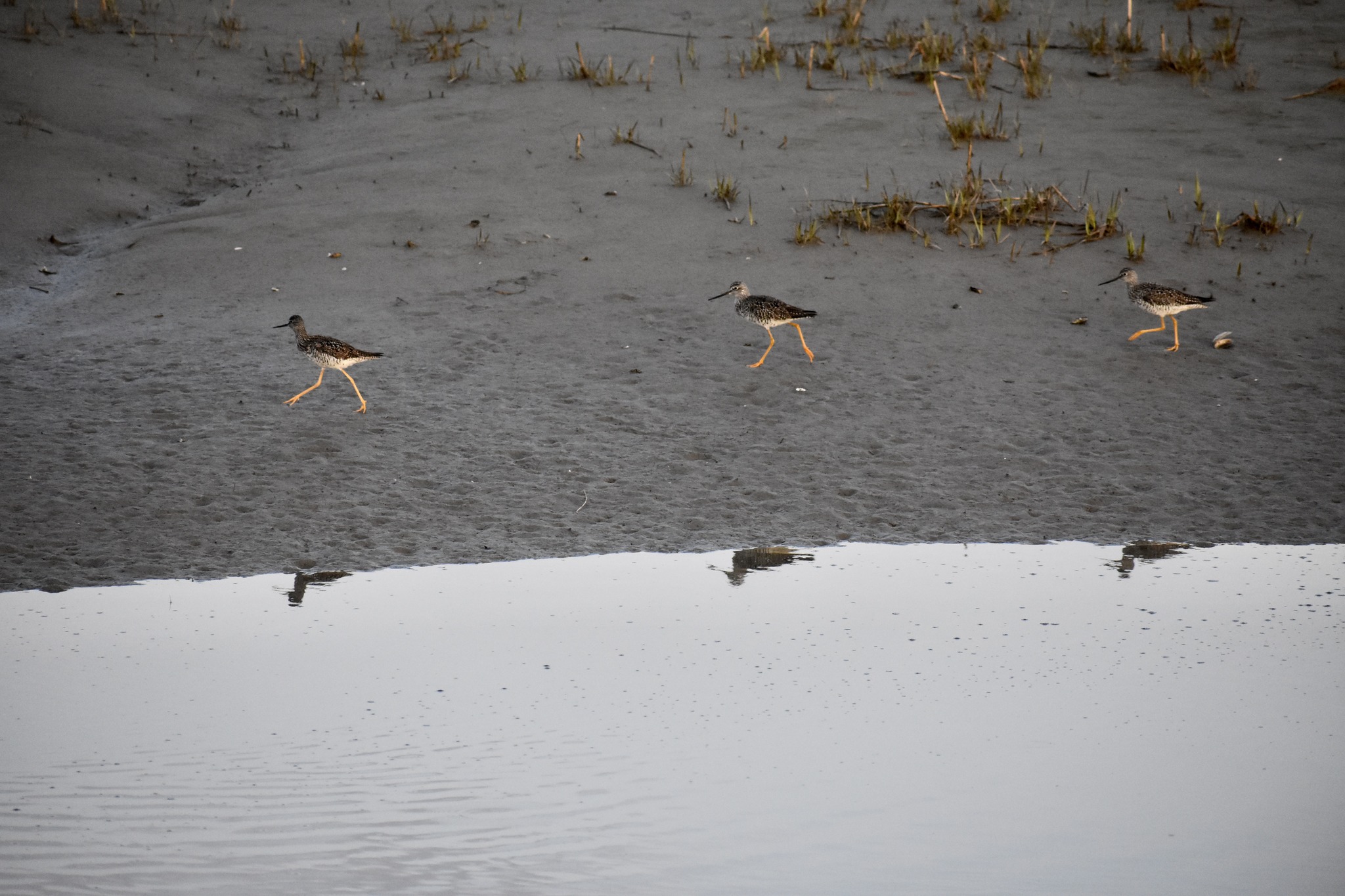
Molly Hogan captured this funny photo on a recent outing into the marsh in Maine. I love how she captured the reflection as well. These shorebirds are called yellowlegs for the obvious reason that they have yellow legs, but I think watching them skitter along the shore would bring a smile to anyone’s face.
Let this photo be your muse this morning as we get closer to slower, beach-filled days of summer. I welcome the extra time, but not the heat. Our temperatures in the south are already inching up to 90 degrees. Leave a small poem in the comments.
I’m back to my daily elfchen practice. A reminder of the form: eleven words, 1, 2, 3, 4, 1. The first word introduces the topic, the second tells what it does, the third where it is, and the fourth how it makes you feel (I go for a metaphor in this line), ending with a word of transformation from the first word.
Yellowlegs toothpick race across sandy marsh. No one wins a prize– Solidarity.
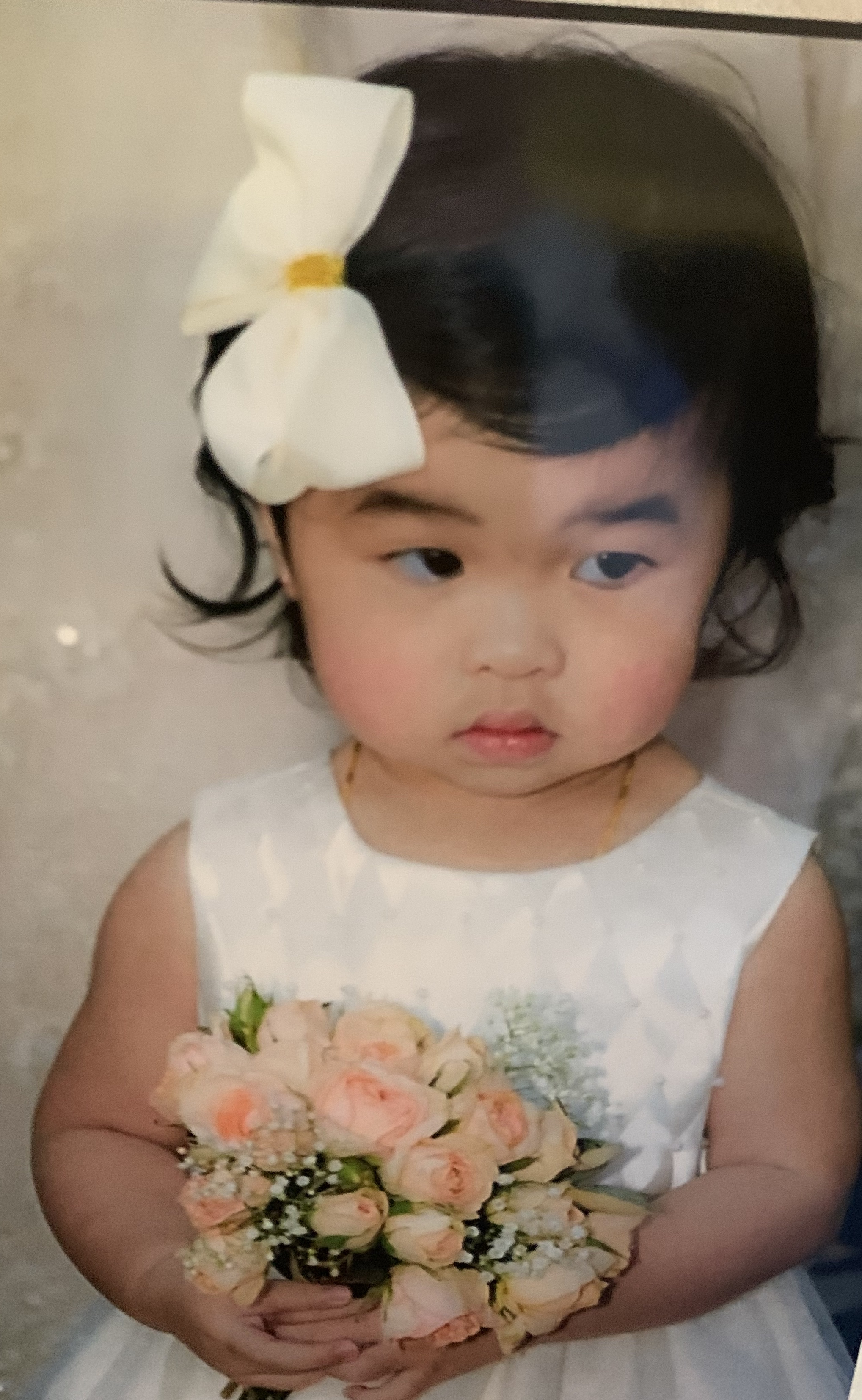
One of my students brought a small photo album to school and shared with me this photo of her as a baby, probably between 18 months and 2 years old. She was a flower girl in a wedding. There are so many things to love about this photo. The facial expression, her rosy baby cheeks, and the celebration of love. So I took a photo of the photo, which doesn’t make for great quality, but you get the idea. May Day is a time for celebrating the warmth of spring and the blooming of flowers. (I do not have permission for the use of the photo.)
Flower girl
To honor the Asian tradition, I wrote a Luc Bat. The syllable count is 6, 8 (luc bat translates to six, eight) and in the 8 syllable line, the 6th syllable rhymes. There is no limit to the number of lines, but it typically ends on the 8 syllable line.
Our song begins with praise fills temple as we raise our one voice. Flower-scented hands held together by bands of love.
Margaret Simon, draft
Please respond to this photo with a small poem in the comments. Encourage other writers with your comments.
This week is state testing week, so I did not pull my gifted students out from their regular classrooms. I’m on stand-by to help if needed. But I do get to see my youngest ones. William, first grade, was only recently placed in gifted services. His gifted brain is so full of ideas that he can barely settle on one thing. I asked him to work with me on a haiku about a rainbow. We talked about how a haiku form captures a single moment in time, usually about nature, and has 3 lines, short, long, short. We played around with word order and placement of his ideas. Then he came out with the word “surprise.” Ah yes, that’s it!
Reflex (relects) in the warter (water). a rainbow comes out of clouds. surprise in the sky
William’s first haiku, 1st grade
Carson in 2nd grade has been working with me all year long. He’s more independent in his writing, but still needs reassurance. I showed him a video from Mystery Science about how the rain becomes a prism to refract the white light into a colorful rainbow.
Rainbows are still a mystery to me even though I have this knowledge. When I see an actual rainbow in the sky, I often take a picture. My husband knows to stop for rainbows. If you are drawn to them, to Molly’s amazing photo, and want to add your writing to the collection, go back to this post on Wednesday.
Sunlight prism in the water makes rainbows arch of colors
Carson, 2nd grade
While I was checking my Fanschool post, I realized that even though Adelyn was not coming to class, she checked on our weekly “This Photo Wants to be a Poem” post and wrote. She is crazy about all things mythological. Can you tell?
The great color arc, stretching above us. As water vapor shimmers bright in shining light, Iris glows.
Adelyn, 5th grade
After a skipped day on Thursday (no worries, just busy life), Karin introduces a new character.
Margaret Simon lives on the Bayou Teche in New Iberia, Louisiana. She is a retired elementary gifted teacher who writes poetry and children's books. Welcome to a space of peace, poetry, and personal reflection. Walk in kindness.







 Reflections on the Teche