Thank you to Two Writing Teachers for creating an amazing community of writers and a safe, welcoming space to write and share.
This month I am following Georgia Heard’s calendar of prompts for small poems. I am posting daily on Instagram. But this poem response “A List of Last Times” was a little long for that platform.
As the end of the school year and my retirement approaches, I am experiencing many lasts. Some are easy to let go off, some are harder.
Last List for Closing Out the School Year
Complete SLT “student learning target” Last essays: read, evaluate, give feedback.
Last lesson plans: standard noted opening student work closing Submit for review.
Last Field Trip forms: list students collect money get check from the office.
Last hallway walk (How many steps have I taken on this hall?) my own safe space books, books, books student voices echo a full nest empty (fledglings flown.)
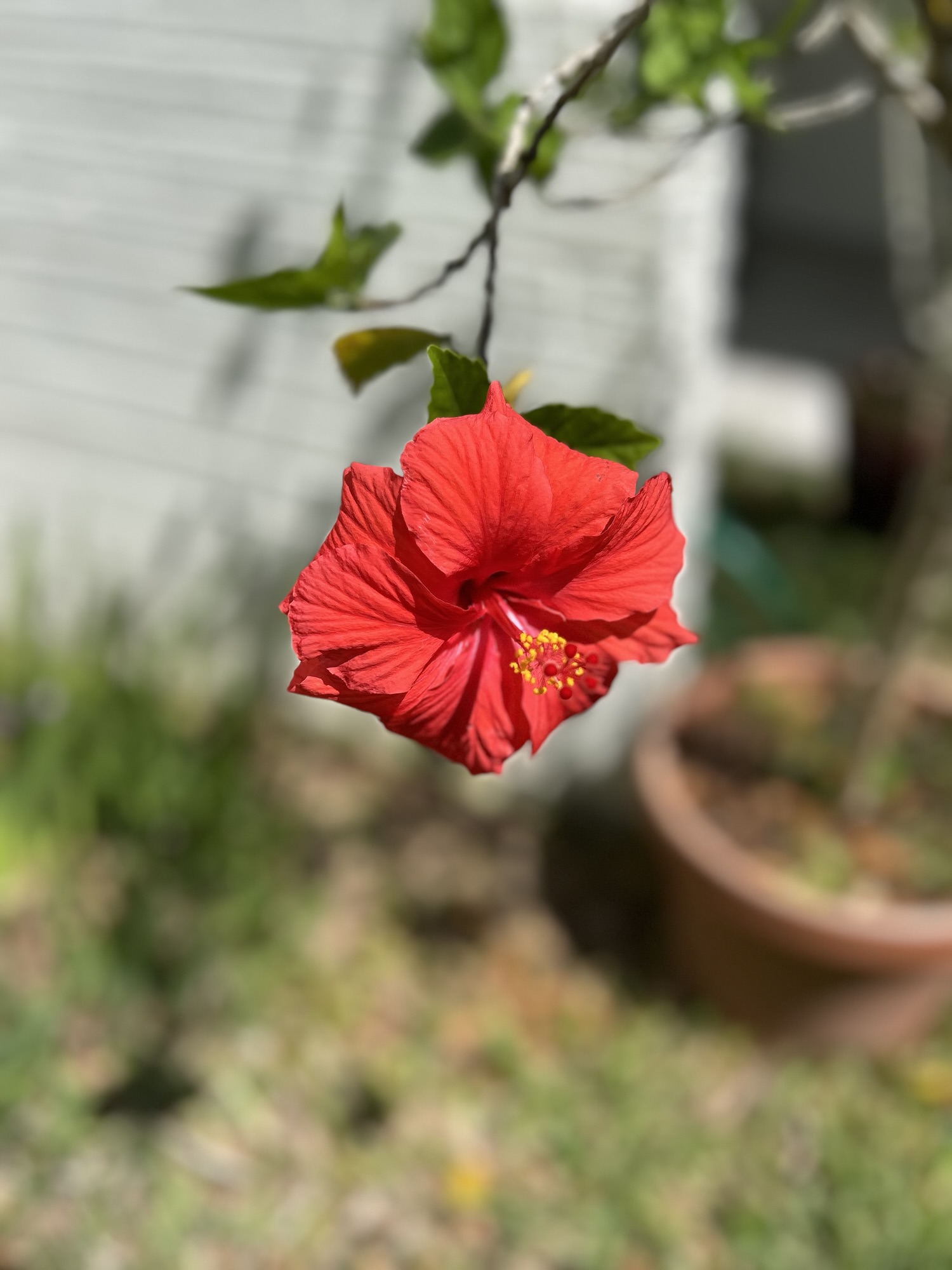
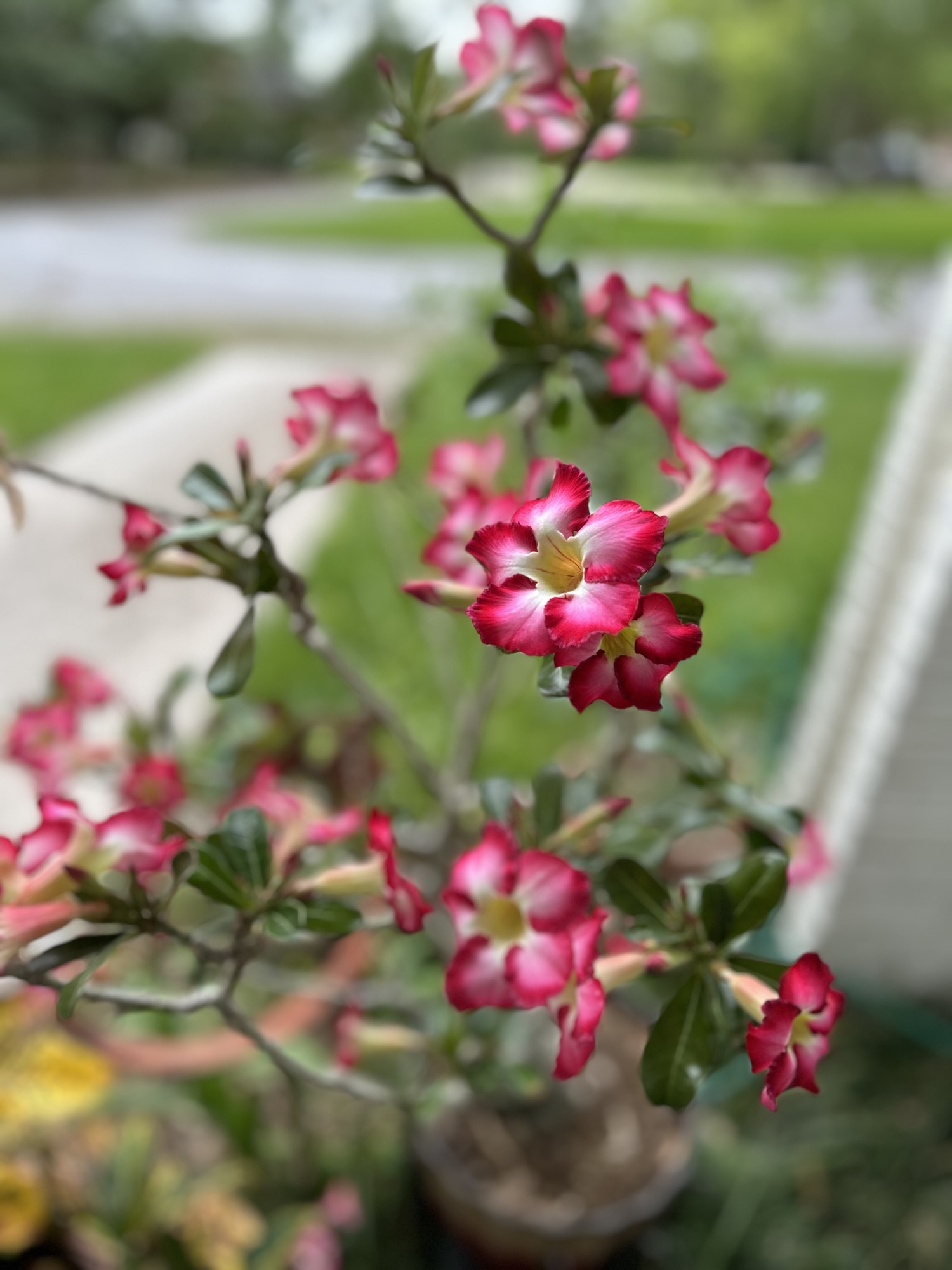
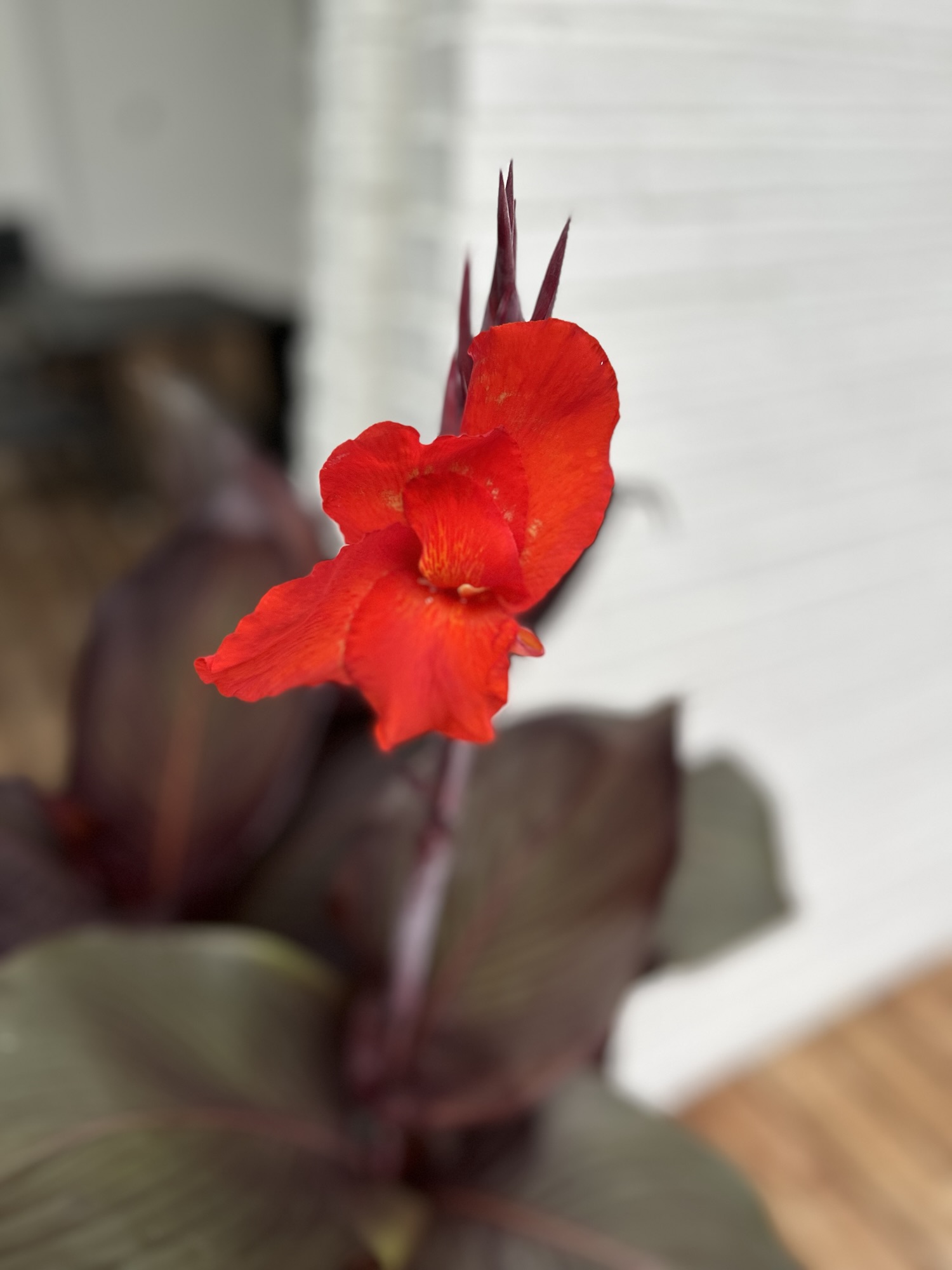
Last month I was writing a poem each day prompted by Ethical ELA. One of the prompts offered by Alexis Ennis invited us to write an ode to peace. This prompt landed on a Sunday when I had time to sit and sip on my back deck overlooking the bayou. In winter when I had to haul pots inside, I cursed my love of tropical flowers, but on this day, I was celebrating their quiet and bright emergence.
As I revised this poem, I asked AI to give it a title. I like the response, go figure, of “Waking in Red.”
Waking in Red
the corner of my heart slowing for breaths deep and long
on the cypress the cardinal busy on branches by and by
here is the ruby-throated hummer humming a second longer
there the glowing sun rising to light this day
space opens for red bat plant, desert rose, and buckeye
skin warms as I wake with the power of red. Margaret Simon, draft
I am writing a poem a day in May using #poemsofpresence and #smallpoems. Many of them are inspired by flowers. I invite you to join me on Instagram.
If you live nearby, come by Books Along the Teche (our local indie bookstore) for our book signing. Books Along the Teche will take orders for signed books.
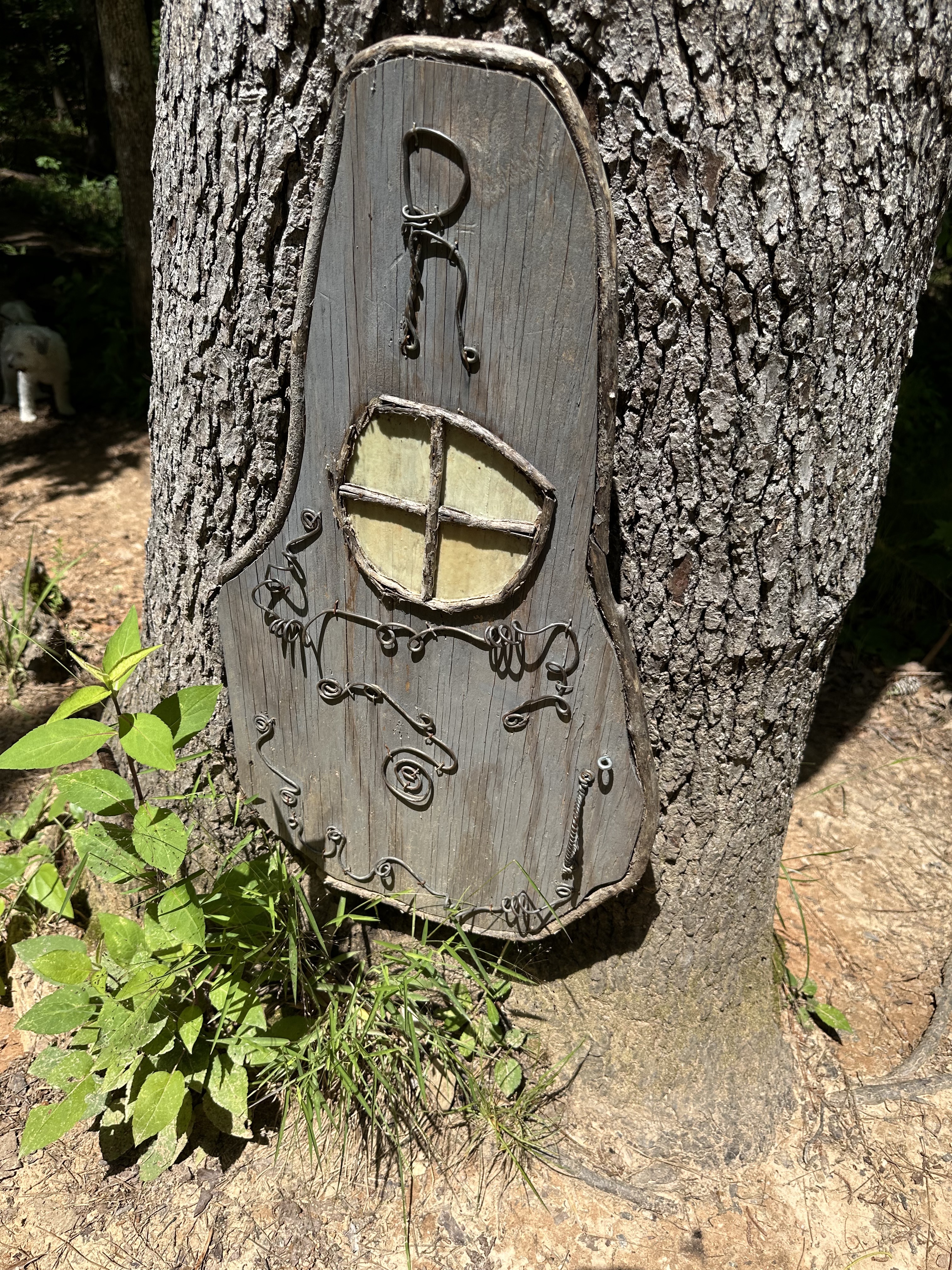
“Walking in the woods today, I came upon a fairy door,” wrote my friend Kim in a text. She suggested I use it here for a poetry prompt.
From Wikipedia: “A fairy door is a miniature door, usually set into the base of a tree, behind which may be small spaces where people can leave notes, wishes, or gifts for the fairies.”
An open invitation for imagination. I’m curious about the R on this door. Is it part of an alphabet trail? Is it the first or last initial for the person who made it? Is there a fairy with that initial?
Today I am choosing to write an elfchen. Somehow a fairy door calls for an elfchen poem.
Fairy holds wishes in the forest Delicate balance of presence Oracle
I invite you into this magical forest to let go of concerns and be imaginative. Write a small poem in the comments. Join me on Instagram during the month of May writing #smallpoems, #poemsofpresence. Tag me @margaretgsimon.
Thank you to Two Writing Teachers for creating an amazing community of writers and a safe, welcoming space to write and share.
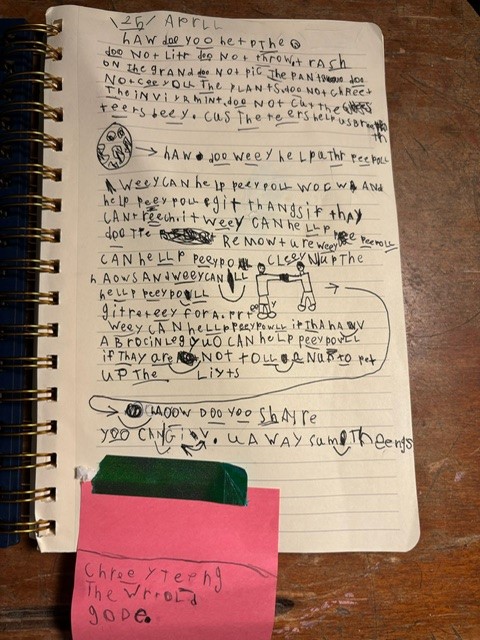
The week of Earth Day was a spring break for my grandson Leo. Because he has working parents, he went to his former daycare for the week. We are not sure if that is where he learned about Earth Day, but he came home and wrote in his special journal (the one with the soft cover). Leo is in kindergarten, so he is new to reading and writing, but this grandmother/ teacher/ writer sees the potential of his writing. If nothing else, it will go in the archives of his earliest writing.
My interpretation: “How Do You Help The Earth”
Do not litter. Do not throw trash on the ground. Do not pick the plants. Do not kill the plant. Do not kill the environment. Do not cut the trees because the trees help us breathe.
How do we help the people?
We can help people walk and help people get things if they can’t reach it. We can help do the remote when people can help people keep up the house and we can all help people get ready for a party. We can help people if they have a broken leg. You can help people if they are not tall enough to put up the lights.
How do you share? You can give away something.
Keeping the world good. by Leo, age 6 (kindergarten)
Mary Lee Hahn has the Poetry Friday Round up at A(nother) Year of Reading.
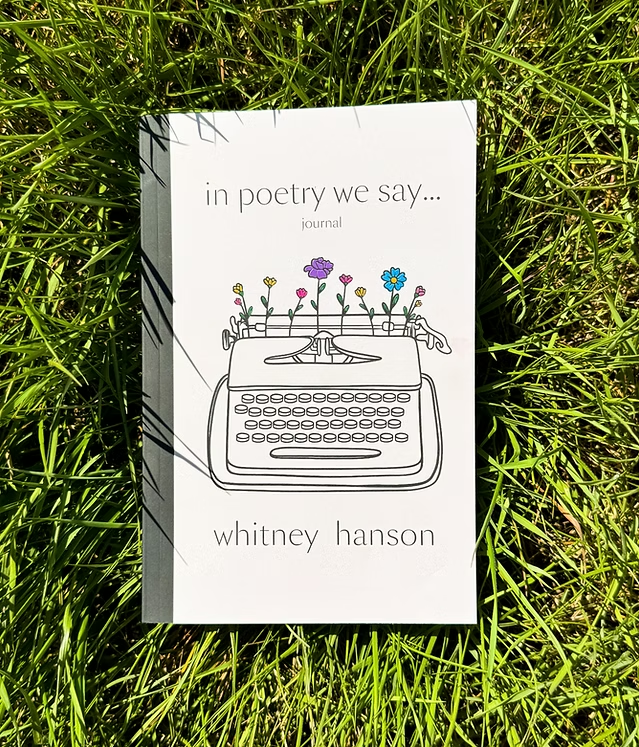
Today is the first Friday in May which means it’s time for another Inklings challenge. This month, Linda Mitchell asked us to consider a line borrowed from poet Whitney Hanson, “In poetry we say…”
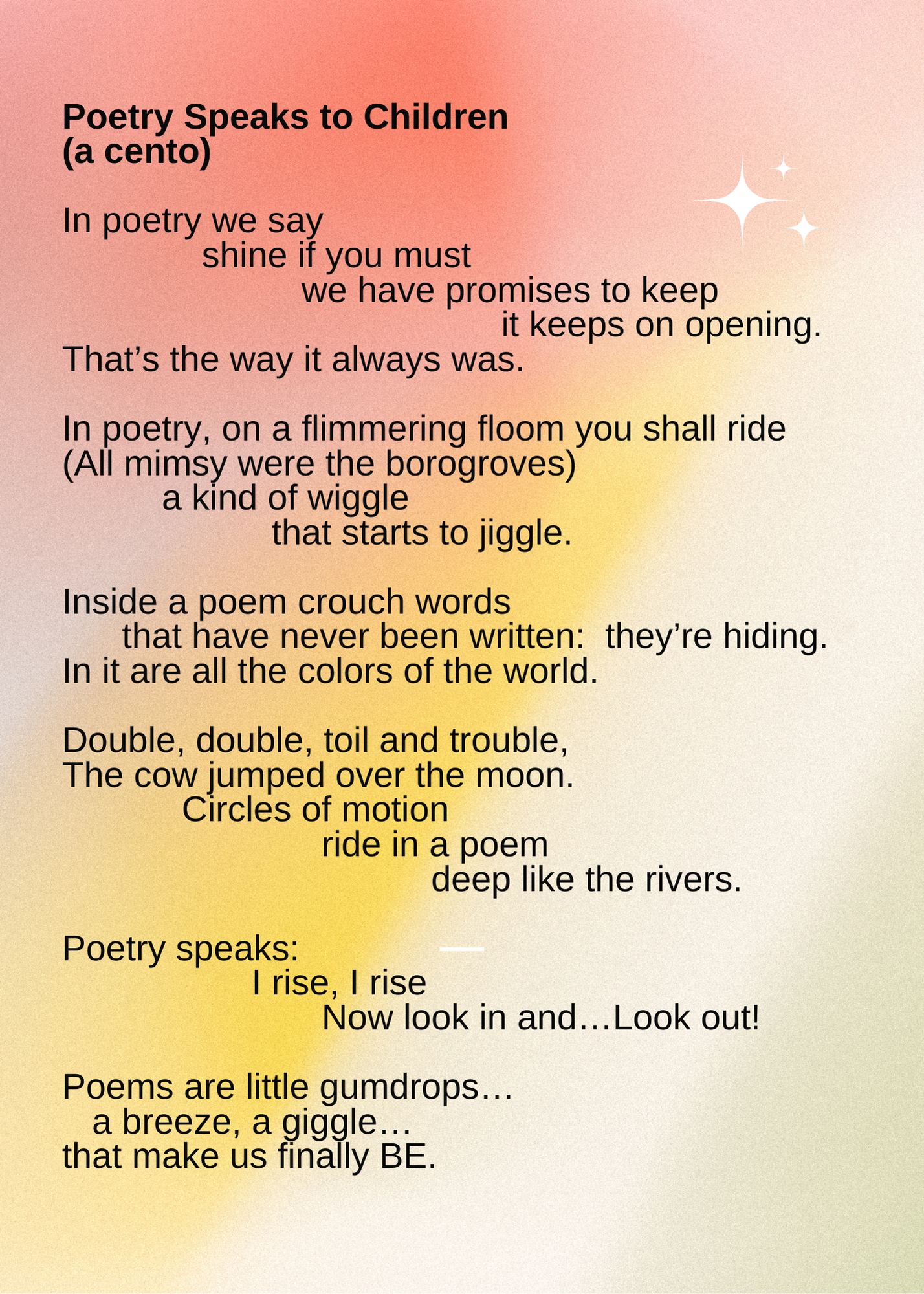
I took out an old favorite anthology of poems in my classroom, Poetry Speaks to Children, and created a cento poem using lines from other poems. The process was interesting and fun. You may even recognize some of the lines.
Lines from these poets:
Rita Dove Robert Frost Gwendolyn Brooks Carl Sandburg Lewis Carroll Maxine Kumin W. S. Merwin Jane Yolen William Shakespeare J. R. R. Tolkein Joy Harjo Langston Hughes John Ciardi Nikki Giovanni Sonia Sanchez
The 2025 Kidlit Progressive Poem is complete! See the poem as a whole along with all the participating poets archived here.
To read how other Inklings approached this challenge:
“A world of grief and pain, flowers bloom—even then.” -Kobayashi Issa
Carol’s husband died recently and as she navigates her grief, I am pleased that she still wants to be involved in the wider world of blogging. I love the quote she offered by Issa. I received Georgia Heard’s newsletter in which she invites us to write small. Writing that is small can carry a large load or it can capture a small moment. Here’s Georgia’s May calendar of invitations.
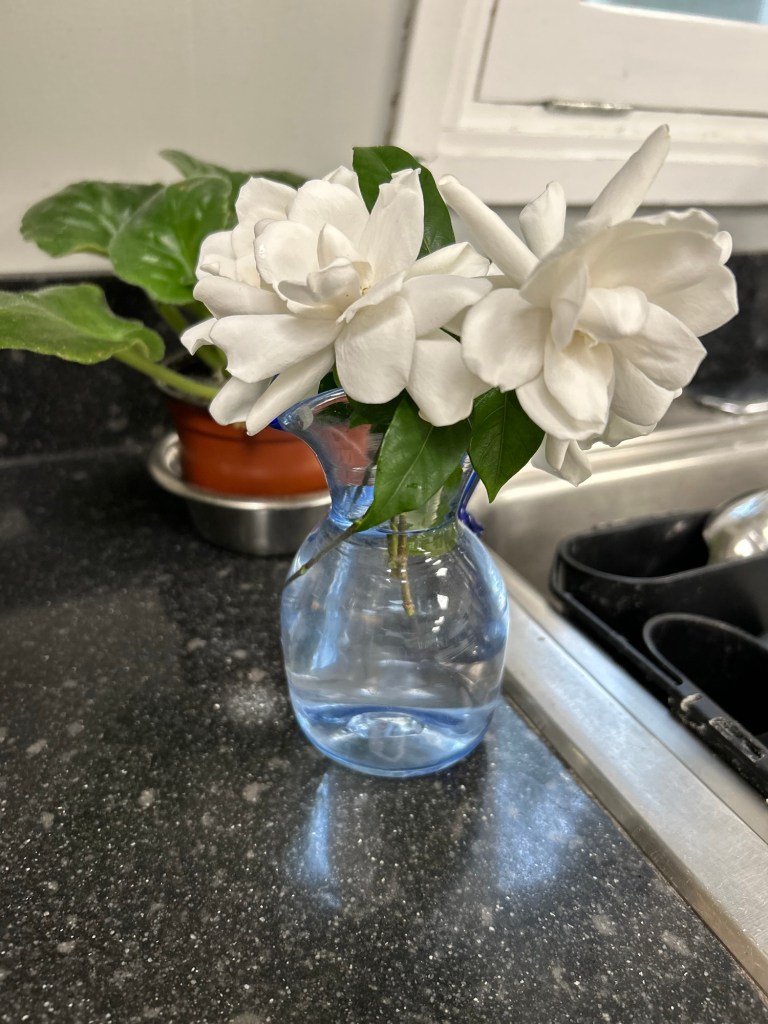
Gardenia power scents the whole kitchen with breaths of grandma’s perfume
Flowers have brightened my daily walks this spring. With the sun rising by the time I head out with Albert, I’ve had more light to walk in. Sunrises, too, delight me. A spiritual journey is a daily practice of presence.
I invite you to write #poemsofpresence this month. I will post daily on Instagram. I will also give myself grace if I miss a day or two. May is about keeping myself grounded as the whirling ending of school presses upon me.
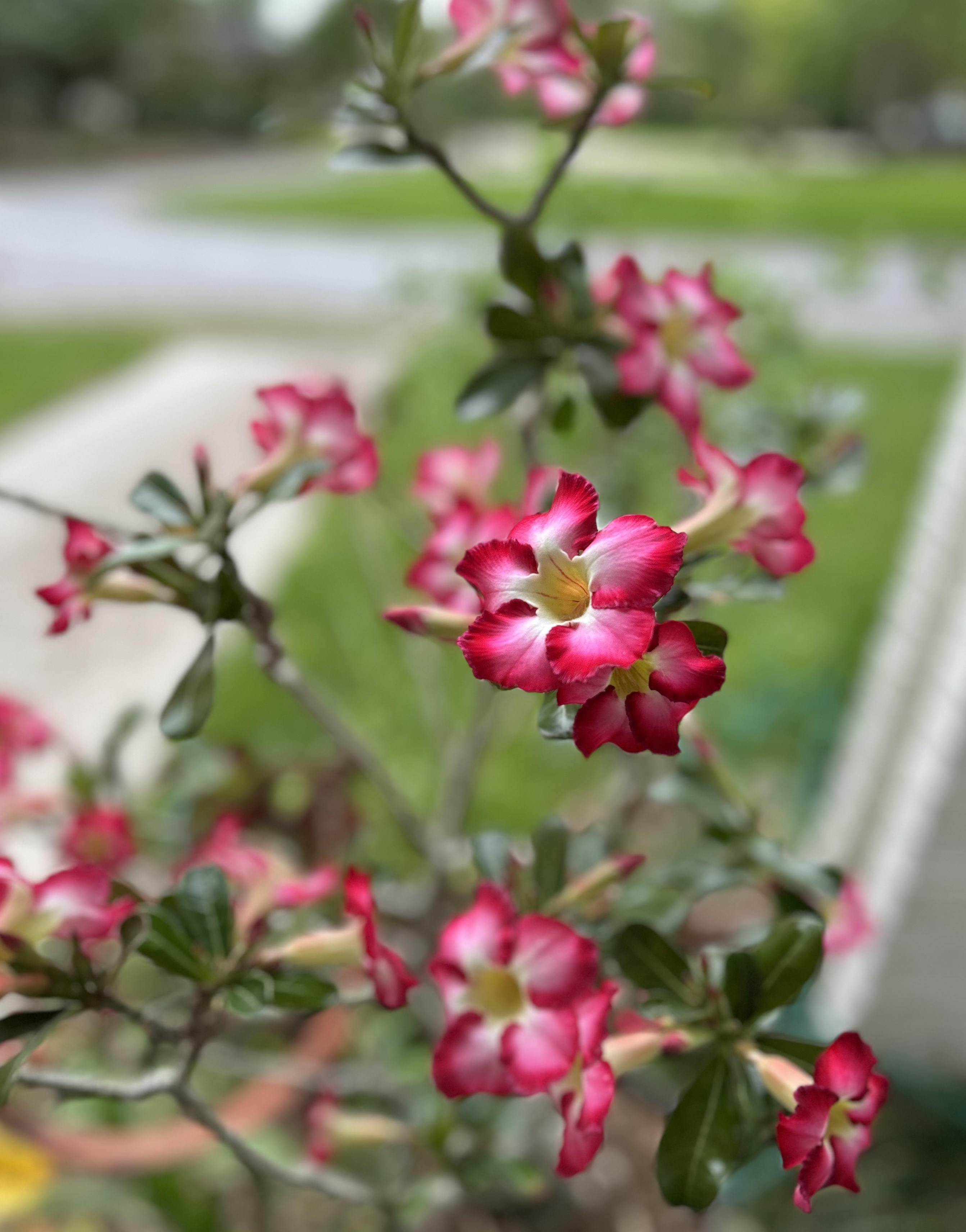
This desert rose thrives at my front door. Another blossoming welcoming spring.
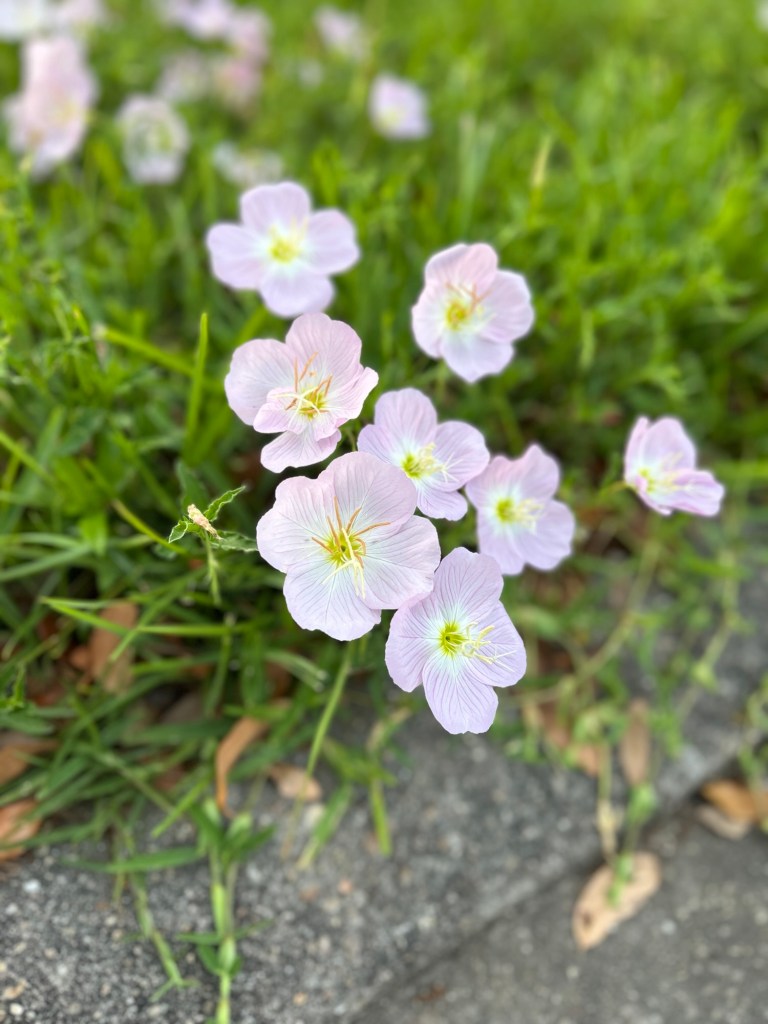
Growing up in Mississippi and now living in Louisiana, I always thought this flower was called a buttercup and grew wild on roadsides. This photo was taken in my neighborhood near the curb of an empty lot. These wild things love a bit of concrete to bloom from.
Yesterday when I googled them, I saw that I could actually buy seeds and that they were also known as a primrose. I love both of these names and wanted to play with them in a poem.
There is a poem form in which the first line is _______ is a ________ word. I came across this form when I was cleaning my classroom. Irene Latham had sent me two along with a collage in a summer poem swap who knows how long ago.
Buttercup is a bouncy word open to the spring of teacups with a dollop of honey and lacy pink napkins.
Primrose is a proper word holding out its pinky ready to sip sweetness among the wild grass.
Margaret Simon, draft
Please write a small poem in the comments and support each other with positive feedback.
The final line of the Kidlit Progressive Poem is with April Wayland at Teaching Authors. Hope over and give her some comment love, too. The line is a celebration. She’s asking for a title.
Heidi Mordhorst is hosting Poetry Friday at My Juicy Little Universe and she also has the next line for the Kidlit Progressive Poem.
This week we are back from Easter break and in the depths of standardized testing, so it has become an opportunity for me to start the daunting task of cleaning out my classroom for retirement. I’ve been looking through old files and deciding what to keep and what to trash. Most of it is trash, but I look at it anyway. There are some things that are hard to throw away. It’s hitting me hard, I must say. So for two of the poem prompts at Ethical ELA, I wrote about this process. Writing is the way I can let go of some of the pent up feelings. (I don’t want to show them to my students.)
Larin Wade gave the prompt on Wednesday. Ironically she is a first year teacher. She asked us to write about seasons using the etheree form (consists of ten lines of increasing syllable count: 1, 2, 3, 4, 5, 6, 7, 8, 9. 10)
Time reflects a long life of commitment not only to teach but to nurture children hold them with loving kindness allow a safe space for growing. Retire is a bold, yet daunting word. One door closes. Will another open?
On Friday, Ashley challenged us with double dactyls. To see the rules (guidelines) for this poem, go to her post here.
Higgledy-piggledy Filefuls of gibberish Fill up her trash bin with Piles of old news
Secretly covering Years of her mothering Spilling soft mutterings long overdue.
And now back to the task at hand. Happy Friday! Four Fridays to go!
I made this collage years ago in a paper workshop.
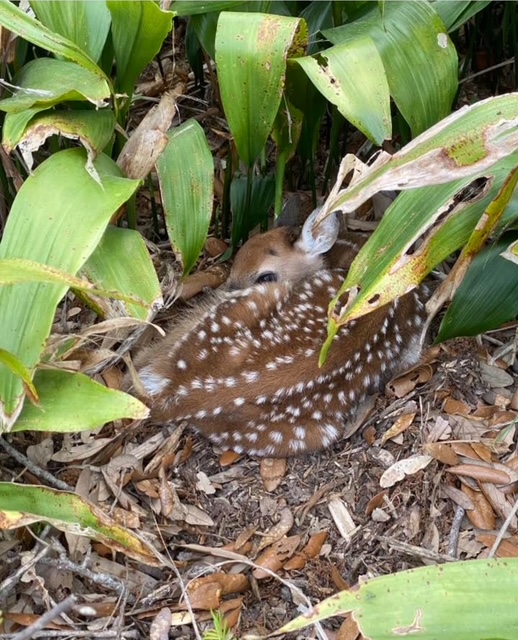
My friend Lory is a retired first grade teacher who now works at the Avery Island Country Store. She posted a picture of a small sleeping fawn. A sure sign of spring on “the island.” Today in my class, we are on the letter K for poetry month, so I am writing a kouta, aJapanese form that contains a quatrain with the syllable count of 7, 7, 7, 5 or 7, 5, 7, 5.
Early morn, she saw a fawn a nestled speckled pillow Where’s your mama, little one? Can I be your friend?
Margaret Simon, draft
Please leave a small poem in the comments and support other writers with your comments.
I’ve been writing this month with Ethical ELA’s #Verselove. On Sunday, Susan Ahlbrand led us in a prompt called “Lingering Lines.” We could choose a song from a musical to use as inspiration. One of my favorite musicals is Waitress by Sarah Bareilles, and my favorite song is You Matter to Me. Try to listen to it without crying. I can’t.
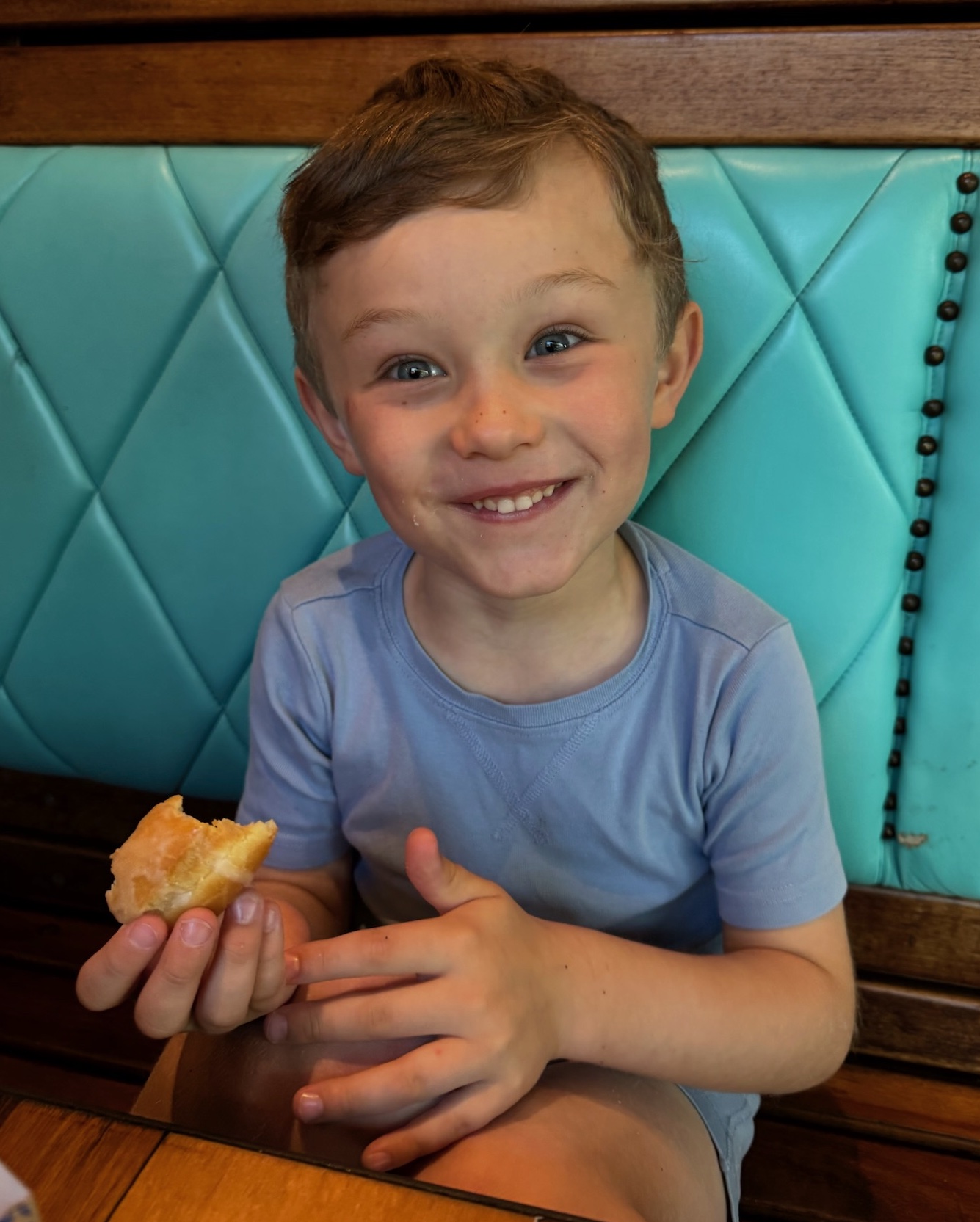
My grandson, Thomas (5.5)
This weekend my daughter was visiting with her son, Thomas, who is now 5 and a half. How time flies! He is the sweetest boy with an active imagination and crystal blue eyes. He loves me without condition which warms my mamére heart. I borrowed the song lyric and wrote a short poem for Thomas.
You Matter to Me
I find sea glass treasure in your eyes. You look in my heart as a mirror and smile for the picture frame. You matter to me.
I sing a lullaby love song and you think I’m magical. You say “I love you” like they’re the easiest words to say.
I know your love is true innocence of a 5 year old simple and free, no baggage or judgement. You see You matter to me.
Margaret Simon, draft
Kidlit Progressive Poem Update: Patricia had a family emergency, so Rose is taking her line today (at Imagine the Possibilities). That is one thing I love about this community. We can lean on each other.
Thank you to Two Writing Teachers for creating an amazing community of writers and a safe, welcoming space to write and share.
Margaret Simon lives on the Bayou Teche in New Iberia, Louisiana. She is a retired elementary gifted teacher who writes poetry and children's books. Welcome to a space of peace, poetry, and personal reflection. Walk in kindness.