Feeds:
Posts
Comments

Posts Tagged ‘Ada Limón’

Poetry Friday is gathered today by Laura Purdie Salas who has a new picture book Line Leads the Way. Visit her site for all the poetry goodness.

The first Friday of each month is reserved for the Inklings challenge. This month Catherine tuned us in to Ada Limon’s project You are Here. Her question is What would you write in response to the landscape around you?

Last month I participated in Ethical ELA’s Open Write. Mo Daley prompted us to write a type of found poem called “X Marks the Spot.” The idea was to take any text and draw an x across the page, then use the words to make a new poem.

I look forward to trying this prompt with my students soon. Having a bank of words to use in a poem can be just the push you need. “You are here” is often marked by an X. I used a poem found in the American Scholar magazine titled “The Bougainvillea Line” by Ange Mlinko. 

This summer our landscape has been saturated by rain. This is better than drought, to be sure, and my garden has loved it. This poetry exercise stretched me to find a new place to land. The found words are in italics.

Summer Soaked in Rain

Driving the back roads which 
pass by train tracks which carve ditches
of untended weeds, we breathe the familiar
lime-lit gravel there
swarming with wild volunteers.

Illuminated porches bark with fervor,
tomatoes once sweet, pock-marked
by bird beaks.

I think of my own garden
full and overgrown, untrained vine
of bougainvillea stretching underfoot
with poor allegiance
to the government of gardens
dissolving in rained-on glory.

Margaret Simon, draft

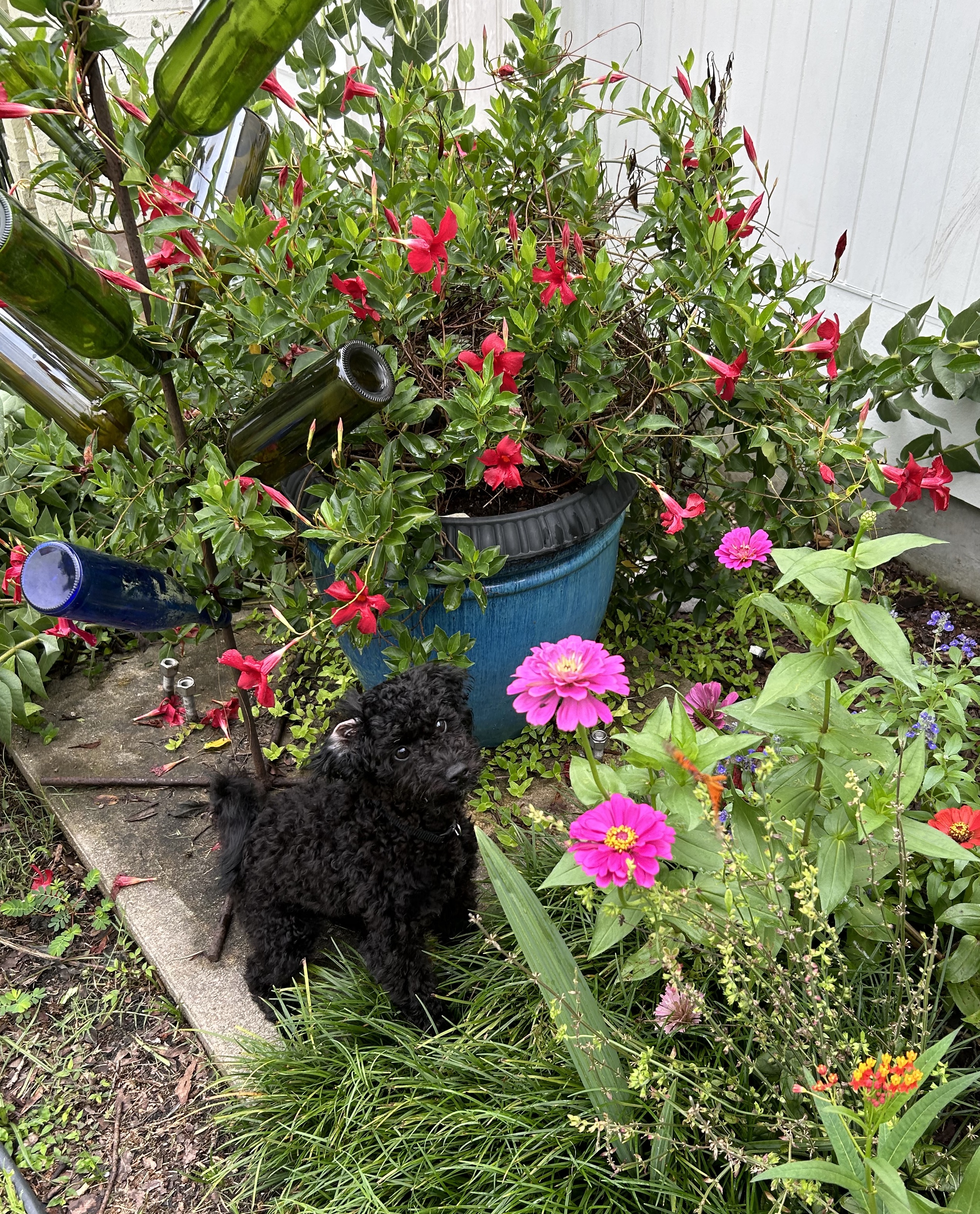
In my butterfly garden, Albert chases a Gulf fritillary. Photo by Margaret Simon

To see how other Inklings responded to this prompt, go to these links:

Linda @A Word Edgewise
Catherine @Reading to the Core
Molly @Nix the Comfort Zone
Mary Lee @Another Year of Reading
Heidi @my juicy little universe
Read Full Post »

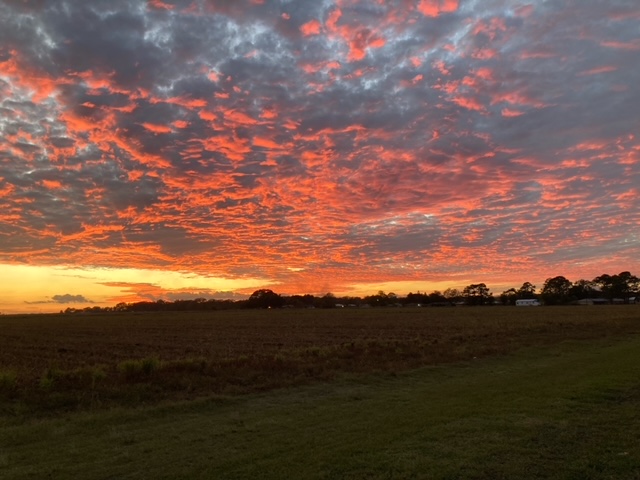
While I was in Ohio for NCTE, my husband sent me this photo of a harvested sugarcane field under an awe-inspiring sunset. He described it to me this morning, “It covered the whole world!” Ethical ELA held its Open Write this week. Kim Johnson prompted us to write a poem using Ada Limón’s poem Give Me This. I wrote a golden shovel about this photo using a striking line: “Why am I not allowed delight?”

So many sunset photos, I wonder why

attraction to orange, pink, purple sky is what I am

with you. Loving this mirror–I

with you, noticing. We are not

the same, yet we’re always allowed

a sunset delight.

Margaret Simon, after Ada Limón

I invite you to write an ekphrastic poem about this photo. Imagine the bigness of the sky, the awe-inspiring sunset, a field of brown…wherever the muse takes you. I hope you take a moment away from your Thanksgiving preparations to write. Come back if you can to comment on others’ poems with encouraging words. Most of all, “Happy Thanksgiving!”

Read Full Post »

Thank you to Two Writing Teachers for creating an amazing community of writers and a safe, welcoming space to write and share.

My feelings are all over the place. Starting the day later because I can sleep longer wakes me rested, ready. A walk outside on a perfect spring morning energizes. But then the weight of all that is different, all that is not happening, not normal comes with cleaning out a classroom or picking up items at the store or watching the news.

Poetry helps me cope. In my email inbox, on my Instagram feed, or on the bedside table, I can find a poem that soothes, comforts, or inspires me.

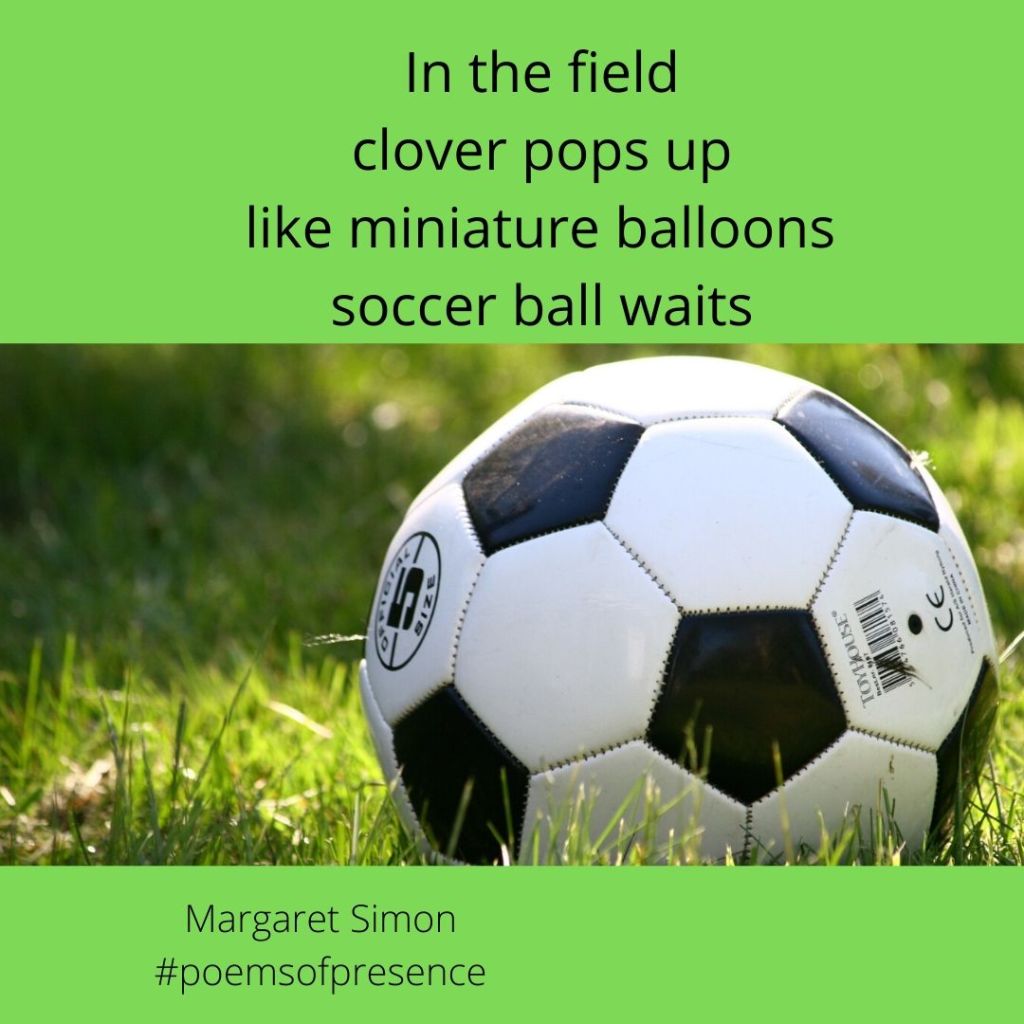
On Twitter this month, a group of us teacher-poets are writing #Poemsof Presence. These poems capture a single moment in time. They honor the present without regard or worry over the future or past. I can find connection and hope in this task. If you are a poem dabbler, join us.

This poem by ADA LIMÓN has come across my path a few times. Today from Gratefulness.org. I love how the title Instructions on Not Giving Up tells me what she wants me to learn from nature. And the poem fills me with a beautiful image.

More than the fuchsia funnels breaking out
of the crabapple tree, more than the neighbor’s
almost obscene display of cherry limbs shoving
their cotton candy-colored blossoms to the slate
sky of Spring rains, it’s the greening of the trees
that really gets to me. 

Ada Limon, read the rest of the poem here.

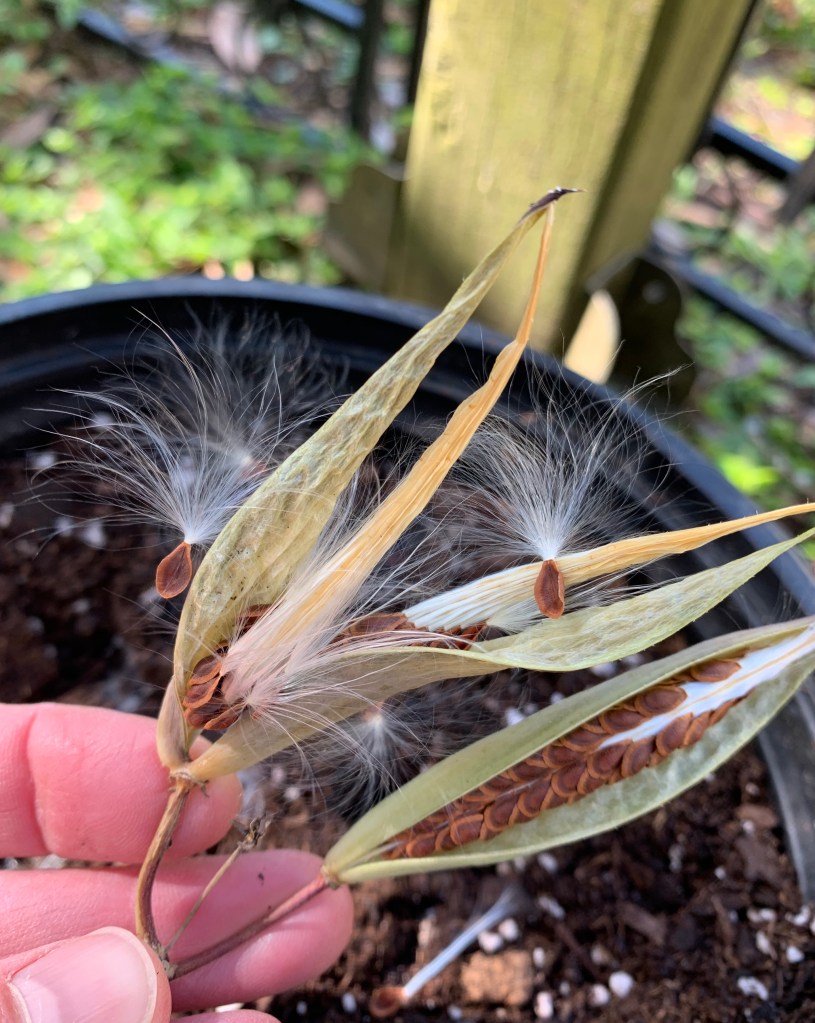
Milkweed seeds
Release on silken wings
Like the butterflies they nourish.

Margaret Simon, #poemsofpresence

A little lagniappe of beauty in this video of a monarch butterfly swarm.

Read Full Post »

See more posts at Two Writing Teachers Slice of Life .

When we returned from our holiday break, I found a poem from Poets.org in my inbox.  I subscribe to Teach this Poem, a weekly lesson plan around a selected poem.  The poem Dead Stars by Ada Limón drew me in, and I felt compelled to teach the lesson. To begin, we looked at pictures of the Orion constellation and made attempts to draw it in our notebooks.

Before we read the poem, I talked about how I love poems that take notice of something in nature then go deeper to something more profound.

We find it hard to settle our brains down, and poetry offers us that silence, that quiet space, and allows us to reconnect with ourselves, or with an idea, or with an emotion. (Ada Limón)

When reading a poem with my students, I let them take the lead.  “What do you notice?” “Are there any words you don’t know?” “What do you think the poem is about?”

Each group of students takes the discussion in a different direction.  With my first group, we discussed an interesting metaphor in this line, “I am a hearth of spiders these days: a nest of trying.”  Daniel rephrased the line, “Laying eggs of attempt.” Then we noticed that both hearth and nest are places of caring.

With my second group, theme became the focus.  What is the poet trying to teach us? She wants us to rise above the tide (the hard times) and be alive.  Landon wrote a thematic sentence, “Be alive, reach for the stars, and shine!”

In my third group, stars, constellations, and the fact that we are made of stardust became the topic of discussion.  “But mostly we’re forgetting we’re dead stars too, my mouth is full of dust and I wish to reclaim the rising–” (Ada Limón)

I pulled up an article to read from National Geographic.

Everything we are and everything in the universe and on Earth originated from stardust, and it continually floats through us even today. It directly connects us to the universe, rebuilding our bodies over and again over our lifetimes. (Iris Schrijver)

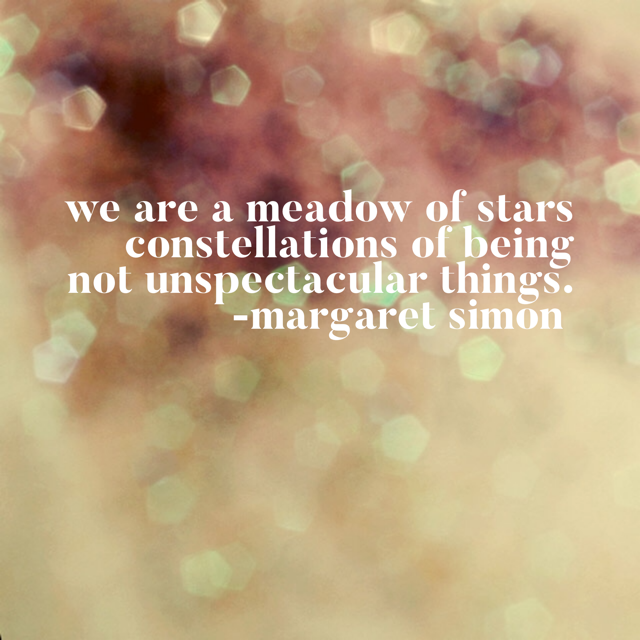
In response I wrote a septercet, a form created by Jane Yolen with 3 lines of seven syllables each.  The last line is from Ada Limón’s poem “Look, we are not unspectacular things.”

When I work on poetry with my students, I try not to push them to complicated analysis.  There is time for that when they are older.  I hope to expose them to amazing language, to the art and craft of metaphor, and to understand that poetry is always available to them.  Even when they are “rolling their trash bins out.”

A cherita about the stars:

You say look up

Take notice of the stars
Name the one you are

We are the star
dust of many ages
collected as unique thoughts.

(c) Margaret Simon


Read Full Post »