This month Mary Lee Hahn challenged the Inklings to write after Joyce Sutphen‘s poem Next Time. Sutphen’s poem has a dreamy quality to it, that if-only-I-could-do-it-again thought process. I was drawn to her lines “Next time I won’t waste my time on anger…Next time, I’ll rush up to people I love, look into their eyes, and kiss them, quick.”
I write about grief a lot. Why is that? Grief settles after a while but is always there waiting to be released again and again. It can be set off by a song, the familiar sound of a bird, or my grandson saying “I want to Facetime Pop.” We have to remind him (at age 5) that Pop died. When I sent this poem to fellow inkling Heidi Mordhorst, she said, “You write again and again about grief because you are still learning exactly this.”
Abby Wambach said recently in “We Can Do Hard Things” that she has made friends with her grief. “grief has become a friend to me, in that I am developing a real true relationship with it, because it’s the access point to all of the most intense feelings that I feel, the most intense sadness, the most intense anger.” So, here I am again and again, writing a grief poem.
I’ll avoid the cut grass where the snake eggs lie. I’ll check the mailbox for menacing wasps. Next time I’ll be wary when the cat calls to me in mournful mews.
Next time I won’t stray from the well-worn path. I’ll acknowledge wisdom of ancestors who learned, felt a spiritual guide. Who denies their purpose?
Next time I’ll read the book start to finish, underline passages in pencil, notes in the margin. Next time I’ll know death comes. It will not surprise me. Gut me.
Next time I’ll answer the call on the first ring. I’ll be there by your side, holding your hand in mine. I’ll let love keep its promise, be my purpose.
Poetry Friday is gathered today by Laura Purdie Salas who has a new picture book Line Leads the Way. Visit her site for all the poetry goodness.
The first Friday of each month is reserved for the Inklings challenge. This month Catherine tuned us in to Ada Limon’s project You are Here. Her question is What would you write in response to the landscape around you?
Last month I participated in Ethical ELA’s Open Write. Mo Daley prompted us to write a type of found poem called “X Marks the Spot.” The idea was to take any text and draw an x across the page, then use the words to make a new poem.
I look forward to trying this prompt with my students soon. Having a bank of words to use in a poem can be just the push you need. “You are here” is often marked by an X. I used a poem found in the American Scholar magazine titled “The Bougainvillea Line” by Ange Mlinko.
This summer our landscape has been saturated by rain. This is better than drought, to be sure, and my garden has loved it. This poetry exercise stretched me to find a new place to land. The found words are in italics.
Summer Soaked in Rain
Driving the back roads which pass by train tracks which carve ditches of untended weeds, we breathe the familiar lime-lit gravel there swarming with wild volunteers.
Illuminatedporches bark with fervor, tomatoes once sweet, pock-marked by bird beaks.
I think of my own garden full and overgrown, untrained vine of bougainvillea stretching underfoot with poor allegiance to the government of gardens dissolving in rained-on glory.
Margaret Simon, draft
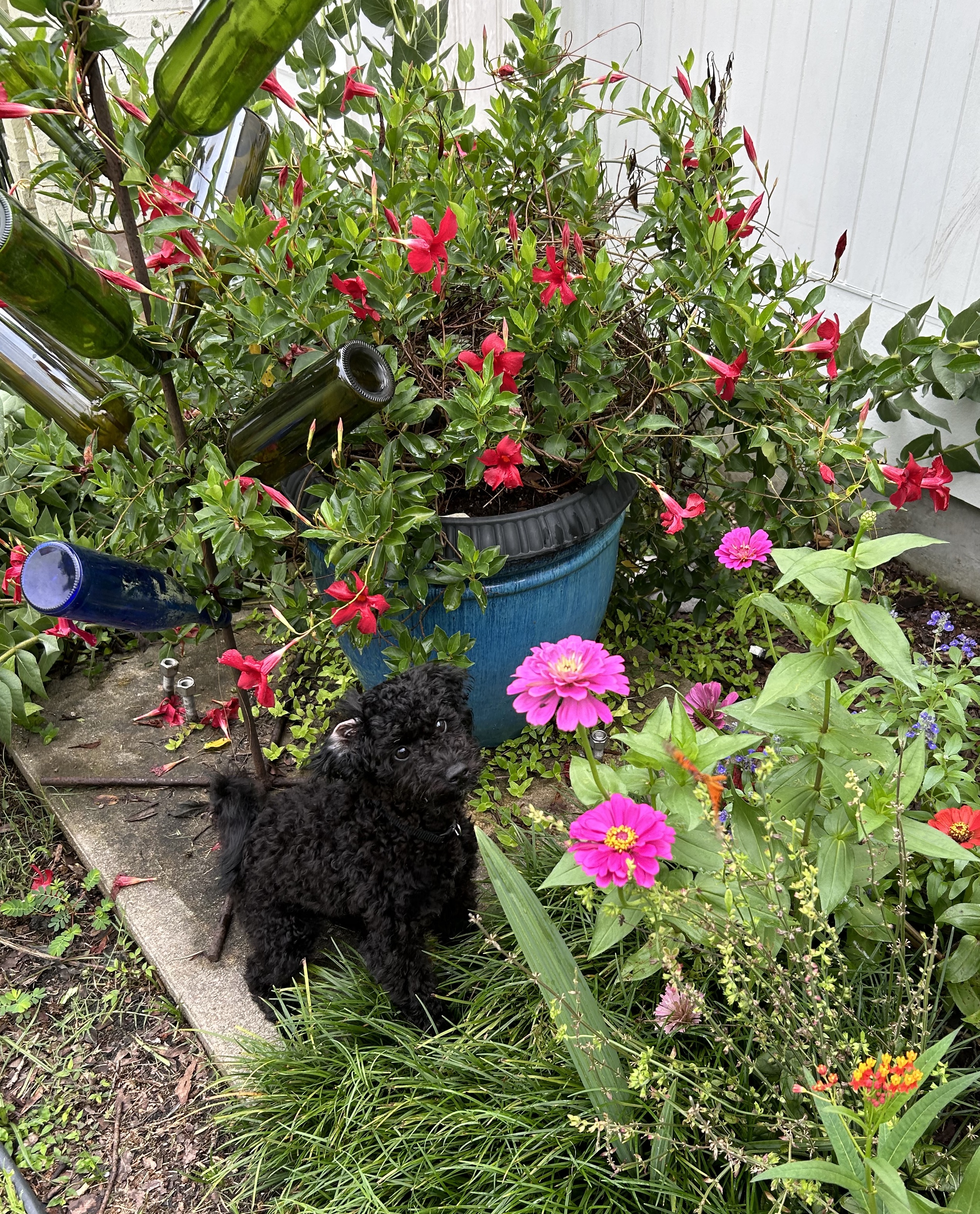
In my butterfly garden, Albert chases a Gulf fritillary. Photo by Margaret Simon
To see how other Inklings responded to this prompt, go to these links:
Poetry Friday is hosted today by Tracey Kiff-Judson at Tangles & Tails.
Here we are again with a monthly Inkling challenge. This month Molly challenged us with a prompt from Pádraig Ó Tuama who said “A poem is a word-event going in many directions at once. Sometimes the “you” of a poem is a specific person, at other times it’s the poet, or a general audience, and at times there’s no you at all so the poem addresses itself to the world.”
Molly asked us to write a narrative poem that includes observations about the world and explores the craft of address, the you of a poem. On a recent morning walk, I spoke two observations into my notes app. I felt invaded upon when a truck high up on oversized wheels revved its engine at me as it passed. The other observation was not connected at all. I saw oak tree arms leaning on electric wires. We’ve had a number of sudden storms this summer, and each one is frightening. That’s all to say that poetry is a place where I can vent; I can let steam rise and fall. I address this poem to the you of a random monster truck.
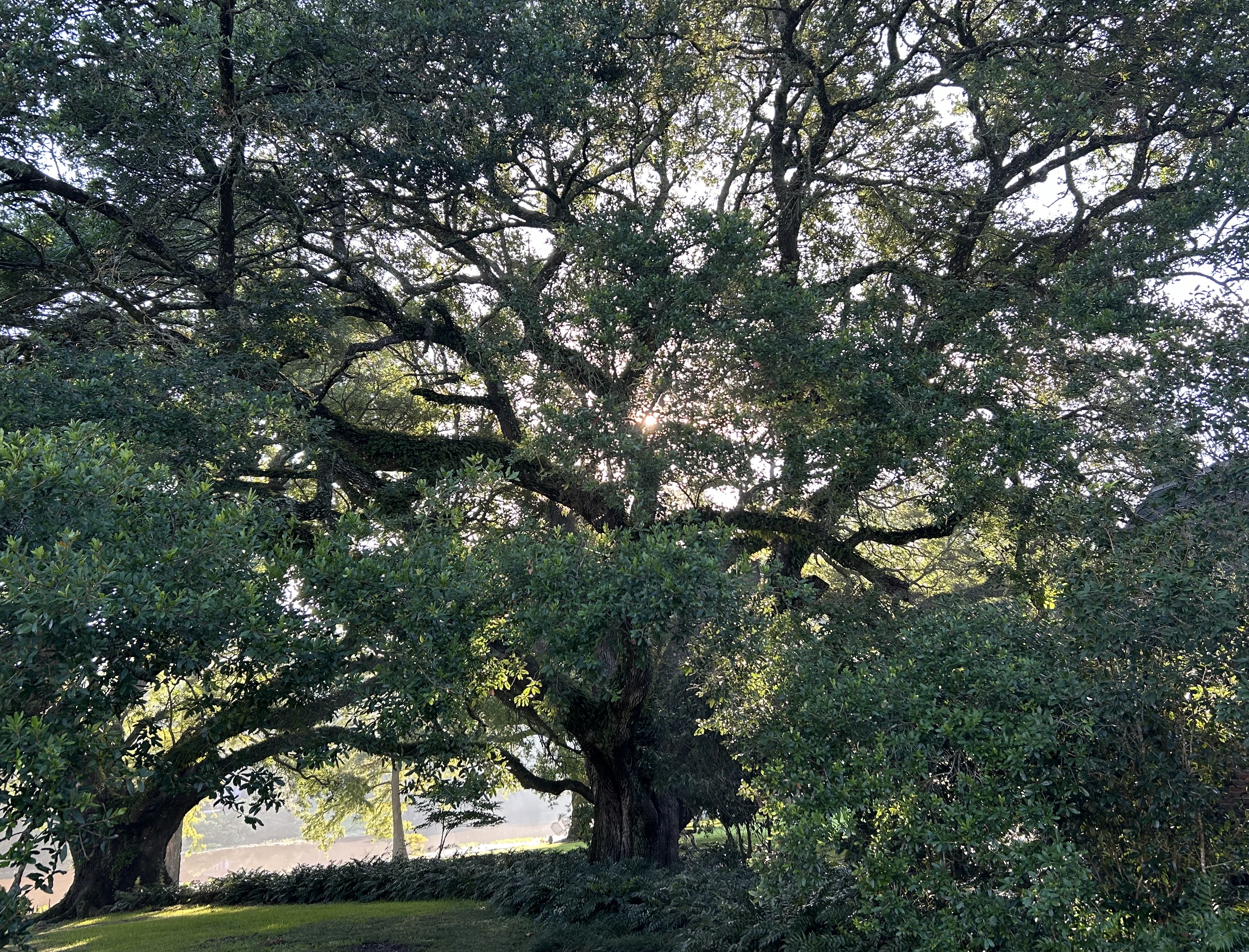
Grandmother Oak Sunrise June 6, 2024
You disturb my peace.
You! with your hot wheels rumbling down the road, motor revving, disrupt this peace of mind I’m in writing a poem in my head about birds singing.
Birds sing as you pass, your rolled-up windows beat-boxing, shaking a rhythm
of my walking, heart pumping brow sweating. I’m in this groove you move your hard edge against.
My poem wants to be kind, but I cannot wash away your harsh sound that erases the wind heaving a heavy sigh
like the old oak arms leaning on electric wires holding heavy vibration– a lightning bolt I cry
to be saved from.
Margaret Simon, draft
Take a look at how my Inkling friends approached this challenge:
Happy May! In many ways, I’m sad that it’s May. I looked over the school calendars, and I have fewer than 10 days left with my students. May’s calendars are worse than December. They are full of “Fun Days”, field trips, and “Awards Day”… Where are the time-with-my-students days?
Of course, there are some wonderful days on the same calendar: Teacher Appreciation Week, Mother’s Day, Memorial Day, Sleep-in-it’s-summer days.
Today is Inklings Challenge of the Month Day. Linda Mitchell hit us with an interesting challenge to exchange poems and “Fiddle with, play with, tinker, tear-apart, be inspired or stumped by” the poem you were given. I chose to find a nestling ( à la Irene Latham). On this Canva design, you can see the poem Linda sent and my nestling.
Full poem “Star Says” by Linda Mitchell Nestling “Star” by Margaret Simon
Links to other Inklings. Molly had my poem to fiddle with. I can’t wait to see what she did with it.
If you followed the Progressive Poem, you can find the poem as a whole at this link: 2024 Kidlit Progressive Poem: Border Crossing This year felt different, a higher stakes dramatic story evolved. Thanks to everyone who participated.
I will be participating in a poetry reading event on Saturday night. It’s been a while since I have read for an audience. Wish me luck.
Here we are on the first Friday of the month and Inklings are spilling secrets. Catherine Flynn prompted us “Write a poem about secrets——family, community/societal, governmental, personal, etc. This could be a narrative (how the secret(s) started, where it or they led, the along-the-way and final (if any) consequences. For inspiration or starting blocks for your poem, here’s this poem, “Family Secret” by Nancy Kuhl: https://poets.org/poem/family-secret“
I found a way to write about my mother. It really isn’t a secret that she is living with Alzheimer’s. I’ve written about her before. But I hesitated to write about her. Is it disrespectful to the mother she used to be? I have discovered by revealing this secret, people are more open about their own struggles with the disease. I hope by telling my story with specificity, this poem/secret reaches out to the universal.
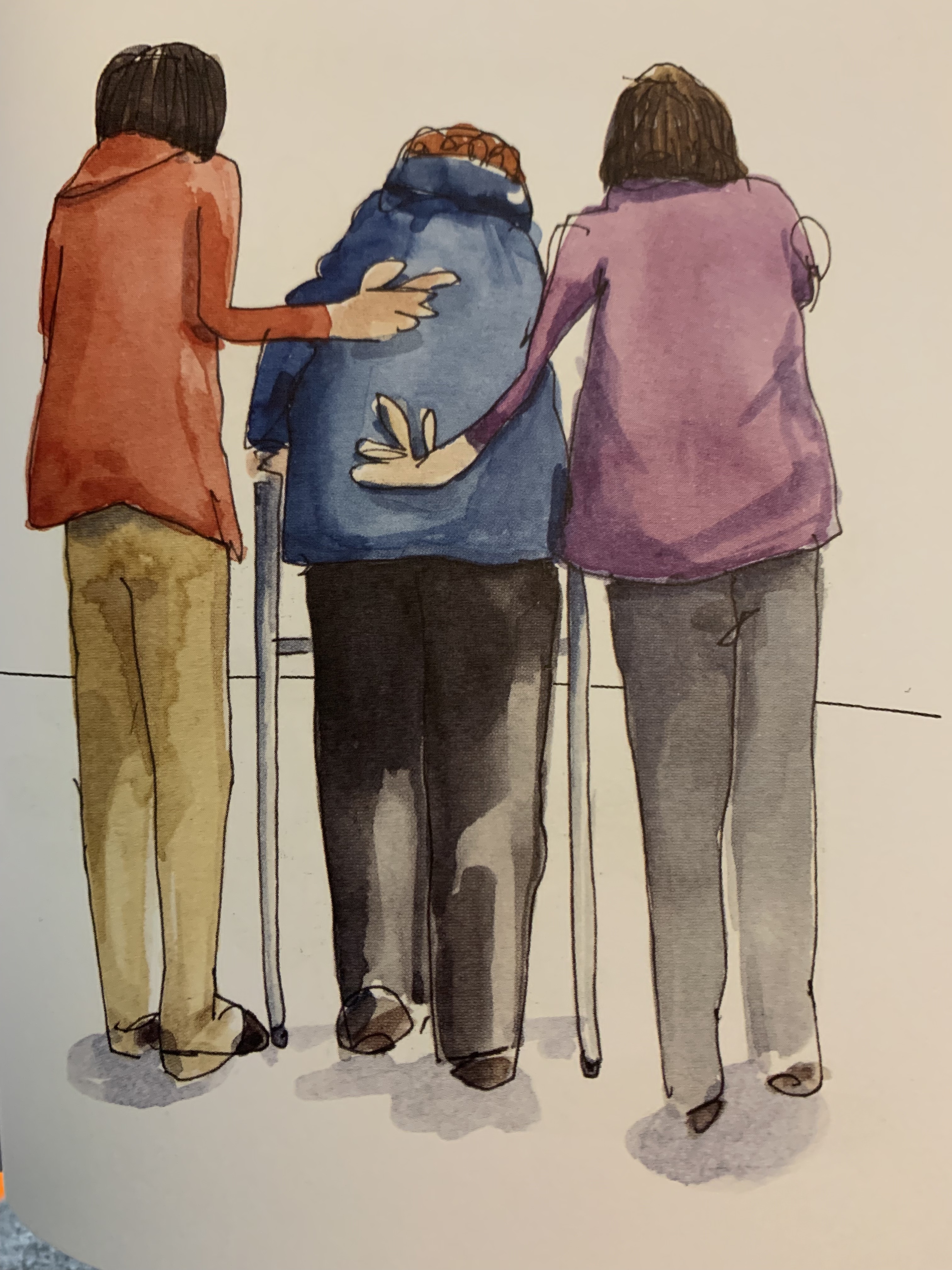
Dressing my Mother at the Memory Care Home
In my dreams, she’s at the kitchen table, sipping black coffee. She’s reading, ready for the day to come.
My sister and I remove her oversized jacket– daughters on either side coaxing her arms free from brown suede. “Is this Dad’s old coat?” my sister asks, pulling
on the heavy cloth. We are caught in a maze of arms and fabric, confusion, undoing a mistake of memory we can no longer hide from. Mom stays silent.
How does thinking work when words are gone?
Her eyes laugh at this silly game we’ve urged her to play. She giggles looks to the dolls on the bed– “How are you doing today?”
Margaret Simon
Visit other Inklings’ sites to hear their secrets, or not.
The first Friday of each month, one of my Inklings writing group friends gives us a challenge. Well, Heidi gave us 12 prompts, one for each day of Yuletide. She sent it to each of us in a handmade mobile. I attached it to my December calendar page and left it there while Christmas and a family trip happened. Only yesterday, I decided to glue the prompts into the remaining pages of my 2023 notebook. The ultimate procrastination, I’m afraid. I’ve written one poem, so it is one poem you will read. This is probably not what Heidi intended when she put so much time and handwork into making our Yuletide prompt calendar.
Call Back the Dying Sun
Your rising beckons me to notice a stream of light overarching bare trees.
Your rising beckons me to be like you– a light for sight, beacon of joy.
Your rising beckons me to sense warmth even at a slant toward darkness– I rise, too.
Margaret Simon, draft
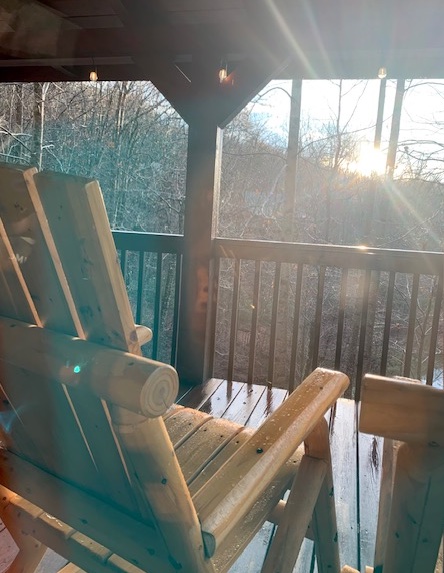
Morning sun on the porch of our mountain house in Georgia.
Linda Mitchell challenged the Inklings this month to write a prose piece and use it to create a poem. I thought of how much the Poetry Friday community nurtures me and keeps me writing, so my prose and poem are in praise of you, my Poetry Friday peeps.
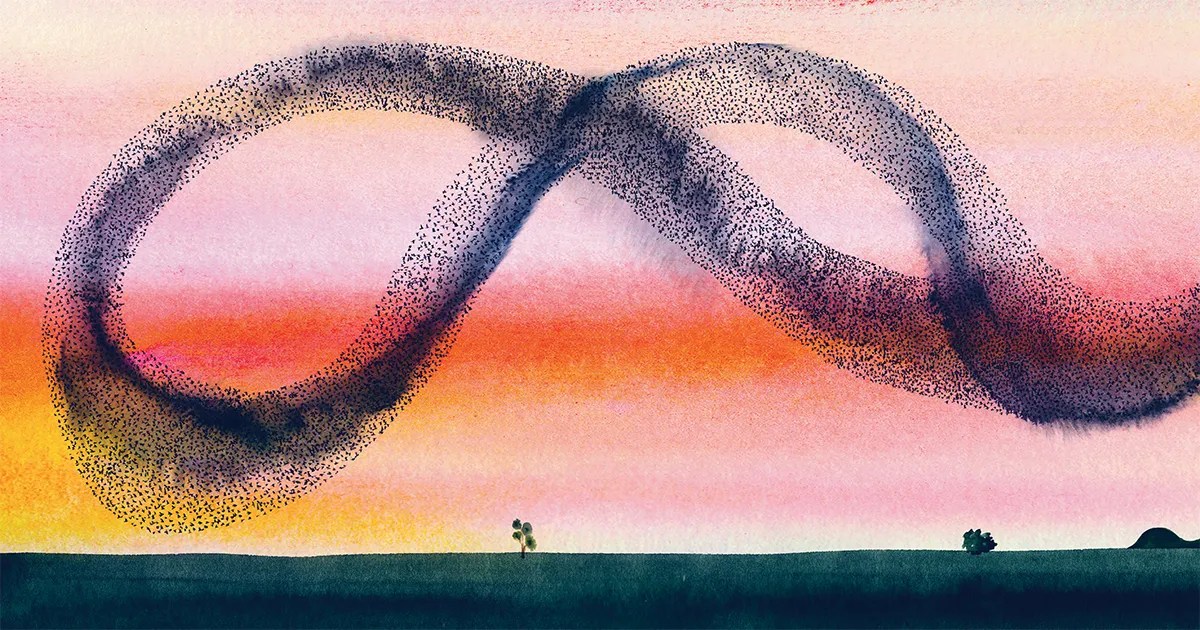
Because our kindred spirits meet each week, we read, internalize, explore words, thoughts and meanings from our virtual friends who write their hearts out, who transform small things into murmurations echoing through cyberspace.
In the sky of our world, words are offered up like kites in the wind, flipping to and fro, and sometimes taking flight, yet always tethered to its person– a human trying to make sense of the world, to take an ordinary day and make it shine like the sun or peek out from the clouds like the full moon.
I am honored by their presence inside my computer, by their comments that urge me onward or rest with me in grief. I cannot measure their worth with a single gesture. I can only take it all in as a gift, a surprise, or a nod that means everything will be fine. I am not alone. Hope is with me.
Kindred spirits meet Move like a murmuration Spreading cyber-hope.
Margaret Simon
To see how other Inklings approached this challenge, visit these sites:
The first Friday of the month is reserved for the Inkling challenge. This month Mary Lee fascinated us with Visual Frameworks as a prompt for writing. You can see all the choices here.
With school, teaching, volunteering all get fully underway, I feel the sense of juggling lots of balls in the air. And at any time, one or more may fall, and mess with the balance I am currently trying to hold onto. I taught the zeno form to my students last week and featured it on This Photo, so I chose the form to juggle this challenge. I like how the rhythm of it creates the sense of juggling.
Juggling Zeno
A system complex and controlled keeps all balls up– motions bold. Ability to thrust/ hold– a blink of eye plunges my load.
Today is the first day of September and it comes with a full Blue Moon and slightly cooler temperatures pointing the way to fall. Ah, me! I breathe in deeply and sigh.
August has been a dark month for me, and I am just beginning to emerge from the cocoon of illness. When I asked the Inklings to study and use the tool of enjambment in a poem, I had no idea how my whole life would be enjambed. My hysterectomy in June had the worst possible complication, an opened and infected incision. I had a second surgery on Friday, August 18th. I was in the hospital for 5 days and in bed at home for 10 days following. As I begin to feel better and the cloud is lifting, I am cautiously optimistic that I am healing.
For the enjambment challenge, I offered my friends a model poem from former Louisiana poet laureate Jack Bedell.
Ghost Forest —Manchac, after Frank Relle’s photograph, “Alhambra”
1.
Backlit by city and refinery’s glow these cypress bones shimmer
on the still lake’s surface. It’s easy to see a storm’s
coming with the sky rolling gray overhead and the water
glass-calm. Even easier to know these trees have weathered
some rough winds, their branches here and there, pointing this
One early morning this week, I sat outside (at the urging of a close friend) and watched the bayou. This small draft of a poem came to me. I offer it here because it’s the only thing I have and doing this makes me feel normal again. Thanks to all of you who have expressed concern and sent cards and messages.
Is it the play of light on the surface or air bubbles moving over glass-calm
water I watch still, quiet bayou breathe, like me, slow and deliberate taking in life- giving oxygen.
We are trying to survive, bayou and I, trying to make this day meaningful all the while knowing breath is all that matters.
Margaret Simon, draft
Bayou Teche Sunset, by Margaret Simon
To see how other Inklings used enjambment, check out their posts.
Mary Lee has the round-up and we Inklings are posting Catherine’s challenge.
Robin Wall Kimmerer teaches us that “It’s a sign of respect and connection to learn the name of someone else, a sign of disrespect to ignore it…Learning the names of plants and animals is a powerful act of support for them. When we learn their names and their gifts, it opens the door to reciprocity.” Look closely at the flowers, birds, trees, or other natural features in your neighborhood (or if you’re traveling, a new-to-you species) and write a poem about your chosen species. Free choice of format.
Catherine’s challenge for August
I wrote a poem in July. One of those poems that comes out while walking. As I’m sure you’ve heard, Louisiana is experiencing our hottest summer in history. Who knew this was going to happen? Duh, everybody. I just hope the meteorologist who said the extreme heat is keeping the hurricanes away is right, but it’s probably not. The Gulf will heat up and get angry soon enough.
For now I am listening to endless cicadas during the day and tree frogs through the night. And because we haven’t had rain, I’m watering, watering, watering. The good news is sunflowers are blooming in my butterfly garden.
When in July
When in July, the cicadas buzz all day, when tree frogs near the bayou peep through the night, when crepe myrtles brighten sky with pink and pink and pink, when I walk alone and visit the old oak tree leaning toward the ground inviting me to join her in homage to this unceasing humid heat that calls like the cicadas to our spirits to play like children play running through sprinklers, spreading arms wide like dragonfly wings, then July leaves us with sunflower-smiles.
August is for the Sealy Challenge: reading a poetry book each day. Mary Lee shared her list for the first few days. Here’s mine: Day 1: Mary Oliver: A Thousand Mornings (I’ve read this one before and it’s a comfort read.) Day 2: Pádraig Ó Tuama: Poetry Unbound (Reading a chapter a night) Day 3: Jim Kacian: Long After (This is a visual haiku masterpiece!)
Margaret Simon lives on the Bayou Teche in New Iberia, Louisiana. She teaches gifted elementary students, writes poetry and children's books. Welcome to a space of peace, poetry, and personal reflection. Walk in kindness.