
Here we are on the first Friday of the month and Inklings are spilling secrets. Catherine Flynn prompted us “Write a poem about secrets——family, community/societal, governmental, personal, etc. This could be a narrative (how the secret(s) started, where it or they led, the along-the-way and final (if any) consequences. For inspiration or starting blocks for your poem, here’s this poem, “Family Secret” by Nancy Kuhl: https://poets.org/poem/family-secret“
I found a way to write about my mother. It really isn’t a secret that she is living with Alzheimer’s. I’ve written about her before. But I hesitated to write about her. Is it disrespectful to the mother she used to be? I have discovered by revealing this secret, people are more open about their own struggles with the disease. I hope by telling my story with specificity, this poem/secret reaches out to the universal.
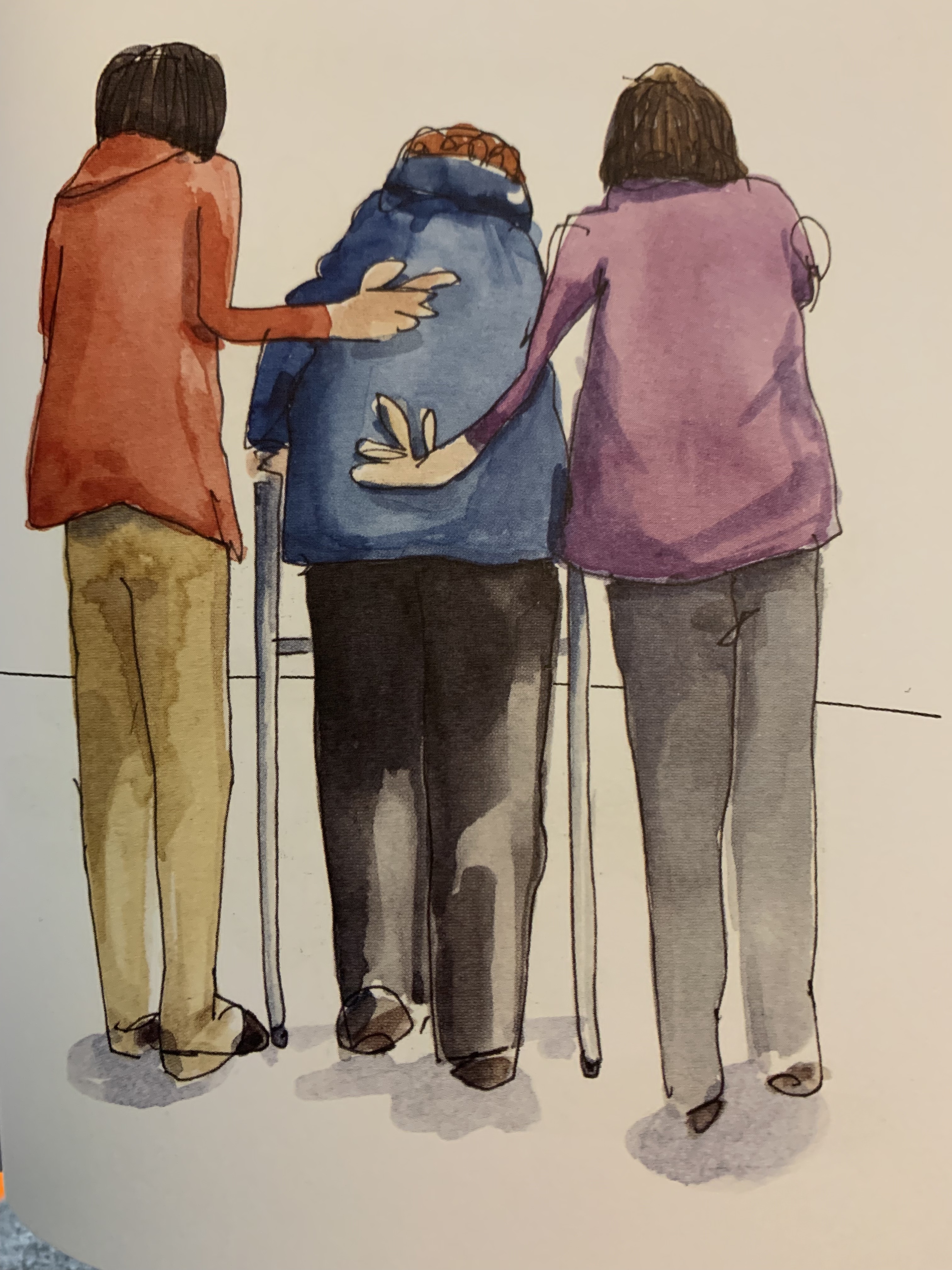
Dressing my Mother at the Memory Care Home
In my dreams, she’s at the kitchen table,
sipping black coffee. She’s reading, ready
for the day to come.My sister and I remove her oversized jacket–
daughters on either side coaxing
her arms free from brown suede.
“Is this Dad’s old coat?” my sister asks, pullingon the heavy cloth. We are caught
in a maze of arms and fabric,
confusion, undoing
a mistake of memory we can no longer hide from.
Mom stays silent.How does thinking work when words are gone?
Her eyes laugh at this silly game
Margaret Simon
we’ve urged her to play.
She giggles
looks to the dolls on the bed–
“How are you doing today?”
Visit other Inklings’ sites to hear their secrets, or not.
Catherine @Reading to the Core
Heidi @my juicy little universe
Linda @A Word Edgewise
Molly @Nix the Comfort Zone
Mary Lee @A(nother) Year of Reading


 Reflections on the Teche
You know I was deeply struck by this poem, but the images of the heavy tangled sleeves, by the silence and surprise of speech at the end. Thank you for sharing the secret of your own experience! And you found a perfect illustration, too.
Your poem is so touching, Margaret. The single line: “How does thinking work when words are gone?” is especially powerful and echoes the questions many in this situation must have. Thank you for sharing part of your heart.
Margaret, Your poem does indeed reach out to the universal, so touching, and encompassing many emotions that caregivers feel simultaneously.
It is SO important that you share your story. It is important both as a window for those of us who haven’t experienced this disease, and a mirror for those whose grief deserves validation. (hat tip to Rudine Simms Bishop for windows/mirrors)
So touching, sad, and yet uplifting…It brought back treasured memories of my sister and I with my mom.
Thanks Carol. I hope to treasure this time someday.
Wow, Margaret, this hits home. It is so sad to see a loved one struggle. The line, “How does thinking work when words are gone?” However, it is wonderful to get a glimmer of hope in the form of a giggle.
She is not unhappy and that is a blessed. Thanks.
Wow. How did you find such a perfect illustration? That is amazing. This poem and all the poems that come from your relationship with your mother are so tender. There is beauty in the untangling and smiling eyes. I feel fortunate to be someone to read this and other poems from this part of your life.
Margaret, your poem speaks of love and loss and loyalty – finding new treasures in this world you are navigating. It would be dangerous to keep all those emotions inside. And so helpful, not just for you, but others too, to share them.💗
Margaret, what a rich poem. I’m so glad you wrote it. For my measly opinion, I don’t think it’s disrespectful to the mother she used to be. She will always remain. Today, she is different, though and we look through our eyes and ask “How does thinking work when words are gone?” So powerful. I like the sweet ending that shows your mom is at peace.
Thank you for sharing about your mom’s journey, Margaret. Yes, many of us are walking this path with our parents. And it’s hard and heartbreaking and full of questions. And comforting to know we are not alone. If you don’t read her, you might look up Courtney Martin’s “The Examined Family” on Substack. She also hesitated, but has begun to share about her journey with her father.
Margaret, I am touched by your words, the illustration, and the piercing question: How does thinking work when words are gone?
Wow! This poem is so moving. I loved “We are caught /
in a maze of arms and fabric” and also the lingering question “How does thinking work when words are gone?” That will stay with me for a long time. Thank you for sharing.
Margaret, this poem remains as powerful as the first time I read it. That “maze of arms and fabric” is the perfect, heartbreaking imagery. Thank you for trusting your readers to share your journey, and honoring your mother and your love for her by trying to make sense of the now, even while mourning the then.
Thank you for sharing your “secret,” one so many others share. My parents are gone now- my dad left us far too soon- a sudden heart attack at 44, my stepfather after a long struggle with heart disease, and my mother battling breast cancer. Though these circumstances were different, there were times along the way when we, too, faced the stark contrast of the person they had been and who they became in struggling against disease. Now I have two close friends facing Alzheimer’s and dementia with their parents. Sharing poetry and slice of life writing from others also going through it provides encouragement and moments of reflection. In particular in this poem of yours, the sisterly connection, daughters on either side, caught in a maze… is poignant, yet hopeful.
You’ve seen that I’ve called it ‘the long goodbye’ before, Margaret. Your capturing of these moments, though so sad for what they mean, brings joy from the smallest giggles, a life being lived no matter the circumstance. I love that you showed us this. The art is beautiful, too.
I am comforted by your comment. “The long goodbye” is too true. It’s even more painful being so far away from her. I need to treasure these small moments and poetry helps me do that. Thanks.
Margaret, I think when you write deeply personal poems about someone you love and cherish so much, you are being such a treasured witness to that person and their time and journey. I don’t think anything you write about your mom would be disrespectful, even if you wrote more strongly about your own frustration or loss. Even though your mom doesn’t know what you’re sharing, you are honoring her (and all people on that painful journey) and the truth of life in this situation. Hugs to you, Margaret.
Thanks, Laura. Your comment helps me feel seen. This can be such a lonely and personal journey. I think about her every day but cannot talk to her. She no longer can use a phone. These small moments of contact are all I have of her now.
And your writing is helping people see your mom. And even if she’s not aware of it, she is worth being seen, in all her power and vulnerability. Just like all of us. It’s a hard journey you’re on, Margaret. Being a caretaker…oomph. I think it’s so respectful and necessary for you to express it through poetry or prose–or tears and laughter, when you feel those. You BOTH deserve to be seen and connected with. ❤
Alzheimer’s is such a cruel disease, hardest on the family who has to watch their beloved disappear before their eyes. Your poem is powerful, Margaret. I think it helps to write about your experience to work through some of the pain. Hugs to you.
“How does thinking work when words are gone?” << this is so heartbreakingly poignant. It takes courage to speak/write openly about difficult things. Thank you for sharing this poem with us today.
Thoughts coming your way after reading this, Margaret. We have been through similar trials and it is heartbreaking. My dad could only repeat “da da da” at the end. I think sharing the story is healthy…and brave.
We have shared this experience. I know the day will come when she doesn’t speak. It seems to slip away slowly and quickly. Thanks for your support.
Such a sweet poem, Margaret! At the end of my mom’s life, though she lost her memory, we seemed to laugh more than ever, like she forget many things that used to bother her. It was a special time for me.
Wow, Margaret, this one made me cry. And that illustration. ❤️ Sending hugs — knowing that you know, knowing that I know, how this feels. There is not a shred of disrespect here. Any of us who have been, or are, caregivers, can feel and see the deep love and deep respect for the woman who was and who *is* your mother. ❤️❤️