
I pulled out an old library discarded book The Space Between Our Footsteps, an anthology of Middle Eastern art and poetry, edited by Naomi Shihab Nye, published in 1998. Our world news has been so harsh on the Middle East. I don’t know how much my young students know, but I was sure I could find an empathetic poem to share with them. Naomi’s introduction speaks of the prejudice of Americans toward Middle Easterners. She turns the table to tell what Middle Easterners might say about Americans. The truth is we are all humans. We all have thoughts and feelings, love, and tragedy.
The poem I chose for Poetry Friday was “I Have No Address” by Hamza El Din.
I Have No Address
I am a sparrow with a white heart and a thousand tongues.
I fly around the globe
Singing for peace, love and humanity
In every place.
I have no address.My address is lines ornamented by dreams, beating hearts united by smiling hope
For people who wish good for other people all the time.
I sing, smile and cry.
My tears wash away pain
In every place.Our paths are boats of longing, turning round and round with us—
One day to the east, another to the west, to tranquil moorings.
And when the waves go against us and cast us away,
Then the echo of my sounds at midnight will be a dock at the shore of tranquility,
In every place.The day we join hands with others’ hands, our universe is
A rose garden blooming in the holy night.
It contains us, with hope, love and alleluias.And I am the sparrow on the branch.
Hamza El Din
I sleep, dream and fly happily
In every place.
I have no address.
How do we build empathy in our students when the news is anything but? Where do we direct them to find peace and understanding? I believe literature, poetry can do this. But is it enough? I don’t know.
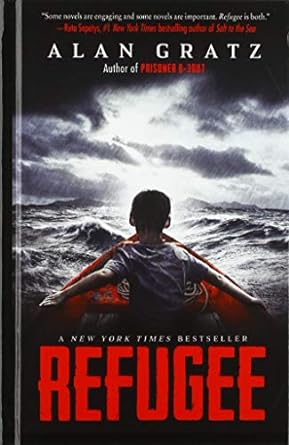
My student Kailyn is a first generation American whose father immigrated from Laos with his family. She has heard first hand from her grandfather what the land of the free means. Currently she is reading Refugee. She saw the title in my classroom and identified with it immediately. I warned her that it’s a tough book. Sad things happen. She took it anyway. Her poetic response to I Have No Address came from her reading.
Freedom
I am free,
I have peace.
I can wander without anyone judging me.Freedom is a privilege,
One wrong move and,
Boom!Josef, Isabel, and Mahmoud,
Aren’t free;
They’re controlled.I am free,
I am free from controlling,
I am free from fear.I
Kailyn, 5th grade
Am
Free


 Reflections on the Teche
How lucky you are, Margaret, to be sharing such riches with young people, and receiving back treasures from them. Everything I read one of their poems, it’s such a gift.
I found poetry in your opening prose,
–“I pulled out an old library discarded book..”– C. M.S.
even before the two potent poems, wonderful Margaret.
It brought me a stark picture but also a lifesaving picture, of you saving a precious book. Appreciations for liberating Naomi Shihab Nye’s important poetry collection. How does poetry grow “old?” More than ever we need more Voices in all arts, including poetry.
The Space between our Footsteps – what a powerful image right from the start. I don’t know this books so will see if the library has it. I am woefully shy of poetry books so this would be a great find. Your students response held its own power. Thanks for bringing this work to us!
I love Naomi Shibab Nye, but I hadn’t heard of this poem or book. I’m interested in the way Kailyn’s poetic response weaves together her experience & the experiences from the book along with Nye’s writing. I currently teach in a school where far more than half of our students are newcomers or children of newcomers, so building empathy is necessary for everyone in the building. Like you, I believe that literature is part of that. It’s also the tool I have, so I use it as best I can.
“The day we join hands with others’ hands, our universe is
A rose garden blooming in the holy night.
It contains us, with hope, love and alleluias.”
-Amen. El Din’s words hit home.
The need to focus on empathy is enormous. Yes, literature and poetry are powerful tools for building it, for they strike chords in the human spirit. I was thinking just today about some of the behavior problems we’re having at school…of course we have to figure out the “why” but then we also need families to help us problem-solve, or nothing we do at school will work for long. Whenever we realize we are all in this together…we will really get somewhere with empathy. Kailyn’s poem is stunning. At ten years of age, she understands suffering and celebrates peace. Freedom from one another’s judgment – or the refraining of passing it, seems like the first step of toward empathy to me.
Beautiful offerings, Margaret – thank you.
Margaret- I wasn’t aware of Nye’s anthology. What a haunting poem you chose. It’s amazing how your student used it as a springboard to capture her thoughts on the book she’s reading. I would love to try this with my students. Thank you for the idea.
Wow! Kids are amazing, we just have to find ways to offer space and opportunity. Thanks for sharing Kailyn’s poem.
Margaret, Kailyn’s response is beautiful. I love how she used the book Refugee and Hamza El Din’s poem to create something that melds the two. Thank you for sharing with your students and with us.