
On Friday, I taught a writing workshop around my book Were You There? A Biography of Emma Wakefield Paillet. (Click the link to find out more about the book.) I had sent out a few feelers with people I knew to get gigs around Black History Month. I was excited and a little daunted to teach a senior AP class at Ascension High School. But the kids were great! They were engaged from the start and had limited experience with poetry.
The found poem form is a wonderful form to use with students new to poetry. They have the words in front of them. It takes some higher level thinking to synthesize the words into a new text, a poem.
We were using the text of Martin Luther King, Jr.’s speech at Selma at the conclusion of the Selma to Montgomery march in 1965. Four of the students shared their poems with me.
Untitled
by Martha O.
Our divided masses began awakening,
began uniting
to meet this threat, to follow the roots
today the state of the American dream will be transformed
Let us march
Let us march
Let us march on in honor, in struggle
and in faith
Transform dark yesterdays into
bright tomorrows
As I Stood on a Stage
By Rorie W.
As I stood on a stage,
all I can see is people.
Blacks and whites,
some young, some old.
Some shoot me angry glares with snarling lips,
some look as if I hold their fate in my hands.As I look out into the mass,
I am filled with emotions plenty.
Fear and anger, but most importantly hope.I hope for the day of unity, the day of peace
so, when I stand on the stage,
I don’t see only Black, only white,All I can see is people.
The Right to Vote
By Luke H.

They revised the doctrine of white supremacy
laws of the South made it a crime to come together as equals.
That’s what happened when the South threatened to unite.
We are on the move now.
Ghettos?
Let us march!
Social and economic depression?
Let us marchLet!
Ballot boxes?
Let us march!
Until brotherhood becomes more than a meaningless word.
Let us march!
Let Us March
by Cameron A.
I want to tell the city of Selma
We are on the move now
Let us continue our triumphant march
to the realization of the American dream.
Let us march on segregated housing.
Let us march on poverty.
Let us march on ballot boxes.
We are still in for a season of suffering
in many counties of Alabama,
many areas of Mississippi,
many areas of Louisiana.
We must come to see that the end we seek
is a society at peace with itself.
That will be the day of man as man.
Please leave a comment to encourage these students.


Margaret, those are some lucky students to grow under your motivation. Thank you for sharing their work. I lived in Selma, long ago, and was drawn to the line (and memories) of” tell the city of Selma we are on the move now.” You have provided inspiration among these young writers.
Margaret, I saw your post yesterday and my heart sang out. You look great in front of a high school class, sharing your passion! I enjoy working with our ninth grade academy students and will be in our school March 12 doing some writing like this. And such an amazing extra scoop of joy is sharing your own book for the found poems. Those students will not soon forget this. Keep doing this!
I am so jealous of these writing workshops you have been doing. And these poems are wonderful, especially since you said they had limited experience with poetry. I would never have guessed.
When I like something I’ve read, I enjoy using it to write a found poem. It’s amazing what you can create by lifting words out of another person’s writing. And it is also amazing how you can often hear the voice of that author in the poem. These poems are wonderful. They captured the style of MLK Jr — his use of repetition and his use of the power of three. You made a good choice of source text for your students. I remember his speeches (I was a teenager). They were powerful and they are timeless.
Margaret,
I love that you are creating your own teaching gigs. I’m doing a bit of that with my local Audubon poetry walks, but you are making me wonder if I should try more of the type of teaching I used to do with kiddos. Strong work!
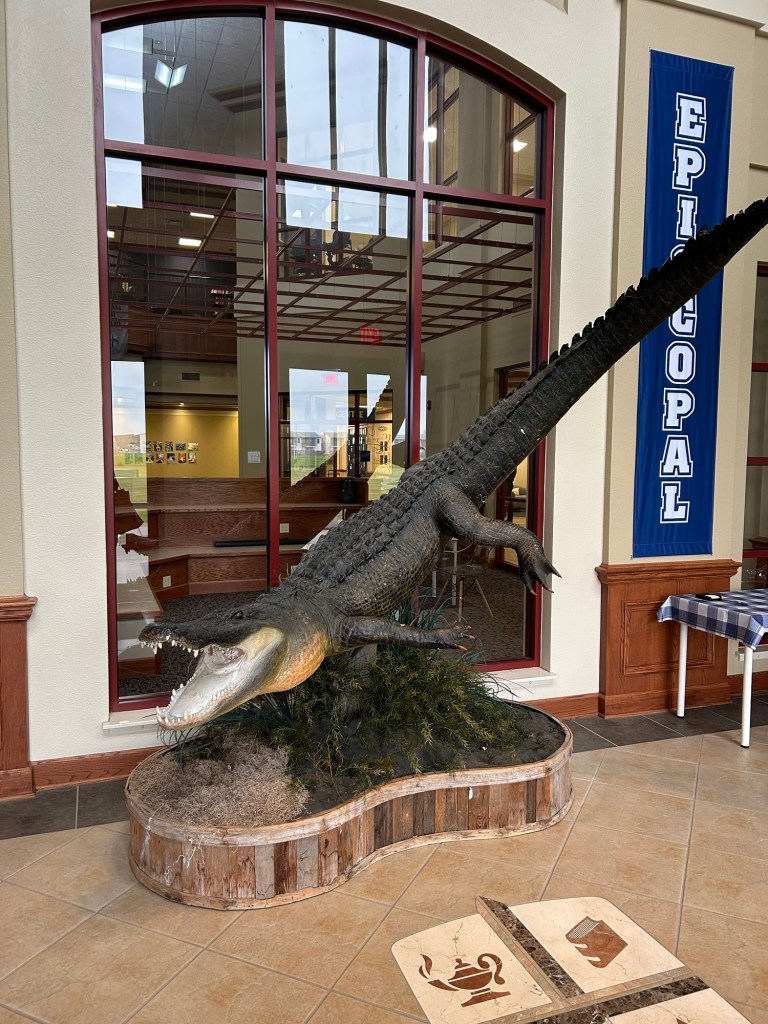
Thank you, Margaret, and Gators for sharing your poems!
Martha, I love the powerful line: “today the state of the American dream will be transformed” followed by “Let us march” repeated like a mantra. Yes, let us march on March 28 and continue until the American dream is transformed again. Always reforming and perfecting America.
Rorie, I love this line: “I hope for the day of unity, the day of peace” It would be great if someday we can have this without having to worry about color, as Dr. King had hoped.
Luke, the refrain of “Let us march!” after each question is so powerful. Yes, indeed, let us march!
Cameron, you have captured such a powerful section of the speech in your poem. The ending especially:
“We must come to see that the end we seek / is a society at peace with itself. / That will be the day of man as man.”
MLK, Jr. was a wise person, knowing that a society at peace with itself cannot be white supremacist. “man as man” Wow.
Bravo to the HS students who are certainly young poets. Each student created a different perspective. Martha O’s poem uses repetition to bring the importance of the march. “Let us march on in honor, in struggle/and in faith”. Rorie W was sincere “I don’t see only Black, only white, / All I can see is people.” That deserves an Amen. Luke H. used repition to establish his thoughts and Cameron rBravo to the HS students who are certainly young poets. Each student created a different perspective. Martha O’s poem uses repetition to bring the importance of the march. “Let us march on in honor, in struggle/and in faith”. Rorie W was sincere “I don’t see only Black, only white, / All I can see is people.” That deserves an Amen. Luke H. used repition to establish his thoughts and Cameron repeatedly spoke of the march ending with :We must come to see that the end we seek/is a society at peace with itself.” Thank you for sharing the writing of these amazing first -time poets.