
On Saturday I attended Jone MacCulloch’s Poetry Pop-up Salon by Zoom. We were all familiar with each other through our poetry blogging and easily settled in to write. Something about writing in community creates magic. Everyone had a poem to share around Jone’s chosen word prompt, “harvest.”
At this time of year in New Iberia, sugarcane is being harvested and ground. Many people don’t like this season. The sugarcane trucks slow down traffic flow. The smoke from the mills and the burning of the fields aggravates allergies. And there’s the bagasse smell that makes you think you stepped in dog poop. But to me, it means fall. Cooler temperatures and sweet air.
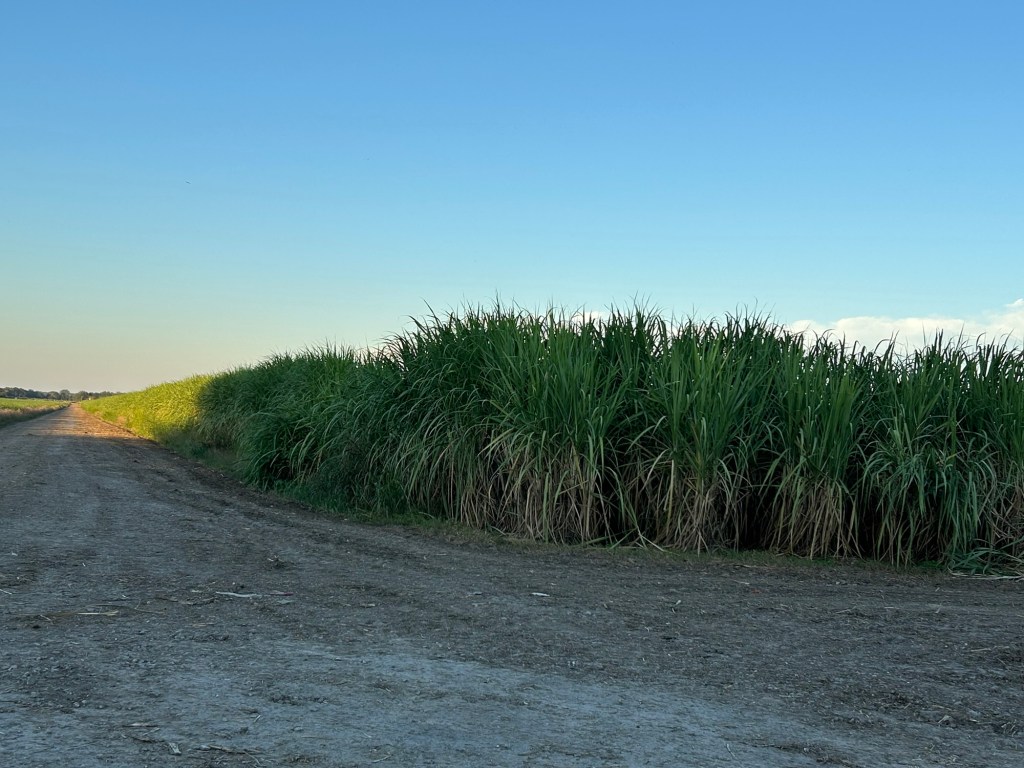
Yesterday as the sun was going down, I was delivering food to a friend down the country roads, so I stopped to take some photos of the cane fields. I didn’t get a shot of the big dinosaur-like harvesters, and I was swatting at swarming gnats, but I loved the light of the autumn sun falling down the fields.
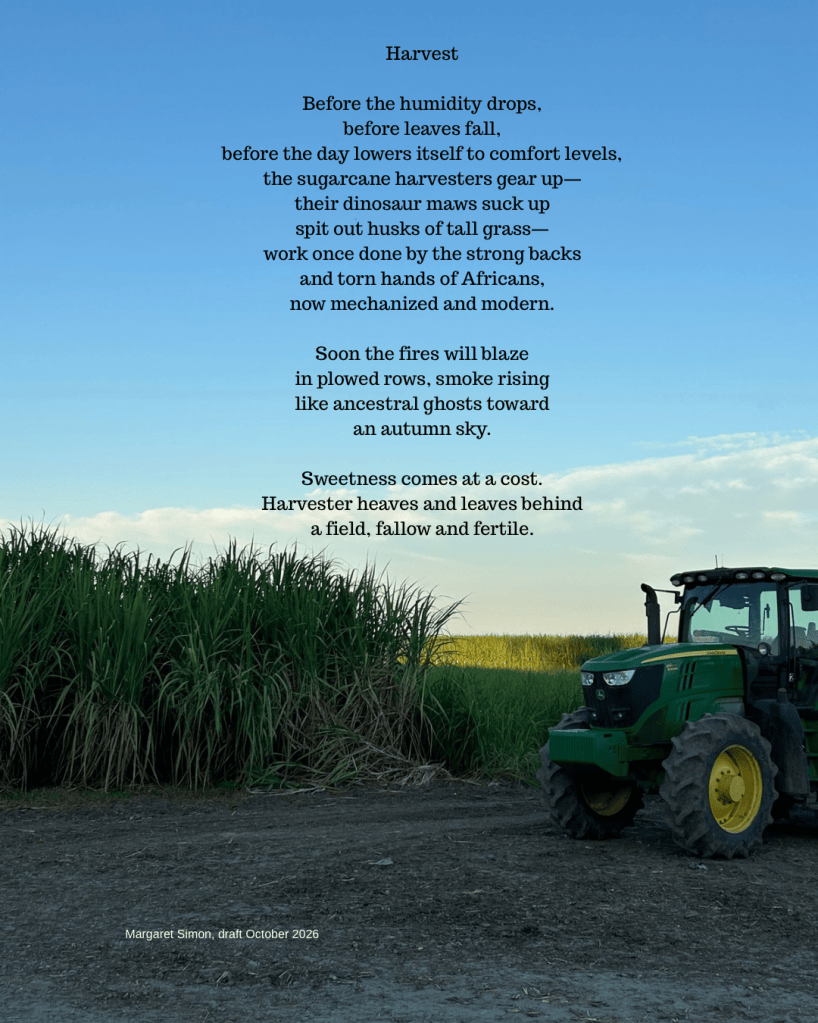
Harvest
Before humidity drops,
before leaves fall,
before the day lowers itself to comfort levels,
sugarcane harvesters gear up—
their dinosaur maws suck up
spit out husks of tall grass—
work once done by strong backs
and torn hands of Africans,
now mechanized and modern.
Soon fires will blaze
in plowed rows, smoke rising
like ancestral ghosts toward
an autumn sky.
Sweetness comes at a cost.
Harvester heaves and leaves behind
a field, fallow and fertile.
Margaret Simon, draft


These images of sugarcane harvesting and local associations with harvesting for fall and what it means are deeply entrenched in the cultural roots of place and belonging. I love that you shared the swarming of gnats and the smells of the mills. Even though those things aren’t the gold stars of what you love about it, they make the reading experience richer for the reader. I love burning leaves, and that smell of fall smoke makes me think of toasted marshmallows and family gatherings.
Like you, I love the photo of the sun sliding away. Thanks for teaching us about the sugarcane harvest. It’s new to me.
So interesting learning about the fall sugarcane harvest. Your poem paints a vivid picture — especially like ʼsmoke rising
like ancestral ghosts toward
an autumn sky.ʼ
Margaret, I am impressed by your harvest poem. It not only gives details about this harvesting process but it background historical information. Since I have never read anything about sugarcane harvesting and harvesters, I would like to showcase your image poem on my Autumn’s Ephemeral Gold Padlet Gallery if you are interested.
Thanks Carol. I already put it in the gallery.
You have made a uniquely regional experience available to all of us. Your words and images put us right there with you.
It’s really fun to compare and contrast your fall to Molly’s….so different and yet it’s the light and the feel of the air that comes through in your poems. I love that the harvesters are dinosaurs. Of course they are! I can just picture that.
Margaret, I found so much power in the line “Sweetness comes at a cost.”
Your word choice is so evocative throughout this poem and you’ve layered in so much history and meaning. It’s so foreign from my experience of autumn, and I’m fascinated by all you describe. I had hoped to attend Jone’s pop up but wasn’t able to. I love seeing what you all created when writing in community!
Margaret,
Until your poem, I never knew sugar cane grew in your part of the country. I became fascinated with this crop when we went to Kauai and tubed down the sugar cane trenches, years ago. I’m sorry I missed Jone’s pop up this time – I’ve attended in the past. It would have been nice to see all of you.
Oh, Margaret… a “day lowers itself to comfort level” …I see the strong, tired back of original harvesters finally surrendering to rest. Was that in the original? Beautiful.
I didn’t change much, but what I know about poetry is that each reading can reveal different meanings. Thanks for reading.