Feeds:
Posts
Comments

Archive for the ‘Books’ Category

See more posts at Two Writing Teachers Slice of Life .


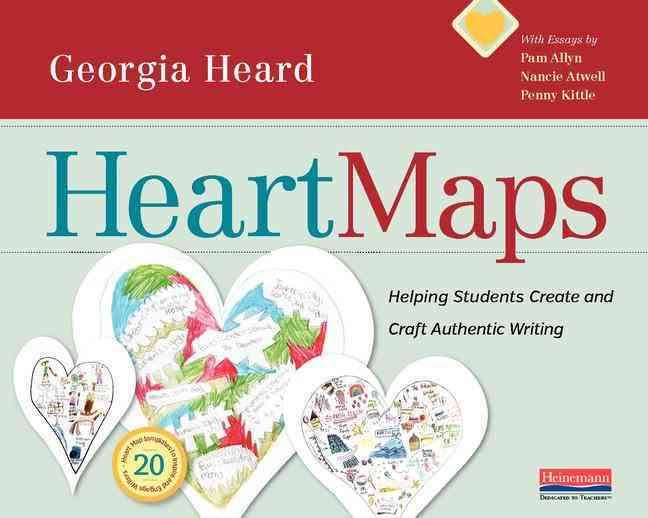
I’ve been a fan of using heart maps in my classroom for a while.  At the beginning of the year, we made name heart maps.  Later in the year, we may use a heart map to identify an interest area for a research project.  This week, for the first time, I tried out readers’ heart maps.  Georgia Heard’s book about heart maps offers many different styles.  I tend to use the simple design.  Plain white paper. Taco fold. Draw half a heart. Cut it out. Then glue in your journal.

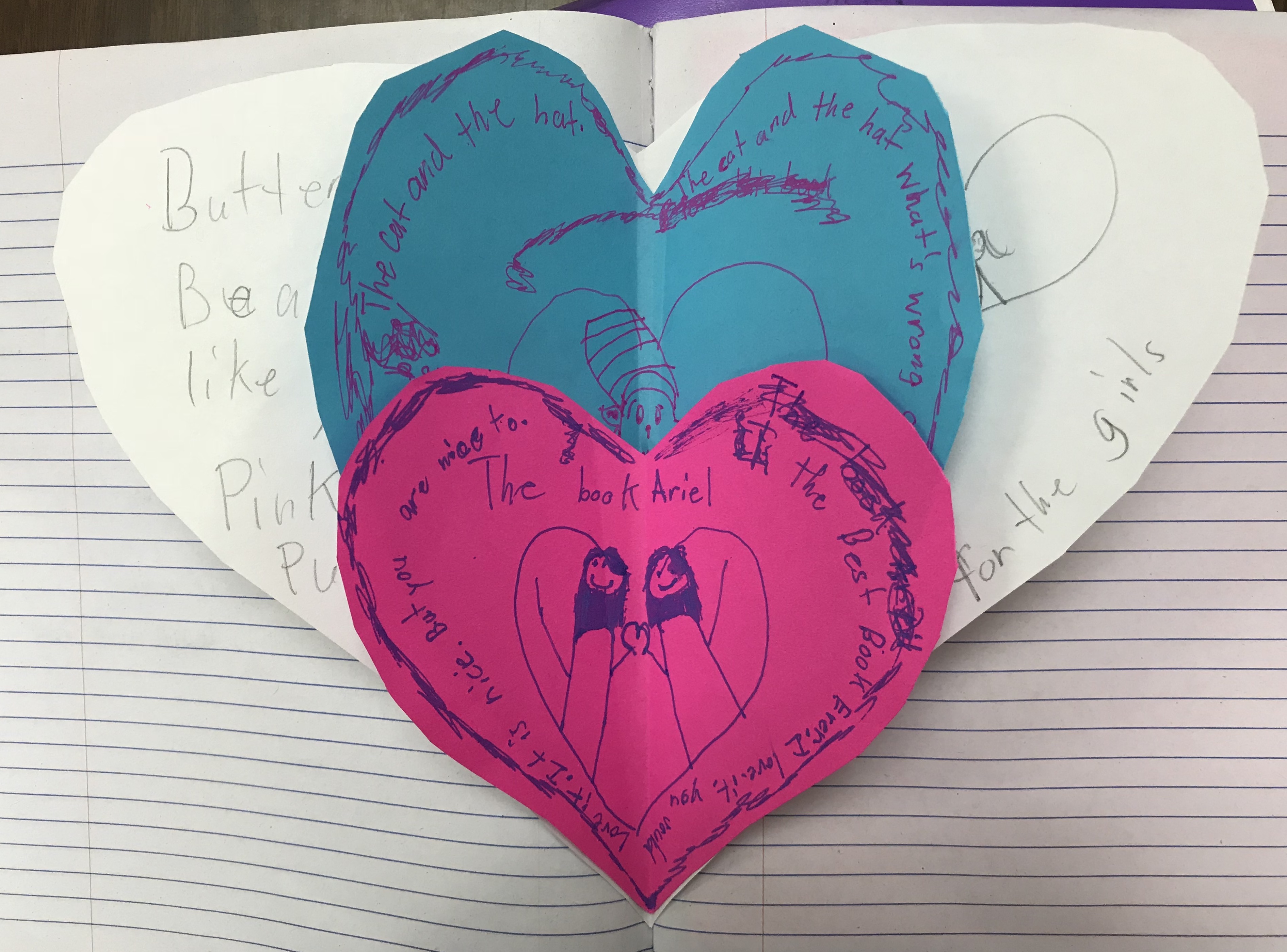
Chloe decided to cut out three hearts.  She made one with white paper.  Then she asked if she could use colored paper.  Then she made a blue one and a pink one.  I suggested that she could layer them one on top of the other.  She loved that idea.  One heart became about her favorite book at home about Ariel.  She’s a Dr. Seuss fan and made her blue heart about Dr. Seuss.  On the big white heart, she chose herself and wrote one of her poems.  Why not choose yourself as your favorite author?

Chloe’s layer of Reader’s Heart Maps.

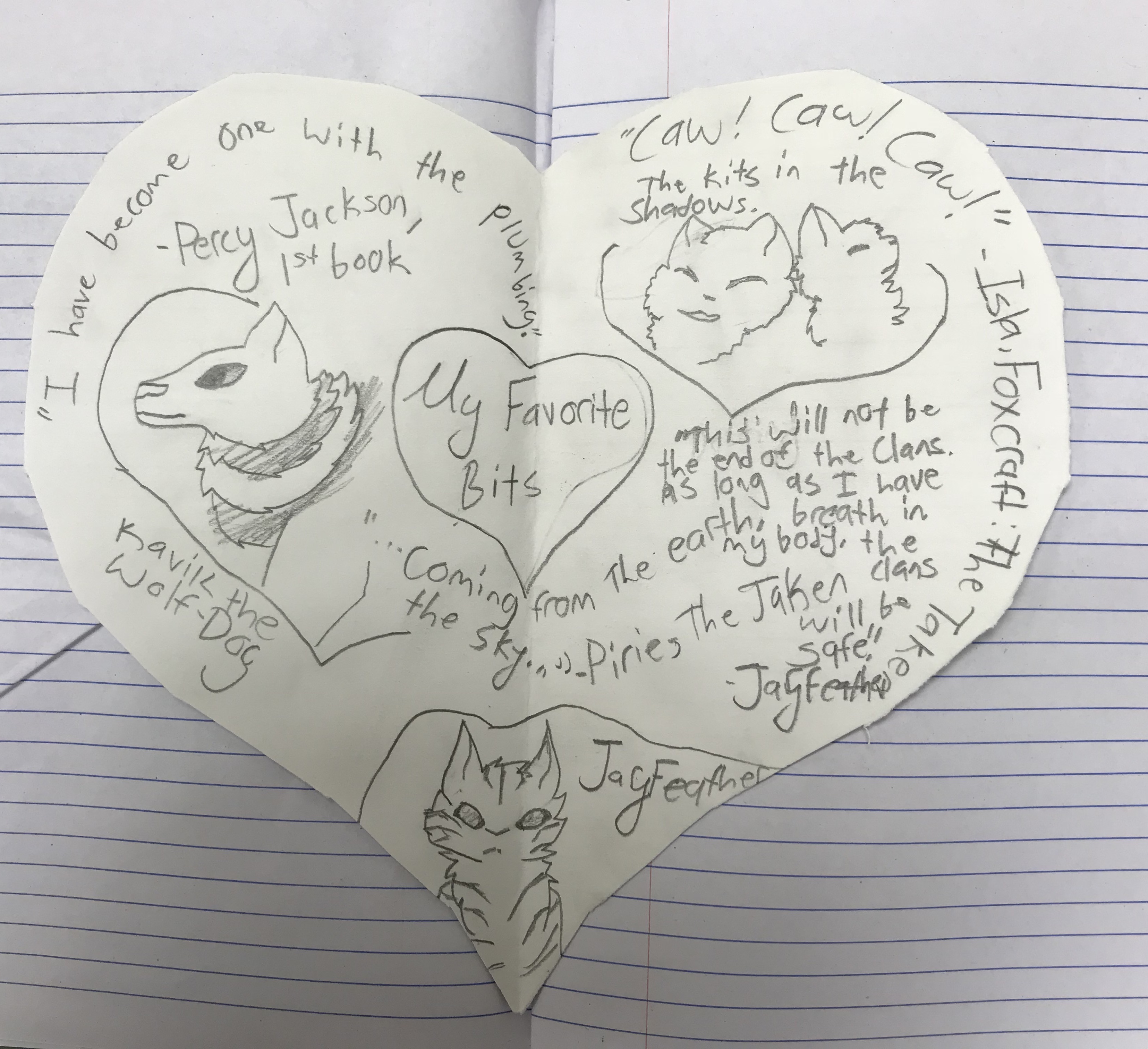
Madison decided to fill her reader’s heart map with quotes from her favorite books.  Her all time favorite quote comes from Percy Jackson, “I have become one with the plumbing.”  She laughs out loud.


Madison’s reading heart map


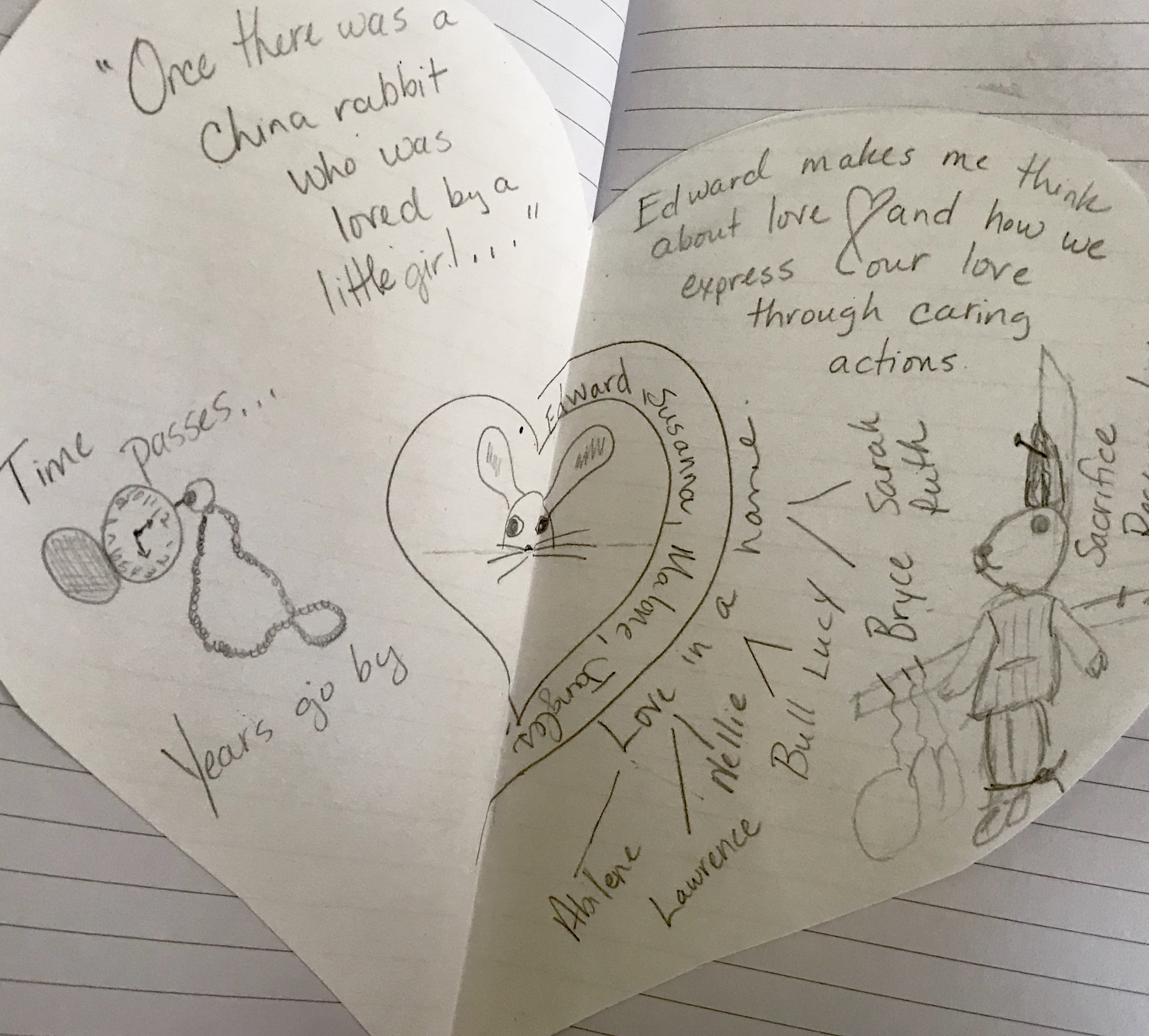
I’ve been reading aloud Kate Dicamillo’s “The Miraculous Journey of Edward Tulane,” so my reader’s heart map became about this book.  Edward breaks my heart over and over again.


My reader’s heart is broken and healed by Edward Tulane.

I think making heart maps is a great way to honor your students’ individual choices in reading.  They can express what they love to read in a reader’s heart map. We will come back to the heart maps to write about ourselves as readers.  What would you make your reader’s heart map about?


Read Full Post »

Please use this button on your site for DigiLit Sunday posts


CyberPD got well underway this week.  All over the globe teachers are reading and discussing Dynamic Teaching for Deeper Reading by Vicki Vinton.  I began reading this book back in June and wrote about my first impressions here. 

I understand Vicki’s frustration with the way reading is being taught.  In order to meet the Common Core Content Standards, we have whittled down the process of reading to extracted strategies.  These strategies help teachers deal with gaps that tend to follow children through their learning career; however, they deny the full process of reading, the experience as a whole.

I am also reading Disrupting Thinking: Why How We Read Matters by Kylene Beers and Bob Probst.  I find the theories in both of these books parallel.  The two books profess that we have taken out not only the whole meaning making process from reading instruction, we have also removed the joy.

Joy of reading is the only thing that will create lifelong readers.  By moving students through the act of reading without addressing how the text makes them feel, we rob them of the experience of seeing themselves in a book or becoming empathetic with someone who is different.

Vicki Vinton professes that we should shift the focus of reading instruction away from text dependent questions to the actual thinking that the reader does.

If our ultimate goal is truly independence, we need students to do much more thinking that highly scaffolded approaches ask of them…students build their identity and sense of agency as readers when they’re the ones doing the work. (p. 23)

At the end of chapter 2, I have highlighted an entire bulleted list of things to remember when planning for more complex reading and thinking.  I paraphrase the list here.

  • Reading is an education of the heart.
  • Meaning is the purpose of reading.
  • Consider how much the author hasn’t said explicitly, problem solve.
  • Help students build their identities as readers.
  • Every student is more than a level. Consider social-emotional needs as well when recommending books.
  • Nothing replaces your own personal judgement about what students need.

As a teacher of gifted students, I find the strict strategy based curriculum does not meet the needs of my students.  My students need more from their reading experiences.  They do not need to be confined by levels or forced to read material that doesn’t interest them.  They rebel against these strict practices.  Vicki’s ideas reflect my own philosophy of teaching.  I know as I continue to read, I will find more connections and ways to enrich the experiences of reading for my students.

If you have a digital literacy post, please leave a link below.


Read Full Post »

Find more celebration posts at Ruth’s blog.


Since I first read Donalyn Miller’s book The Book Whisperer, I have implemented the 40 book challenge.  I teach 1st-6th grade gifted kids.  These kids are usually readers when they walk into my classroom.  My bulletin board houses sticker charts all year long.  Students add a sticker for every book they read.  Every nine weeks grading period I remind them to update their charts, but other than this, I leave them alone.

I do not believe in gimmicks to get kids to read.  What I do believe in is finding space to read every day and knowing a student well enough to place a just-right book into their hands.  My students have not all met the challenge, but this year a majority of them did.  This week we colored bubble numbers celebrating their achievements.

This Animoto video is a showy one. I didn’t get a posed picture will all of my kids, but here are a few proud readers. Enjoy!

https://animoto.com/play/q3z0TlAxDyNWvhIyfliGNg?autostart=1

Read Full Post »

Join the Two Writing Teachers blog for the Slice of Life Challenge.
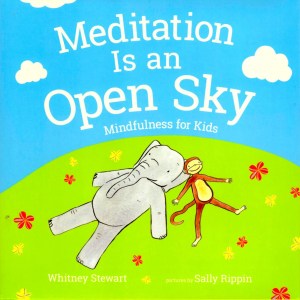
At the SCBWI conference in New Orleans, I met Whitney Stewart.  She is a nonfiction writer.  I bought her book, Meditation is an Open Sky: Mindfulness for Kids.  Whitney has practiced meditation throughout her life, but only recently turned this love into a picture book and mindfulness teaching. 


Earlier this week I used her book as our read aloud.  I found meditation music online, turned out the lights, gathered pillows, and asked my students to settle down for meditation.  This was easier for some more than others.  One student opted to sit in his desk and put his head down.  Another opted to continue writing a slice. But a few sat cross-legged on pillows, closed their eyes, and listened to the meditation prompt from the book.


There was movement.  There were giggles.  Meditation was a new idea, an awkward idea.  This may take a while to get the hang of.


I read two of the meditation exercises.  The second one, Protection Circle, asked the students to imagine a glowing ball of white light between their eyebrows.  “Breathe out and send the light out of your forehead to surround your body.” Then we moved on to a red light in your throat and a blue light inside your heart.  Each ball of light was breathed out to encircle you with light.


Following the meditation, Kaiden said to me, “I imagined the three balls of color were fear, anger, and sadness.  But when they left my body, they looked like balls of fire.”

This morning, two of my students came into my room before school asking if they could meditate.  Again they sat on pillows on the floor with lights out.  I read another meditation from Whitney’s book.  They said they felt calmer and more prepared to start their day.  

Whitney’s meditation book is illustrated with child-like images of an elephant and a monkey. While reading aloud, the illustrations don’t matter.  What matters is the space to clear the mind.

I don’t know if I’ll keep this up, but I wanted to try it.  My students are especially stressed because they just completed 10 days of practice testing, and the actual state testing starts in two weeks.  Meditation works for me.  I’m glad to have a resource for passing it on to my students.

Read Full Post »
Join the Two Writing Teachers blog for the Slice of Life Challenge.


Raising three daughters is a challenge. Now that they are adults, I try to forget the tough times. I like to forget that Maggie hated the dresses that I smocked. And that Katherine wanted to wear Sunday shoes to school. Martha wore the smocked dresses, but did not like matching her sisters. Each girl had her own personality, and in truth, I had a hard time keeping up. “Mom, don’t you know I Hate baked fruit?”

This weekend at the first SCBWI LA/MS regional conference, I met picture book author and illustrator Sarah Frances Hardy. Who knew when she sat at my table that we would connect in so many ways? She now lives in Oxford, MS, but she grew up in Jackson, like me. Later in the evening we sat next to each other at dinner and found out more things we have in common; we both have three daughters.

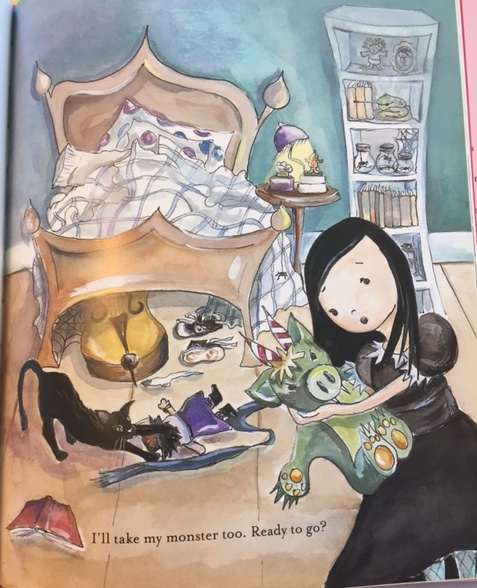
Sarah hilariously depicts the individual likes and dislikes of girls in her latest picture book, Puzzled by Pink.

Izzy’s sister Rose loves pink, but Izzy wears black, has a black cat, and carries a monster doll. It’s Rose’s birthday and Izzy refuses to wear a pink tutu. Izzy makes a party of her own in the attic complete with an invisible friend. This book speaks not only about being unique and accepting every one as they are, it also speaks to creativity and imagination. I am especially attracted to the details in Sarah’s artwork. All the way to the creepy spiders.

Sample page from Puzzled by Pink. Can you find the spiders?

On Sarah’s blog site, there is a post about making a birthday party celebration based on the book. There are links to fun crafts, too. Consider having a Puzzled by Pink party in your classroom. What costumes would each student wear? Let’s celebrate differences!

Read Full Post »

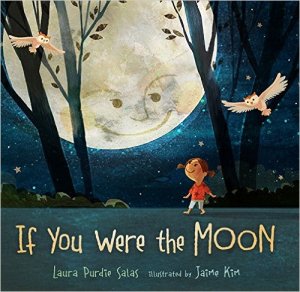
if-you-were-the-moon

Before you begin to read If You Were the Moon by Laura Purdie Salas, turn this music on in the background.

Illustrated in dreamlike images by Jaime Kim, Laura takes us on a journey of discovery about the moon. In the beginning, the young girl muses on how easy the moon’s job is, but the moon explains. “If you were the moon, you would…” Along with delightful metaphor are embedded facts from how the moon was formed to Neil Armstrong’s iconic walk. Artists are inspired by the moon. Hence the musical piece, “Clair de Lune.” I remember listening to my mother play this on the grande in our living room.
A glossary and further reading section make this book teacher-friendly.

I often use picture books to lead my students to their own writing. I can imagine prompting my students with the words “If you were _________.” Students could research their favorite planet or natural disasters (my students love them!). Then they could write and illustrate their own books including interesting facts along the way. Finding a way to tie a book to writing enriches the classroom experience.

Laura sent me this amazing teacher’s guide written by Randi Miller Sonnenshine. This guide includes activities across the curriculum.

If You Were the Moon releases March 1st, 2017. Get your copy today!

Read Full Post »

IMWAYR 2015

I grew up in the 1960’s and 70’s in Jackson, Mississippi. I didn’t really know about prejudice, but I remember well when our schools were integrated. I was in the fourth grade. We went home for two weeks and came back (I still attended a neighborhood school) to new students and new teachers. Mrs. Love was my new 4th grade teacher, the first African American teacher I had ever met. She beamed with joy and kindness. Her name completely expressed who she was. Her classroom was fun and engaging. The color of her skin made no difference to me. I was just so happy to be back in school.

In Ruby Lee and Me, the schools of Shady Creek, North Carolina, were being integrated. Sarah would attend school with her best friend Ruby Lee, but it’s not as easy as it sounds. Sarah is dealing with a huge load of guilt. Her sister was hit by a car and hurt badly, and Sarah thinks it was her fault. While her sister is in the hospital, Sarah stays with her grandparents. She messes things up with her good friend Ruby Lee and calls her the “N” word. Apologizing in the midst of small town racial issues is difficult. Can Sarah save her friendship?

Sarah and Ruby Lee meet their new seventh grade teacher, Mrs. Smyre who reminded me of Mrs. Love, the new African American teacher in a previously all white school. I was curious about author Shannon Hitchcock’s process to publishing this book. She shares some of her story in the end pages. Like me, she was raised during this time period of school integration. Her favorite teacher, like Mrs. Love and Mrs. Smyre, was Mrs. Pauline Porter.

I contacted Shannon and interviewed her by email.

When writing about the past for children of today, I focus on the universal. RUBY LEE & ME is about the love Sarah has for her sister and her best friend. Those are feelings kids still experience today, and along with the universal, I sprinkle in a generous dose of history. Kids may be surprised that Ruby Lee couldn’t swim in the town pool, or eat in Bubba’s Grill, but hopefully, they’ll be outraged on Ruby’s behalf. Historical fiction touches our hearts because we experience the past through characters we care about.

Interracial friendship is at the heart of RUBY LEE & ME. I hope the book sheds light on how hard it was for blacks and whites to be friends in the 1950s and 60s. That may even lead to a discussion of how things have changed and remained the same. For instance, have today’s students faced friendship challenges with kids who are disabled, or of a different religion, or maybe speak a different language? We all struggle to understand people who aren’t like us.

My advice for writers is to read, read, read, especially books that have been published in the last five years or so. I’m also a big proponent of SCBWI. I met my editor at the Orlando SCBWI conference, and sold RUBY LEE & ME to her after revising on spec. I also love taking writing workshops because authors never stop learning.

From her post on Nerdy Book Club, April 4, 2016: The 1960’s were a turbulent time in my family and in my town. Though Brown v. Board of Education became the law of the land in 1954, our public schools remained segregated until 1967. I started first grade that year, and my school’s first African-American teacher taught in the classroom beside mine.

Mrs. Porter had a special gift for working with reluctant readers. So every afternoon, she changed classrooms with my teacher and worked with those of us struggling to read… I shudder to think what might have happened if I’d never caught up.

Thanks, Shannon, for your bravery in writing this book, for sharing a piece of your own life story, and helping students to see how things have changed, and how some things, like friendship, love, and understanding, are universal.

ruby-lee-and-me

Read Full Post »

Find more celebration posts at Ruth's blog.

Find more celebration posts at Ruth’s blog.

There are those weeks that seem to go on and on, yet offer nothing to be celebrated. Sometimes I have to look harder to find the bright spots. I am actually ashamed that I felt this way yesterday because this morning I looked through my mail and found so much to celebrate.

I signed up for a poetry postcard exchange. I thought the giving and receiving was over, but this week I got three more poetry postcards.

New Year poem cards from Sylvia Vardell with a Wonder Woman stamp.

New Year poem cards from Sylvia Vardell with a Wonder Woman stamp.

Poem from Donna Smith: Listen to the sounds crunching, munching, lunch a foot Leaves nourishing earth

Poem from Donna Smith:
Listen to the sounds
crunching, munching, lunch a foot
Leaves nourishing earth

Handwritten poem and card from Kim Urband:

Summer Storm
Stone-gray clouds steal azure sky
Lightning stabs, singes
Liquid silver glazes hills
Relinquishes to Rhapsody

–Kim Urband

This sweet, uplifting message from Joy Acey:

My body feels electric like new years fireworks
blazing in starlight.
I want to raise my arms
to twirl and dance in the moonlight.
Poetry fills me
and runs out of my pen.
May the force be with your poetry.
–Joy Acey

And an invitation to my daughter’s wedding in March. Here we go again!

maggie-wedding-invitation

preaching-interior-2-1000x647
This week I read aloud Preaching to the Chickens about John Lewis’s childhood. I wanted my students to know his name and to have a better understanding of the fight for civil rights. This book is beautifully illustrated. One of my students, Madison, was inspired by the paintings to draw her own yard of chickens. I love the personalities of each of her chickens.

Chickens by Madison, 3rd grade.

Chickens by Madison, 3rd grade.

I didn’t have to look very hard to find these celebrations today. What are you celebrating?

Read Full Post »

#MustRead2017

mustreadin2017

Carrie hosts the MustRead2017 roundup here.

mustread2017


Here I go again, joining another challenge.  I want to thank Carrie Gelson and her charge to read that stack of books, those books that I’ve bought on recommendations of others and let sit on the shelf.  And there are books that I haven’t caught up with yet, but I want to.

In 2015, I attended an SCBWI conference in Houston.  I didn’t know a soul.  On the walk across the street from the parking lot to the conference center, I met a delightful woman.  She had a charming Scottish accent.  She befriended me for the day.  We sat together, talked, shared, and ended up having lunch together.  Then within the next year, she got an agent and was on her way to publish the very book she was pitching at the conference, Wait for Me.  I can’t wait to get a copy when it comes out on January 31st.

At the same conference, I learned about Nicola Yoon and her debut novel, Everything, Everything.  I loved it and look forward to reading her second book, The Sun is Also a Star.

Is it cheating to put a book on my list that I just finished?  In truth I didn’t start it until 2017, but Wish by Barbara O’Connor was my companion this week while I was recovering from a nasty stomach bug.  This book completely drew me in.  The character’s voice was charming, real, and compelling.  I’m so glad I finally read it.

There are times in my teaching life that I just can’t seem to find the time to read.  I read at bedtime and sometimes only a paragraph before I fall asleep.  I am hoping my list of “must reads” inspires me to be more dedicated to my reading life.  I feel like a hypocrite when I push my students to read, read, read, and I don’t keep up a strong reading life myself.  Maybe you can help by checking in with me every once in a while.

And I hope you will share your reading list with me.  I think, in truth, that’s what this challenge is really about, connecting, sharing, and reading.


Read Full Post »
Poetry Friday is at Donna's site: Mainly Write

Poetry Friday is at Donna’s site: Mainly Write

In November at NCTE16, I was privileged to finally meet poet Jeannine Atkins.  I got a copy of her upcoming book in verse, Stone Mirrors.  I didn’t know what this book was about.  I just loved the cover.

stone-mirrors


The beauty of this book is on the inside and the outside.  Jeannine tells the story of Edmonia Lewis, a Objibwe-Haitian-American woman, who in 1862, had the rare chance to attend Oberlin.  While there, she became mixed up in a controversy over poisoning.  She was acquitted, but forced to leave the school.  Her future took her to Boston and Italy where she became a successful sculptor.

The facts, however, are not the important aspects of this story.  What I found intriguing was Jeannine’s unique way of writing story in verse.  As I read, I was drawn in  by the melody of the language as well as the fascinating story. I loved following Edmonia through her growing confidence as an artist and as a woman.  I wonder how Jeannine got into the mind of Edmonia.  How did she know the feel of the stone she carved?  “She hammers out stillness, holding a life in mid-speech or stride, like a deer between danger and trust.”

Intertwined into the story of Edmonia Lewis are lines of wisdom, carved into Jeannine’s poems like the images Edmonia carved in stone.

Broken Colors

Edmonia carves the smokey smell of drawing pencils,
like a burned-down fire, and hardening clay,
with its whiff of a pond bottom.  She goes to the art room,
where each mark on paper offers a new chance.
She has nothing left but hunger for beauty,
small as the tip of a paintbrush.

She wishes the stove were lit,
though if smoke rose she might not be alone.
She smashes ice that sheathes
a jar of water to rinse a paintbrush.
She no longer draws goddesses, gods,
or anyone in transformation.
White people think metaphor belongs to them.

She opens a cupboard with boxes
printed with names, none hers.
She reads them as if studying a map
of places no one expects her to see.
The shelves and boxes are divided
like classrooms where walls come between
art, poetry, and myth. In history class,
teachers separate the dead from the living.
All through the school, lines are drawn between
right and wrong, white and colored, rich and poor,
truth and lies, facts and dreams, courage and fear,
what belongs to one person and what doesn’t.
They forget that every time the wind blows,
the world asks everyone to bend.

from Stone Mirrors, Jeannine Atkins, January 2017


On a recent trip through New Orleans, we crossed the Hale Boggs Bridge. My daughter was driving, so I could take this amazing picture. As the time changes over to a new year, I contemplate what may lie ahead.

Towers reach for time Carved into parting clouds Tuning my future Margaret Simon #haikuforhealing

Towers reach for time
Carved into parting clouds
Tuning a future
Margaret Simon
#haikuforhealing

Read Full Post »
« Newer Posts - Older Posts »