Feeds:
Posts
Comments

Archive for the ‘Teaching’ Category

Find more celebration posts at Ruth’s blog.

Thursday, Feb. 1st was World Read Aloud Day.  Back in November, Kate Messner posted a long list of authors willing to do free Skype visits.  I selected and contacted Sarah Albee, author of Bugged, Poop Happened, and Poison, amazing and engaging nonfiction books.

Each of my students in my morning class composed a question and were promised a chance to personally ask their question.

Argh!  Tech problems!

A quick call to the tech director, and he took over the computer and was able to solve the problem just in the nick of time.  My students were able to ask their questions, and Sarah expertly answered each one.
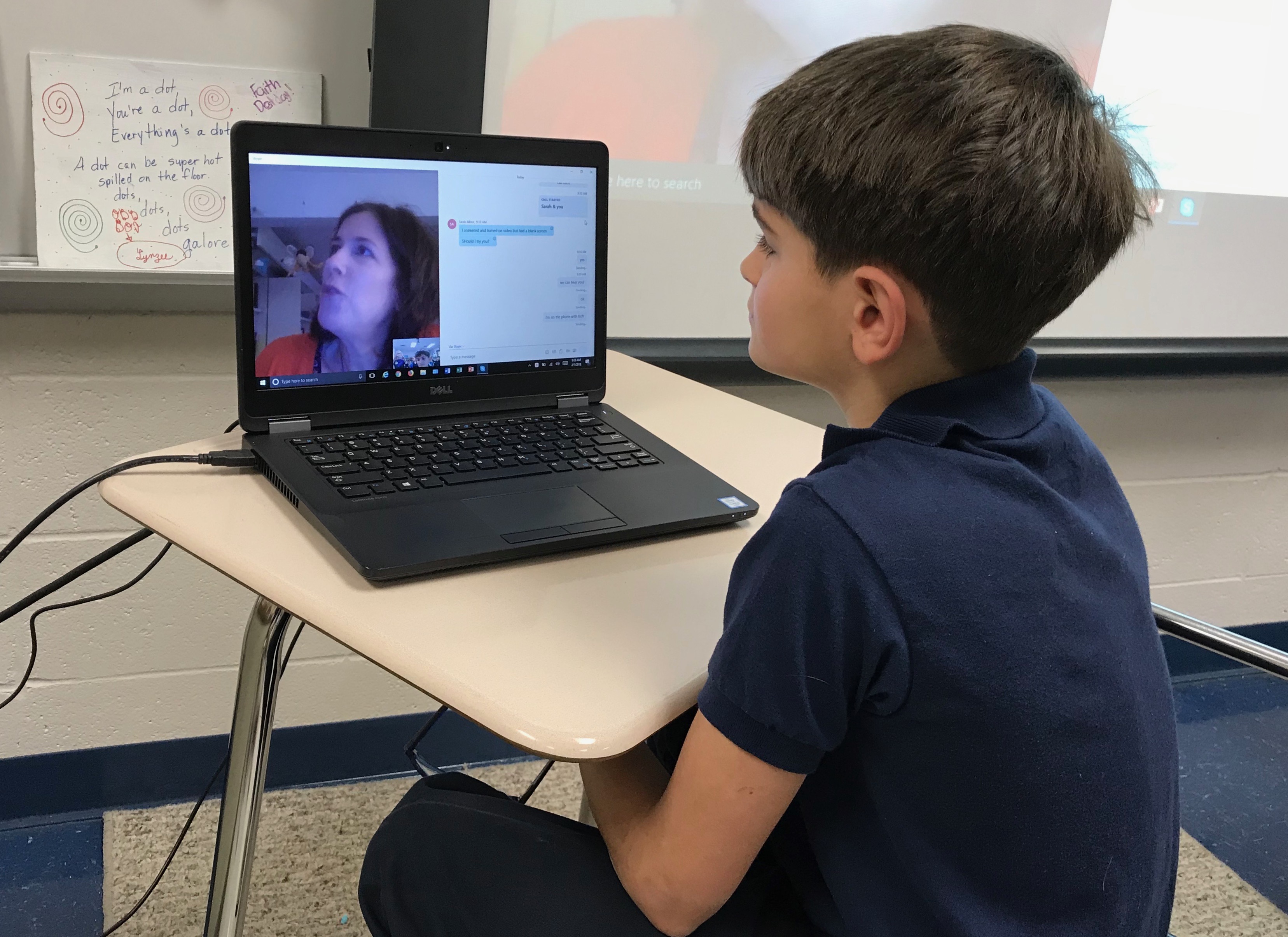
Even Erin’s question, “Do you know what a narwhal is?” did not stump this nonfiction research expert.  Sarah pointed Erin to a page in Poison in which she refers to the practice of using narwhal horns to simulate unicorn horns.

My students marveled in the length of time it takes to research, write, and publish a book.  Dawson, who is reading Bugged, asked what her favorite insect is.  Would you be surprised to know it’s an ant?!

Dawson later announced that it was the first time he had ever met anyone famous.  In a more perfect world where technology was flawless, I would Skype more often with “famous” people.  Authors are my heroes, and they are becoming my students’ heroes as well.

Read Full Post »

Poetry Friday round-up is with Donna at Mainely Write


This week there was a big moon event: the second full moon in January called the blue moon as well as a lunar eclipse that caused the moon to appear reddish and the fact that the moon was closer to the Earth than usual making it a super moon, thus blue blood super moon.

What better reason do we need for writing poems?

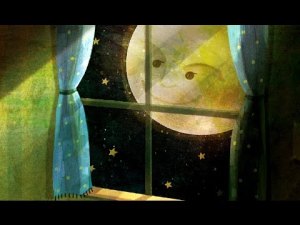
Prompted by NASA images and Laura Purdie Salas’s book If You Were the Moon, my students and I wrote moon metaphor poems.


Lynzee watched and wrote as slides of moon photos rolled across the screen.

Super Blue Blood Moon

Two birds, side by side,
front row seat
for what happened
in the early hours of the morning.

Birds flying in front of the moon
like sparkles on a disco ball,
they see, too, what happened.

Plane flying, too,
over the skies of Britain
like the moon’s huge moving tattoo.

Lynzee, 3rd grade

Chloe is new to writing poetry.  She’s a second grader.  She seems to be grasping the idea of metaphor in her poem.  She was so proud of her poem, she typed it in all caps.

THE MOON IS BRIGHT LIKE A STAR

IT IS NOT A STAR BUT IT IS FAR

THE MOON IS A BABY FOR EARTH

Chloe, 2nd grade

Madison is becoming quite a poet.  Her poem is one I used in other classes to model the use of metaphor.

Peppermint Moon

Red Splashing Shadow
Take a White Pearl
In The Sky

Peppermint Swirling
Shadow,
Flaming From
Embers
To White and Red Tongues,
Licking the Dark Coals
Of the Night

 A Flame
Red and White
Sends Embers Scattering Across
The Deep Black, Overhead
But A Golden Flame Rises,
A Bonfire To Cast
Shadow Around
The Gem.

A White Diamond Revealed,
A Golden Bonfire Raging
It Is Time For The Moon
To Rest,
Forever The White Diamond
Of the Night Sky.

Madison, 4th grade

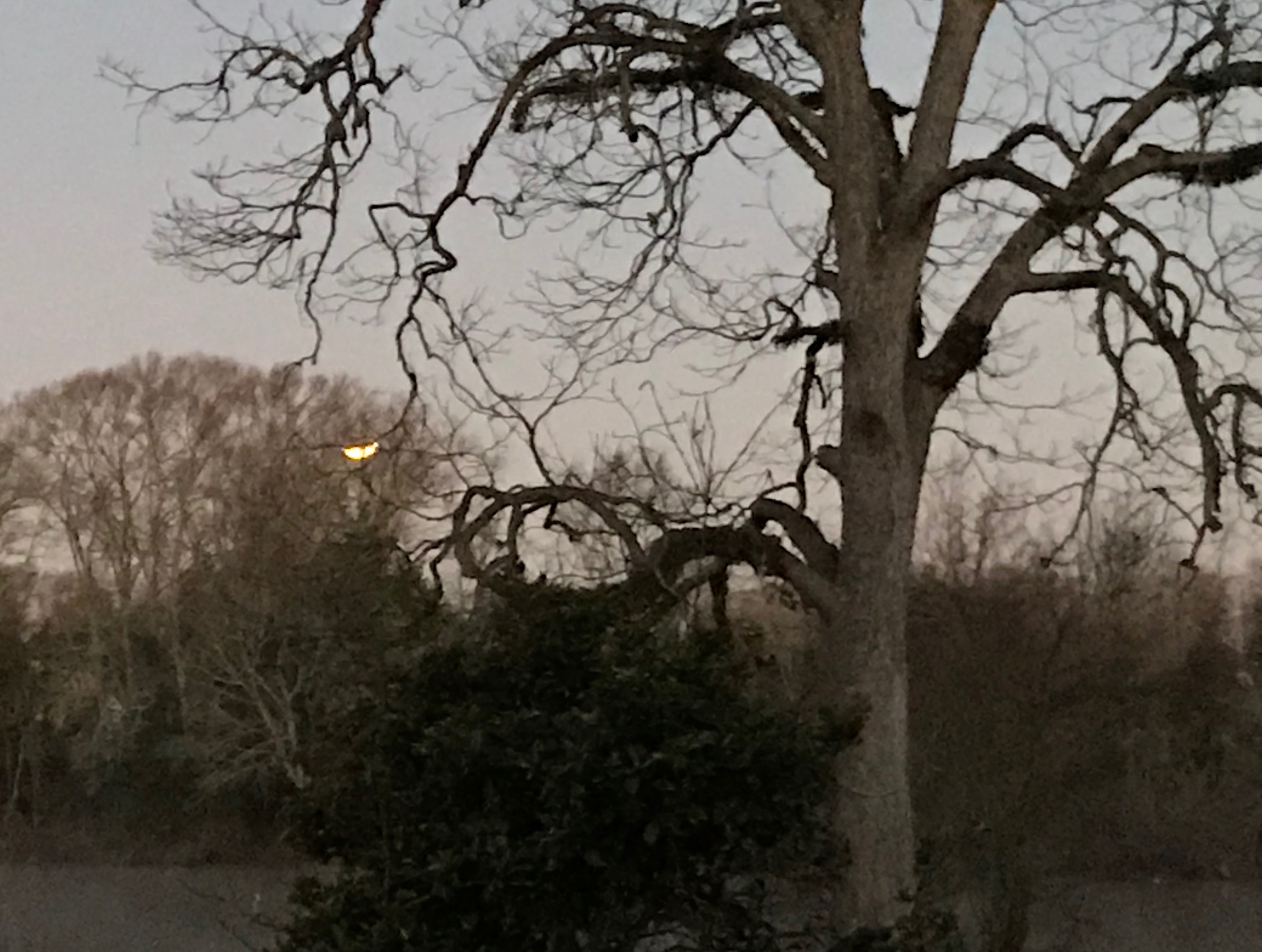
Eclipsed moon hides in the trees.

And here is a draft of a poem I wrote alongside my students.  I wrote two poems and combined them to make draft #3.

We all see the same moon.
All over the world,
Prague, Athens, Rome,
yellow, red, blue
sphere in the night sky.

I walked early this morning
watching the eclipse
of the full supermoon.
Minute by minute,
pieces fell from sight
like a giant hand
turning off the light.

In the shadow of a church steeple,
over desert hills,
setting behind our Lady Liberty,
a super moon eclipsed by our own
planet Earth.

As the moon set below the trees,
I thought of you
far away
seeing the same moon
in the same sky.

Margaret Simon, (draft) 2018

Yesterday I posted “Moon Wisdom” for Spiritual Journey (first) Thursday which included a poem by me around a painting by Michelle Kogan.

My post for #TeachWrite Chat this month is about sustaining a writing life by joining Poetry Friday.  See the post here. 

Read Full Post »

Join the Two Writing Teachers blog for the Slice of Life Challenge.


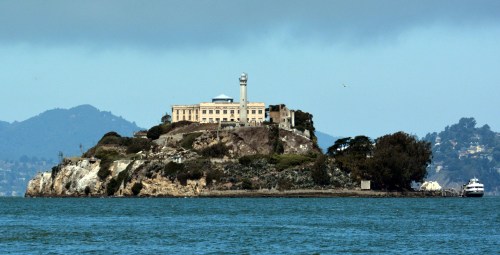
Last week my students and I read together a Scope magazine article titled, “Escape from Alcatraz.”  The title alone was enough to interest my students as well as the images of three fugitives believed to have escaped the highest security prison that ever existed.

Armed with the article and a video from MythBusters, I asked my students to make up their own minds about whether or not the fugitives escaped.  Students worked on rough drafts and by Wednesday were poised at the computers to type up their essays.

Alcatraz_Island_photo_D_Ramey_Logan

Photo from Wikipedia by D. Ramey Logan.

They were still bothered, however, because they didn’t know the truth.  Did the three men escape or not?  Searching for images to put into their blog posts, a student came upon a recent news report, recent as in “3 hours ago.”  We all eagerly gathered around the computer, reading over his shoulders.

A letter allegedly written by one of the escapees recently came to light. CBS San Francisco exclusively obtained it from a source.

“My name is John Anglin. I escape from Alcatraz in June 1962 with my brother Clarence and Frank Morris. I’m 83 years old and in bad shape. I have cancer. Yes we all made it that night but barely!”   

CBS News Jan. 24, 2018


What happens to an essay that has been written and worked on in conferences when new evidence emerges?

Different students responded in different ways.  One student placed the link to the article into his post.  Another changed his whole essay and threw away the rough draft.  Others adjusted and added to what they had already written. And some were not convinced by the evidence.  They kept their original theory.

In a recent blog post by Kate Roberts on The Educator Collaborative, Kate asks these questions: “Is it ever worthwhile to read as a community, to read a text someone else chooses for you, one that you would never read on your own? ”

Like Kate Roberts and many reading workshop gurus, I believe strongly in choice.  But when it comes to nonfiction, experiencing the text as a whole class is engaging and exciting.  Nonfiction encourages more research.  Students push each other, ask questions, and engage in a deeper way when reading nonfiction together.

This week we are reading aloud Poison by Sarah Albee to prepare for a Skype visit with her on Thursday, World Read Aloud Day.  I look forward to discovering where this will lead us.  Keeping kids engaged, wondering, and curious is what teaching is all about.


Read Full Post »

Find more celebration posts at Ruth’s blog.


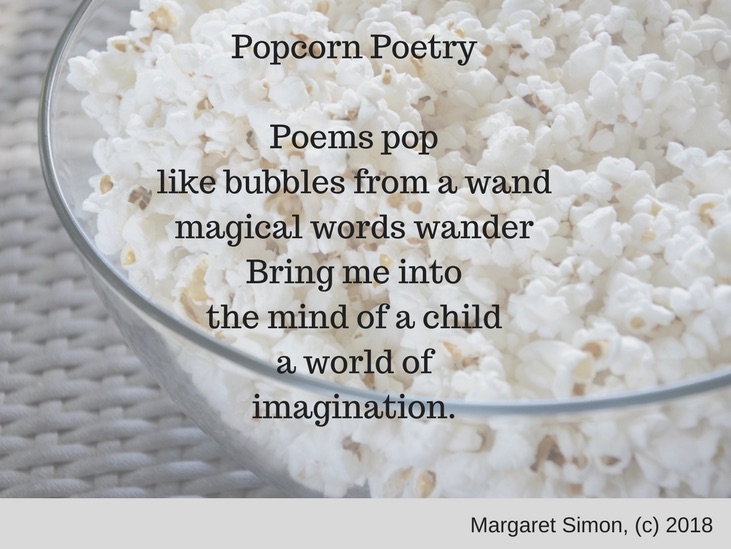
Early morning on Friday, I read Poetry Friday blog posts.  I read Irene Latham’s post here.  Her prompt suggestion came from a book that I have on my shelf, PoemCrazy by Susan Goldsmith Wooldridge, Chapter 31 “bring me magic.”

Inspired, I grabbed some packs of microwave popcorn and headed to school for Popcorn Poetry Friday!

Even a juice spill couldn’t dampen our poetry spirits.  The prompt calls for a walk outside, but we passed around the object inspiration box I had in the closet.  Each student picked an object to write about.

The instructions: 1. Choose an object; give it a name. 2. What does it look like? 3. Ask the object for a quality or deeper wisdom.

I believe this was the first prompt I’ve used this year that was successful for each student.  I typed each poem into a Google doc and on a whim, sent it to Irene.  Within our two hour class time, she responded.   She wrote a comment of encouragement on each student’s poem.  What a gift! They were thrilled.  Their teacher was thrilled.  Thanks, Irene, for your generosity and kindness.

Austin

Colorful butterfly
inspires the caterpillar
to rise up and fly.
Bring me your inspirational, stress-free life.

Lynzee

Black crayola paintbrush
dark as velvet,
give me your way of bringing color
to any situation
no matter how grey.

Mason

Bald eagle
white and burgundy,
bring me the ability
to soar faster than anyone
even if I mess up.

Andrew

Colorful feather
like the paintings of an artist,
give me a creative mind
like Pablo Picasso.

Trace

A turtle
that swims through the water
as wind does through the air,
bring me hope and peace
in ways as the water flows
through the currents of life.

Dawson

Dear little angel,
give me hope in time of anger and war.
Dear little angel,
enlighten me
with your sparkles and light
that shine so bright
every day and night.

Faith

Discarded flower necklace
connected by the same chain,
bring me your connection.

Like my family
all connected,
bring me gratitude.

Deep inside
a core of happiness,
bring me
your joyfulness.

Erin

Sandy hope
washed up on the shore
of value,
bring me confidence.

Erin extended the writing project and wrote a poem for each of us in the class.  Another amazing gift!  Poetry builds community.


Read Full Post »

Join the Two Writing Teachers blog for the Slice of Life Challenge.

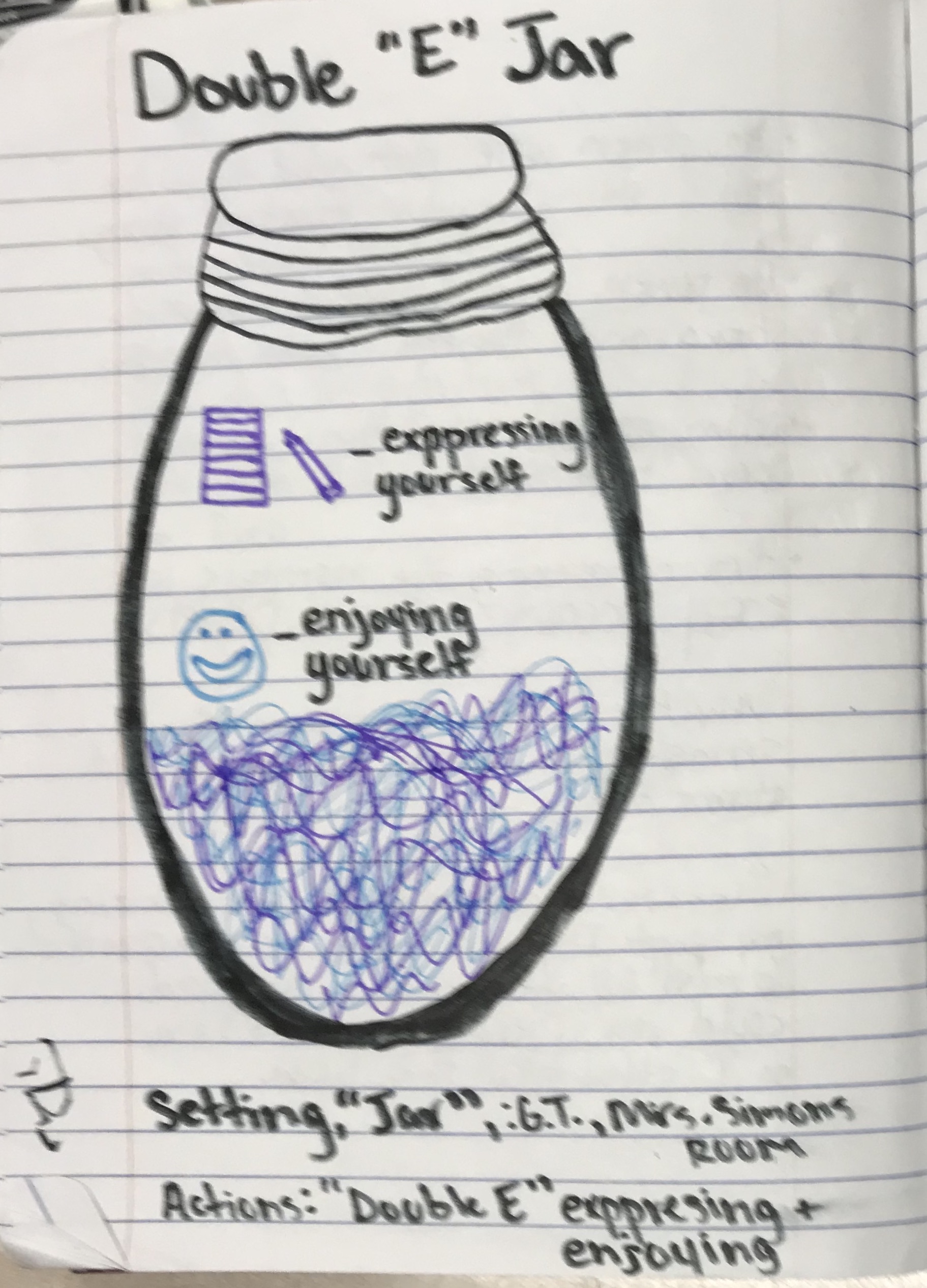
I am a co-moderator with the #TeachWrite chat on Twitter. (Note the graphic on the side bar.) One of my colleagues in this endeavor is Michelle Haseltine.  Michelle put a photo on Facebook of a journal page from one of her students.  The page was filled with the outline of a jar and words and sketches were drawn inside the jar.

I took this idea and presented it to my students with a Brene’ Brown twist from Braving the Wilderness. 

We all have times when we feel lonely.  Have you ever felt alone in a crowd?  Like you just don’t fit in? There’s no one around who sees you or that you connect with.

We all have these times.  But when we do, we can take with us a jar of things that make us feel joy, make us feel safe.  What would be in your jar?

One student jumped up from her seat to draw a jar on the board.  She labelled it “Our Happy Place Jar.”  Her instructions were for everyone to draw one thing from their jar onto our shared jar.  (I love it when kids respond to the lesson with such leadership and participation.)

My students drew a variety of jars.  Some were filled with specific things from our class, Slice of Life, read aloud, computer (blogging), friends.  Others find joy in nature or family or funny memes.  Whatever their choices, they engaged with the idea and filled their jars.

Near the end of the week, Chloe announced, “Even if I have to throw away this journal, I will tear out this page and save it forever!”  That’s what I call Joy!

Mrs. Simon’s Sea

We are fish,
fish swimming through a treacherous sea,

a book,
open and full,

a nest,
a place of warmth,

a pencil and paper
for expression,

and a poem.

by Lynzee, 3rd grade

Austin’s Double E Jar

Andrew’s Rainbow Jar

Read Full Post »

Find more celebration posts at Ruth’s blog.

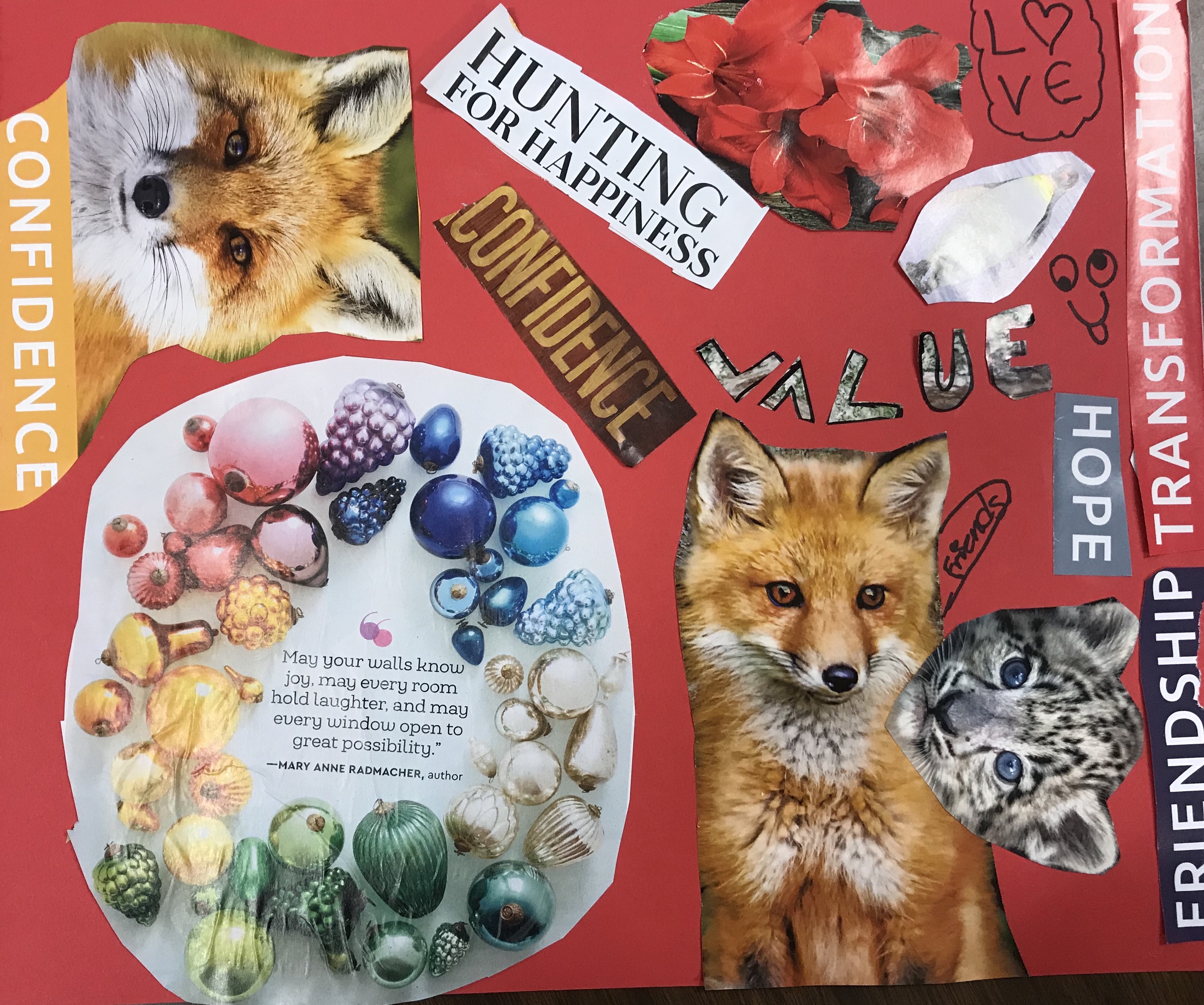
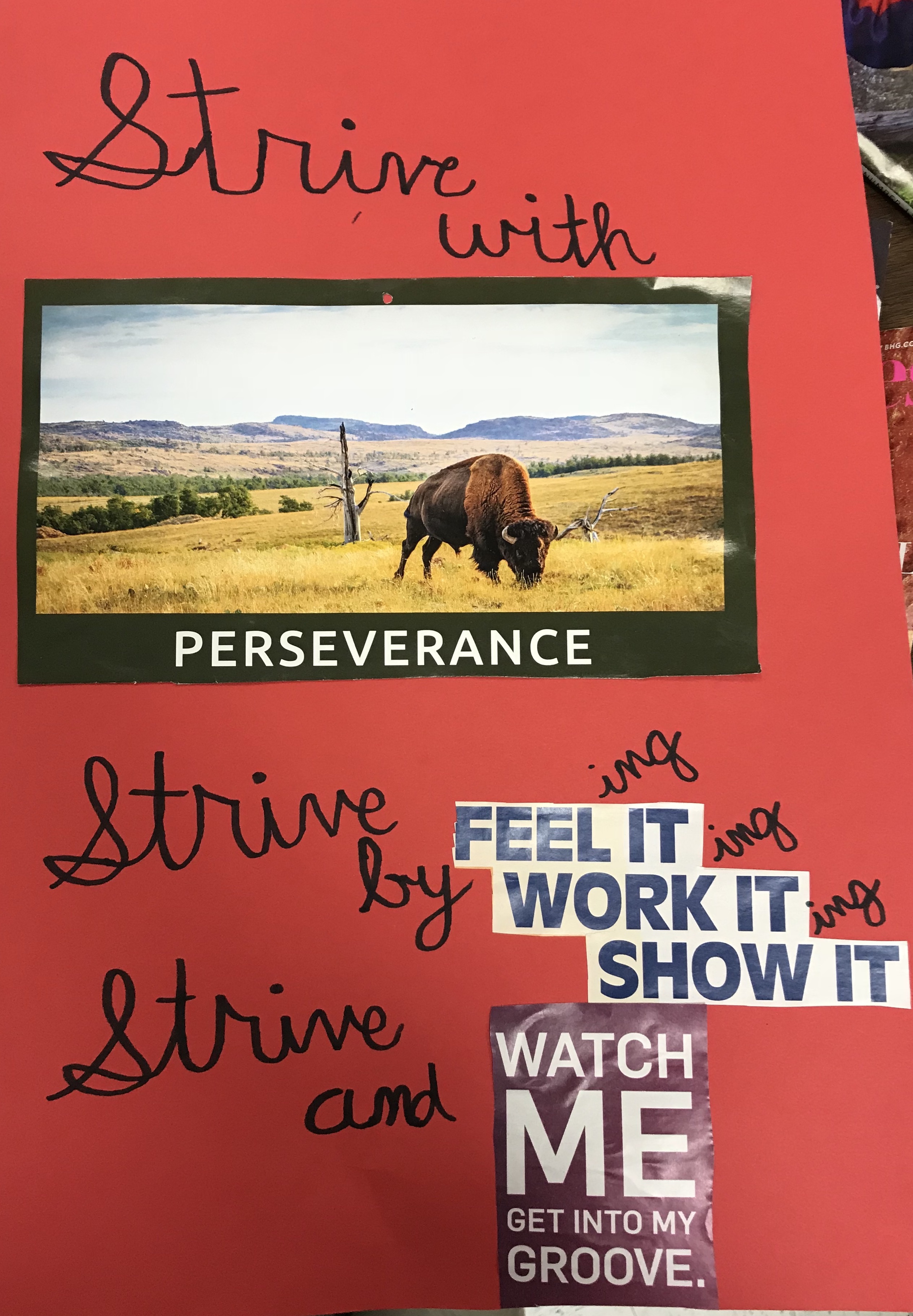
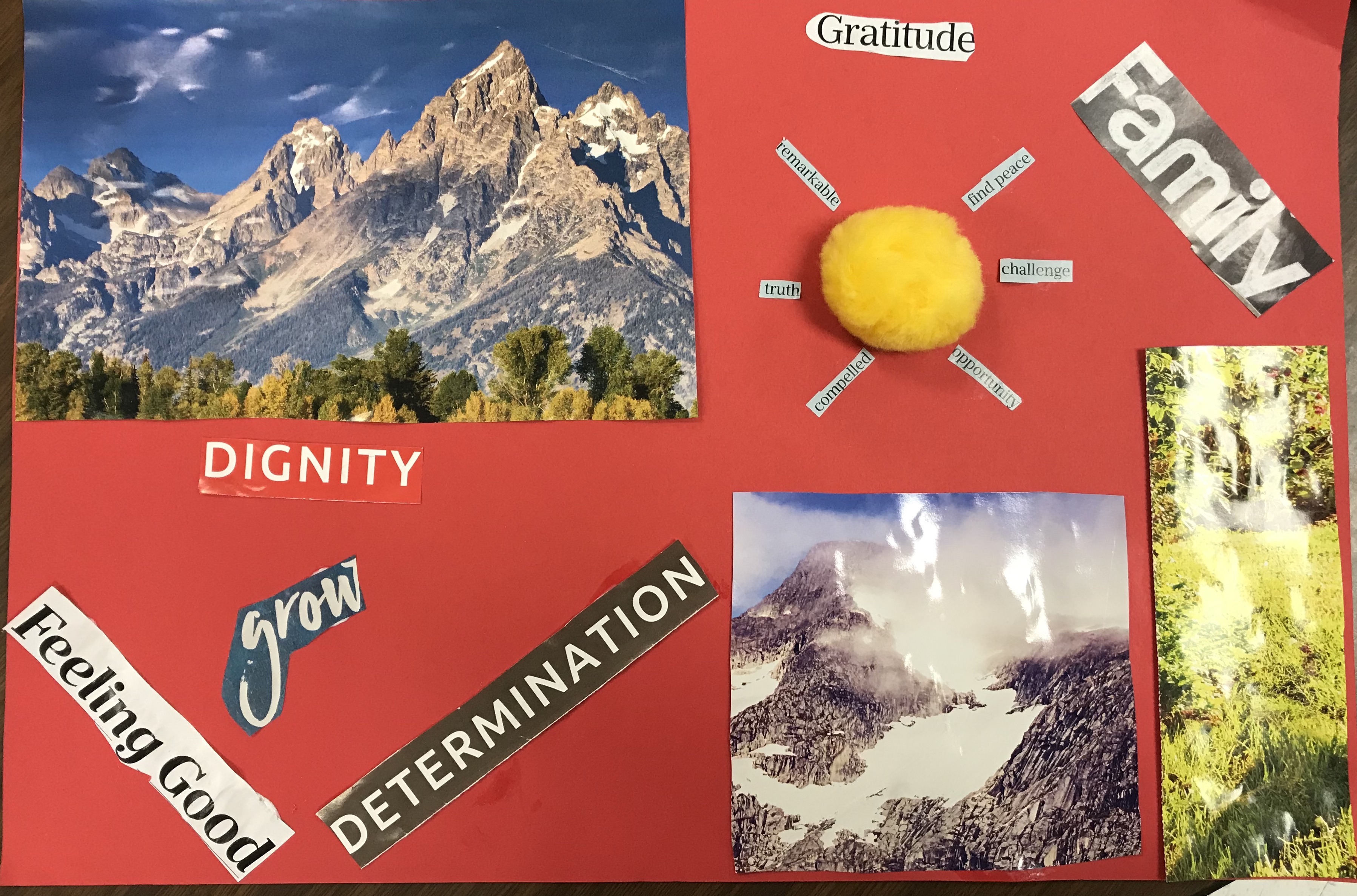
This week as we returned from our break and began 2018, I wanted my students to choose a One Little Word for their year.  To lead them in this, I created a Google slide show.  

My students were very thoughtful about their word choices.  With three choices to creatively represent their words, students rotated from magazine collage to Canva and Animoto. For their writing element, I asked them to write the journey to their chosen word.

This exercise confirmed a belief I have about students and literacy.  A child’s story should be told, honored, and respected.  Then you can reach, teach, and move them forward.

My students worked through their struggles, their heartaches, their goals, and their dreams.

Erin’s word is Value.

Erin wrote: “I chose value because it’s unique like me. To most people it’s the worth of money. But to me, it’s the worth of myself. I could have chosen other words like confidence, determination, etc. But I couldn’t live by those words. I couldn’t try to be confident for the whole year. The first week I would fail. But I can value myself. I can live by this word, whether it’s me trying to have more value in myself, or me knowing that other people value me.”

Austin chose the word Strive.

Austin wrote: “I got my one little word from basketball. Since the beginning of Christmas break, I have been playing the game a lot. I still have been going outside, but not as much as I usually do. So when it was time to get on the court, I was not ready. I was not ready to run a lot. I was not ready to dribble the ball. I was not ready to put the ball in the basket. We lost both of our games. My mom and my dad told me that if I was not on my game the whole time, I would have been ready for this moment. That is when I decided that I needed to strive to be what I want to be (basketball player). I couldn’t just sit back and do nothing and wait until it was time to do something. I decided to limit my ps4 time. I would work more, hustle more., and especially strive more. I decided to go to the time, not wait till the time came to me.”

Faith’s One Little Word is Gratitude.

Faith wrote: “My journey to get to my one little word all starts when the hurricanes and fires and floods all started. When hurricane Harvey hit Texas, the devastation was horrible. Watching the news and all the houses and building destroyed, it made me feel thankful and grateful for everything I have.”

Trace made an Animoto video about helping.  In his post, he wrote, “My One Little Word is Helpful. The way this train of thought all started was when my Mom had told me  ‘Maw-maw has a problem where she is starting to forget so we will need to help her more often. Also she is starting to forget to eat so she really needs our help.’ So now I go there almost everyday to help. ”

https://animoto.com/play/joYHfwU0Y3n7F4h0zGGStQ


Read Full Post »

Join the Two Writing Teachers blog for the Slice of Life Challenge.

Not every student is made to be a mentor.  A common thought about gifted kids is to encourage them to mentor other students.  As a teacher of gifted, I’ve seen students who work well with other students and I’ve seen those who don’t.  I feel it is important to know a student well before pushing him/her to help other students.

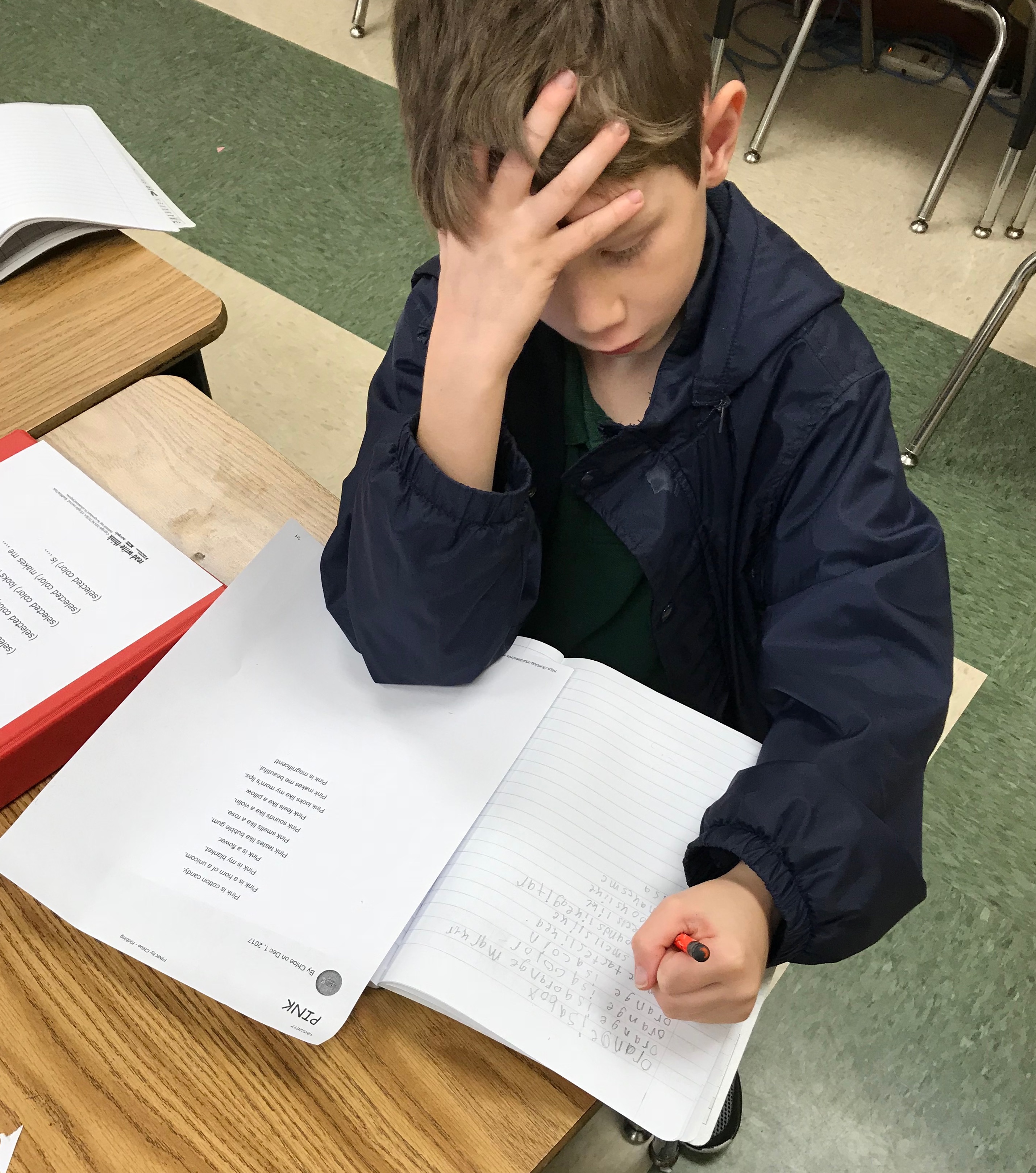
I haven’t taught Chloe long, but I knew she would make a great mentor. She is confident without being condescending.  She’s enthusiastic about whatever we are doing in class and spreads that enthusiasm.  So when I asked her if she wanted to teach her regular class about color poems, she literally jumped up and down.

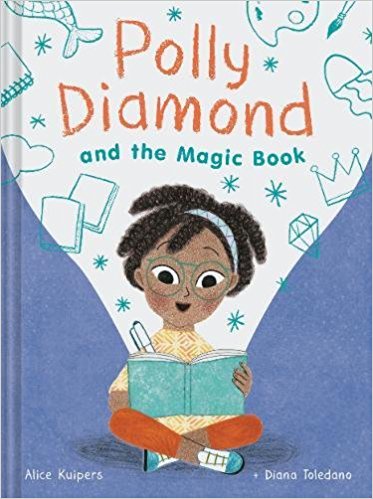
At NCTE I grabbed an Advanced Reader’s Copy of Polly Diamond and the Magic Book by Alice Kuipers and Diana Toledano. I also picked up a teacher’s guide which led me to the color poem pattern from Read, Write, Think.  (Polly writes a color poem that her teacher loves.) Chloe wanted to write a color poem like Polly.

First she chose her favorite color, pink, and made a list of pink things.  We talked about figurative language and how she could use it in her poem.  Chloe wrote this poem:

Pink is cotton candy.

Pink is a horn of a unicorn.

Pink is my blanket.

Pink is a flower.

Pink tastes like bubble gum.

Pink smells like a rose.

Pink sounds like a violin.

Pink feels like a pillow.

Pink looks like my mom’s lips.

Pink makes me beautiful.

Pink is magnificent!

When Chloe shared her poem with her classmates, they were ready to write their own.  Having a form helped.  Her friends selected their own favorite colors and used the form to guide their writing in their writing notebooks.  As she walked from group to group, Chloe checked in to see what they needed help with.  She was patient and helpful.  Her classmates were focused and serious about their writing.  Chloe was a proud teacher.

Writing is hard work!


by second grader Kelsie.


Read Full Post »

Click over to Steps & Staircases for more Poetry Friday.


Inspired by Project 1,2,3 originated by Amy Krouse Rosenthal and continued by her daughter, Lisa challenged us to make a metaphorical poem from an object/image.  Many of us took the challenge.  To see more poems, click over to Lisa’s blog to read more posts.

I brought this idea to my students and combined it with a lesson from Amy Ludwig VanDerwater’s book Poems are Teachers, “Make Metaphors” on page 136. We looked at model poems and talked about how an object can become a metaphor.  In one class, I passed around a paintbrush and said, “A paintbrush is…”  In another, I blew bubbles and said, “Bubbles are like…”  Each of these inspired beautiful responses from my kiddos.

  • A paintbrush is your imagination.
  • A paintbrush paints your path.
  • Bubbles are sparkling rainbows.
  • Bubbles are in orbit flying around Saturn.

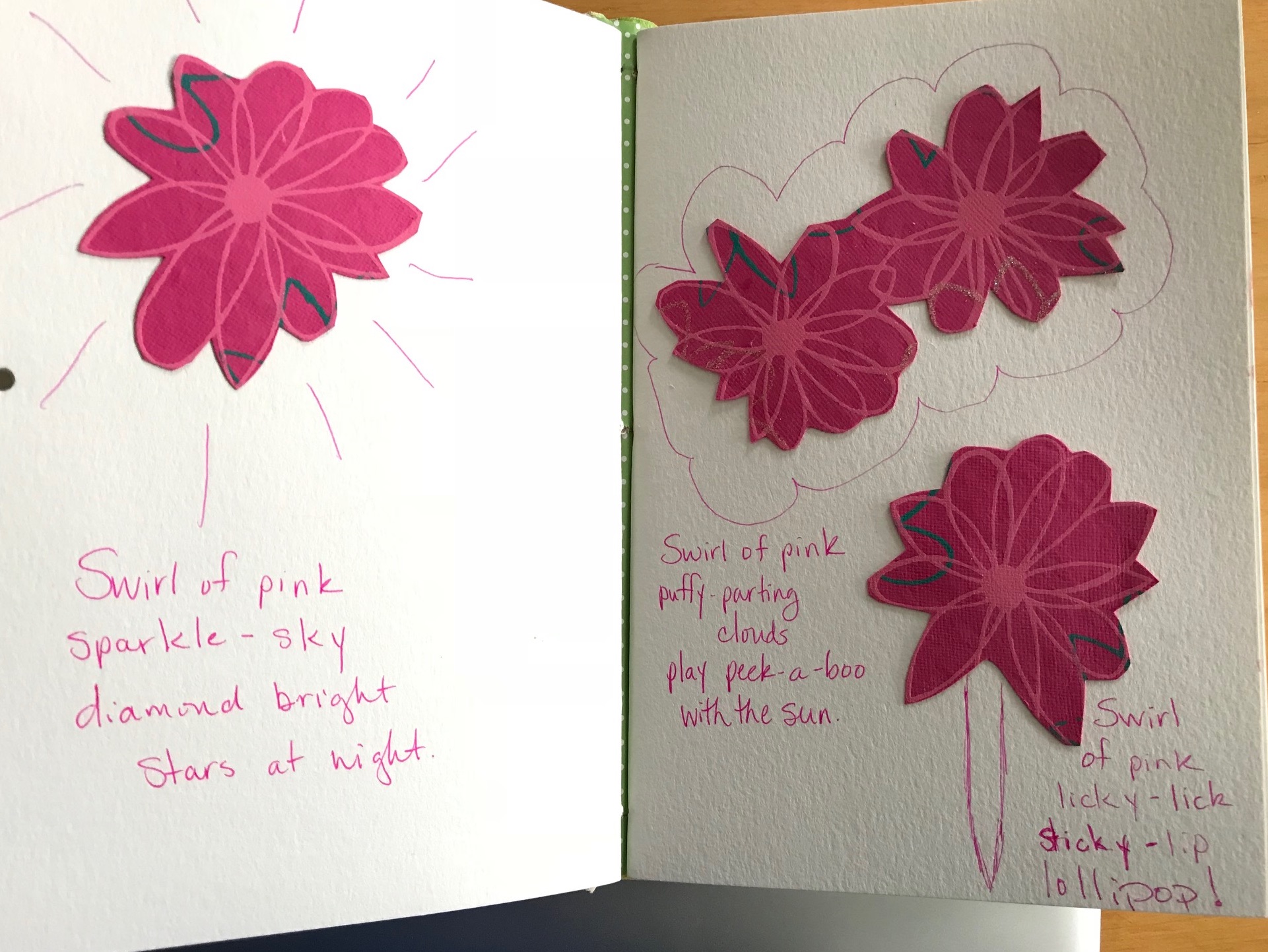
As I wrote with my students, I grabbed a pink marker and made three swirls on my paper.  Back at home with a little time to craft (snow day!), I cut and pasted pink swirls in an art journal.  Thanks, Lisa, for the fun prompt.


Swirl of pink
sparkle-sky
diamond bright
stars of night

Swirl of pink
puffy parting clouds
play peek-a-boo
with the sun

Swirl of pink
licky-lick
sticky-lip
lollipop

–Margaret Simon, 2017


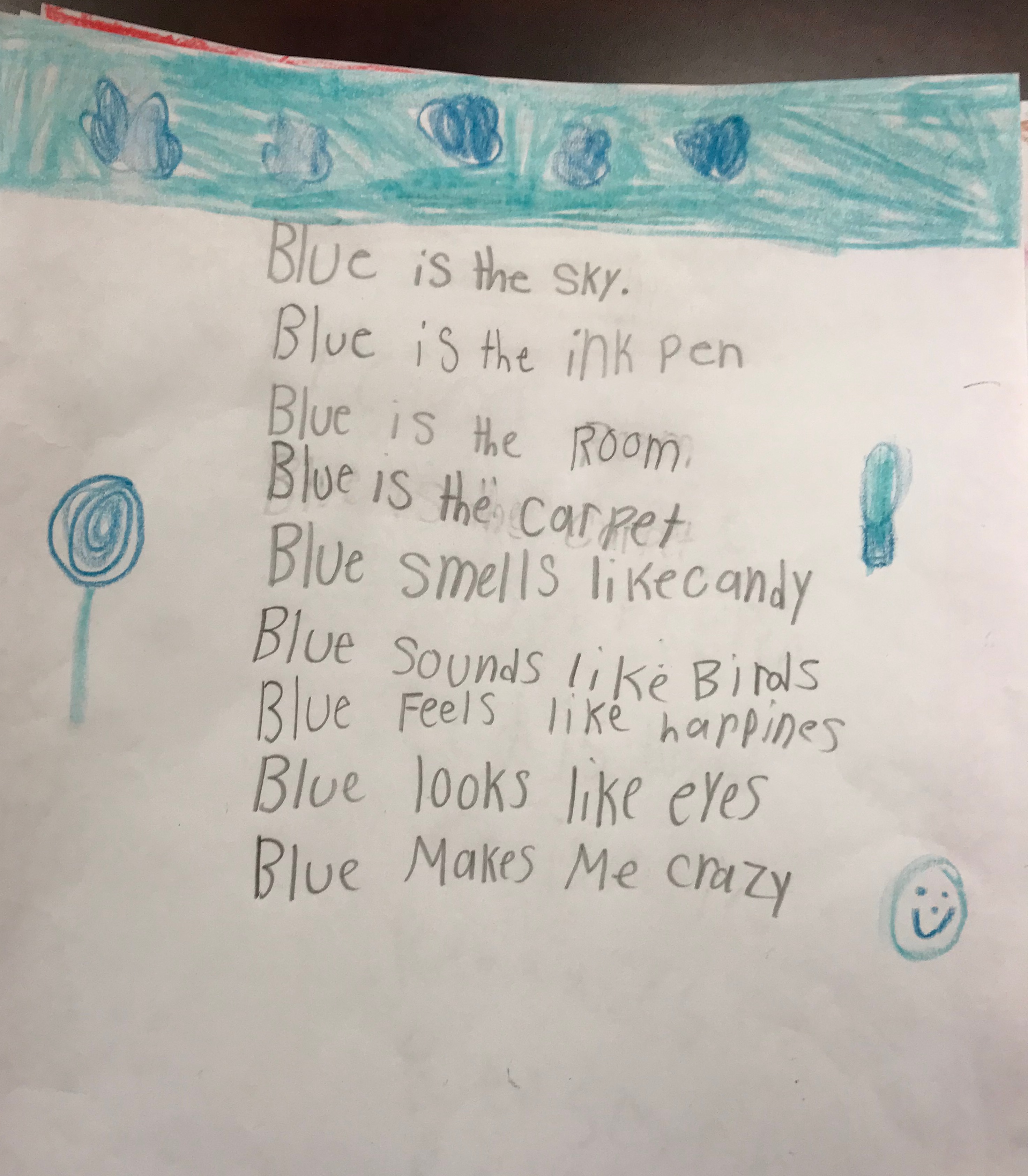
Chloe’s Bubble poem

Trace’s pink paintbrush poem

Austin’s wooden flute poem

Lynzee’s angel poem

After we wrote and shared our poems, Andrew had an idea.  “Why don’t we take a line from each of our poems and make a new poem?”  Sounds like a great idea.  Here’s the resulting poem.

To dream it, all you have to do is start.

Don’t erase yourself from the real world.
Paint your true colors.

There is no fright.
Not to lose but to gain.

Flying high above
a swirl of pink puffy parting cloud,

The sea is my world.
The sand is my happiness.

–Caneview GT Allstars


Read Full Post »

Slice of Life: Racism

Join the Two Writing Teachers blog for the Slice of Life Challenge.

Up early this morning, I was reading my email and read a blog post from my friend Julieanne. She lives in Los Angeles, but a few weeks ago we were together at NCTE in St. Louis.  NCTE planted seeds. We left feeling refreshed, renewed, and challenged in our thoughts about teaching and about our lives.

This morning Julianne wrote:

I have been afraid to face racism straight on in the classroom. Fearful of being wrong. The thing is, it’s a done deal. I am wrong. I had manufactured a dilemma to hide in.
–Julieanne Harmatz

Her post reminded me of a conversation in the hallway returning from lunch.  Noah said to Jacob, “You know, you are my slave.”  He did know.  They had both figured out without any words from me that in the play they are rehearsing for the Shadows, a local plantation home, that they are acting as owner and slave.

My students have done this play for years, but this year I wanted to be clear about what their roles were.  I hadn’t talked about it yet with these boys, but they figured it out.  Jacob said, “I’m OK with it.  It’s just a play.”

But is it just a play?  What is our role in stopping racism?  How are we perpetuating the story without saying anything?

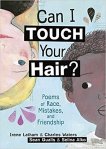
Back in class, we were looking through the collection of books I got at NCTE.  One book was Can I Touch Your Hair? by Irene Latham and Charles Waters.  I explained that Irene is a woman who looks like me, and Charles looks like Chloe’s dad.  In their book, Charles and Irene face racism head on. (No pun intended.) We came across a poem about the N-bomb.  What is the N-bomb?  My students wanted to know.

We had an honest discussion about how that word (I spelled it because I couldn’t say it out loud.) is racist.  And what is a racist?  Someone who judges another person by their race and not by who they really are.

Like Julieanne and many teachers affected by the words of Jacqueline Woodson and Jason Reynolds at NCTE, I will take the opportunities when they arise to have these tough conversations.  Teachable moments.  I am a white southern woman. I am part of the dilemma, but I can also be part of the solution.  So can you.

Read Full Post »

Join the Two Writing Teachers blog for the Slice of Life Challenge.


As I sit at home rummaging through my notes and photos from NCTE, I wonder how I can capture this amazing weekend in a single post.  Then I wrote my title, “A Slice of NCTE.”  I can do a slice, a snippet, a taste.

The overarching message that I came away with was equity.

From Katherine and Randy Bomer, as they accepted the NCTE award for Outstanding Elementary Educator, equity is communicated in their core values.  Meet every child with an air of expectancy and listen with love.  When I attended Katherine’s session “Appreciative Response for Writers: Words and Ways to Reclaim our Voices and Instill Agency in All Students,” once again the word equity arose as she and her teacher educators gave very practical ways to give students what they need in feedback to writing. I stopped by Corwin Books to buy Patty McGee’s new book Feedback that Moves Writers Forward.  In the session, Patty showed us how to honor what students are already doing and yet, move them toward growth.  I look forward to digging into this book.

From Jason Reynolds, the equity message was evident in his acceptance speech for the NCTE Charlotte Huck Award.  The story of Ghost is based on Jason’s real life friend, Matthew.  The real Ghost also loved to eat sunflower seeds.  Jason challenged us teachers by asking us what kind of sunflower eater would we be.  One who puts the whole seed in your mouth and sucks all the salt off to spit it out whole?  One who chews the whole seed and spits it out?  Or one who carefully finds the perfect place to crack the shell, hides the tiny seed in a safe place, then takes out the hard, cracked shell?  #sunflowerseedchallenge.


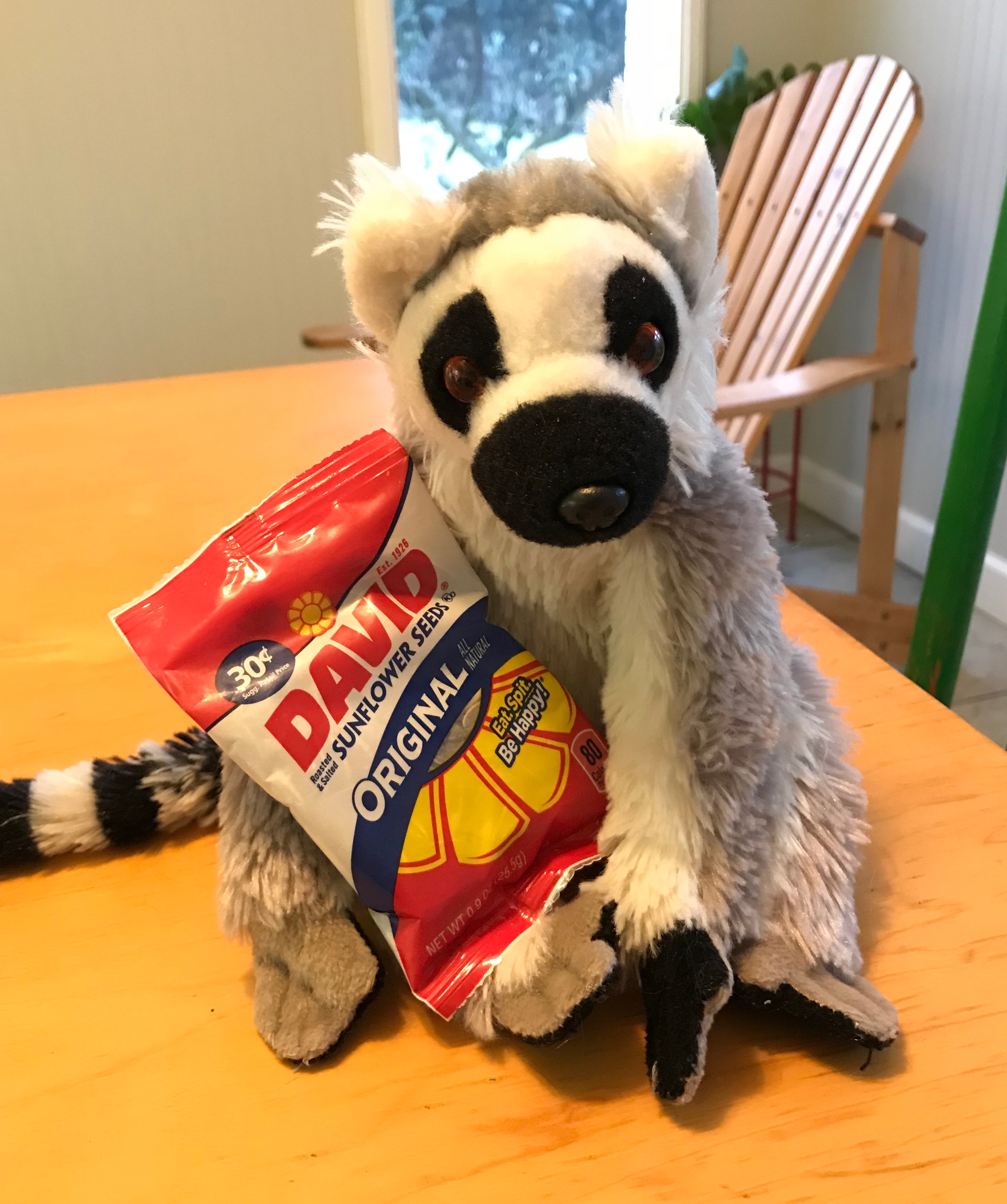
Jack, the lemur, eats sunflower seeds slowly.

From a panel of moving educators (Sara Ahmed, Katharine Hale, Jessica Lifshitz, Donalyn Miller, Katie Muhtaris, Pernille Ripp, and Katherine Sokolowski), all women who have a story, a story of inequity, a story of how they were called to stand up and stand out for justice.  There wasn’t a dry eye in the room.  I was more than moved by their stories.  I resolved to be better, to do better.  I resolved to carefully eat my sunflower seeds and offer a place a safety, a place of equity, a home for all student voices.


Read Full Post »

« Newer Posts - Older Posts »