Feeds:
Posts
Comments

Archive for the ‘Teaching’ Category

Please use this button on your site for DigiLit Sunday posts

Join the Two Writing Teachers blog for the Slice of Life Challenge.
I subscribe to the Edutopia newsletter.  When I came across this article, Are we Innovating, or Just Digitizing Traditional Teaching?, I had to ask myself if what I am doing in my classroom is true blended learning or is it just the same ole stuff digitized.  

“True blended learning affords students not only the opportunity to gain both content and instruction via online as well as traditional classroom means, but also an element of authority over this process.” Beth Holland

I watched with renewed interest as my students worked on book talks this week.  I started assigning book talks 10 years ago when I taught 4th grade.  I’ve been using the same rubric.  But watching what my students were doing with the addition of technology, I realized I needed to throw out the old rubric.

In my small groups of gifted students, my students rarely stand in front of the class to present their books.  I can take off the element of “engaging the audience with eye contact.”  I also need to remove “reading aloud a portion of the book.”  While this does show the audience the style and voice of the author, this is difficult to accomplish in an online presentation.

“(An online presentation) is about the visual,”  my student Emily said when I asked her how using the internet changed the work of a book talk.  She realizes that her visual elements play an important role in the presentation.  She wants the viewer to be inspired not only by what she says about the book but also by how attractive her video is.  

Blended learning can mean a step toward agency if we teachers create the conditions in which agency can occur.  I look on my role as more like a coach.  I stand by for any trouble shooting.

A student may say, “I don’t know the theme of this book.”  Then we have a conversation about it.  What are the major events?  What does this say about your character?

“My character was brave.”

“Did he need help? Did his family or friends help him?”

Theme: Family and friends can help you feel brave.

This kind of conversation doesn’t only happen when students are creating book talks; it may also happen during a reading conference, or when a student is writing a literary essay.

Again I ask myself and my students, “What is different when you use technology?”

Jacob said, “It makes it so much more interesting.”

Kaiden said the process of interacting with the graphics is more enjoyable.  He contends that it is more interesting to the viewer, too.

Emily responded with a “Yes!  And it’s so much more fun to do!”

I’m still unsure if I have truly switched over to blended learning. I use technology with my gifted students because it is motivating and gives them control over their product.  They look to the chart on the wall to see if every element I require is there.  When their presentations are done, they call out to me, “Mrs. Simon, come see this.”  They are proud producers of digital media.  This pride of accomplishment is enough for me.


If you are joining the DigiLit conversation today, please leave your link.

Read Full Post »

Please use this button on your site for DigiLit Sunday posts

Please use this button on your site for DigiLit Sunday posts

critical-thinking-digilit-sunday

Last week as I was reading DigiLitSunday posts, I found these questions on Fran McVeigh’s post.

Do we REALLY want students to be critical thinkers?

Then how are we encouraging “critical thinking” every day in our classrooms?

How are we REALLY encouraging independent thinkers and workers?

Tough questions that I contemplated all week.  Am I really encouraging critical thinking in my classroom every day?  To answer this question, I looked at my various assignments during the week.  On Monday, we watched a Flocabulary video on The Voting Rights Act and answered these questions:

1. Connection to other movements: Think of a historical event or movement that is similar to the Selma marches. How are these events similar?

2. Connection to current events: Are racial equality and voting rights still issues in the US today? How have these issues changed since 1965? In what ways are they the same?

3. Connection to civic participation: Why is the right to vote an important right to protect?

I have to credit Flocabulary because not one of these questions elicits the exact same answer from every student.  When we look for questions that encourage critical thinking, we must wonder if the answer will be the same for every student.  Granted these questions also depend on quite a bit of prior knowledge.  Not all of my students have a clear understanding of voting rights or what race relations are like today.  Some of them are quite sheltered from the news and that’s OK with me.  They’re young.  But my older students, those in 5th and 6th grade, really thought deeply about these questions and offered some thoughtful responses.

What is important to me as a teacher of gifted students is to open up the door for communication and for critical thinking.  I have to be willing to hear different responses, and not always ones I agree with.  Critical thinkers are active, and our challenge as their teachers is to keep them thinking and questioning and wondering.

One way I do this is assigning reader responses.  There is no one right way to respond to a book for my students.  We have a chart on the wall that lists multiple options.  These options include: write about the theme, relate to a character, connect the book to the larger world, etc.

This week a few of my students are reading Raina Telgemeier’s graphic novels, Smile, Sisters, and Drama.  One student was appalled that Drama was placed on the second grade shelf because it is at a second grade AR level.  “This book is not appropriate for second graders!”  She explained that the book deals with the sensitive subject of sexuality.  A selection from her reader response:

“This book can relate to the world because just like Jesse people know their sexuality, but can’t tell their friends or family because they’ll be teased or judged. In Jesse’s case his father doesn’t accept his older brother Justin because he’s gay, so Jesse is afraid to tell anyone because they might not accept him.”

She went on to rant about the recent controversy over transgender students and bathroom use.  Reading with a critical eye as well as having an open policy for student responses helped this student not only relate to the book, but also to express her own opinions about the subject.

My students are not just writing for an audience of one.  They write on a blog we share with other gifted classes.  When they write about their own thoughts, they trust that others will read them with the understanding that we are all trying to write in a way that best expresses our own thoughts.  A blog space is just right for experimenting with thinking and writing.    A critical thinker understands that others have different assumptions and different perspectives, so in the blog space, we must make it safe for those expressions.

Thanks, Fran, for posing those questions and for helping me realize that critical thinking is purposeful and intentional every day.

I am off to New Orleans Mardi Gras on Sunday, so I am posting early.  Please link up when you can.

Read Full Post »

Join the Two Writing Teachers blog for the Slice of Life Challenge.

Join the Two Writing Teachers blog for the Slice of Life Challenge.

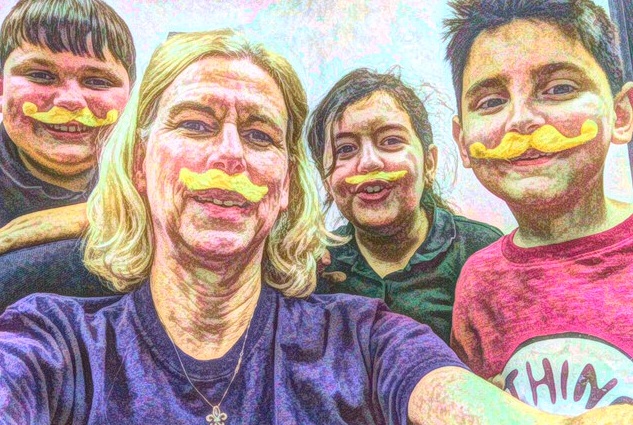
It’s Dr. Seuss week at one of my schools, so each day is a different dress-up day. Last week I was sick for a few days and then there was the Beta convention, so I missed out on seeing some of my students all week. I wanted to plan better. I got so far as to order yellow mustaches and a used copy of The Lorax. I didn’t put together a full costume, but I let each student choose a mustache style. The rule was you had to wear your mustache while we read The Lorax. Little did I know the thing would tickle every time I spoke. But it made for a festive way to celebrate, nevertheless.

Mrs. Simon's Loraxes

Mrs. Simon’s Loraxes

Following this selfie, we got down to the real business of criticycles. I want my students to be ready for the March Slice of Life Challenge. They’ve been writing a slice each week, but their writing lacks elaboration and interest. I pulled out the sticky notes. I projected a student’s recent post and asked that student to read aloud his/her writing. On the sticky notes, we made symbols for critiquing (+ for something positive, ^ for something to change, and ? for further questions). Following the criticycle session, my students were motivated to return to their posts and edit.

I had forgotten how powerful peer review can be. For whatever reason, we hadn’t done it in a while. My students were receptive to their classmates’ ideas and were motivated to make their writing stronger. I just stood by and watched as they discussed their writing in a meaningful way. I need to remember that sometimes all it takes is a yellow mustache and blue sticky note to turn readers into writers.

DrSeuss_Lorax

Read Full Post »

Please use this button on your site for DigiLit Sunday posts

Please use this button on your site for DigiLit Sunday posts

I hate to admit it, but I have not been the best at teaching vocabulary.  I’ve tried all kinds of methods from word lists to word walls, but I am still met with groans from kids when I say Vocabulary.  This year I’ve been using a workbook.  This goes against my whole philosophy of teaching, so please don’t tell my students.  This workbook provides an authentic text, so the words are in context.  We also work with synonyms and antonyms and always a writing piece.  But like most work with Vocabulary in the title, my students think drudgery.

It is time for a change.  I have been intrigued by Carol Varsalona’s word clouds.  I tweeted a question to her.  Turns out it was our mutual friend Holly who introduced Tagul to Carol.

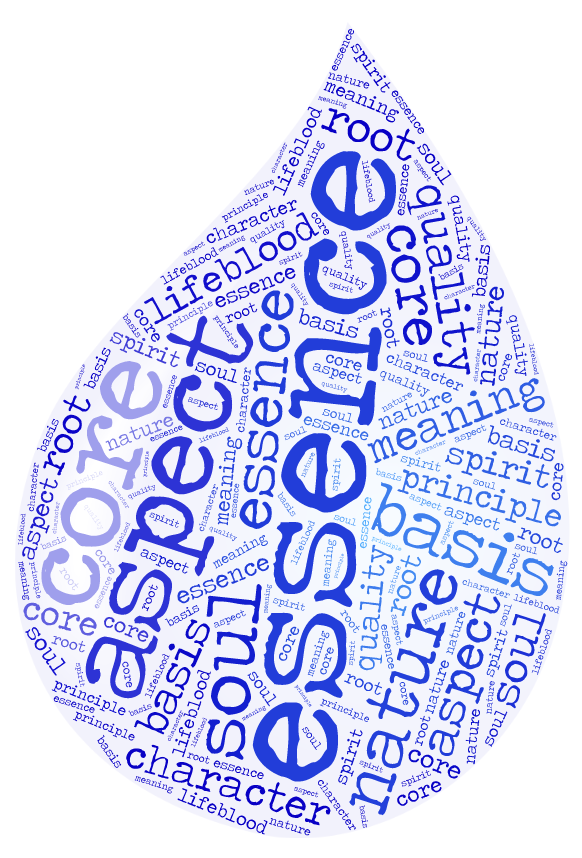
This leads me to an idea I will be trying this week with my students (crossing fingers the app works in our network).  I took one of our vocabulary words from last week, essence, and typed it into Thesaurus.com.  I opened Tagul and typed in a dozen synonyms.  Then I looked for a shape that would help define the word.  I chose a water droplet because water is the essence of our bodies.  The image shares common synonyms as well as makes this vocabulary work more motivating.

essence-word-cloud

In what ways are you digitizing vocabulary work?  Share your ideas on your blog and link below.


digilitsunday-215

Read Full Post »

Find more celebration posts at Ruth's blog.

Find more celebration posts at Ruth’s blog.

There are those weeks that seem to go on and on, yet offer nothing to be celebrated. Sometimes I have to look harder to find the bright spots. I am actually ashamed that I felt this way yesterday because this morning I looked through my mail and found so much to celebrate.

I signed up for a poetry postcard exchange. I thought the giving and receiving was over, but this week I got three more poetry postcards.

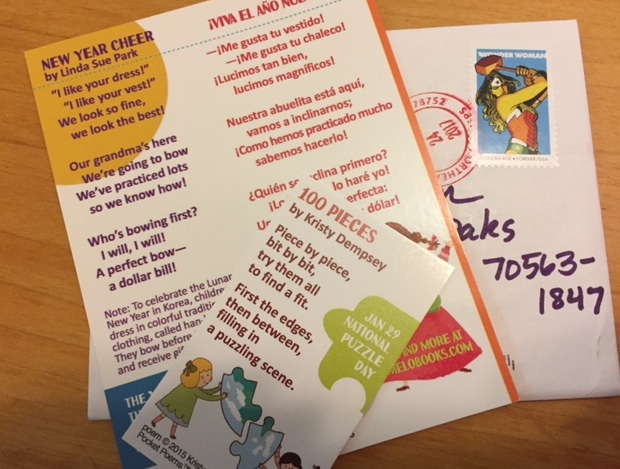
New Year poem cards from Sylvia Vardell with a Wonder Woman stamp.

New Year poem cards from Sylvia Vardell with a Wonder Woman stamp.

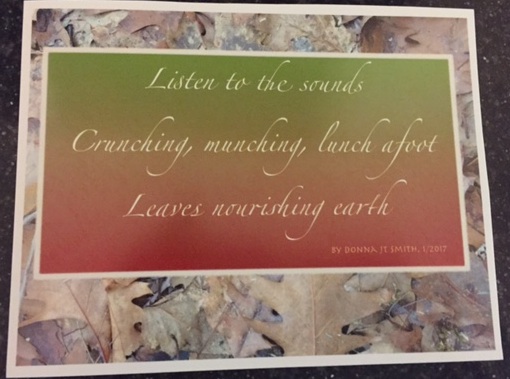
Poem from Donna Smith: Listen to the sounds crunching, munching, lunch a foot Leaves nourishing earth

Poem from Donna Smith:
Listen to the sounds
crunching, munching, lunch a foot
Leaves nourishing earth

Handwritten poem and card from Kim Urband:

Summer Storm
Stone-gray clouds steal azure sky
Lightning stabs, singes
Liquid silver glazes hills
Relinquishes to Rhapsody

–Kim Urband

This sweet, uplifting message from Joy Acey:

My body feels electric like new years fireworks
blazing in starlight.
I want to raise my arms
to twirl and dance in the moonlight.
Poetry fills me
and runs out of my pen.
May the force be with your poetry.
–Joy Acey

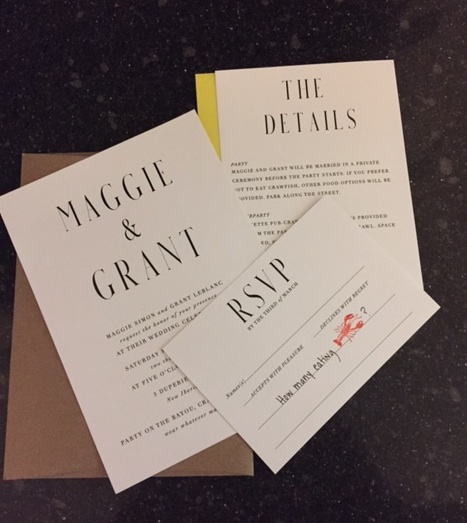
And an invitation to my daughter’s wedding in March. Here we go again!

maggie-wedding-invitation

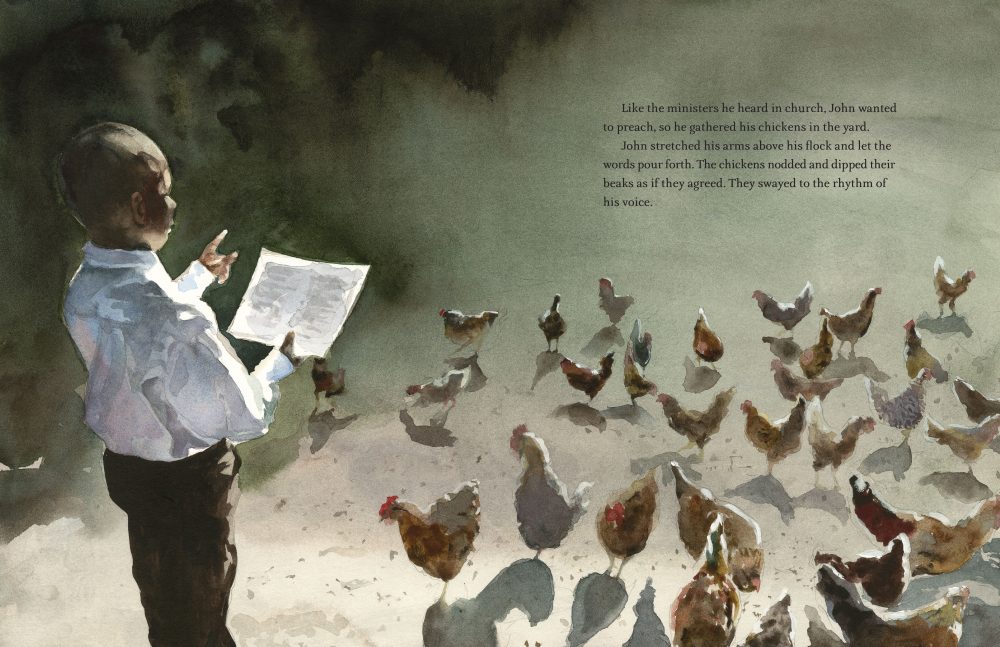
preaching-interior-2-1000x647
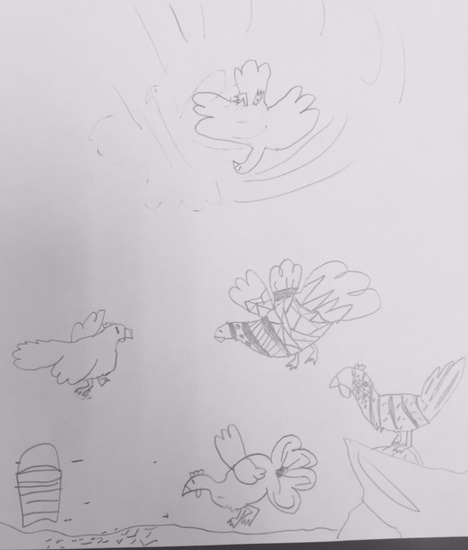
This week I read aloud Preaching to the Chickens about John Lewis’s childhood. I wanted my students to know his name and to have a better understanding of the fight for civil rights. This book is beautifully illustrated. One of my students, Madison, was inspired by the paintings to draw her own yard of chickens. I love the personalities of each of her chickens.

Chickens by Madison, 3rd grade.

Chickens by Madison, 3rd grade.

I didn’t have to look very hard to find these celebrations today. What are you celebrating?

Read Full Post »

DigiLitSunday Logo

Please use this button on your site for DigiLit Sunday posts

stones-1372677_960_720

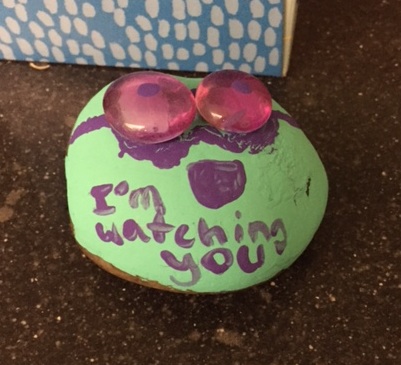
The image above makes me imagine metaphorically that I am that big green rock holding in balance the different colors of my students.  Teaching is a delicate balancing act.  As teachers, we must set goals for our students, individually and collectively.  Our job is to get on the train every morning and move down the tracks to that goal.  (Excuse the mix of metaphors.)

Sometimes one student can topple the whole balancing game.  We must stop whatever it is we are doing and pay attention.  Focus on needs rather than goals.

This week I had to call on a colleague for help.  I was not meeting a student’s need, and I wasn’t sure where to go next.  I had tried many directions, but none were working very well.  This is humbling.  However, I found strength and comfort in the shared experience.  Reaching out when you feel defeated is tough to do.  I am so grateful now that I did.  My student is better for it.  I am better for it.

My students write every day.  Writing is a brave act. So different from answering questions or working out a math problem.  Writing is personal and hard.

This week one of my goals was teaching essay.  The kind of essay that testing will require in which the student writes about a literary element (in this case, theme) comparing two texts.  We worked with a nonfiction article and a poem.

During a conference with one of my students, I read aloud to her what she had written.  “Blah, blah, blah” was her response.  “I can’t stand writing essays.  They’re so boring!”  After our chat, she typed up her boring essay.  I had to laugh when I read it.  She began with, “Hey, world. Listen here!”  And at a later point, she wrote, “Now that is awesome!”

My students need to be able to express themselves.  Sometimes these expressions come out in loud exclamations, quiet tears, or interjections. No matter the goal, needs may throw us out of balance, or may be the very thing to keep the balance.

Please join the conversation by leaving a link below:

Read Full Post »

DigiLitSunday Logo

Please use this button on your site for DigiLit Sunday posts

Personally I have become very suspicious of news lately.  The skeptic in me is showing.  On social media, I hesitate to click through to a website for fear of ad invasion or some pop-up wanting me to sign up, and then there’s the creepy fact that everything you search becomes part of your history and everyone knows.  I placed an order on Jet.com and for a week, every website I went to popped up a Jet.com ad.  Really? Modern day commercials geared to who some cyberspace robot thinks I am.

How do we protect our children in these times of everything is news, real or fake?  When the topic came up, I originally thought I didn’t need to worry about it.  Our school district has safety blocks in place; however, lots of fake news sites have ways of circumventing these blocks.  And in the name of good research, my students were finding them.  Time for a talk.

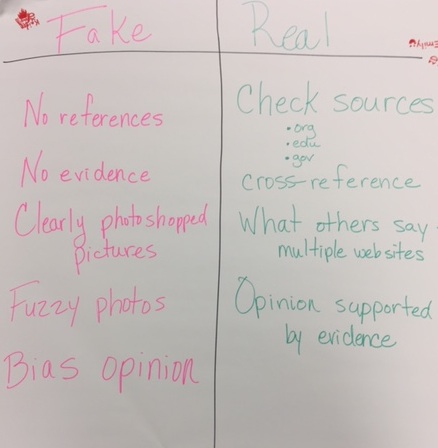
Armed with chart paper, I wanted to find out what my students already knew about the difference between fake and real news stories.  Here’s what we came up with.

fake-real-news-chart

Then I asked my students to pick a story on the internet that they are interested in investigating and write about their findings.  One student made an interesting discovery when she wanted to find out if Donald Trump supports LGBT rights.  She was confused by the reports and the images of Trump holding an LGBT flag.  Which is true?  In this case, both.  So now we are on to another issue, what do we believe by the actions and the words of a person in politics?  My response was yes, it’s confusing, so write about that!

Kevin Hodgson tweeted a Google slide show that he created for his students.  I plan to show this next week to keep the conversation open.

I don’t have all the answers.   This world of news at our fingertips, real or fake or just plain confusing, can be daunting.  I want my students to be discerning citizens.  So I keep the doors open.  We wonder.  We question.  We look for answers.

Please add your link to the conversation below.

Read Full Post »

Join the Two Writing Teachers blog for the Slice of Life Challenge.

Join the Two Writing Teachers blog for the Slice of Life Challenge.

The writer has to be like the firefighter, whose job, while everyone else is fleeing the flames, is to run straight into them. — Jonathan Franzen in The Best American Essays 2016

After reading Katherine Bomer’s book The Journey is Everything, meeting her virtually by hosting a Twitter chat, and meeting her face to face at NCTE16, I have a new understanding of the power of essay. Katherine’s passion for the resurgence of the real essay came through in the panel she hosted at NCTE with Corinne Arens, Allyson Smith, and Matthew Harper. These teachers experienced the transformative power of essay in a writing institute, and transferred that understanding to their classrooms.

Unpacking my notes, I rediscovered this way of thinking and writing. In real essay, we explore Hot Spots, Buried Truths, and Freedom. We write to think, leaving space for unknowing. Like a conversation with your best friend, real essay uses words like maybe and perhaps while circling around an idea, unwinding your thinking.

Essay is literature. Essay includes ideas, voice, and risk. It is the risk that stood out to me. Isn’t all writing risky? Yes, but adding the element of risk to essay has been funneled out by the Common Core testing. And when we remove risk, we remove what makes us human. Jonathan Franzen agrees as he writes in the introduction to the 2016 collection of The Best American Essays, “A true essay is ‘something hazarded, not definitive, not authoritative; something ventured on the basis of the author’s personal experience and subjectivity.'”

Writers are not born, they are made. In order to discover what we think, what we know, what we are passionate about, we need to be real in our essays, in our blog posts, with our students. When we trust this process of discovery, we allow our students an opportunity to express themselves beyond 5 paragraph essay structure.

The writer holds the paintbrush. Rather than painting an image with authority, paint with abandon to the rules. The image will be creative, expressive, and all yours.

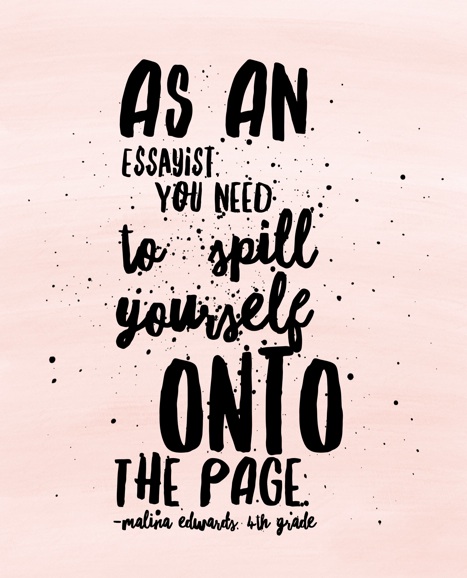
student-essay-quote

Read Full Post »

A breakfast conversation in the lobby of the Hilton in Atlanta for the NCTE 2016 conference, Collette turns to me and points her finger saying, “Words matter!”

We talked about this a lot.  Words and their importance was in the theme of every presentation I attended.  What we say, what we write, how we express ourselves and how we lead our students to express themselves matters.

The first gathering I attended on Thursday afternoon featured the work of Thomas Newkirk.  Friends and colleagues gathered to share how Tom’s words had influenced the ongoing work of writers like Penny Kittle, Jeff Wilhelm, and Ellin Keene. Jeff Wilhelm shared this Marge Percy poem, “To Be of Use.”   I wondered, “Am I of use?”

Our theories are disguised autobiographies often rooted in childhood.  –Tom Newkirk

Penny Kittle repeated this quote like a mantra, 3 times.  Long enough for me to write it down.  Long enough for me to contemplate what that means for me and for my students.  This idea leads us to empathy. How can we not be empathetic if we consider everyone’s theories come from their roots?  We must respect the roots to offer ourselves and our students wings.

This theme of empathy and the value of words continued on Friday morning at the Heinemann breakfast honoring the work of Don Graves.  Katherine Bomer reminded us that kids want to write.

Writing is the way children’s voices come into power, reminding us that we are all human.–Katherine Bomer

Following all of the amazing, articulate speakers, we were asked to create our own credo.  Here’s mine:

Student voices are precious, like a tiny fragile egg.  I must crack it open without destroying the life inside. –Margaret Simon

NCTE is a powerful, inspirational gathering of gentle, generous, kind and brave teachers and authors.  We know that words matter, but hearing the message in this atmosphere ingrains it into our hearts, and we are empowered to move forward.


Read Full Post »

Note: Header image art by my sister, Beth Gibson Saxena.

Join the Two Writing Teachers blog for the Slice of Life Challenge.

Join the Two Writing Teachers blog for the Slice of Life Challenge.

jane-yolen_

Jane Yolen

Poets love words. Poets play with words. Poets want you to love language as much as they do.

In my classroom, we read poems together, searching for sounds, images, and meaning. Jane Yolen is a master. I’ve admired her poetry for years. But only a year ago, maybe less, I signed up for her daily poem email. She believes in writing a poem a day. She practices what she preaches and sends out her daily drafts trusting that we receivers will honor and respect her words.

I shared one of these gems with my students, “Seven Ways of Kneeling on the Ground.” My first intent in sharing this poem was to show students how to use a pattern of 7 stanzas with 3 lines each, but in further examination, the poem offered so much more. We found imagery bouncing off the page. Her poem exemplified the magical sounds of words without using end rhyme: “Kneeling in the high bracken/ the brown crackle of it.”

There is JOY in reading a poem together, marking it up in colorful markers, and discovering how language (the sounds of words, double meanings, metaphor) leads us to a deeper understanding of our world.

jane-yolen-quote

Read Full Post »

« Newer Posts - Older Posts »