With my fifth and sixth grade students, I am reading Out of the Dust by Karen Hesse. I’m amazed at the parallels of the Dust Bowl to our current climate crisis in Louisiana, but that is a post for another time. Today I am determined to focus on beauty.
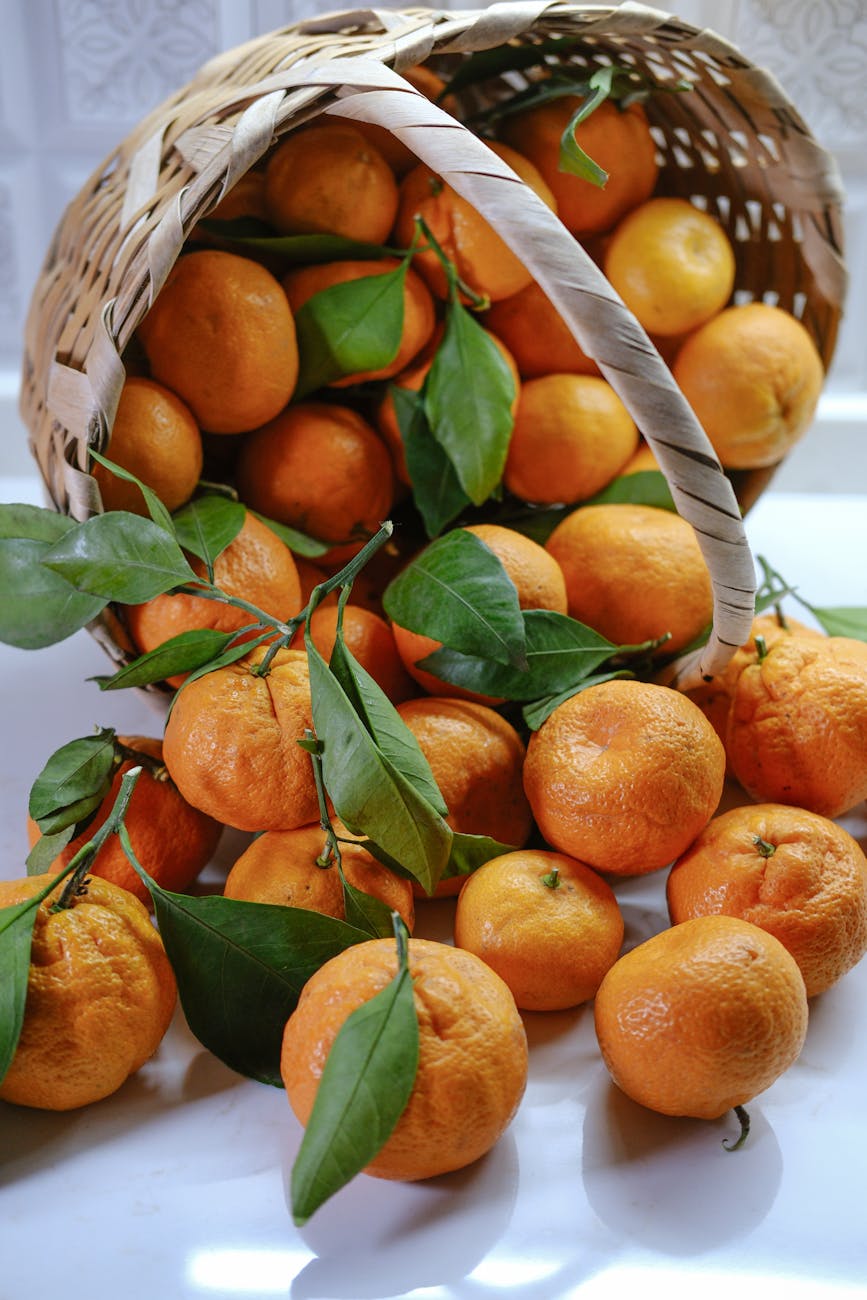
The poem Apple Blossoms was our mentor text. I wrote alongside my students about our favorite fruits. Mine is currently overflowing on a tree in our backyard, the satsuma.
after Karen Hesse “Apple Blossoms” Out of the Dust
Not just an orange, you are the ultimate citrus, hanging like golden ornaments on our tree near the fence where butterflies play and spiders web.
Your easy-to-peel goodness makes anticipation grow in fall, until by Halloween, the tree is full, overflowing, drooping, dripping inviting me to basket a gift for you to share juicy sweetness and smile!
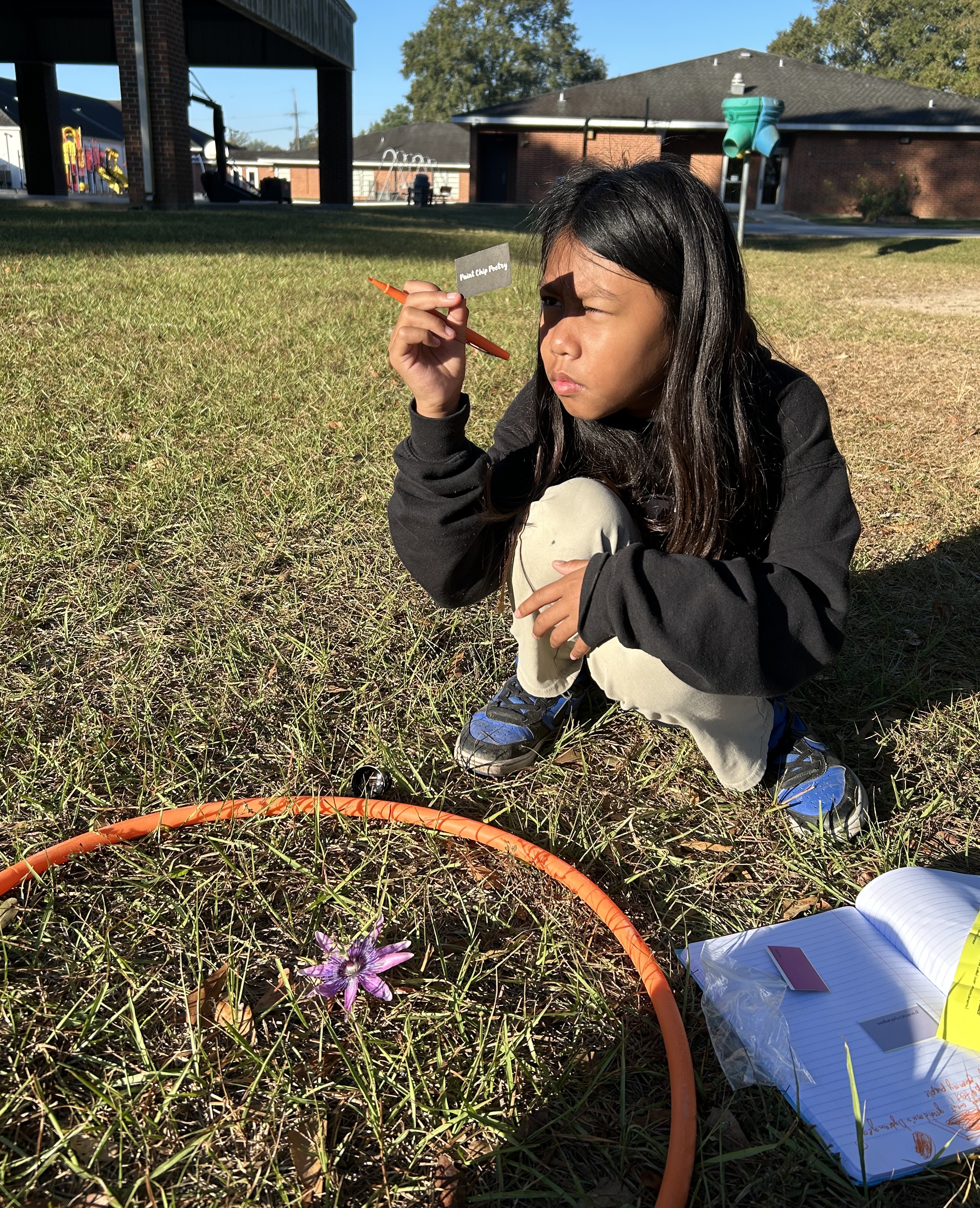
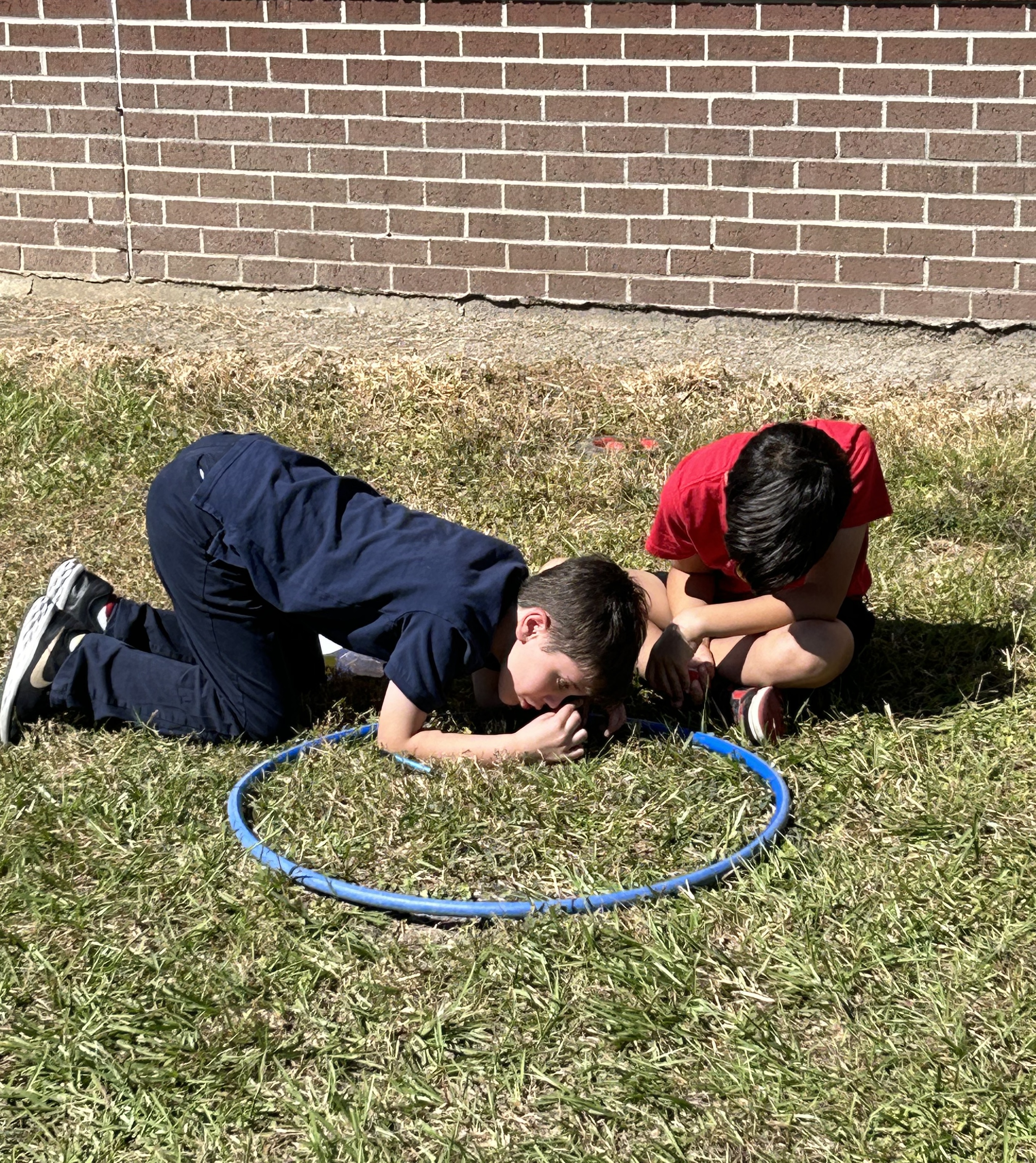
These past two weeks I’ve been trying to squeeze in Write Out opportunities for my students. Write Out is an annual event sponsored by the National Writing Project and the National Parks. This year Kate Messner was the Author Ambassador. One of her prompts asked students to take a hula hoop outside and focus on their circle when writing. Because I can’t leave well enough alone, I added paint chips and jewel loupes to the writer’s toolbox.
Our weather has been perfect the last two weeks. Cool mornings. High sun. Warm afternoons. Perfect for writing outside.
The paint chip words were just the thing to add a little twist to the poems my students and I wrote.
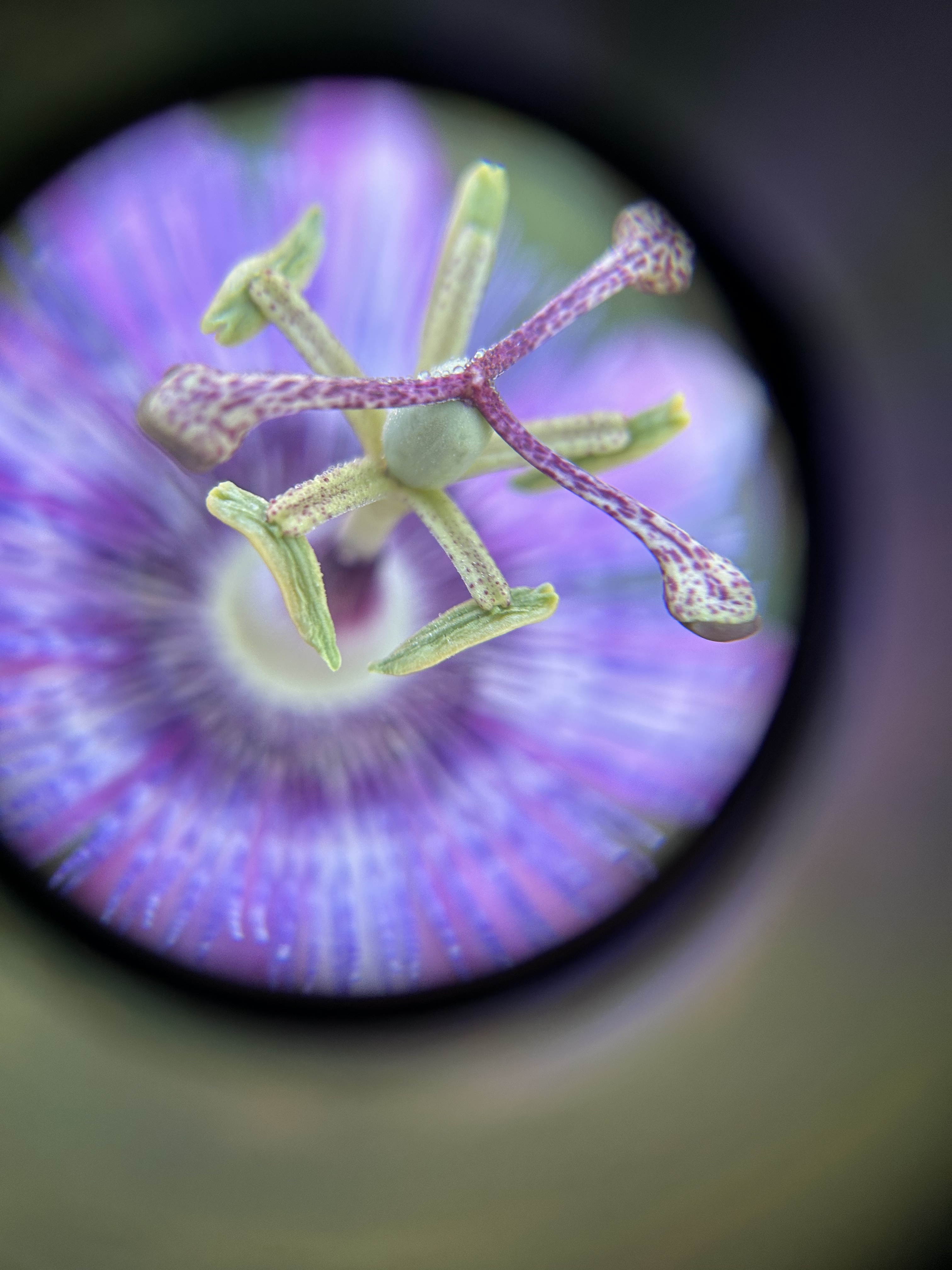
Purple flowers are community of the grass, some clustered some isolated in the sea glass waves.
by Adelyn, 6th grade
The grass has a shine from the blazing sun spitting out embers like a swarm of yellow jackets.
by James, 4th grade
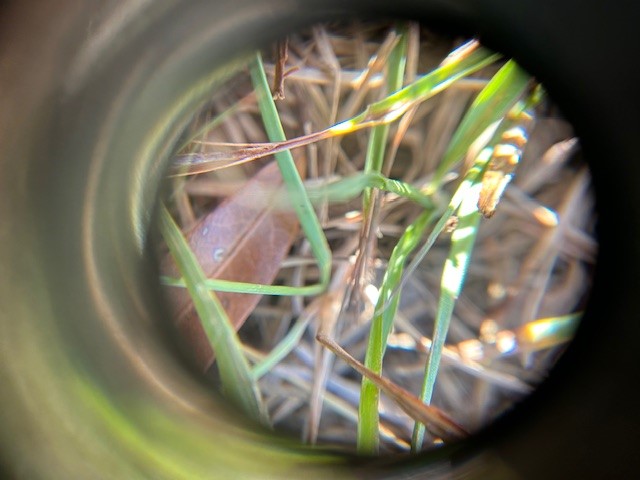
Looking through the jewel loupes helped us see intricate designs and stretched our metaphorical thinking. I love using the jewel loupe with my camera lens on my phone.
Circle of Grass The blades of grass are a kaleidoscope reflecting after the fire in a tangerine dream. by Margaret Simon, draft
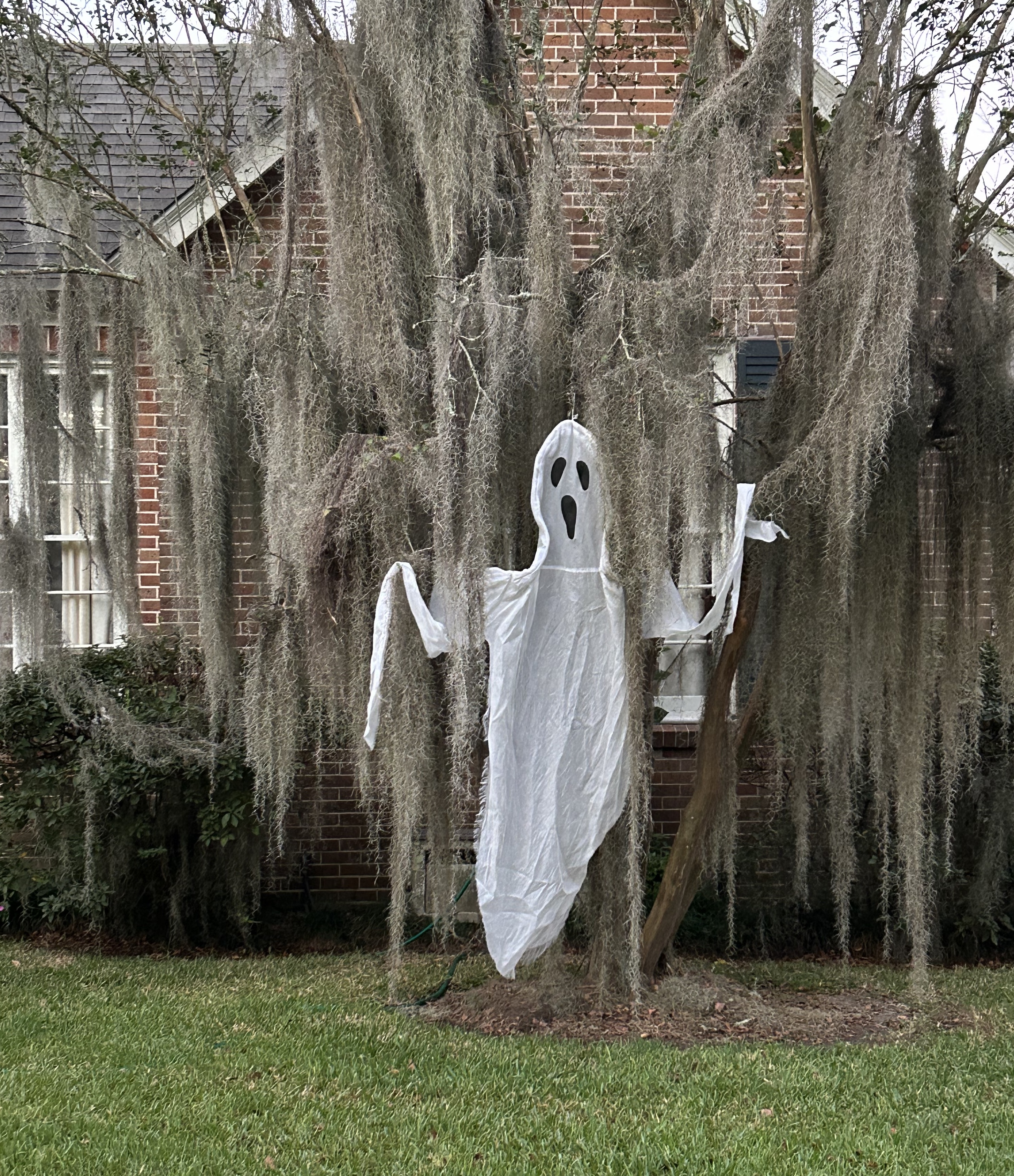
If you have a tree covered in moss, then you must hang a ghost there.
I’ve taken a number of pictures of Halloween decorations thinking about the photo for this week. This one is the winner. In my neck of the woods (South Louisiana), moss covered trees are common. My husband grew up calling it “spooky moss”. It is the common Spanish moss, and on some trees, the stuff practically takes over the tree, even though I’ve read that moss is a bromeliad in the pineapple family and does not harm the tree.
“Many homeowners think that Spanish moss kills their trees. This is not the case because the moss is not parasitic. The only thing Spanish moss uses trees for is support.” University of Florida.
Yesterday as we were writing metaphors for artifacts in nature (#WriteOut), Avalyn created this form: The (A, An) object in nature is/is like … describe how it is like end with a connection to life
I tried the form when writing about milkweed seeds. I combined it with a prompt from Ethical ELA to write with words from paint chips here.
A milkweed seed is a great white egret showing off its lacy wings to the mirrored pool in the sky. Margaret Simon, draft
Spanish moss are stalactites hanging on a crepe myrtle hosting ghostly terrormites. Margaret Simon, draft
Now it’s your turn. You can try Avalyn’s form or use your own. Please encourage other writers with your responses. Happy Halloween!
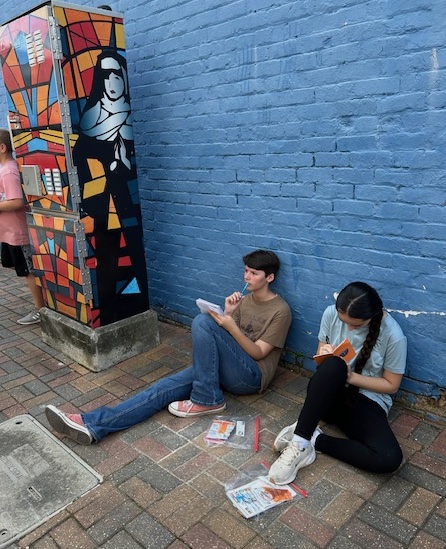
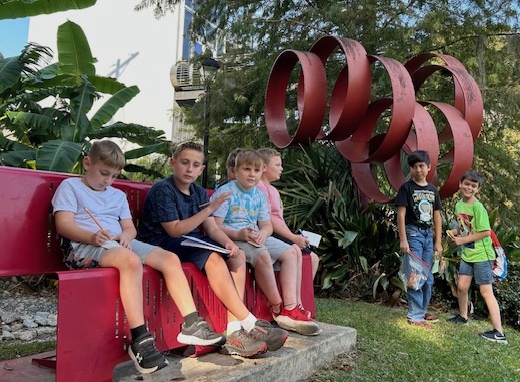
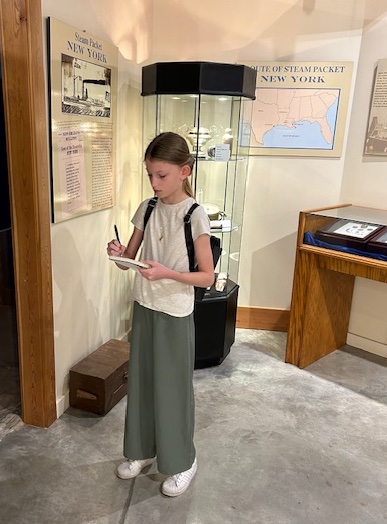
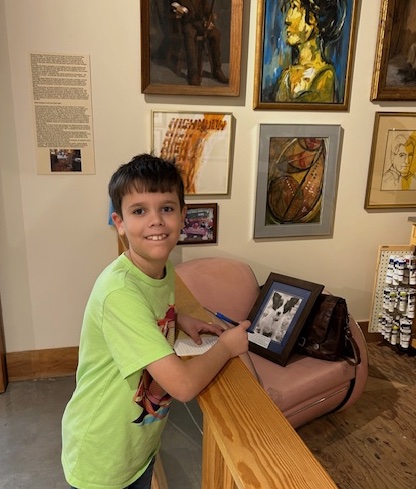
What a wonderful first week of NWP’s Write Out! On Tuesday, our schools were on fall break, but two other teachers and I decided to create a Write Out Field Trip. Twenty-seven kids attended from K-8th grade. Our local Bayou Teche Museum graciously opened its doors for us. We wrote at 4 different places, the museum, a sculpture garden, Bayou Teche kayak dock, and Church Alley.
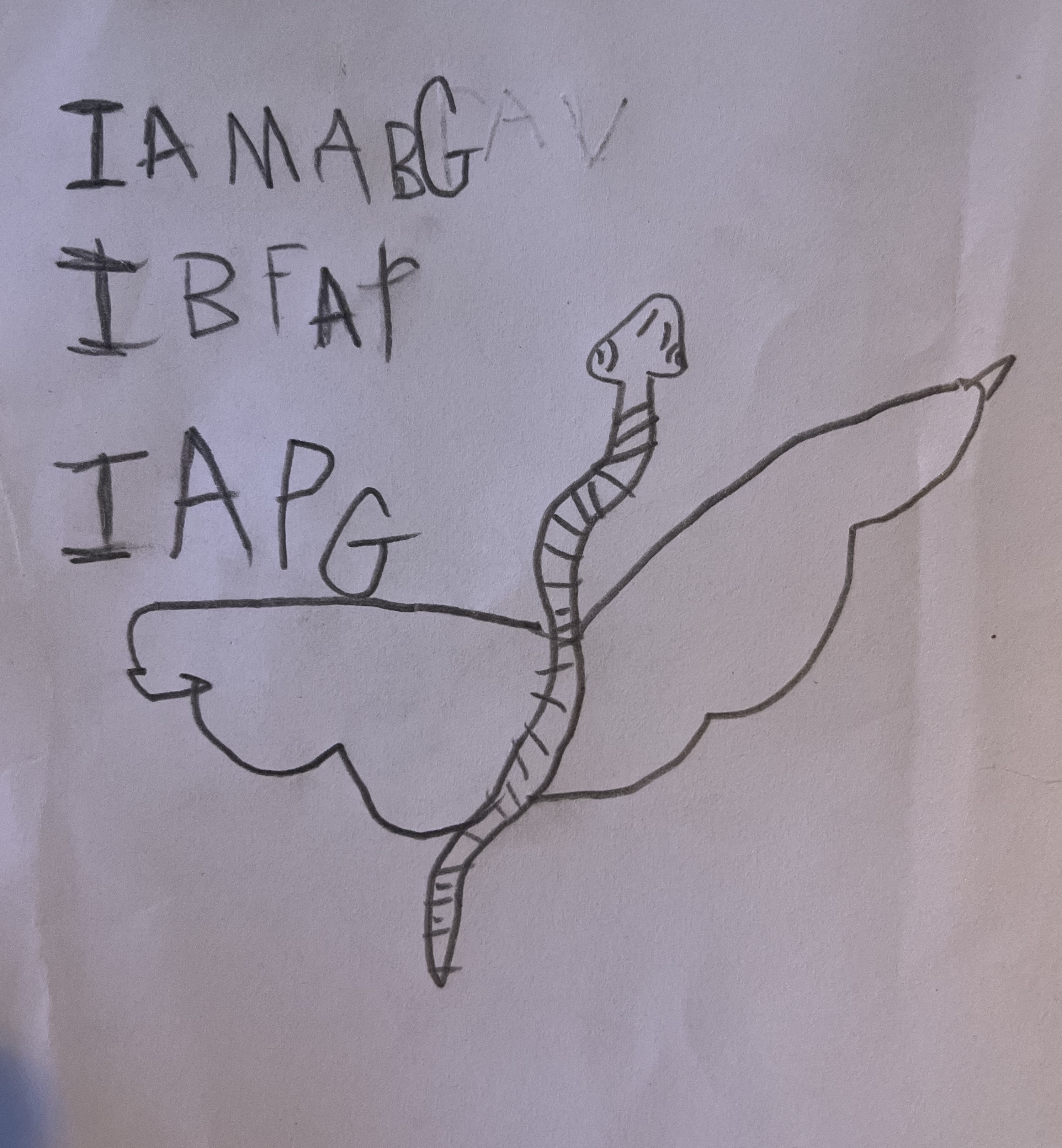
Because he was on fall break, too, my grandson Leo joined us. He is at the earliest stages of reading and writing. He loves to draw, but by our third stop, he wanted to be a writer.
I am a brave dragon. I breathe fire. I am a poisonous dragon. by Leo, Kindergarten
A proud Mamére moment!
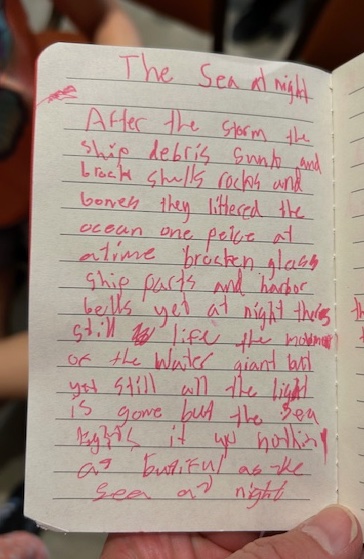
My colleague Beth’s granddaughter, 4th grade, wanted to read all her poems at the read around. Here’s her notebook with a poem about a museum exhibit of a shipwreck.
The Sea at Night
After the storm, the ship debris sunk and broke shells, rocks, and bones. They littered the ocean one piece at a time, broken glass ship parts and harbor bells. Yet at night there’s still life– the movement of the water, giant but yet still. All the light is gone but the sea lights it up. Nothing as beautiful as the sea at night. by Annie, 4th grade
Thank you to Two Writing Teachers for creating an amazing community of writers and a safe, welcoming space to write and share.
This is Just to Say
I have forgotten the words to that song you sang to me
and which you are probably humming in your head while you sleep.
Forgive me: I will sing along with you anyway.
Margaret Simon, after William Carlos Williams
I believe in daily poetry, but I fell off the Stanford Challenge for writing a poem a day. Lately the new book from Sarah Donovan, Mo Daley, and Maureen Young Ingram, 90 Ways of Community is helping. Each day I present one of the prompts to my students and write alongside them. They are responding so well to this daily practice. I hope you don’t mind if I share a few here. First up is a skinny poem by Grayson.
White void endless space just waiting wondering no thoughts waiting, I’m tired of waiting in this endless void, white space that is just too empty.
by Grayson, 5th grade
We’ve explored ourselves and written I am From poems.
I am from crunching leaves and windy days.
I am from books, and books, and even more books.
I am from the Bayou, and I am from the trees. I come from murky waters and lush green leaves and sturdy branches.
I am from the scratching of a pen, and the flick of a brush.
I am from the smell of cigarette smoke and an autumn evening.
I am from a household, a household holding four. A mother of books, a father of autumn, a daughter of both, and a sister of all.
by Adelyn, 6th grade
Each week I invite my students to write to a photograph. They are free to choose their own form even as I model a form for them.
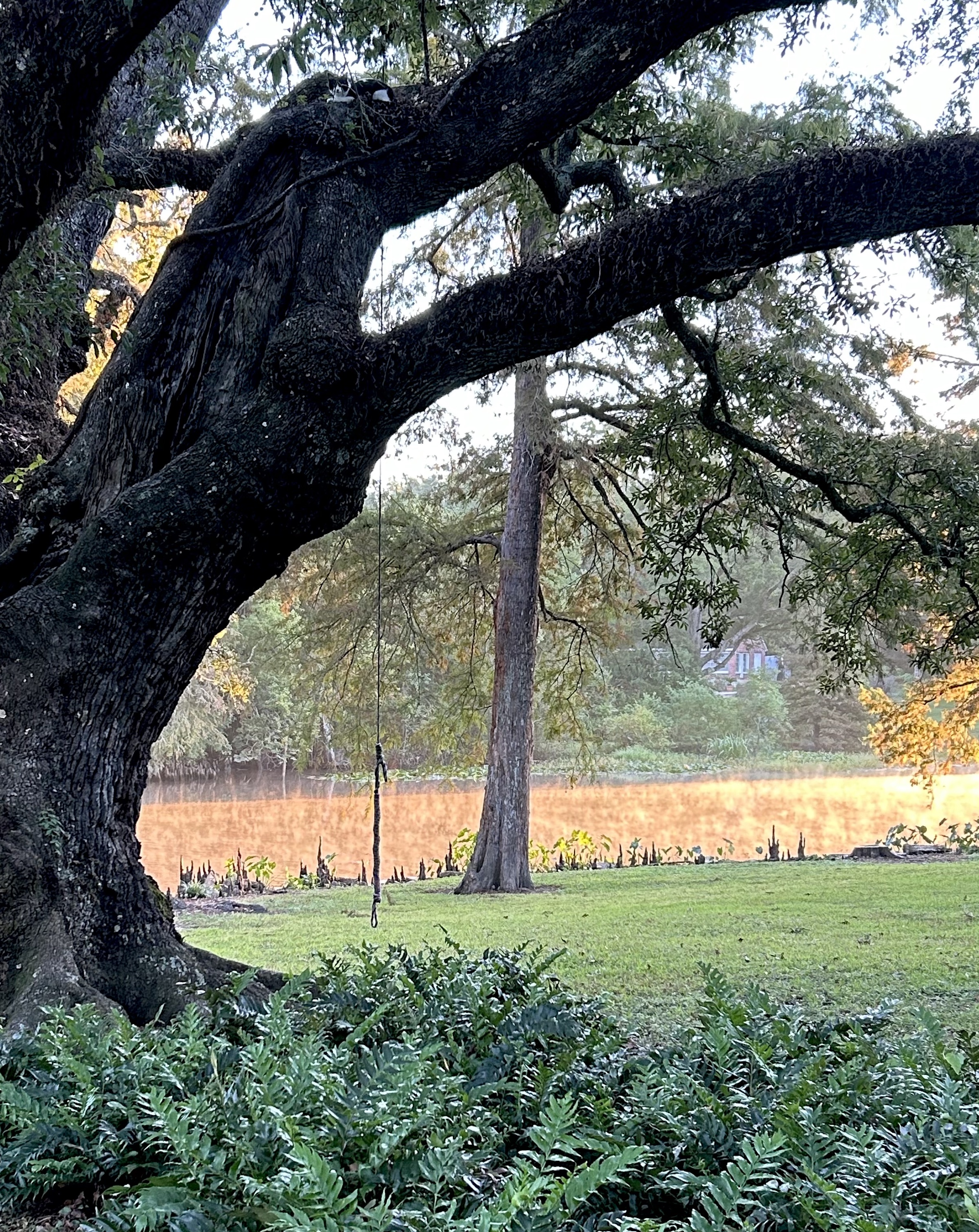
Old tree Stays in the backyard Is surrounded by water and ferns Waiting outside on the porch for the sunrise Lovely morning
by Marifaye, 5th grade
If you would like to write a poem to a photo, please join me on this blog on Wednesdays: This Photo Wants to be a Poem. I wish for you daily poetry.
Thank you to Two Writing Teachers for creating an amazing community of writers and a safe, welcoming space to write and share.
I teach gifted elementary students. I think of my classroom door as a revolving one because students from grades 2-6 come in and go out all day long. Two weeks ago I brought in some Gulf fritillary caterpillars in a butterfly net. I placed them on the table and invited my students to ask questions.
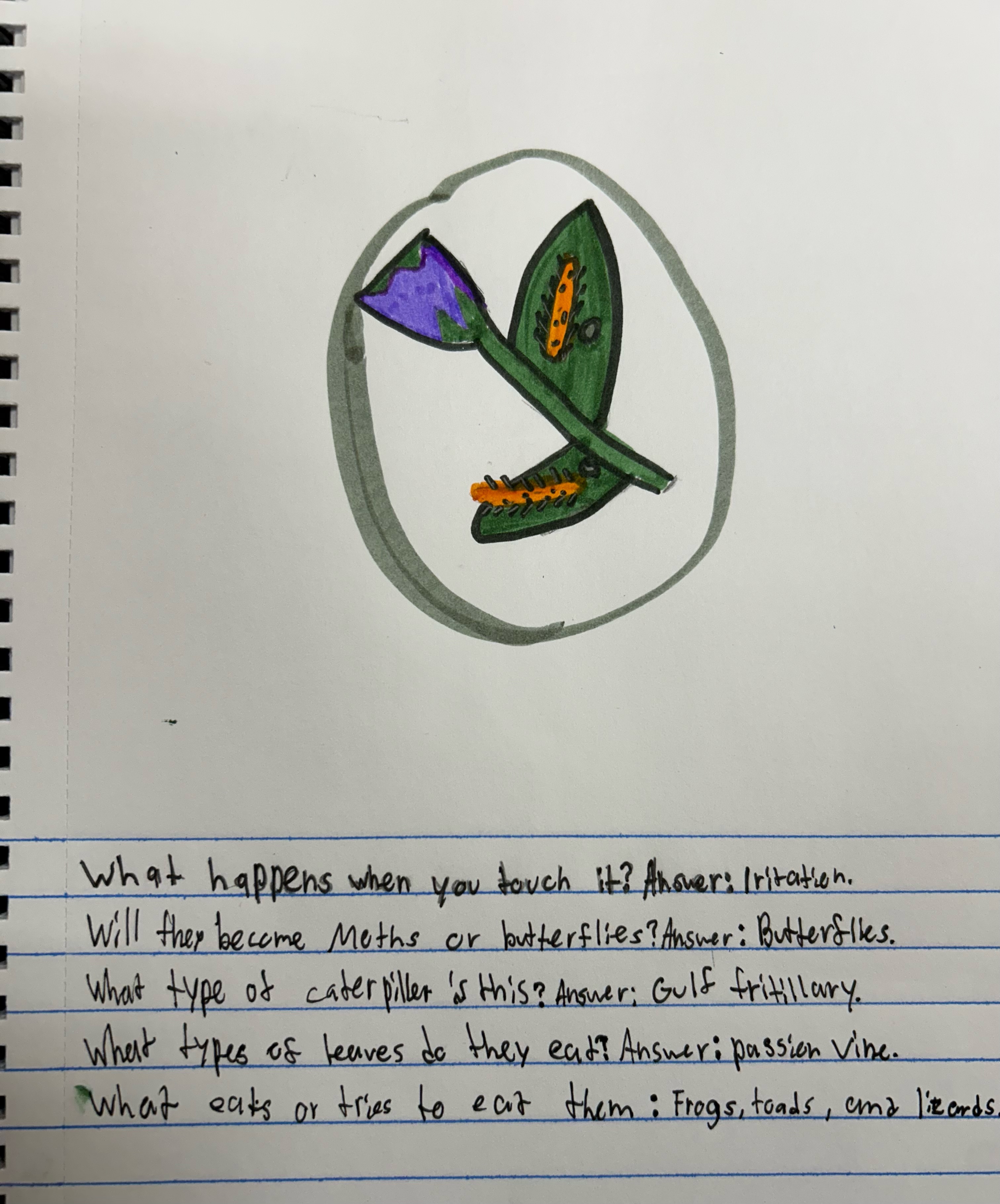
This is Marifaye’s sketchbook neatly written with her 5 questions and the answers. (Not all notebooks looked this neat.)
Students gathered around the table and drew what they saw, asking question after question. They became enthusiastic yet frustrated that I would not give them a straight answer. They practiced using Google to research and answer their questions.
This week the caterpillars eclosed (hatched) and once again we observed and drew pictures then released the butterfly.
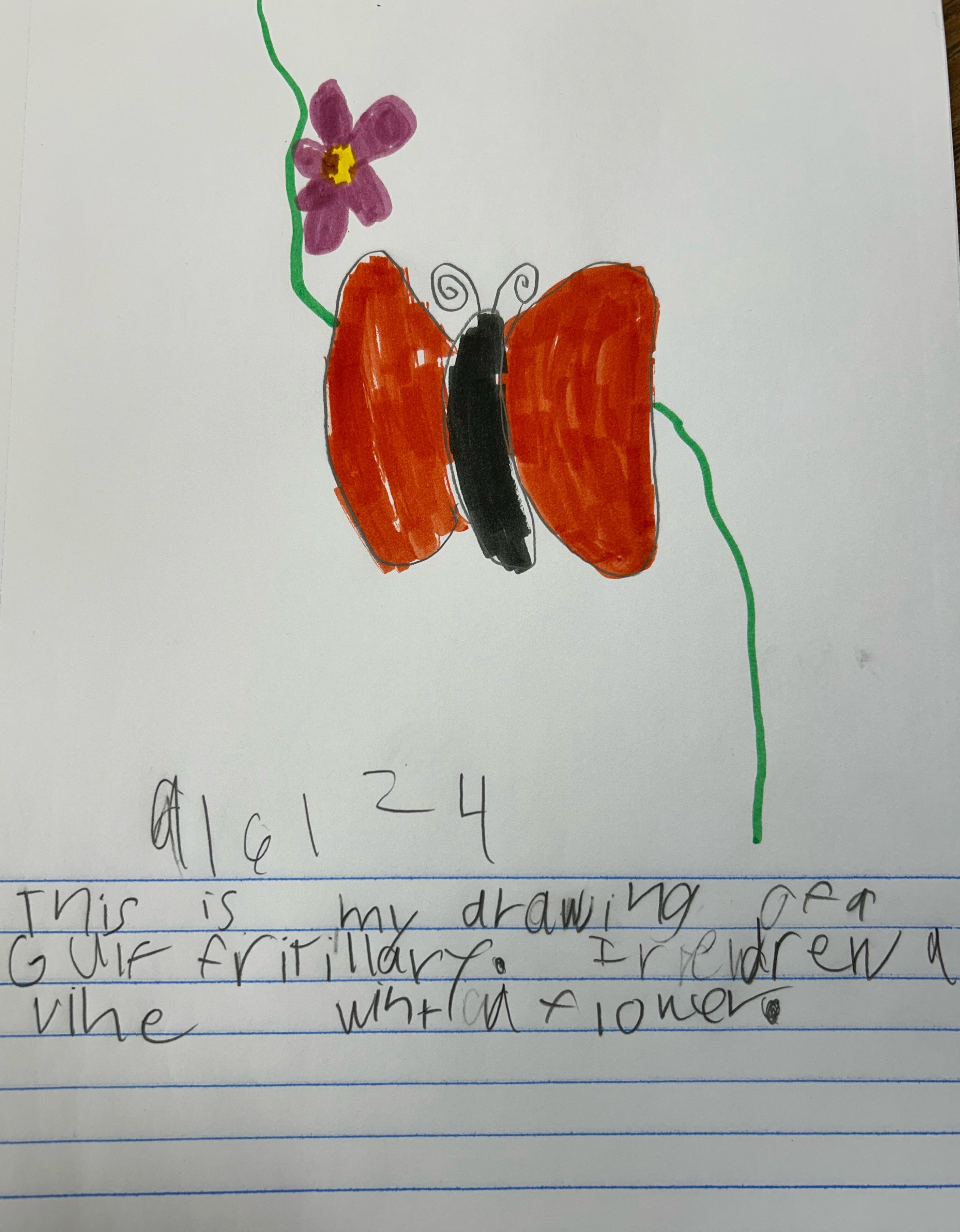
Danielle, 2nd grade, wrote a sentence. “This is my drawing of a Gulf fritillary. I drew a vine with a flower.”
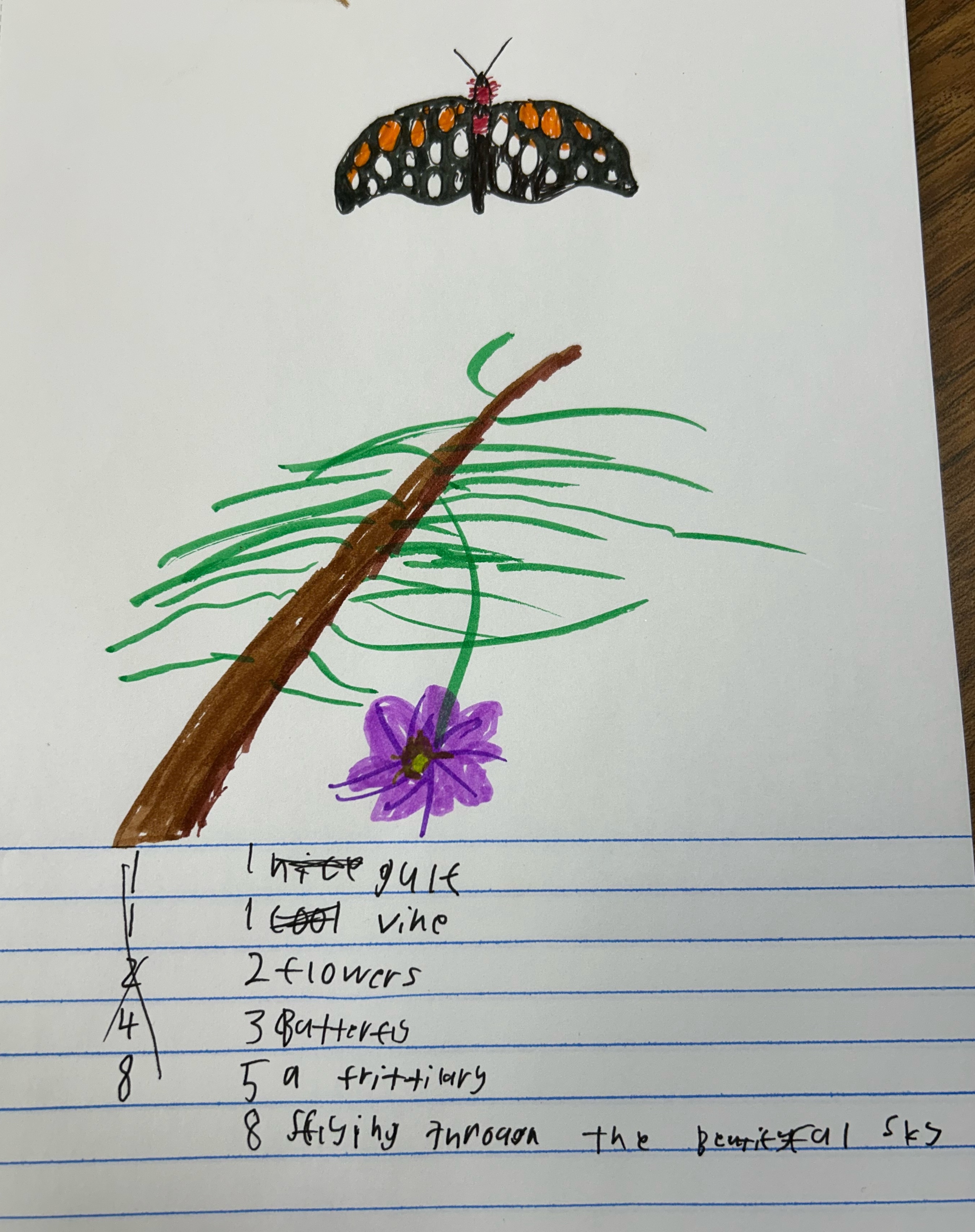
James wrote a fib poem about the butterfly. (We talked about using more specific vocabulary than words like nice and cool.) Gulf vine flowers butterfly a fritillary flying through the beautiful sky
I don’t always have nature at my fingertips to lead inquiry with my classes. This was a wonderful way to introduce the idea that asking questions and wondering are all part of the process of learning. And releasing was just pure Joy!
Writing in a community of writers has led me to so many wonderful connections with other teacher-writers from all over the world. I discovered the writing community at Ethical ELA in the spring of 2020 when we were all isolated. Being able to find meaningful writing prompts and support from others helped me feel less alone.
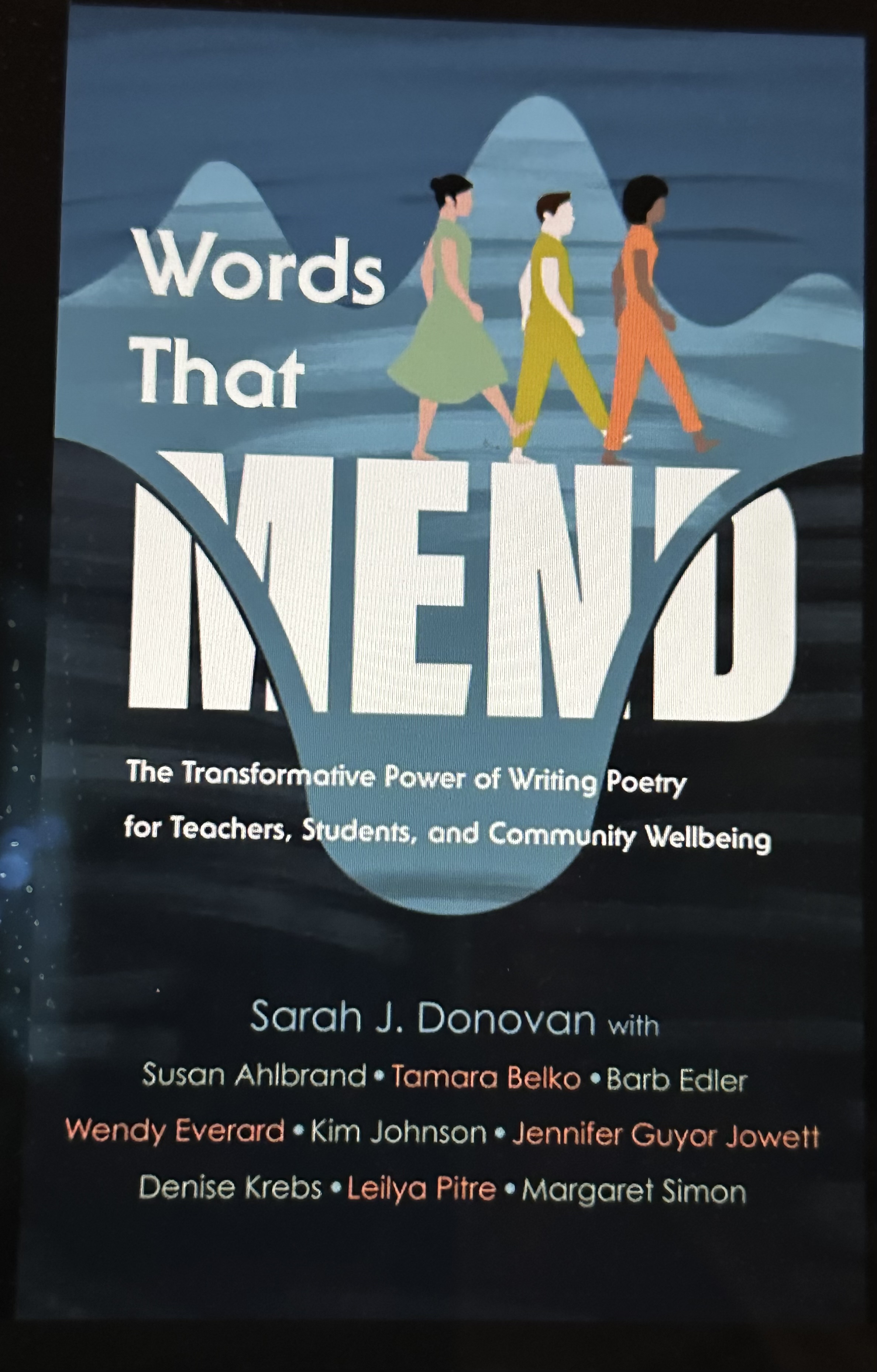
Now, four years later, I am honored to be involved in a book project. I have two chapters in a book that gives teachers an understanding of how poetry can be healing in our classrooms and beyond. Words that Mend is here, alongside its sister books 90 Ways of Community and Just YA.
One of my chapters in Words that Mend appears in the section Teacher Healing titled Walking through Grief with Poetry. I wrote about my grief journey after my father’s death and how writing poems helped me process that grief. The comments others left for me on my poems felt authentic and caring. Healing from grief doesn’t happen quickly, if ever, but finding a space for sharing my thoughts in poetry gave me a purpose. And having this book now out in the world gives me purpose.
The second chapter I wrote is titled Write Along with Me, An Invitation Accepted. I wrote about how one of my students used poetry in my class to carry her through grief and how she reached out to me to start a small after school writing group. In that chapter, you can find writing prompts that worked for me as I worked with her. In fact, each chapter includes a section for a prompt for teachers and students.
Penny Kittle wrote this about Words that Mend:
“My time reading Words that Mend was not only worth it, it has multiplied my thinking about teachers as writers in profound ways. These chapters contain the lives and experiences of teachers—written like a colleague who pulls up a chair to sit beside you—and you lean in, listening with intensity and joy. What a gift this book is: it holds so much. Words that Mend is the invitation each of us needs to write in community. In celebration. In support. In discovery of what it means to bring poetry into the lives of all those we know. There is a particular generosity in this book: one of personal experiences, yes, but also the hesitations all writers feel to show their lives in writing. You will find beginnings here (even a notebook page of first thoughts) that will inspire you to write. You will find lesson plans already worn and weathered by use in classrooms. Do not turn from the gift of Words that Mend: you need it more than you might think you do.”
~Penny Kittle, author Write Beside Them, Book Love, and Micro Mentor Texts
Words that Mend is now available for purchase on Amazon (for printing cost only) and a free pdf download on Ethical ELA here.
Sarah Donovan, Oklahoma State University, curator of Ethical ELA tells our story on YouTube:
We will have an online event at 2:00PM CST on September 22nd to celebrate and write together. Stay tuned!
This week was my second week of teaching this school year. We are settling into the routine. My classroom door revolves all day long with incoming and outgoing students. Nevertheless, I am establishing some routines. One of the expectations each week is “This Photo Wants to be a Poem.” On Wednesdays I post a photo here on my blog, but I also post it on our Fanschool site.
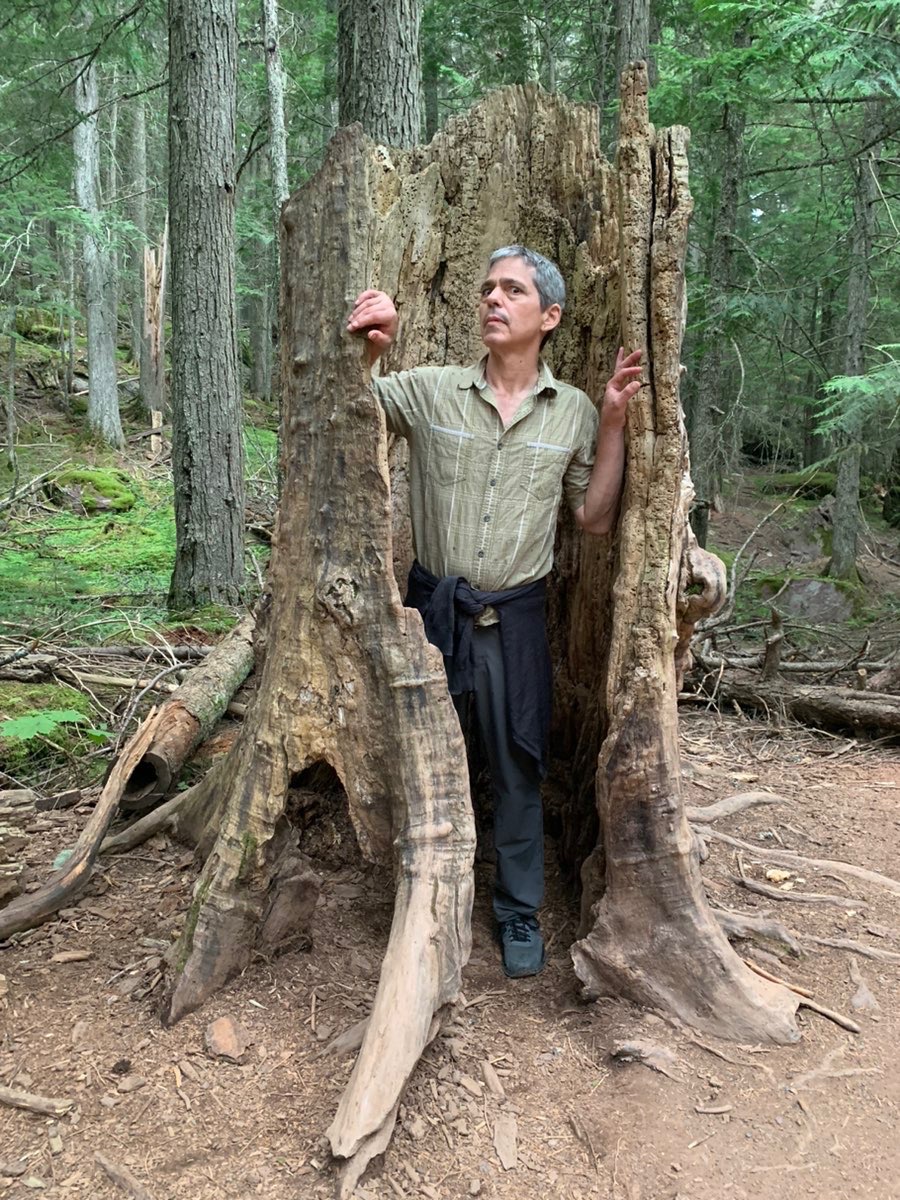
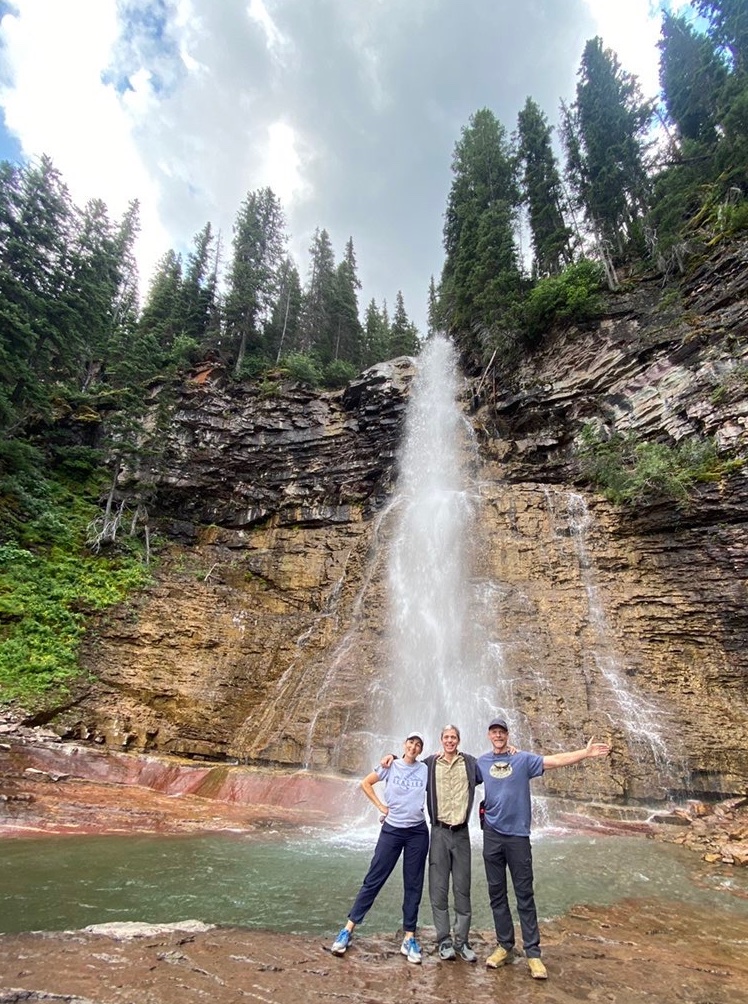
My friend Dani Burtsfield is a teacher in Kallispell, Montana. Last week she hosted poet Allan Wolf for her annual reading conference. She took Allan on a hike that she had taken me on a few years ago, so she sent pictures of them. I was wishing I could teleport and be with them, especially since our temperatures are well into the 90’s these days. If you know Allan and his poetry presentations, you know how he creates fun wherever he goes. Dani sent me some pictures.
Allan Wolf photo by Dani Burtsfield
On my students’ blog, I post my own poem as a model, and each student writes their own poem in response. One of my new students is a second grader. I taught her how to write a haiku. First we collected words. Then she spoke lines using the words. We counted syllables. I think she was pleased with her poem.
Crystal clear water you can see mountains through it beautiful blue lake
by Danielle, 2nd grade
Avalyn, now in 5th grade, wrote similes and used repetition. It amazes me how seemingly simple poetic elements can work together to become a beautiful poem.
Like an oversized crystal it falls Like the morning mist it falls Like a Maiden priestess it falls Like an opal river it falls by Avalyn , 5th grade
The final example I want to share made me laugh. Kailyn wrote from the perspective of the waterfall itself.
I love spitting on people, it’s just the way I flow. Paparazzi all around me, trees for hair. My life has been a sequel, the water in me loves to go, go, go! I can just relax and be lazy. If you visit me, you might want to watch what you wear.. by Kailyn, 6th grade
Dani, Allan, and Randy at Virginia Falls in Glacier Park, Montana.
Thank you to Two Writing Teachers for creating an amazing community of writers and a safe, welcoming space to write and share.
School has started so that means back to the butterfly garden. Summer has left it overgrown and in need of attention.
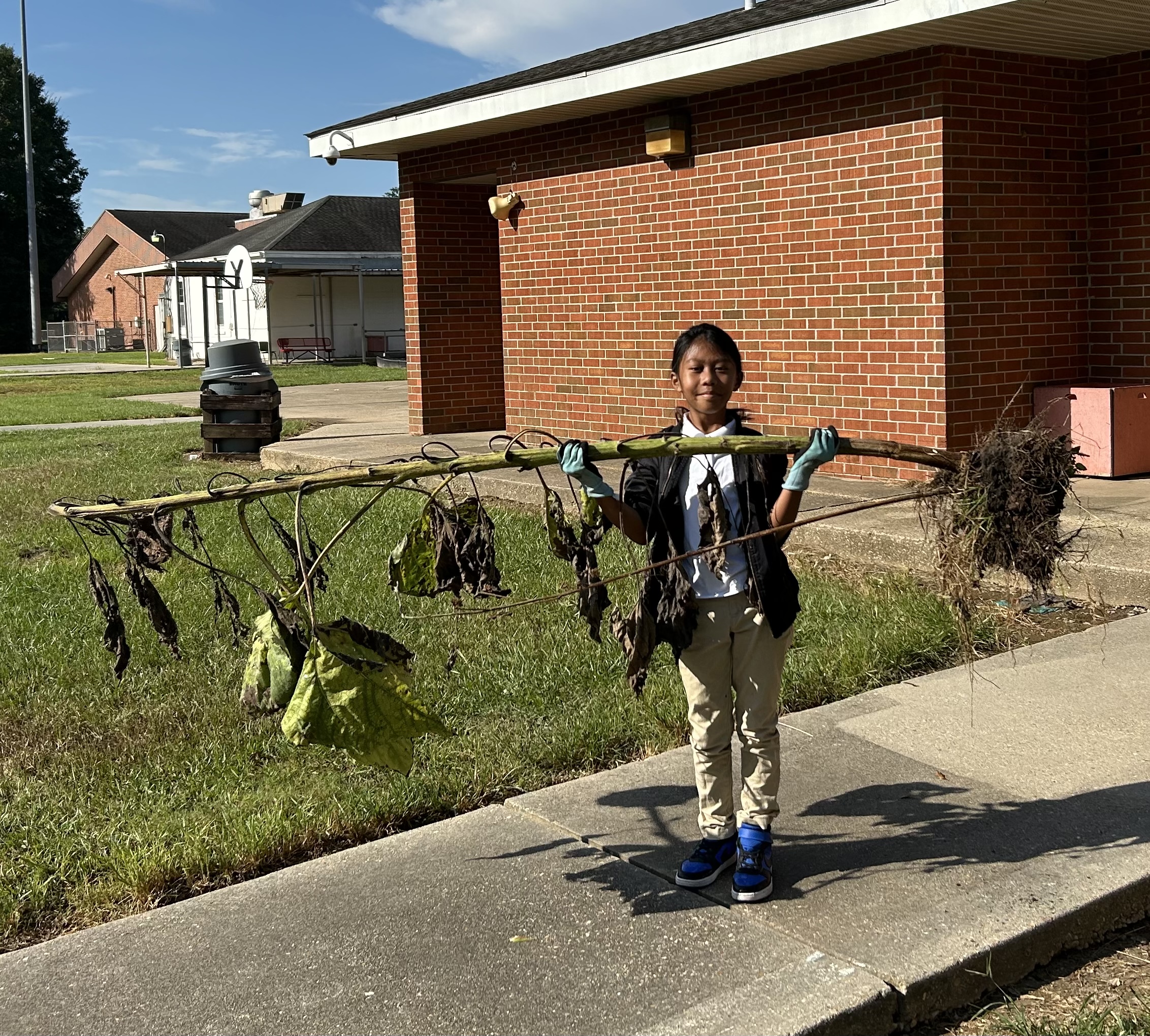
On Friday my student Avalyn and I got to work. Here she is with a mammoth sunflower we planted in the spring.
Avalyn and the giant sunflower.
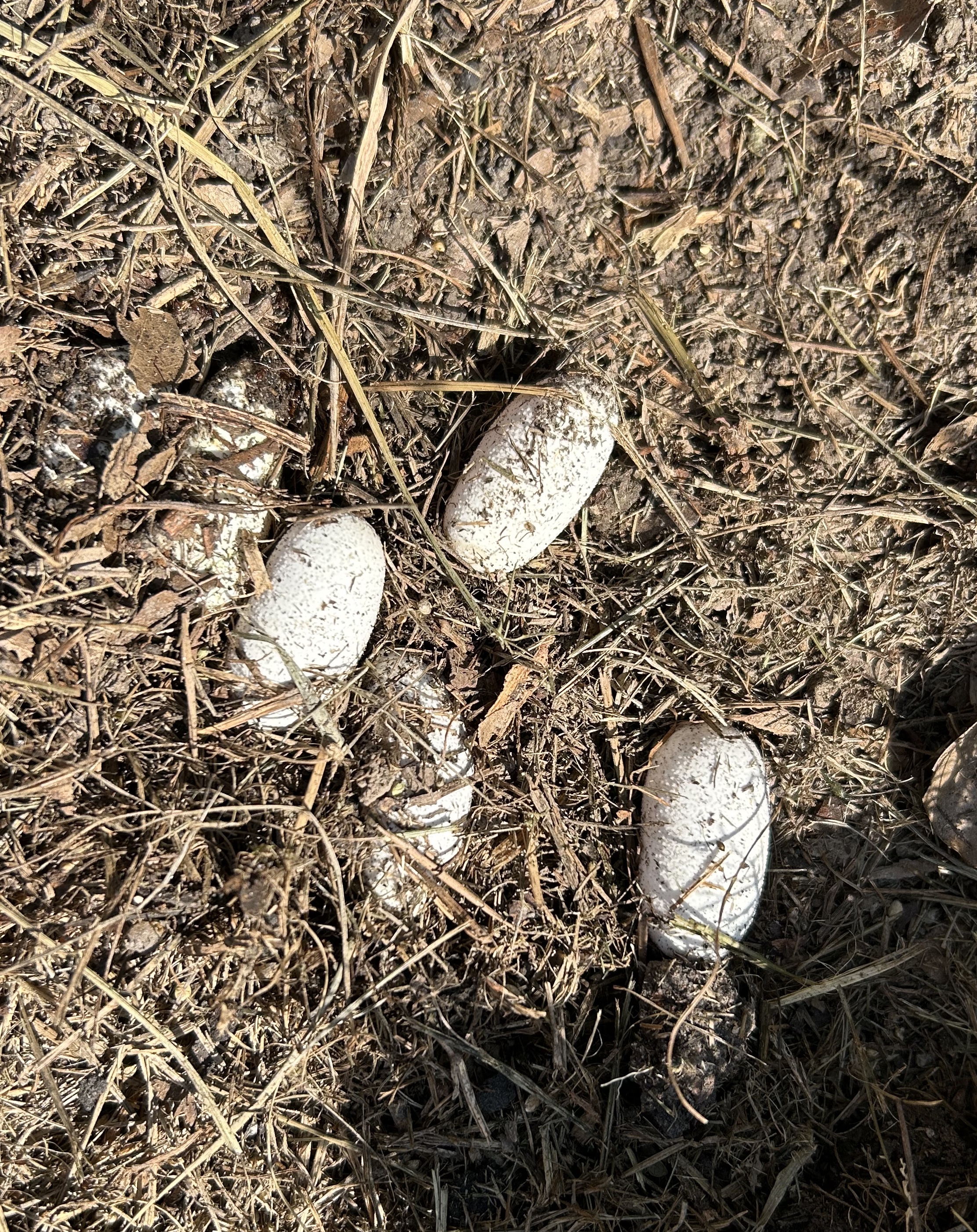
I started picking up the layers of mown grass around the edge of the planter box. I uncovered a nest of eggs.
Nest of eggs in dead grass
Avalyn and I, along with a few curious teachers, began a quest to find out what these eggs were.
They wouldn’t be bird eggs. Bird eggs are hard and round and usually in trees with an attending mother bird.
What about turtle eggs? Turtles usually dig a hole, and they lay near water.
Lizards? Too big.
We finally landed on the scariest option, snakes.
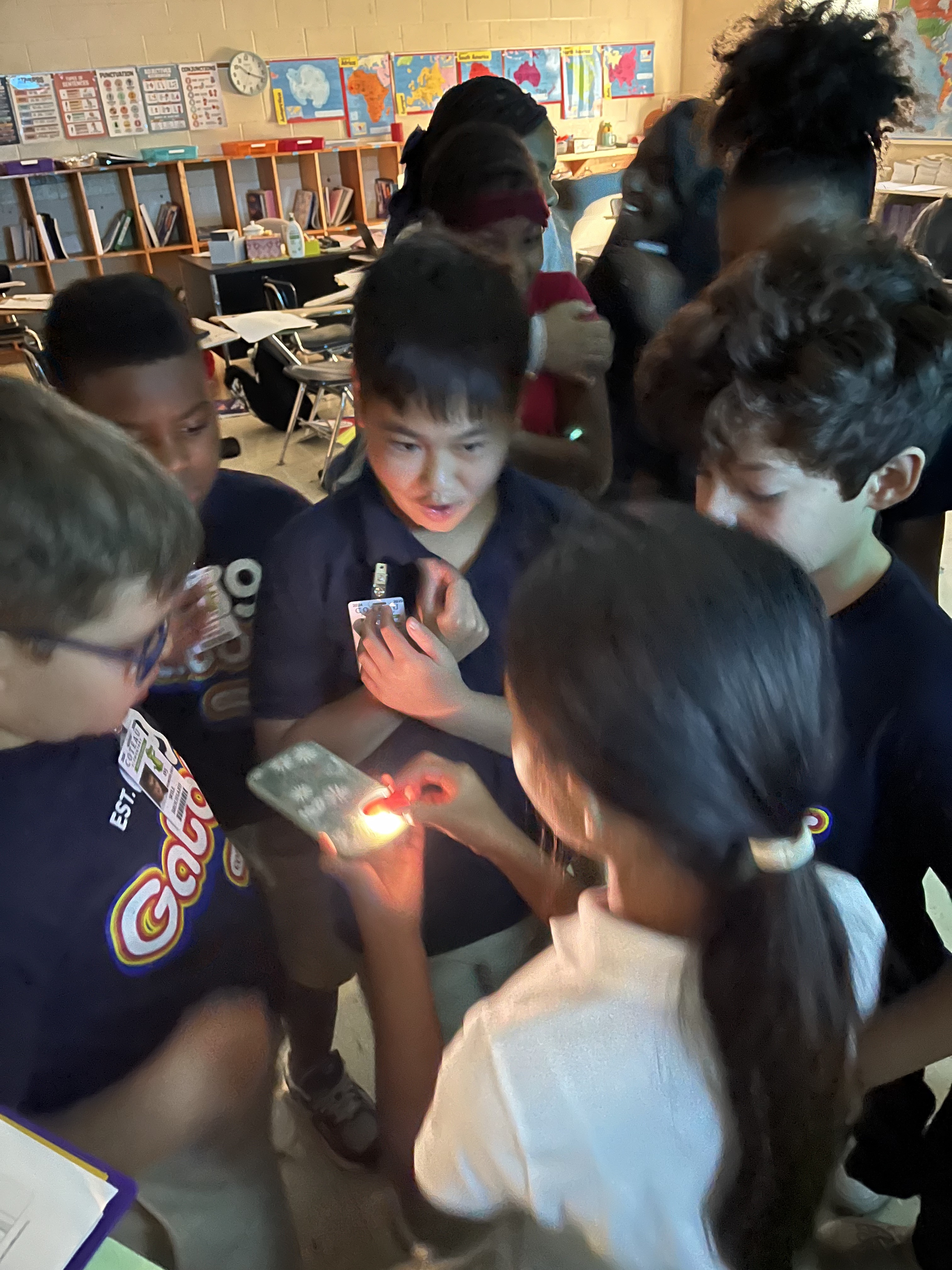
With my cell phone flashlight, Avalyn (Unlike her teacher, she didn’t mind touching and handling the egg.) candled the egg. Candling is a way to see inside the egg. She showed her classmates. We could see the embryo and veins and a shadow of a swirl.
Avalyn shows her classmates how to look inside an egg.
I know that having a garden is good for the social and emotional needs of gifted students (all students, actually) but I hadn’t prepared myself for the possibility of snakes.
I’m relieved to report that the eggs were hatched or eaten, certainly not viable, come Monday morning.
Thank you to Two Writing Teachers for creating an amazing community of writers and a safe, welcoming space to write and share.
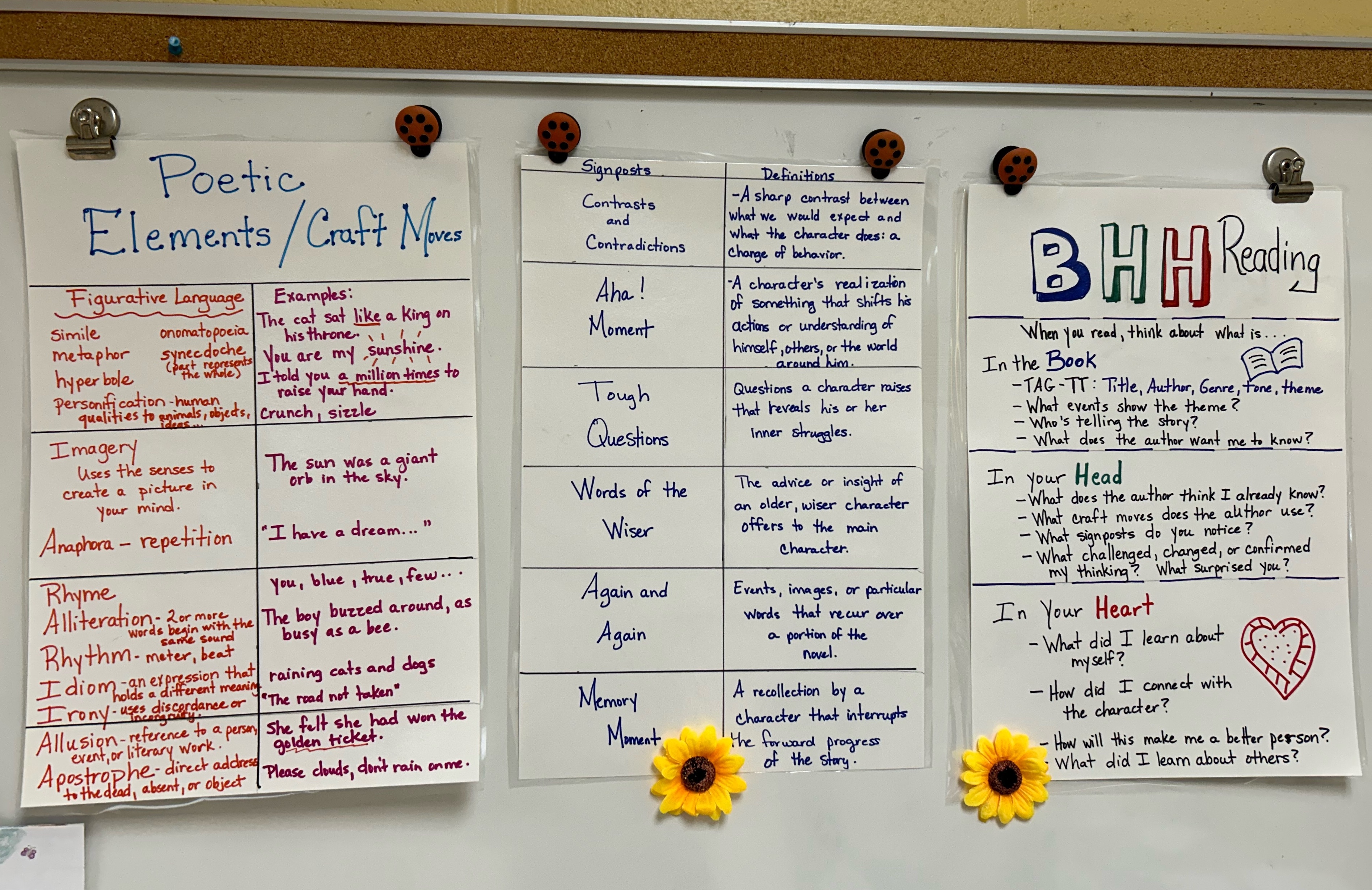
What do you do when the internet goes out, and there are two days before the students arrive at school? Make anchor charts, of course. Why not? The laminator is well stocked and hot. I got new markers with my supply order. I have a copy of Disrupting Teaching* on my table with a bookmark to the Book, Head, Heart format.
Influencer Faith Broussard Cade of Fleurdelisspeaks wrote, “You are not a fraud. You have put in the work. Do not waste precious energy doubting your worth or capabilities. You deserve to be here.”*
Even though the state insists on a new rubric for evaluation of teachers, even though the district has chosen a new platform for teaching English/ Language Arts, and even though my supervisor will be checking for annotated lessons and gifted strategies, I am an expert here. I know what I am doing.
It’s so easy for me to get stressed out over all the new, but I am keeping a mantra throughout beginning-of-the-year teacher meetings, “You know what you are doing!”
So anchor charts! To remind me that good teaching practice was not invented this year. I will implement good reading strategies without a manual that is hidden behind a code I don’t know yet. I will guide my students’ writing by sitting beside them as I have always done. I will encourage independent reading, personal narrative writing, and poetry not just in April. I deserve to be here.
Anchor Charts for Craft Elements, Notice and Note Signposts, and the BHH format for response to reading.
*Kylene Beers & Robert E. Probst, Disrupting Thinking: Why How We Read Matters, Scholastic, 2017.
Margaret Simon lives on the Bayou Teche in New Iberia, Louisiana. She is a retired elementary gifted teacher who writes poetry and children's books. Welcome to a space of peace, poetry, and personal reflection. Walk in kindness.





 Reflections on the Teche