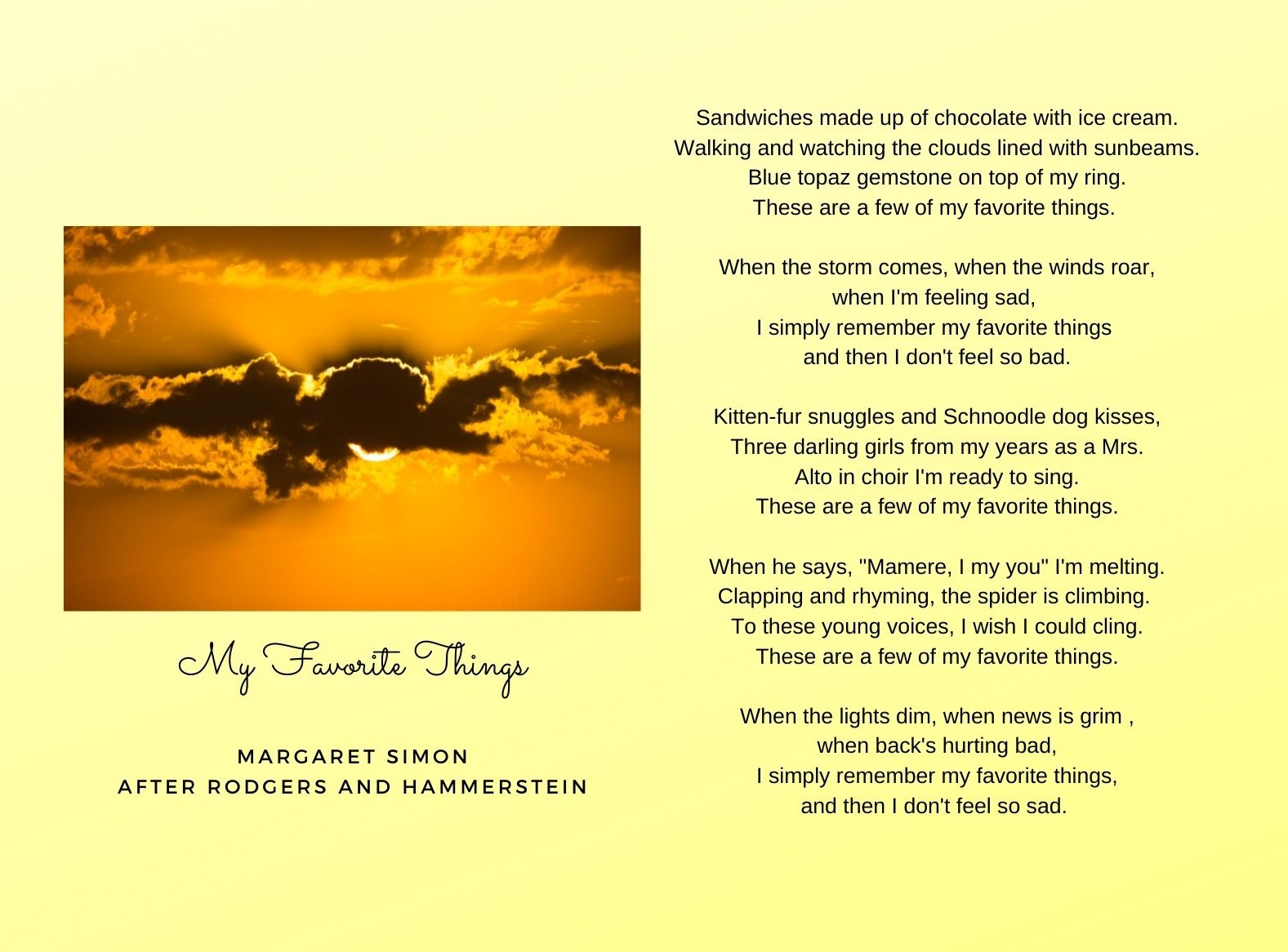
Laura Purdie Salas has been a writing mentor in my classroom for years now. Her books and poetry speak to children ( and to this adult). A few weeks ago she posted this poem on her blog. I used it with my students for a beginning-of-the-school-year writing prompt. I did not require the precise rhyme and rhythm pattern; they got the gist of making a list of favorite things.
I, however, took on the challenge of getting into the right meter and rhyme-scheme. I don’t think I’ve nailed it (I’m missing a verse and one of the rhymes is too slanted) but each revision gets closer to it. Rodgers and Hammerstein were musical geniuses. I played a video of this favorite scene from The Sound of Music, a classic that many children are unfamiliar with. They know this version better–the Lays commercial with Anna Kendrick. It’s fun to watch, too.
Thank you to Two Writing Teachers for creating an amazing community of writers and a safe, welcoming space to write and share.
We are in our second full week of school, so it’s time to start slicing. I am pleased with the daily routine I’ve started this year with my students. Today, they came in and found their notebooks, opened them up to a clean page, dated it, and waited. Ah, yes. Routine of writing every day is taking hold.
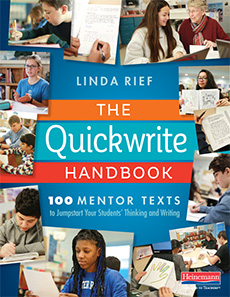
This morning after our quick write, Jaden pointed to Katie’s filled page and said, “She told me she didn’t want to write this morning.” The magic of Linda Rief’s The Quick Write Handbook. Together we have done the first two quick writes in the book, Rambling Autobiography and On Being Asked to Select the Most Memorable Day in My Life. These were great set ups for writing a Slice of Life post on our class blog. (Kidblog has morphed into Fan School and we are not happy.)
I write alongside my students. For the rambling autobiography, Linda Rief suggests using three phrases on their blank page, at the top, middle, and bottom, and write to them. (I was born…, I lied to…, and A friend once told me…)
Rambling Autobiography
I was born under the Perseids meteor showers in a Mississippi torn by racial riots. When I was six, “camping out” in our front yard, we set it on fire, an accident that left me with a fear of fire and deep shame. Our house had the largest oak tree on the whole block. I’ve always imagined my grandmother as my guardian angel. I carry her name with me every day. I lied to my mother about the fire. A friend once told me to trust my gut. I could create a timeline of my life with parentheses of hurricanes. I secretly like to listen to choral music and sing along the alto part. I once danced with Marilyn Singer’s husband. I’ve won an award for teaching writing but not for writing.
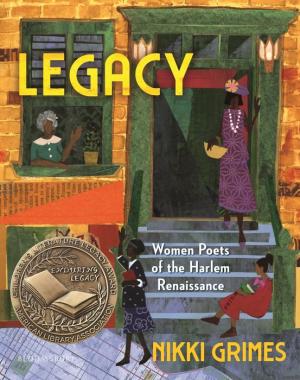
I was the lucky winner of a free copy of Legacy by Nikki Grimes. I would have, should have a copy of this book, but hadn’t bought it yet. I recently subscribed to Chris Barton’s newsletter, and low and behold, was the winner of this book on my first month. You can be lucky, too. Subscribe here. His newsletters are full of stuff, author interviews on “This Book is Dedicated to”, promotional materials, and links to more.
In Legacy, Nikki Grimes uses the golden shovel form to celebrate women poets of the Harlem Renaissance. Each Renaissance poem is accompanied by a golden shovel and an illustration by a Black woman artist. It’s beautifully pulled together into 3 sections: Heritage, Earth Mother, and Taking Notice.
The poems I am featuring today are about poetry, the writing of poems. The fancy term is ars poetica.
Notice the tactile in this poem, kneel, wriggling, and my favorite “water which satisfies, soothes, tickles–what wet word/ pours itself into the vessel that/you call thought?” Nikki Grimes calls us to notice it all and make poetry.
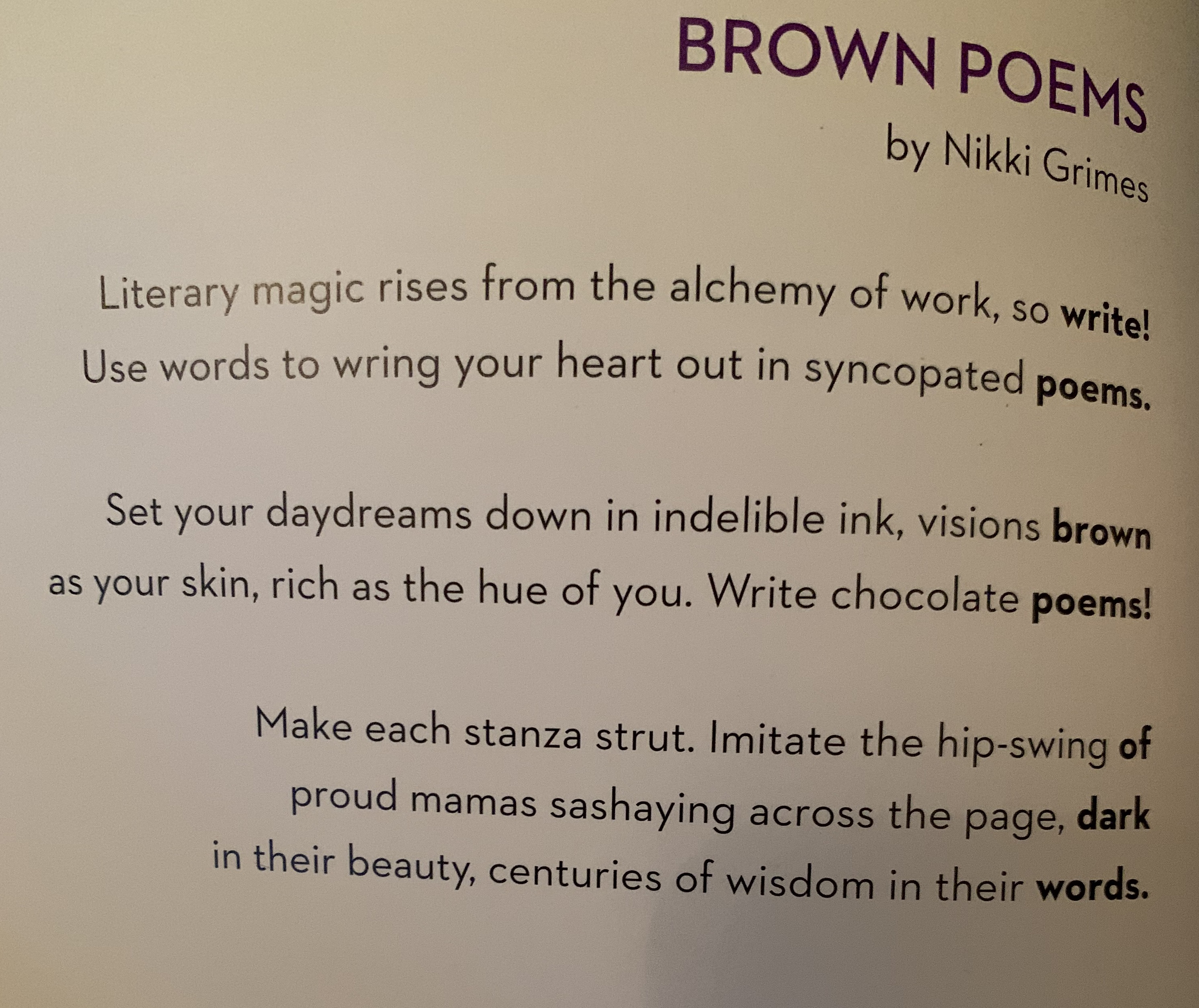
And this one I will print out for my brown girl writers this year.
I love the instruction to “Write chocolate poems!” Can’t you taste it? I’ll bring in Dove chocolates, the kind with a message on the wrapper and hand them this poem. Yes! I’m excited to start a new year of teaching with this book in my hands. Thanks, Chris Barton and Nikki Grimes!
When something comes across my radar multiple times, I pay attention. This is the first year I’ve heard of the Sealy Challenge. It is a challenge to read a poetry book each day in the month of August. I read poetry books for more than one purpose.
To enjoy lyrical language
To inform my own writing practice
To get ideas for teaching
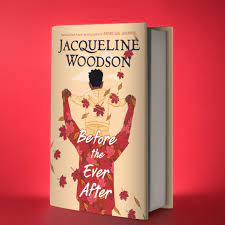
The first book I read was Jacqueline Woodson’s Before the Ever After which accomplishes all three goals.
I picked up the book at a new local independent bookstore, and it was signed! Ha! What a find!
Before the Ever After is a middle grade novel-in-verse. To read a review, click here.
For my take on the Sealy Challenge, I’d like feature one poem and respond to it.
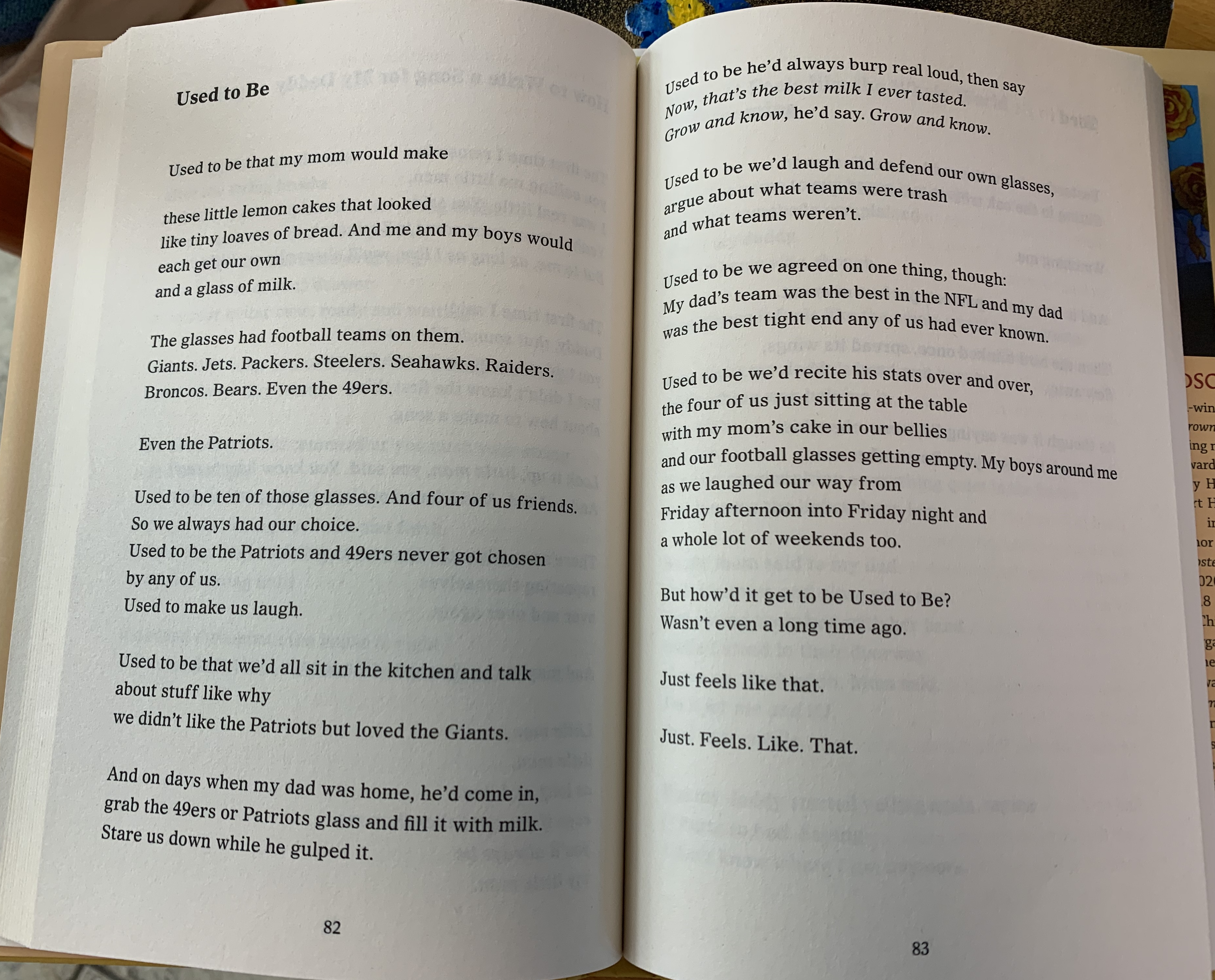
This poem captures a few themes of the verse novel. ZJ’s father is suffering from chronic traumatic encephalopathy (CTE) and his friends help him through the struggle. Football is a major topic, but ZJ is a musician and has troubled feelings about football due to his father’s illness. The repetition of “Used to” effectively communicates ZJ’s continued struggle about how things used to be before his father was ill.
Craft moves I love in this poem are the repetition (anaphora) of “Used to be” as well as that ending. “Just feels like that.” becomes “Just. Feels. Like. That.” This craft move is something I can try in my own writing and I can show kids how to use it with effectiveness.
Jacqueline Woodson, while being a master of craft, does not overuse any literary element. It just feels natural. It’s. Just. Natural.
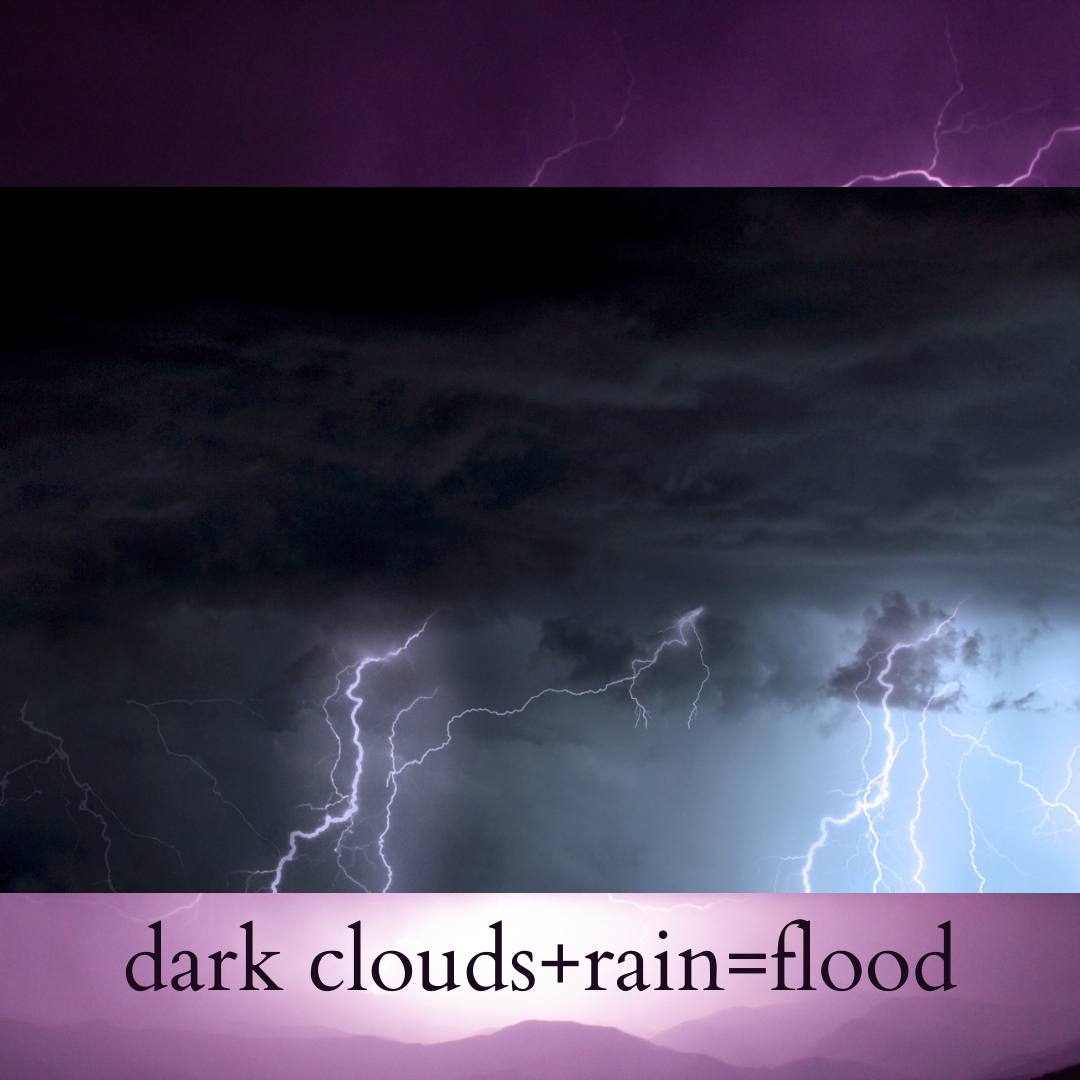
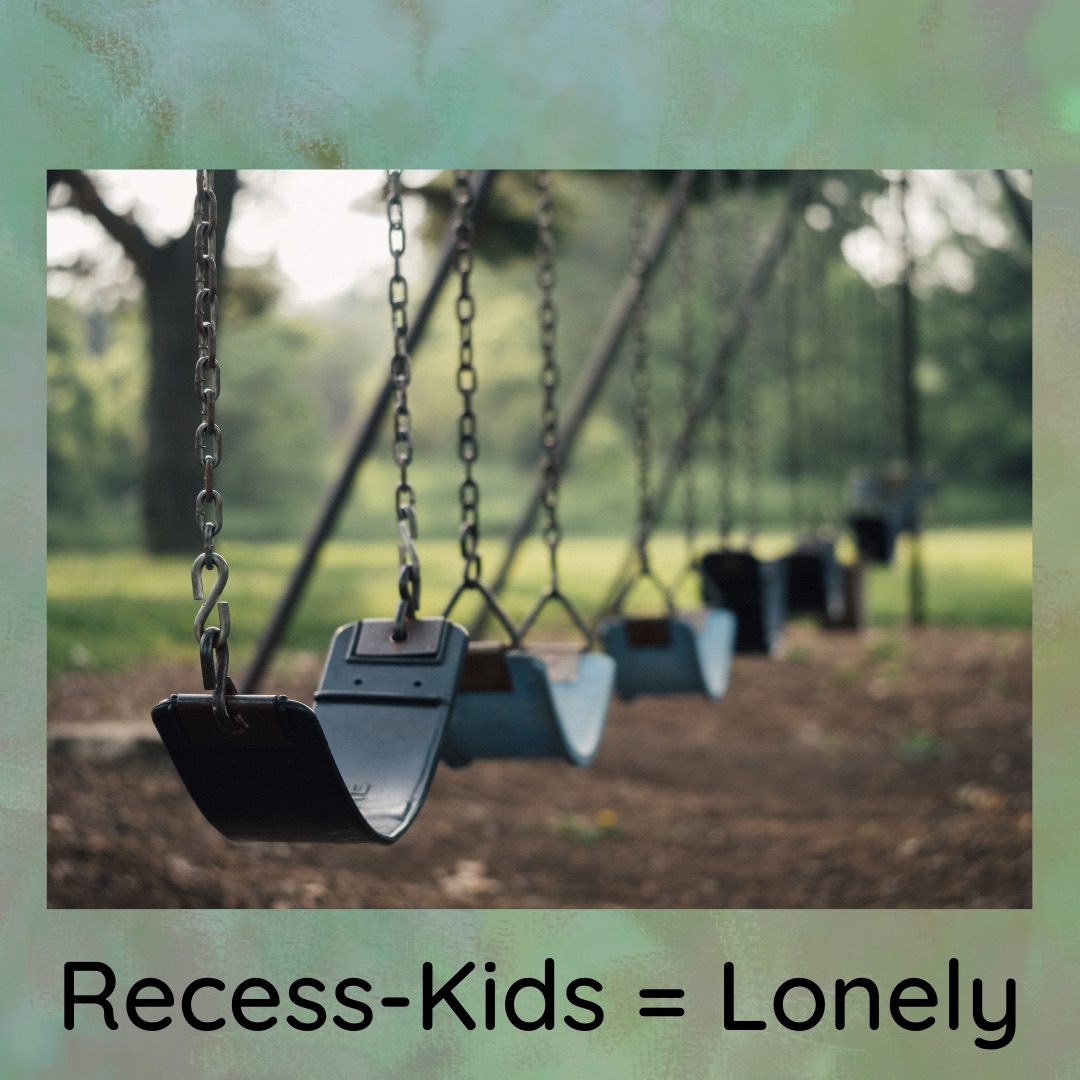
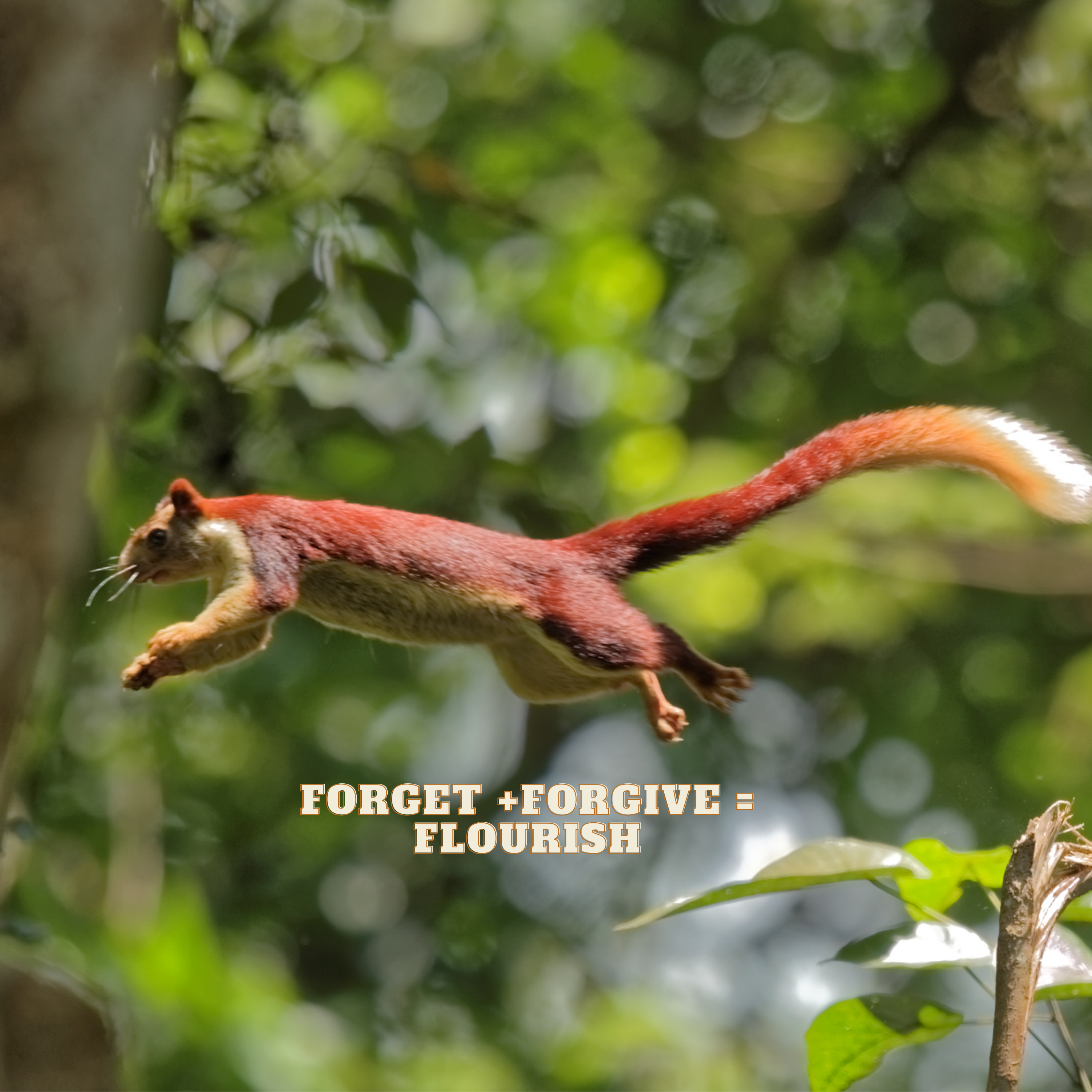
I hope you are having a fun-filled poetry month. This week I played with equation poems à la Laura Purdie Salas. Laura released a book of equation poems titledSnowman – Sun = Puddle(published by Charlesbridge and with art by Micha Archer). This is a great book to read with budding second and third grade writers as they learn about figurative language. This month Laura is posting an equation poem on her blog daily. My students and I enjoyed creating image equation poems using Canva.
by Rylee, on a stormy day when her teacher had a hard time getting home because the streets were flooded.by Mrs. Simon on the same rainy day when no one could go out for recess. by Adelyn, who in second grade is learning about the Civil Rights Movement. by Chloe with a nod to Flora and Ulysses by Kate DiCamillo.by Mrs. Simon
Thank you to Two Writing Teachers for creating an amazing community of writers and a safe, welcoming space to write and share.
I have been tutoring 3rd grade virtual students after school once a week. There are rarely more than 3 students who tune in. It’s on Monday; what can I expect? I actually prefer the small group. The planning for these meetings has been a challenge because I am not completely familiar with 3rd grade standards. I usually focus on a writing skill. This week when I checked on what third graders are learning, I found similes. That was a topic I could get my head around.
I created a slide show with some simile examples and a writing activity. Only one student came. D does not show his face or turn on his mike because there is a lot going on in his house. I often wonder if he is paying attention at all. When I asked him what a simile was, silence.
“Are you with me?”
In the chat box, “yes”.
“Do you know what it is?”
“no”
“Let me show you.”
I showed examples and then asked him to find the simile in a passage. He got it. We then moved on to the poem. Have you ever written a poem with a student you cannot see or hear? With discussion (me talking, him typing), we got through it. For taste and sound, I gave him some ideas to choose from.
“Do you have any clothing that is lime green?”
“A shirt”
“Where did you get that shirt?”
“school”
“Oh, it’s the Spirit Shirt you can wear on Friday?”
“yes”
So I typed “feels like Friday” as well as the line “Lime green reminds me of the shirt I wear to school on Spirit Days.”
We had “It smells like…” to fill in.
By then he had gotten the idea. He typed, “outside.” Perfect!
D unmuted long enough to read his poem out loud. I heard the pride in his voice. And then he said, “Thanks. I learned something today.” There it was, all I needed to smile.
https://twowritingteachers.org/ Thank you to Two Writing Teachers for creating an amazing community of writers and a safe, welcoming space to write and share.
As an adult I’ve learned that failure is a part of life. However, it’s not one we want to admit to. Failure feels uncomfortable. Failure feels unspeakable. Failure is fearful of what happens now.
This year of the Covid pandemic, there has been a great deal of failure. It’s hard to find the silver lining. I met with my last remote student yesterday and wanted to reach across the screen and cradle him. He feels like a failure. He will go back to in-person school on Monday because he couldn’t keep up with the work in the computer program he was given.
Our district has a virtual option for parents who did not want to send their children back to the buildings. The virtual option does not come with a teacher. As a gifted teacher, I was only responsible for IEP minutes, enrichment basically. I did not teach content to the virtual students. Their curriculum was through a program of videos and tasks. Virtual literally means “not real” and the program is not at all real. My student is not alone. Many students are not making it. Many are failing.
Our System has failed our Students. I do not know what this year will mean in the long run. What does the future hold? Where will we go from here? Education has failed. Our students are the victims.
Thank you to Two Writing Teachers for creating an amazing community of writers and a safe, welcoming space to write and share.
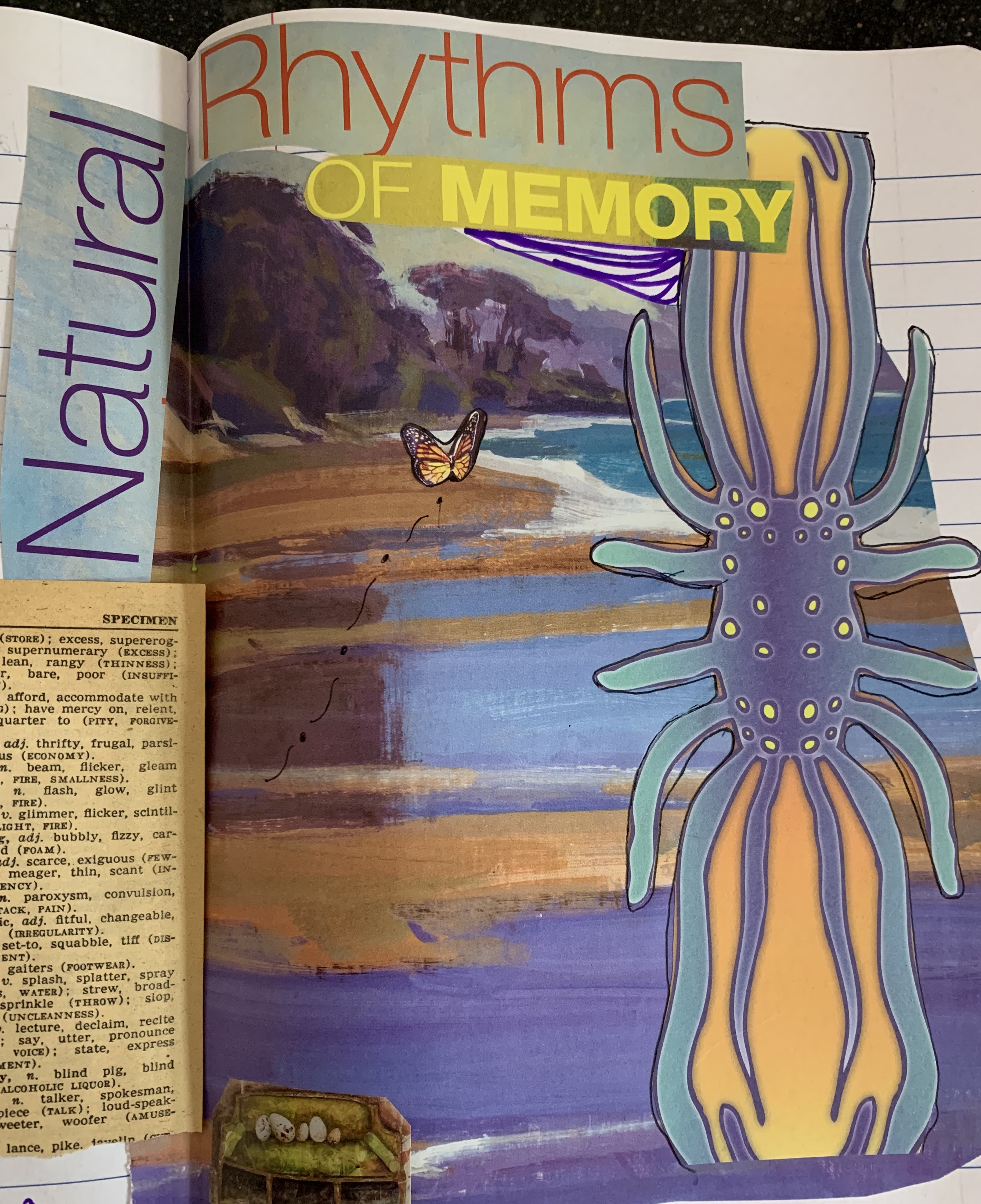
I teach multiple grade levels, so in one given day I’ll read a social justice poem, an article about invertebrates, a picture book about water protectors, and student slices. But all reading roads lead to writing in one way, shape, or form. We write every day.
Today’s notebook collage is a sea of invertebrates, including a thesaurus page with the heading word specimen. But it was the words that led to my thoughts. We all have a story to tell. I may not have a story about significant environmental issues or roots in injustice, but it is a story, a history worth noting in a poem.
Notebook page collage, 3/1/21
In the Natural Rhythm of Memory
While she may speak of rivers, and he speaks for the trees, the poet speaks for mollusks, snails, and anemones. Who do I represent? Neither drums of nature, nor blood of brothers tell my story. Not poor or tortured; My river runs from Mississippi to Texas, through veins of magnolias and spray of Gulf waves– my history is a southern drawl spoken over the telephone, sweet as maple syrup, white as cornbread, and golden as the morning sun.
Thank you to Two Writing Teachers for creating an amazing community of writers and a safe, welcoming space to write and share.
Amanda Gorman is an icon these days. She’s everywhere. Even at the Super Bowl. While I didn’t care much for the game, I do care about poetry and am enthralled by Amanda Gorman.
For writing time Monday morning, I showed this video of her performance. At first we just watched and listened. Then my students and I collected word groups. Amanda not only writes with rhyme and rhythm, she also plays with the inner sounds of words. Here are a few of the groups we collected:
captain action impact
need lead exceeding succeed
expectation limitation uplifting
wound warfare warrior share
nonstop hot spots laptops workshops
acting courage compassion
charge champions carry call captain
neighbors leaders educators healers
schools tools
Chloe said “Her tongue’s a trampoline.” I grabbed that line as a first line to this poem.
Amanda
Her tongue’s a trampoline! Words bouncing, beginning a charge for compassion, acting, not reacting with a force for choice. Nonstop flips and jumps, swinging above expectations with a landing, a bow, and branding a voice for now, an example of how, Amanda amps the vow– Wow!
Last Friday I posted poems from my two fifth grade girls who responded to Amanda Gorman’s powerful words with their own poems. Their poetry prowess has not stopped. On Thursday, Kaia announced that she had written another poem. She explained to me that she saw Beldam, the Other Mother in Coraline. She googled it and found a poem by John Keats, La Belle Dame sans Merci. As she’s telling me this, she is writing and googling and writing and asking me about the Queen and how tall she is. Where is she going with this? In the end, it all led to an original ballad-esque poem.
I told her, “You are doing the work of a poet.”
Her face (her eyes, for she was wearing a mask) lit up. “Really, why?”
I explained that as a writer, we seek inspiration and research it and then write from it. Amanda Gorman explained in an interview with Anderson Cooper that she read other inaugural poets and researched inspirational speeches to write her poem, The Hill We Climb. “You are doing this kind of work. You are not just writing from my prompts anymore. You are actually a poet.”
Those words inspired her to write another poem. I will post a stanza here. She said, “I love how in poetry, you can write about anything. I can write about your desk, that pen, the Kleenex box.”
“Yes, you can.” I thought to myself, a dream come true. Or my One Little Word, Inspire, at work.
I’d like to find a place to send some of her work. If you have any ideas, please leave a comment.
The Work of a Poet
As you pick up the pen, you wonder what to write Thinking this way and that way, until you see a light A shining and glistening rhythm it sets off And helps you to the end of the paper, as fast as a cough
Margaret Simon lives on the Bayou Teche in New Iberia, Louisiana. She is a retired elementary gifted teacher who writes poetry and children's books. Welcome to a space of peace, poetry, and personal reflection. Walk in kindness.