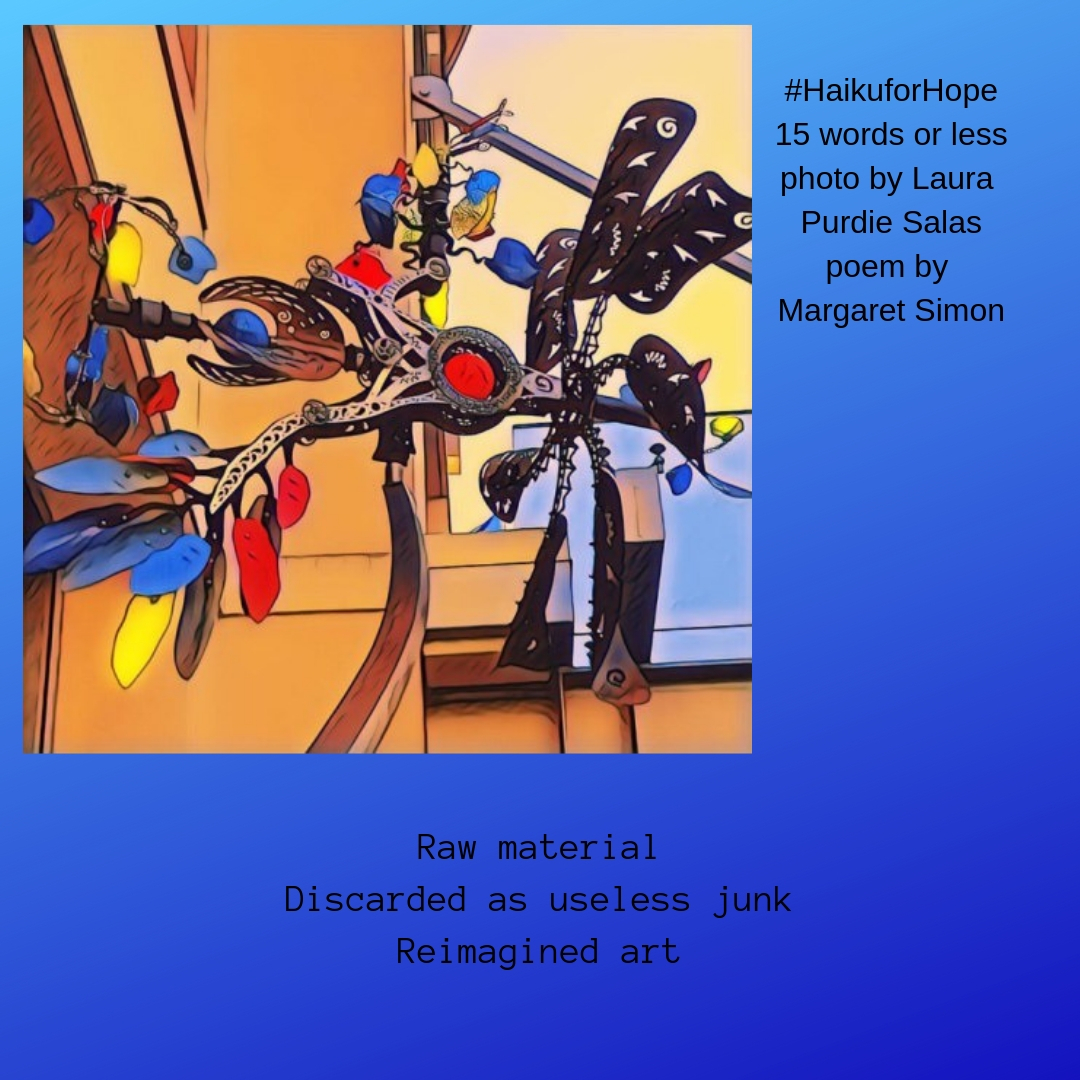
Laura Purdie Salas hosts a 15 Words or Less poetry drafting exercise every Thursday. This image is on her blog today. Join in here.
Posted in Photography, Poetry, Writing, tagged #haikuforhope, 15 Words or Less, Laura Purdie Salas on December 27, 2018| 2 Comments »
Laura Purdie Salas hosts a 15 Words or Less poetry drafting exercise every Thursday. This image is on her blog today. Join in here.
Posted in Poetry, Slice of Life, Writing, tagged #haikuforhope, Bob Raczka, Santa Clauses on December 18, 2018| 5 Comments »
See more posts at Two Writing Teachers Slice of Life .
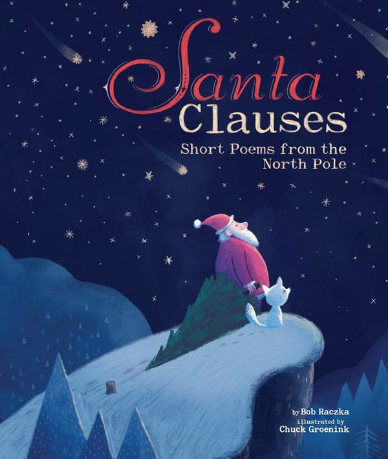
Yesterday I read aloud the book Santa Clauses to my students. Written by Bob Raczka and illustrated by Chuck Groenink, Santa Clauses is a book of haiku for every day in December up to Christmas Day.
I read the opening author’s note: “Santa is a man of many talents. He’s a toymaker, a reindeer trainer, a sleigh pilot, and a world traveler. But did you know he is a poet?”
Chloe, 3rd grade, said Santa must’ve written the haiku and sent them to Bob Raczka to publish. I agreed that seemed like a reasonable idea. (I love having believers in my classroom.)
Of course, in response, we had to write our own Santa clauses. Here are a few:
So warm at nighttime
I love eating my cookies
with tasty milk cups.
by Breighlynn, 3rd grade
Paper, ribbons, bows
wrapping love in a package
Open carefully.
Margaret Simon
Rudolf is happy
that history is alive
He will tell Santa.
by Chloe, 3rd grade
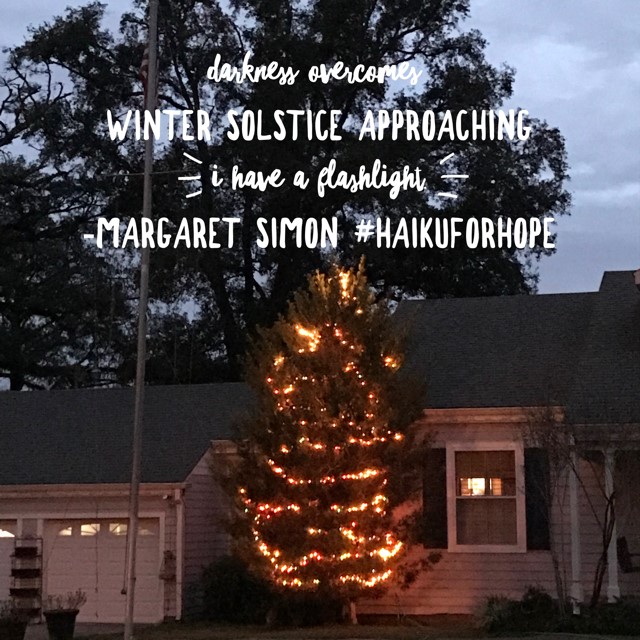
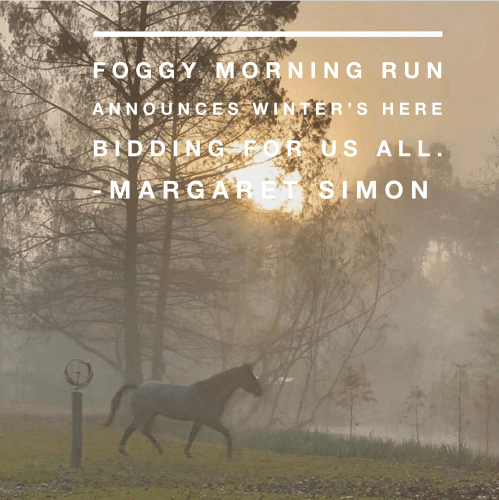
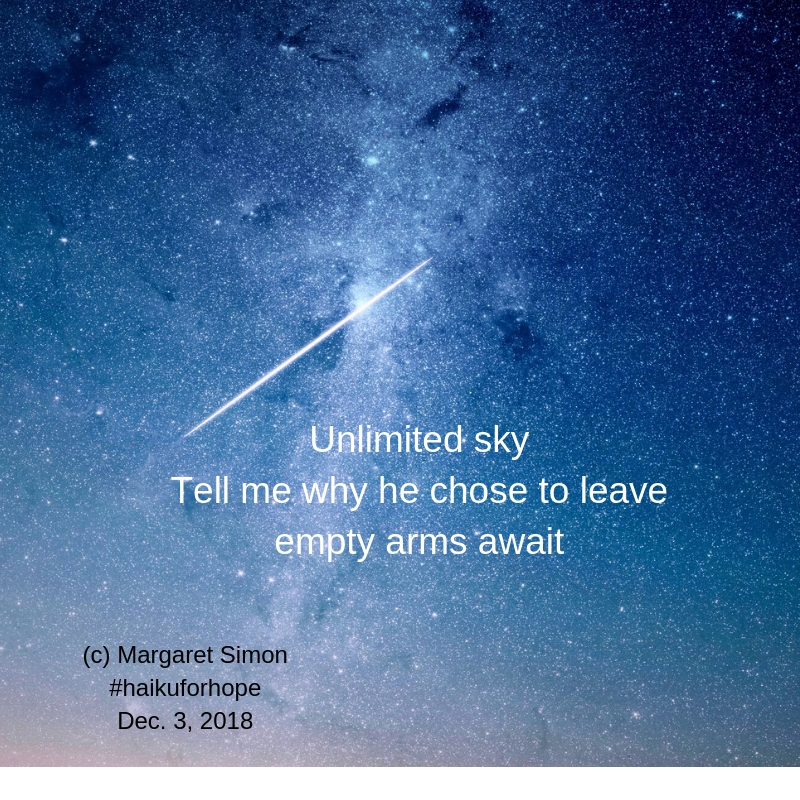
I am participating in #haikuforhope along with others on Twitter. My poem today was made in Word Swag from an Instagram photo from my friend Jen Gray.
Posted in Writing, tagged #haikuforhope, winter solstice on December 13, 2018| 5 Comments »
Posted in Spiritual Growth, Writing, tagged #haikuforhope, spiritual journey on December 6, 2018| 5 Comments »

Round up is with Irene at Live Your Poem.
On this first Thursday of December, the Spiritual Journey bloggers are reflecting on our 2018 one little word. Way back in January, I chose the word Explore. Like previous words, Presence and Open, this word helped me to be more present to the world around me. Exploration is important in the life of a writer. To me exploring has a connotation of adventure and daring. While I find much comfort in just being at home, when I am more open to adventure, I reach out and invite joy in.
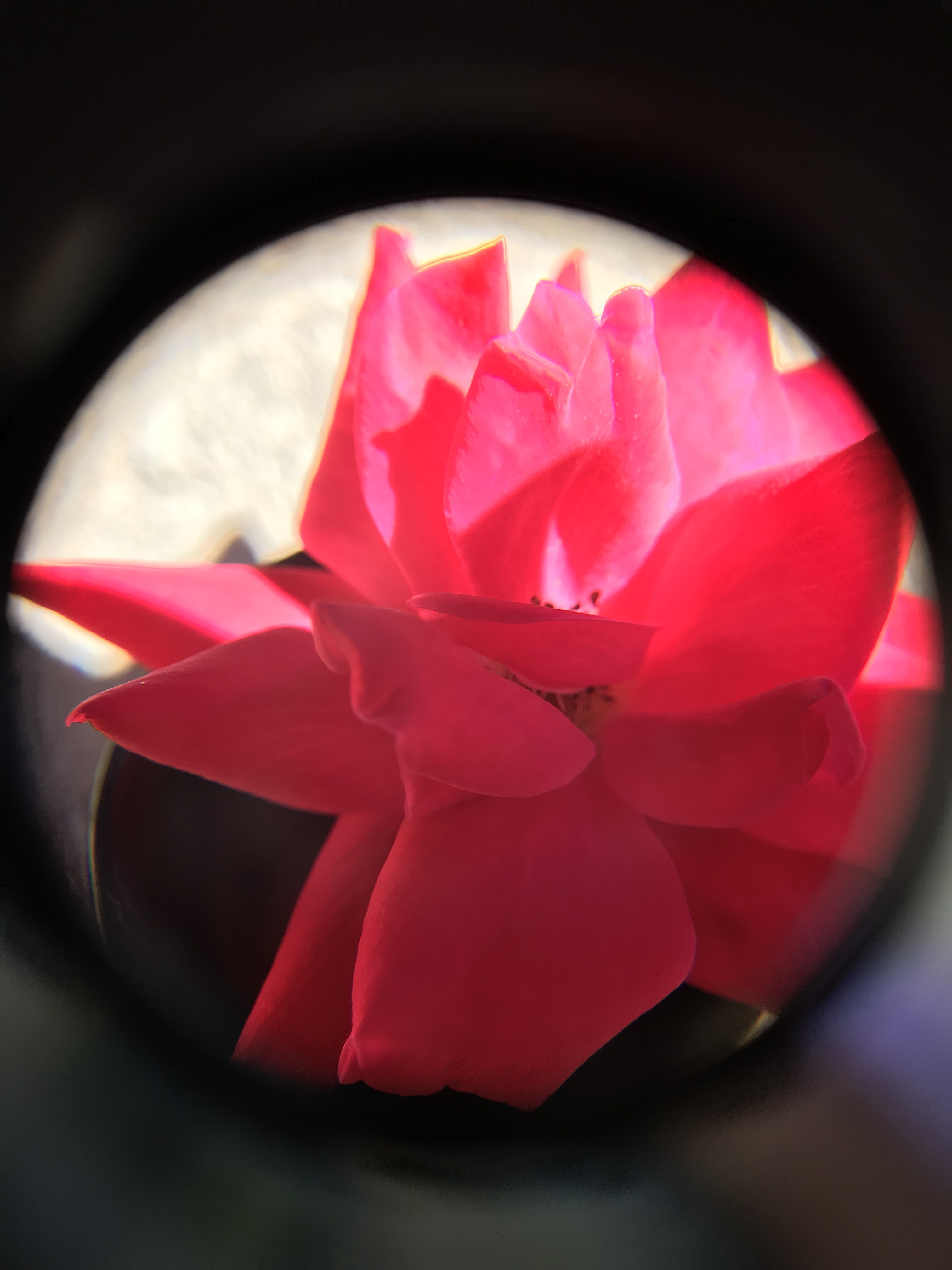
My students and I enjoy exploring different ways to look at common objects. The above image was taken through a Private Eye jewelers loupe in the school garden. The Private Eye asks the viewer to use figurative language to describe what you see. It looks like… and it also looks like…
A rose in bloom
flowing tutu in the sun
a garden dancer
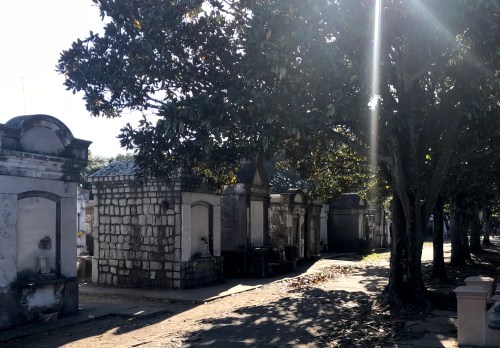
Following NCTE in Houston, my friend Dani traveled home with me for a few days before heading back to Montana. We explored Avery Island and the Tabasco plant, a sculpture garden in New Orleans, and an old cemetery. Dani was fascinated by the above ground crypts. Since NOLA is below sea level, bodies are buried above ground to avoid floating away. Exploring is more fun with a friend.
Explore was a good word for 2018, but as this year comes to a close, I’m thinking about next year’s one little word. I feel the need to turn more toward reaching out to others and making some kind of difference. Explore was a more self-serving word, one that led me to adventures and new places, but didn’t send me outward to others. I’m ready to look inward to how I can become more generous to others.
#haikuforhope
Hope fills my waiting heart
Gently cradled in wonder
Exploring my world
(c) Margaret Simon
Posted in Writing, tagged #haikuforhope, faith, labyrinth, Solomon House on December 5, 2018| 3 Comments »
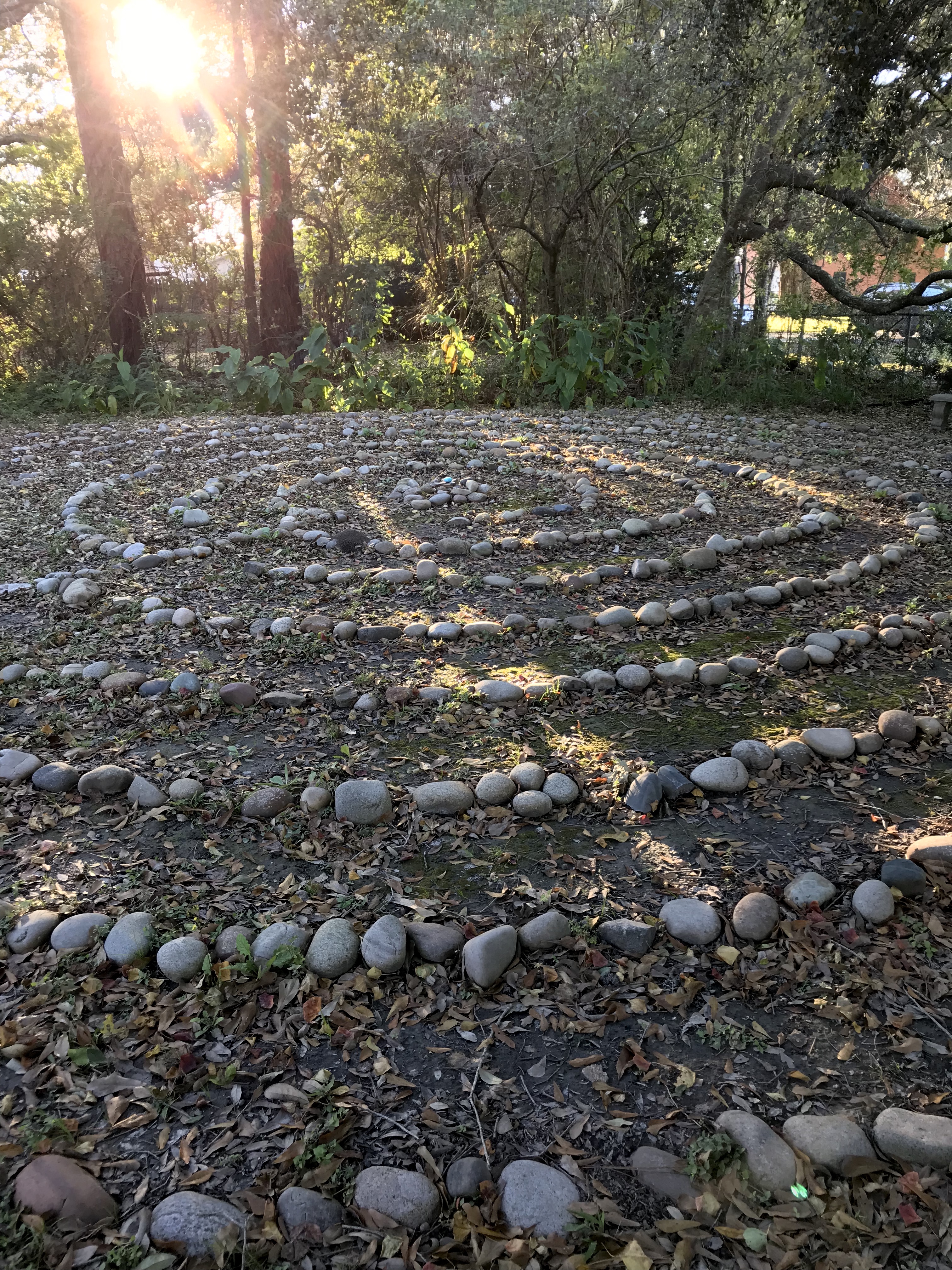
Our paths turn and turn
we seek the light of knowledge
a labyrinth of faith(c) Margaret Simon
#haikuforhope
Posted in Poetry, Slice of Life, Writing, tagged #haikuforhope, youth suicide on December 4, 2018| 13 Comments »
See more posts at Two Writing Teachers Slice of Life .
I am participating in writing a haiku-a-day in the month of December. Follow the hashtag #haikuforhope on Twitter to read and join in.
I had news of a tragic death by suicide this weekend. A former student. A creative soul. An enthusiastic friend who loved without condition. Why? No one knows. Not even the ones who were closest to him.
I wish there were some way I could remain a person in my students’ lives, someone they could call whenever they needed someone to talk to without judgement. They enter my heart when they are so young, 8, 9, 10 year-olds who know so very little about what lies ahead, but they are full of curiosity and longing. I love them when I have them, then I have to let them go. They continue to grow and change and become grown-ups. I may find them again on social media, but there are no guarantees. I have to trust that the world will be kind.
I don’t think the world was kind to Walt. He never fit in, conforming was not a part of who he was or who he could be. He wanted so much more than the world could give him. I really don’t know what could have gone through his head to make him choose death instead of life. I need to let go again. I have to trust that he is where he needs to be now, in the arms of an angel in heaven who can love him forever.
Posted in Poetry, Writing, tagged #haikuforhope, Bayou Teche on December 3, 2018| 3 Comments »
Sunday afternoon was so gorgeous we had to stop and take a canoe trip down the bayou. The temperatures were in the 70’s which we won’t likely see again for a while as December begins to roll in on cooler waves. I really believe that the cypress trees are more beautiful this year with their bronze needles that still cling to the branches. We stopped by a neighbor’s house and chatted with her while a fat water snake slithered from a nearby bush. Yes, it freaked me out, and I became jumpy. Everything became a snake: branches, leaves, jumping fish, scurrying squirrels. But soon my heebie-jeebies subsided, and I enjoyed the scenery. With the still water, the reflections were picture perfect.
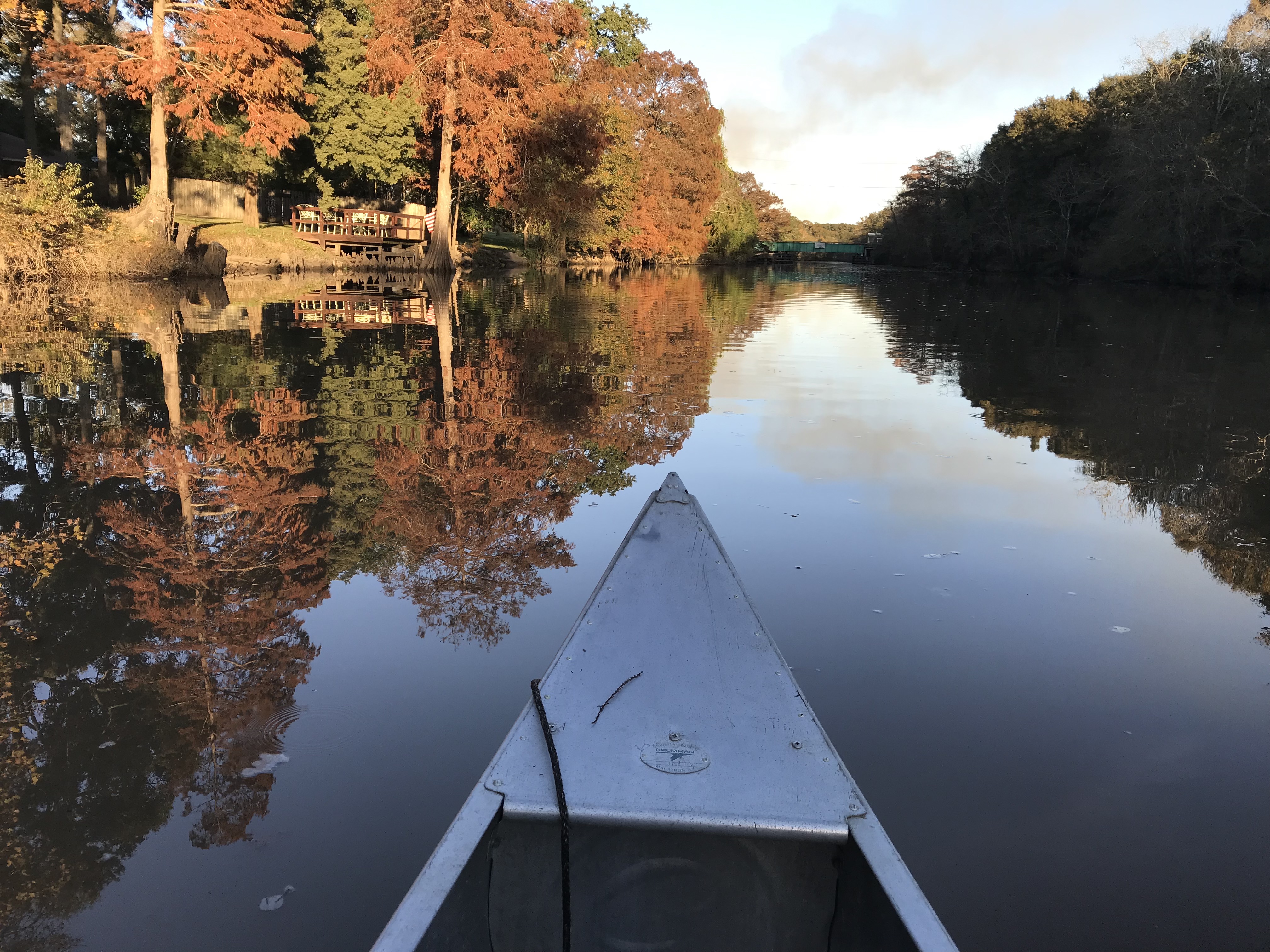
December on Bayou Teche by Margaret Simon
Dusk, hawks are hunting,
Scouting a slithering snake.
Keep paddle moving.(c) Margaret Simon
Posted in Poetry, Slice of Life, Teachers Write, Teaching, Writing on November 28, 2018| 11 Comments »
See more posts at Two Writing Teachers Slice of Life .
At NCTE 2018, I was excited to attend a session, Why Notebooks?, that some of my favorite people were leading: Jen Cherry, Amy Ludwig VanDerwater, Michelle Haseltine, and Linda Urban. I’ve been a notebooker for some time now, and I always have my students decorate a marbleized journal at the beginning of the year, so I was drawn to finding more ways to use notebooks in my classroom.
As someone who loves little notebooks, I was delighted that there were handmade notebooks for us to keep (folded unlined paper with a colored cardstock cover). They passed around puffy stickers for us to choose from. I felt the thrill of creating something new.
Jen Cherry gave us reasons behind using notebooks with your students:
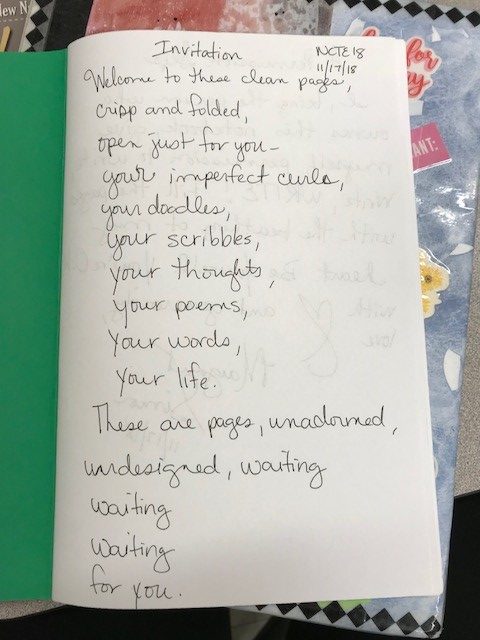
Michelle Haseltine prompted us to write an invitation to our notebooks. On the first clean white page of the little green notebook, I wrote this poem.
I made a commitment to myself to be more intentional about notebook writing with my students. On our first day back after Thanksgiving break, I asked my students to get out their notebooks. In order to provide a structure that honors choice, I thought back to a workshop I attended with our Louisiana Poet Laureate Jack Bedell who told us about William Staffords’ daily writing discipline.
After a few days of using this structure, I was hooked. It was working for me, so why not share it with my students? This is what I wrote on the board:
I set the timer for ten minutes and we wrote. Some shared. And some found their next blog post. “I’m going to use this for my Slice of Life.” We were doing the work of real writers.
We’ve been using the 365 Days of Wonder for quotes of the day, but I wasn’t doing anything more with it than having a student choose one and write it on a frame of glass. They were enjoying the process of choosing and would often naturally start a conversation around the chosen quote. Adding it to our daily notebook page gives more attention to the quote as well as possibly inspiring more writing.
This was our quote yesterday: “Happiness is a perfume you can not pour on others without getting a few drops on yourself.” My poem-like meditation:
Happiness is the scent of flowers
in a bouquet
you give
just because
you’re happy.
Then the drops of perfume
fill your senses
and transfer
to whomever you hug.
Spread some happiness today!
As we get more and more adept at writing in our notebooks every day, my students and I will reap the benefits of sharing in a writing community. Why Notebooks? So many reasons. Pull them out of the desks, booksacks, or cubbies and just do it! You’ll be glad you did.
Posted in Photography, Poetry, Poetry Friday, Travel, Writing, tagged New Orleans City Park, Sydney and Walda Besthoff Sculpture Garden on November 23, 2018| 13 Comments »
Poetry Friday round-up is with Irene at Live Your Poem.
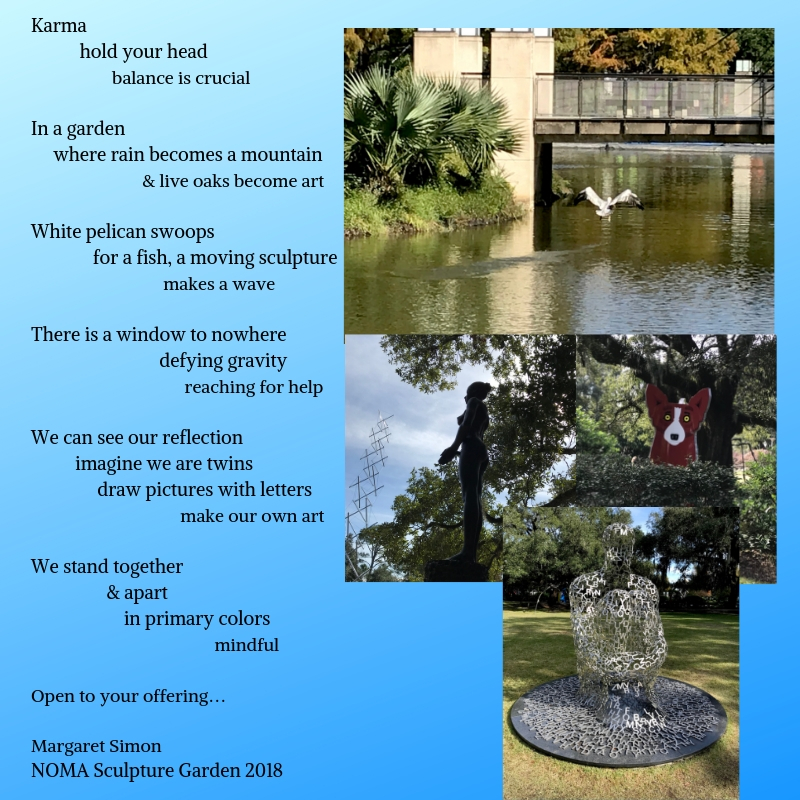
Spending some time in New Orleans filled me with inspiration, especially in the Syndey and Walda Besthoff Sculpture Garden at the New Orleans Museum of Art. I took pictures and found a poem. My friend, Dani Burtsfield from Montana, walked with me and found her own poem. The two compliment each other like we do as friends.
Posted in Slice of Life, Teaching, Writing, tagged #NCTE18 on November 20, 2018| 6 Comments »
See more posts at Two Writing Teachers Slice of Life .
NCTE 2018 has come and gone as a quick wind beneath my wings. The presentations, the authors, the people, the atmosphere lifts me up and says, “You are doing the good work.”
In his keynote with his twin brother Paul, Peter Reynolds said, “Your brain is beautiful.” Everywhere I went, everyone I met helped me to believe this is true.
My husband calls the NCTE conference “hobnobbing with your fellow wizards.” My fellow wizards include poets from Poetry Friday, teacher-writers from Two Writing Teachers and TeachWrite, and dedicated educators from Good to Great. These people are my tribe.
I was so privileged to be able to present with Ralph Fletcher, Naomi Shihab Nye, and Chris Crutcher on the theme of Voices in the Air. These three authors are inspirational and powerful speakers. Their message was one of hope, that when we write and put our voices out in the world, someone will be touched by it.
On a panel with my Poetry Friday peeps, Heidi Mordhorst, Laura Purdie Salas, Mary Lee Hahn, and Irene Latham, we inspired teachers to take their students outside of the classroom to write in the wild. We talked about exploring the world through other perspectives and looking more closely.
In a session with Michelle Haseltine, Amy Ludwig VanDerwater, Linda Urban, and Jen Cherry, I felt renewed interest in writer’s notebooks, in providing a place for students to be themselves, to encourage mindfulness, build stamina, and encourage risk. I felt braver writing in my own notebook, realizing that there is no perfect way to keep a notebook, my notebook is mine, and I should give my students more opportunities for free writing.
In a panel with Jan Burkins, Kim Yaris, Dani Burtsfield, Christina Nosek, and Kari Yeatts, I learned new ways to be responsive to my students as readers. I learned to look at four characteristics of a reader: book choice, healthy habits, strategic process, and authentic response. They said, “Learn about your student first; the teaching will come.” I also noted this quote, “The awesome in us sees the awesome in you.” Back to that beautiful brain. These teacher-leaders did not say they had all the answers; they said, “We are with you.”
Sitting beside my students, I will have these people with me. I am full! I am rich! I am renewed!
NCTE is…
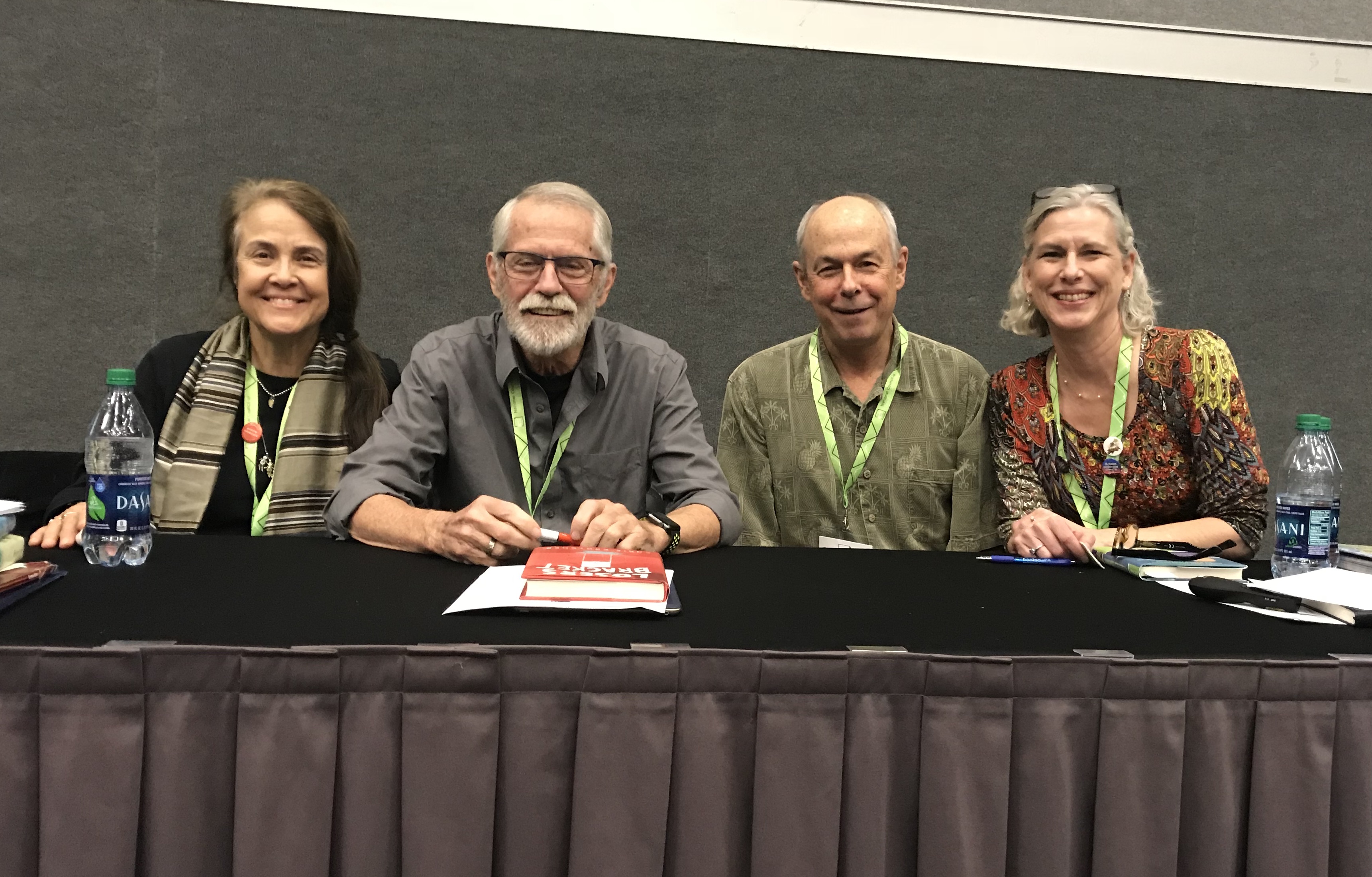
presenting with author rock stars…

connecting with poets…
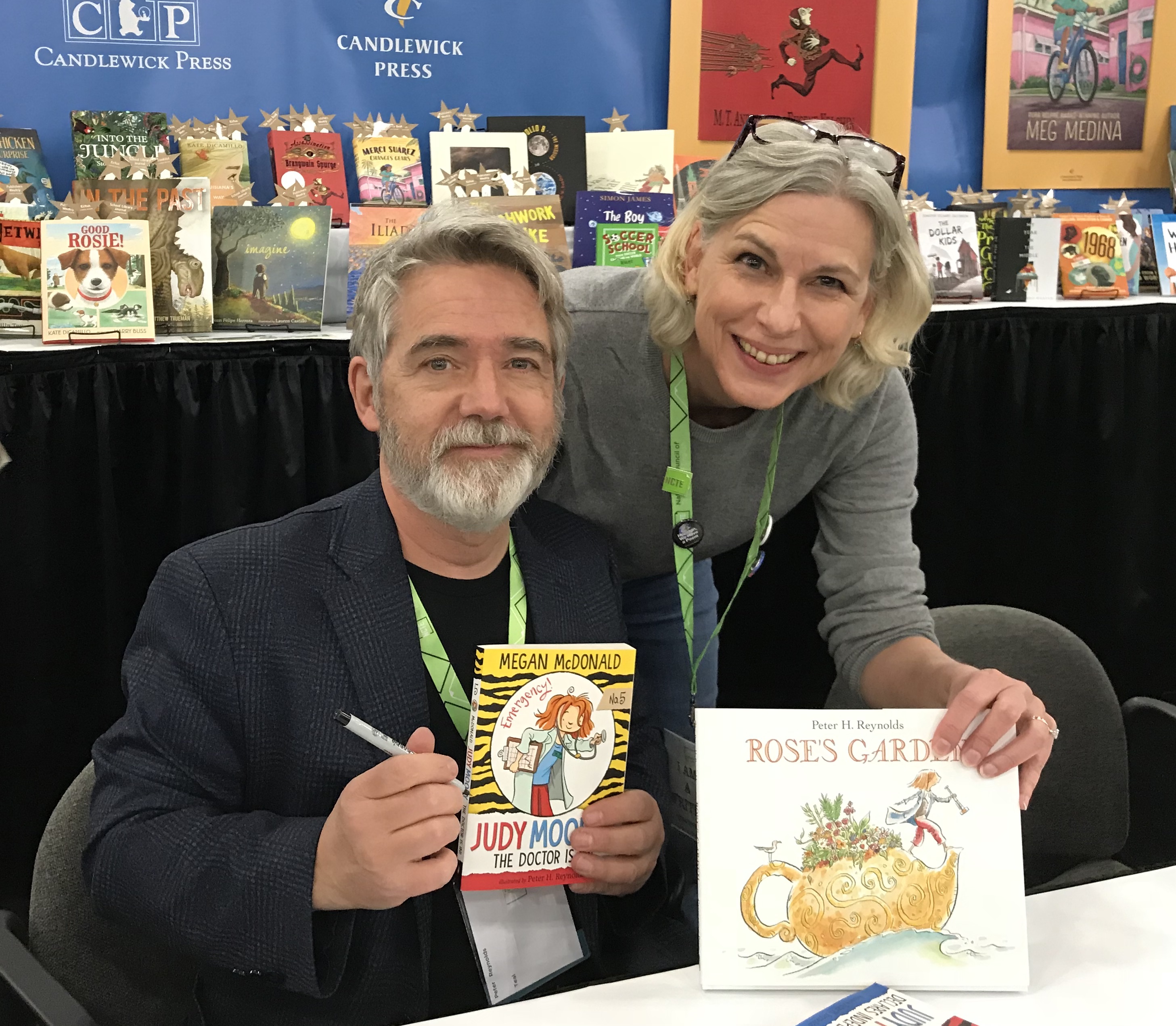
meeting your favorite author…

spending time with friends…
and more!


| M | T | W | T | F | S | S |
|---|---|---|---|---|---|---|
| 1 | 2 | 3 | 4 | |||
| 5 | 6 | 7 | 8 | 9 | 10 | 11 |
| 12 | 13 | 14 | 15 | 16 | 17 | 18 |
| 19 | 20 | 21 | 22 | 23 | 24 | 25 |
| 26 | 27 | 28 | 29 | 30 | 31 | |


Our address on the Bayou Teche


Order on Amazon.


April 1 Linda Mitchell at A Word Edgewise
April 2 Tricia at The Miss Rumphius Effect
April 3 Robyn at Life on the Deckle Edge
April 4 Donna Smith at Mainely Write
April 5 Denise at https://mrsdkrebs.edublogs.org/
April 6 Buffy at http://www.buffysilverman.com/blog
April 7 Jone at https://www.jonerushmacculloch.com/
April 8 Janice Scully at Salt City Verse
April 9 Tabatha at https://tabathayeatts.blogspot.com/
April 10 Marcie at Marcie Flinchum Atkins
April 11 Rose at Imagine the Possibilities | Rose's Blog
April 12 Fran Haley at Lit Bits and Pieces
April 13 Cathy Stenquist
April 14 Janet Fagel at Mainly Write
April 15 Carol Varsalona at Beyond LiteracyLink
April 16 Amy Ludwig VanDerwater at The Poem Farm
April 17 Kim Johnson at Common Threads
April 18 Margaret at Reflections on the Teche
April 19 Ramona at Pleasures from the Page
April 20 Mary Lee at A(nother) Year of Reading
April 21 Tanita at TanitasDavis.com
April 22 Patricia Franz
April 23 Ruth at There's No Such Thing as a Godforsaken Town
April 24 Linda Kulp Trout at http://lindakulptrout.blogspot.com
April 25 Heidi Mordhorst at My Juicy Little Universe
April 26 Michelle Kogan at: https://moreart4all.wordpress.com/
April 27 Linda Baie at Teacher Dance
April 28 Pamela Ross at Words in Flight
April 29 Diane Davis at Starting Again in Poetry
April 30 April Halprin Wayland at Teaching Authors