Feeds:
Posts
Comments

Find more celebration posts at Ruth’s blog.

Recently I have connected with Jennifer Laffin of Teach Write.  She invited me to be a part of a team encouraging teachers to write.  Our monthly Twitter chats occur on the first Monday at 7:30 PM EST with the hashtag #TeachWrite. (Our next chat is Oct. 2, 2017.) I subscribed to her personal blog as well as her professional one at Sweet Writing Life.  She wanted to commit herself to a more disciplined daily writing routine, so she started a daily word prompt.  She tweets the word at #DWHabit.  This was today’s tweet:


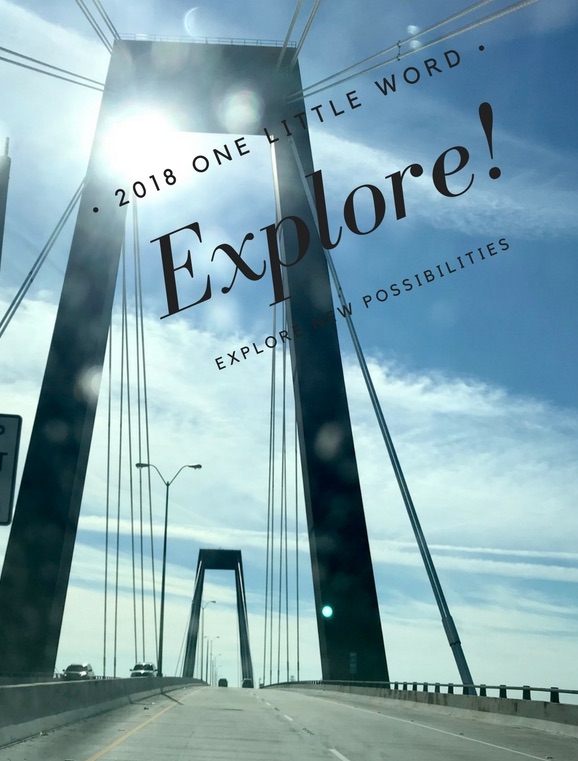
I am not sure I will have the time to respond every day, but today, I took the word explain for a walk.  My students teach me over and over again that sometimes I need to stop, take a breath, and backtrack before moving on.  Sometimes more words just muddy the waters. This is a first draft poem.

Explanation

I don’t want to explain again
and again.  Words hit the air,
make waves that dissipate,
fall
before your ears
catch them.

I’d rather you look
into my eyes
to understand,
feel in your heart
a knowing.

My breath is tired
of moving
so fast, so I stop.
Pause.
Fingers to my lips
forbid me to move on.

When I hit the reset button,
I can hear your confusion.
I am the one
who needs to retrace my steps,
start over,

and listen.

Thanks for this prompt, Jennifer.

If you choose to join Jennifer and me practicing our daily writing muscles, tune in to #DWHabit or follow Jennifer on Facebook.


Poetry Dot Day!

Poetry Friday posts are with Michelle at Today’s Little Ditty.


dots

One of my favorite days of the school year is Dot Day.  My students love it, too.  Today we will be making creative dots in class.  I’ll post them next week.

In preparation for our Friday celebration, I shared Laura Purdie Salas’s Dot poem.


Laura Purdie Salas

As a class, we brainstormed a list of things that were dots.  I asked my students to write a rhyming couplet with one or two of the ideas we listed.

Writing a rhyming couplet seems easy, at first.  I quickly discovered that rhyming doesn’t go together with making sense in kids’ writing.  We had lots of a lots rhyming with dots.  We even had cots and bots.  We also had internal rhyme rather than end rhyme, slant rhyme, and some just plain nonsense.

One student said, “This is hard.”

I responded, “Yes, but isn’t it fun when it works?”

We persevered and created a poem everyone was happy with. I am sharing two poems from each of my ELA groups.


A Pixel on the Page

A pixel on the page is just the start
for what may become a famous work of art.

Everything is made up of matter,
even the mad hatter.

Dots are everywhere
as well as over there.

A dot is the sun. A dot is the moon
disappearing around noon.

The earth is a dot
in not just one spot.

Want to make a rhyme,
running out of time?
Who you gonna call?
The majestic, dotty, narwhal.

One dot, two dots,
three dots, four,
five dots, six dots,
seven dots,
let’s add some more.

A dot is a dot
and there are quite a lot.

All you need is a spot
to make a dot.

I’m a dot, you’re a dot, everything’s a dot.
A dot can be super hot
spilled on the floor
dots,
        dots,
                 dots
                           galore.


Dot to Dot

Put an egg in a pot to boil
water bubbles, bump and coil.

My fingerprint marks a dot
leaving my dirt in a swirling spot.

A period on the end of a line
On a piece of paper ready to sign.

Potatoes, tomatoes, grapes on the vine
A salad combined for us to dine.

A seed that will grow into a tree
pollinated by a tiny little bee.

A dot…
a dot is a lens on the tip of your eye
looking for clouds high in the sky.

A dot is spot we can see
like that chocolate chip in my cookie.


Join the Two Writing Teachers blog for the Slice of Life Challenge.


New York, NY, September 13, 2001 — Urban Search and Rescue specialists continue to search for survivors amongst the wreckage at the World Trade Center.
Photo by Andrea Booher/ FEMA News Photo

I never know if it’s the right thing to do.  I didn’t write it into my lesson plans.  I hesitate every year about teaching 9/11 to my gifted students.  But there’s a part of me that thinks they need to know the truth.  The need to have some seed of understanding about the meaning of that tragic day.

In my email on Monday morning, I read “Teach this Poem” from the Academy of American Poets. I forgot that I had signed up for this email, but I was glad it came.  The lesson gave me strong footing for talking about the unspeakable tragedy of 16 years ago.

First we looked at a photo of the destruction, writing down things we saw.

Some words collected from the image

dust
ash
destruction
devastation
war
dark
despair
collapsed
ruined lives

Then we read Lucille Clifton’s poem Tuesday, 9/11/01.  We noticed in the structure of the poem spaces, no capital letters.  This structure, someone said, expressed how raw and true her response was.  One student read it aloud.  The others hummed at the end, that hum when words hit you right in the gut.

I looked at their faces, the faces of my students who were innocent of terror and fear, but they heard it, they saw it, they got it.  And this understanding made me so extremely sad.

At the end of class, Faith came to me and said, “I need a hug.”

She knew it was me who needed the hug.

How do we best teach this history that is still so new and raw?  Pictures, poems, words, talk, tears.  That’s how.

My students wrote their poetic responses. Some wrote the facts they learned.  Some wrote their own feelings.  Some wrote through the eyes of the helpers.

I wish I didn’t have to teach this day.  I wish this day never happened.  I hope my students walked away with not only the details of the tragedy, but also a heart of kindness, hopefulness, and (please God) peace!


Madison’s journal page

Poetry Friday posts are with Matt at Radio, Rhythm, and Rhyme.


There are times when a poem passes your way, like a butterfly on the rose bush or the tree frog on the window glass.  It comes and hovers a minute with the sole purpose of reminding you that God is real and present.

I felt this lighting when I opened Jane Kenyon’s A Hundred White Daffodils and found “Let Evening Come.”  With all the natural disasters in our midst, we need this reminder.

Let Evening Come

Let the light of late afternoon
shine through chinks in the barn, moving
up the bales as the sun moves down.
Let the cricket take up chafing
as a woman takes up her needles
and her yarn. Let evening come.
Let dew collect on the hoe abandoned
in long grass. Let the stars appear
and the moon disclose her silver horn.
Let the fox go back to its sandy den.
Let the wind die down. Let the shed
go black inside. Let evening come.
To the bottle in the ditch, to the scoop
in the oats, to air in the lung
let evening come.
Let it come, as it will, and don’t
be afraid. God does not leave us
comfortless, so let evening come.
Jane Kenyon, “Let Evening Come” from Collected Poems. Copyright © 2005 by the Estate of Jane Kenyon. Reprinted with the permission of Graywolf Press, St. Paul, Minnesota, www.graywolfpress.org.
Duperier bridge sunset

Bayou Sunset: Let evening come…

Find other posts at Pleasures from the Page with Ramona.

Be a good steward of your gifts. Protect your time. Feed your inner life. Avoid too much noise. Read good books, have good sentences in your ears. Be by yourself as often as you can. Walk. Take the phone off the hook. Work regular hours.

–Jane Kenyon, A Hundred White Daffodils

I wake early so I can open my eyes slowly.

I wake early so I have time to stretch and take a walk with Charlie.

I wake early to hear the sounds of the morning and see the moon.

I wake early to nourish my soul.

Jane Kenyon reminds me to be a steward of my gifts.  She’s speaking specifically about poetry in a chapter titled Everything I Know about Writing Poetry.  These are perfect instructions for nourish, Ramona’s one little word.  The word our spiritual journey group is writing about today, the first Thursday of September.

This early morning a cool front has come in.  For the first time since early spring, the temperature has fallen below 70 degrees.  What this does for my spirit is like a lift to wings.  Fall is in the air.  Energy fills me along with my morning coffee.

To nourish and nurture my self, I wake early.  I’ve learned to savor these early morning hours.  I take my time becoming present.

We all need to learn how to nourish our souls.  Without nourishment, rushing to stress can quickly take over.  Our lives always carry the potential to overload.  When we slow down, take time to reflect and read and walk, we nourish the inner spirit that is always there, waiting for us to take notice and feel loved.


Join the Two Writing Teachers blog for the Slice of Life Challenge.

This summer after our Father’s Day lunch, a stroll in the lower garden district of New Orleans with my daughters led me to Sophie Bell Wright. When I saw what seemed to be a random statue of a woman, I paused.  Curiosity got the best of me, so I walked across the street and through the tall grass to see this statue.  A woman?  Who is she?

In this season of southern statues causing uprisings, Sophie Bell Wright sits unguarded and untouched, practically hidden from public view.  When I got close enough to read the plaque, I saw that she was a teacher.  I had to know more.


My research led me to Know Louisiana, a website curated by the Louisiana Endowment for the Humanities.  I have supported this organization for years, but didn’t know about this site for historical documents.  This primary source newspaper article was there.  Click on the image to go to the article.

Sophie B. Wright only lived for 46 years. In those years she struggled with a disability and rose above poverty to create a public day school for girls and a night school for boys who had to work during the day.  In 1904 she established the first school for disabled orphans. In her spare time, Sophie Wright worked for prison reform, public playgrounds, and as president of the Woman’s Club.

I saw a Tweet from a friend about a NY Times article by Julia Baird entitled Why We Should Put Women on Pedestals.  While this article speaks of a statue of Queen Victoria in Quebec that was damaged by vandals, it inspired me to look back at the photo I took this summer. In the process, I found the story of Sophie B. Wright.  This amazing woman should be recognized for her strength and courage during post Civil War New Orleans to face obstacles and persevere for education for all.  This is a statue that will continue to point us toward a deeper understanding of the purpose of statues and monuments: to inspire us to be better, do better, and know better.


Celebrate Dawson

Find more celebration posts at Ruth’s blog.

Dawson is new to gifted classes, but he is not new to helping others.  I found out on Friday that he had a bake sale on Thursday to benefit a local diner.  I asked him to tell me all about it.  We talked about the efforts that went into the process, talking with the principal, advertising, and making all the treats.  His goal was $50.  Selling each treat for 50 cents takes a while to reach $50, but he was determined.

He wrote this on his Kidblog post:

I’m so excited I can’t wait till I get to see the happy looks on the homeless people’s faces! I just can’t wait. By the time the 4th, 5th, and 6th graders come, I will have no more food. Some of the comments they gave me were ” Delicious brownies Dawson”, and ” Wow, great cookies Dawson”.

When Dawson finished his post, I asked him what else he was passionate about.  Without hesitation, he said “Reading.”  He had figured out a way to get all his AR points by reading every night before bed.  He also learned that reading before you go to sleep actually creates melatonin and helps you sleep better.  Did I mention that Dawson is in 4th grade?

As a teacher of gifted kids, I am used to being blown away every day.  They can say the most amazing things.  But Dawson’s only been in my class for 2 weeks, and already he is showing the kind of leadership I can work years to instill in my students. I couldn’t help myself; I had to egg him on.

In the end, he created this public service announcement that we recorded and emailed to all the teachers.  What a joy!

Poetry Friday posts are with Kathryn Apel all the way from Australia.


Most of my week was spent inside my house watching the weather channel and wondering what Hurricane Harvey had in mind.  He was a destructive force in South Texas.  But here in Acadiana, we got some rain, some wind, and three days off of school.  I am happy we didn’t have to endure the suffering of flooding and wind damage, but there’s a part of me that feels guilty about that.

I’m in charge of this month’s #10foundwords article for Laura Shovan’s Facebook poetry project.  I chose an article that Tabatha Yeatts posted about how we can help Houston: Ways to Help People During Hurricane Harvey.

The ten words I found are: storm, contribute, massive, functioning, need, home, shelter, giving, dramatic, midst.

While the storm was heading north to dissipate, a few bands of wind gusts passed our way.  I love the way the cypress trees bend and wave with the wind.  They are designed to withstand hurricanes and tropical storms.  I went outside to video the trees. When the wind passes through the trees, it sounds like waves on the seaside.

I realized that the video could enhance my poem, so I worked on an iMovie.  If I had been teaching, I never would have had time for this kind of creative play.  The grace of this storm was time to create. The grace of poetry is words to express my deepest empathy.

A Slice of Grace

Join the Two Writing Teachers blog for the Slice of Life Challenge.


Grace takes a breath.

Grace assumes positive intent. Grace gives us permission to fail or forget or forge ahead. Grace helps us to try again, to keep going, to work the tasks, one manageable piece at a time.

Lee Ann Spillane

For my one little word in 2017, I chose Cherish.  There was purpose in this as I knew the special moments with my children would be fewer.  I wanted to be sure to cherish every family event.  And I did.  We had a beautiful wedding in March, and I cherished visiting time with family this summer.


Things change.  Fast forward to August, 2017 when the thing I need most is grace.  The kind of grace that Lee Ann Spillane is asking for.  The grace that lets me be imperfect and unorganized, stressed out and overwhelmed.

This grace comes in the questions from my yoga instructor on Saturday:

How will you enter into this day?
Will you try to fit through the needle?
What is the shape of a cloud?

Metaphorical me wants to have grace like a cloud, not the stormy ones that have threatened the Gulf coast this week, but those white fluffy ones.  The ones that cover the sun allowing crepuscular rays to escape.  I find hope in those clouds. I can be any shape I want to be.

I received grace in the storm.

Hurricane Harvey has devastated Houston. For that, I am deeply saddened and continually praying.  Around here in South Louisiana, we’ve had rain, rain, rain.  School was cancelled due to street flooding, but so far no home damage.

My grace came in the shape of a storm.  Time to resettle myself.  Time to regroup, reorganize, and get a grip.  Time to cherish my good fortune and blessings.

Help Houston:

Kate Messner has set up an auction KitLit Cares.  Please consider a bid to benefit yourself and your students and ultimately help our friends in Houston.

This storm just won’t quit.  My friend, author Caroline Sibbald Leech, posted this link for places to donate and ways to help.


Be sure to set aside time on Labor Day evening to join the #TeachWrite Twitter chat as we discuss finding time to write.

Hurricane Poetry

Poetry Friday posts are with Jone at Check it Out.

Image from Nola.com

What do you do when there’s a hurricane in the Gulf? Write a poem about it, of course. Here in South Louisiana, we are no strangers to the dangers of hurricanes. Hurricane Harvey is threatening, but all models show the brunt of the storm heading into west Texas, miles away from us. We will have rain, days and days of rain, which could lead to some flooding. That remains to be seen.

I asked my students to list all the words they could think of about hurricanes. Their lists included words like danger, wind, storm, and bigger words like magnificent and treacherous. We talked about the poetry form called a cinquain. We counted syllables in the words we had listed. Doom and gloom poems emerged.

The weather channel is on.  We are watching the progress.  These weather events are scary yet intriguing.  We can channel our thoughts and worries and fascination into words.

Tracking
hurricane’s path
swirling charged red center
unwanted catastrophic storm
Gulf beast

–Margaret Simon

Massive
Dangerous floods
Treacherous destruction
Magnificent monstrous mammoth
Scary
–Noah, 6th grade

Jacob chose to write a free verse poem. I like to introduce forms, but also choice. There should always be choice.

Hurricane Harvey

A spinning circle of destruction
On a treacherous journey through ruined parts of Earth
Walking through this dark thick rain, trying to find home
I see the eye of this magnificent beast
I stare as the tornadoes and rain fly away in the sky
I see the Sun, I know that this monster of wind and rain is over.

–Jacob, 4th grade