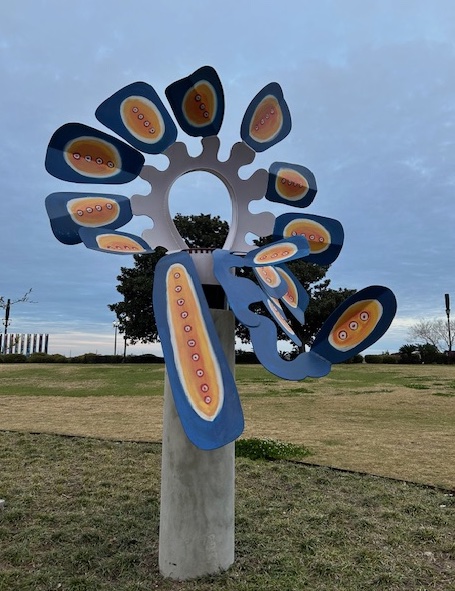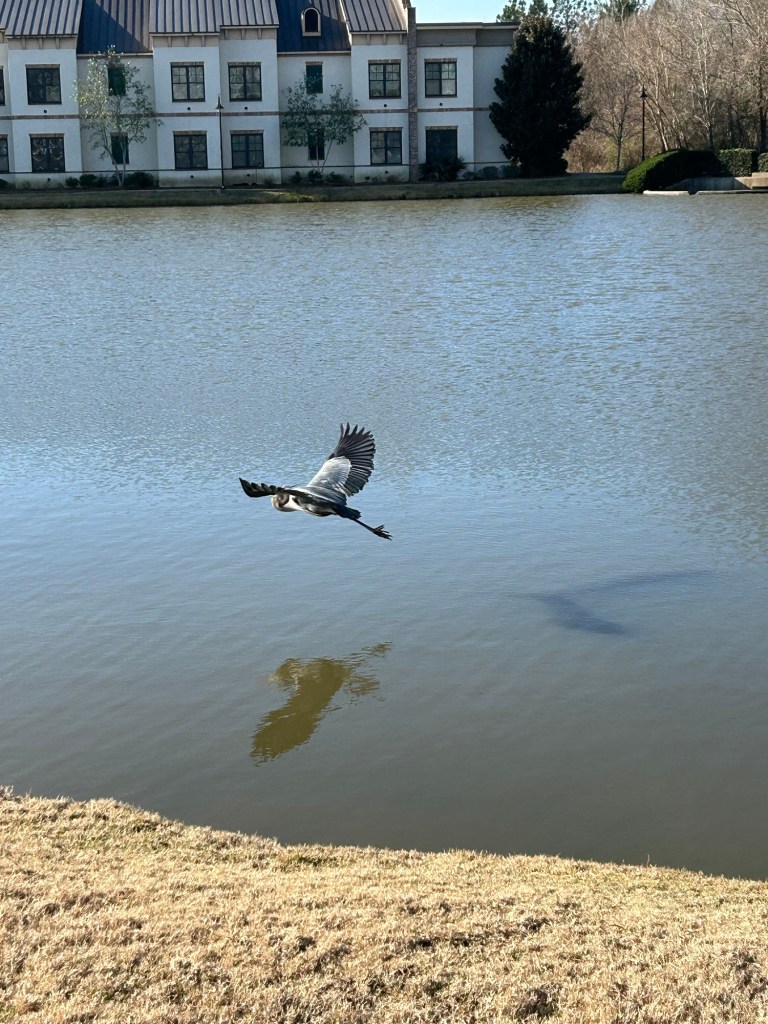
Recently I’ve had three different friends travel to Scotland. I think it’s a sign that I am meant to travel there. And, of course “Outlander” on Netflix is my current binge obsession. Mary Lee has been posting daily albums on Facebook of her travels. I chose this one, but they are all amazing. Can’t you just hear the bagpipes and feel the cool breeze?
Let’s travel today in our poems. Where would you like to go? Maybe a stay-cation is all you need. Close your eyes and dream. Please leave a poem in the comments and respond to other writers.
Mary Lee is writing daily cherita poems of one line, two lines, three lines that tell a complete story. So I chose the cherita form.
Scotland calls me
to hear the wind roar across the sea
and be a traveler wondering isle to isle seeking Skye.
Thank you to Two Writing Teachers for creating an amazing community of writers and a safe, welcoming space to write and share.
This is Just to Say
I have forgotten the words to that song you sang to me
and which you are probably humming in your head while you sleep.
Forgive me: I will sing along with you anyway.
Margaret Simon, after William Carlos Williams
I believe in daily poetry, but I fell off the Stanford Challenge for writing a poem a day. Lately the new book from Sarah Donovan, Mo Daley, and Maureen Young Ingram, 90 Ways of Community is helping. Each day I present one of the prompts to my students and write alongside them. They are responding so well to this daily practice. I hope you don’t mind if I share a few here. First up is a skinny poem by Grayson.
White void endless space just waiting wondering no thoughts waiting, I’m tired of waiting in this endless void, white space that is just too empty.
by Grayson, 5th grade
We’ve explored ourselves and written I am From poems.
I am from crunching leaves and windy days.
I am from books, and books, and even more books.
I am from the Bayou, and I am from the trees. I come from murky waters and lush green leaves and sturdy branches.
I am from the scratching of a pen, and the flick of a brush.
I am from the smell of cigarette smoke and an autumn evening.
I am from a household, a household holding four. A mother of books, a father of autumn, a daughter of both, and a sister of all.
by Adelyn, 6th grade
Each week I invite my students to write to a photograph. They are free to choose their own form even as I model a form for them.
Old tree Stays in the backyard Is surrounded by water and ferns Waiting outside on the porch for the sunrise Lovely morning
by Marifaye, 5th grade
If you would like to write a poem to a photo, please join me on this blog on Wednesdays: This Photo Wants to be a Poem. I wish for you daily poetry.
The Pythagorean poem is another modern poetic invention using a mathematical pattern. Shari Green shared the form with Laura Shovan who shared the form with me and other PF folks. I challenged the Inklings to write one for our monthly challenge before trying one myself. It’s not as easy as it looks.
Like the Pythagorean theorem of geometry, the word count is based on a right triangle. Shari’s instructions:
Here’s the math background: Pythagoras’ theorem is a2 + b2 = c2. One possible “triple” is 3, 4, 5.
3×3 + 4×4 = 5×5
9 + 16 = 25
Using the triple, the poetic form works like this:
1st stanza: 3 lines of 3 words each
2nd stanza: 4 lines of 4 words each
3rd stanza: 5 lines of 5 words each*
* The third stanza must be composed of all the words found in stanzas one and two (in any order; variations okay). The third stanza should be a progression of sorts, a product of the first two in thought or theme or meaning.
The trickery comes when writing the third stanza. I wrote one about butterflies here. As I tried to write another one, I thought I should have saved that first one for this post. I chose another topic close to my heart, my puppy golden doodle “Albert (Albear)” Albert has been with us for almost 4 months, and he’s really doing well about most things, but he has an annoying habit of barking at us when we eat dinner. As we take our daily walks, he loves to pick up a stick and prance like the prince he is. My poem takes words from Mark Doty’s Golden Retrievals.
I hope you will try the form and tag Shari Green and me. Honestly, I haven’t tried it with my students yet. They are getting their feet wet with cinquains and fib poems.
Leigh Anne has the October Spiritual Thursday gathering at A Day in the Life.
Female monarch butterfly
While walking in my neighborhood, I saw this large monarch sitting on the ground, barely moving. I crouched down expecting it to fly away, but she stayed very still. I gently placed my finger under her legs and she stayed there on my hand. I marveled at this moment while also worrying about why she was so lethargic. Had she just landed after a long trip from the north? Was she hungry?
I lifted her tired body to a nearby rose bush. I left her there with a blessing.
I often turn to the life cycles of nature to gather a spiritual understanding of change and transformation. Change is hard. I’ve watched my mother change from a vibrant, active woman to an inactive, confused invalid. I know there are parts of her still there, but they are harder and harder to see as she transforms. I question the cruelty of it all, but perhaps it’s only cruel in my limited vision, but not so cruel to her. How can I know?
When a caterpillar begins its pupa stage, there is a struggle. It wiggles and writhes, dropping its head and consuming its body sometimes right before our eyes.
Then it’s the waiting time, absorbing its old self and becoming something new and magical.
I wish I could stop time. I wish I could sit with my mother again and talk about everything. Change and transformation include this in between time, the time of waiting, the time to be present and grateful for what was and will be again.
Faith Broussard Cade posts inspiring notes on Instagram daily. I love them. You can follow her @fleurdelisspeaks. Her new book is Shine Bright Anyway.
Bayou morning with rope swing, photo by Margaret Simon
I’ve been working through the new book 90 Ways of Community by Sarah Donovan, Mo Daley, and Maureen Young Ingram of Ethical ELA. Daily I’ve been reading a prompt to my students and writing alongside them. Today’s prompt comes from Linda Mitchell. Her original prompt suggests to find a list of words in our notebooks to write along to. Her sample poem is “Wishing Well Price List” which led me to think of the song from the musical Oliver, Who Will Buy?.
I took this photo at sunrise on Sunday morning. Hanging from our grandmother oak is a rope swing. I began to imagine how many people over the years have swung on that rope. My grandchildren don’t have the strength yet in their toddler bodies to hold on, but they love swinging the rope and running to keep it from hitting them, a game they made up.
This photo may take you on a journey to another place in your memory. Let it go and write a small poem in the comments. Respond to others with encouraging words.
Who will buy this sunglow on water?
Who will buy the fallsteam rising?
Who will buy a twist of rope to swing on?
Who will buy this changing of seasons? I find a reason to keep my spirits high wondering who will buy.
Poetry Friday is hosted today by Irene Latham at Live Your Poem.
This last Friday of September, the Poetry Sisters called out a challenge based on Wallace Steven’s Thirteen Ways of Looking at a Blackbird. I enjoy puzzling together ideas into poem forms. In the model poem, Stevens uses few words in each stanza to convey a single emotion or thought.
I became intrigued by the idea of looking at grandchildren, not a single one, but the idea of having a grandchild. I have three daughters, and have been blessed with 4 grandchildren, ranging in age from 5+ years to 21 months. Each of my daughters have had at least one miscarriage.
To write this poem, I started using sticky notes, I carried the collection around for a few days. It worked well for separating each one and arranging them into some logical order. Thanks to my Inklings’ honest feedback, I am ready to publish this poem here, but I’m not leaving it. I want to feel that it will grow as my grands grow and reveal more to me about this amazing journey in grandparenting.
Ways of Looking at a Grandchild
I. Grandmother Mother Daughter 3 in 1 1 in 3 Egg to egg to egg
II. Cut the cord connection broken New bond forever woken.
III. Cells divide. Divide again. Sometimes there is no heartbeat.
IV. The way a mother looks at her child with purest adoration– A bloom of a flower planted long ago.
V. Golden curls, crystal blue eyes– Precious gems to hold.
VI. Hand sign three fingers I Love You
VII. One day she’s Ariel another Anna, Batman, Spiderman— always a fierce girl wonder.
VIII. Whose eyes are these? I think I know. I’ve seen them from a portrait glow.
IX. Whispers at bedtime “Sing me the song you sing” A grandmother’s lullaby.
X. Curve our bodies together and turn pages of a book, We enter a magical place.
My grandson drawing with chalk while we wait for our table at a restaurant.
I’ve long been a fan of chalk art. Years ago Betsy Hubbard led a weekly chalkabration in which bloggers posted chalk poems. I’m not sure why we stopped doing this.
Chalk art is temporary. Perhaps that is freeing to the artist, allowing for freedom from perfection. We know the next rain will wash it away.
There is an old Tibetan Monk tradition of making sand mandalas. “These sacred cosmograms are said to transmit different positive energies to the environments that they inhabit and the people that come to view them.” I believe this is true on a smaller scale with chalk art. The act of doing the art itself is meditative. And the viewer is pleased by the art’s energy.
Today I want to offer the form called “cinquain.” The form is five lines and follows the syllable or word count or 2, 4, 6, 8, 2.
Artist patterns petals with a stroke of his hand. He walks away, letting his mark spread joy Margaret Simon, draft
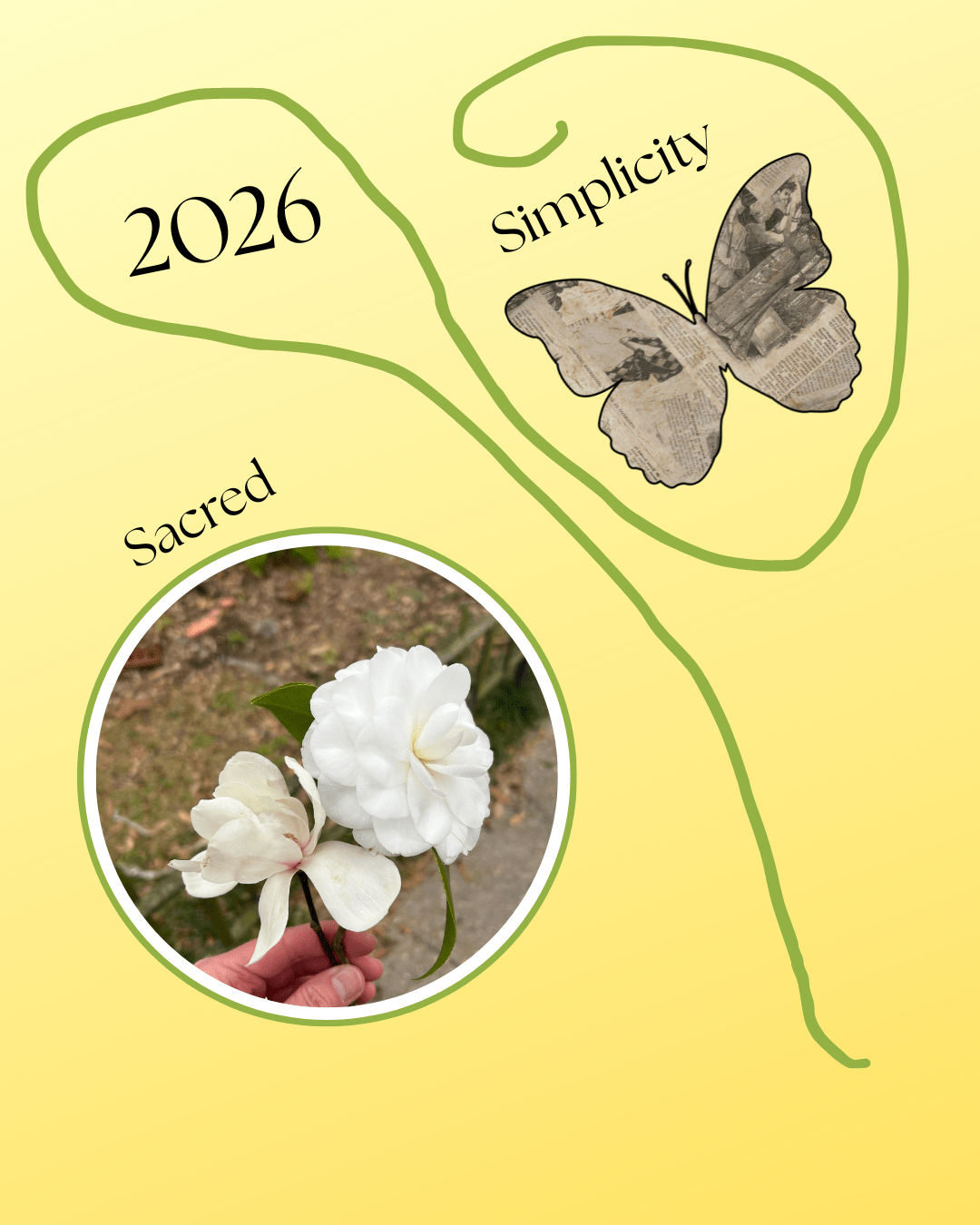
Please leave a small poem in the comments and give encouraging responses to other writers.
Thank you to Two Writing Teachers for creating an amazing community of writers and a safe, welcoming space to write and share.
For multiple reasons, I had a rough week last week. On Saturday, I woke up early and went to a local farmer’s market to sell books and make “zines” with kids. It was really great fun, but hot! By the time I finished, I had not eaten or had anything to drink, so I went to my daughter’s house to cool off, literally.
Maggie and I started talking about my week and the day at the market. She suggested I pull a card from her oracle deck, “Mysteries of Love” from alenahennessy.com.
The card I pulled could not have been more perfect, literally and figuratively.
Poetry Friday is hosted today by Linda Baie at Teacher Dance.
Monday, September 16th was International Dot Day. Dot Day was created by a teacher who wanted to celebrate the Peter Reynolds book The Dot. It’s a story about a young girl, Vashti, who doesn’t think she can draw. She is encouraged and inspired by a teacher’s confidence in her. “Make a mark and see where it takes you.”
This year I wrote Zeno poems with my students and encouraged them to create a Zeno Zine.
A zine is a foldable book that can be made with a single sheet of paper. See a YouTube video here.
A zeno poem is a form created by J. Patrick Lewis using the syllable pattern of 8, 4, 2, 1, 4, 2, 1, 4, 2, 1. The one syllables all rhyme. For me it works best if I decide on my rhyming word. I was thinking about the idea that you are never too old for Dot Day, so I chose old, gold, and bold.
When making your mark shine this bright, you are never too, too old. Remember who creates gold: They are the ones who live BOLD! @Margaret Simon
I also read aloud Laura Purdie Salas’s Dot Day poem.
A golden shovel poem using the line “a flashlight’s gleam. A full moon dream.”
Here are some sample zine pages from my students:
by James, 4th grade
by Avalyn, 5th grade “Think creative. Be creative. When you want to make a dot. Maybe you could use this spot. Or mix them up in a pot!”
Dot Day is fun, and for purposes of gifted standards, it also encourages creativity, critical thinking, and problem solving. Win! Win!
My colleague Erica knows I like to raise butterflies. After recess, she came into my classroom exclaiming “You Have to see this moth on the playground!”
My students and I rushed out to find it. At first it was poised on the brick post of the pavilion. Then one of them stimulated it with a stick and it flew to me. Fascinating large creature that is camouflaged as a leaf. Who knew?
With my students, we researched and found out that it was a Pandorus Sphinx Moth. I wrote a found poem from the information on the website Insect Identification. In this poem, each word in the poem comes from the article in the order it was found.
Playground Discovery
Hawk moth boasts– robust fast fliers on aerodynamic wings.
The Pandorus Sphinx Moth blending in inside woodlands at dusk or dawn.
Margaret Simon lives on the Bayou Teche in New Iberia, Louisiana. She teaches gifted elementary students, writes poetry and children's books. Welcome to a space of peace, poetry, and personal reflection. Walk in kindness.