Linda is hosting today with a mashup of songs and poems. This reminded me that we did a similar activity in my class. I asked the class what song about friendship do they like. Kailyn said, “Count on Me” by Bruno Mars.
I stole the line “I’ll sail the world to find you.” to create a golden shovel.
My friend, I’ll tell you again that I will sail through a turbulent storm, the end of the world as we know it to rescue you, comfort you, to find safety in this place with you. Margaret Simon, draft
Thank you to Two Writing Teachers for creating an amazing community of writers and a safe, welcoming space to write and share.
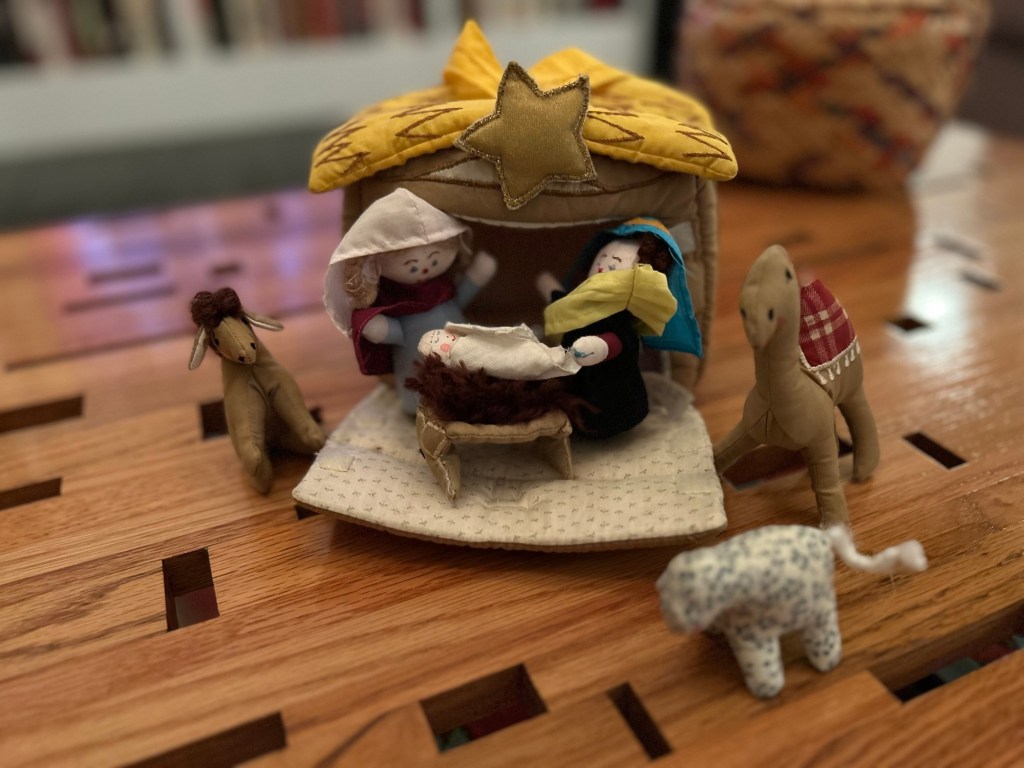
Child’s Nativity
These characters usually live in a wooden bowl with a top that a grandchild used for storing such small softies. Among them live knit finger puppets.
As I was decorating, I rescued poor unclothed Mary, Joseph, and baby Jesus to set them up on the coffee table, ready for the next visiting grand to play, rearrange, and hide the sacred characters.
During this season of waiting and preparing for Christmas, I pause, play a favorite song, and sing along.
Spiritual Journey, First Thursday is being hosted today by Kim Johnson at Common Threads. This is Kim’s first time to host, so please give her some comment love!
Kim Johnson, our SJT host, has read a new book, Wintering by Katherine May. I have not read this, but I loved reading Kim’s thoughts about how winter gives us some time to read and reflect. I wish I could say that I’ve had that kind of time, but the truth is things have been quite frenzied around my house. But a spiritual journey means even in times of stress, we should make moments in our day for prayer, meditation, and reflection.
I am currently reading The Buddhist Enneagram: Nine Paths to Warriorship by Susan Piver. I heard her on a podcast called The Austin Enneagram by Elizabeth Chapin. The author Susan Piver writes concisely about the enneagram numbers while adding in Buddhist teachings around warriorship. Who doesn’t want to be a warrior? I struggle to embrace the good aspects of my number (four) and tend to focus more often on the negative ones, such as overrun emotions and shame. Working on ourselves and with our personalities is a lifelong spiritual journey.
AI tells me “In Buddhism, warriorship is about being present with what is happening, and not reacting with fight or flight. It’s about facing one’s own neurosis in order to address the neurosis of the world”
I can become a warrior by living in gratitude.
On one of those frenzied days, I became overcome by irritation, so I took a drive by myself. I went to the pharmacy to pick up a prescription. While I checked out, a woman recognized me and told me how her husband was in the hospital. My heart went out to her. Also, my irritation was relieved. God was letting me know, through presence and empathy, I can be selfless and generous. Maybe I can be a warrior who “addresses the neurosis of the world.”
What are you reading on these cold days? How are you being a warrior?
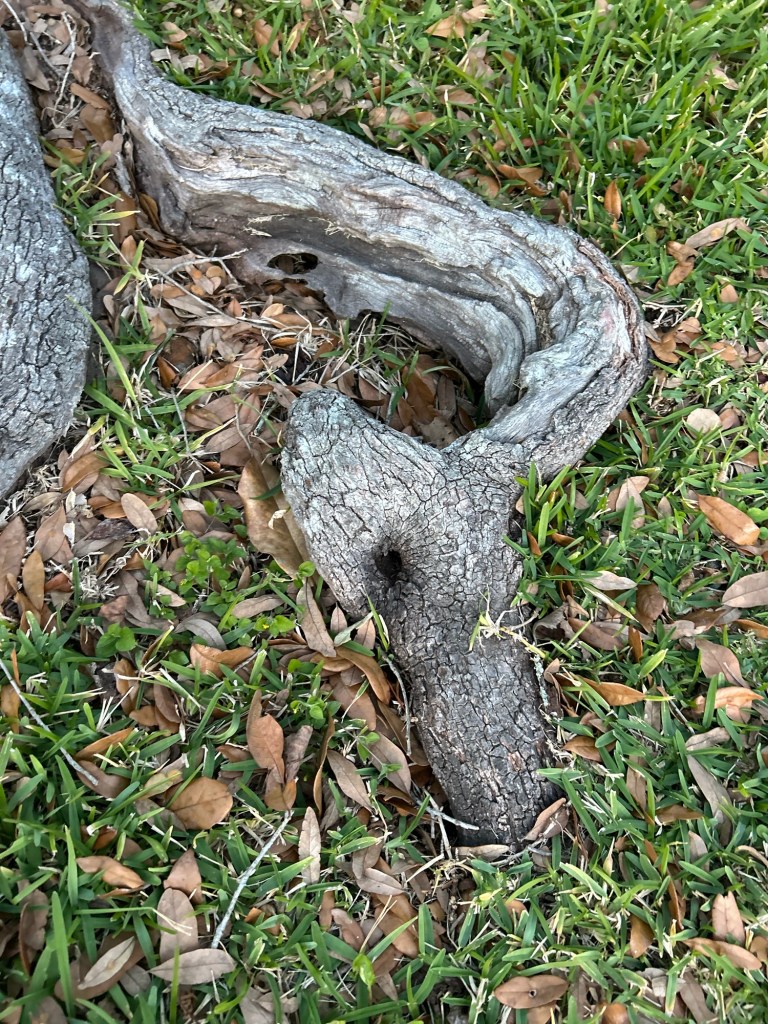
Here in the deep south, live oak trees are iconic. This root is old and has emerged over time from the ground. I took notice of its unique design. As no two humans are exactly the same, I imagine trees have their own personalities, too.
I started the year 2024 with writing daily elfchen. For this Advent season, I’ve picked up the form again. Here are the rules:
Grounded Roots revealed Begging us hear The true language of Connection Margaret Simon, draft
Join me today in writing to this photo prompt. Come back to offer encouragement to other writers.
Thank you to Two Writing Teachers for creating an amazing community of writers and a safe, welcoming space to write and share.
How do you deal with small problems? I tried so hard to walk in gratitude this morning, but Albert pulled constantly on the leash and wanted to pee on everything, so I lost my patience. Then once we were home, he got out, off-the-leash, and chased the cats. I was so mad that I screamed the f bomb at him and put him into his kennel…forever!
This is not how I wish to start my day. I want to find peace. I want to drink a hot cup of coffee and read poems.
Thanksgiving break for me was a whirlwind of travel and then family. All great things! Yet yesterday at school, our first day back after the week off, three students were brought to tears. For different reasons, the stress of following directions, the stress of “let’s relate to the character in a deeper way”, and the stress of “I went camping and forget to take my book with me.” It seems to me that kids in general (myself included) do not handle stress as we used to.
What are some ways you handle the little things? I anticipated this time of pre-Christmas frenzy. But it doesn’t help when you are deep into it.
I know that I am okay and normal and my dog is “just a puppy!” Thanks for being here with me on the good days and the bad. As Alexander’s mom wisely said, “Some days are like that. Even in Australia.”
As we end our vacation in Portland, Maine, we found the best place to eat lobster, Luke’s. Outside the restaurant on a peer overlooking the Old Port Harbor, there was a young boy putting finishing touches on the huge stack of lobster traps turned Christmas tree.
As we head back home to Louisiana for big family Thanksgiving, we are grateful for this time to relax and enjoy a different place in the world.
I invite you to leave a small poem of gratitude today.
Thank you to Two Writing Teachers for creating an amazing community of writers and a safe, welcoming space to write and share.
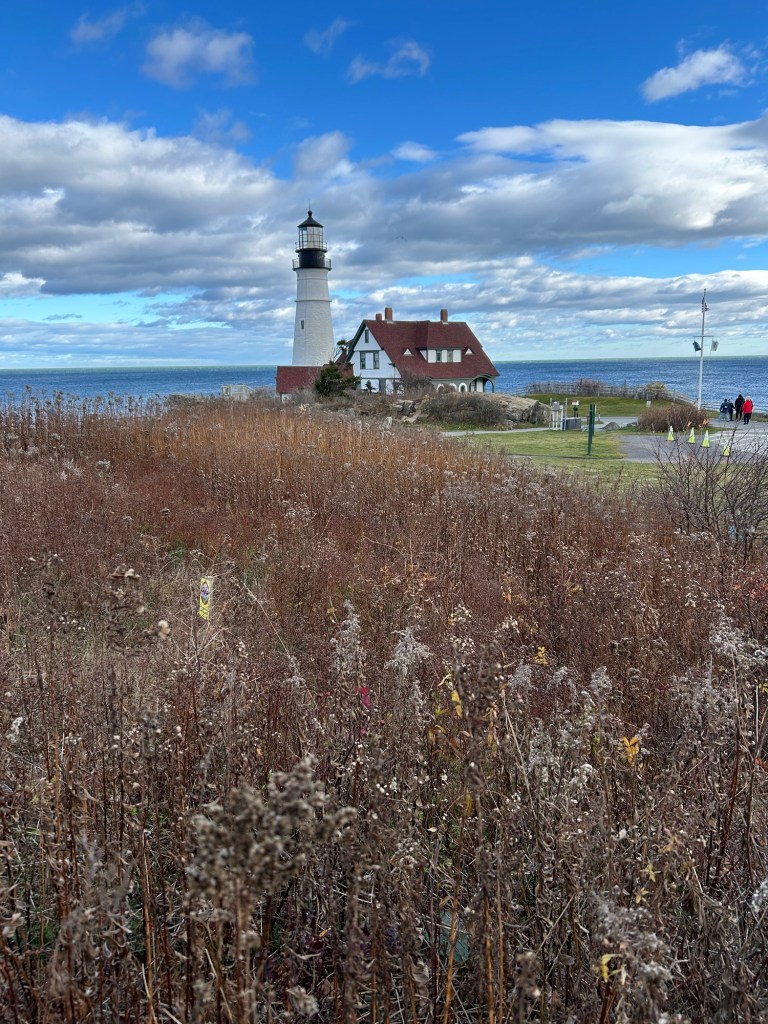
My husband and I are on vacation in Portland, Maine. On Sunday my dear friend and fellow Inkling (writing group) Molly Hogan and her husband Kurt took us to the most photographed lighthouse.
Portland Head Light
The views were incredible, but the best part was seeing Molly in person and getting to know her husband. We talked for hours.
The highlight of our time here yesterday was the ferry cruise. We happened upon a ride that carries supplies and mail to the islands. There was a young man who did everything, and one of his jobs was to find us and tell us stuff about the islands. I’m guessing in the winter months there are fewer tourists.
Mailboat Ferry
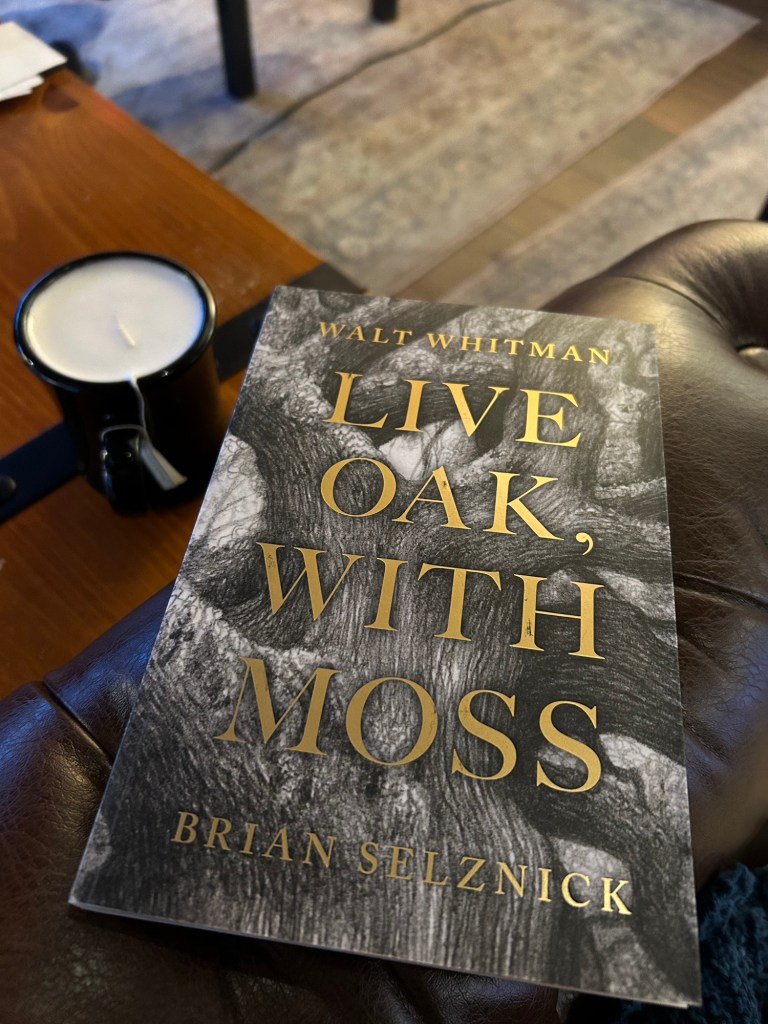
I like some alone time in any given day, so after shopping at Reny’s (Molly was right; we found good deals), Jeff dropped me at the Novel coffee shop where one can read and have coffee. I picked up a copy of a book I didn’t know existed about a poem that few knew existed.
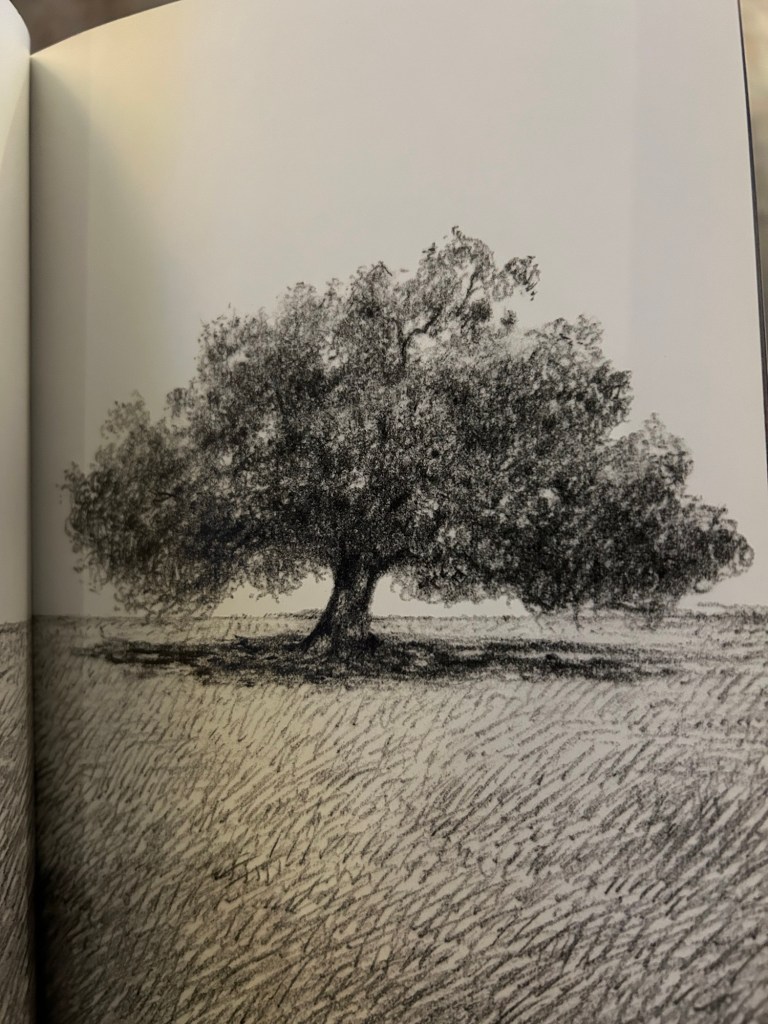
Live Oak, with Moss
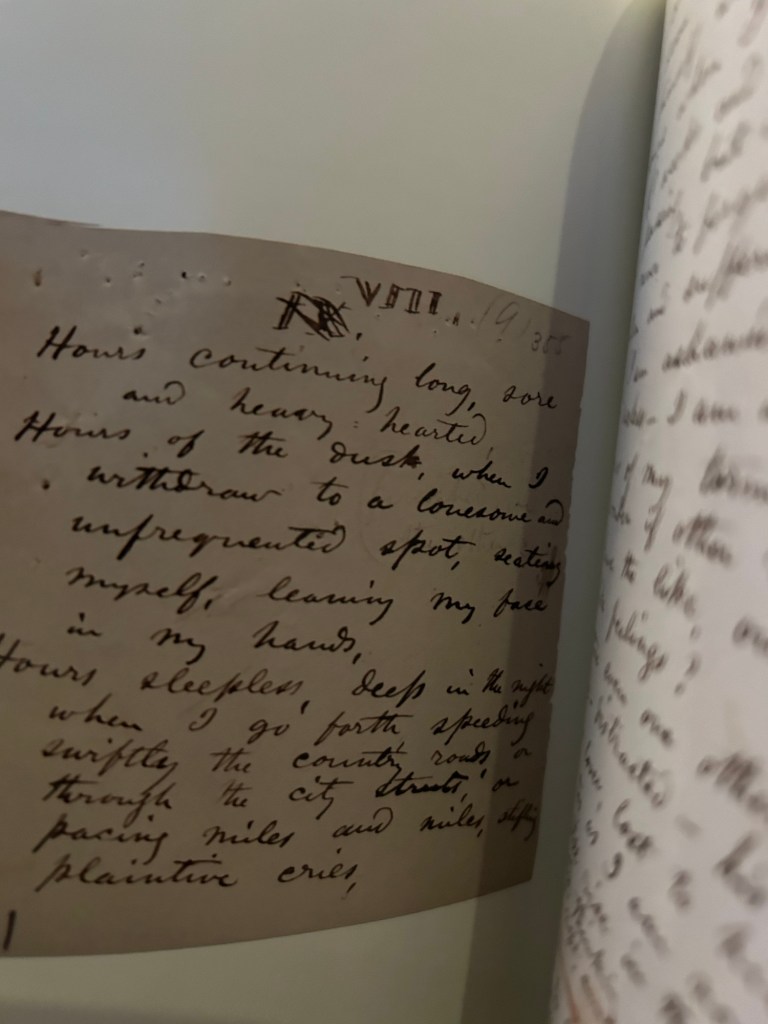
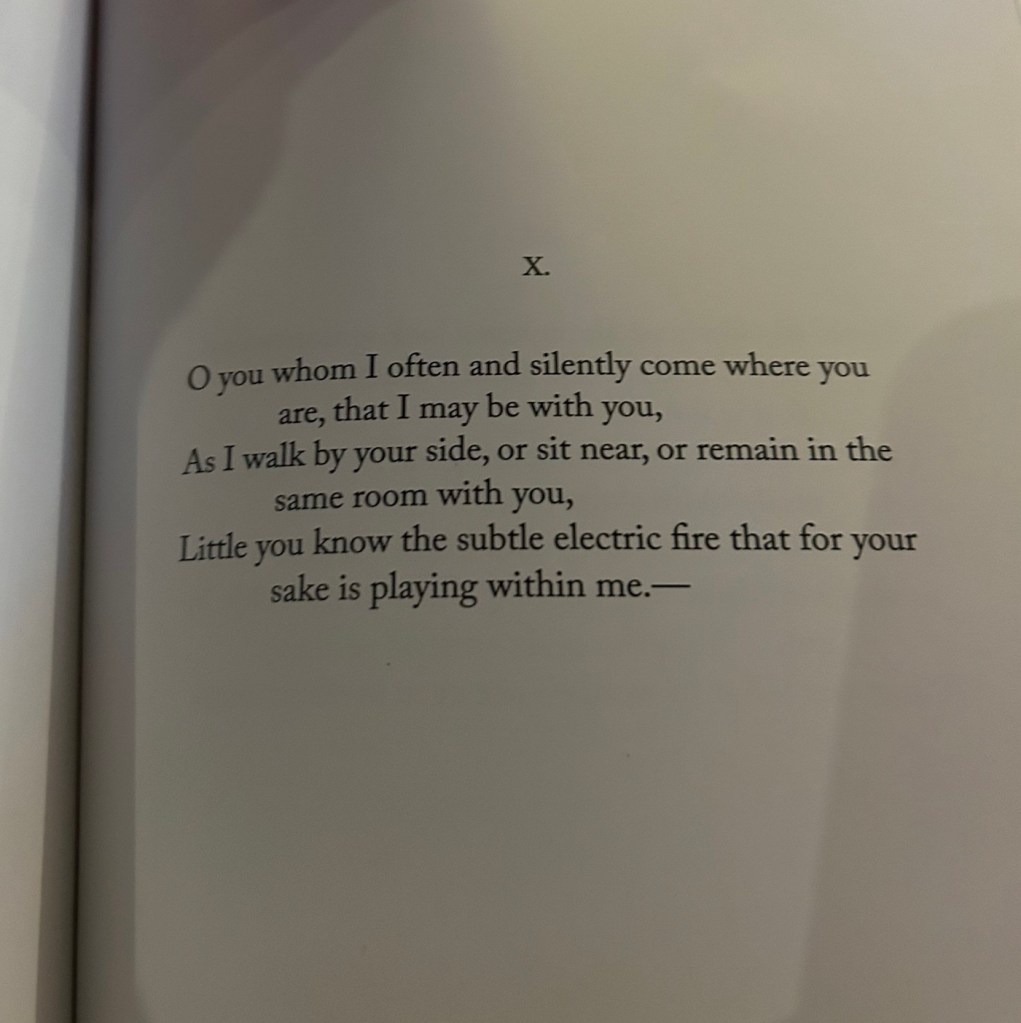
Walt Whitman’s Live Oak, with Moss is not the poem you think it is. The papers he wrote the poem on were torn and put back together into other more acceptable poems. Originally Whitman was writing a love poem to a man (or men).
The book drew me right in and I read it on the spot. Brian Selznick took an idea he had discussed with Maurice Sendak to illustrate the long hidden poem. Sendak never had the chance.
Here are some pages:
Live Oak with Moss by Brian SelznickWalt Whitman pages
Amazing love poem by Walt Whitman
In every vacation there are the things you plan and the happy happenstances. This little treasure was waiting for me, I believe.
Happy Thanksgiving! May you find a small moment to treasure in your heart.
My students and I are reading Out of the Dust by Karen Hesse. In the book, there is a poem “On the Road with Arley” that begins with line “Here’s the way I figure it, my place in the world is at the piano.” It’s been fun to find music of the time period and write alongside it. My students worked hard to create poems using this beginning line. I asked them to use imagery to create a tone. I wrote a model poem about my place in the world.
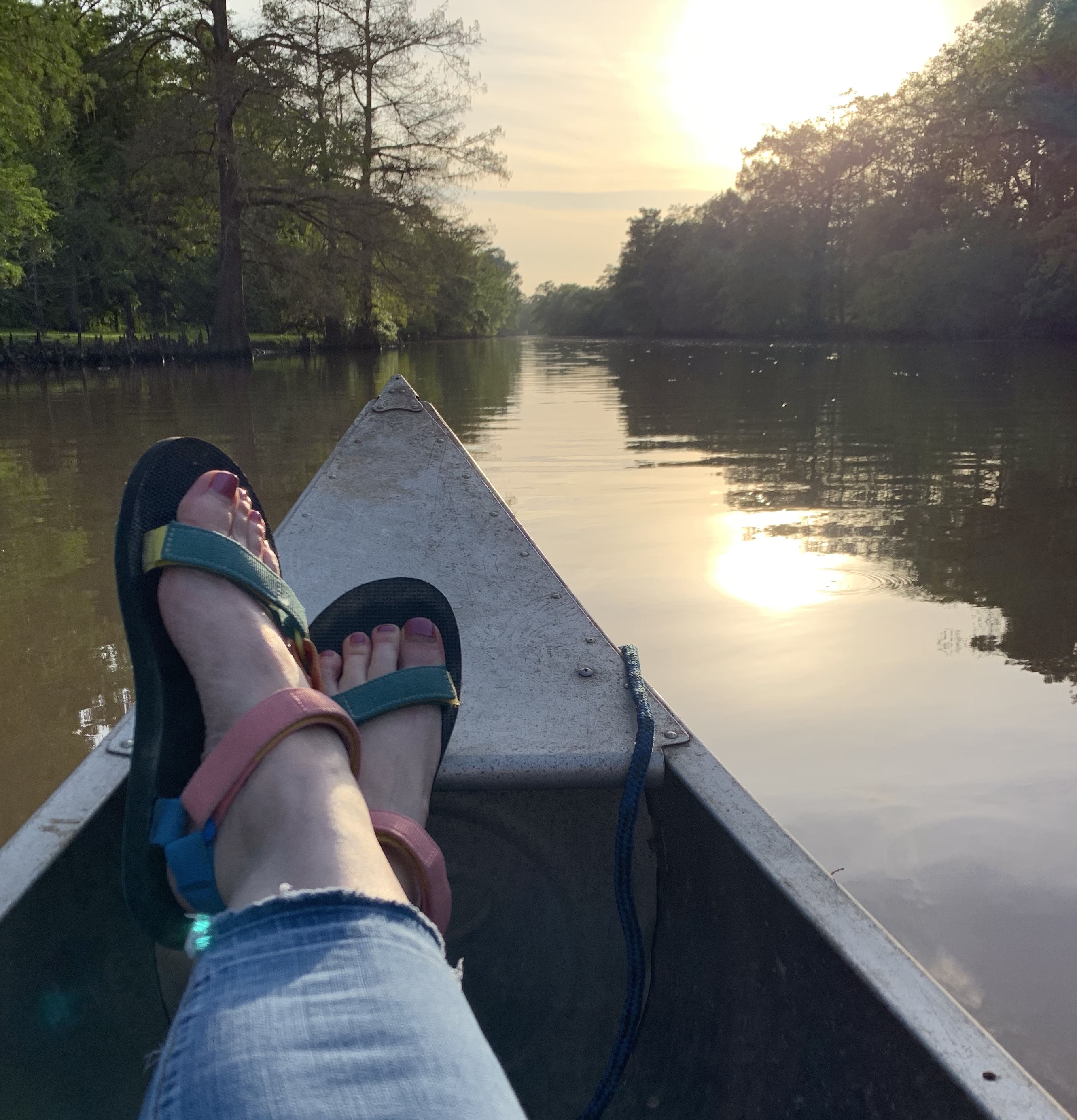
In a Canoe
Here’s the way I figure it, my place in the world is on the bayou lazing about in a canoe with you.
I’m just a mamere wanting the best time to be outside watching for eagles slipping through slow current listening for Mr. Owl to cook-cook-for-you!
My place is in open toes among cypress knees sniffing catfish air hearing cicadas buzz when the sun goes down.
Here’s the way I figure it, my place in the world is in a canoe with you.
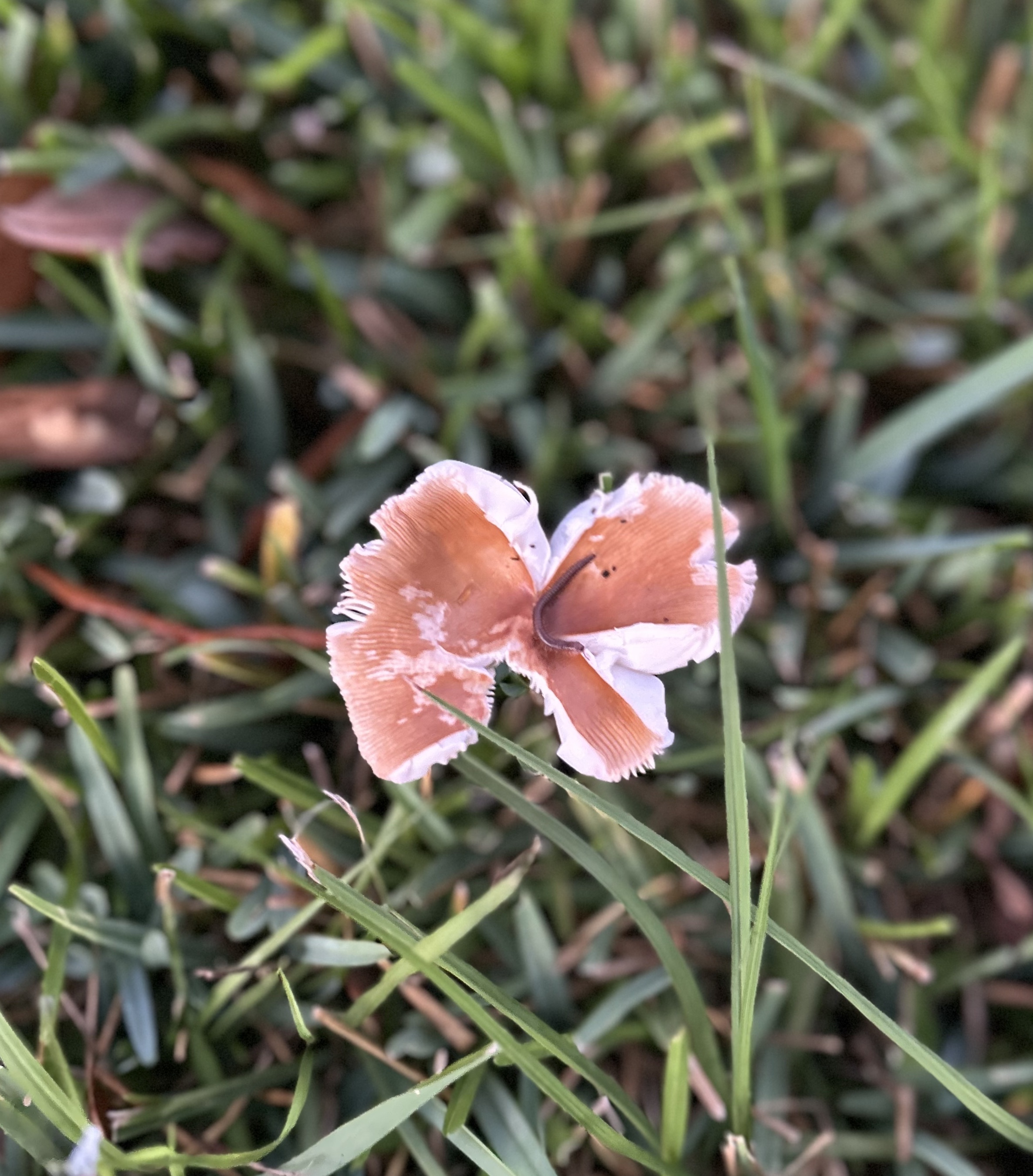
I noticed this mushroom in the grass and how in its disintegrating process, it looked like a butterfly, but on closer examination, there is a small worm crawling that camouflaged as the butterfly’s body. Our eyes play tricks on us all the time. Think about what you see and contrast that to what’s not actually there that you may imagine you see. Share a small poem in the comments.
Filaments of brown turn mushroom inside out peaceful inclusion
Thank you to Two Writing Teachers for creating an amazing community of writers and a safe, welcoming space to write and share.
Today I am envious of all the hype leading up to NCTE because I won’t be going for the first time in ten years. I hope all of you who are attending have a wonderful conference and send out some ELA love into the universe.
This morning Emily led the Ethical ELA Open Write with an invitation to write an acrostic about the best and the worst of yourself. I usually avoid looking too closely in the mirror for fear of what I might see. And of course, I have a long name with repeated letters that added an even harder challenge, but this is what I got in the wee dark hours of the morning.
At my best,
Mood smooth like malbec wine A steady Rock you can lean on Grounded in my faith Alert to nature Ready for a long talk Empathetic with my tears Trust me with your pain.
At my worst,
Moody Arrogantly Reserved Guarding my soul Assailed by doubt Reactive Enneagram four evading reality Torturing myself…
Margaret Simon lives on the Bayou Teche in New Iberia, Louisiana. She is a retired elementary gifted teacher who writes poetry and children's books. Welcome to a space of peace, poetry, and personal reflection. Walk in kindness.















 Reflections on the Teche