I am participating in Ethical ELA VerseLove. On Saturday, the prompt was given by Emily Yamasaki, a teacher in San Diego. She led us to write a poem after things I have memorized by Maria Giesbrecht. To me, scent is a memory maker, so most of my lines center around smell.
Things I have Memorized (randomly ordered)
The smell of coffee and pancakes on Saturday morning How many turns and stop signs in the circle drive from Beechcrest to Sedgewick Hum-buzz of a hummer at the feeder First words Stench of our house after the flood Sparkle of diamond Scent of his cheek on the pillow Honeysuckle, Sweet olive, and Aunt Alabel’s perfume Recipe for cornbread dressing My childhood phone number (956-2526) The Lord’s Prayer, My Country ‘Tis of Thee, and Itsy Bitsy Spider
Margaret Simon, draft
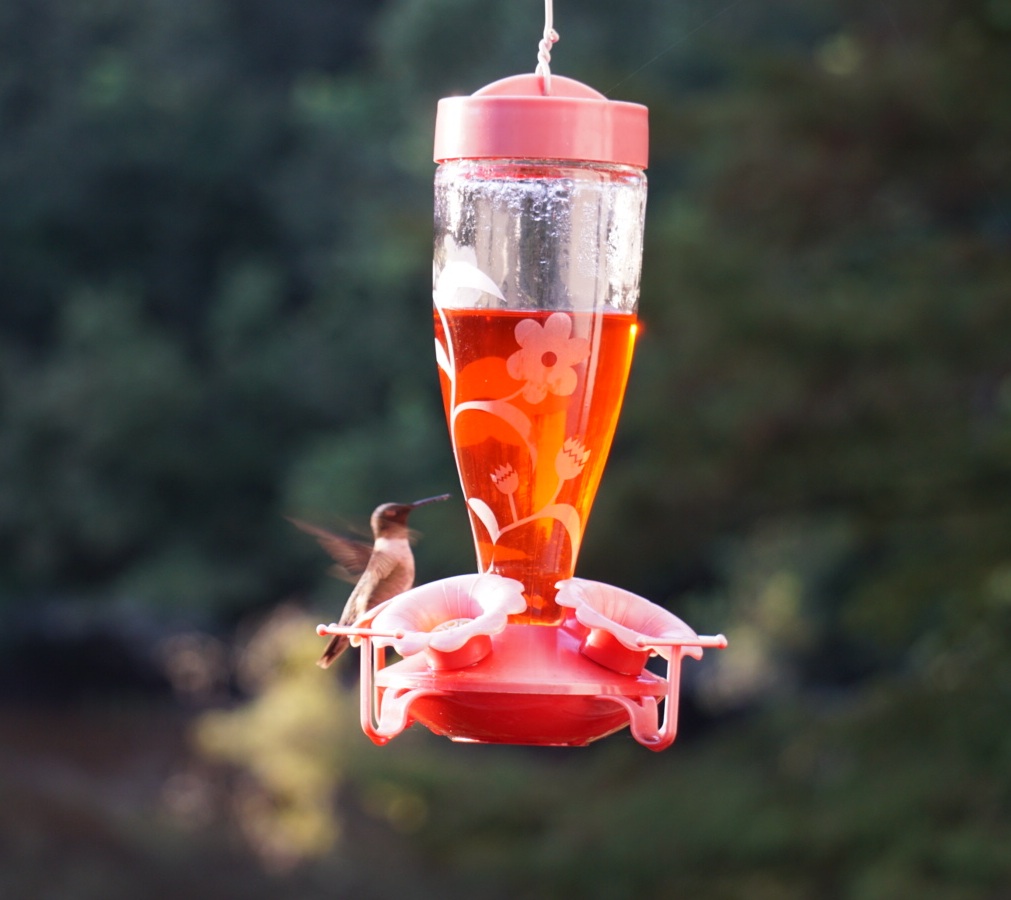
Hummingbird at the feeder in my backyard. Taken August 30th. Photo by Margaret Simon
Britt Decker wrote a prompt for Ethical ELA’s Open Write this week inspiring us to use a picture book quote to write a poem. At the school book fair, I bought “I am One” by Susan Verde and Peter Reynolds. It made me think about our one wood duck hen who is nesting. We have a wood duck house with a Ring doorbell camera inside so we can watch the progress of our tenants. Each day the Ring goes off around 7 AM, and we look at the video to see her poking around the shavings and settling in to lay an egg. She will do this for a week or so, then she will sit on the clutch. After 28-30 days, the ducklings will hatch. That’s the most exciting part. Within 24 hours they jump from the box into the bayou.
Thank you to Two Writing Teachers for creating an amazing community of writers and a safe, welcoming space to write and share.
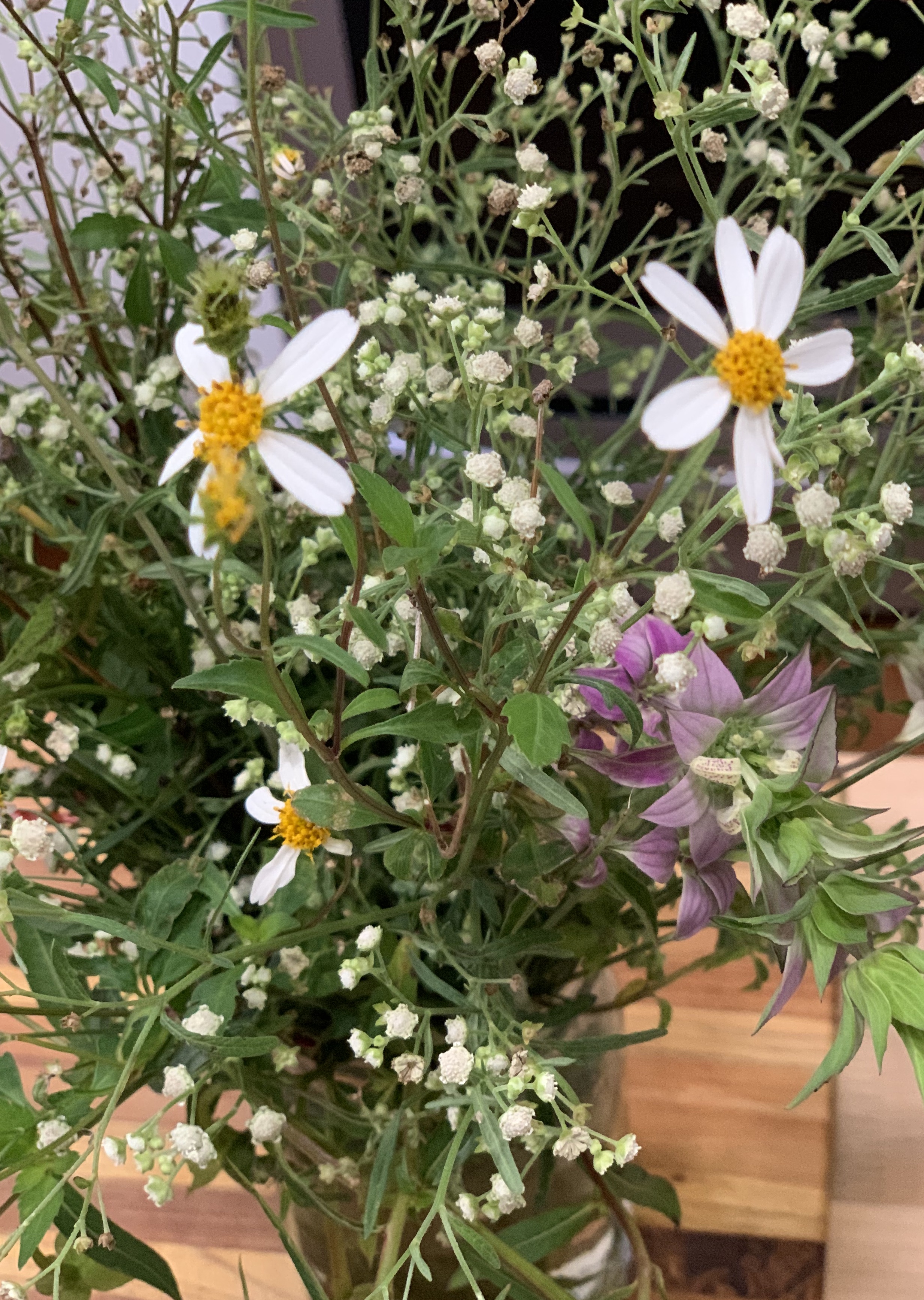
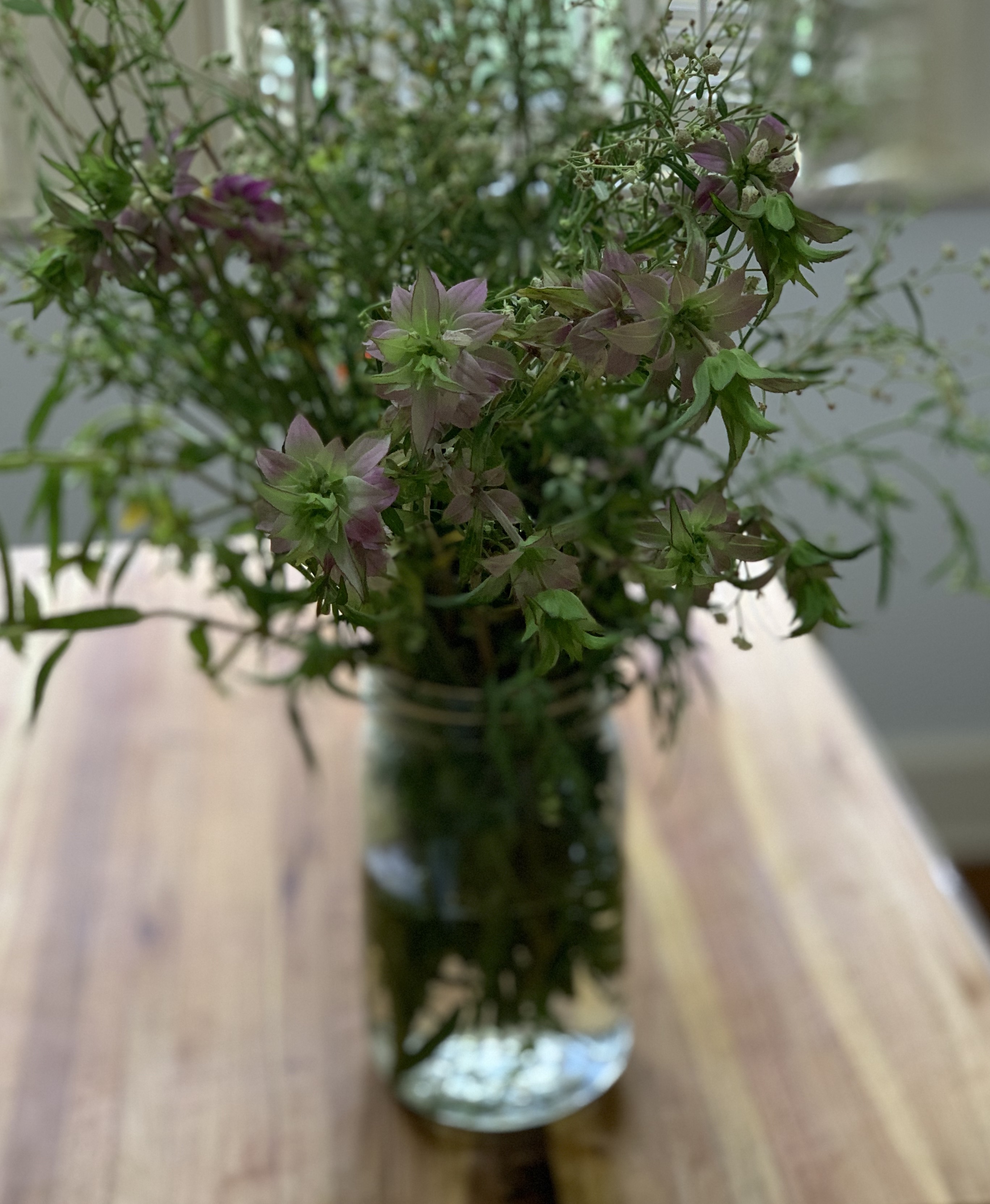
Wildflowers in a jar, Margaret Simon
If you read my post last week, you know I have a thing for flowers. After visiting Petite Anse Farms and cutting my own flowers, the wildflowers that line the Lafitte Greenway in New Orleans drew me in and begged to be clipped, collected, and given away.
Every morning this week the full “blue” moon has accompanied me on my walk. I’ve taken cell phone photos that I posted on Instagram, but for this post, I reached out to my Inkling writing friend Molly Hogan. She came through with multiple moon photos for me to choose from.
On Ethical ELA’s Open Write this week, Tamara “Tammi” Belko led us in a one sentence poem prompt. You sure can pack a lot into one sentence if you try. I wrote mine by speaking into my phone notes app while walking. Siri often misunderstands me–must be the southern accent– and she thought I said “How are you” instead of “Owl echoes over the bayou.” I decided to leave it in the poem.
In the early morning light of a new day when the moon still hangs high while the owl echoes “how are you”, I am tethered to this old dog walking, wandering, praying.
Margaret Simon, draft
Moon through the trees by Molly Hogan
Please join us by writing a small poem (maybe just one sentence) in the comments. Leave encouraging comments for other writers. Thanks for stopping by.
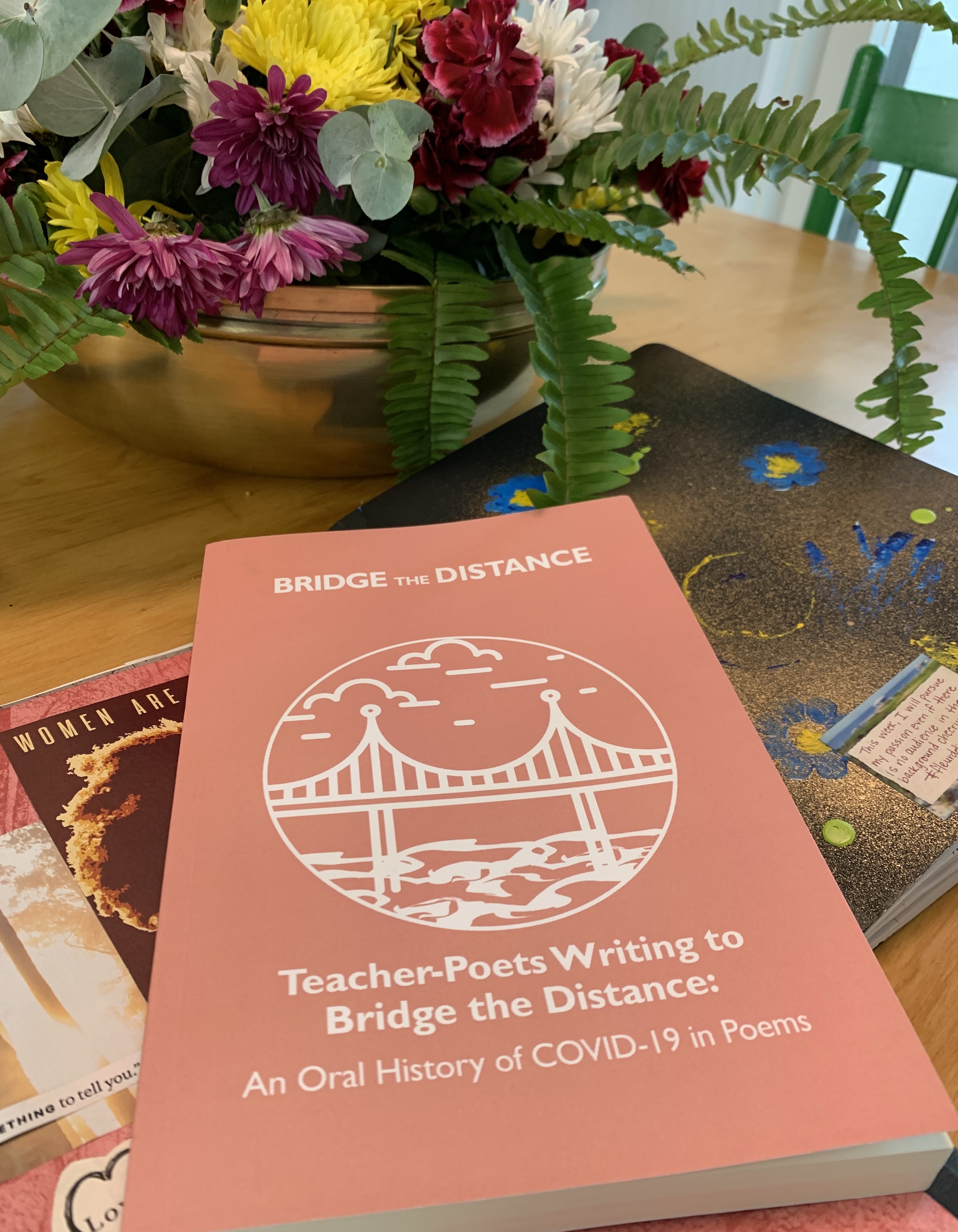
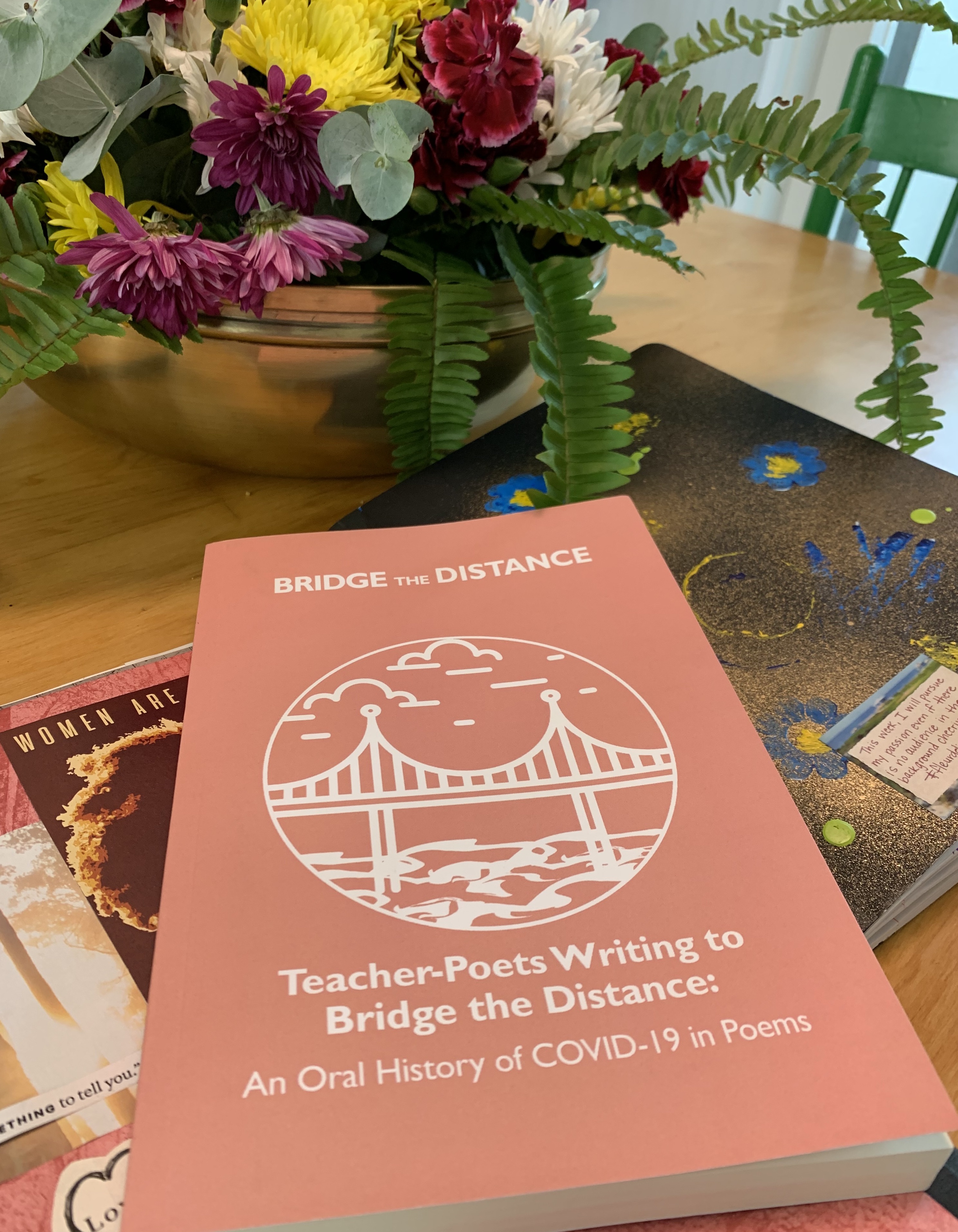
This month I am participating in The Sealy Challenge by reading a poetry book each day. Today’s book is An Oral History of Covid-19 in Poems gathered by Sarah Donovan of Ohio State University. Sarah curates Ethical ELA with an Open Write event each month. During the month of April, she posts a prompt each day. In the spring of 2020, the daily writing was a way for teachers isolated by the pandemic to connect through writing. We wrote poetry to process this unusual time. Sarah and her colleagues decided to preserve this work in an oral history project. Through that project, they conducted interviews by zoom and collected submitted poems into a collection. The book is free to read online or you can purchase a book copy for the cost of printing. (Link to Free Press Book.)
The thread that holds this collection together is the shared experience of teaching in 2020. Many of the poems are narrative while some follow forms.
I’ve chosen two poems to feature today.
Elms on Death Row
DENISE HILL
Three trees stand solemnly in a row just as planted nearly one hundred years ago
Each tendril root tapped deeply into place somnolently holding to earth
Craggy rough bark like aged hands so many life stories harbored there
Each now marked: a bright red dot some roughshod city worker sprayed just doing his job
Their days are numbered soon hewn to stumps then those ground flush
I place my hand on one breathe in breath out say “Thank you”
then the next: Thank you. then the next: Thank you.
Lest they go from this world unappreciated for all they have provided.
Thank you.
I relate to this poem as I have experience the chopping down of trees for development. Haven’t we all? I feel sad for the marked trees. Denise captures that feeling well. I love how she decides to deal with this sadness, not by ranting, but by gratitude. This poem also holds together as a metaphor poem for Covid. The illness strikes some with little or no symptoms while others are very ill and die. Senseless deaths. Like the Elms, they leave behind their stories.
Washing Hands
SCOTT MCCLOSKEY
They say that all poems are political; all poems are an expression of freedom against oppression are innately radical. Their mere “existence is resistance.”
But not this one.
This one is just about me washing my hands and how sometimes I lose count, so I need to start over to ensure that I’ve done it for the proper length of time.
Hands lathered up, I stare out the kitchen window at the neighbor’s house, at my neighbor who, although it’s the middle of December, and sure, it is unseasonably warm, looks to be planting fake flowers in the sills outside of her windows.
This is the same neighbor who was surprised when her racist lawn ornaments were stolen this past summer when yet more videos of atrocities and injustices were going viral,
which, of course, makes me scrub more vigorously, thinking of the UPS package that came, the actual reason that I’m standing here in the kitchen — Was that one thousand seventeen or eighteen? —
So, I apply more soap from the hands free dispenser, and watch, transfixed, as she carefully, artistically even, places various colors and kinds together, creating, to her mind at least, a pleasing arrangement, taking more care and effort to arrange these fake flowers than she has ever afforded her neighbors.
And I just wanted to wash my hands, wanted to not (potentially) infect my wife or myself, wanted to simply go about my business, maybe read a little, grade an essay or two,
but I keep thinking about the sad fact that cultivation does take time and effort and persistence, and, for some, it really is easier to arrange plastic flowers
than to plant and nurture live ones.
In Scott’s poem about washing hands, I appreciate how he sets up the poem as an ordinary moment, not a political poem “not this one” and yet, it becomes more and more filled with emotion, and in the end, imparts wisdom with an extended metaphor in “plastic flowers.”
I hope I can continue this daily blogging practice around a different poetry book each day, but realistically, “cultivation takes time and effort”, as Scott McCloskey says. I’ll take it day by day. Thanks for reading.
Poetry Friday round-up is here! Scroll down to add your link to Inlinkz.
Finding safe online spaces for writing is invaluable to me as a poet-teacher in a small Louisiana town. During the pandemic shut down of 2020, writing kept me sane and real and present. Sarah J. Donovan, Ph.D. directs the website for teacher-writers at Ethical ELA. She is assistant professor of secondary English education at Oklahoma State University where she turned the writing we did during April 2020 into an oral history project.
I ordered a copy. No one profits from the sale of this anthology; you are paying printing costs only. I wanted to have this collection in hand to read and use with my students as mentor texts.
8. Bells chime a call to worship to empty pews echoing the song of trees.
7. I’m sorry I keep taking the same path, the same images do not grow weary of me noticing.
I pick gardenias from CeCe’s side yard. If she came out, she wouldn’t mind.
6. I stop by Anne’s to view her century plant as it reaches skyward. A century plant waits 25 years to blooming, blooming only once in a lifetime. A lifetime I took for granted only weeks ago.
5. I can take my time. No one will call to check on me.
I’ll check the feeders: the hummingbirds like sweet water.
I’ll get to it in time.
4. I walk and walk wondering if it will always be this way.
Hollow bells pealing for no one.
No one venturing out to see anyone.
3. It may rain tomorrow. Today, the sun shines, the birds sing, and I don’t have to join the chorus.
I’ll keep singing to myself.
2. A link was sent by email to a video church service, one priest, one reader.
The organist plays as though the cathedral is full.
Full feels scary now. Full carries weight. Who wants to be full?
1. I close this book, heat another cup of tea, and find my shoes, find my way, fill my day, and perhaps…
Bloom!
Margaret Simon, all rights reserved Bridge the Distance, 2021
Thank you to Two Writing Teachers for creating an amazing community of writers and a safe, welcoming space to write and share.
Last weekend with grandkids in tow, my daughters and I traveled to Mississippi to see my parents. Mom celebrated her 85th birthday on Friday. We had an amazing dinner together, all four generations.
Pop with great grandchild, Stella, 6 months.
Over at Ethical ELA, it’s Open Write time. Denise Krebs posted a prompt that pushed me to write a poem for my father. Her poem prompt was based on Langston Hughes’s poem I Dream a World.
He Dreams a World (for my father, John Gibson)
He dreamed a world where hope would be our North Star guide, a world where we could care, embrace each other’s side.
But dreams read daily news on print as small as stars. His weathered hands held fast so futures could be ours.
Today he watches them and wonders where they’ll go, more treasures to be found and promises of hope.
Margaret Simon, after Langston Hughes
John Gibson, Pop, watches toddler artists Leo and Thomas.
This week I was humbled and surprised to have one of Sylvia Vardell’s students create an amazing poem video of Zen Tree from Hop to It: Poems to Get You Moving. Garrett’s soothing voice, the calm music, and the amazing images all came together to show something beautiful. I am honored by this creative expression of my words. Thanks to Sylvia for organizing the project with her students. See more at Poetry for Children.
Michelle Schaub has been posting poetry videos all month on her blog Poetry Boost. My video of “Peep Eye” was featured this week.
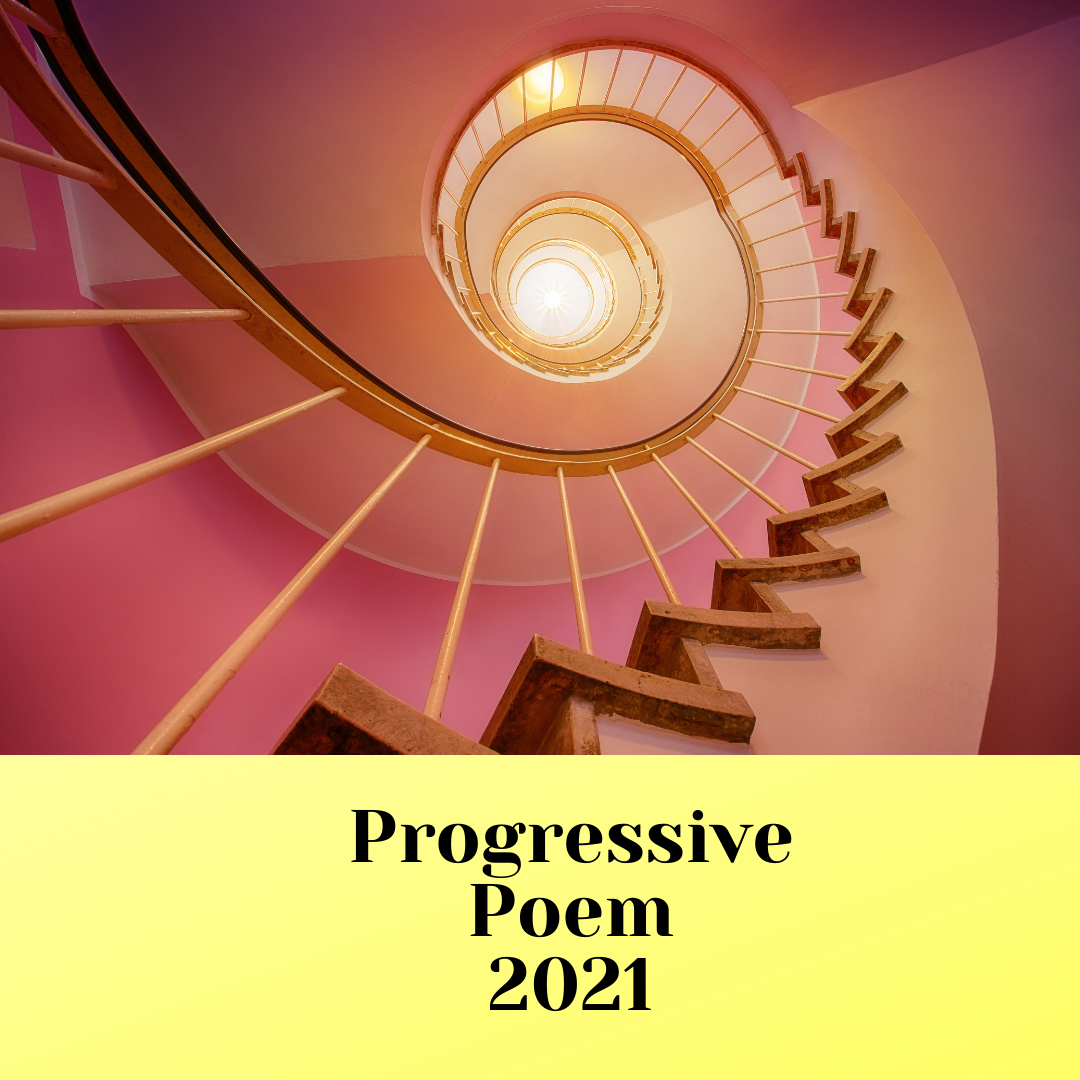
Michelle Kogan finished up the Kidlitosphere Progressive Poem with a final line as well as a delightful illustration. The poem will be archived here.
I’ve been writing poems each day in response to prompts on Ethical ELA. I share these prompts with my students. On Wednesday, I struggled over the prompt. I shared the struggle with Chloe. She started writing me notes with topic suggestions. One of these notes said, “Me.” Then the pen flowed.
Fifth Grade
She comes in the room with an attitude that testy mood of preteen silliness and suggests I write a poem about her.
As if I know her well enough to write her down in words.
What I know is she grins loudly in braces. She writes notes on paper and crumples them like the crunch of a chip bag in the trash– Schwoop! Perfect shot!
But this poem will not be a perfect shot. There are no shots left on her page of excuses–the “not my fault” dissolves into “I just can’t.”
I wonder aloud “When will you believe in yourself?” When did I believe in myself? Have I ever?
This poem can’t end like this. I must write something encouraging to make all this white space worth it.
On Ethical ELA this month, teachers and authors are offering intriguing poetry writing prompts. Padma Venkatraman wrote on April 14th that she has created a team of authors dedicated to diverse verse: “Diverse Verse is a website and a resource for educators and diverse poets and verse novelists.” This week they launched using the hashtags #DiverseVerse and #AuthorsTakeAction.
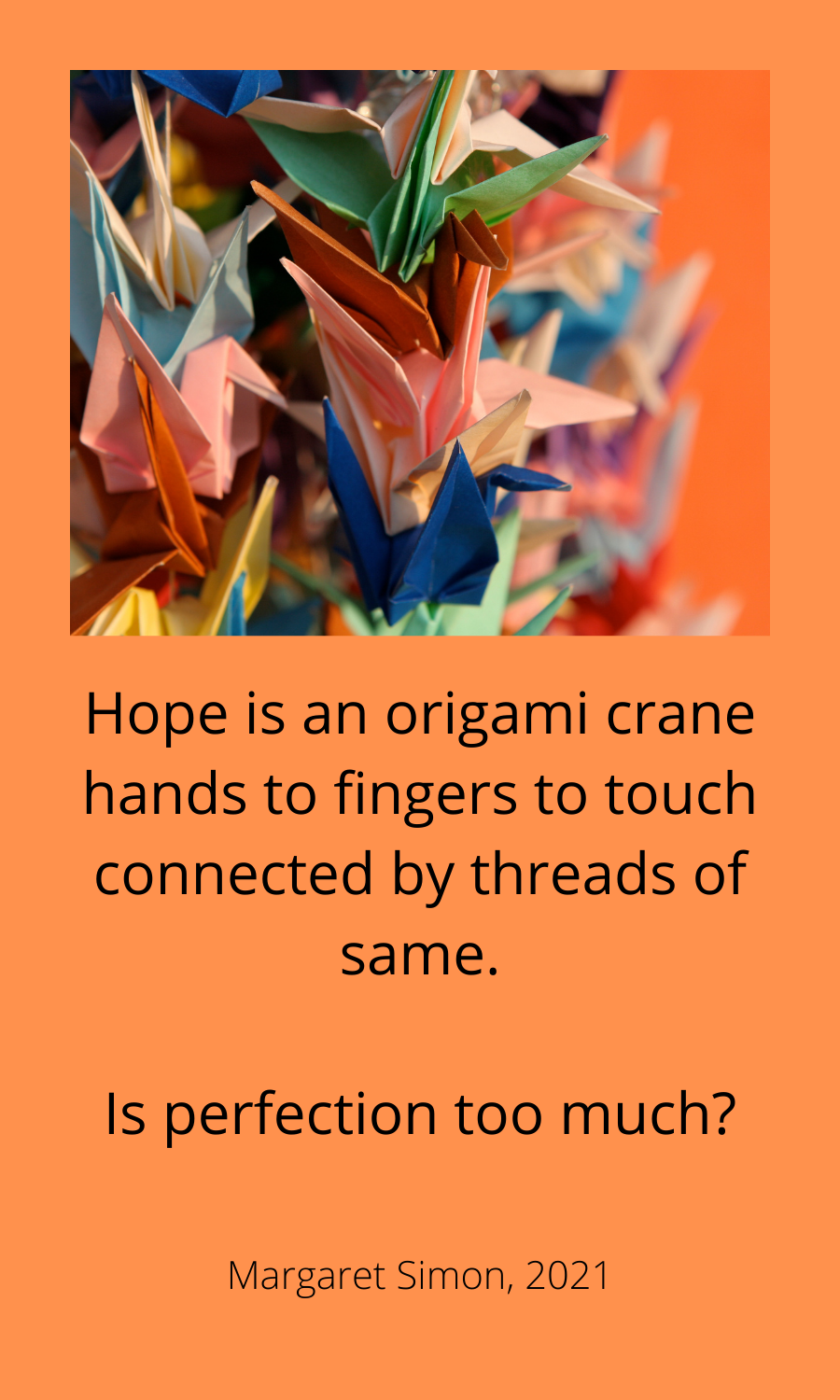
Padma invited teacher/writers to write a 4 lined rhymed stanza beginning with “Hope is.” I thought of how I made origami cranes last summer and organized a gathering of cranes to hang downtown. My first draft of this poem was this:
Hope is an origami crane hanging in a tree twisting with the wind longing to be free.
Draft #1
In the comments, someone pointed out the words hanging, twisting, longing. “There is beauty but also struggle with “hanging”, “twisting”, “longing”. Much truth here.” A positive comment, I know, but I wanted to revisit the verse and see if I could make more of a connection from the hands creating the crane to the idea of peace. This is my next attempt with a line from Chloe, “Is perfection too much?” We’ve tried origami together. She pointed out how our attempts are imperfect at best, but we keep trying. Like hope. Like peace. It’s in the attempts, not the perfection.
Chloe wrote a verse, too. She received a comment from Padma herself and was thrilled.
Would you like to try to weave a metaphor about hope? Share one in the comments.
Thank you to Two Writing Teachers for creating an amazing community of writers and a safe, welcoming space to write and share.
I’m inviting you to find inspiration today at Ethical ELA. I wrote the guest prompt of the day for National Poetry Month. My inspiration came from a National Geographic email that I subscribe to. In the newsletter, there were selected photographs chronicling the pandemic across the world. I chose to write about a photograph of undocumented workers making masks.
Writing to photographs is inspirational as there are so many ways to approach the task. With students you can ask questions that lead them to wonder and response. Who do you see? What do you think you know? What can you discover?
Building a sense of empathy is vital in our world today. Finding a world view can open up empathy. Consider joining the community at Ethical ELA and writing a poem in response to a photograph.
Undocumented
“How can you say we don’t belong here when we are working so hard to heal this country’s communities right now?” Veronica Velasquez
I think of the mask makers, side-by-side on an assembly line cutting, threading, sewing white cloth To keep us safe while they live in the shadow in plain sight, essential now.
Belong or don’t belong? Our survival depends on their survival. Undocumented saviors.
Margaret Simon lives on the Bayou Teche in New Iberia, Louisiana. She is a retired elementary gifted teacher who writes poetry and children's books. Welcome to a space of peace, poetry, and personal reflection. Walk in kindness.











 Reflections on the Teche