Feeds:
Posts
Comments

Posts Tagged ‘Fran Haley’

Thank you to Two Writing Teachers for creating an amazing community of writers and a safe, welcoming space to write and share.

A few weeks ago I attended a writing workshop with one of my mentors Darrell Bourque, former poet laureate of the state of Louisiana. He asked us to look at common language to explore in a poem form. He suggested a pantoum. I wrote one there, but there were parts that didn’t work for me, some rhymes that seemed forced. Was my heart in it? I knew what I wanted to say. Sometimes a form is the just right thing to contain all that your poem wants to say.

This workshop, Darrell’s gentle guidance, have stayed with me. Last week I copied into my Notes app a billboard catch phrase, “I triple-dog-dare you.”

Yesterday I read Fran Haley’s post, a beautiful pantoum about a rainbow. I looked up the form again and took another shot. This one satisfies me.

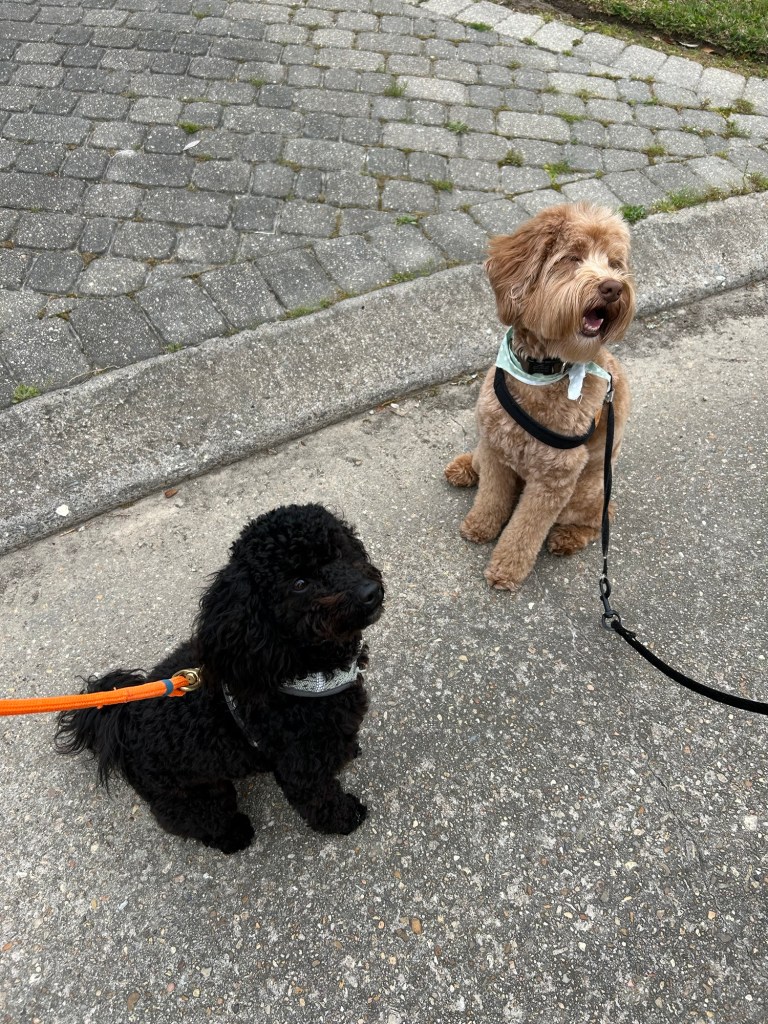
On Sunday I texted my neighbor to go for a walk with our doodle dogs. Her husband passed away last Sunday. I didn’t know if she would be up for it, so I was pleased when she agreed to go. Even though she thanked me profusely for reaching out, I felt it was my honor to be with her. Grief can be a weird time, and we are often not sure of the “right” thing to do to help someone through it. The dog walk was the right thing for both of us.

Dog Walk Pantoum

Split in a million heart pieces,
I triple-dog-dare you to go.
We walk our dogs on their leashes
connecting puzzle pieces as we go.

I triple-dog-dare you to go
to the place where grief hides in shadows. 
Connecting our puzzle pieces as we go.
Comfort in our walk-talk grows. 

The place where grief hides in shadows;
Listen close to the sound of the wind.
Comfort in our walk-talk grows.
Each of us finds a good friend.

Listen close to the sound of the wind
chimes, like a million heart pieces.
Each of us finds a good friend.
We walk our dogs on their leashes. 

Margaret Simon, draft

Albert and Ruby

Read Full Post »

The Poetry Roundup is with Ruth at “There is no such thing as a God-forsaken town.”

This week was the Open Write for Ethical ELA. I love how this event once a month inspires me to sit each day and write. I’m often surprised by what comes out on the page.

Fran Haley prompted us to write a bird story. To see her wonderful model poem and the prompt, click here. It brought back a memory for me.

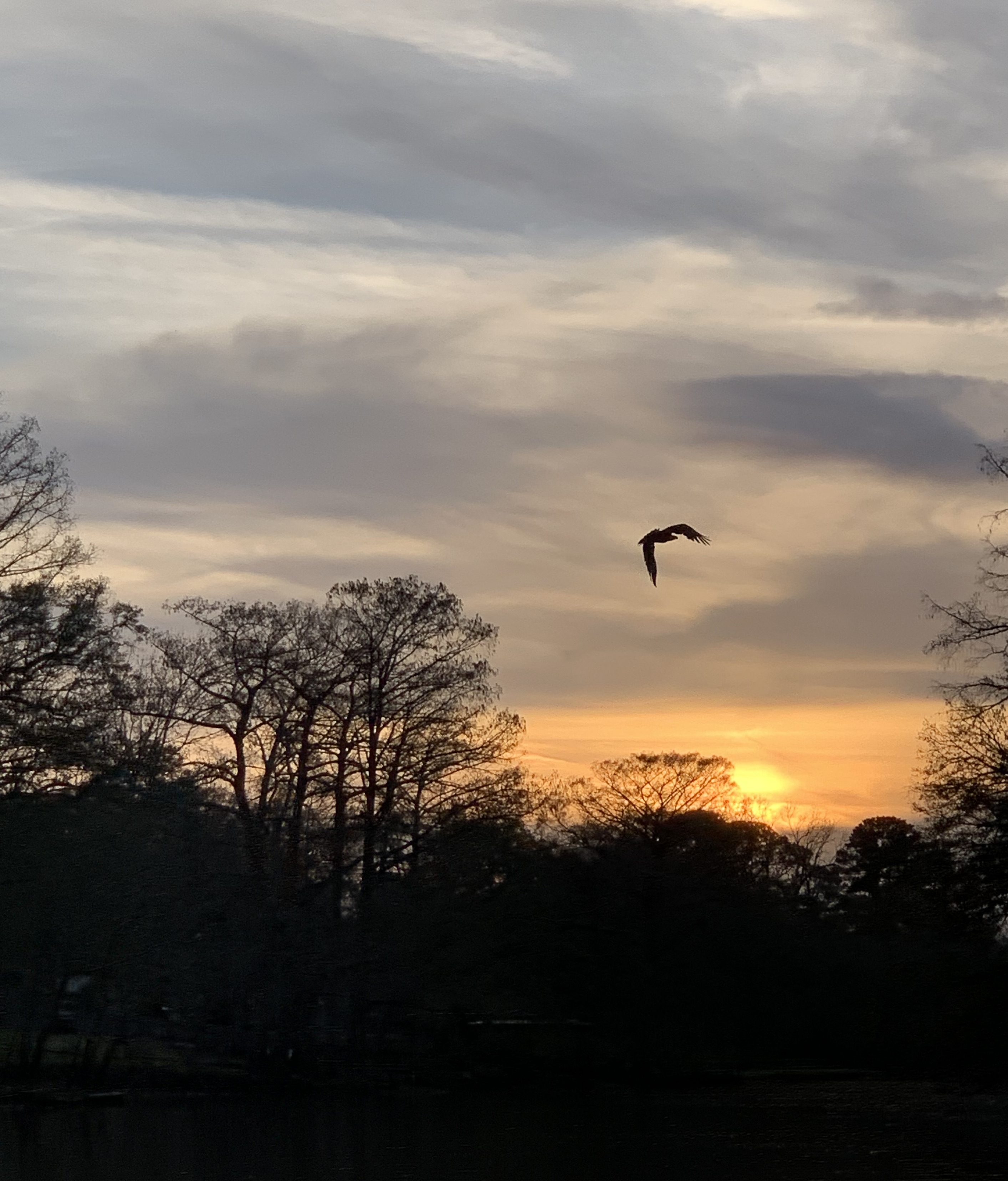
Eagle over Bayou Teche, Louisiana

Everyone has a bird story

Remember the time we saw the eagle
atop the bridge to Seattle?
A few days later, you read
the eagle died, a car hit it.

Once we saw an eagle while canoeing,
elegantly soaring over our bayou–grand beauty
symbol of strength. Then you recalled
the Seattle eagle. That tragic death
hit us hard. He was “our” eagle.

How can we claim ownership of a wild thing?
Freedom is temporal.
The story remains.

Margaret Simon, draft

Fran is not only a wonderful poet, writer, teacher, she also supports other writers and me with lovely comments. I feel the comments that most resonate with me are ones in which the writer makes a heart to heart connection. This was what Fran wrote about my poem: “I’d have mourned long over this loss as well. I find, as I grow older, these things strike deeper than they ever used to. Yesterday I came through a crossroads where woods had long grown over an old farm and it’s all being bulldozed for building houses, I presume. I thought of the majestic hawks and “my” eagle and wanted to weep – how far will the birds have to go to find a new home? “How can we claim ownership of a wild thing?” Because the wild thing is connected to us, to our essence, in some deep way; as the wild thing goes, so go we. I cannot help thinking of the eagle in your verse in another way, as our national emblem, especially in these true and haunting lines:”Freedom is temporary. The story remains.”

May this holiday season bring you lots of small moments of great joy!

Read Full Post »

Read, write, share

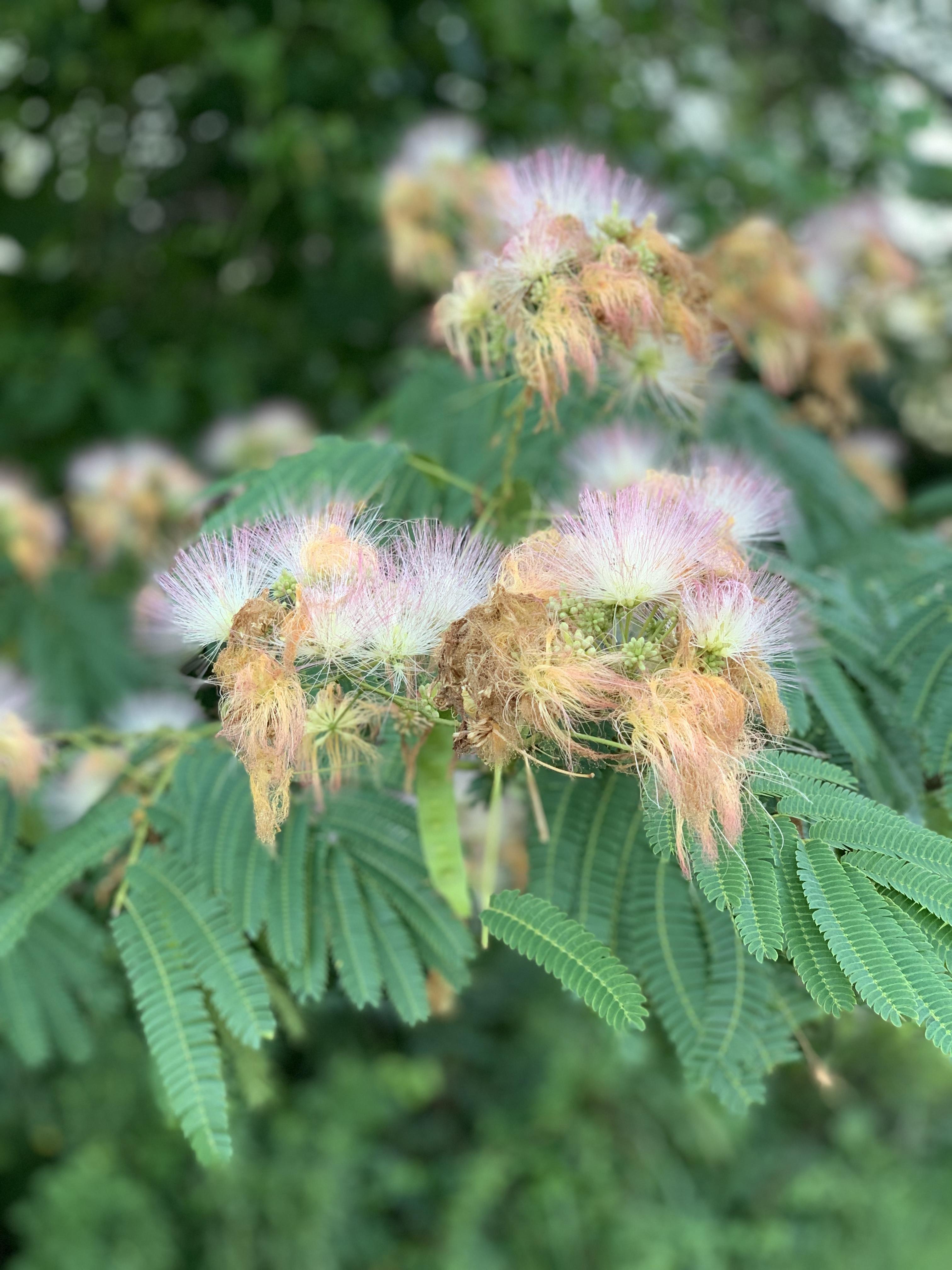
I have a soft spot for the mimosa tree. One was growing in my grandfather’s yard when I was a child. My brother and I would climb its branches and use the seed pods in mud pie and “soup”. On a recent walk I took pictures of the mimosa blossom. It’s beautiful in its feathery flounce. When I took a moment to Google the tree this morning, I found out a few things:

  1. The tree comes from Asia, known as the Persian silk tree or the pink silk tree.
  2. The wood of the mimosa is brittle and prone to break. Thus the tree has a short life span.
  3. The tree is an invasive species from China.
  4. The tree attracts webworm.
  5. The mimosa pod (which my brother and I used in pretend play) is poisonous.

This mimosa tree was growing wild in Mississippi. I’ve also seen a few in our city park and near the bayou in a wooded area. Write a poem based on this image and put it into the comments. Please reply to 3 other writers with encouragement. Thanks for being here.

Fran Haley is leading the Open Write at Ethical ELA today. I used her prompt to create my poem.

Mimosa

evanescent blossoms
perky pink feathering
flames of flower power
invasive Asian tree
reaching for the sunlight
my childhood memory

Margaret Simon, draft

Read Full Post »

Thank you to Two Writing Teachers for creating an amazing community of writers and a safe, welcoming space to write and share.

Even before we were sheltering in our homes, I enjoyed making connections over cyberspace. Teacher-poet-writer Fran Haley is one of those connections. We read each other. Yesterday she wrote a beautiful blog post “Ode to the Wind.” In that post she wrote about a tweet from Robert MacFarlane with the word of the day: susurrate.

Word of the day: “susurrate”—to whisper, murmur, esp. of noise produced by numerous individual sources of sound (bees humming, leaves rustling, etc.) Compare to “psithurism,” its similarly sibilant sense-sibling, meaning the whispering of wind in trees (from Ancient Greek).

Susurrate was a new word to me when I read MacFarlane’s most amazing, beautiful book the lost words: A Spell Book. A friend who knows I love words and poetry loaned it to me. I presented the first few poems to my students. The last stanza of the second poem “adder” reads:

Rustle of grass, sudden susurrus, what
the eye misses:
For adder is as adder hisses.

Robert MacFarlane, the lost words

Reading Fran’s post, I remembered that I had written a definito to the word. The definito is a form created by my friend, teacher-poet Heidi Mordhorst. “The definito is a free verse poem of 8-12 lines that highlights wordplay as it demonstrates the meaning of a less common, often abstract word, which always ends the poem.

I love this form for working with the meaning of a new word in a way that helps someone else understand the word.

As murmur is to whisper
a mutter to a babble
When grumbles turn to mumbles
and a purr softens sound
As whisper is to wind
a sigh of the weather
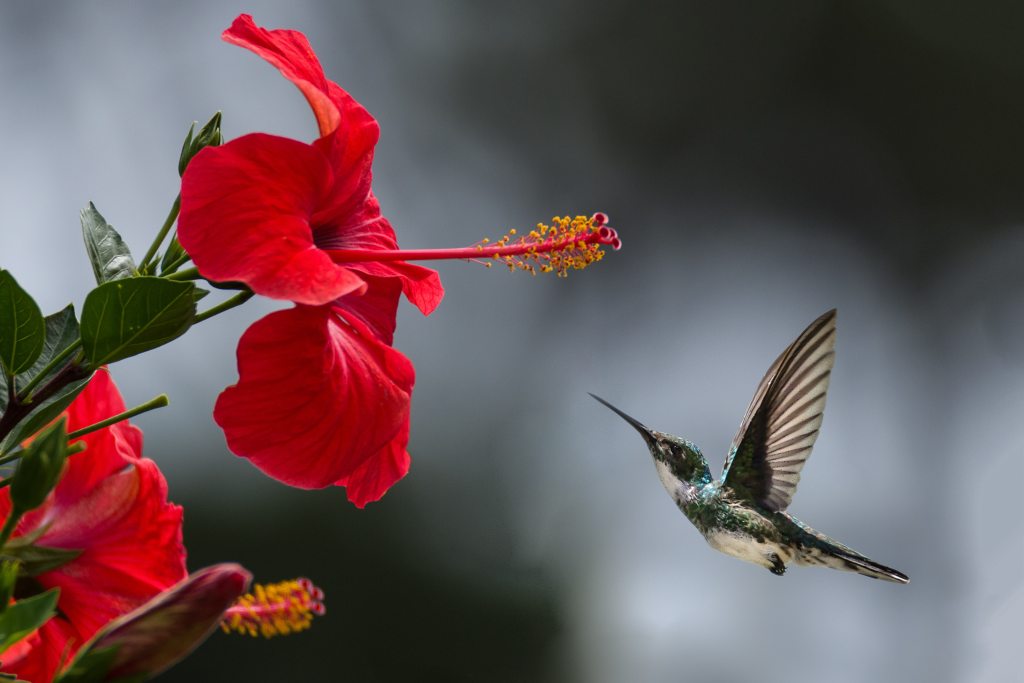
As a hum is to a hummingbird
flying quickly to a flower
You may hear something
close to silence…susurration. 

Photo by Philippe Donn from Pexels

The Progressive Poem is coming to the end. Today Donna Smith is hosting Jessica Bigi’s contribution.

Read Full Post »