Feeds:
Posts
Comments

Posts Tagged ‘Gulf Fritillary’

Thank you to Two Writing Teachers for creating an amazing community of writers and a safe, welcoming space to write and share.

I teach gifted elementary students. I think of my classroom door as a revolving one because students from grades 2-6 come in and go out all day long. Two weeks ago I brought in some Gulf fritillary caterpillars in a butterfly net. I placed them on the table and invited my students to ask questions.
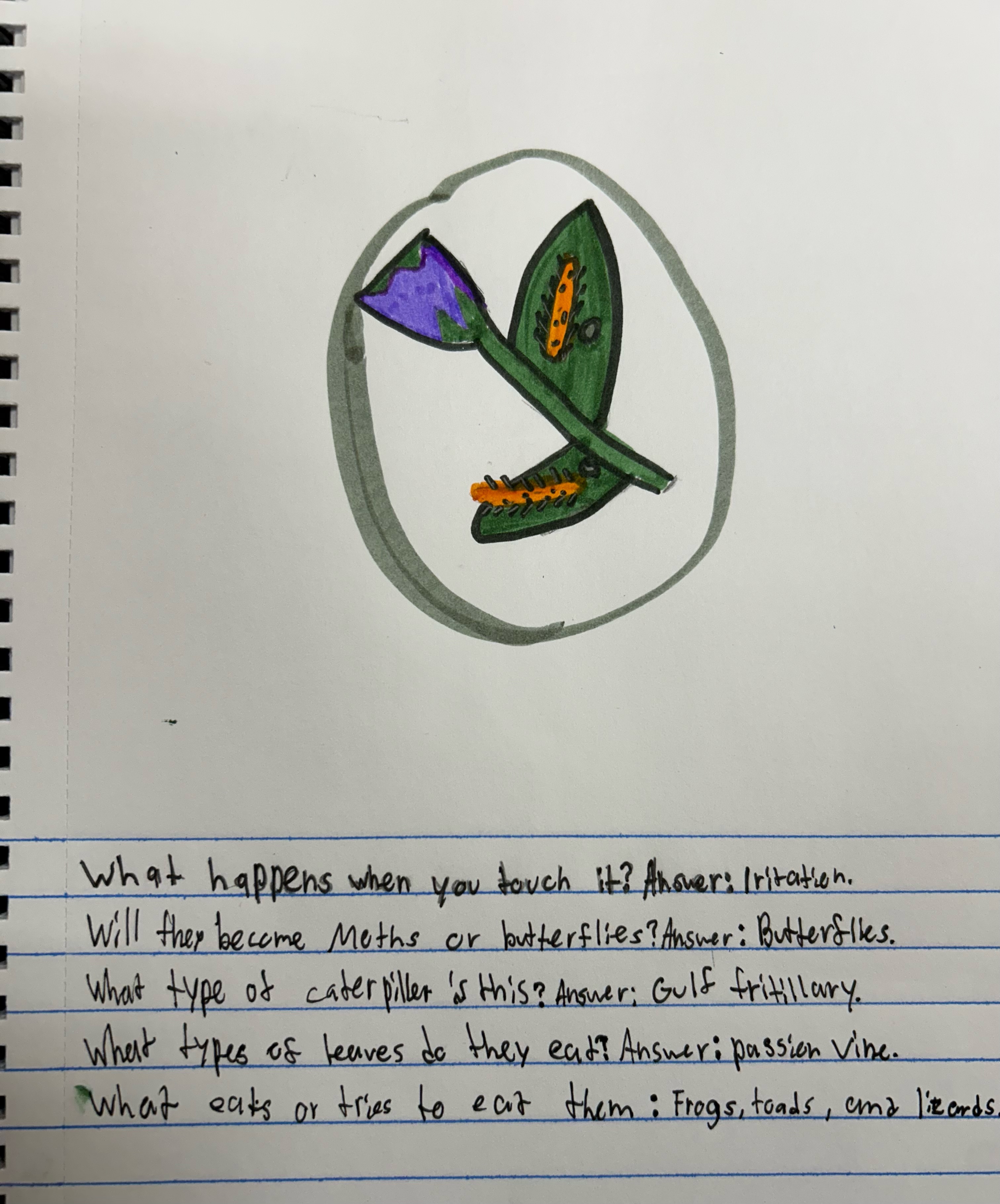
This is Marifaye’s sketchbook neatly written with her 5 questions and the answers. (Not all notebooks looked this neat.)

Students gathered around the table and drew what they saw, asking question after question. They became enthusiastic yet frustrated that I would not give them a straight answer. They practiced using Google to research and answer their questions.

This week the caterpillars eclosed (hatched) and once again we observed and drew pictures then released the butterfly.
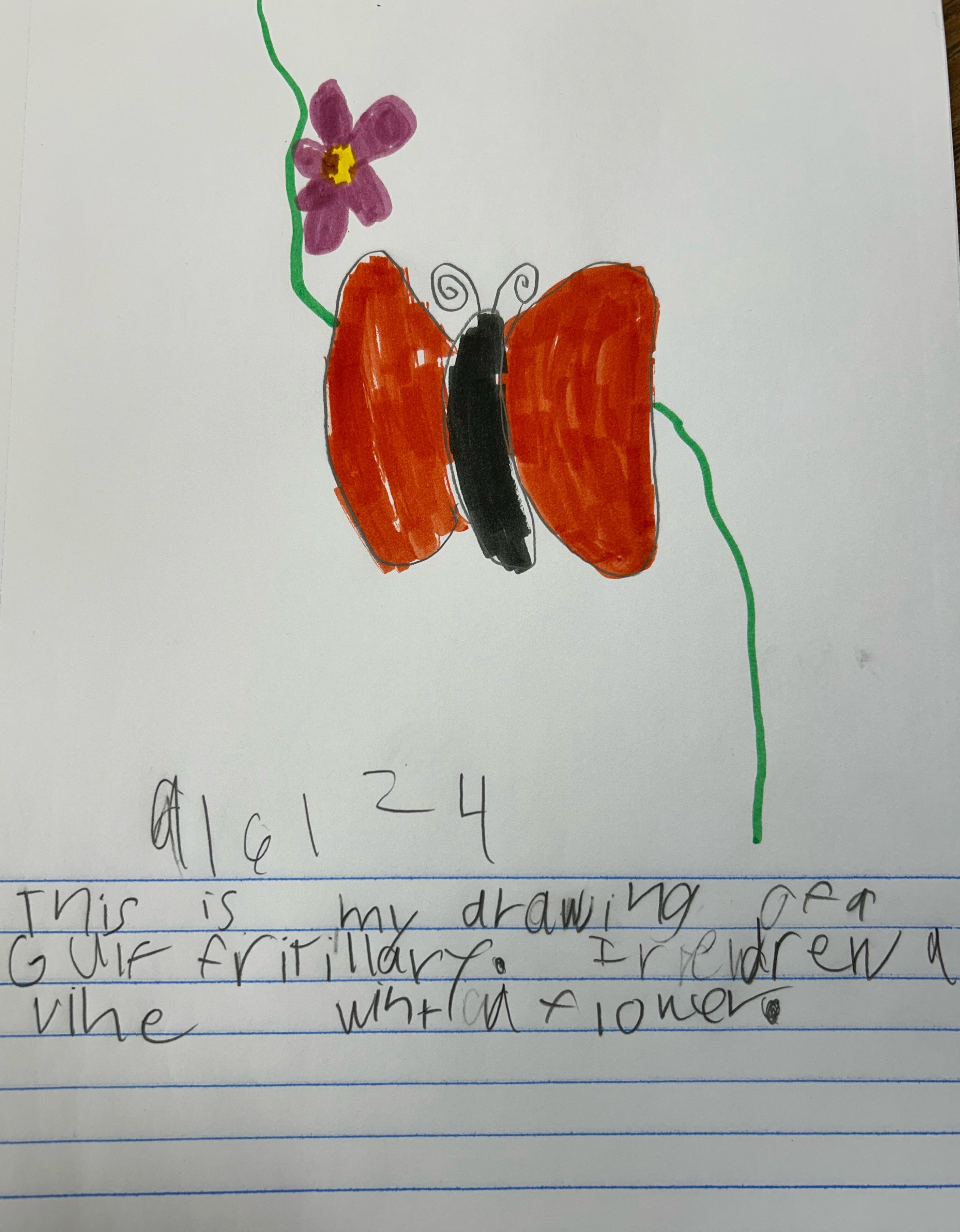
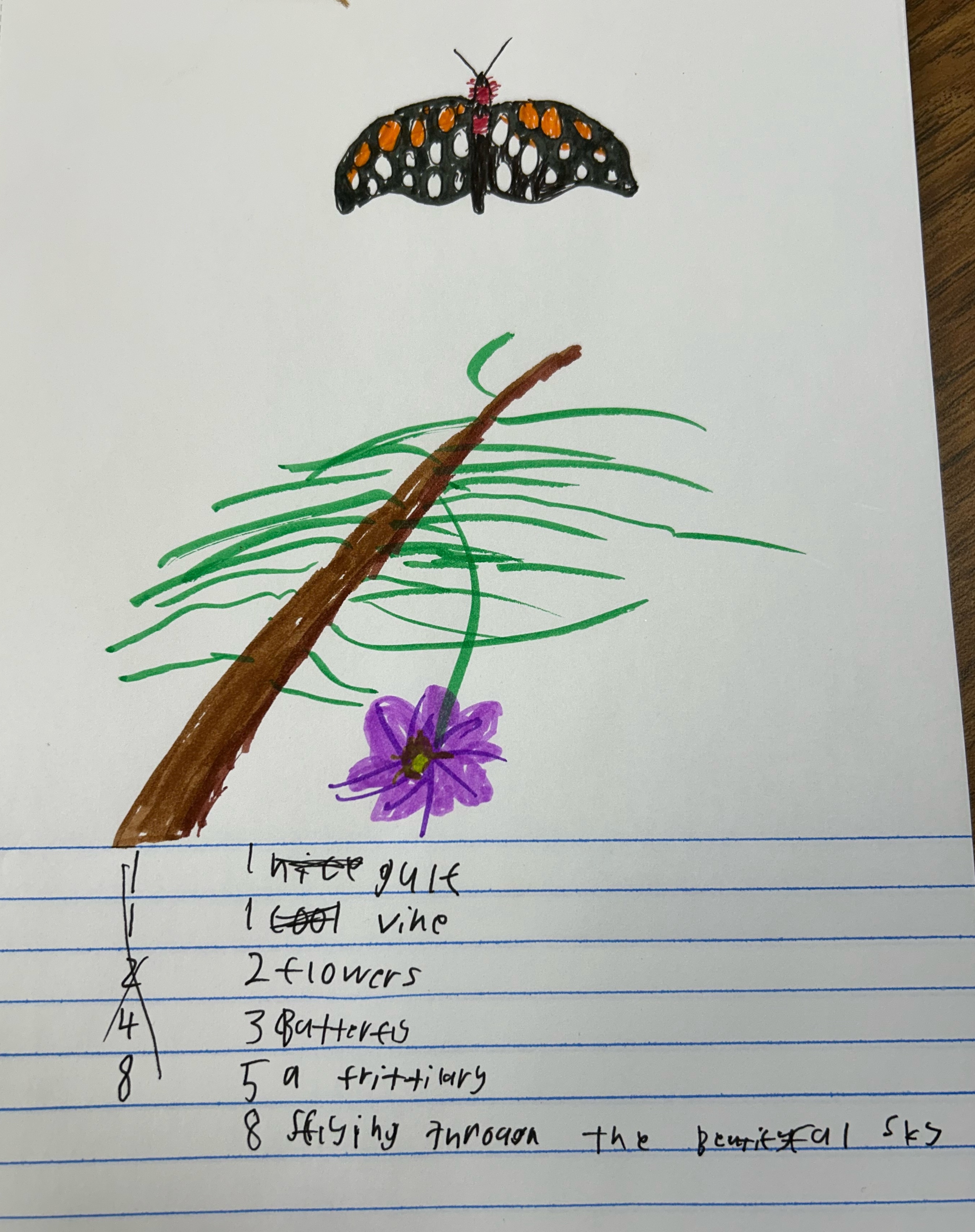
Danielle, 2nd grade, wrote a sentence. “This is my drawing of a Gulf fritillary. I drew a vine with a flower.”
James wrote a fib poem about the butterfly. (We talked about using more specific vocabulary than words like nice and cool.)
Gulf
vine
flowers
butterfly
a fritillary
flying through the beautiful sky

I don’t always have nature at my fingertips to lead inquiry with my classes. This was a wonderful way to introduce the idea that asking questions and wondering are all part of the process of learning. And releasing was just pure Joy!

Read Full Post »

Poetry Friday is hosted today by Susan at Chicken Spaghetti.

A few weeks ago I received an email from Laura Shovan introducing me to a new poetry form, the Pythagorean Poem created by middle grade author Shari Green. For anyone who loves a good challenging form, this is for you. I haven’t tried it with my students…Yet.

Similar to a Fibonacci poem, the form is based on a mathematical truth, the Pythagorean theorem. This theorem for you non-math nerds like me is the rule for a right triangle:

a^2 + b^2 = c^2

Shari took this rule to a poetry level: Using the triple, the poetic form works like this:

1st stanza: 3 lines of 3 words each

2nd stanza: 4 lines of 4 words each

3rd stanza: 5 lines of 5 words each*

* The third stanza must be composed of all the words found in stanzas one and two (in any order; variations okay). The third stanza should be a progression of sorts, a product of the first two in thought or theme or meaning.

I think you could change the numbers of a and b, but the final stanza must use a combination of words from the first two stanzas.

In my classroom and at home, I am keeping caterpillars in safe enclosures. The caterpillars are Gulf fritillaries that hatch and feed on passion vine. I tried this topic for my first ever Pythagorean Poem.

Hidden in wood
chrysalis of safety
rest for weary

hardworking caterpillars climb
munching passion vine leaves
grow longer each day
prepare for enclosed transformation

Passion caterpillars grow, prepare for
weary rest enclosed in safety.
Each hardworking, munching vine leaves.
Climb into wood-hidden chrysalis–
Transformation for longer days.

Margaret Simon, draft

Photo by Brian Forsyth on Pexels.com


Read Full Post »

Poetry Friday Round up is with Carol at The Apples in my Orchard.

The National Writing Project’s Write Out ended last Friday with the National Day on Writing. All the wonderful content is still available, and my students aren’t ready to stop writing. Yesterday we perused the site and found information about Phillis Wheatley from the Boston National Historic Park. When I was researching to write poems for my forthcoming book Were You There: Biography of Emma Wakefield Piallet, I used a line of Phillis Wheatley to write a golden shovel. I shared the mentor text with my students.

They were fascinated to try writing golden shovels, so we found a poem written by Phillis Wheatley on Poetry Foundation. We read “A Hymn to the Evening.”

A Hymn to the Evening

BY PHILLIS WHEATLEY

Soon as the sun forsook the eastern main
The pealing thunder shook the heav’nly plain;
Majestic grandeur! From the zephyr’s wing,
Exhales the incense of the blooming spring.
Soft purl the streams, the birds renew their notes,
And through the air their mingled music floats.
Through all the heav’ns what beauteous dies are spread!
But the west glories in the deepest red:

Phillis Wheatley, read the complete poem here.

Thursday was a special day in our small room. The butterfly whose chrysalis lay on the zipper finally emerged. We were excited because it meant we could finally open the enclosure to release them all. We had four that I had been feeding with mandarin oranges from the cafeteria.

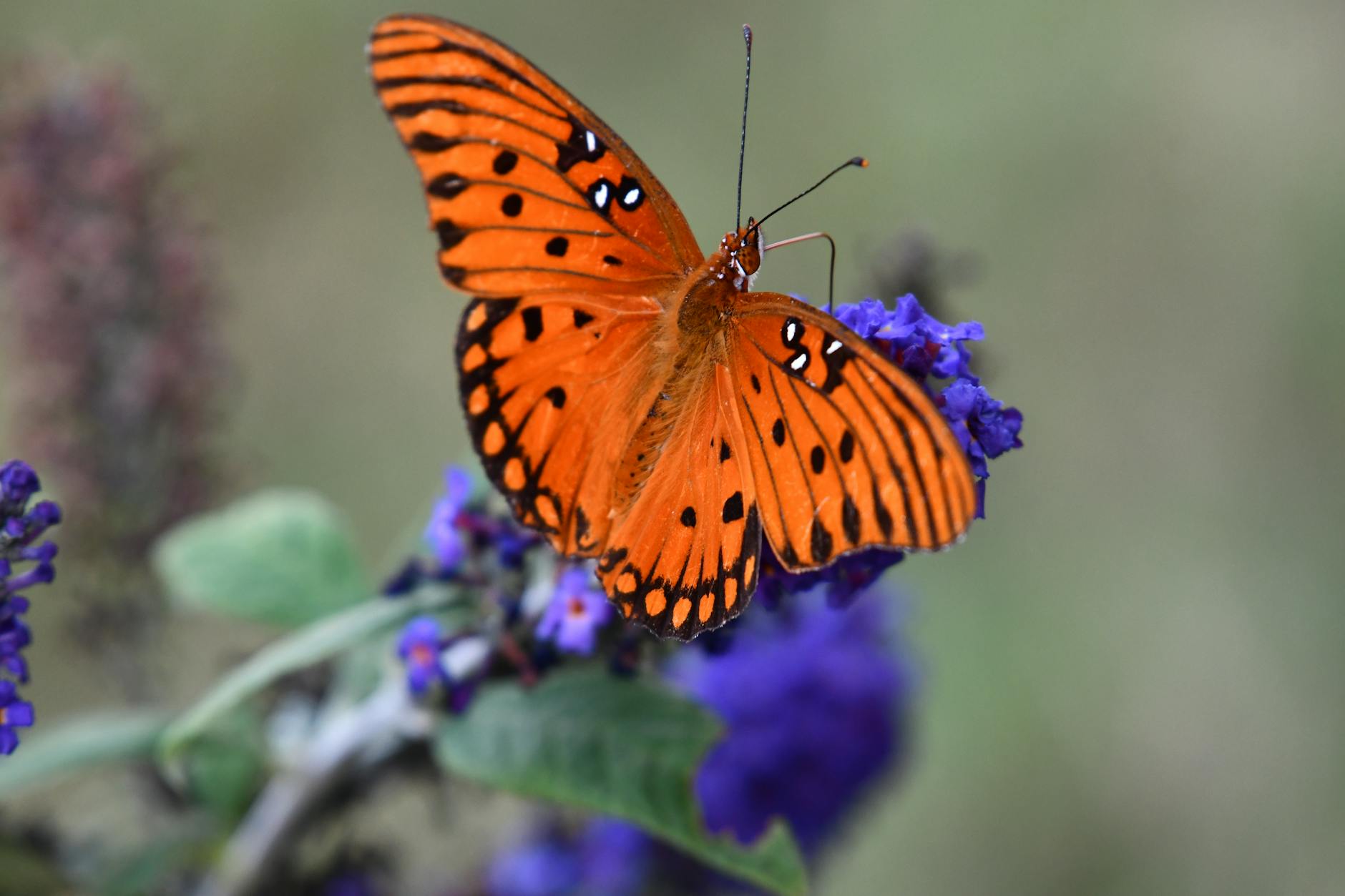
We had the privilege of watching their daily antics and marveling at their beauty. The butterflies were Gulf fritillaries. And flit they did. This breed was less tame than the monarchs we have raised before. They did not light easily on a finger. We had some exciting moments trying to catch them all.
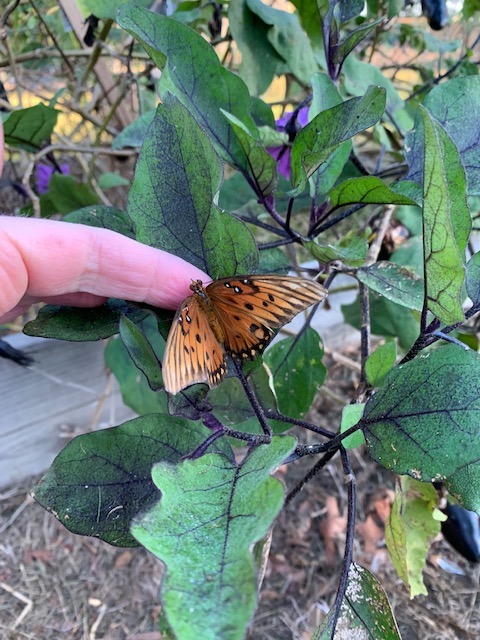
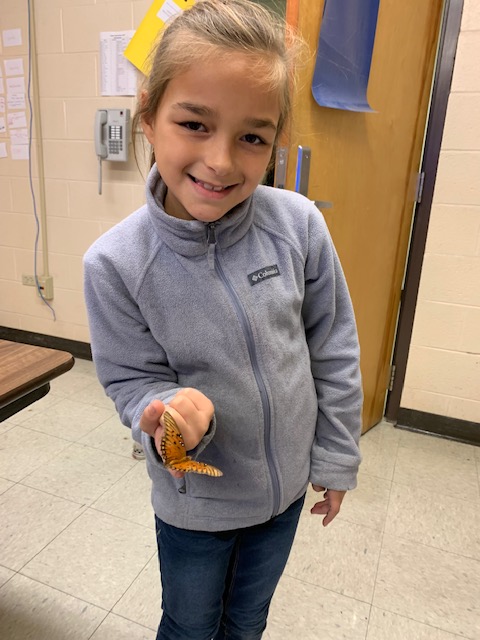
But we did and together released them into the butterfly garden. Luckily one of them hung around for a photo.

My mind and my golden shovel poem were both on this miracle of Mother Nature.

A Hymn for the Gulf Fritillary 
after Phillis Wheatley
“A Hymn to the Evening”

 Fritillary soft 
petals purl 
from enclosure to the 
spread of wings, flitting over streams, 
freedom like the 
birds 
who renew, 
survive and thrive singing their 
tender, sweet notes.

Margaret Simon, draft

Read Full Post »

You park in the same spot.
You walk the same hall,
see the same faces, but one day,
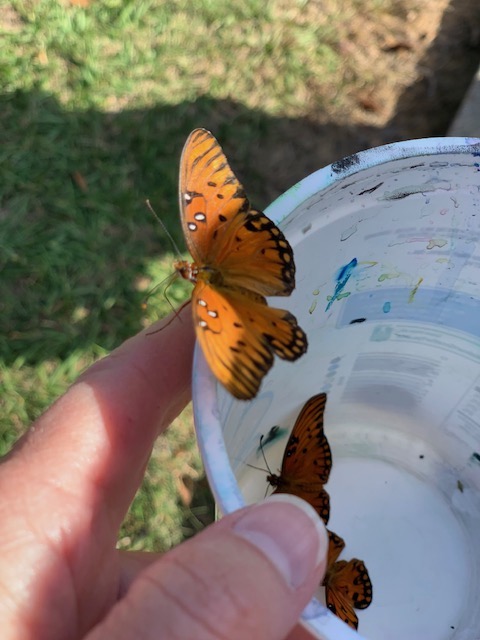
a child opens her hands to show you
a butterfly, and suddenly,
you become a part of her wonder.

You invite her to go outside.
“Let’s find a flower to feed the butterfly.”
You open Google and take a photo.
Images pop up identifying the beautiful wings
as “Gulf fritillary or Passion butterfly.”

Other children gather round
and pass the gentle butterfly hand to hand.

In your mind, you know this is not a good sign.
The butterfly is not viable, yet one student squeals,
“I’ve never seen a butterfly so close up!”
Others whisper, “Wow!”
“It’s so soft!”

Wonder continues, grows, swells,
so the poor fritillary becomes a subject
to study, a specimen for children’s eyes.

You decide it’s an honor
to be known as the butterfly whisperer.

Read Full Post »