Feeds:
Posts
Comments

Posts Tagged ‘picture books’

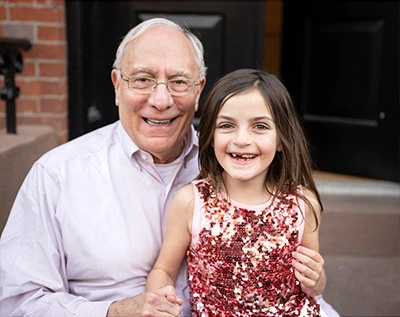
Author Phil Russotti with his granddaughter Stella.

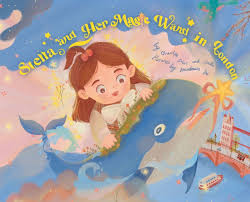
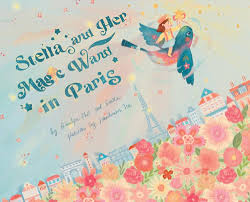
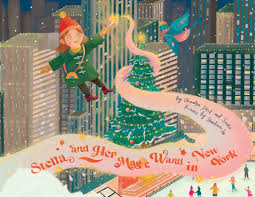
Phil Russotti sent me copies of his 3 Stella books because I am the grandmother of a girl named Stella. It was quite a coincidence to find out while reading his books that his character, Stella, has a brother named Leo. How can that be? When I read the books to Stella, my 4 year old granddaughter, she decided to change all the names to match her friends’ names. I think she believed the story was about her. And why not? In the books, the character Stella does all kinds of magical and fun things with her family, friends, and magic wand. She can even fly on her pet bluebird. The books are full of fun fantasy. My Stella feels special that she has books with her name in it.

Phil co-wrote the books with his granddaughter. I imagine doing that someday with my grandson, Leo, who is becoming quite the artist. This grandfather/granddaughter duo took the extra hard step to publication. I was curious about the process, so I sent Phil some questions.

Tell us about the book:

The first book “Stella in Paris” was conceived by Stella and myself during the Pandemic. We were living together for safety reasons when one day Stella said to me, “Grandpa I was thinking that I went to the top of the Eiffel Tower and waved my Magic Wand and the virus went away all over the World. “

I said that was a wonderful thought and a  great idea for a story and we started developing the book. It was her idea that she got the Magic Wand from the Tooth Fairy and that she flew to the top of the Eiffel Tower on her pet bird, Mr. Tweet Tweet, her trusted companion. We then decided that Stella could do more helpful things and conceived of the London and New York books.

Why did you write it?

Stella’s initial idea was born out of her reaction of fear and incomprehension of what was happening with the spreading virus. Which I assume all children had. But her solution had a positive and powerful message of empowerment that I realized could serve as a lesson for young girls that they could conquer any problem if they put their minds to it. We then ventured to other locales to show how a young girl could solve problems all by herself and help people. 

Tell us about the writing process or collaboration. Did you discover anything new about yourself as a writer?

The collaborative process was accomplished by me coming up with the basic story (ie. saving a whale that got caught in the River Thames) and asking Stella questions to which she supplied the answers to flush out the story. Such as “Where should the next book be based?” and she came up with London. I asked why would she go to London and she said that once the pandemic was over, people would want to travel, and it would be natural for someone in Paris to travel to London. So she went to London to meet new friends. When I asked if she took the Chunnel from Paris to London, she said, “No, I would go with Mr. Tweet Tweet.” We just proceeded from there, question by question and she filled in the details.

I discovered that I could engage in fiction writing, which is something I had never done, and in fact, I didn’t read fiction. It was a growing experience for me to help create stories. 

Who was the book written for?

The books are written for young girls to see how powerful they can be and how they can solve any problem they put their minds to. They are books of empowerment.

Could you share an example or excerpt for the audience?

In London when the whale inadvertently broke her Magic Wand, Stella had to figure out how to fix it. She came up with asking another woman, the Queen of England. When she met the Queen, she bowed and then said, “You’re welcome, but please Your Majesty can you fix my Magic Wand?” The Queen exclaimed ,”I’d be happy to”, and told Stella to hold the pieces together. The Queen then picked up her giant scepter and waved it over the wand saying, “Whippety, whoopity, whopp, Wand Wand come together!” and the wand was fixed better than ever. Two women solving the big problem together!

You can check out the Stella books on Phil’s website and Amazon.
Read Full Post »

Poetry Friday is hosted today by Karen Edmisten


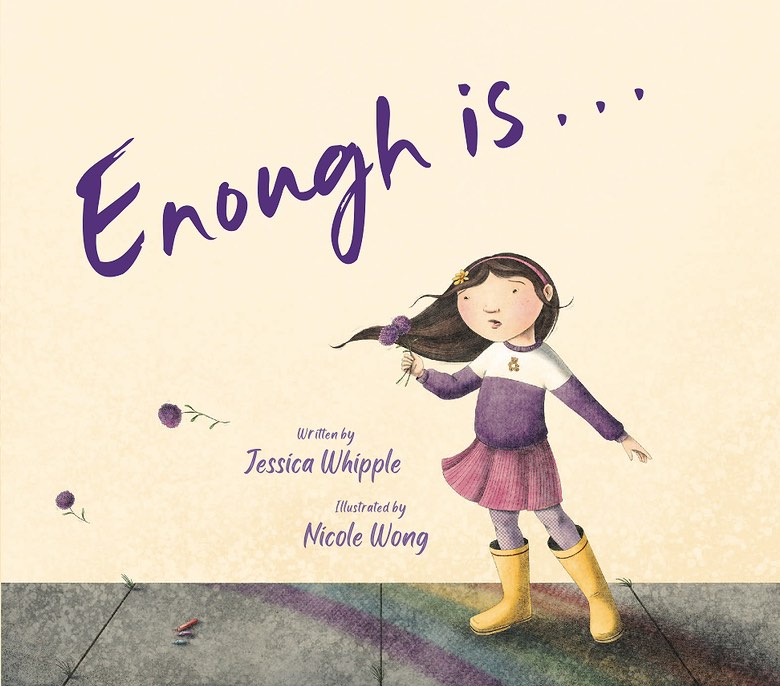
I was introduced to Jessica Whipple by my friend Irene Latham. What a delight to read her new picture book “Enough is” illustrated by Nicole Wong. Enough was my One Little Word for 2022. When I need to remind myself that I am enough and I have enough, I wear the bracelet that bears the word. Jessica took this idea and stretched it into love in a picture book. “Somewhere between a little and a lot, there is Enough.”

The child character is learning about enough. “Enough isn’t a number,” so she wonders, what is enough? She comes to the profound conclusion that when you have enough, it’s easy to share.

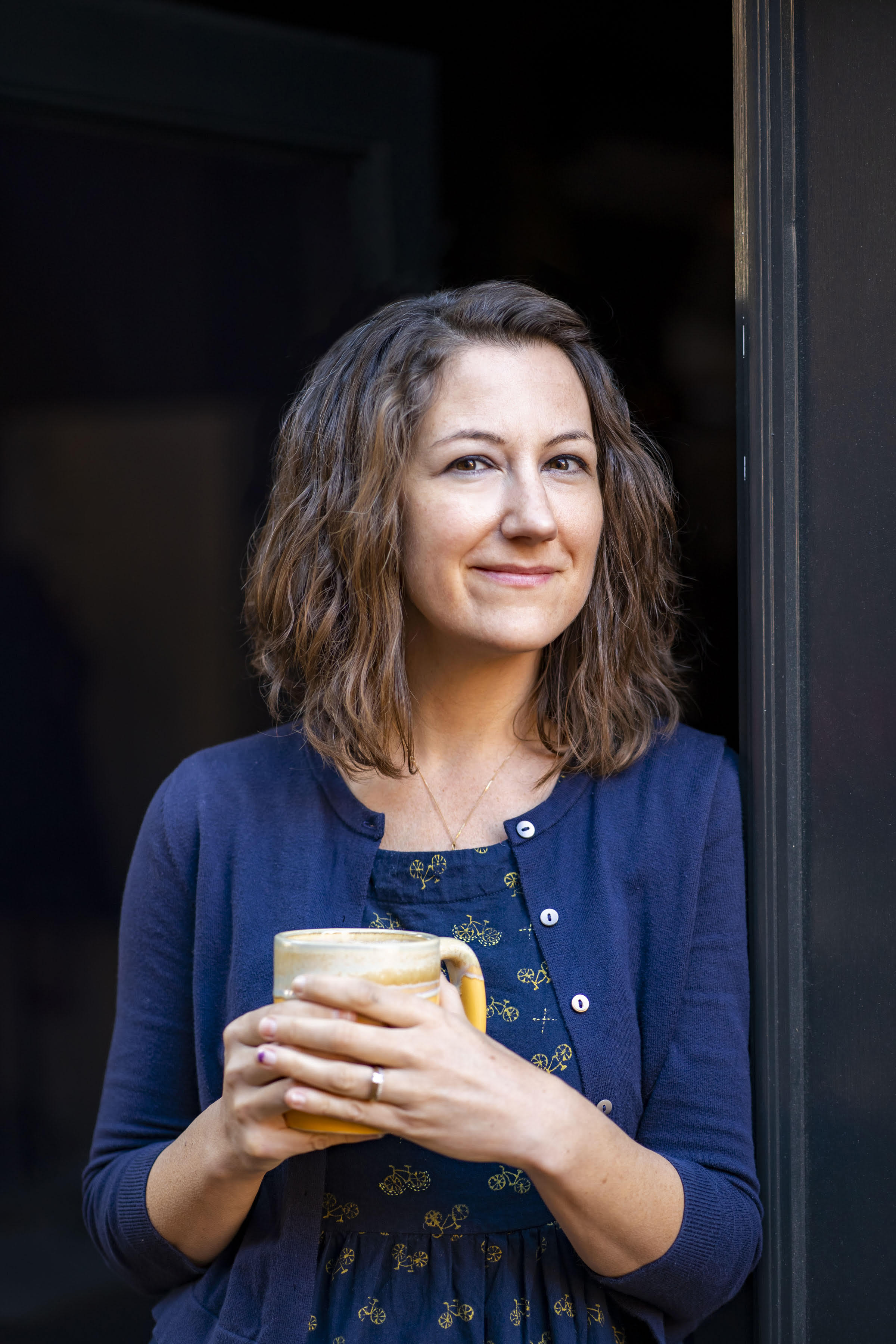
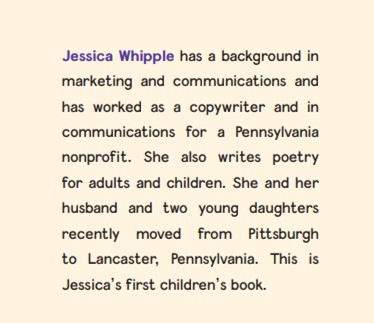
I asked Jessica to answer some questions about her author’s journey to publication. Her book Enough Is published this week.

How would you describe your journey as a writer?

My journey as a writer began as an experiment! I’m a “try it and see what happens” kind of person. In short, I had an idea (out of which came my first book, ENOUGH IS…), and then the question “I wonder if I can write a picture book?” And soon after, “What does it take to publish a picture book?” I was a young-ish mom, so picture books were starting to fill my consciousness! And I have a degree in communications, and so writing has been part of my make-up for some time. Four, maybe five years later, here I am and I never expected to answer my first two questions in such a delightfully surprising and satisfying way.  

How does writing poetry help when writing a picture book? How are they different?  

There are similarities in form between a free verse poem and a picture book, and of course a rhyming PB and a rhyming poem. There tend to be short lines in both forms, economical language, a set “flow,” lyricism, introspection, toying with reader expectations…I could go on! In fact, I am working on a virtual or in-person presentation for poetry-loving highschoolers about this topic. Shameless plug: I would love to speak to your student literary magazine or English class! 

Is Enough a concept you feel young children have a hard time with? What is your experience with this concept? 

Very much, yes! And my own experience is that I have a hard time with it as an adult, even! As a child, I remember the sadness that came after, say, a back-to-school shopping trip and how conflicted I was with the realization it was all just “stuff,” yet somehow I wanted more of it. And now, without limits, I’ll simply keep eating chocolate chips out of the bag if I don’t remind myself that I wrote a book about this very thing! “Enough” is hard because it’s uncomfortable. We want…things, friends, happiness, you name it…so the more we help each other learn contentment, the easier it is to feel comfortable with having enough. 

What part of the publishing journey is your favorite? Your least favorite? 

Oh man I love querying! And now that I have an agent, Emily Keyes of Keyes Agency, I don’t get to do that anymore! I love the process of doing the same thing over and over again trying for a good result. But I suppose I can keep doing that as I work to promote my books… In terms of my least favorite part of the publishing journey, definitely the waiting!

Do you have any writing rituals that others may find helpful in their own writing? 

I wouldn’t say this is a ritual, more of a mindset, perhaps: It doesn’t hurt to ask! For anything! As long as you are respectful, polite, and grateful, by all means, ASK. THE. QUESTION!  Maybe it’s, “Is my manuscript still being considered?” Great one! As long as you’ve minded submission guidelines, send a brief email and ASK! Or are you seeking a blurb from an author you love? Say why you admire that author and ASK! I can’t tell you the many times putting myself out there and advocating for myself–not aggressively, but confidently–has led to positive results.

Welcome Jessica to Poetry Friday with your comments. Don’t forget to follow the Kidlit Progressive Poem to Sarah Grace Tuttle’s site today.

And because it’s National Poetry Month and I am writing a poem each day, I have a Zeno about the word Enough. J. Patrick Lewis invented the form using a mathematical pattern of 8,4,2,1,4,2,1,4,2,1 in which the one syllables rhyme. I’ve been watching ruby-throated hummingbirds fighting over the feeder.

Enough

When I am down, worried about
having enough,
God sends
me
hummingbirds flit-
flapping
free,
messengers of
“Enough,
See!”

Margaret Simon, draft

Read Full Post »

Join the Two Writing Teachers blog for the Slice of Life Challenge.


Raising three daughters is a challenge. Now that they are adults, I try to forget the tough times. I like to forget that Maggie hated the dresses that I smocked. And that Katherine wanted to wear Sunday shoes to school. Martha wore the smocked dresses, but did not like matching her sisters. Each girl had her own personality, and in truth, I had a hard time keeping up. “Mom, don’t you know I Hate baked fruit?”

This weekend at the first SCBWI LA/MS regional conference, I met picture book author and illustrator Sarah Frances Hardy. Who knew when she sat at my table that we would connect in so many ways? She now lives in Oxford, MS, but she grew up in Jackson, like me. Later in the evening we sat next to each other at dinner and found out more things we have in common; we both have three daughters.

Sarah hilariously depicts the individual likes and dislikes of girls in her latest picture book, Puzzled by Pink.

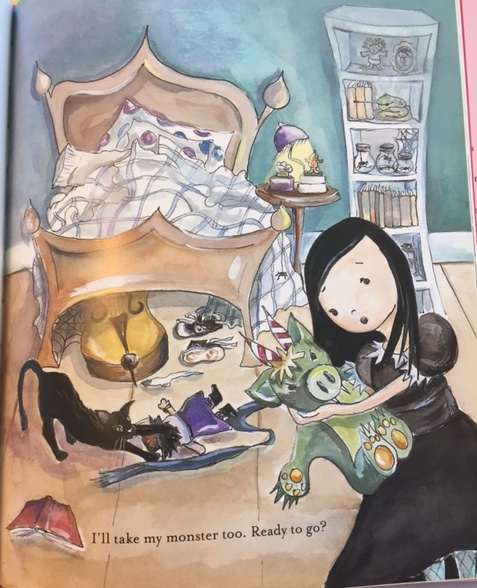
Izzy’s sister Rose loves pink, but Izzy wears black, has a black cat, and carries a monster doll. It’s Rose’s birthday and Izzy refuses to wear a pink tutu. Izzy makes a party of her own in the attic complete with an invisible friend. This book speaks not only about being unique and accepting every one as they are, it also speaks to creativity and imagination. I am especially attracted to the details in Sarah’s artwork. All the way to the creepy spiders.

Sample page from Puzzled by Pink. Can you find the spiders?

On Sarah’s blog site, there is a post about making a birthday party celebration based on the book. There are links to fun crafts, too. Consider having a Puzzled by Pink party in your classroom. What costumes would each student wear? Let’s celebrate differences!

Read Full Post »

Join in the fun of nonfiction picture books at Kid Lit Frenzy.

Join in the fun of nonfiction picture books at Kid Lit Frenzy.

Layout 1

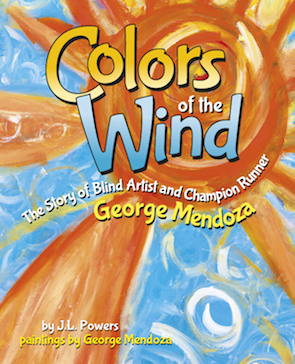
I am determined this year to get more nonfiction and more reading aloud into my daily class time. This new book about the life of George Mendoza by J.L.Powers helped me inspire my students for their dot painting on Dot Day. (See Tuesday’s post.)

By the time George Mendoza was 15, he was legally blind. But George’s blindness was unique. He didn’t totally lose his sight. His condition caused him to see colors in an unusual way, like a kaleidoscope. This true story is inspirational on many counts. George became an Olympic athlete, setting world records as a blind runner. Later, he took up painting. A priest once told him to paint what he sees. The book is full of George Mendoza’s amazing, colorful paintings.

I paired this book with Peter Reynold’s book The Dot which tells the story of Vashti becoming an artist. Through both of these books, my students could see that anyone can be an artist. All you have to do is try. Both George and Vashti’s stories waved a creative magic wand over my students. They were primed and ready to make their own mark.

Colors of the Wind is written for an early reader. The sentence structure and word choice are easy to read. Some sentences are repeated throughout. An early reader would enjoy being able to read the words as well as look at the colorful images. As a read aloud for older students, I included the back matter, the last two pages that tell the whole story. Whichever part you read, this book will fascinate the inner artist.

"Sometimes, George uses paintbrushes.  But most days, he fingerpaints, using heavy work gloves with gobs and gobs of paint."

“Sometimes, George uses paintbrushes. But most days, he fingerpaints, using heavy work gloves with gobs and gobs of paint.”

Read Full Post »

Link up with Teach Mentor Texts

Link up with Teach Mentor Texts

Today is a big day for me. Not only is it my dog Charlie’s birthday (and Labor Day), I am the featured blogger on The Nerdy Book Club. I was excited to be invited to write a post about my reading life. Follow the link: Friend Request an Author.

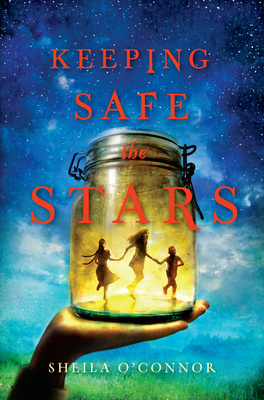
I am not a reader who believes that every book is made for every one. I have students who adore fantasy fiction. I appreciate this, but I much prefer realistic fiction. I have tried and liked many historical fiction books as well. This week I finished reading Keeping Safe the Stars by Sheila O’Connor. The Stars (Pride, Nightingale, and Baby) are orphans living with their grandfather in the year of the Watergate scandal. For students to fully understand some of the underlying themes, they would need some knowledge of this event. As I recall being a teenager during this time, the whole thing was confusing. Was Nixon a bad guy? Nobody really said so, but he did bad things. Pride is the oldest and is left in charge of the family while her grandfather is ill. She struggles with taking on this huge responsibility, and like Nixon, finds herself telling a few lies. She is only 13. The burden is huge for her. Over and over I wanted to pull her aside and give her my advice. The storyline went on too long for me. I wanted a resolution sooner than it came. Eventually, the people Pride has entrusted rally to care for them, and there is hope for Old Finn’s recovery. This is a story of resilience and independence.

Keeping Safe the Stars

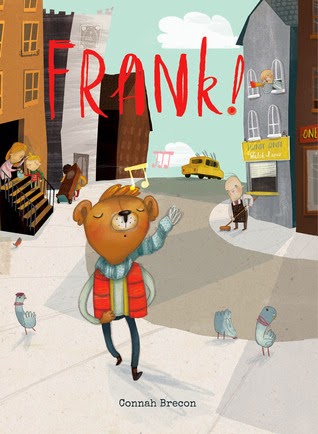
FRANK!

Frank by Connah Brecon will be on sale at the end of September. Frank is a cute little bear dressed in a blue scarf and red vest. He has a problem. He is always late for school, but he has good excuses, such as helping a cat stuck in a tree. When I turned the page, the tree was running off with Frank in it. This does not teach Frank a lesson about being late. He is late again. This time he is challenged to a charity dance-off. His reasons for being late get wackier and wackier. The illustrations are as crazy as the text. In the end, a zombie threatens the school, but Frank saves the day when he challenges the zombie to a dance off. Connah Brecon is a talented artist. The drawings are busy and full of quirky characters. The text lacks a cohesive logic, and the lesson of taking time to make friends is lost in the exaggeration of events.

What are you reading this week? Don’t forget to check out The Nerdy Book Club.

Read Full Post »

Link up with Teach Mentor Texts

Link up with Teach Mentor Texts

I am sporadically participating in this online book review meme for kidlit from Teach Mentor Texts and Book Journey.

This summer I committed myself to reading middle grade novels. One, because I love reading them, and two, because I want to be better prepared to be a book whisperer for my students. (#bookaday)

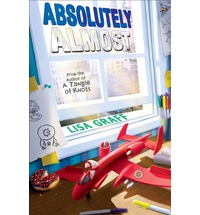
absolutely almost

Donalyn Miller recommended Absolutely Almost saying that it was an important book like Wonder. I am a huge fan of Wonder and think everybody should read it, so I thought I should read Absolutely Almost. At first I was not too sure how I was going to like Albie. The voice of the character in my opinion is too young. After reading The Year of Billy Miller, I thought Albie sounded more like a second grader than a fifth grader. Eventually I fell in love with Albie. He has the coolest babysitter Calista who does anything to make Albie more accepting of himself. Calista makes up for the shortcomings of Albie’s parents. I was a bit frustrated by their shortcomings. His father does not even remember buying the A-10 Thunderbolt model and promising to help Albie build it. In fact, Dad buys him another one for his birthday. I know some real life parents are career minded, but would a dad really be this stupid and heartless? And Albie’s mother is not too much better. She does tell him again and again that he is caring and thoughtful and good. Which he is, but I can’t help but think that Mom doesn’t see her son for who he really is. And to top off his difficulty at home, he is bullied at school. I found myself becoming more and more empathetic with Albie. He is a hero, and students should read this book. They will learn to understand that not everyone is gifted, but everyone is valuable.

Lisa Graff crafts a lovely novel with word play beginning with the title of Absolutely Almost and continuing with crafted chapters using anaphora (a repeated phrase). My favorite is “rain in New York”:

When it rains in New York, no one knows where to walk…When it rains in New York, The playgrounds are empty and the buses are full. When it rains in New York, the garbage cans at every corner are stuffed with the twisted bits of broken umbrellas. I like it when it rains in New York.

An interview with Lisa Graff about Absolutely Almost.

Albie is slower than most kids in a lot of ways, and I wanted to explore what that would be like for him in a world that constantly expects him to be smarter, faster, better than he is. In a world like that, where does a kid like Albie fit? How does he find his own worth?

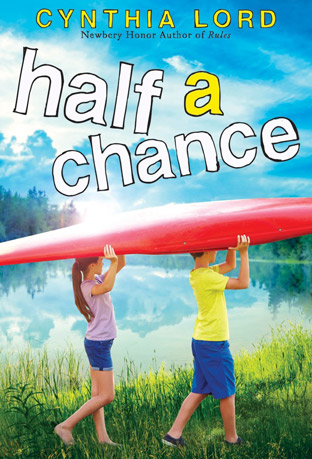
cover-half-a-chance

I am loving Cynthia Lord’s books. I finished half a chance, and I’m almost finished with Rules. In half a chance, Lucy’s family moves to a house on a lake in New Hampshire. There she meets Nate’s family and helps them track the habits of loons living in the lake. I love nature and the descriptions of the lake and the loons is beautifully done. Lucy is trying to prove to her photographer father that she has a talent for photography, too. She enters a contest that her father will be judging. For students, I like the ideas for the photo contest as metaphor. The contest calls for photos that reflect abstract words, such as secret and lost. I’d like to use these words with students as writing prompts. We could discuss how Lucy interpreted the words with her photographs and then make our own interpretations.

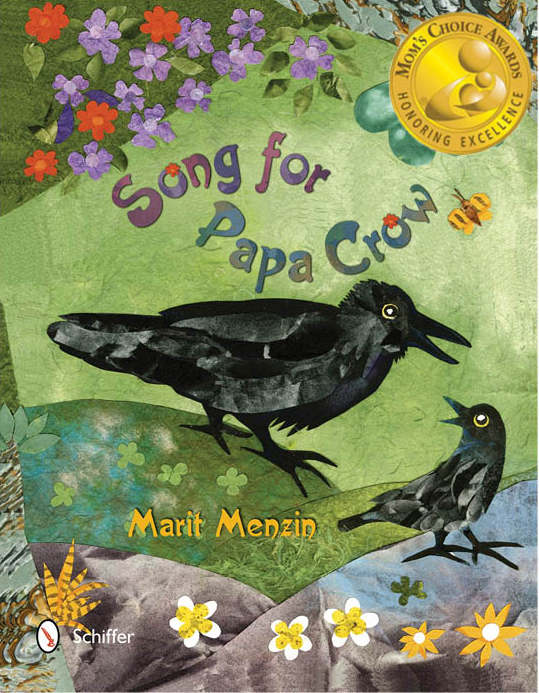
Song for Papa Crow

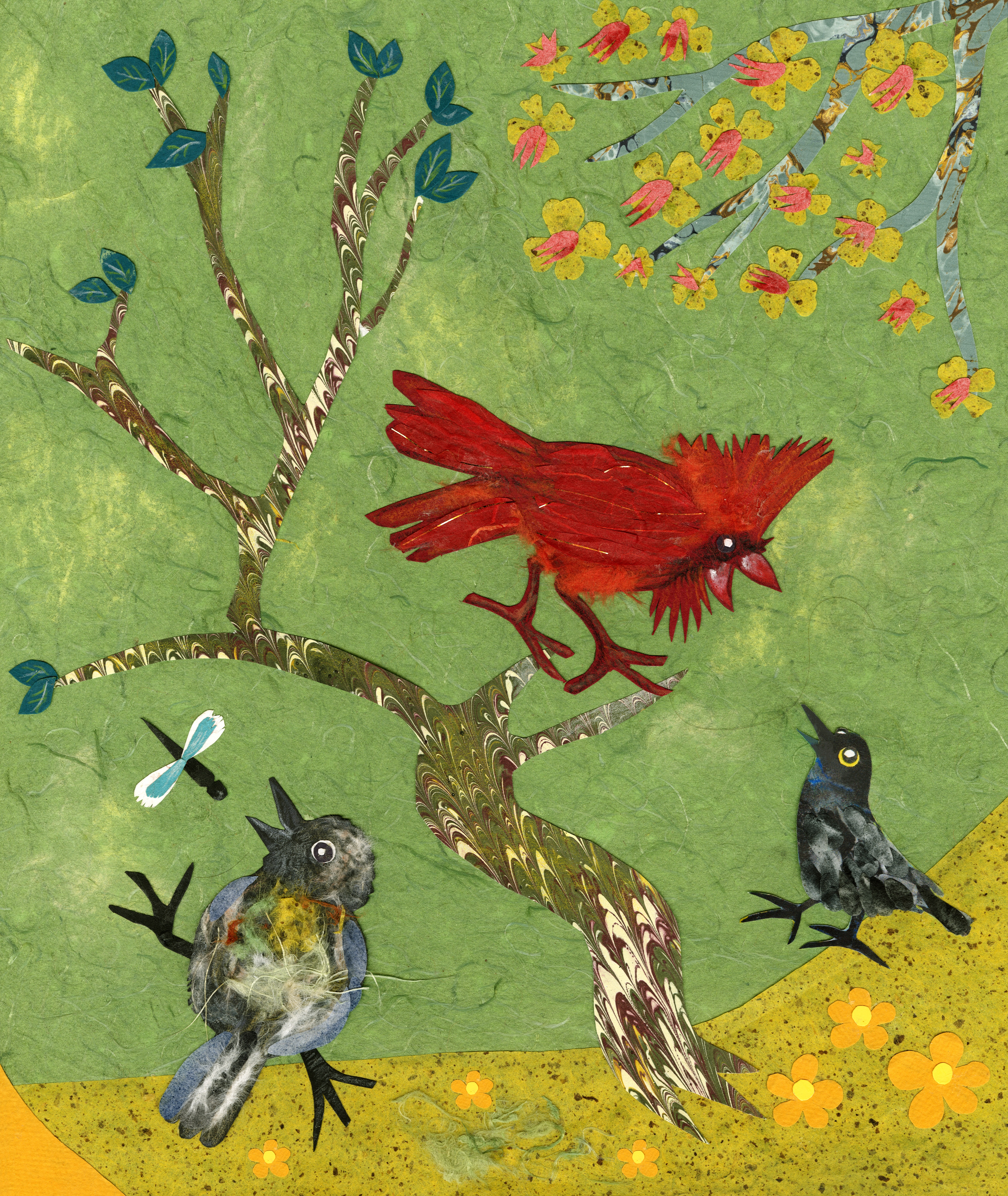
Schiffer Publishing sent me a copy of a new picture book, Song for Papa Crow by Marit Menzin. The story follows the common children’s book theme that you are special just as you are. Little Crow loves to sing until he is taunted by all the other birds who do not appreciate his “Caw! Caw!” So, a magic seed transforms Little Crows voice; that is, until he is in danger. In the end, Little Crow comes to appreciate his out of tune voice. The illustrations are made with collage. I love the art work. Marit Menzin personifies her birds. For students, they could make their own book using the common theme and use collage for illustrating. Song for Papa Crow is available at Schiffer Publishing.

Used by permission from Schiffer Publishing.  All rights reserved.

Used by permission from Schiffer Publishing. All rights reserved.

Marit Menzin, all rights reserved.

Marit Menzin, all rights reserved.

Read Full Post »