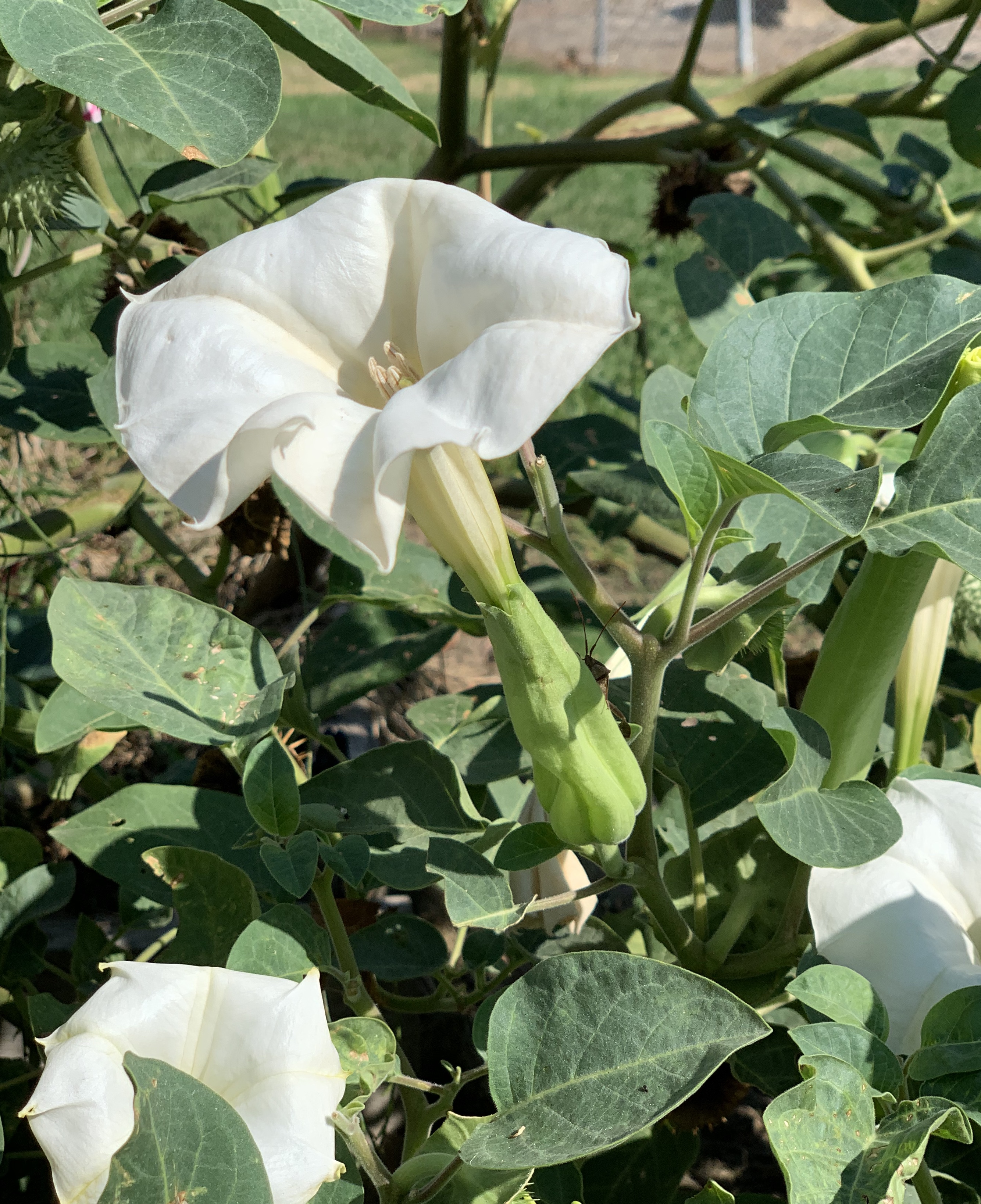
Moonflower in the butterfly garden, by Margaret Simon
In May, my student Avalyn took on a project to create a butterfly garden at her school. When I returned to school this week, she couldn’t wait to show me how the garden was doing. It was full of flowers. The largest was this moon flower. My friend Mary had donated a small plant in the spring and now it is huge! Yesterday we found a fat green caterpillar on it and researched. The caterpillar is a tobacco hornworm and will become a moth. We also found gulf fritillary caterpillars on the passion vine. They’ve eaten it all. I have a passion vine in my own butterfly garden that hasn’t been touched. I will bring some cuttings to help these little prickly cats along. Raising butterflies is a Joy!
Today write your own poem in any form about the moon, this flower, garden pests, butterflies, etc.
Tobacco Hornworm Nonet
Moon flower night bloomer bright white fragrance among the children feeds tobacco hornworm. Watch how he chomps on the leaves; Aggressive eater, camouflaged soon will burrow to emerge as moth.
This week I have felt nearer to normal. I’ve been thinking about teaching and preparing lessons for my return on Monday. I’m pushing away concerns that I have no control over. Yesterday I invited a neighbor, a retired teacher, to cut and paste magazine words onto Jenga blocks, an idea that originated with Paul Hanks and used by Kim Johnson. (See this post.)
I get a lot of poems in my inbox. Some days it’s too overwhelming to read them all. Some days I find inspiration in a line or a form or an idea. This week I found a first line from Ching-In Chen’s poem Breath for Metal.
Breath for Flesh
This a story I’ve kept inside my soft body. I’ve discovered
breath dissolves fever–practiced pulling in, hold, hold, hold– sigh.
I am being gentle with her, speaking softly through tears like a light rain in fall.
Today is the first day of September and it comes with a full Blue Moon and slightly cooler temperatures pointing the way to fall. Ah, me! I breathe in deeply and sigh.
August has been a dark month for me, and I am just beginning to emerge from the cocoon of illness. When I asked the Inklings to study and use the tool of enjambment in a poem, I had no idea how my whole life would be enjambed. My hysterectomy in June had the worst possible complication, an opened and infected incision. I had a second surgery on Friday, August 18th. I was in the hospital for 5 days and in bed at home for 10 days following. As I begin to feel better and the cloud is lifting, I am cautiously optimistic that I am healing.
For the enjambment challenge, I offered my friends a model poem from former Louisiana poet laureate Jack Bedell.
Ghost Forest —Manchac, after Frank Relle’s photograph, “Alhambra”
1.
Backlit by city and refinery’s glow these cypress bones shimmer
on the still lake’s surface. It’s easy to see a storm’s
coming with the sky rolling gray overhead and the water
glass-calm. Even easier to know these trees have weathered
some rough winds, their branches here and there, pointing this
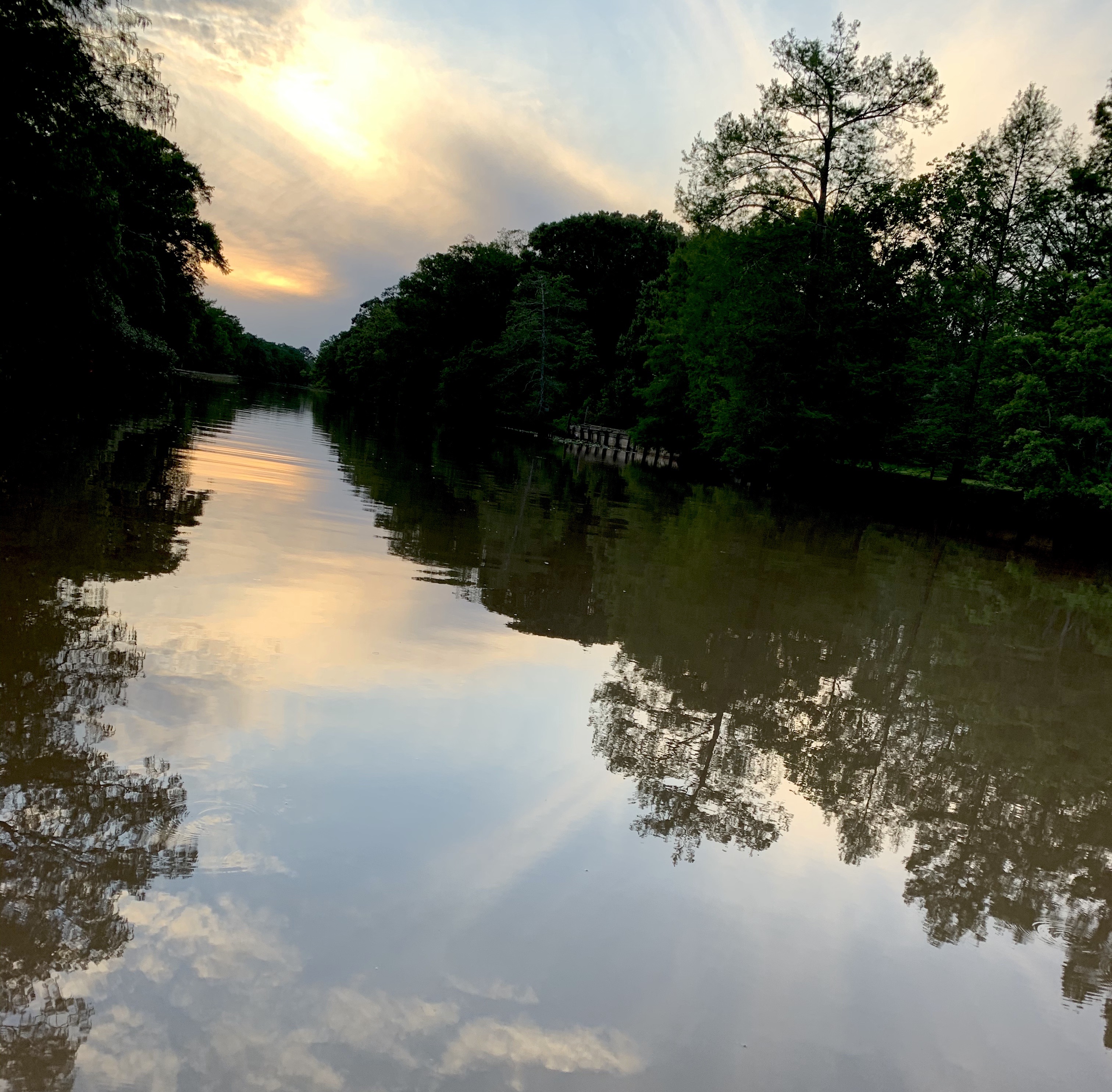
One early morning this week, I sat outside (at the urging of a close friend) and watched the bayou. This small draft of a poem came to me. I offer it here because it’s the only thing I have and doing this makes me feel normal again. Thanks to all of you who have expressed concern and sent cards and messages.
Is it the play of light on the surface or air bubbles moving over glass-calm
water I watch still, quiet bayou breathe, like me, slow and deliberate taking in life- giving oxygen.
We are trying to survive, bayou and I, trying to make this day meaningful all the while knowing breath is all that matters.
Margaret Simon, draft
Bayou Teche Sunset, by Margaret Simon
To see how other Inklings used enjambment, check out their posts.
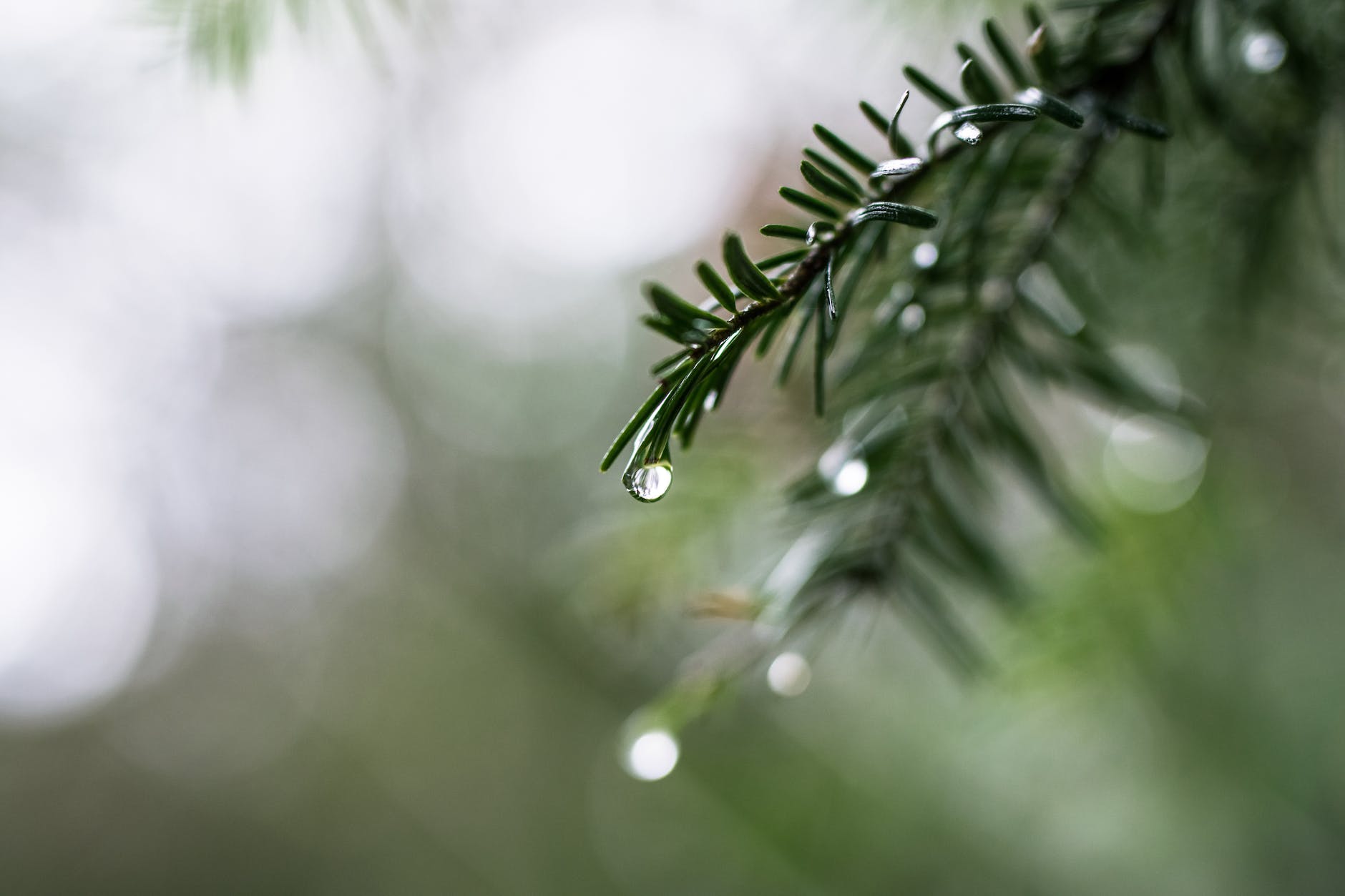
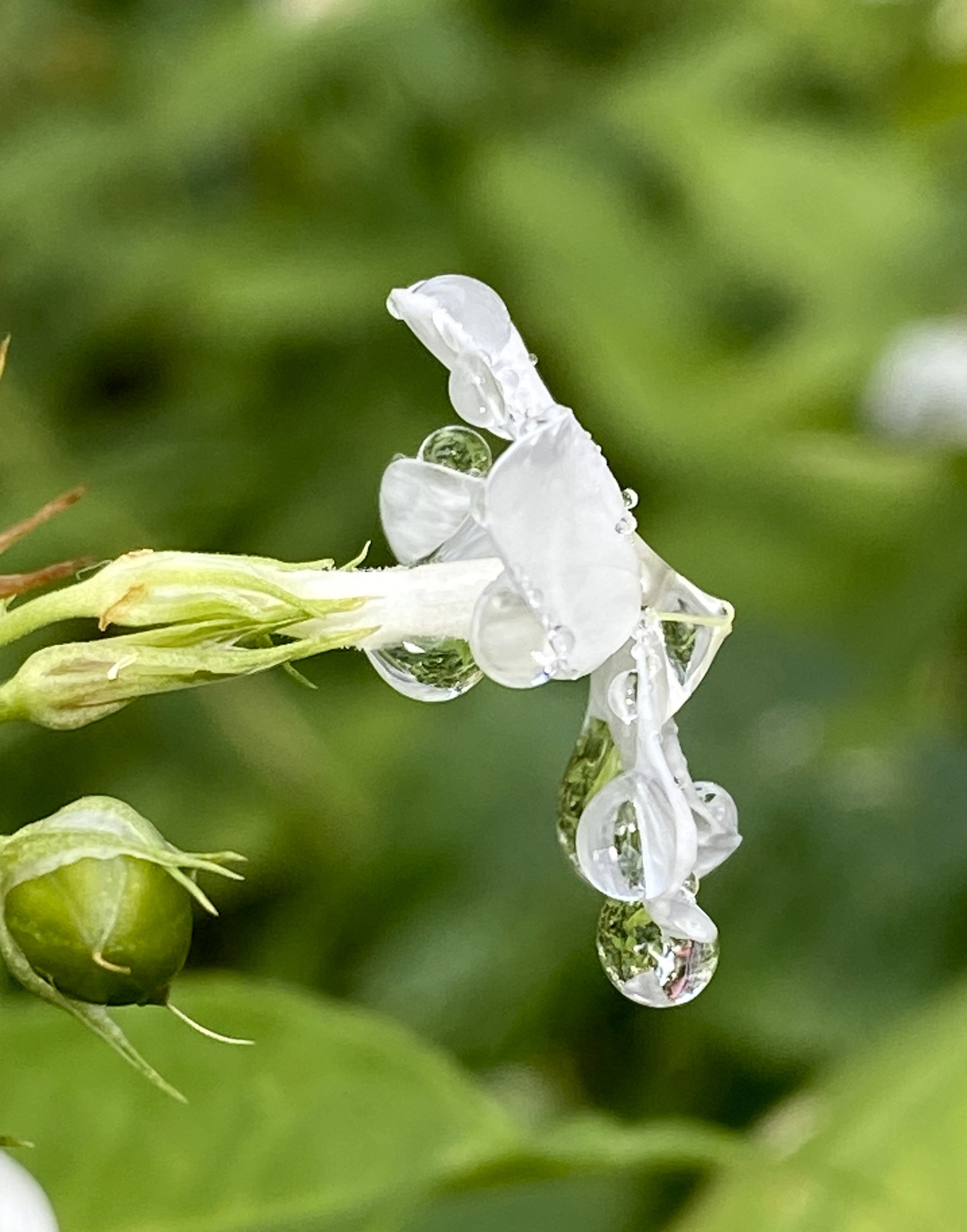
I hope this post finds you happy and healthy and enjoying the last dog days of summer. My friend, fellow teacher-poet Molly Hogan has been getting outside and taking amazing photos in nature. I borrowed this photo from her Facebook page. She identified the flower as phlox. The water droplets transform this image into something new entirely. I’ve been watching a great white egret appear on the bayou each day, so my haiku turns the image to the egret. Use your imagination and write a small poem in the comments. Be sure to read others and encourage with your responses.
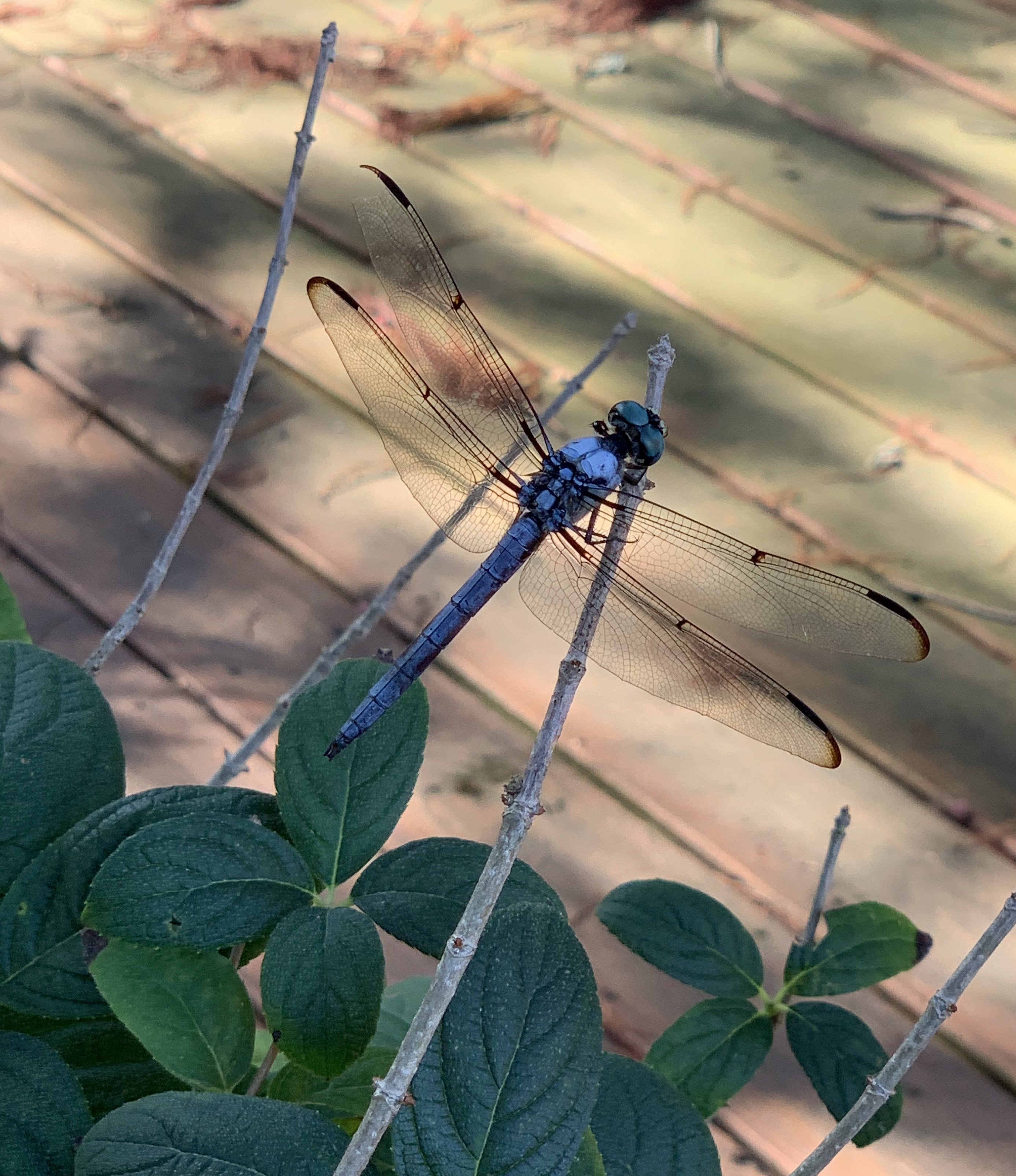
Deep down south we have many varieties of dragonflies. I love to watch them. They fascinate me and take me away from worry to a place of gratitude. Who doesn’t love a good Google search for meaning?
“Dragonfly’s can be a symbol of self that comes with maturity. They can symbolize going past self-created illusions that limit our growth and ability to change. The Dragonfly has been a symbol of happiness, new beginnings and change for many centuries. The Dragonfly means hope, change, and love.” https://dragonflytransitions.com/why-the-dragonfly
That first sentence grabbed me “self that comes with maturity” because this is the week of my birthday. I will be 62. If there is an age of maturity, I’d go with anything past 50, but now that I’m in my 60’s, stuff keeps happening that requires me to be mature, to change the things I can, and accept the things I cannot change.
Consider writing with us today. You can choose one of the many things that a dragonfly symbolizes or write whatever comes. This is a safe place to explore. Perhaps time yourself for 7-10 minutes. Turn off the critic and let the words flow. Leave encouraging comments for other writers.
Dragonfly dazzles a dry branch, revealing self-purity
Have you ever really focused on a zinnia? They are one of the few flowers that can be grown by seed and withstand high heat. My neighbor, James Edmunds, posted the above photo of a volunteer zinnia. Volunteer means it was not planted by people. It just shows up, and usually in an odd location. I found the one below growing from a crack in a sidewalk.
Zinnia in the sidewalk by Margaret Simon
Reminds me of the Leonard Cohen lyric, “There is a crack, a crack in everything That’s how the light gets in.”
I’m also drawn to the flower in a flower of a zinnia’s center. There are multiple florets. These are important to the reproduction of the flower and most likely the cause of volunteers.
Please join me today in musing on zinnias and cracks and light and anything else that is on your mind. Leave a small poem in the comments. Encourage other writers with response comments. Thanks for being here.
Patience
Focus on the crack Feel the throb of pain Plant a tiny seed
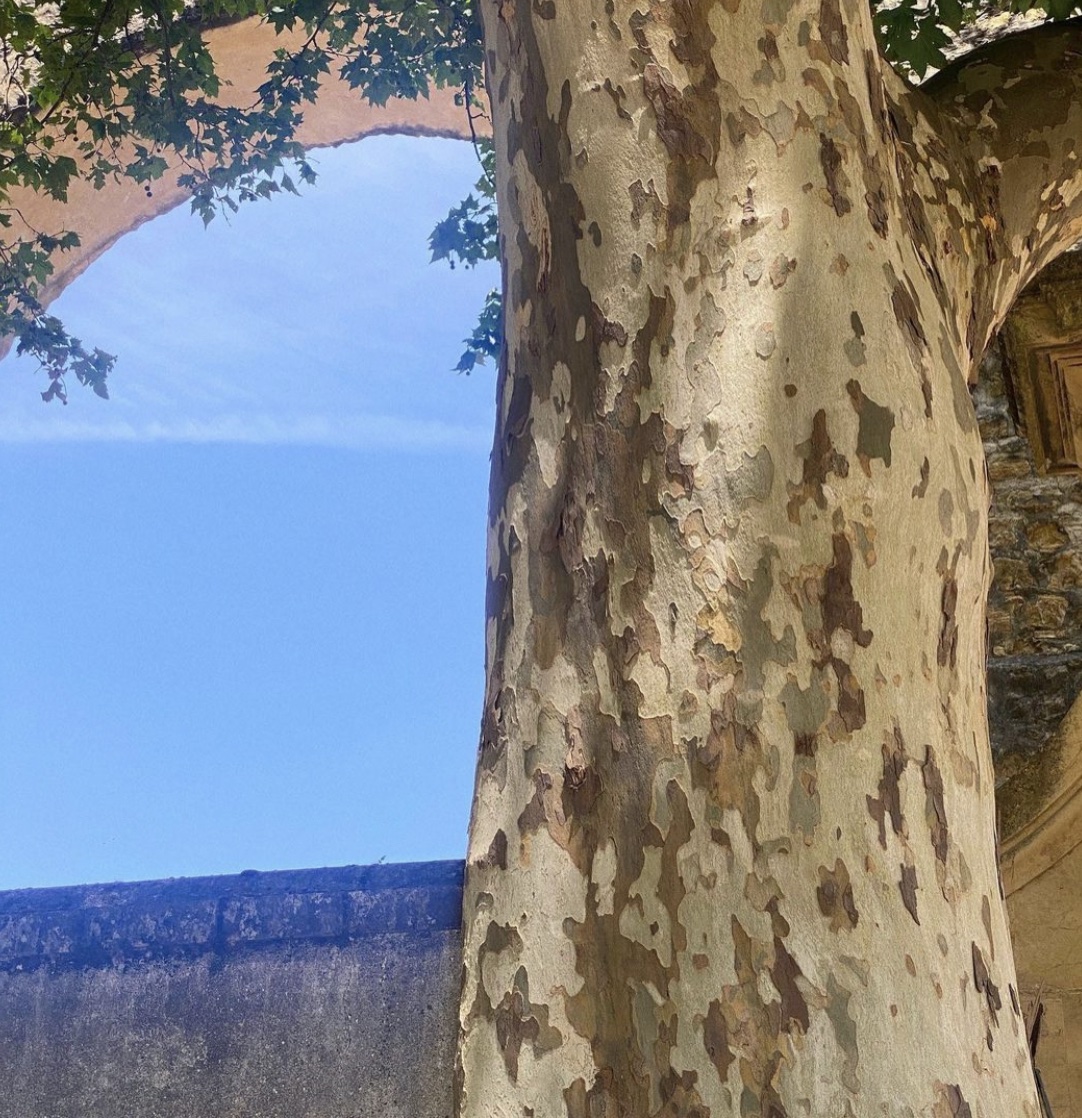
Summer is here! This is the time I travel vicariously through others. Because of circumstances keeping me at home this summer, I will not be traveling. But my 24 year-old niece recently toured Portugal and posted dreamy, beautiful photos. I asked her if I should put Portugal on my bucket list and her response was “Yes! The hills/stairs are killer but it’s so beautiful.” I’m having second thoughts, but maybe I can build up to it. My walking path is flat and the last time I did an elliptical, I couldn’t walk for a few days. This photo was taken by Taylor Saxena in Madeira, Portugal.
For this flash draft, I used my Insight Timer, an ap that offers a timer with ambient sounds as well as meditations. I’ve set the timer for 5 minutes. When you write today, consider a time limit and accept what comes.
Thoughts come and go. Feelings come and go. Find out what it is that remains.
Ramana Maharshi
Sometimes I think about going. Sometimes I feel what it means to stay. Stay near you, listen to the sounds of your voice; stay for what may be the last time. Margaret Simon, draft
Please sit and stay. Write what comes and place your words in the comments. They don’t have to be good or perfect, but they are yours for now, this moment. Reply to other writers with encouraging words.
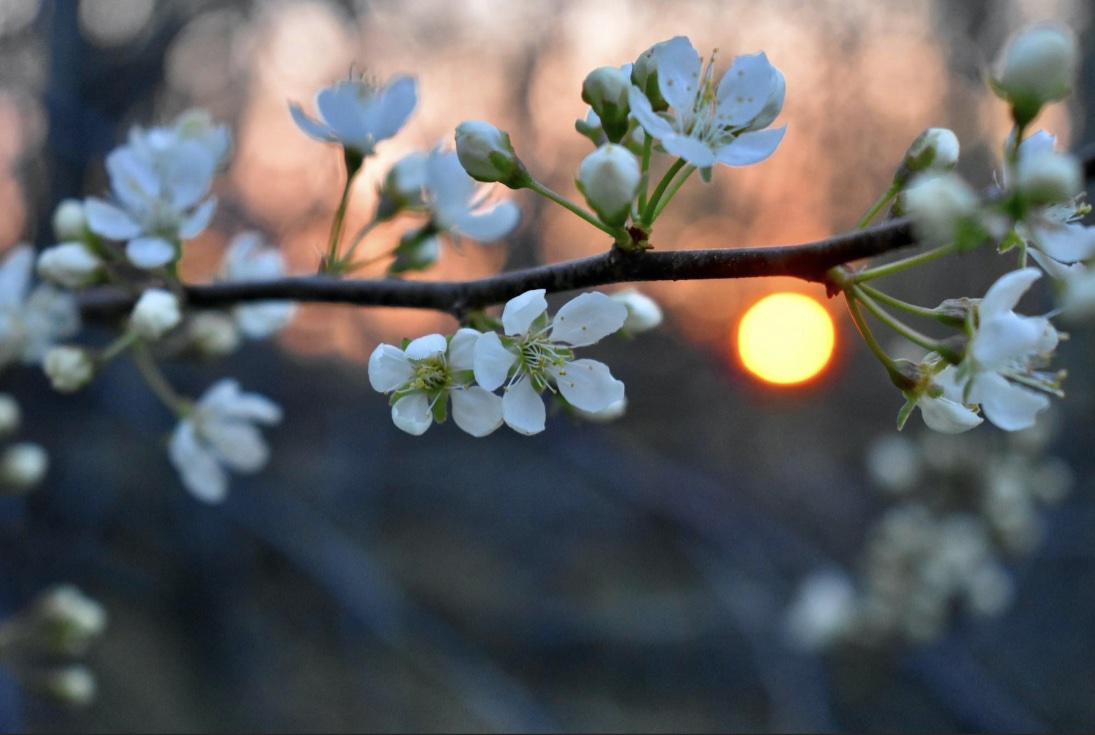
I am a hopeless romantic who believes that dreams come true. Recently, for me that has been wonderfully true and painfully false all at the same time. I think that’s life. How can someone capture that feeling in a photograph? Molly Hogan does. The photo for today she took on her way to work. The caption on Facebook simply said, “What almost made me late for work twice this week.” The reality is that we work every day, and sometimes those days are hard and don’t go the way we planned. We do it anyway, every day. But sometimes there is beauty that stops us in our tracks, makes us pull the car over and wonder at the miracle of two things, flowering branch and rising sun, can come together in a composition of Awe.
Put on your awe-glasses today. Find the flower in the rainstorm. Be aware that life will not always be so hard. Breathe. Join me in musing over this amazing photo and write for a few minutes. It will be good for your soul.
I have a long list of things to do. You know the one we write each May and tick away day by day until you wake up on a morning in June and find peace on a branch with blue blossoms welcoming you awake.
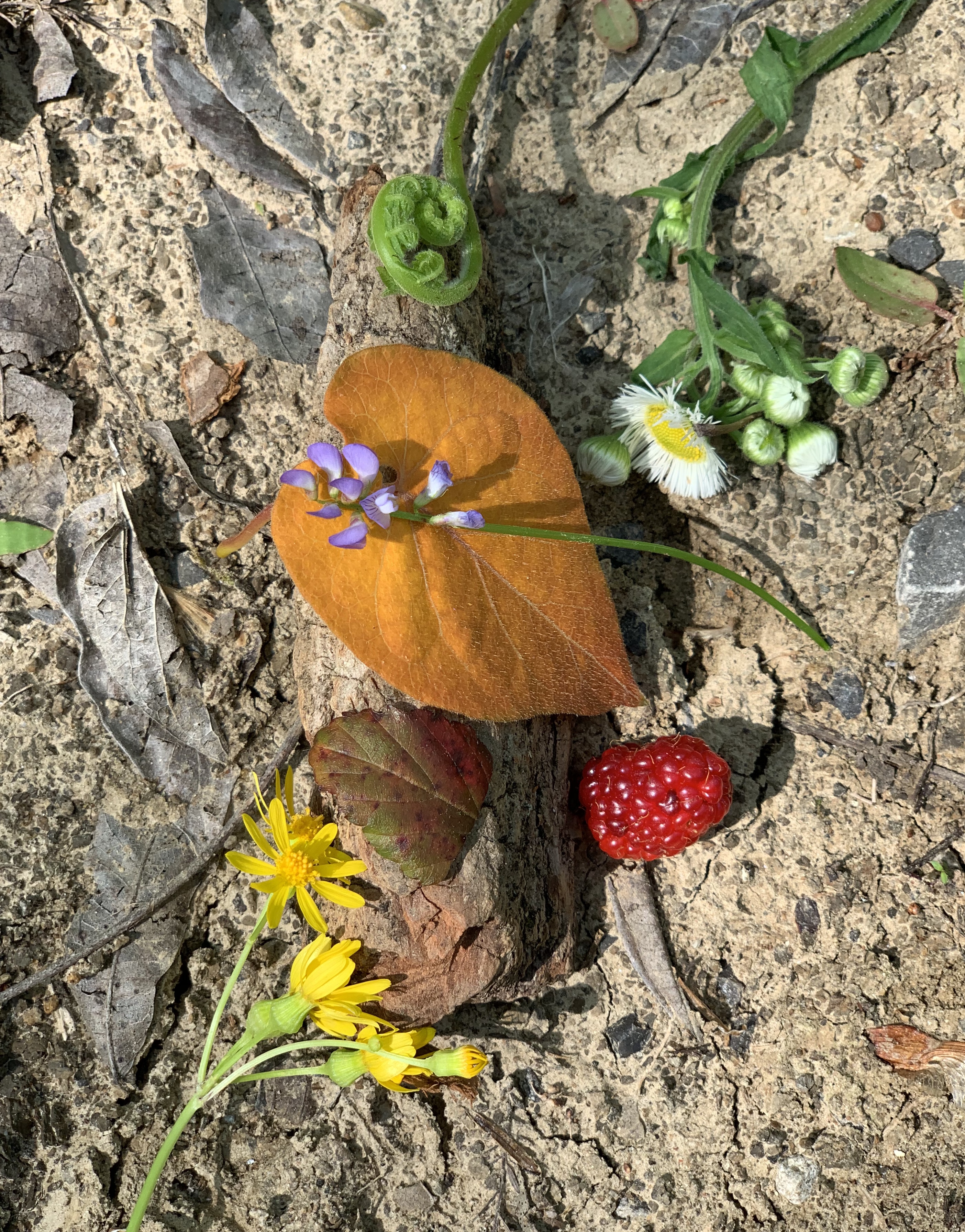
On wooded trails, under the wild strawberry a fresh fern unfurls, new leaves replace old heartshapes of gold, a forest in rebirth.
Margaret Simon, draft
Rainbow collage collection, Lake Fausse Pointe trail photo by Margaret Simon
On a recent yoga Women’s Wellness Retreat, I collected things as I walked a forest trail. The instructor suggested collecting a rainbow. My collection includes an unripe blackberry, a piece of dead wood, a fiddlehead fern, a few wildflowers and leaves. When we stopped for a short break, I arranged them into something that pleased me and took this photo. I left most of it in the forest where I found it. I kept the heart-shaped leaf, fern fiddlehead, and the purple wildflower to press and tape into my notebook. We poets are pretty good at assigning symbolism to things. If this collage arrangement speaks to you in some way, write a small poem in the comments. Be sure to support other writers with comments as well.
I am planning a National Poetry Month project, but This Photo Wants to be a Poem will continue to be part of it. Consider adding this practice to your own NPM project. Follow my blog to get updates in your inbox. If you teach, you can use this prompt with students. Please share students’ poems as well.
I will also be posting links each day to the Kidlit Progressive Poem. I’m excited for April, my favorite month of the year.
Welcome to a weekly Wednesday photo poetry prompt. If you’d like to get this in your inbox each week, please subscribe to my blog. Join in the community by writing a small poem in the comments and encouraging other writers with your comments.
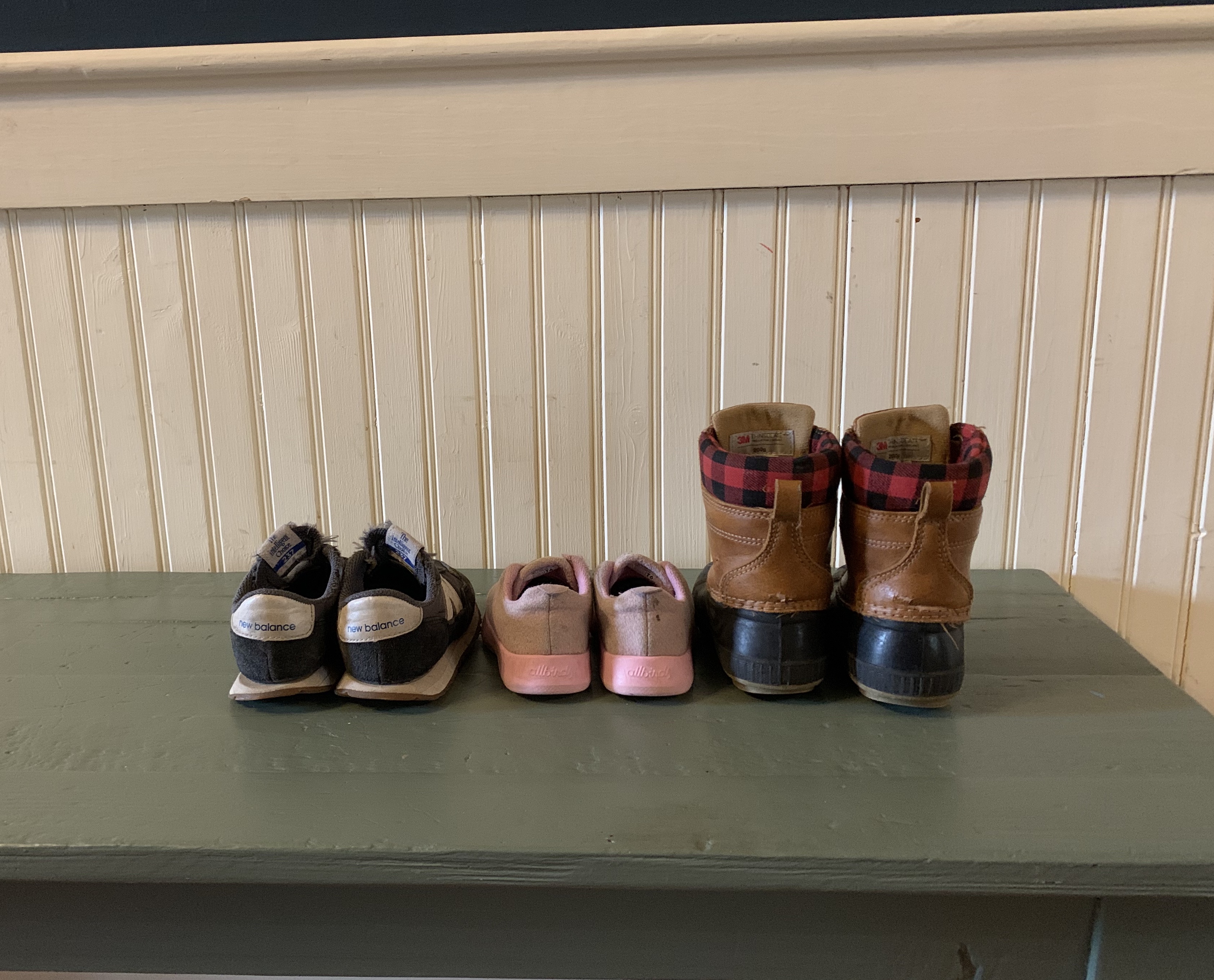
Today’s photo is one I took at my daughter’s house last weekend. I had returned her two children from a morning at the museum and was getting ready to leave when I saw the shoes posing. Perhaps my daughter had placed them there, but more likely it was Stella who, at the age of two, likes a certain order to things. Her mother was like that, sorting all the cans in the cabinet by size and color at a very young age. She gets that from her father, and her father gets it from his mother. I once took a personality test that labeled me “abstract random” and my husband as “concrete sequential.”
No matter what type of order your keep or don’t, this photo is sure to charm you into writing something. At Ethical ELA this week we wrote a Pile of Good Things poem. I think I could add “Three pairs of shoes all in a row” to my pile.
Photo by Margaret Simon (permission to freely use)
These shoes have seen the hills of North Carolina and the backyards of Louisiana but they are most happy lined side by side on a bench in the home where they belong.
Margaret Simon lives on the Bayou Teche in New Iberia, Louisiana. She is a retired elementary gifted teacher who writes poetry and children's books. Welcome to a space of peace, poetry, and personal reflection. Walk in kindness.





 Reflections on the Teche