Feeds:
Posts
Comments

Posts Tagged ‘This Photo Wants to be a Poem’

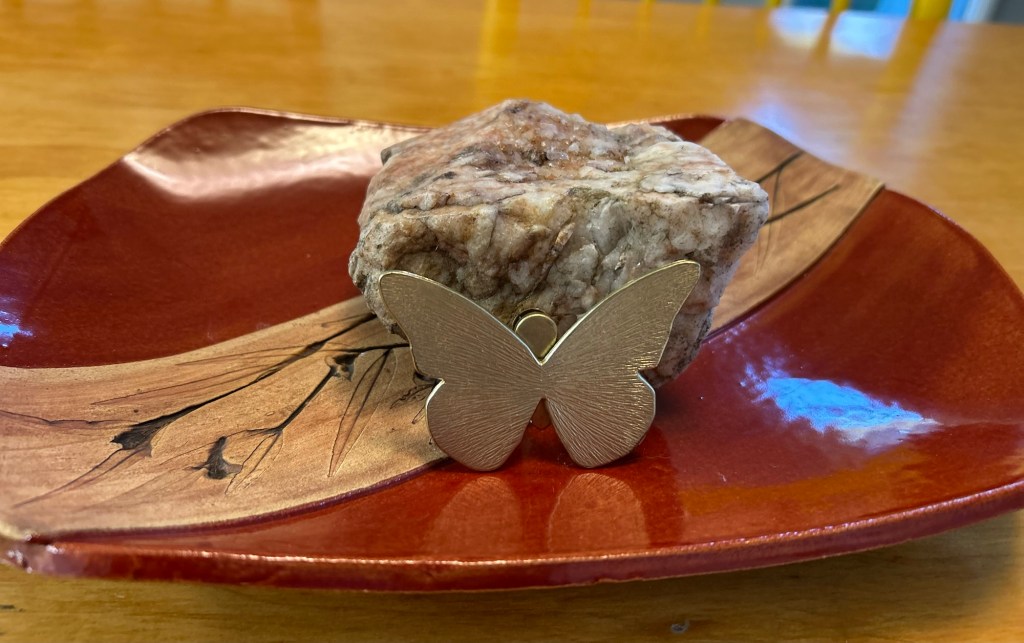
Oklahoma Rock Still Life

My family of eleven traveled to Oklahoma for our Christmas trip. Everything was just right, all of us together, the cousins playing, gathering around the fire pit. In Oklahoma they have rocks. One day we went to a place where the kids could mine for rocks. Cheesy, yes. So was the shesquatch who brought donuts. But it was all part of the attitude of vacation.

I took this rock from the yard of the house we stayed in. I placed in on my kitchen table with a butterfly clip that was on a Christmas gift. I want to remind myself when things get busy again that there is time for stillness.

Please join me on this first day of 2025 and commit to stillness in which writing may come.

Like hearth is to home

Your love is my solid rock

Keeping me steady

Margaret Simon, draft
Read Full Post »

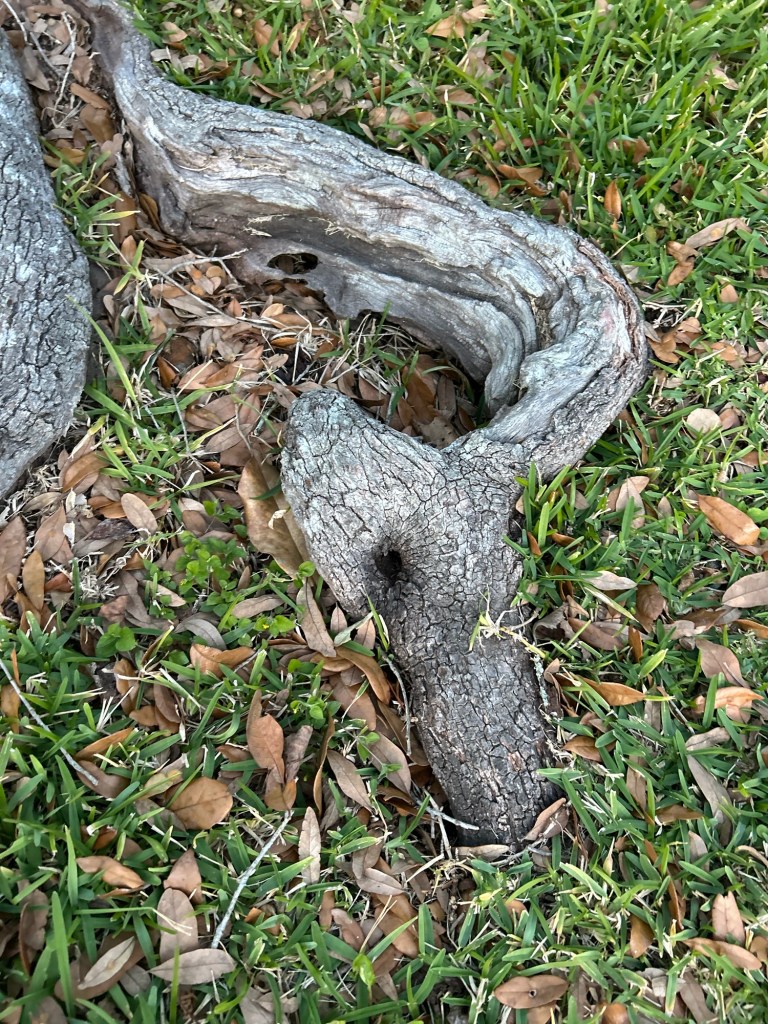
Live oak roots

Here in the deep south, live oak trees are iconic. This root is old and has emerged over time from the ground. I took notice of its unique design. As no two humans are exactly the same, I imagine trees have their own personalities, too.

I started the year 2024 with writing daily elfchen. For this Advent season, I’ve picked up the form again. Here are the rules:

Grounded
Roots revealed
Begging us hear
The true language of
Connection
Margaret Simon, draft

Join me today in writing to this photo prompt. Come back to offer encouragement to other writers.

Read Full Post »

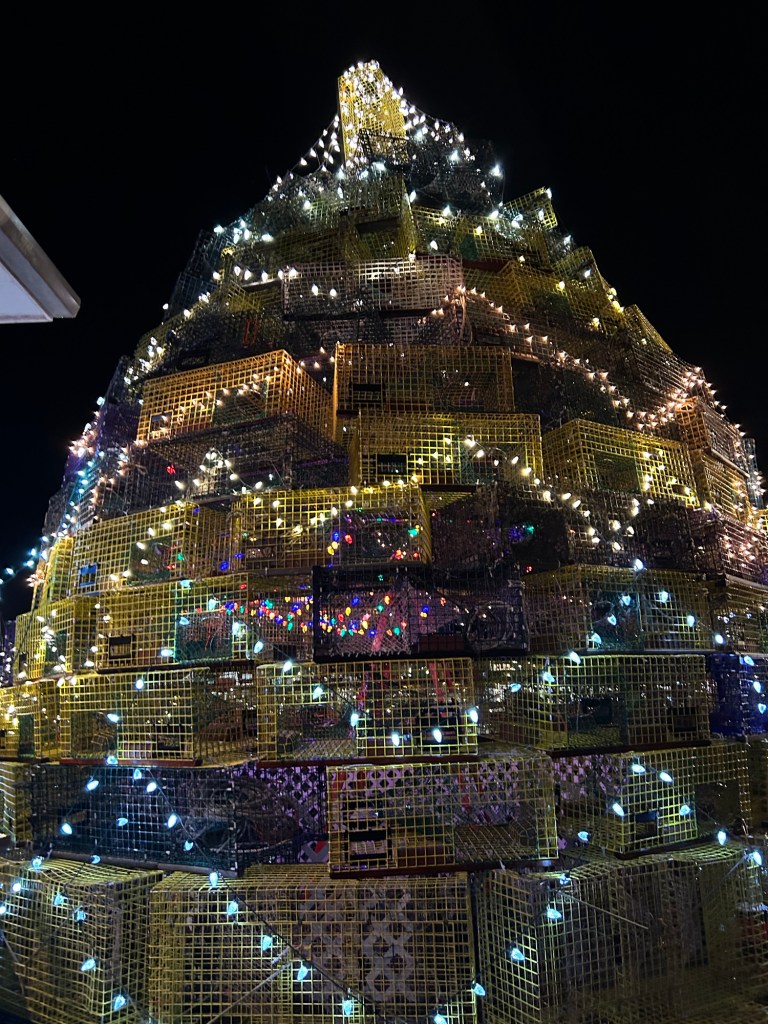
Lobster trap tree

As we end our vacation in Portland, Maine, we found the best place to eat lobster, Luke’s. Outside the restaurant on a peer overlooking the Old Port Harbor, there was a young boy putting finishing touches on the huge stack of lobster traps turned Christmas tree.

As we head back home to Louisiana for big family Thanksgiving, we are grateful for this time to relax and enjoy a different place in the world.

I invite you to leave a small poem of gratitude today.

An ordinary trap

Becomes a beacon of light

For traveling mercies

Margaret Simon, draft

Read Full Post »

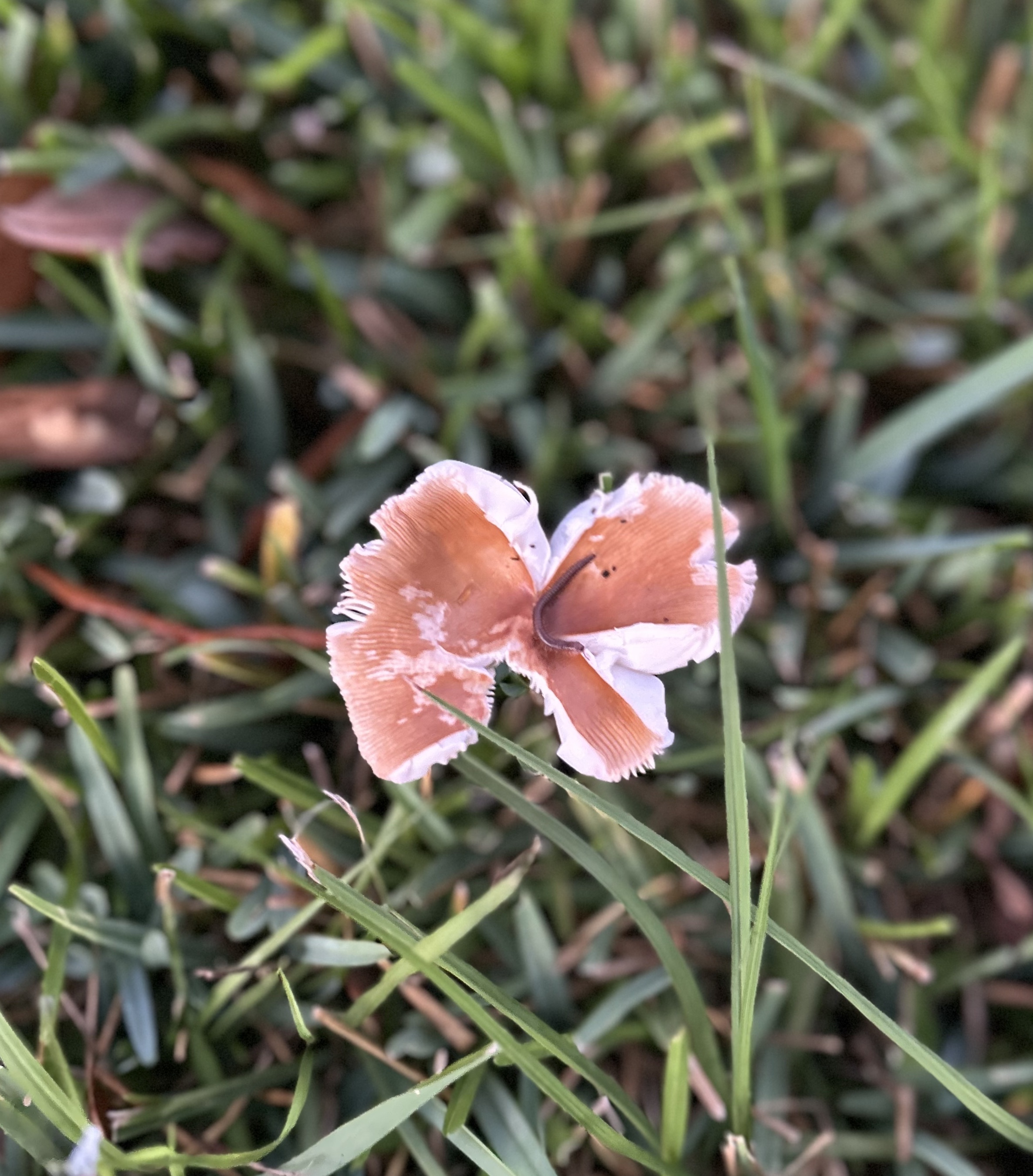
Butterfly Mushroom? by Margaret Simon

I noticed this mushroom in the grass and how in its disintegrating process, it looked like a butterfly, but on closer examination, there is a small worm crawling that camouflaged as the butterfly’s body. Our eyes play tricks on us all the time. Think about what you see and contrast that to what’s not actually there that you may imagine you see. Share a small poem in the comments.

Filaments of brown
turn mushroom inside out
peaceful inclusion

Read Full Post »

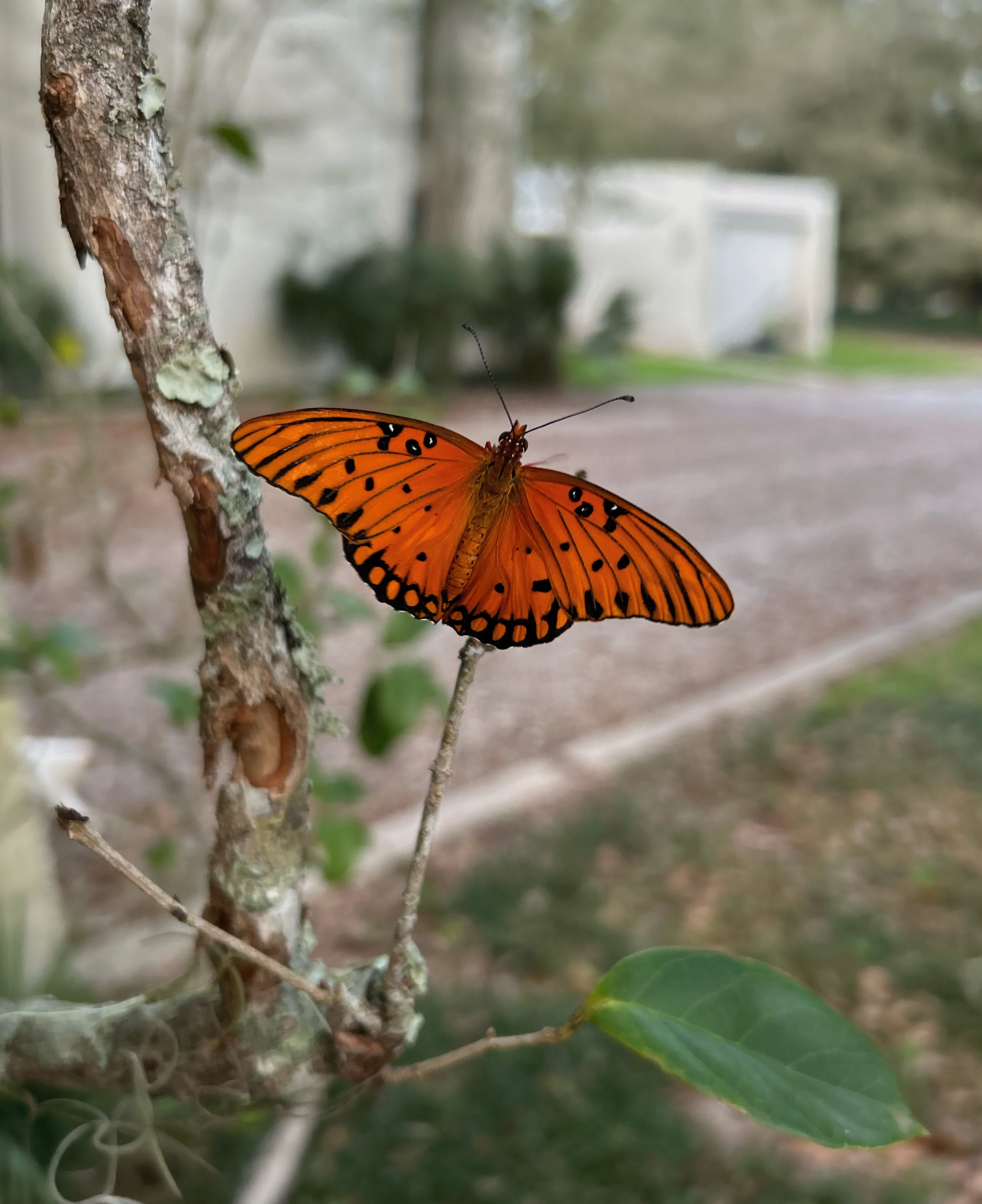
Newly emerged Gulf Fritillary by Margaret Simon

I’ve been raising Gulf Fritillaries in a butterfly enclosure. One day this week we came into the classroom to find one butterfly and within minutes, like magic, there were three. Unlike monarchs, these seem to just pop out in seconds. We haven’t witness the emerging yet.

I am participating in Mary Lee Hahn’s #haikuforhealing on Instagram. This is a way to put beauty out into the world. Join me and my students today writing about the miracles of nature.

Open your wings
Flutter in sacred silence
Then let go and fly

@Margaret Simon

Read Full Post »

Prayer candles in St. James Episcopal Church, 2024 by Margaret Simon

I was in my childhood home church on Sunday. While the scent of incense lingered, I walked over to the columbarium to say hello to my dad. I saw the metal rack of votive candles. I decided to light a candle for my mother, in hospice care at the end stages of Alzheimer’s, and one for my daughter’s mother-in-law who is battling cancer. To light a candle for someone symbolizes the prayer intention. Do we need this symbols? I believe we can pray without them, of course, but something in me was comforted by the act of lighting.

I invite you to consider holy moments, whether they be in church or out in nature, perhaps even in the quiet of your day. We can set intentions and practice mindfulness. What are your intentions today? Write a small poem in the comments and encourage others who write with us.

Instead of empty…
fill
Instead of fallow…
fertile
Instead of loss…
love
Instead of lies…
truth
Instead of hopelessness…
faith

Read Full Post »

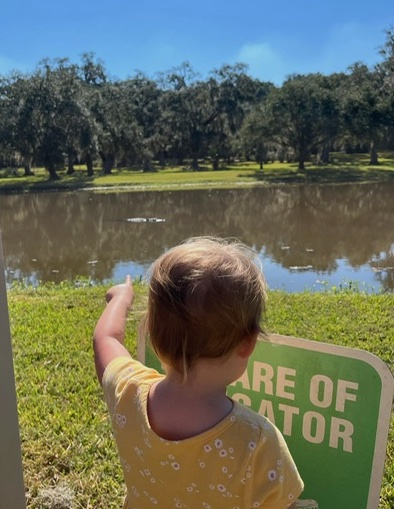
Granddaughter June, 22 months, pointing at an alligator at Avery Island, Louisiana.

My daughter joined my older daughter and her kids at Avery Island, Louisiana, a few miles south of us. It’s the home of the Tabasco plant. The place is beautiful, set on an inlet from the Gulf of Mexico. The water is fresh water and yes, there are gators there. Alligators are generally not aggressive animals. They peacefully float along the surface. I’m not sure, but this might have been June’s first time to see an alligator out in the wild.

Let’s play with enjambment today. Enjambment is a poetic element in which a sentence or phrase continues from one poetic line to the next, without end punctuation. Enjambment can create a surprise or suspense.

Here’s an example from Maggie Smith’s poem “First Fall”:

“I’m your guide here. In the evening-dark
morning streets, I point and name.
Look, the sycamores, their mottled
paint-by-number bark. Look, the leaves”

Here is my draft:

Your finger is the guide here, pointing,
noticing, identifying first gator.
You say, “Foggie,” and Mom
repeats, “That’s an alligator!”
You point again, fumble over
new syllables, soaking up
space, place, and being
a toddler on tour.
Margaret Simon, draft

Read Full Post »

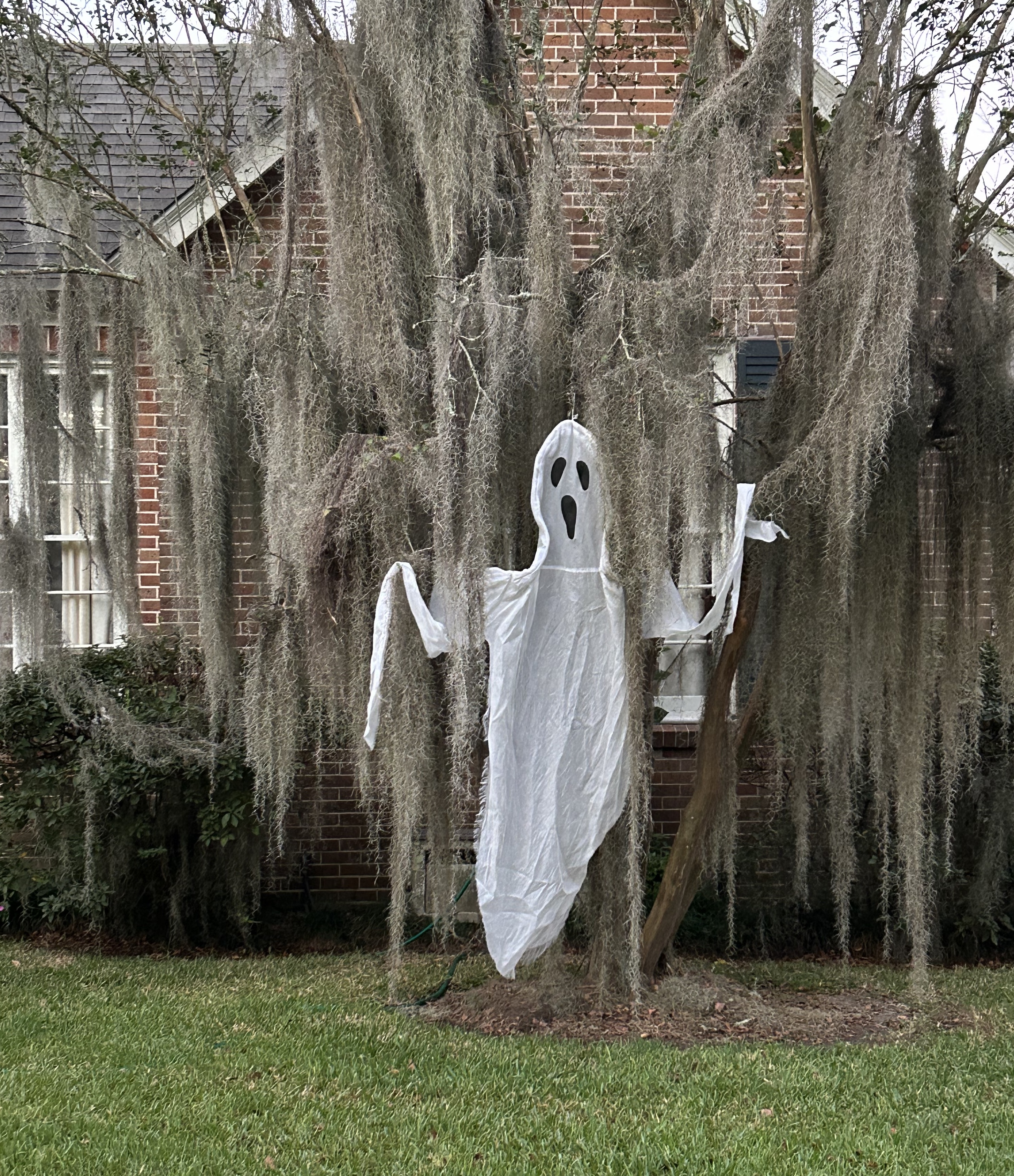
Mossy Ghost by Margaret Simon

If you have a tree covered in moss, then you must hang a ghost there.

I’ve taken a number of pictures of Halloween decorations thinking about the photo for this week. This one is the winner. In my neck of the woods (South Louisiana), moss covered trees are common. My husband grew up calling it “spooky moss”. It is the common Spanish moss, and on some trees, the stuff practically takes over the tree, even though I’ve read that moss is a bromeliad in the pineapple family and does not harm the tree.

“Many homeowners think that Spanish moss kills their trees. This is not the case because the moss is not parasitic. The only thing Spanish moss uses trees for is support.” University of Florida.

Yesterday as we were writing metaphors for artifacts in nature (#WriteOut), Avalyn created this form:
The (A, An) object in nature
is/is like …
describe how it is like
end with a connection to life

I tried the form when writing about milkweed seeds. I combined it with a prompt from Ethical ELA to write with words from paint chips here.


A milkweed seed
is a great white egret
showing off its lacy wings
to the mirrored pool in the sky.

Margaret Simon, draft

Spanish moss
are stalactites
hanging on a crepe myrtle
hosting ghostly terrormites.
Margaret Simon, draft

Now it’s your turn. You can try Avalyn’s form or use your own. Please encourage other writers with your responses. Happy Halloween!

Read Full Post »

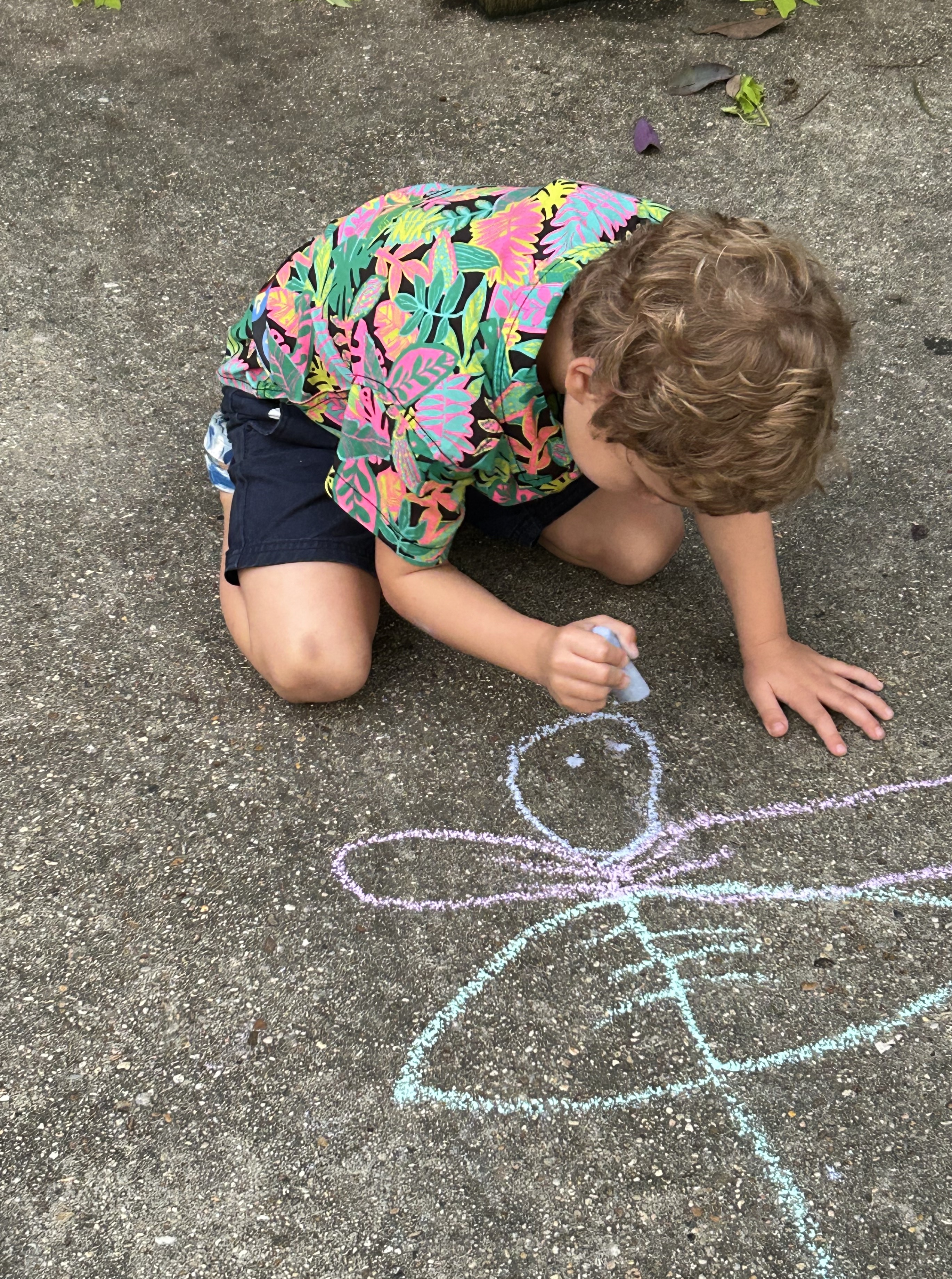
My grandson drawing with chalk while we wait for our table at a restaurant.

I’ve long been a fan of chalk art. Years ago Betsy Hubbard led a weekly chalkabration in which bloggers posted chalk poems. I’m not sure why we stopped doing this.

Chalk art is temporary. Perhaps that is freeing to the artist, allowing for freedom from perfection. We know the next rain will wash it away.

There is an old Tibetan Monk tradition of making sand mandalas. “These sacred cosmograms are said to transmit different positive energies to the environments that they inhabit and the people that come to view them.” I believe this is true on a smaller scale with chalk art. The act of doing the art itself is meditative. And the viewer is pleased by the art’s energy.

Today I want to offer the form called “cinquain.” The form is five lines and follows the syllable or word count or 2, 4, 6, 8, 2.

Artist
patterns petals
with a stroke of his hand.
He walks away, letting his mark
spread joy
Margaret Simon, draft

Please leave a small poem in the comments and give encouraging responses to other writers.


Read Full Post »

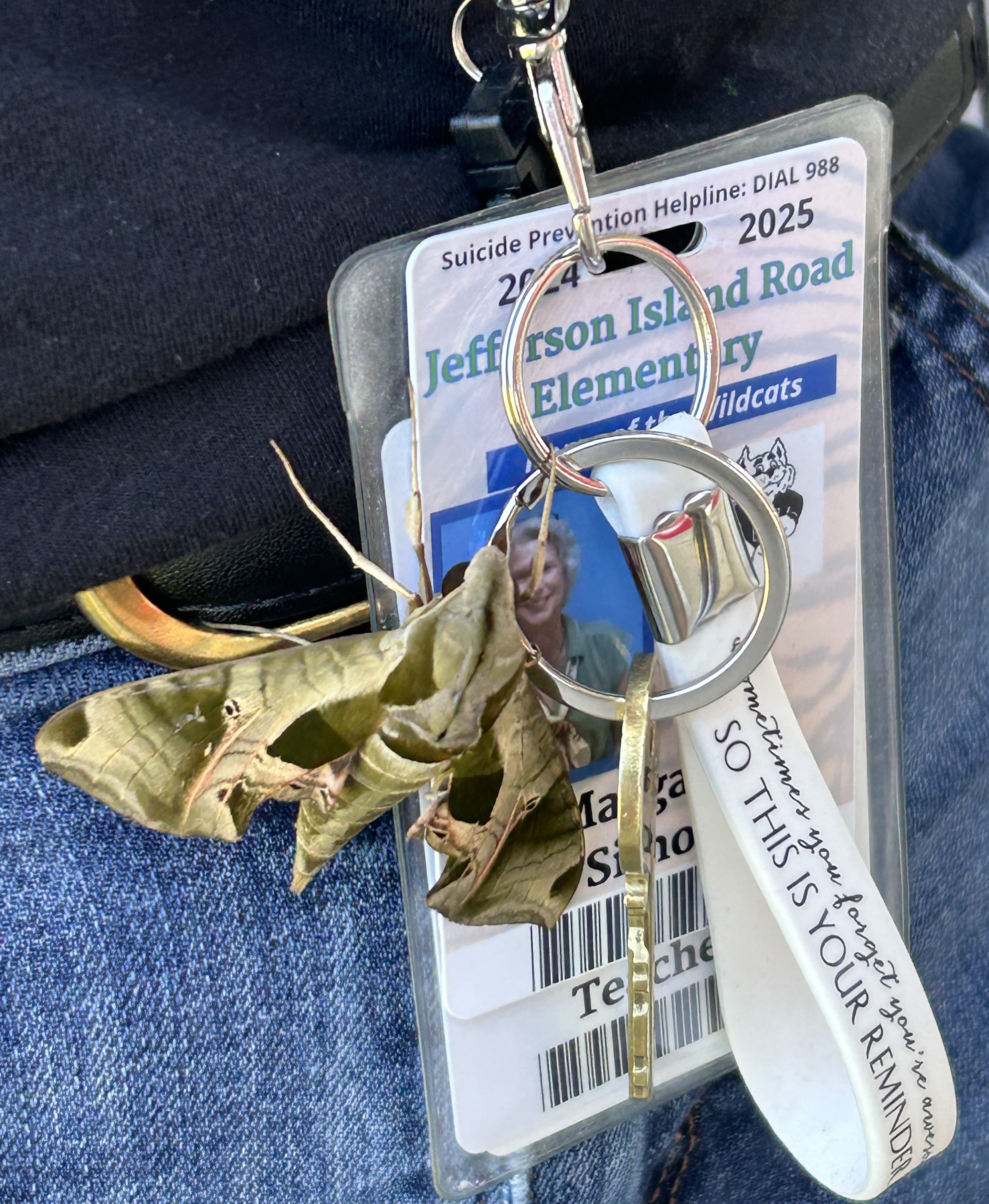
My colleague Erica knows I like to raise butterflies. After recess, she came into my classroom exclaiming “You Have to see this moth on the playground!”

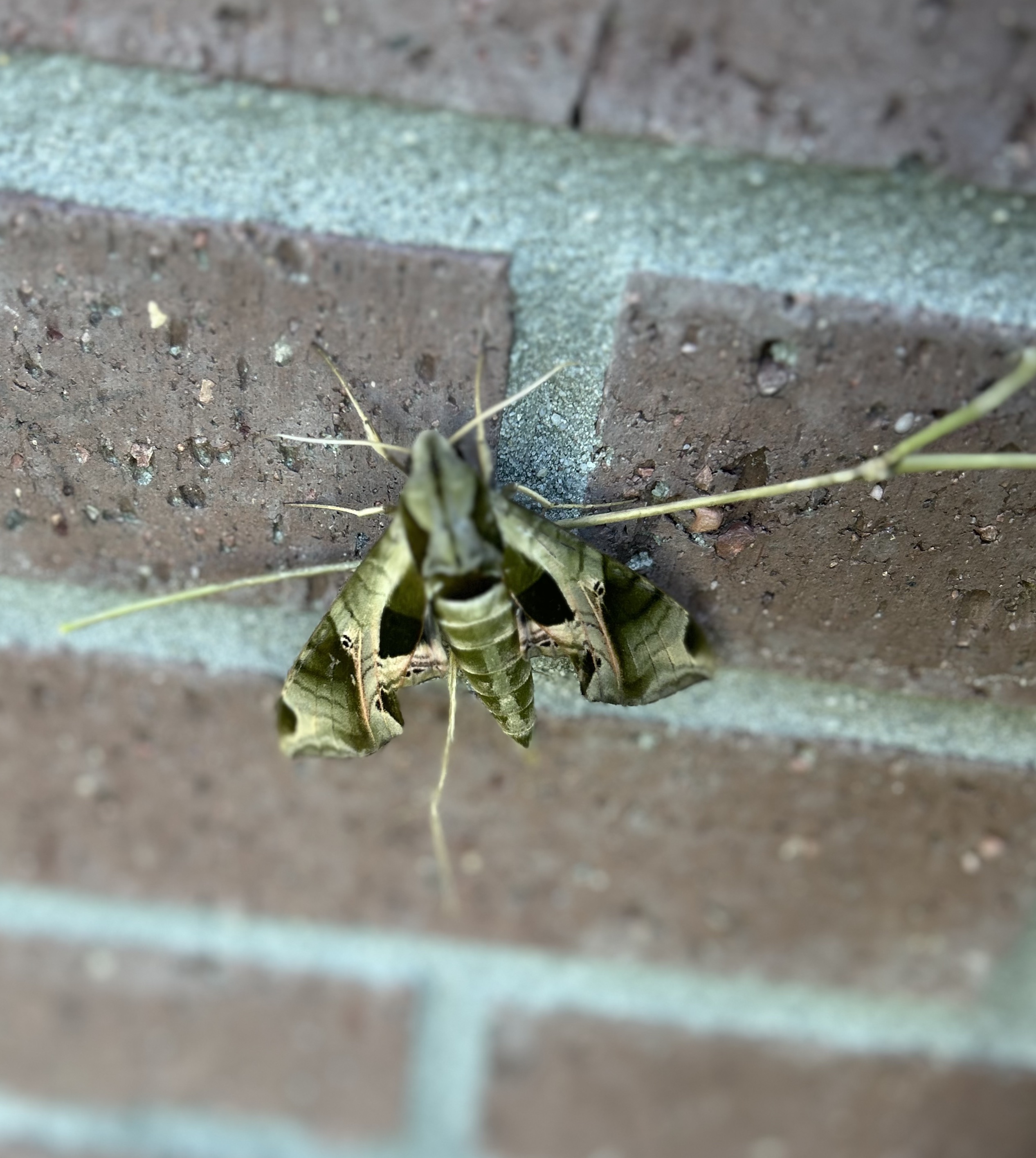
My students and I rushed out to find it. At first it was poised on the brick post of the pavilion. Then one of them stimulated it with a stick and it flew to me. Fascinating large creature that is camouflaged as a leaf. Who knew?

With my students, we researched and found out that it was a Pandorus Sphinx Moth. I wrote a found poem from the information on the website Insect Identification. In this poem, each word in the poem comes from the article in the order it was found.

Playground Discovery

Hawk moth
boasts– robust
fast fliers on
aerodynamic wings.

The Pandorus Sphinx Moth
blending in
inside woodlands
at dusk or dawn.

Read Full Post »

« Newer Posts - Older Posts »