Feeds:
Posts
Comments

Archive for the ‘Digital Learning’ Category

Join the Two Writing Teachers blog for March Slice of Life Challenge.

Join the Two Writing Teachers blog for March Slice of Life Challenge.

Please use this button on your site for DigiLit Sunday posts

Please use this button on your site for DigiLit Sunday posts

Happy Easter, friends!

I considered taking today off from writing a post; however, an issue concerning digital literacy occurred in my classroom this week that needed to be addressed. There are two ways that I process things, by talking and by writing. In fact, today on the Two Writing Teachers call for Slices, there is this quote, “Writing floats on a sea of talk.” Britton. This weekend my sea of talk was with my father and with my Voxer writing group. Both helped me think in a deeper and more logical way about what happened.

My students use Kidblogs daily. They have since the first day of school. As a teacher of multi-grade gifted students, blogging is the way I encourage individuality and independence. One of the many advantages is that students can continue to work on their writing projects outside of class and when I am not at school. Last week I had an inservice, so I wasn’t at school. When I checked the blogs, I discovered that one student had “hacked” another student’s blog and wrote a post about it. I know she was just being playful, but I took it seriously. I commented to this student personally and removed the post. I also had a conversation with the whole class about trust.

When we read posts, we assume that the person who owns the blog wrote the post. I explained that I get an email whenever there is any activity on our Kidblog. I am watching, but more importantly, hacking is wrong. It breaks our trust and messes with the community we have built.

Another more serious incident occurred. As I have mentioned, I teach different grade levels, so my students have social lives with their grade level peers that our class is not a part of. There is safety in our community to talk about and write about things outside of our class. One student wrote a post about a conflict she was having with friends. Fairly typical sixth grade social issue; however, a 5th grader decided to take the matter into her own hands. She printed the post and gave it to one of the sixth grade girls. This post made the rounds all the way to the assistant principal. Not the intended audience of the original post.

When we write on a blog, the world can take our work and use it for any purpose, whether or not it is our intent. This is the reality of digital writing. This reality hit home this week. No real harm was done, but trust was compromised. Our classroom community was broken.

My father (wise as he is) pointed out that my students were able to fail in the safety of my care. Making mistakes is part of the learning process. Breaking trust is part of life. We will all do it at some point. What better way for my students to learn the dangers of digital writing than in the safe environment of school and class blogging?

I could make new rules: no hacking, no printing, but rules will not keep kids form being kids. My friend Julianne talked about the reins of control, how we let them go and then tighten them up. Push and pull. This digital world is amazing and wild and wonderful. We need to be able to fail and pick up the pieces, move on, and be wiser.

Trust is a powerful word. Trust is fragile. Trust is difficult to build and easy to shatter. Luckily, my students were not harmed by their breaches of trust, and they learned an important lesson. These are not the kinds of lessons teachers can design or plan on. My first reaction was disappointment. How could they do this? In reflection and conversation, I realize that all will be well as my little ones maneuver their way through this digital world.

Continue the conversation about digital literacy and trust by leaving a link to your blog post and reading other posts here. Click the linky below.

Read Full Post »

Join the Two Writing Teachers blog for March Slice of Life Challenge.

Join the Two Writing Teachers blog for March Slice of Life Challenge.

Please use this button on your site for DigiLit Sunday posts

Please use this button on your site for DigiLit Sunday posts

My husband says to me, “Look at this!” He is not on any social media, but he reads USA Today on his tablet every day. He is a learner who always wants to know more. Yesterday he showed me this amazing video about a tiny poodle in a nursing home. Get your tissues out.


I want my students to know that learning is a part of life. Last week I brought in a snap circuit kit and just let them play with it to try to figure it out. My administrator was observing me, and I am hopeful that she understands the lack of instruction on my part. Discovery was the point, and the answer doesn’t always come immediately.

Discovery is an important aspect to any learning. Because we have so much available at our fingertips, discovery is easy and constant. “Look at this, Mrs. Simon” are words I hear often. Jacob wanted to know how many moons Jupiter has. That’s not something I keep tucked away in my brain. “Check NASA’s site,” I tell him.

Each week my students are engaged in discovery about whatever interests them. During the Slice of Life Challenge, their Wednesday Wonder has become a Wonder SOL. I ask them to write a paragraph about how they became interested in their topic and to conclude with ideas for further learning. Their research is now framed by a personal connection.

I wonder about a lot of things. Do tree trunks grow fungus to make their colors?

Were the leaves flowers at first but it just lost its petals?

Chlorophyll is a large molecule. It absorbs light from the Sun and because it is a green color it makes the plants green.

I was very surprised that Chlorophyll was a word and that it even existed. I didn’t know it made plants green. I wonder why plants are green and not different colors like,pink,black,brown,red,green,orange, or tan. I think that there is another planet out somewhere that has a atmosphere and has different colored plants.
–Jacob, 2nd grade

In what ways is discovery a part of Digital Literacy in your classroom? Join the discussion by leaving a link.

Read Full Post »

Join the Two Writing Teachers blog for March Slice of Life Challenge.

Join the Two Writing Teachers blog for March Slice of Life Challenge.

As winter transitions to spring, there is an argument in the skies.  High winds, thunder, rain, and more rain.  In parts of my state, flooding.  Transitions can be ugly, hard, and unpredictable.

In a digital classroom, transitions come slowly and with less fanfare.  In fact sometimes the transition is barely visible.  You have to look hard to see it happening.

On Thursday, when winter was fighting with spring outside, inside the room was quiet.  Every student was focused on the work of reading and writing.  I didn’t want to breathe.  I was afraid to make a sound for fear this was a fleeting moment.

When I look at this scene through the reflections of my students’ faces, I realize that they have become exactly who I had hoped they would be…independent learners.

Later that night I took some time to read their blog posts.  I saw independent writers making craft moves, writing with voice, and creating complete stories.  While I wasn’t looking, the transition happened.

There are some reasons for this growing independence:

  1. Routine: Students thrive on routine.  They like to know what is expected and when.  Within a routine, students feel comfortable to be themselves.
  2. Writing Daily: We have been participating in the March Slice of Life Challenge.  Anything that you practice daily gets better and better.  My students are no longer afraid of the blank screen.  They usually walk into class knowing what they will write about that day.
  3. Freedom:  Within the framework of routine, my students have freedom of choice.  They know the checklist and expectations, but they can choose what they write about and how they respond to learning.
  4. Safety: Building a safe environment for students is at the top of my list.  I respect (and love) each child and expect them to treat each other with kindness and respect.

March may be a turbulent time in the weather forecast, but inside things are calm and running smoothly.

Consider joining our community of bloggers around Digital Literacy.  Add your link below.

Please use this button on your site for DigiLit Sunday posts

Please use this button on your site for DigiLit Sunday posts

Read Full Post »

Join the Two Writing Teachers blog for March Slice of Life Challenge.

Join the Two Writing Teachers blog for March Slice of Life Challenge.

I am taking a watercolor class. Like most art classes I’ve taken, the first few classes are frustrating for me. I feel defeated. I criticize myself over and over. This is very unattractive behavior, and my teacher is patient. He doesn’t praise me, though. He tells me that these techniques build upon each other. I am learning. It’s a process.

On Tuesday, I had my 4th class. It has taken me a while to create something I wanted to share with others. I finally pulled together the techniques into one art piece that I actually liked. My teacher pointed out the things I did well. The thin lines for branches, the shadows, the light. But still he held back. I said I was pleased with it, but he did not give out a great deal of empty praise. In fact, he told me to practice.

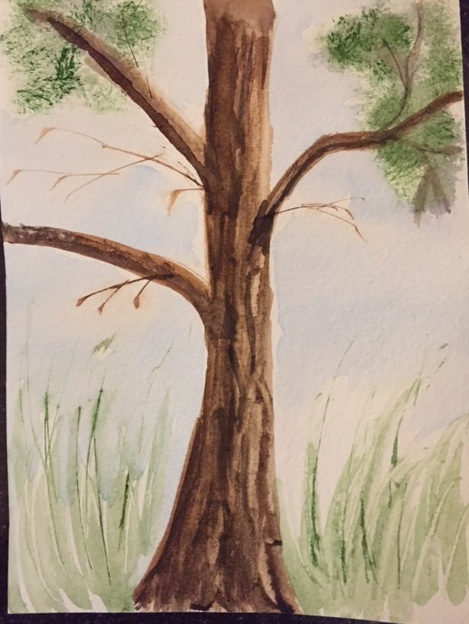
Watercolor pine tree by Margaret Simon

Watercolor pine tree by Margaret Simon

Sound familiar? How we try to lead our students through the writing process. We teach techniques. We look at models. We praise when we see a craft move. These lessons build a writer, but the process can be slow. It can be frustrating. Eventually, the writer will feel good about the product.

The motivation has to move away from teacher approval. The writer/artist must own the process to feel success.

My students have started the classroom Slice of Life Challenge. They are practicing. They are trying craft moves. They are noticing techniques in each other’s slices.

The creative process is a curious thing. We need to learn techniques. We need the guidance of teachers. But in the end, it’s just you and the paper. I believe in techniques, but I also believe in magic. Sometimes magic happens when you continue to show up.

Please use this button on your site for DigiLit Sunday posts

Please use this button on your site for DigiLit Sunday posts

I invite other teacher-bloggers to participate in this weekly meme, DigiLit Sunday. Link your posts up below.

Read Full Post »

Please use this button on your site for DigiLit Sunday posts

Please use this button on your site for DigiLit Sunday posts

Yesterday I was searching for a one word topic for today’s DigiLit posts, and Kimberley suggested “safe.” At first I was thinking about digital literacy safety as in how we teach our students to be digital citizens. But there are lots of resources already out there for that, rules to share with your kids like using a pseudonym or only their first name. Digital citizenship is important. We must teach it so that our students can work safely on the internet.

However, my gut is telling me that safety in the classroom is a bigger issue. How do we create an atmosphere in which our students not only learn, but they also thrive, in which they find a soft, safe place to land?

A growing, active classroom library: Two of my students have taken on the role of librarian. They have sorted and arranged the book shelves. They have claimed ownership. My students share books. They talk about books.

Soft pillows and blankets: I realized the significance this year when I brought in pillows, a blanket, and a kid-made quilt. My students curl up with these comfy things during reading time. Even the 5th grade boys love the feel of a soft blanket when they are reading.

Personalized notebooks: At the beginning of the year, the marbleized notebooks are covered. My students decorate their own and claim these notebooks. I do not grade these or even read them. Their journals are their own. A friend recently donated tiny notebooks to my class, so we decorated these for capturing Slice of Life moments.

A classroom blog with a special name: Our kidblog site is Mrs. Simon’s Sea. The site is kid-friendly and inviting. My students have learned how to navigate it, and they interact with their written words as much as their spoken ones. Blogging (Writing) is valued, honored, and shared.

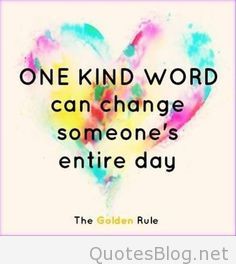
Kindness: I insist on the practice of kindness. Probably the one thing that makes me angrier than anything is when one student is unkind to another. I also have to watch my own tone and words to make sure they are kind. Kindness leads to respect and when students feel respected, they can do amazing things.

2015-kindness-quotes

This post strayed somewhat from digital literacy, but in truth, the beliefs of a classroom contribute to the success of digital literacies. I welcome your additions to this conversation. Please leave a link.

Read Full Post »

Please use this button on your site for DigiLit Sunday posts

Please use this button on your site for DigiLit Sunday posts

Process or Product? What is our focus in digital literacy? I wrote about this in regards to poetry on Friday. My students had me thinking about process this week. The value of the process.

With inspiration from Laura Purdie Salas, I introduced the idea of a found poem from Wonderopolis to a small group of students. I modeled the process for them: Select a Wonder, copy and paste the text into a Word document, and use the strike-through tool to black out text. The idea was to find a poem within the text.

What I thought would be a one day activity covered almost three days. I was not satisfied with the products. They had done the assignment, but the poems weren’t really poems.

I decided we would work on revision together. I put the draft on the Promethean Board. We tabbed to the Wonderopolis article to have the reference to go back to. At first I was doing all the work, making suggestions for cuts, asking if there were more ideas that should be included. However, by the time we got to the third poem to revise, my students talked like experts.

“This line is too long. Should we make a line break?”

“This is a repeated word. Can we cut it out?”

“I like the way this word sounds. Let’s keep it.”

My students felt a sense of ownership as each of their poems were projected and revised. I continually checked in with them. “Is this OK with you?”

This was work. In fact, one of my students said that very thing. I responded, “Yes, but it’s good work. Aren’t you happy with your poem now?”

Who knew that found poems could be so tough. My dissatisfaction with the product led to a much deeper thinking process. My students not only had to gather information; they had to synthesize and evaluate it.

I wish now that I had saved the first drafts to show you the before and after. All I have to share is the after.

Giraffes

Yikes!

Giraffes have tongues

as long as their necks?

Not quite!

If you liked to eat leaves like giraffes do,

Then you would understand.

Acacia’s tasty leaves have very sharp thorns.

Watch out!

While reaching the highest treat,

the giraffe’s tongue

protects itself from being cut.

If a giraffe’s tongue does get cut,

it will heal very quickly.
–Noah, 4th grade

Link up your DigiLit Sunday posts.

Read Full Post »

Please use this button on your site for DigiLit Sunday posts

Please use this button on your site for DigiLit Sunday posts

For DigiLit Sunday lately I have been Tweeting out a topic. The word treasure came to my mind when I saw Kim Douillard’s photo challenge for this week. She is a photographer (teacher, writer, blogger) who captures beautiful images of the beach. Click here to see her blog, Thinking Through My Lens.

The treasure is in the details of Kim’s photographs, the open wings of a gull, the intricate designs of shells, or the silhouette of the surfer.

I am not usually a detail person. I try to be organized, but it’s an effort. I don’t remember people’s names. I could not tell you what you were wearing yesterday. However, when it comes to teaching digital literacy, the treasure is in the details.

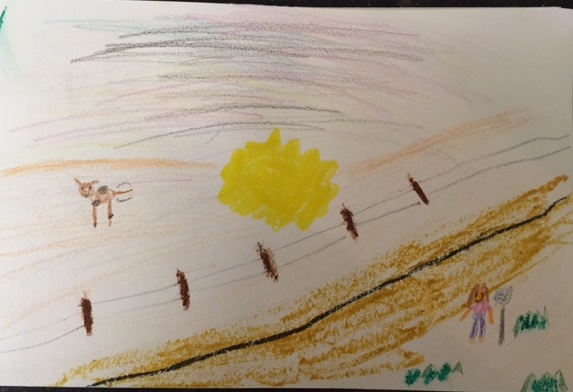
Madison picture

On a field trip on Friday, Madison drew this picture from an art piece she saw in the gallery. Look closely. The details on the tiny girl in the foreground, and notice the motion indication on the cow’s tail. When I saw her drawing, these little details delighted me.

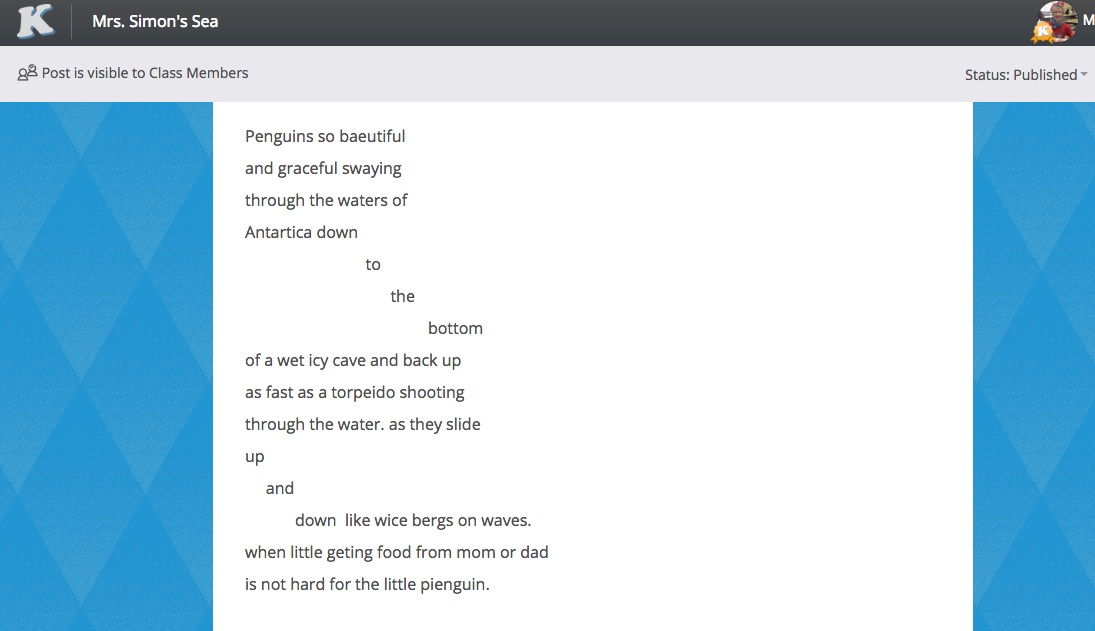
When we teach digital literacies, we need to take time to notice the treasure in the details. Even our youngest students can use these tools to express themselves effectively. Take a look at another of Madison’s recent creations. We were learning about Antarctica and poetry with Irene Latham’s book When the Sun Shines on Antarctica. Madison is in second grade, and this year is her first year in my class. She has jumped right into digital literacies and blogging. I love this poem she wrote about penguins. She used the craft move from Irene’s poetry to show the movement of the penguin diving into the sea. I didn’t watch her do this, but I am sure it took quite a bit of patience tabbing over and placing the words just right. What a treasure in that little detail! (Click on the image to see a larger view.)

Madison penguin poem

Take time to delight in the details this week. Notice when your students make an effort to be precise and intentional in their work.

Happy Valentine’s Day!

Link up your own blog posts.

Read Full Post »

Please use this button on your site for DigiLit Sunday posts

Please use this button on your site for DigiLit Sunday posts

I have been “under the weather” lately. After I wrote that sentence, I had to tab over to Google search where that idiom comes from.

“To be under the weather is to be unwell. This comes  from a maritime source. In the old days, when a sailor was unwell, he was sent down below to help his recovery, under the deck and away from the weather.”

This cold that came on with laryngitis sent me below deck. Our gifted program is a pull-out academic program, so my students just stay with their regular teacher when I am not there. I sent an email to all the teachers asking that my students be allowed to use the computer. There I can keep connected with them through our kidblog site.

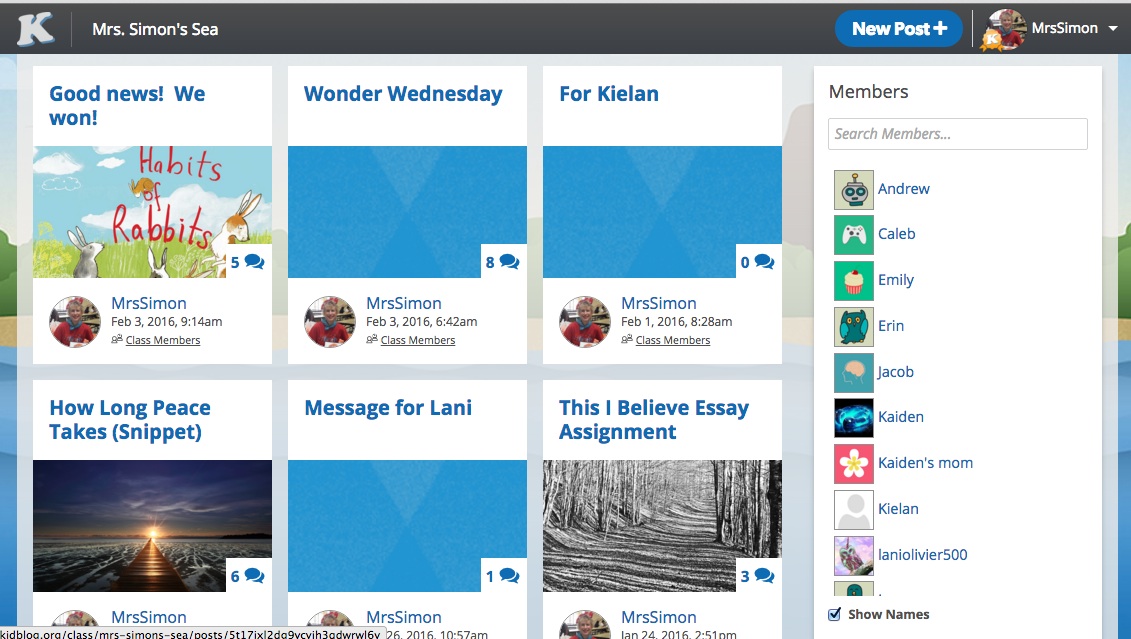
I know a lot of schools have become Google schools, but our district isn’t there yet. But kidblog works. Here is the screen to my posts this week. I can send an assignment with links as well as individual messages for students. And I shared that we won Douglas Florian’s book on Today’s Little Ditty! Yay!

Kidblog screen

Through our kidblog site, we can also connect across the miles with other kidblog classrooms. As we approach the March Slice of Life Challenge, I am pushing my students to pay more attention to these connections. If you want to connect your class with mine, let me know.

In what ways do you stay connected to your students?

Do you know about Digital Learning Day? Sponsored by the Alliance for Excellent Education, #DLDay is scheduled for February 17th, 2016.

Share your digital literacy posts below.

Read Full Post »

Please use this button on your site for DigiLit Sunday posts

Please use this button on your site for DigiLit Sunday posts

quotesgram.com

quotesgram.com


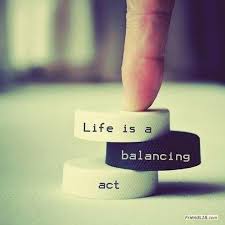
Yesterday I tweeted a call for topic ideas.  Julianne suggested balance.  And now I’m stuck.  I liked that this was a topic that would make people think, but I wasn’t prepared for being stuck.

Balance is so open to interpretation.  Are we thinking about the balance of reading to writing, technology to paper, challenging to easy?  There are so many ways we can look at balance.  In my own life, I need to balance work with play, eating healthy foods, using my time wisely, and on and on.

I look at each one of my students as a small balancing act.  I need to give them enough but not too much.  This week we were behind.  Most of my students had spent their class time on creating digital Wonder presentations, so they hadn’t completed their writing assignments (Slice of Life and Reader response).  A few of them were actually in a panic over getting it all done.  The title of the day was “Finish it Friday.”

When I announced that I wanted to do a poetry activity, I heard groans.  I insisted that we all stop and take 5 minutes to write together.  This turned out to be a good decision.  Creative juices flowed.  My kids turned back to technology not as a chore but as a choice.  I posted some of the results on Poetry Friday.

Teaching gifted students is always a balancing act.  I want to challenge them to think deeper and work harder, and yet, I cannot forget that they are children.  They need creative play as well.  The best lessons are ones that balance the two.  The funny thing about my kids is even if the assignment is not all that creative, they find a way to interject their own voices.  They will be heard.

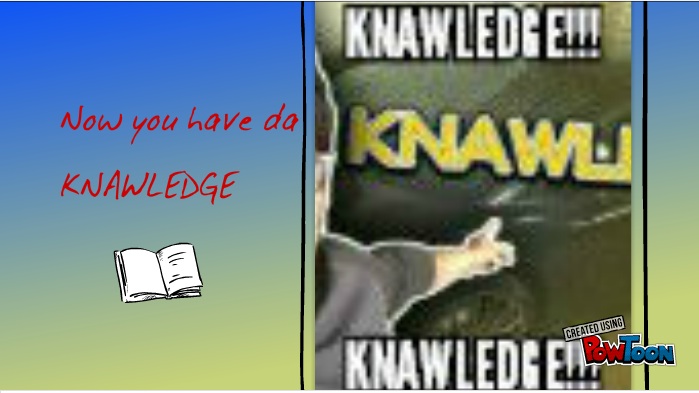
Kaiden’s presentation on how books are made included his own sense of humor as well as information on how paper became books.

Do you have "Da Knawledge?"

Do you have “Da Knawledge?”


Please add the link to your digital literacy blog post.

Read Full Post »

Please use this button on your site for DigiLit Sunday posts

Please use this button on your site for DigiLit Sunday posts

As an educator and as a writer, I am always on the look-out for inspiration. It can come in the form of a blog post, a quote, a video, or an image.

This school year I decided to start a new posting on my kidblog site. I called it Snippet of the Sea to go along with my blog title, Mrs. Simon’s Sea. Each week I post something and ask the students to respond. I started out using quotes. I’ve used videos. And since the new year began, I’ve posted poems.

At first my goal was to promote kindness. The quotes had to do with kindness. But now I see that my purpose is more about inspiring real thinking. I want to expose my students to good, strong words and inspire them to be good stewards of their own words.

To view last week’s poem post by Irene Latham and my students’ thoughtful responses, click here.

I was this close to choosing Inspire as my one little word. I still feel attached to it. The meaning connecting breath and creativity appeals to the core of who I want to be. However, the root meaning spirit tells me that this word belongs to the Creator.

in·spire inˈspī(ə)r/ verb
1. fill (someone) with the urge or ability to do or feel something, especially to do something creative.
“his passion for romantic literature inspired him to begin writing”
synonyms: stimulate, motivate, encourage, influence, rouse, move, stir, energize, galvanize, incite
2. breathe in (air); inhale.

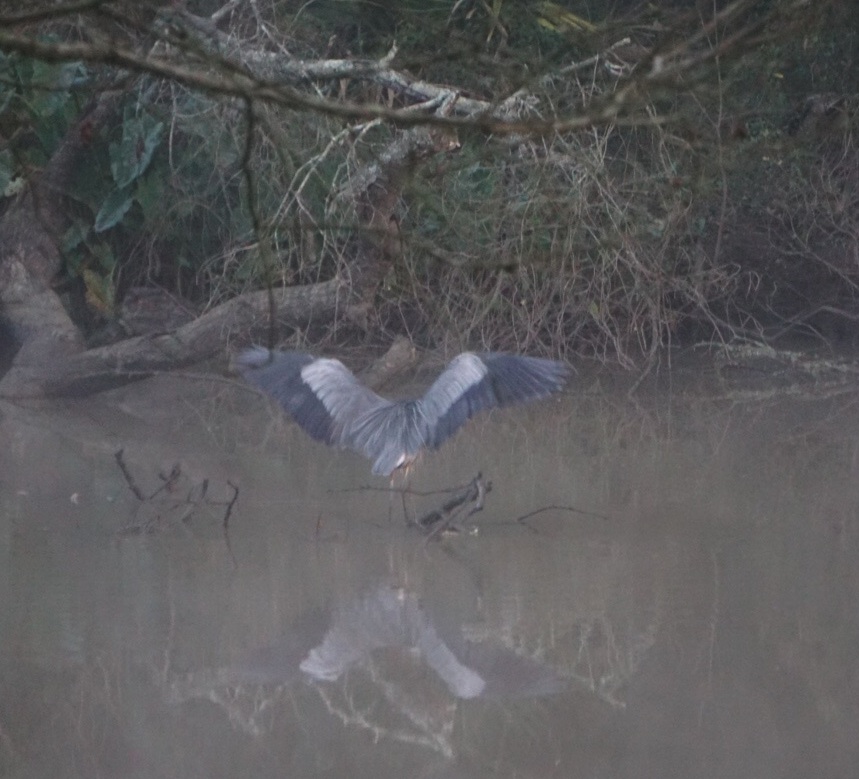
Kim Douillard of Thinking through my Lens inspires me. This week her photo challenge is Quiet. Works well with the quiet, restful week I’ve had. Living on the bayou, I am witness to the quiet calm of nature. On Saturday morning, a blue heron was perched on the water in the rising sunlight. He was there again this morning in the fog. I captured these images.

Bayou heron, Margaret Simon.

Bayou heron, Margaret Simon.

Blue heron wings, Margaret Simon

Blue heron wings, Margaret Simon

What inspires you? Inspires your students? Share your digital literacy posts below.

Read Full Post »

« Newer Posts - Older Posts »