Feeds:
Posts
Comments

Archive for the ‘Gifted Education’ Category

Join the Two Writing Teachers blog for March Slice of Life Challenge.

Join the Two Writing Teachers blog for March Slice of Life Challenge.

Please use this button on your site for DigiLit Sunday posts

Please use this button on your site for DigiLit Sunday posts

Happy Easter, friends!

I considered taking today off from writing a post; however, an issue concerning digital literacy occurred in my classroom this week that needed to be addressed. There are two ways that I process things, by talking and by writing. In fact, today on the Two Writing Teachers call for Slices, there is this quote, “Writing floats on a sea of talk.” Britton. This weekend my sea of talk was with my father and with my Voxer writing group. Both helped me think in a deeper and more logical way about what happened.

My students use Kidblogs daily. They have since the first day of school. As a teacher of multi-grade gifted students, blogging is the way I encourage individuality and independence. One of the many advantages is that students can continue to work on their writing projects outside of class and when I am not at school. Last week I had an inservice, so I wasn’t at school. When I checked the blogs, I discovered that one student had “hacked” another student’s blog and wrote a post about it. I know she was just being playful, but I took it seriously. I commented to this student personally and removed the post. I also had a conversation with the whole class about trust.

When we read posts, we assume that the person who owns the blog wrote the post. I explained that I get an email whenever there is any activity on our Kidblog. I am watching, but more importantly, hacking is wrong. It breaks our trust and messes with the community we have built.

Another more serious incident occurred. As I have mentioned, I teach different grade levels, so my students have social lives with their grade level peers that our class is not a part of. There is safety in our community to talk about and write about things outside of our class. One student wrote a post about a conflict she was having with friends. Fairly typical sixth grade social issue; however, a 5th grader decided to take the matter into her own hands. She printed the post and gave it to one of the sixth grade girls. This post made the rounds all the way to the assistant principal. Not the intended audience of the original post.

When we write on a blog, the world can take our work and use it for any purpose, whether or not it is our intent. This is the reality of digital writing. This reality hit home this week. No real harm was done, but trust was compromised. Our classroom community was broken.

My father (wise as he is) pointed out that my students were able to fail in the safety of my care. Making mistakes is part of the learning process. Breaking trust is part of life. We will all do it at some point. What better way for my students to learn the dangers of digital writing than in the safe environment of school and class blogging?

I could make new rules: no hacking, no printing, but rules will not keep kids form being kids. My friend Julianne talked about the reins of control, how we let them go and then tighten them up. Push and pull. This digital world is amazing and wild and wonderful. We need to be able to fail and pick up the pieces, move on, and be wiser.

Trust is a powerful word. Trust is fragile. Trust is difficult to build and easy to shatter. Luckily, my students were not harmed by their breaches of trust, and they learned an important lesson. These are not the kinds of lessons teachers can design or plan on. My first reaction was disappointment. How could they do this? In reflection and conversation, I realize that all will be well as my little ones maneuver their way through this digital world.

Continue the conversation about digital literacy and trust by leaving a link to your blog post and reading other posts here. Click the linky below.

Read Full Post »

Join the Two Writing Teachers blog for March Slice of Life Challenge.

Join the Two Writing Teachers blog for March Slice of Life Challenge.

As winter transitions to spring, there is an argument in the skies.  High winds, thunder, rain, and more rain.  In parts of my state, flooding.  Transitions can be ugly, hard, and unpredictable.

In a digital classroom, transitions come slowly and with less fanfare.  In fact sometimes the transition is barely visible.  You have to look hard to see it happening.

On Thursday, when winter was fighting with spring outside, inside the room was quiet.  Every student was focused on the work of reading and writing.  I didn’t want to breathe.  I was afraid to make a sound for fear this was a fleeting moment.

When I look at this scene through the reflections of my students’ faces, I realize that they have become exactly who I had hoped they would be…independent learners.

Later that night I took some time to read their blog posts.  I saw independent writers making craft moves, writing with voice, and creating complete stories.  While I wasn’t looking, the transition happened.

There are some reasons for this growing independence:

  1. Routine: Students thrive on routine.  They like to know what is expected and when.  Within a routine, students feel comfortable to be themselves.
  2. Writing Daily: We have been participating in the March Slice of Life Challenge.  Anything that you practice daily gets better and better.  My students are no longer afraid of the blank screen.  They usually walk into class knowing what they will write about that day.
  3. Freedom:  Within the framework of routine, my students have freedom of choice.  They know the checklist and expectations, but they can choose what they write about and how they respond to learning.
  4. Safety: Building a safe environment for students is at the top of my list.  I respect (and love) each child and expect them to treat each other with kindness and respect.

March may be a turbulent time in the weather forecast, but inside things are calm and running smoothly.

Consider joining our community of bloggers around Digital Literacy.  Add your link below.

Please use this button on your site for DigiLit Sunday posts

Please use this button on your site for DigiLit Sunday posts

Read Full Post »

Please use this button on your site for DigiLit Sunday posts

Please use this button on your site for DigiLit Sunday posts

Process or Product? What is our focus in digital literacy? I wrote about this in regards to poetry on Friday. My students had me thinking about process this week. The value of the process.

With inspiration from Laura Purdie Salas, I introduced the idea of a found poem from Wonderopolis to a small group of students. I modeled the process for them: Select a Wonder, copy and paste the text into a Word document, and use the strike-through tool to black out text. The idea was to find a poem within the text.

What I thought would be a one day activity covered almost three days. I was not satisfied with the products. They had done the assignment, but the poems weren’t really poems.

I decided we would work on revision together. I put the draft on the Promethean Board. We tabbed to the Wonderopolis article to have the reference to go back to. At first I was doing all the work, making suggestions for cuts, asking if there were more ideas that should be included. However, by the time we got to the third poem to revise, my students talked like experts.

“This line is too long. Should we make a line break?”

“This is a repeated word. Can we cut it out?”

“I like the way this word sounds. Let’s keep it.”

My students felt a sense of ownership as each of their poems were projected and revised. I continually checked in with them. “Is this OK with you?”

This was work. In fact, one of my students said that very thing. I responded, “Yes, but it’s good work. Aren’t you happy with your poem now?”

Who knew that found poems could be so tough. My dissatisfaction with the product led to a much deeper thinking process. My students not only had to gather information; they had to synthesize and evaluate it.

I wish now that I had saved the first drafts to show you the before and after. All I have to share is the after.

Giraffes

Yikes!

Giraffes have tongues

as long as their necks?

Not quite!

If you liked to eat leaves like giraffes do,

Then you would understand.

Acacia’s tasty leaves have very sharp thorns.

Watch out!

While reaching the highest treat,

the giraffe’s tongue

protects itself from being cut.

If a giraffe’s tongue does get cut,

it will heal very quickly.
–Noah, 4th grade

Link up your DigiLit Sunday posts.

Read Full Post »

Please use this button on your site for DigiLit Sunday posts

Please use this button on your site for DigiLit Sunday posts

For DigiLit Sunday lately I have been Tweeting out a topic. The word treasure came to my mind when I saw Kim Douillard’s photo challenge for this week. She is a photographer (teacher, writer, blogger) who captures beautiful images of the beach. Click here to see her blog, Thinking Through My Lens.

The treasure is in the details of Kim’s photographs, the open wings of a gull, the intricate designs of shells, or the silhouette of the surfer.

I am not usually a detail person. I try to be organized, but it’s an effort. I don’t remember people’s names. I could not tell you what you were wearing yesterday. However, when it comes to teaching digital literacy, the treasure is in the details.

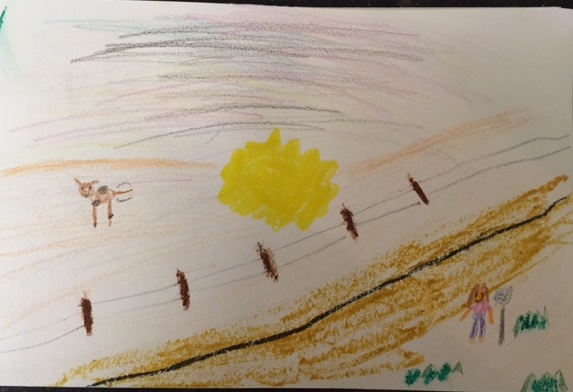
Madison picture

On a field trip on Friday, Madison drew this picture from an art piece she saw in the gallery. Look closely. The details on the tiny girl in the foreground, and notice the motion indication on the cow’s tail. When I saw her drawing, these little details delighted me.

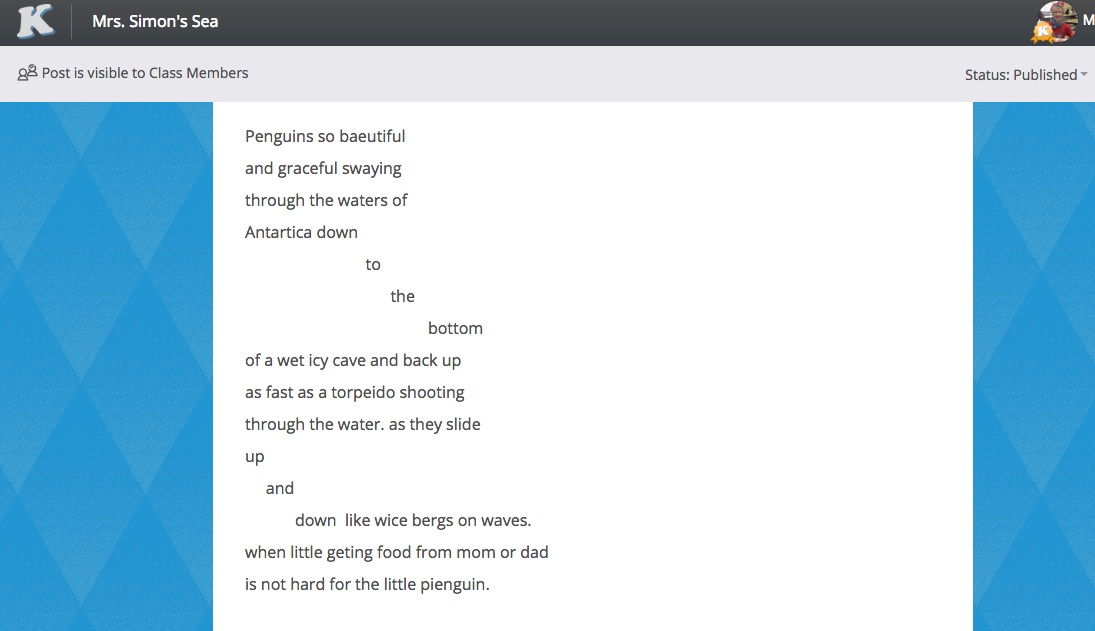
When we teach digital literacies, we need to take time to notice the treasure in the details. Even our youngest students can use these tools to express themselves effectively. Take a look at another of Madison’s recent creations. We were learning about Antarctica and poetry with Irene Latham’s book When the Sun Shines on Antarctica. Madison is in second grade, and this year is her first year in my class. She has jumped right into digital literacies and blogging. I love this poem she wrote about penguins. She used the craft move from Irene’s poetry to show the movement of the penguin diving into the sea. I didn’t watch her do this, but I am sure it took quite a bit of patience tabbing over and placing the words just right. What a treasure in that little detail! (Click on the image to see a larger view.)

Madison penguin poem

Take time to delight in the details this week. Notice when your students make an effort to be precise and intentional in their work.

Happy Valentine’s Day!

Link up your own blog posts.

Read Full Post »

Discover. Play. Build.

Ruth Ayres invites us the celebrate each week. Click over to her site Discover. Play. Build. to read more celebrations.

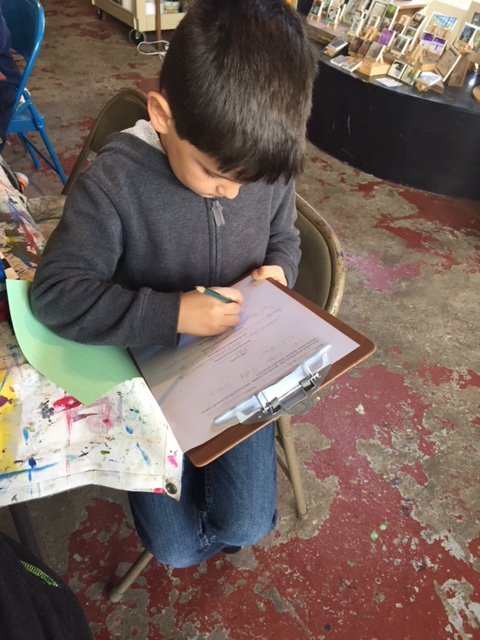
On Friday we took our youngest gifted students on a field trip. The day started at A&E Gallery. Paul Schexnayder, the owner, is an artist and teacher in our talent program. He opened up this old historical building to the wandering eyes of 1st-3rd grade kids. I asked them to find a piece of art that makes them amazed. I had made a form for them to use for a cinquain poem. After they wrote, they created a final draft to give to Mr. Paul. He will place the poems next to the art piece for visitors to see.

Gwen Voorhies, artist.

Gwen Voorhies, artist.

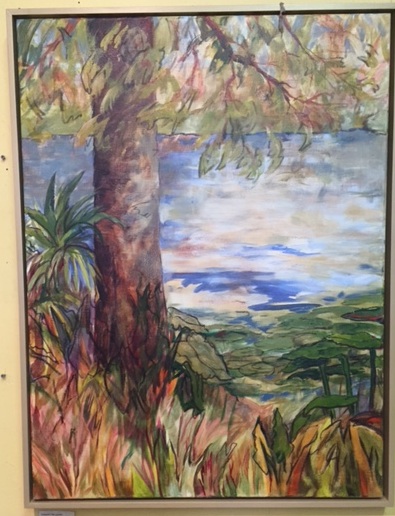
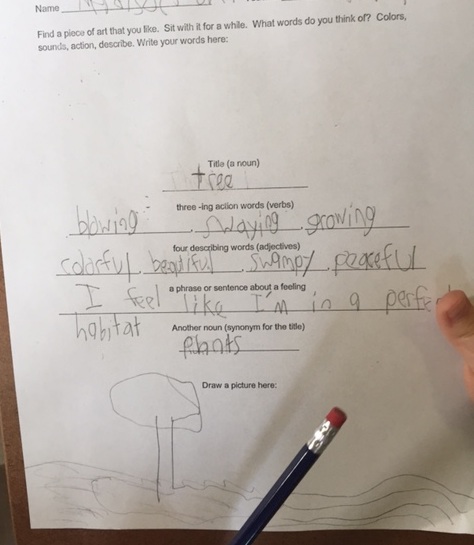
Madison wrote about the peaceful painting above.

Madison wrote about the peaceful painting above.

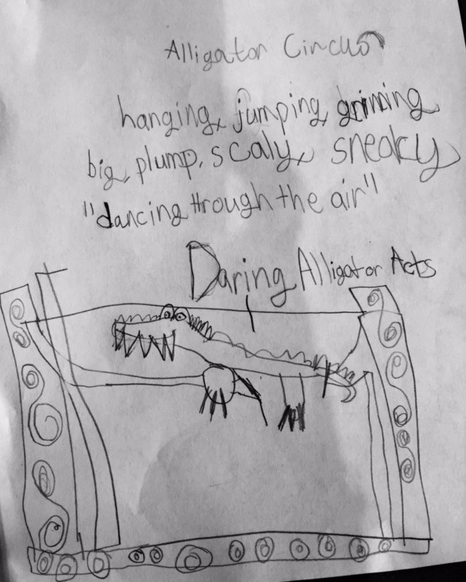
Lynzee wrote about a 3-D piece of an alligator on the high trapeze.

Lynzee wrote about a 3-D piece of an alligator on the high trapeze.

Jacob writing

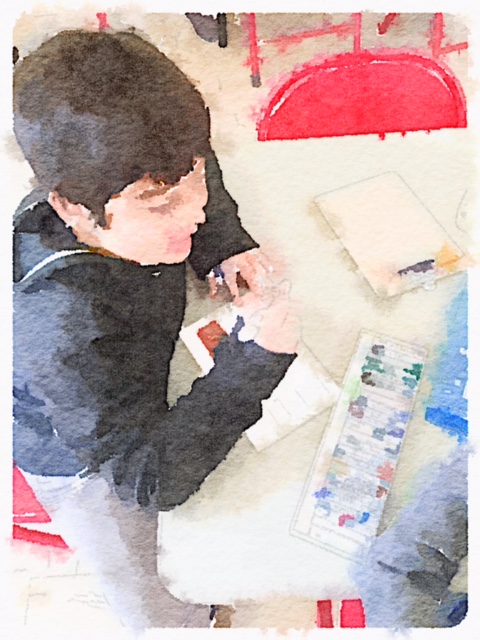
We ventured onward to the Hilliard Museum in Lafayette. This museum is a fine art museum, different from the co-op gallery in New Iberia. The children drew a postcard of a painting and wrote as if they had visited the place. The docent then brought them to an art room where they could color their pictures with oil pastels and colored pencils. My students enjoyed exploring these art materials.

Exploring drawing with oil pastels.

Exploring drawing with oil pastels.

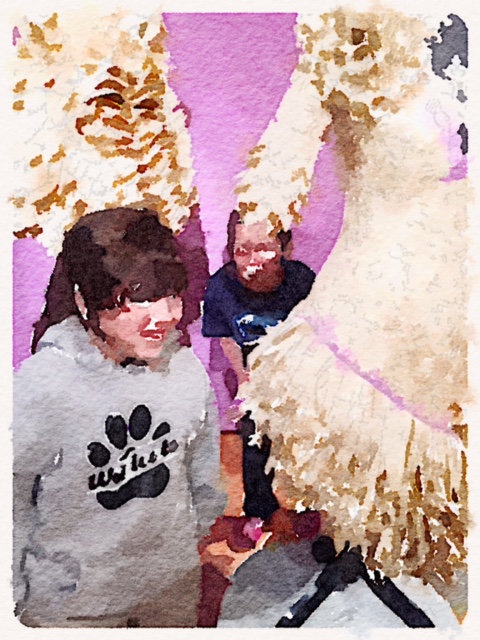
An art display of dresses made from cut up romance novels.

An art display of dresses made from cut up romance novels.

Our final stop (after lunch in the park) was the Lafayette Science Museum where the kids were allowed to roam freely to see dinosaur bones, insects, magnets, and a favorite of all, video games.
Field trips are a great way to expose our students to new things like art. As I was chatting with the docents, they shared with me that not many teachers take advantage of their program. This is disappointing to me. We need to take our students out of the school and into the world of ideas and creativity. This field trip was inexpensive, too. We only charged the students $5. They brought their own lunches and our gifted program procured the school bus.

I celebrate the beautiful day (temps in the 70’s), art, enthusiastic docents, and students writing, learning, and playing. An added bonus: Our students are all from different schools, so they made new friends, too.

Read Full Post »

Poetry Friday round-up with Kimberley at Written Reflections

Poetry Friday round-up with Kimberley at Written Reflections

Inspired by Naomi Shihab Nye’s poem How Long Peace Takes from 19 Varieties of Gazelle, my students and I wrote our own How Long poems. The repeated line “As long as” followed by images works well to inspire poetry.  I wrote one about healing. I am slowly recovering from my tailbone injury. The bayou seems to appear often in my poems and as I am recovering, I have watched the bayou every day. Such a peaceful place to heal.

Peak through the old cypress to the brown bayou.

Peak through the old cypress to the brown bayou.

How Long Healing Takes

As long as reflections of tall trees on a winding bayou.

As long as the slow mowing of a field of grass.

As long as the the thread of soft yarn
winds its way into a baby’s blanket.

As long as the body insists
on being separate and human.

As long as instinct is ignored
and we just talk louder to each other.

As long as the cat
finds a box in the closet,
comfort in cardboard.
She hides all day invisible.

As long as the flowers in the vase
smile their peachy-orange smile
and say stay,
rest,
be well.
–Margaret Simon

And now for a few students’s poems.

How Long Patience Takes

As long as you rise at dawn

As long as the sun rises above
to shine upon us

As long as the teapot sings
a steamy song

As long as long as you make a wish
at 11:11

As long as you blow out you candles
on your special day

As long as you have
patience

As long as you leave at dusk

–Emily, 5th grade

How Long Creativity Takes

As long as you’re reading
with a smile on your face
so deep in your book
you can’t hear anything

As long as you’re drawing
letting the pencil control you
light and dark lines
here and there

As long as you’re brainstorming
with ideas flowing out left and right
shouting them out like you don’t care
while you peacefully think of some more

As long as you’re writing
with a pen in your hand
as you think of a story
and poem at the same time

As long as you let your imagination flow
making dreams a reality
and never losing hope
and letting your mind run wild

As long as you never stop believing
believe in the impossible
step out your comfort zone
and live a creative life

–Erin, 4th grade

Read Full Post »

Please use this button on your site for DigiLit Sunday posts

Please use this button on your site for DigiLit Sunday posts

I have been “under the weather” lately. After I wrote that sentence, I had to tab over to Google search where that idiom comes from.

“To be under the weather is to be unwell. This comes  from a maritime source. In the old days, when a sailor was unwell, he was sent down below to help his recovery, under the deck and away from the weather.”

This cold that came on with laryngitis sent me below deck. Our gifted program is a pull-out academic program, so my students just stay with their regular teacher when I am not there. I sent an email to all the teachers asking that my students be allowed to use the computer. There I can keep connected with them through our kidblog site.

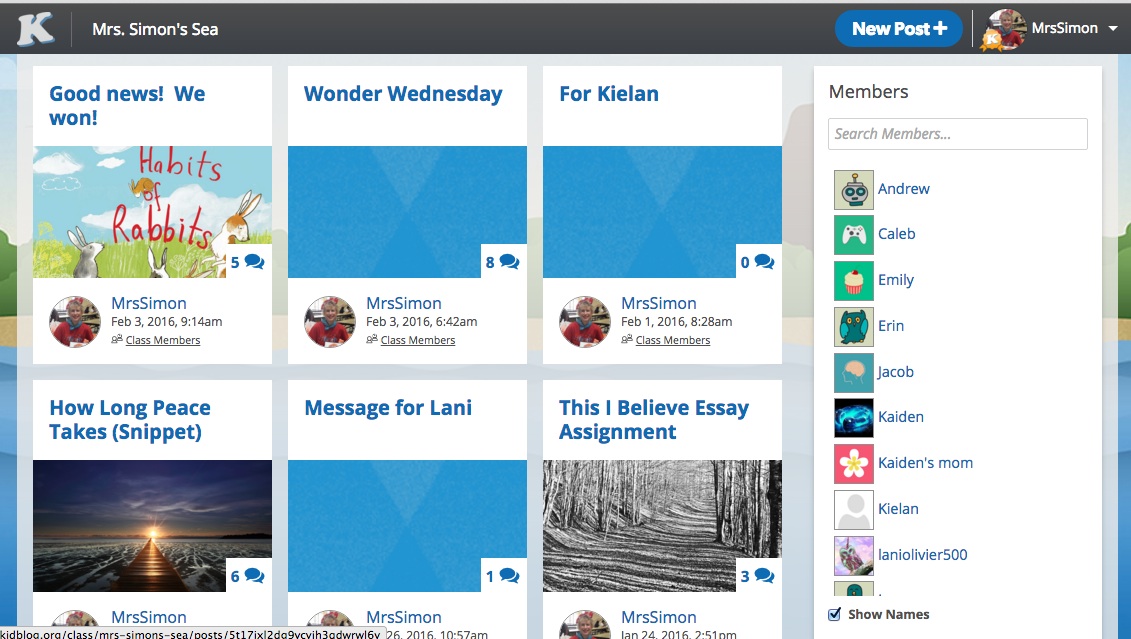
I know a lot of schools have become Google schools, but our district isn’t there yet. But kidblog works. Here is the screen to my posts this week. I can send an assignment with links as well as individual messages for students. And I shared that we won Douglas Florian’s book on Today’s Little Ditty! Yay!

Kidblog screen

Through our kidblog site, we can also connect across the miles with other kidblog classrooms. As we approach the March Slice of Life Challenge, I am pushing my students to pay more attention to these connections. If you want to connect your class with mine, let me know.

In what ways do you stay connected to your students?

Do you know about Digital Learning Day? Sponsored by the Alliance for Excellent Education, #DLDay is scheduled for February 17th, 2016.

Share your digital literacy posts below.

Read Full Post »

Poetry Friday round-up  with Tara at A Teaching Life.

Poetry Friday round-up with Tara at A Teaching Life.

Over at Holly Mueller’s blog, Reading, Teaching, Learning, a group of us are writing about the spiritual aspects of our OLWs. Last week, we wrote about the word Believe. Irene Latham’s creed poem inspired me. I posted it on my kidblog site and asked my students to reflect on the meaning and to respond with their own beliefs. Today I am sharing Irene’s poem and my students’ responses.

I Could Say I Believe in the Ocean

But what I mean is,
I believe in water:
leagues wide
and miles deep,
still-cool-cold on one shore,
warm-salty on the other.

I believe in clownfish
and anemone,
riotous coral reef
and cruising grouper,

octopuses origami-ing
themselves into
castaway bottles
and now-you-see-em-
now-you-don’t krill
diving into
the mouths of whales.

I believe in turquoise
and teal, cobalt
and blacker-than-black.
In shipwrecks
and tsunamis
and deep-sea
luminescence.

I believe in a world
with enough anything
for everyone
where I am a boat
floating quiet
as a moon jellyfish,

weaving between sharks
and icebergs,
allowing the current
to carry me
wherever it will.
– Irene Latham

Student response poems:

I believe in life,

A world where nature blooms beautifully on the ground,

Where the sun is the light bulb of Earth,

Where animals are in love,

And a world where people are all treated equally no matter how different. –Kielan (6th grade)

I believe in unicorns,

dancing through the skies,

I believe in magic,

right before my eyes,

I believe in mermaids,

swimming through the seas. — Lynzee (1st grade)

And this response from Vannisa prompted me to look up the word sonder. I found an interesting YouTube video.

“I believe that you can’t judge a person when you first meet them, or barely know them. Every person you interact with or even just pass by, has a story and memories of their life that you know nothing about. I think it’s an interesting concept to think about. The word for this, which I think isn’t an actual word, is sonder. Some people live by quotes, but I think that sonder is a great word to live by. –Vannisa (6th grade)”

Read Full Post »

Please use this button on your site for DigiLit Sunday posts

Please use this button on your site for DigiLit Sunday posts

Last week I wrote about our Passion Projects. My students are continuing to work on these, but we’ve hit a few bumps along the road.

I am trying to tell myself that any worthwhile learning endeavor has road blocks. We just need to power through them.

On Monday, I had to have the serious talk about plagiarism. I showed Tobie how I could put the text of his writing into a Google search, and it would take me to the very site where he got the information. I explained that I was not interested in reading someone else’s work. “I want to hear your voice, your passion.”

Emily pouted and tore up her draft. She was distraught. To her, Mary Pope Osborn has a perfect voice. She lost confidence in her own passion. I gave her the you-are-a-writer speech, then I left her alone, and by Tuesday, she was writing again. And this time without even looking at the book.

Erin had decided to bullet-point facts for her project. This is a good craft move; however, as a class we had decided that the word count would be more than 300 words. She was in tears. I said, “You know everything you need to know about narwhals. Open your journal and just write what you know.” She eventually wrote two more paragraphs.

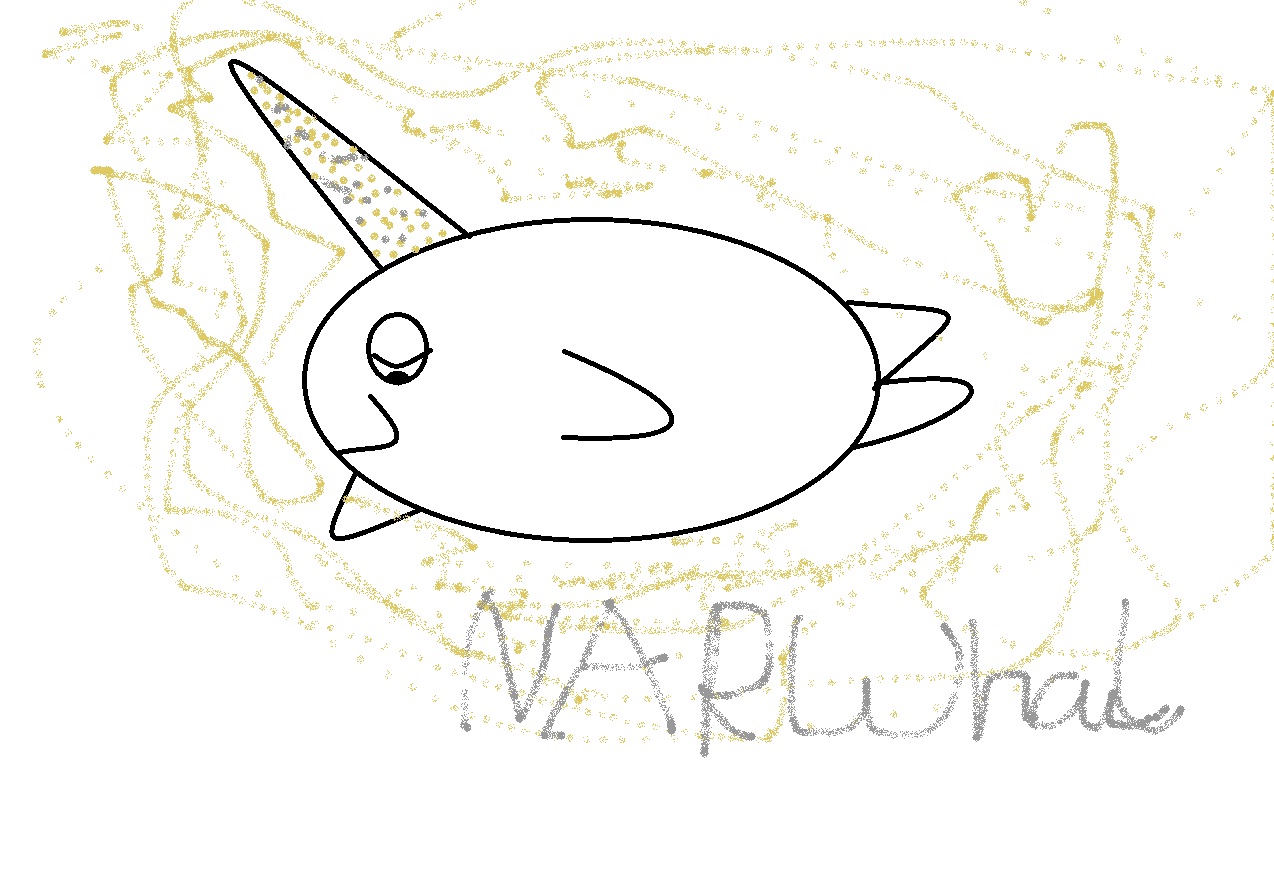
Before Erin’s road block, she spent a great deal of time making a color page. She has extended her project to be a service project. She wants to raise money to “adopt a narwhal.” She decided to use Paint to create her color page. I forget about this tool. It’s been around a long time. Sometimes the just-right tool has been there all along.

narwhal color page copy

If you are writing about digital literacy, link up your post. Be sure to come back by to read more posts.

Read Full Post »

Join the Spiritual Thursday round up at Reading, Teaching, Learning.

Join the Spiritual Thursday round up at Reading, Teaching, Learning.


There are reflections that can be tough to write.  I thank Holly for offering this spiritual space for me to write the tough stuff.

An angel entered my life and left quickly, but I feel his presence still.  When I first found out that C. would be joining my class, the directive came with a large stack of paper.  The papers told a story of a troubled boy, adopted,  who began his life with seizures.  The story unfolded with a diagnosis of superior intellect, ADHD, ODD, depression, and Asperger’s.  Who was the child who was going to enter my classroom?

On the day I set out to meet him, he was in line with his class returning from lunch. He was being yelled at to stop.  He was ignoring the directive.  He continued looking forward and following his class.  “Which one is he?” I inquired.  Blonde hair, blue eyes and a focused stare straight ahead.  His mother was subsequently called to come pick him up.  He was being defiant.

I met him again in the office with his mother.  He talked to me about planets and stars.  The day he started coming to me for gifted, I introduced him to Wonderopolis.  I showed him how he could write about his learning on the blog.  We went to the library and checked out 4 Seymour Simon books.  His face lit up.  A teacher reported to me that for the first time he looked at her and smiled in the hallway.


Boy by Kathleen Hartman

Boy by Kathleen Hartman

I kept up with C.’s daily behavior report.  I talked with his other teachers.  Things were running smoothly.  He even had a few days of rewards.

Then one day I got a phone call from the assistant principal telling me that he was having a melt down in the hallway.  I made my way to his hall.  When I found him, he was lying on the floor with his booksack over his face.  He was completely alone.  I pulled the bag away from his face, and he woke up.  Yes, he was sleeping.

“How did you fall asleep?”

“I guess I was bored.”

“Why were you bored?  Why are you out in the hall all by yourself?”

“I had to sit for recess. I forgot my math homework.”

I walked him to the cafeteria to meet his class for lunch.  We talked to his teacher.  Yes, he had to sit out of recess, but his response was disrespectful.

I am afraid this was not the last time that he was “disrespectful” to this teacher.

I know that I have the privilege of teaching students in small groups.  I know that I am allowed to use interest areas to inspire students.  However, I am saddened that the regular class cannot differentiate for children like C.  He needed to be treated differently.  He needed cool down time.  He needed respect.  He needed…

Now this light has moved on.  His mother thought it best to move him to another school.  I miss him.  I miss the scent of him, too.  He said it was an essential oil called, “Peaceful Child.”  I miss his eagerness.  He greeted each new day as an adventure.  “What are we going to do today?”

“Thank you for being an advocate for my child.” His mothers last words to me.  He gave me a bear hug.  Tears welled up in my eyes.

In the Baptismal covenant of the Episcopal church, we say “I promise to respect the dignity of every human being.”

I think the word dignity should be divinity.  We need to recognize the God in each child.  We need to respect the divinity in every human being.  Think of what a change that would be.  If every person you meet is God, how would you behave differently?


Read Full Post »

« Newer Posts - Older Posts »