Feeds:
Posts
Comments

Archive for the ‘Poetry’ Category

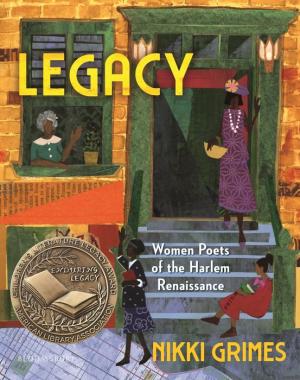
Legacy by Nikki Grimes (on Amazon)

I was the lucky winner of a free copy of Legacy by Nikki Grimes. I would have, should have a copy of this book, but hadn’t bought it yet. I recently subscribed to Chris Barton’s newsletter, and low and behold, was the winner of this book on my first month. You can be lucky, too. Subscribe here. His newsletters are full of stuff, author interviews on “This Book is Dedicated to”, promotional materials, and links to more.

In Legacy, Nikki Grimes uses the golden shovel form to celebrate women poets of the Harlem Renaissance. Each Renaissance poem is accompanied by a golden shovel and an illustration by a Black woman artist. It’s beautifully pulled together into 3 sections: Heritage, Earth Mother, and Taking Notice.

The poems I am featuring today are about poetry, the writing of poems. The fancy term is ars poetica.

Notice the tactile in this poem, kneel, wriggling, and my favorite “water which satisfies, soothes, tickles–what wet word/ pours itself into the vessel that/you call thought?” Nikki Grimes calls us to notice it all and make poetry.

And this one I will print out for my brown girl writers this year.
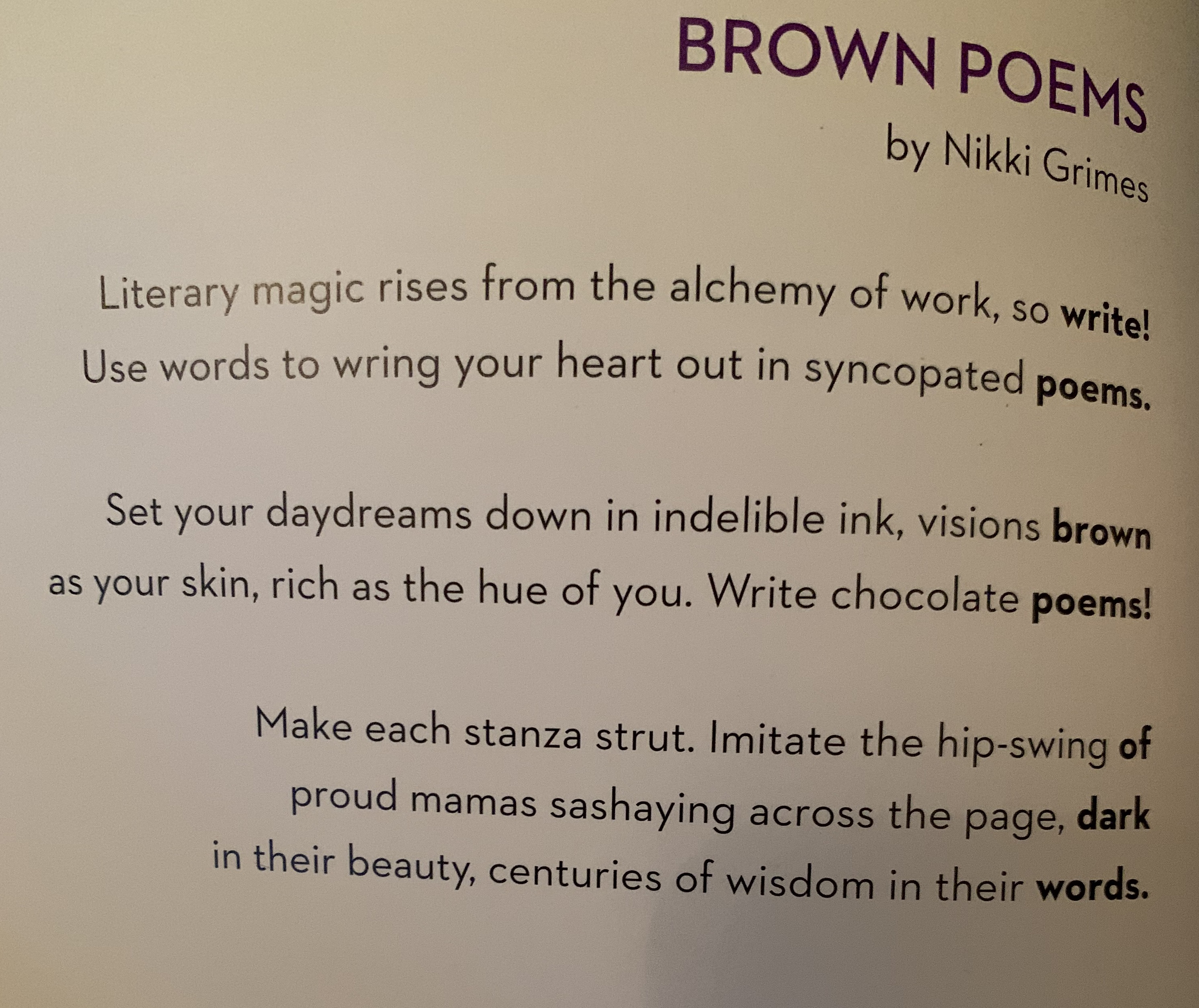
I love the instruction to “Write chocolate poems!” Can’t you taste it? I’ll bring in Dove chocolates, the kind with a message on the wrapper and hand them this poem. Yes! I’m excited to start a new year of teaching with this book in my hands. Thanks, Chris Barton and Nikki Grimes!
Read Full Post »

Let’s get real; I took on the Sealy Challenge to get smarter, to read more poetry, to fill the well. The reality is I am challenged. Challenged not because I don’t have enough poetry books. Not because I can’t read a poetry book each day. I am challenged because poetry is not like fiction that carries you through with a narrative. Poetry requires a different kind of reading. You can’t skim poetry. You have to sit with a poem, and read it again and again to let it sink in. This takes time.

The latest books I’ve read are Irene Latham’s The Sky Between Us and Tracy K. Smith’s Life on Mars. Irene gave me her little chapbook years ago. Since then I’ve followed her blog, bought most of her books, and become friends with her. The Sky Between Us is a love song.

In the “Author’s Note”, Irene wrote “One of the great joys of my life continues to be the discovery of all the beauty this life offers, both in the natural world and in relationships.” In this way, The Sky Between Us slides in beside and between the pages of Life on Mars.

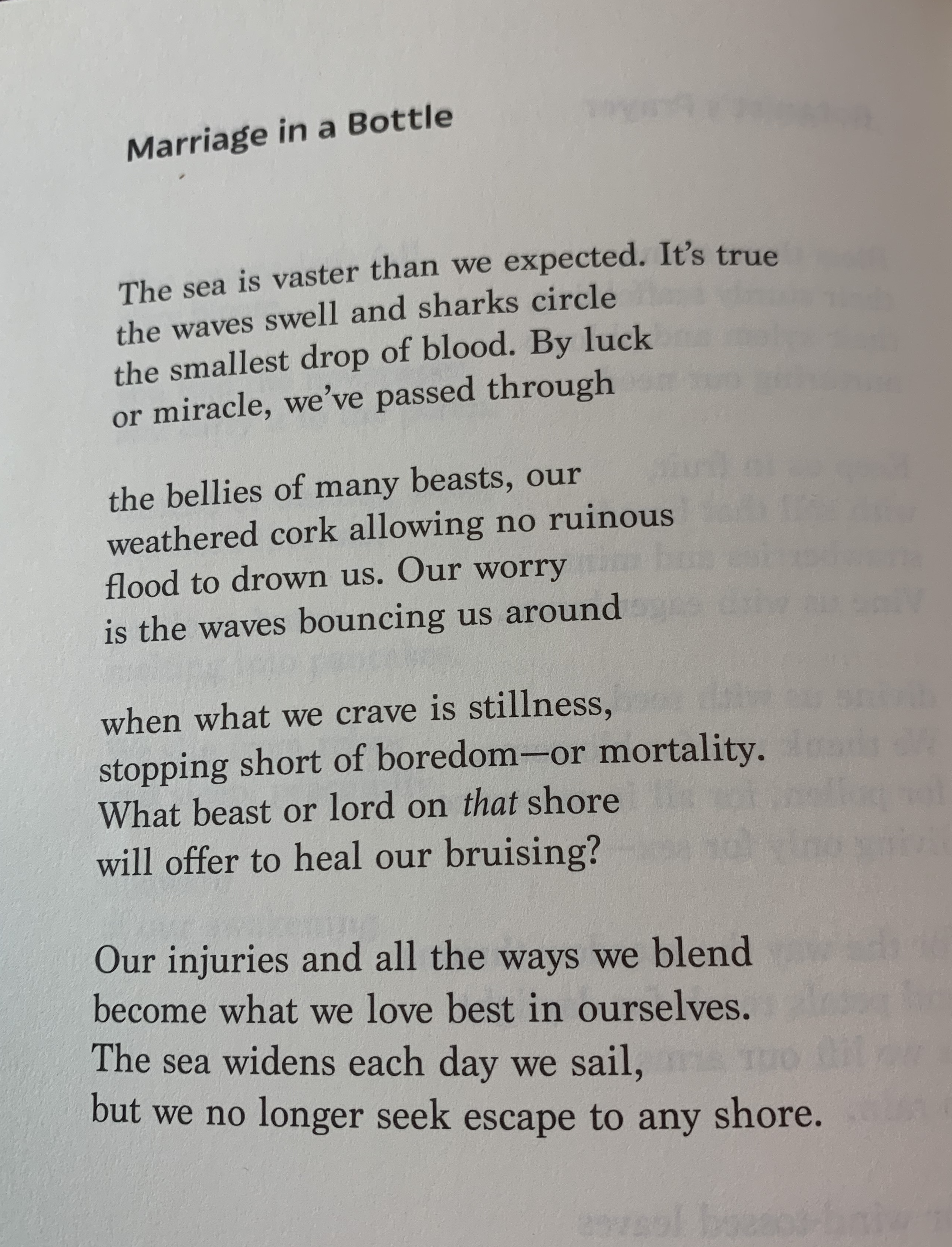
“Marriage in a Bottle” by Irene Latham

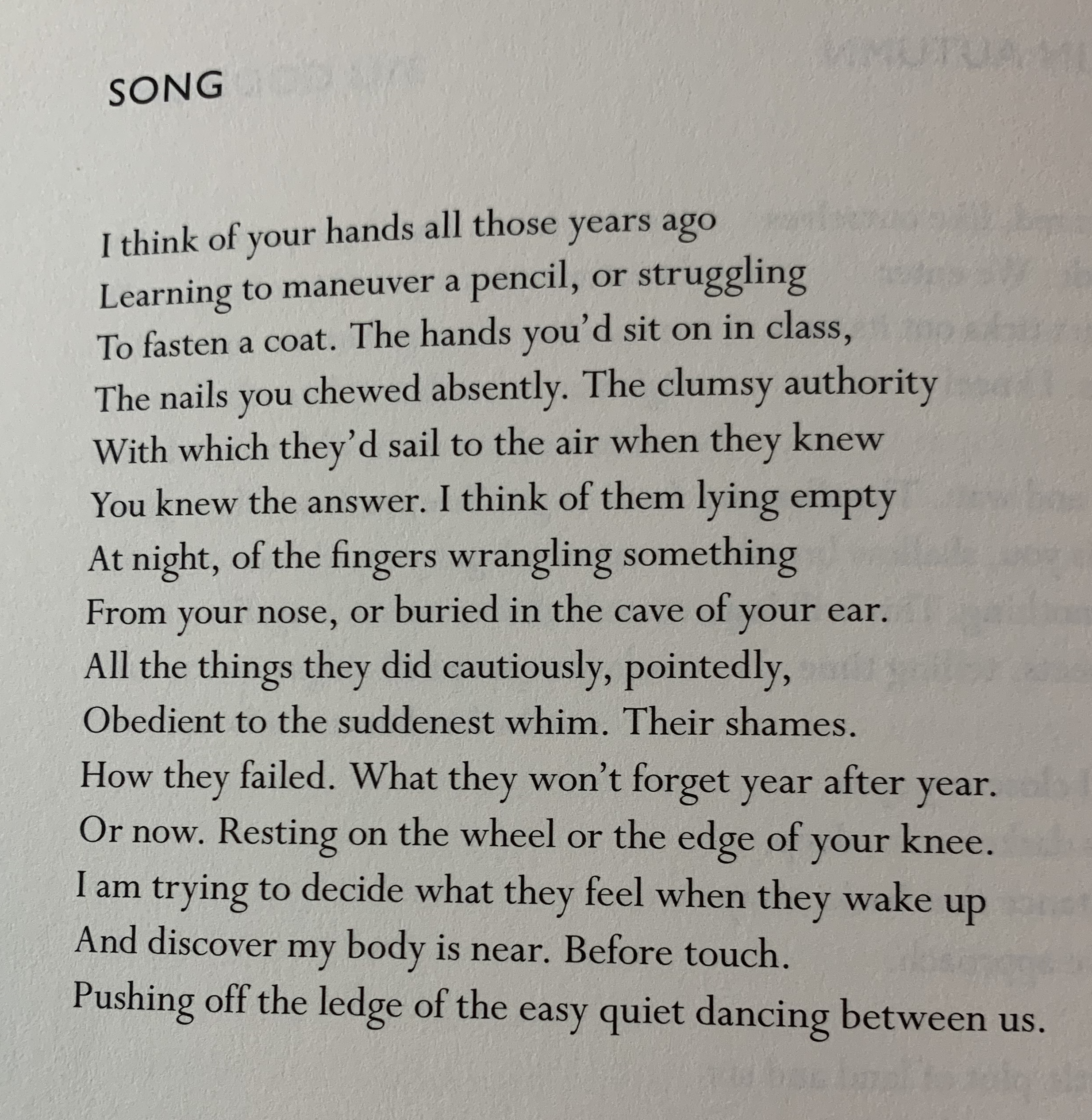
In 2017, Tracy K. Smith served as Poet Laureate of the United States. I loved her poetry podcast, The Slowdown. Her book Life on Mars (2011) won the Pulitzer Prize for Poetry. This book was written as an elegy to Smith’s father who was an astronomer who worked on the Hubble telescope. But, of course, it’s so much more. The poem I chose to share sits beside Marriage in a Bottle. I’ve tucked away the last line for stealing. Celebrating my 39th wedding anniversary this weekend has put me in the mood for marriage poems, poems that speak to the complexity and simplicity of loving another human for a lifetime.

Song by Tracy K. Smith
Photo by Jasmine Carter on Pexels.com

Read Full Post »

Spiritual Journey First Thursday is being gathered today by Linda Mitchell.

Linda Mitchell is gathering Spiritual Journey First Thursday posts. Her topic suggestion is Respect. I wasn’t going to write. In fact, I emailed Linda and apologized, “I’ve got nothing.” However, in the spirit of respect for this community of writers and because I’m awake on the last day of my summer break, I am writing.

Respect is born out of Love. The two are intertwined like the threads on the knitting needles. God calls us to Love.

And so we know and rely on the love God has for us. God is love. Whoever lives in love lives in God, and God in them.

1 John 4:16

This morning I read a beautiful poem by David Whyte, The True Love.

so that when

we finally step out of the boat

toward them, we find

everything holds

us, and everything confirms

our courage, and if you wanted

to drown you could,

but you don’t

because finally

after all this struggle

and all these years

you simply don’t want to

any more

you’ve simply had enough

of drowning

and you want to live and you

want to love and you will

walk across any territory

and any darkness

however fluid and however

dangerous to take the

one hand you know

belongs in yours.

David Whyte, Brain Pickings

Step out of the boat and give your hand to God. Find true love with God. Trust the safety you feel. Hold your hand out to others in respectful response.

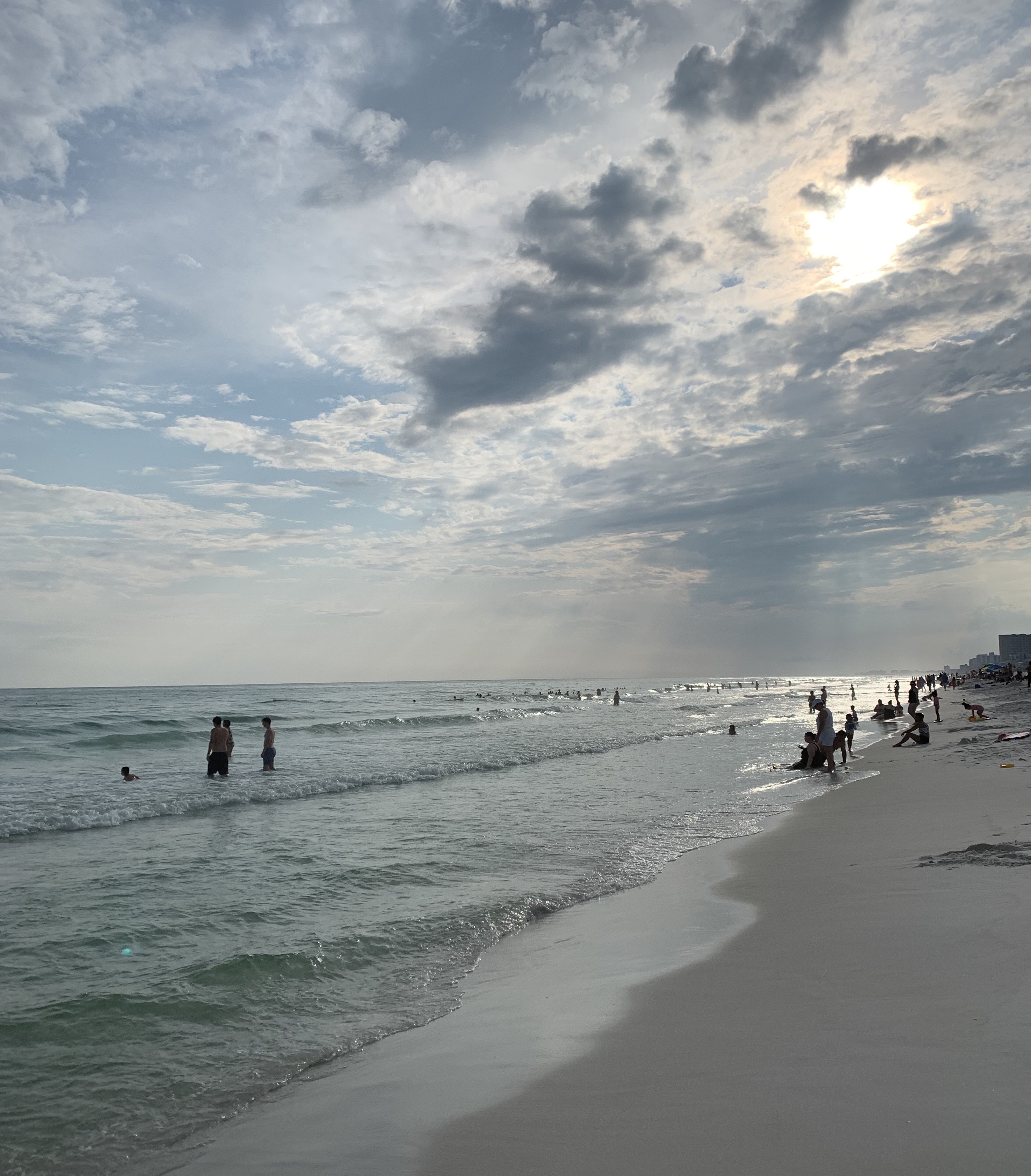
Miramar Beach, Florida (photo by Margaret Simon)

Read Full Post »

I am currently writing in a hotel room in SandDestin, Florida. We are being completely quiet to not wake up my sleeping grandson. My daughter has business here, so I came along to help with Thomas. (His daycare is on a summer break.) The beach views are wonderful, but I can’t take Thomas out on the beach because he hates the way the sand feels on his feet. We spent more time playing in the kiddie pool. He also enjoys running down the hotel hallways and hearing his voice echo. Oh, the joys of being a toddler!

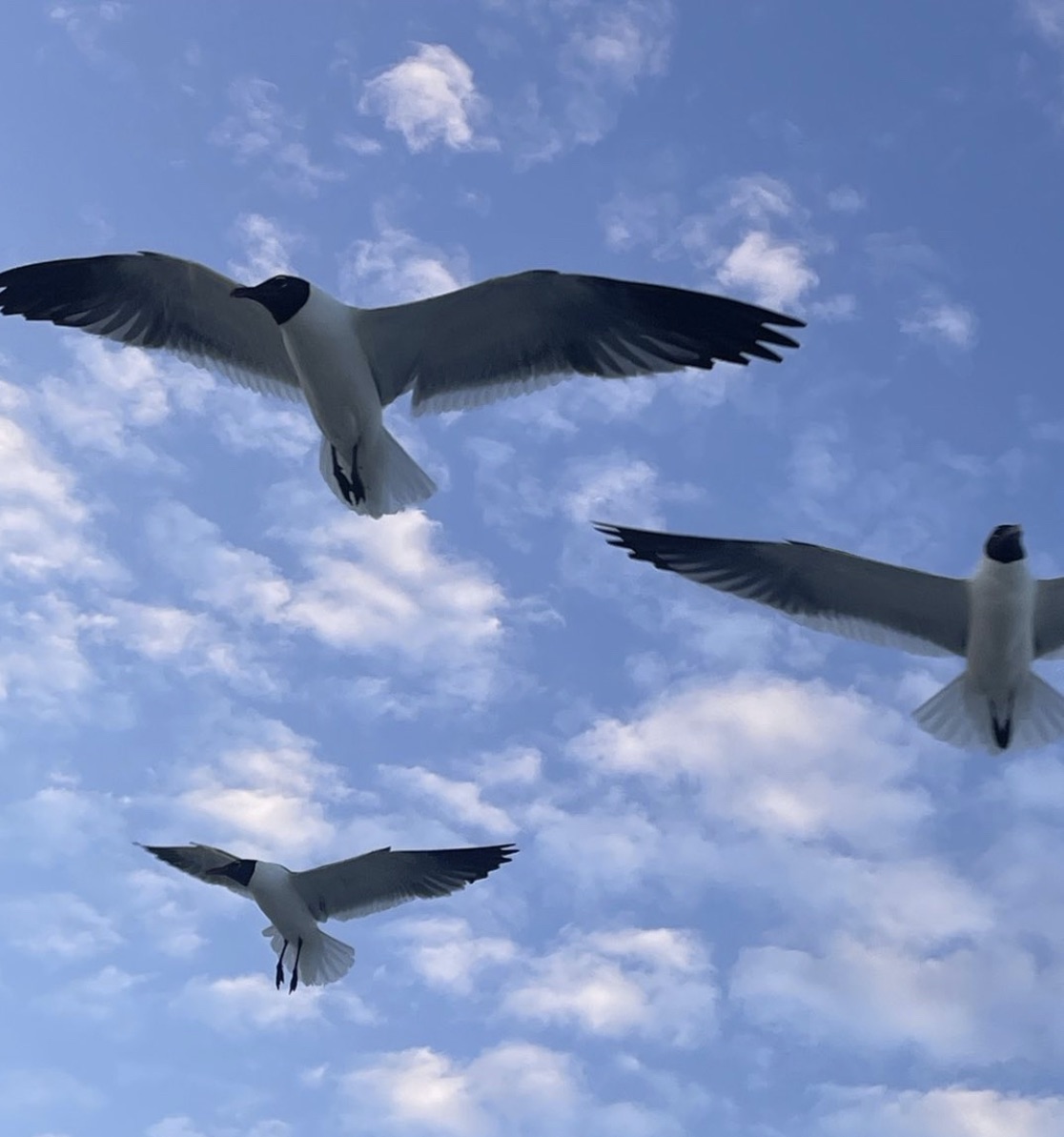
I took a few beach pictures on my phone, but I flipped back to Hope Dublin’s Instagram photos (@hopesview2021) and found this amazing one of flying seagulls. My summer days come to an end this Friday when teachers return to school.

Please join me today by writing a small poem in the comments. Support other writers with comment replies.

Photo by Hope Dublin

Sand tickles my toes
while seagulls float on air
sing an August song.

Margaret Simon, draft
Thomas finds the T on the keyboard. He can also find M for Mamére.

Read Full Post »

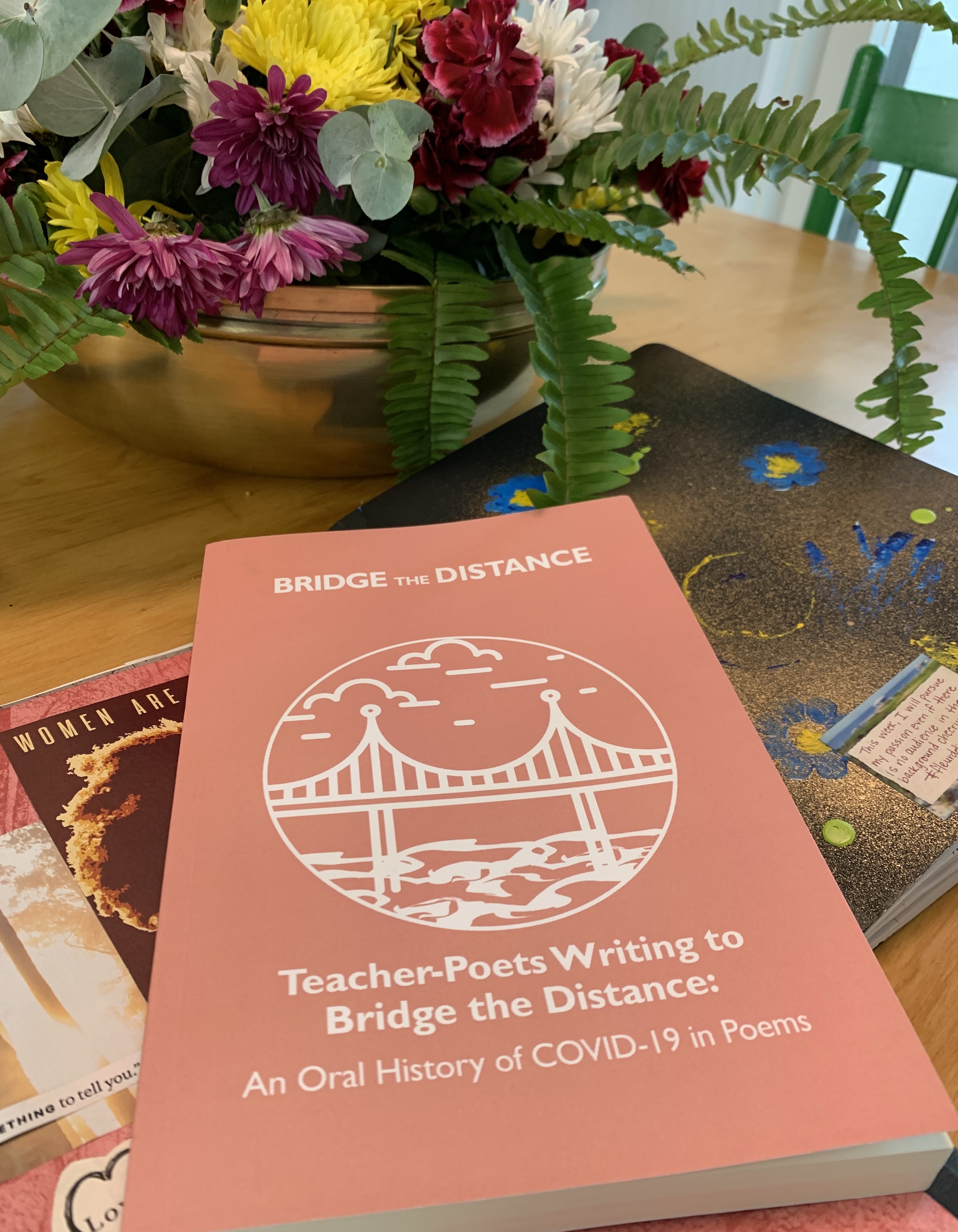
This month I am participating in The Sealy Challenge by reading a poetry book each day. Today’s book is An Oral History of Covid-19 in Poems gathered by Sarah Donovan of Ohio State University. Sarah curates Ethical ELA with an Open Write event each month. During the month of April, she posts a prompt each day. In the spring of 2020, the daily writing was a way for teachers isolated by the pandemic to connect through writing. We wrote poetry to process this unusual time. Sarah and her colleagues decided to preserve this work in an oral history project. Through that project, they conducted interviews by zoom and collected submitted poems into a collection. The book is free to read online or you can purchase a book copy for the cost of printing. (Link to Free Press Book.)

The thread that holds this collection together is the shared experience of teaching in 2020. Many of the poems are narrative while some follow forms.

I’ve chosen two poems to feature today.

Elms on Death Row

DENISE HILL

Three trees stand solemnly
in a row just as planted
nearly one hundred years ago

Each tendril root
tapped deeply into place
somnolently holding to earth

Craggy rough bark
like aged hands so many
life stories harbored there

Each now marked: a bright red dot
some roughshod city worker
sprayed just doing his job

Their days are numbered
soon hewn to stumps
then those ground flush

I place my hand on one
breathe in breath out
say “Thank you”

then the next: Thank you.

Lest they go from this world
unappreciated for all
they have provided.

Thank you.

I relate to this poem as I have experience the chopping down of trees for development. Haven’t we all? I feel sad for the marked trees. Denise captures that feeling well. I love how she decides to deal with this sadness, not by ranting, but by gratitude. This poem also holds together as a metaphor poem for Covid. The illness strikes some with little or no symptoms while others are very ill and die. Senseless deaths. Like the Elms, they leave behind their stories.

Washing Hands

SCOTT MCCLOSKEY

They say that all poems are
political; all poems are
an expression of freedom
against oppression are
innately radical.  Their
mere “existence is
resistance.”

But not this one.

This one is just about me
washing my hands
and how sometimes I lose
count, so I need to start
over to ensure that
I’ve done it for the proper
length of time.

Hands lathered up, I stare
out the kitchen window
at the neighbor’s house,
at my neighbor who, although
it’s the middle of December,
and sure, it is unseasonably
warm, looks to be planting fake
flowers in the sills outside
of her windows.

This is the same neighbor
who was surprised when her
racist lawn ornaments were
stolen this past summer
when yet more videos
of atrocities and injustices
were going viral,

which, of course, makes me
scrub more vigorously, thinking
of the UPS package that came,
the actual reason that I’m standing
here in the kitchen —
Was that one thousand seventeen
or eighteen? —

So, I apply more soap from the
hands free dispenser, and
watch, transfixed, as she carefully,
artistically even, places various
colors and kinds together, creating,
to her mind at least, a pleasing
arrangement, taking more care
and effort to arrange these fake
flowers than she has ever
afforded her neighbors.

And I just wanted to wash my
hands, wanted to not (potentially)
infect my wife or myself, wanted
to simply go about my business,
maybe read a little, grade an essay
or two,

but I keep thinking
about the sad fact that
cultivation does take
time and effort and
persistence, and,
for some, it really
is easier to arrange
plastic flowers

than to plant
and nurture
live ones.

In Scott’s poem about washing hands, I appreciate how he sets up the poem as an ordinary moment, not a political poem “not this one” and yet, it becomes more and more filled with emotion, and in the end, imparts wisdom with an extended metaphor in “plastic flowers.”

I hope I can continue this daily blogging practice around a different poetry book each day, but realistically, “cultivation takes time and effort”, as Scott McCloskey says. I’ll take it day by day. Thanks for reading.

Read Full Post »

I first heard of Ilya Kaminsky in a Poetry Unbound podcast episode. Commentator Pádraig Ó Tuama said he read Deaf Republic three times on the airplane flying home to Dublin. Three times! I thought that would not be me. I don’t usually read books more than once, but when I bought it on Kindle, I had to read it at least twice to have any kind of understanding. In pulling together this post, I’ve read many of the poems a third time.

Deaf Republic is not a book of poems for kids or for the faint of heart, even. It was a difficult book. Violence and sex are not topics I choose to read, but I became intrigued by the characterization of deafness and sign language. The townspeople, after witnessing the shooting of a deaf boy, use an assumed deafness and create a sign language as opposition to the occupying forces.

I’ve learned that Ilya Kaminsky is deaf himself. It’s important to know this when listening to him read. I had a chance to see him present in the Poetry Teachers Institute from the Poetry Foundation last week.

The poem I’ve chosen to feature today is “Alfonso Stands Answerable”.

Alfonso Stands Answerable

My people, you were really something fucking fine
on the morning of first arrests:

our men, once frightened, bound to their beds, now stand up like human masts—
deafness passes through us like a police whistle.

Here then I
testify:

each of us
comes home, shouts at a wall, at a stove, at a refrigerator, at himself. Forgive me, I

was not honest with you,
life—

to you I stand answerable.
I run etcetera with my legs and my hands etcetera I run down Vasenka Street etcetera—

Whoever listens:
thank you for the feather on my tongue,

thank you for our argument that ends, thank you for deafness,
Lord, such fire

from a match you never lit.

Ilya Kaminsky, Deaf Republic

There is so much to notice in this poem. I notice the varying line lengths, first person narrative, and a strong simile is “deafness passes through us like a police whistle.”

A craft move that I would not consider in my own poetry because of the possibility of confusion is the direct address to different characters outside of the poem. “I was not honest with you, life–” and then “Whoever listens” To whom is the narrator testifying to? me, the reader? or the enemy?

I also wonder about the word “etcetera” repeated. I like the way it sounds when read aloud. But why, when the line means the same without the word?

This poem lands with power. As a poet, I rarely hit that mark.

I wonder about using this poem to teach poetry. For my students, I would remove the curse word and draw attention to repetition as a craft move and wonder about the word “answerable”. What does it mean? Why is the narrator answerable?

Honestly, the more I wonder about, the less I know. I probably need to read the book again.

Read Full Post »

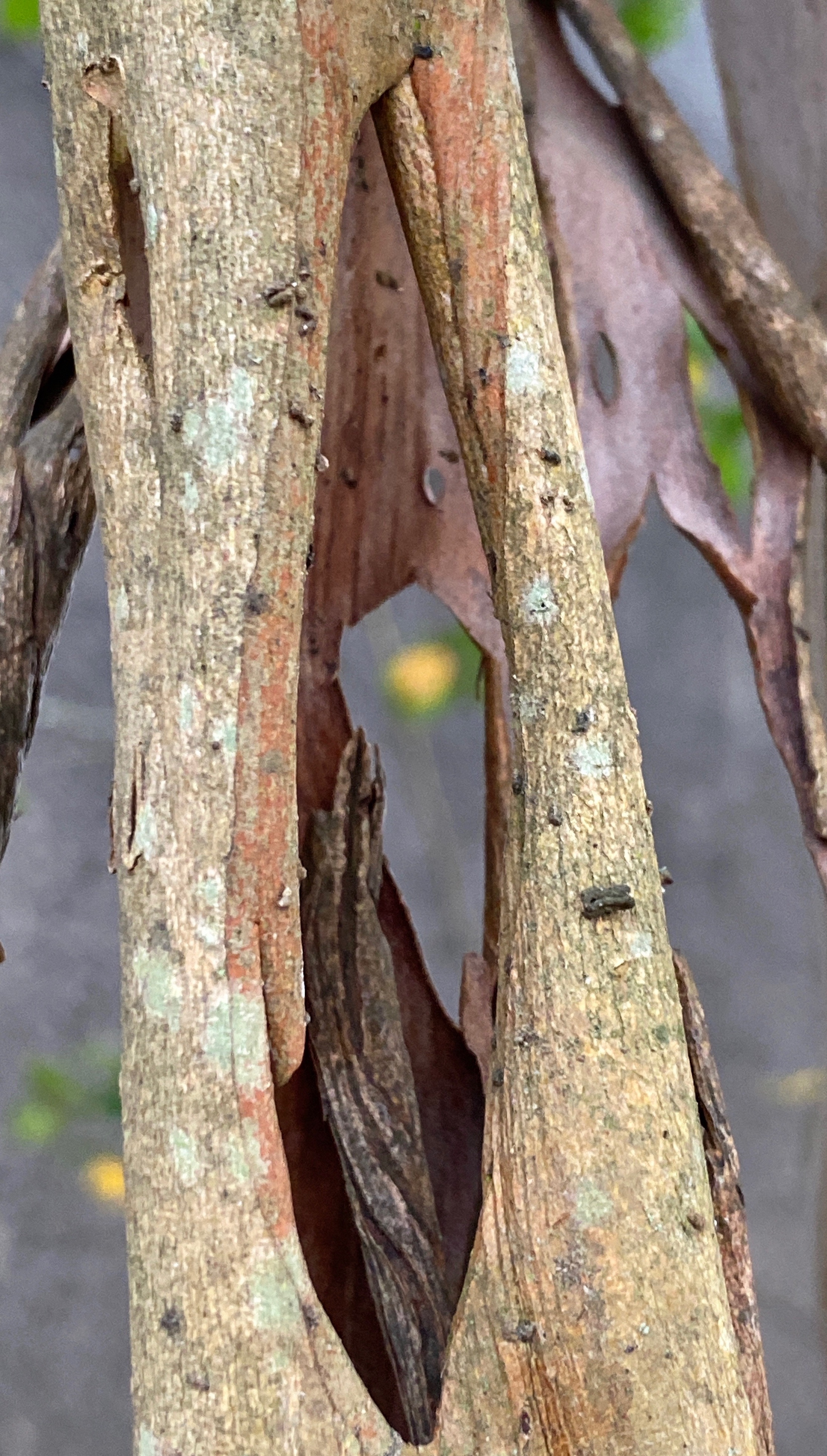
I’ve noticed recently on my morning walks that the crepe myrtle trees are doing something weird, shedding their bark. Surely this is something they do yearly, but I’ve never noticed it. Of course, I googled it.

As all Crepe Myrtles grow and mature, they shed last year’s bark, revealing a colorful, mottled bark beneath. Once the tree has reached full maturity, several years after planting… you are in for a real show. Sit back and enjoy the unique texture and coloration that shows up on their wood once the bark is shed. Because the Crepe Myrtle is a deciduous tree, it sheds all its leaves during the winter, leaving behind the beautiful bark on the tree which makes it a centerpiece in many winter landscapes.

McDonald Garden Center Blog

I took a few pictures with my phone, but I wasn’t satisfied with the artistry of the photos. So I text my friend, teacher-photographer Lory Landry.

“Do you have any good pictures of the peeling bark of crepe myrtles? I love how you see things and photograph them with an artistic eye.”

“I don’t think so. If I knew where some were off hand, I could take some.”

Not a full hour later, she texted me 8 close ups. I had a hard time choosing. This was our next exchange.

Crepe Myrtle Bark by Lory Landry.
On Instagram @leauxlandry

When Sun warms Earth,
Myrtle knows to shed her skin
and show her inside beauty.

Margaret Simon, draft

Leave a small poem in the comments. Be kind in your response to others. Share your inside beauty.

Read Full Post »

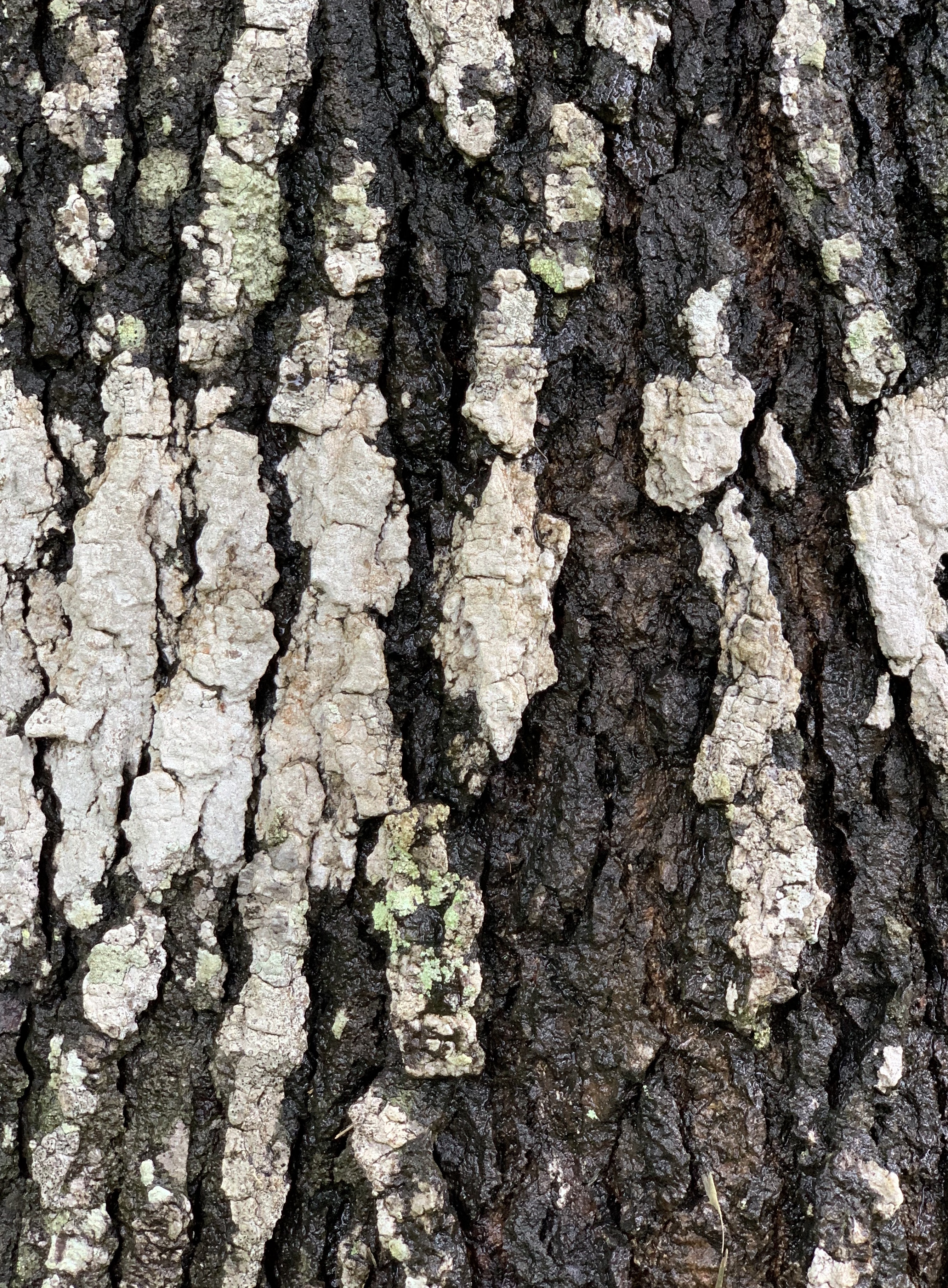
This summer it has rained every day here in South Louisiana. The effects of climate change are here, warmer air, warmer oceans, more water vapor=more rain. We are waterlogged. However, the plants seem to love it. The trees are greener than ever, covered in resurrection fern that only turns green when it is wet. I’ve managed a daily walk between downpours. I took this picture yesterday of the bark on one of our oak trees.

Live Oak, photo by Margaret Simon

There’s imagery here, metaphor maybe? Find your own way into a small poem and leave it in the comments. Be sure to respond to other writers with encouraging words.

This old tree frosted
white with lichen brightens
a trail to fairy heaven

Margaret Simon, haiku draft

Read Full Post »

Thank you to Two Writing Teachers for creating an amazing community of writers and a safe, welcoming space to write and share.

Covid numbers are rising in our community. It’s invaded my family. We thought we were doing everything right. We are all vaccinated. Apparently, the Delta variant doesn’t care. The good news is no one is very sick. The vaccine is doing its job. Needless to say it’s rocked my world. We thought we knew. Now we know nothing. Keep masking up, my friends. This awful ride isn’t over yet.

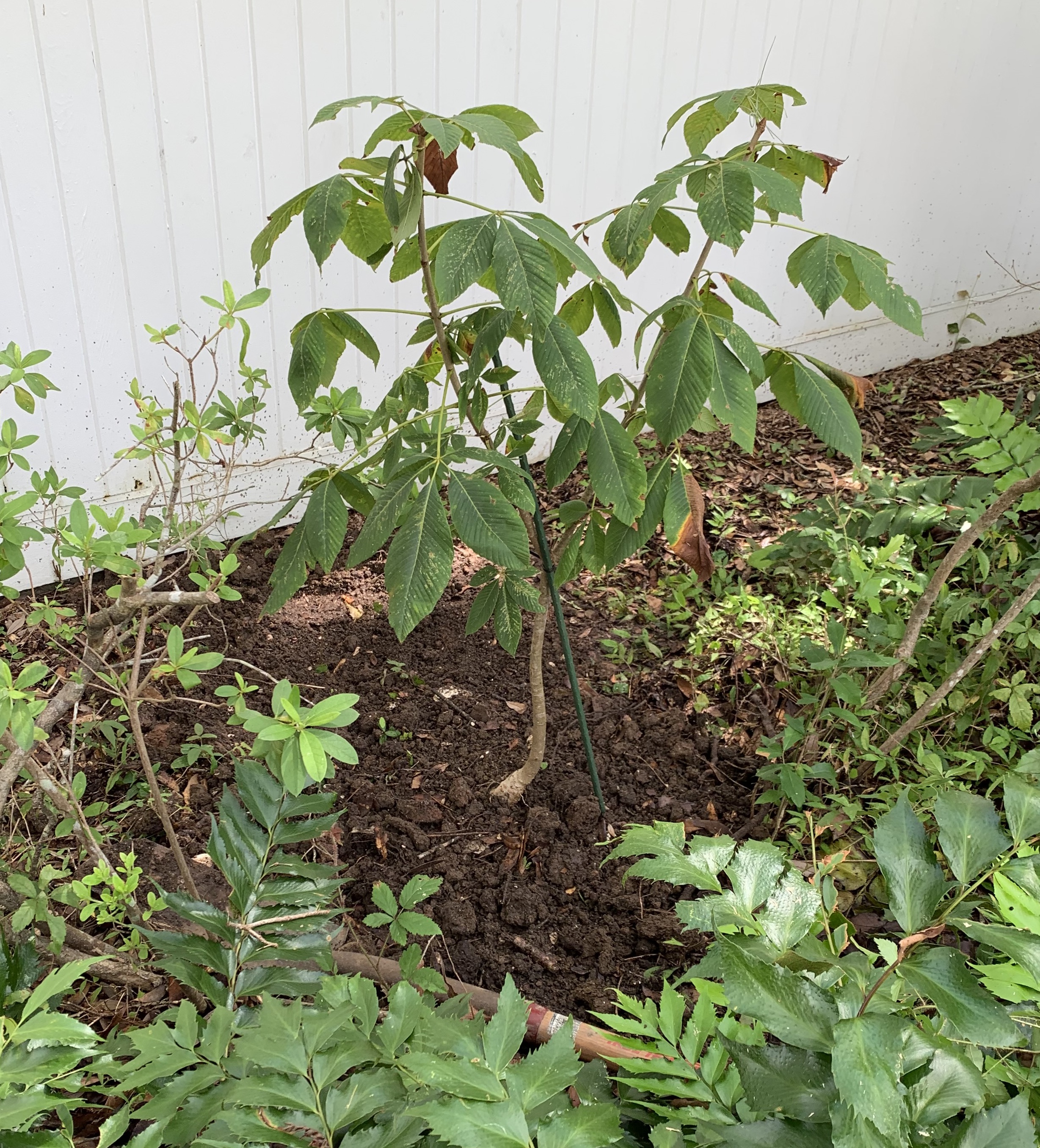
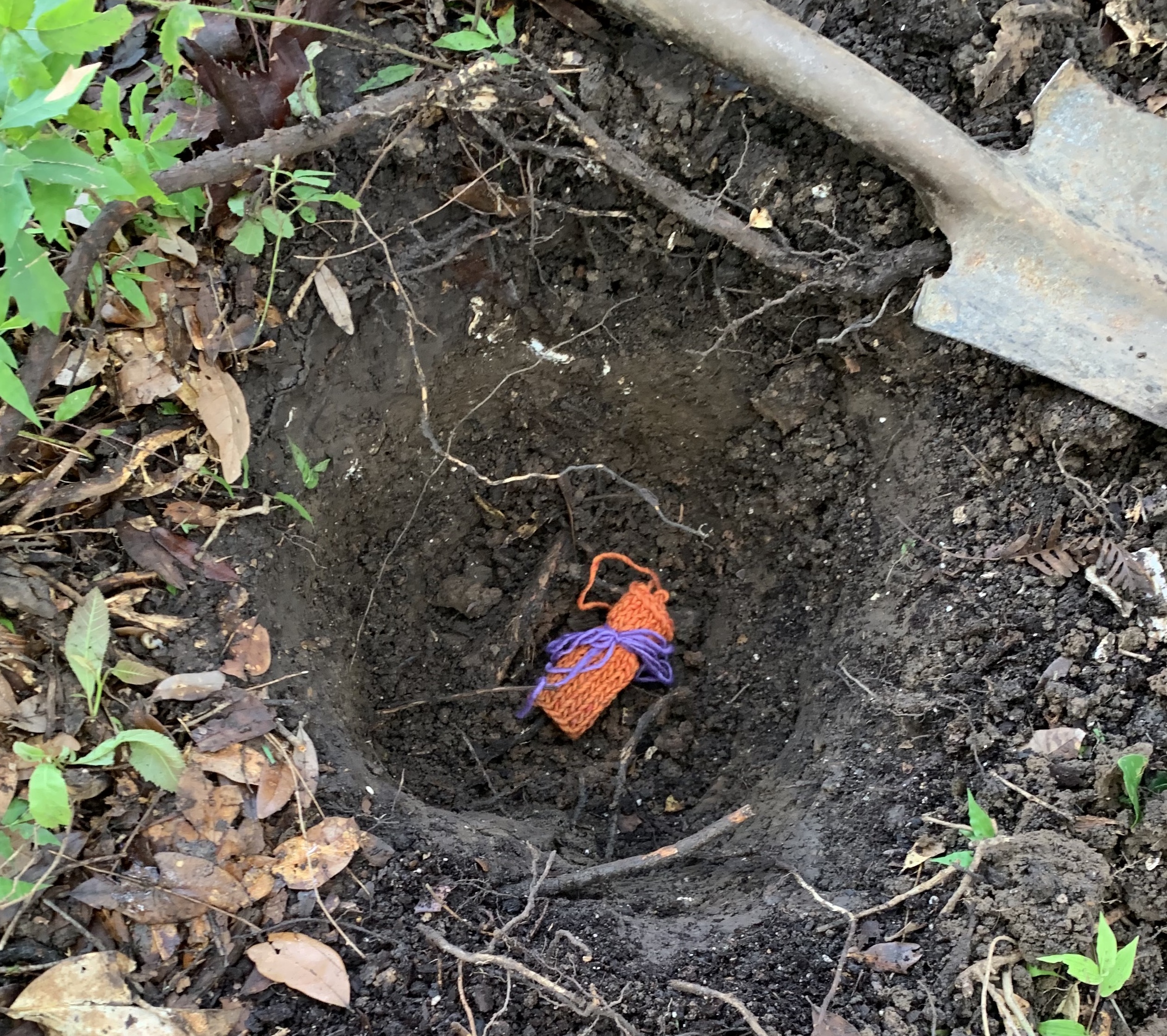
Trying to replace some sense of control, I planted a tree. I’ve been nurturing a red buckeye for years. My friend Jim gave me a seedling. I’ve kept it in a pot, then a bigger pot and a bigger one, but now it’s in the ground. I hope the roots are ready.

In January, my friend Marion died from an aggressive cancer. I did not get to say goodbye. Before her death, she and her daughter Robin cleaned out her yarn supply. They gifted me with two large boxes that I placed in a closet upstairs. I wasn’t ready to open them. Robin had asked that we plant a tree to memorialize Marion. When I planted the red buckeye, I thought of Marion and the yarn, so I opened one of the boxes. I found a piece of knitting and wrapped it and placed it in the hole before placing the tree. A simple gesture that I am writing about here, so I can remember.

red buckeye

Marion was a writer. We met in a writing group once a month for at least 18 years. The poem “Last Words” by Rita Dove appeared in The New Yorker shortly after her death. This poem was just what Marion would have said.

Let the end come
as the best parts of living have come
unsought and undeserved
inconvenient

now that’s a good death.

Rita Dove, read the full poem here.

In the Open Write at Ethical ELA, Tracie McCormick prompted us to write a Golden Shovel. Here’s my Golden Shovel for Marion.

Bury the Knitting
(Golden Shovel for Marion using the striking line from Rita Dove, “Let the end come as the best parts of living.”

I bury the knitting; Let
dirt fall like rain on the
stitches of your gentle hands. The end
came too soon. I come
to this tree today to pray as
you did. The
roots will ravel around the best
parts
of a daily life of
love and care-filled living.

Margaret Simon, draft

Read Full Post »

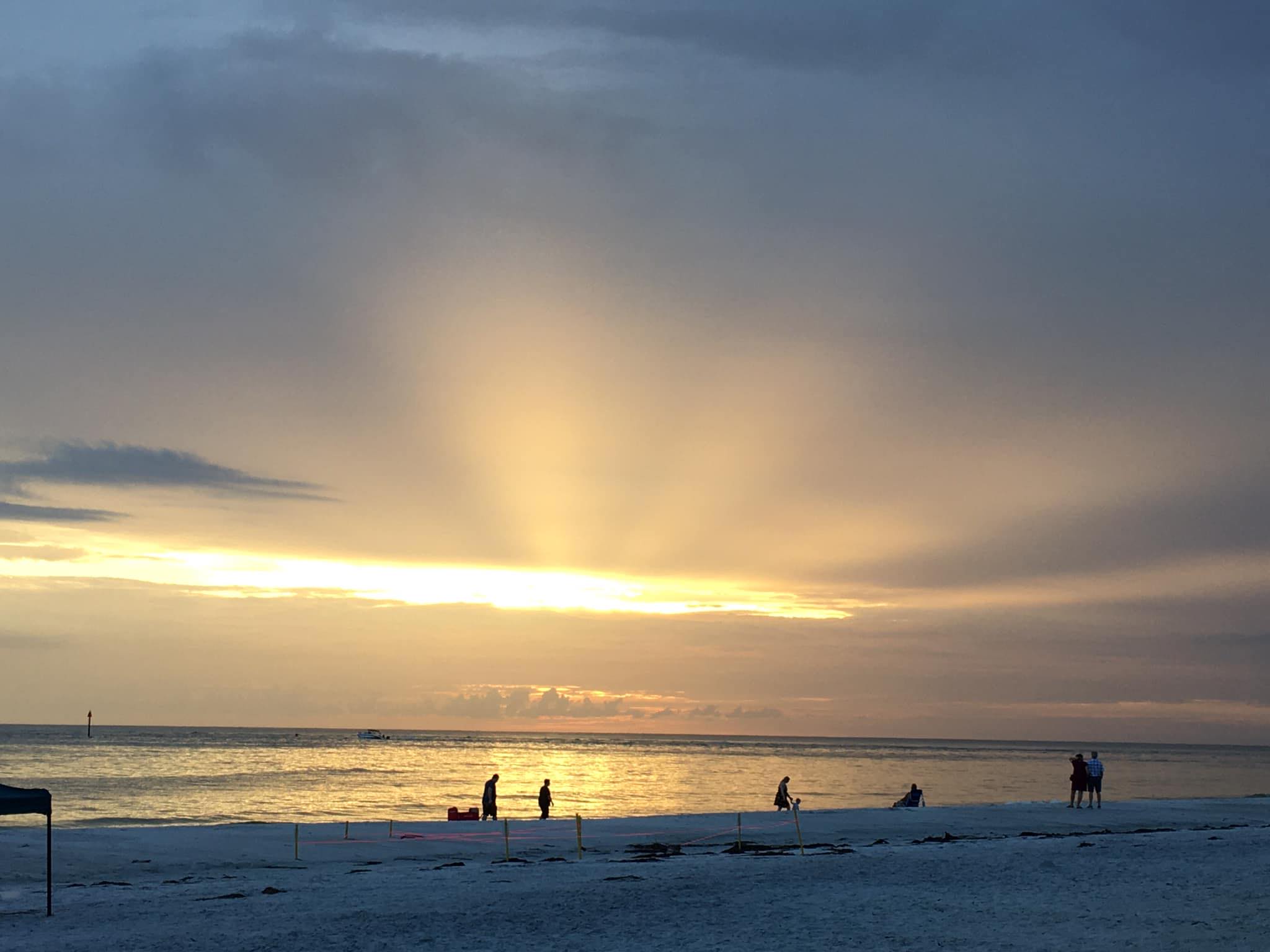
One of our teacher-writer-blogger friends Leigh Anne Eck is on vacation in Florida. Don’t you just love a vacation photo that you can sink your dreams into?

Florida sunset by Leigh Anne Eck

Treasure
found in a sea shell,
an open sky,
a moment

with you.

Margaret Simon, draft

Take a moment to muse about this photo. Write a small poem in the comments. You may share on social media with #ThisPhoto, #poemsofpresence and #smallpoems. Be sure to leave encouraging responses to other writers.

Read Full Post »

« Newer Posts - Older Posts »