A few weeks ago I received an email from Laura Shovan introducing me to a new poetry form, the Pythagorean Poem created by middle grade author Shari Green. For anyone who loves a good challenging form, this is for you. I haven’t tried it with my students…Yet.
Similar to a Fibonacci poem, the form is based on a mathematical truth, the Pythagorean theorem. This theorem for you non-math nerds like me is the rule for a right triangle:
Shari took this rule to a poetry level: Using the triple, the poetic form works like this:
1st stanza: 3 lines of 3 words each
2nd stanza: 4 lines of 4 words each
3rd stanza: 5 lines of 5 words each*
* The third stanza must be composed of all the words found in stanzas one and two (in any order; variations okay). The third stanza should be a progression of sorts, a product of the first two in thought or theme or meaning.
I think you could change the numbers of a and b, but the final stanza must use a combination of words from the first two stanzas.
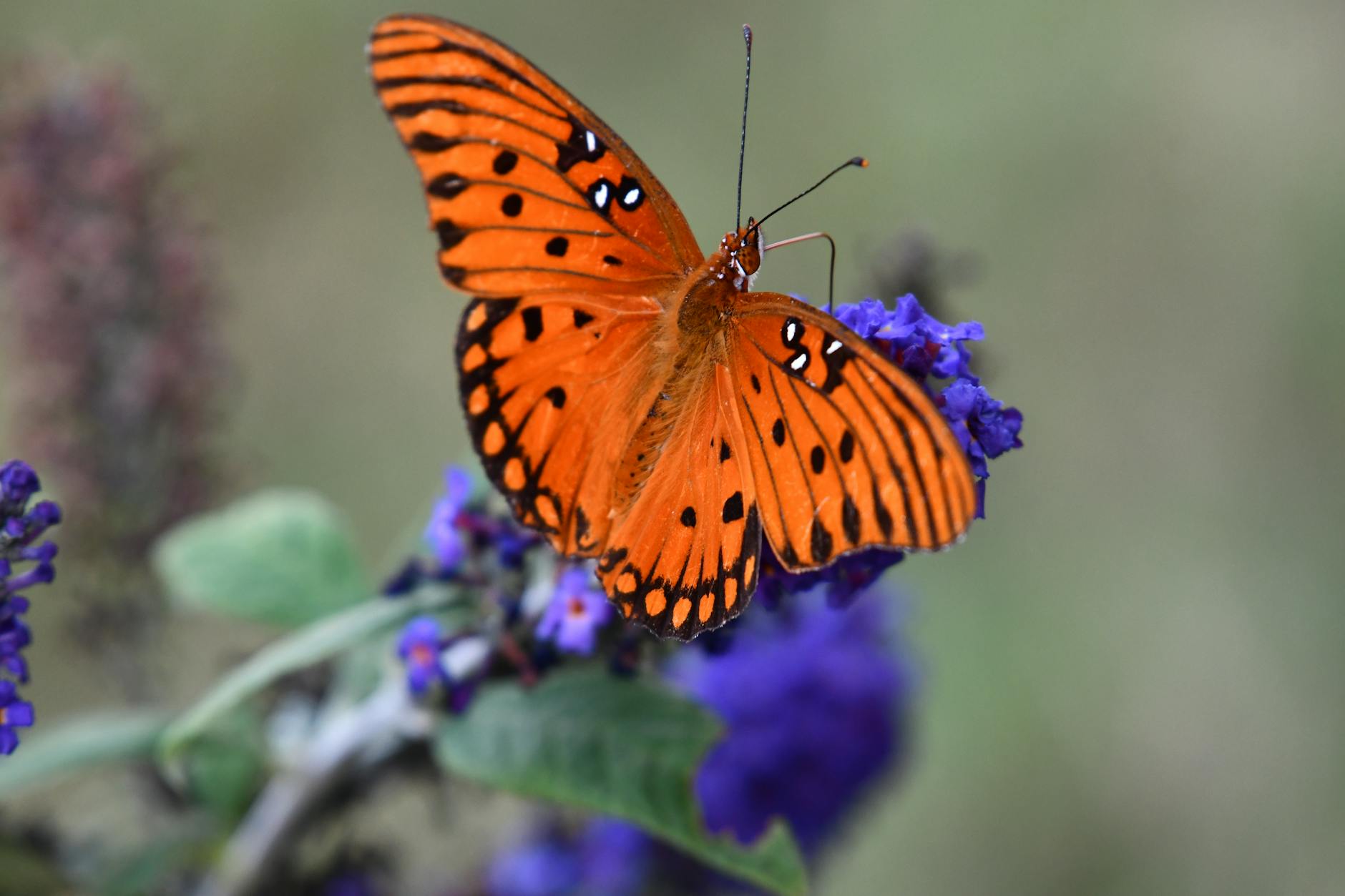
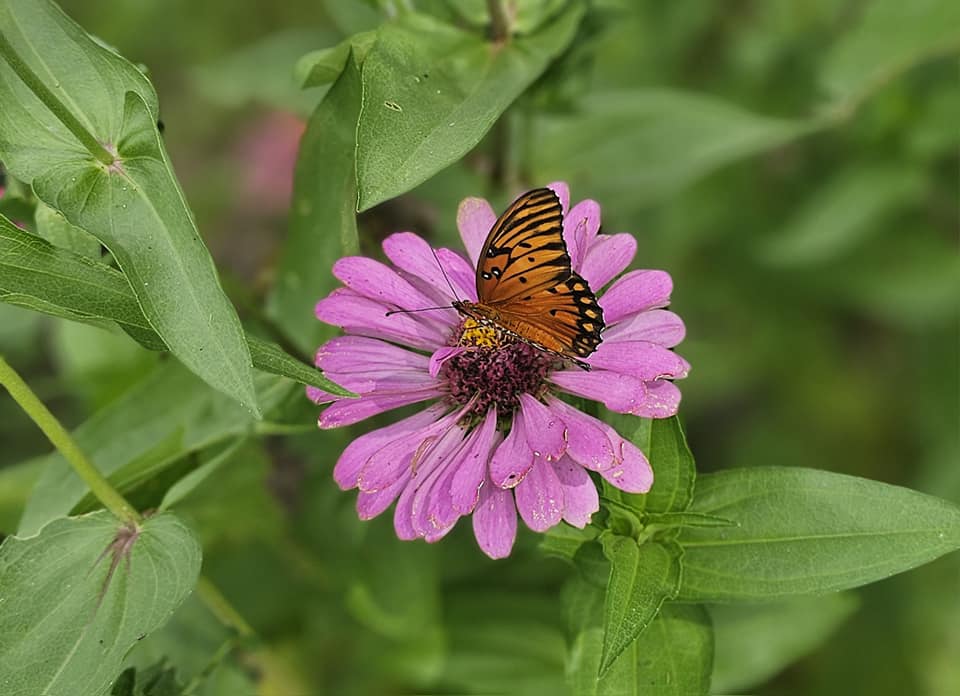
In my classroom and at home, I am keeping caterpillars in safe enclosures. The caterpillars are Gulf fritillaries that hatch and feed on passion vine. I tried this topic for my first ever Pythagorean Poem.
Hidden in wood chrysalis of safety rest for weary
hardworking caterpillars climb munching passion vine leaves grow longer each day prepare for enclosed transformation
Passion caterpillars grow, prepare for weary rest enclosed in safety. Each hardworking, munching vine leaves. Climb into wood-hidden chrysalis– Transformation for longer days.
This week was my second week of teaching this school year. We are settling into the routine. My classroom door revolves all day long with incoming and outgoing students. Nevertheless, I am establishing some routines. One of the expectations each week is “This Photo Wants to be a Poem.” On Wednesdays I post a photo here on my blog, but I also post it on our Fanschool site.
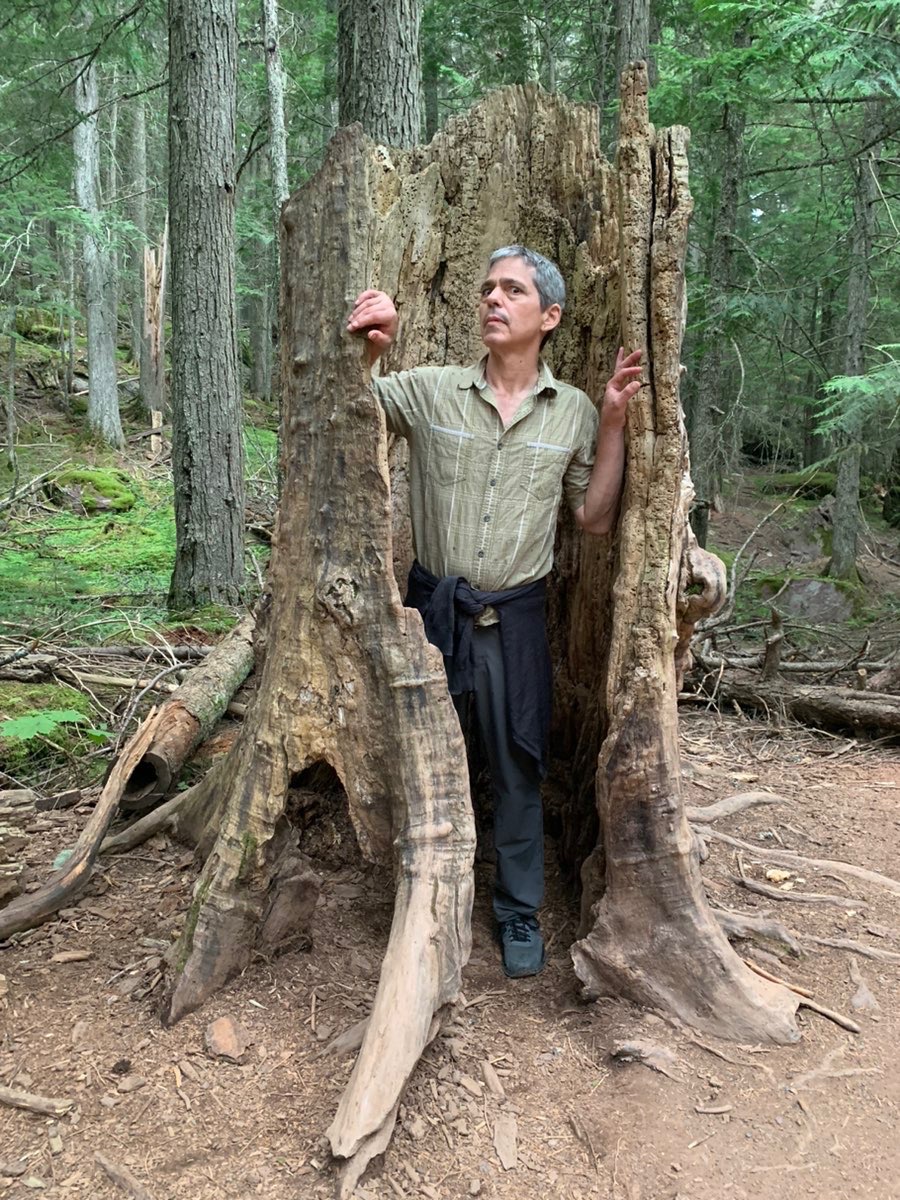
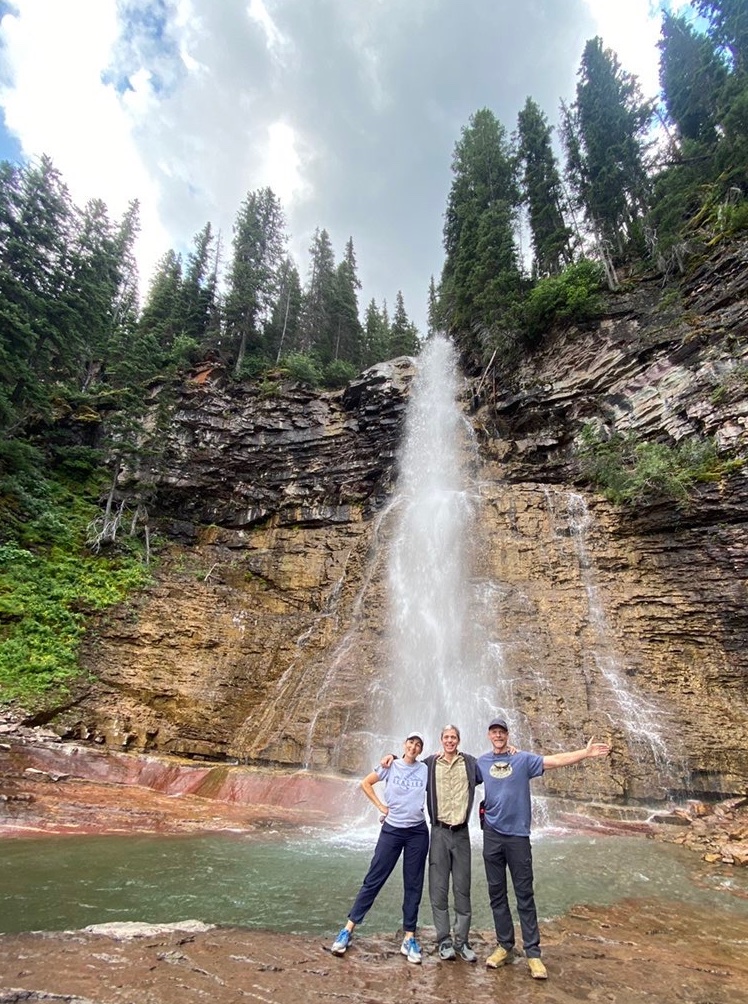
My friend Dani Burtsfield is a teacher in Kallispell, Montana. Last week she hosted poet Allan Wolf for her annual reading conference. She took Allan on a hike that she had taken me on a few years ago, so she sent pictures of them. I was wishing I could teleport and be with them, especially since our temperatures are well into the 90’s these days. If you know Allan and his poetry presentations, you know how he creates fun wherever he goes. Dani sent me some pictures.
Allan Wolf photo by Dani Burtsfield
On my students’ blog, I post my own poem as a model, and each student writes their own poem in response. One of my new students is a second grader. I taught her how to write a haiku. First we collected words. Then she spoke lines using the words. We counted syllables. I think she was pleased with her poem.
Crystal clear water you can see mountains through it beautiful blue lake
by Danielle, 2nd grade
Avalyn, now in 5th grade, wrote similes and used repetition. It amazes me how seemingly simple poetic elements can work together to become a beautiful poem.
Like an oversized crystal it falls Like the morning mist it falls Like a Maiden priestess it falls Like an opal river it falls by Avalyn , 5th grade
The final example I want to share made me laugh. Kailyn wrote from the perspective of the waterfall itself.
I love spitting on people, it’s just the way I flow. Paparazzi all around me, trees for hair. My life has been a sequel, the water in me loves to go, go, go! I can just relax and be lazy. If you visit me, you might want to watch what you wear.. by Kailyn, 6th grade
Dani, Allan, and Randy at Virginia Falls in Glacier Park, Montana.
Last weekend was my birthday. I was blessed with a visit from all of my children and their children. Our time together was full of fun. Then school started in full force for me on Monday. There is no tired like the tired of the first week of school. So I didn’t have anything to offer for today’s post.
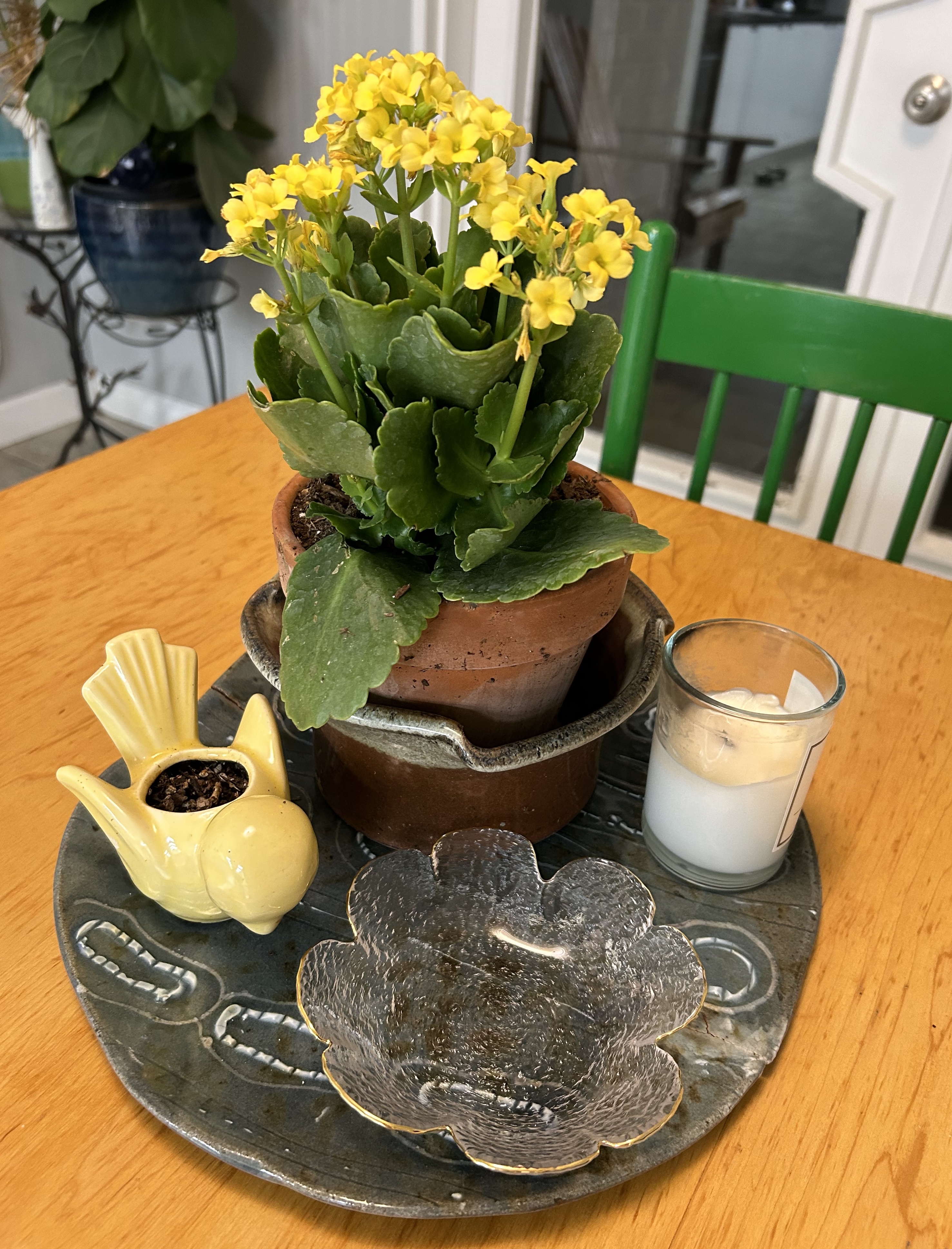
When I opened my email, I had a word-of-the-day from Merriam-Webster that included one of my favorite words to say, Tchotchke. Looking at my kitchen table where I am writing, I see a dish sent to me from my daughter’s mother-in-law. It touches me that in the midst of cancer treatments she had the thoughtfulness to send me a gift. It may just be a knickknack, but the deeper meaning is the love it was sent with.
I turned to the definito form created by my friend and fellow Inkling Heidi Mordhorst. A definito is a poem for children with 8-12 lines that defines a lesser known word. The word is given in the last line of the poem.
Simple Gift
For a birthday gently placed in a small bag tissue paper wrapping a glass dish– dappled, dainty, daisy– a little something to hold a little something decoration, knickknack, trinket simple reminder of a friend’s love...Tchotchke. Margaret Simon, draft
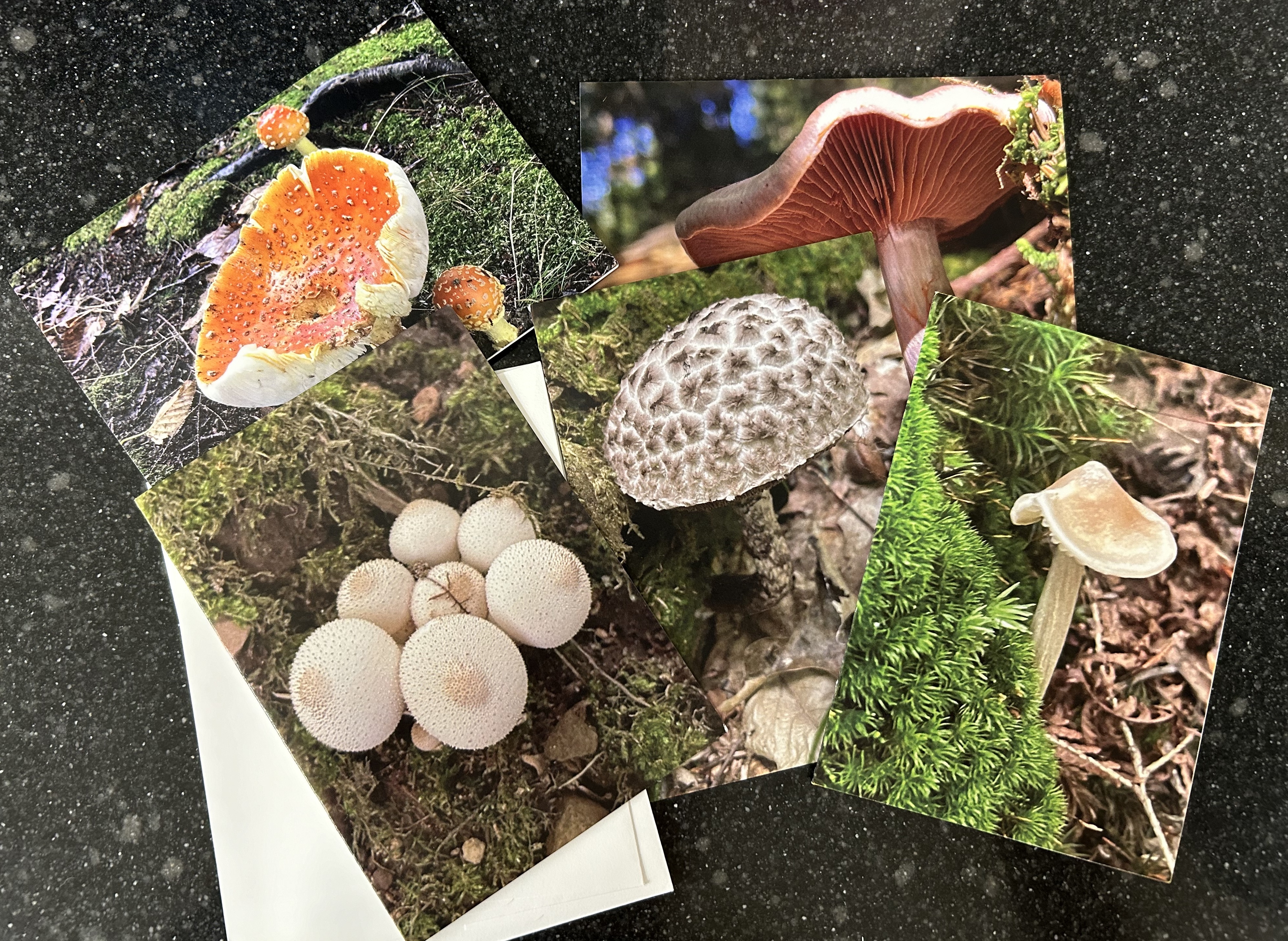
These days not many exciting things come into the mailbox. One of the thrills of summer is the Summer Poetry Swap. Two of the final swaps (organized by dear Tabatha Yeatts) overlapped and arrived close to the same day. My kitchen counter was dappled with cards and stickers and sweet poems.
A set of photo cards by Carol Labuzzetta.
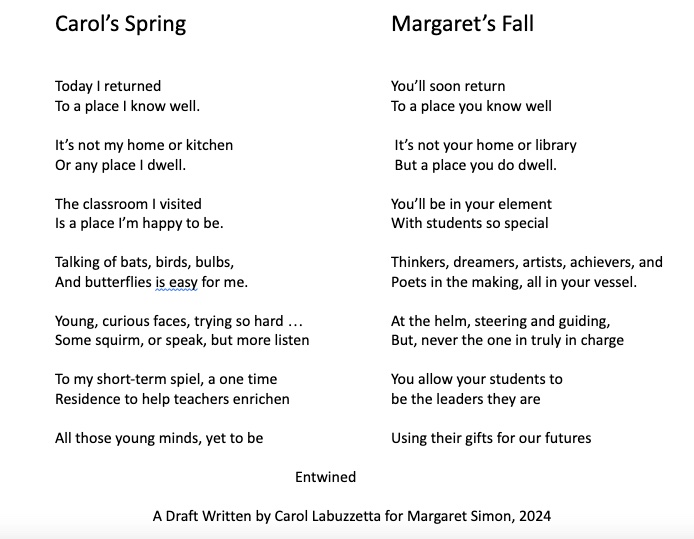
Carol sent a poem she wrote in two voices, the two of us in our vocations side by side, along with a set of her original photo cards. Little did she know I needed this dose of confidence to start my new school year.
Tabatha, our poem swap organizer, sent a poem she wrote about a friend who thinks about writing. I do admit to having days like these when the notebook stays closed.
POSTPONED
by Tabatha Yeatts
When will she write in the notebook, I wonder, the blank one engraved Nina’s Adventures on the front? Once my plans come to fruition, she says, after my dreams come true, when the good times begin. How many stories has she already told? The pet goat who played with dogs, the thief she wrestled, the song she wrote and translated into fifty languages, the love story, its tragic end. Don’t they deserve a space on the pages? No, no, she says, once the adventures start. When I see her, she regales me with her storm-tossed ride, but her pen is in a drawer and the words turn away from the pages, settle everywhere but there.
Thanks to all of the poem swappers this summer. It’s a small way of spreading poetry love.
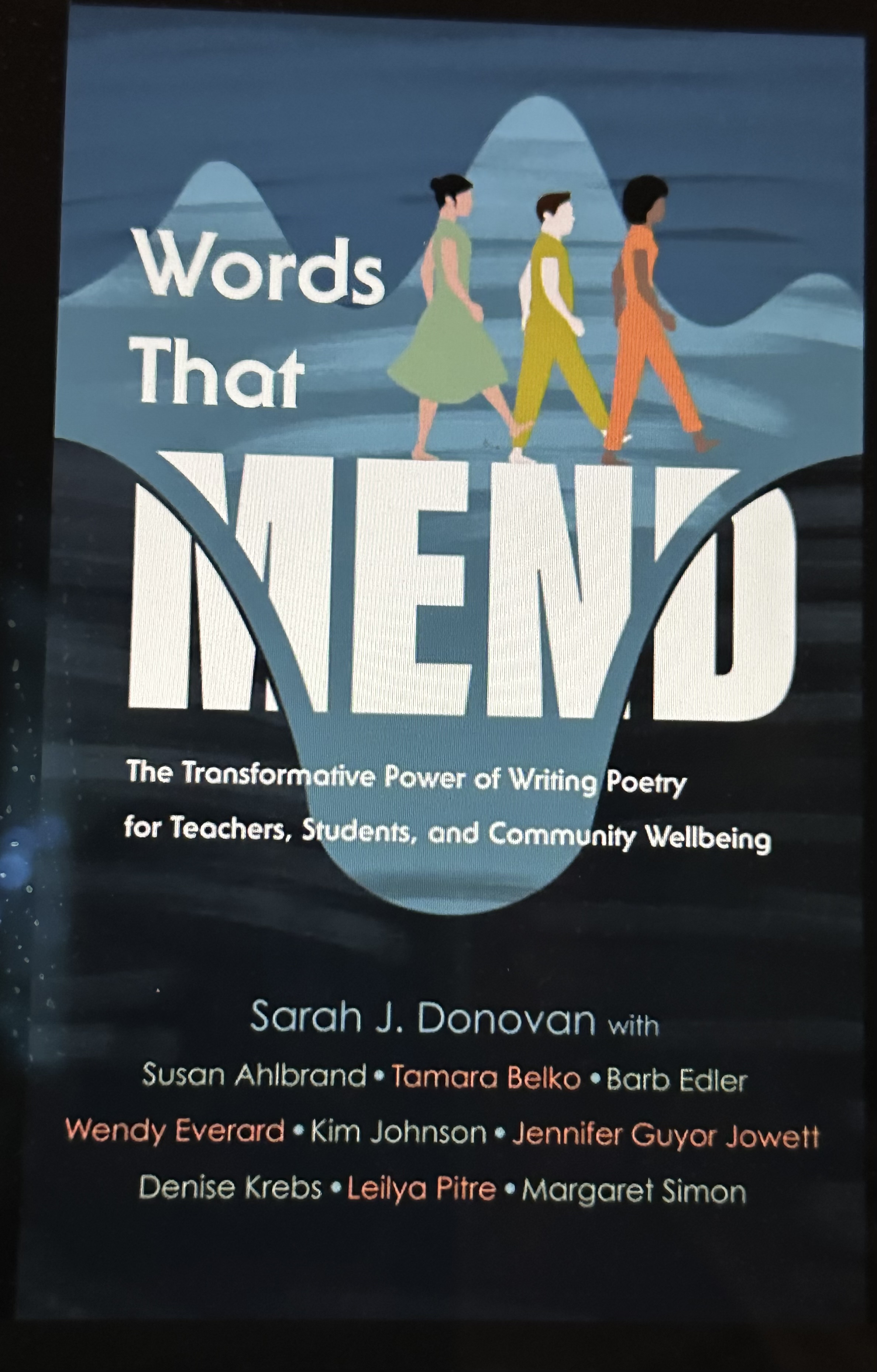
Another way to spread poetry love is to put our new book on your to-be-bought list. I am proud to be a part of Words that Mend: The Transformative Power of Writing Poetry for Teachers, Students, and Community Wellbeing. The book has been a labor of love. It will be released on Sept. 2nd and will be available for free as a download or for print cost only on Amazon. Hop over to Kim Johnson’s post to see her poetic expression of excitement.
Poetry Friday is gathered today by Laura Purdie Salas who has a new picture book Line Leads the Way. Visit her site for all the poetry goodness.
The first Friday of each month is reserved for the Inklings challenge. This month Catherine tuned us in to Ada Limon’s project You are Here. Her question is What would you write in response to the landscape around you?
Last month I participated in Ethical ELA’s Open Write. Mo Daley prompted us to write a type of found poem called “X Marks the Spot.” The idea was to take any text and draw an x across the page, then use the words to make a new poem.
I look forward to trying this prompt with my students soon. Having a bank of words to use in a poem can be just the push you need. “You are here” is often marked by an X. I used a poem found in the American Scholar magazine titled “The Bougainvillea Line” by Ange Mlinko.
This summer our landscape has been saturated by rain. This is better than drought, to be sure, and my garden has loved it. This poetry exercise stretched me to find a new place to land. The found words are in italics.
Summer Soaked in Rain
Driving the back roads which pass by train tracks which carve ditches of untended weeds, we breathe the familiar lime-lit gravel there swarming with wild volunteers.
Illuminatedporches bark with fervor, tomatoes once sweet, pock-marked by bird beaks.
I think of my own garden full and overgrown, untrained vine of bougainvillea stretching underfoot with poor allegiance to the government of gardens dissolving in rained-on glory.
Margaret Simon, draft
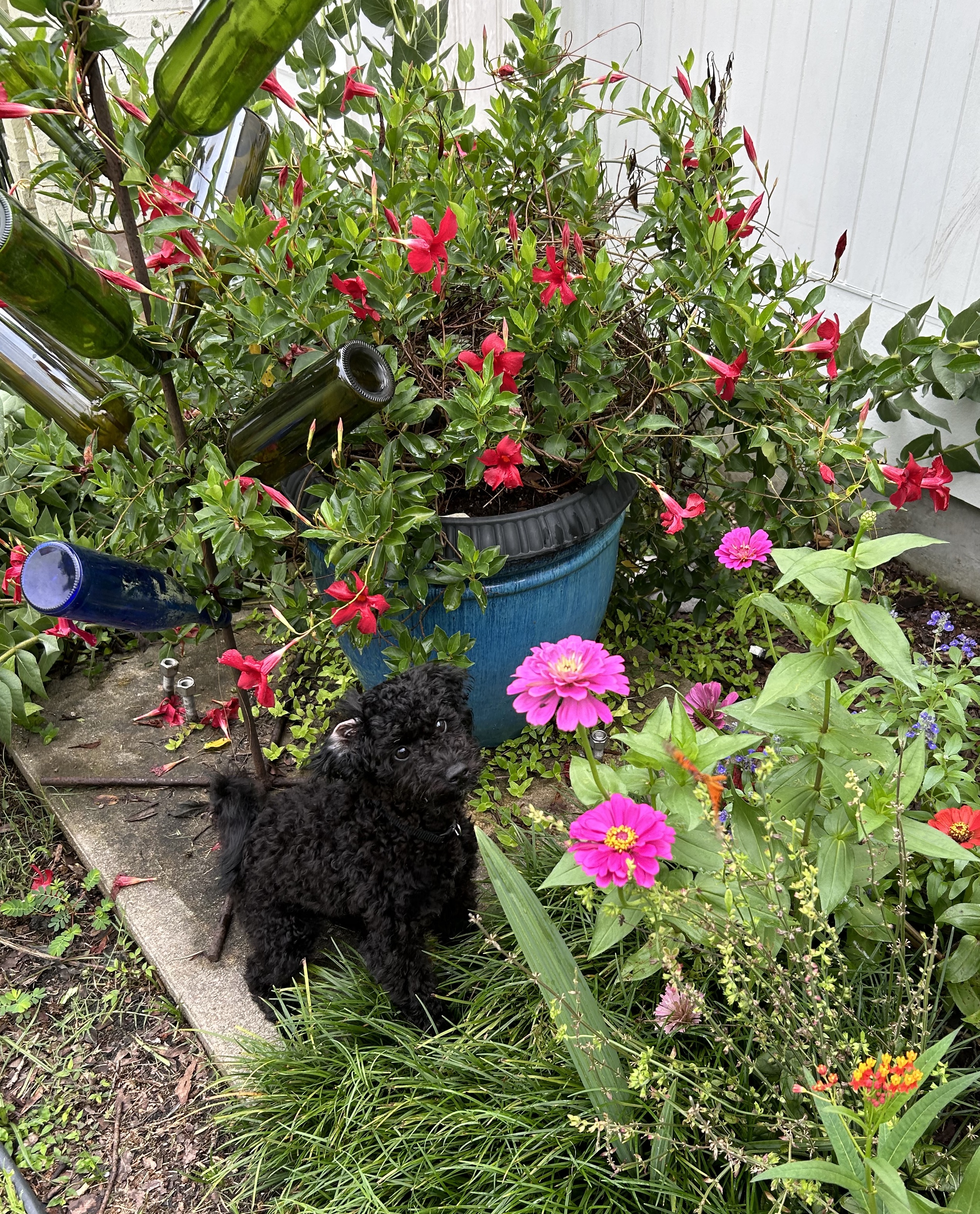
In my butterfly garden, Albert chases a Gulf fritillary. Photo by Margaret Simon
To see how other Inklings responded to this prompt, go to these links:
Poetry Friday is hosted today by Marcie Atkins at her blog.
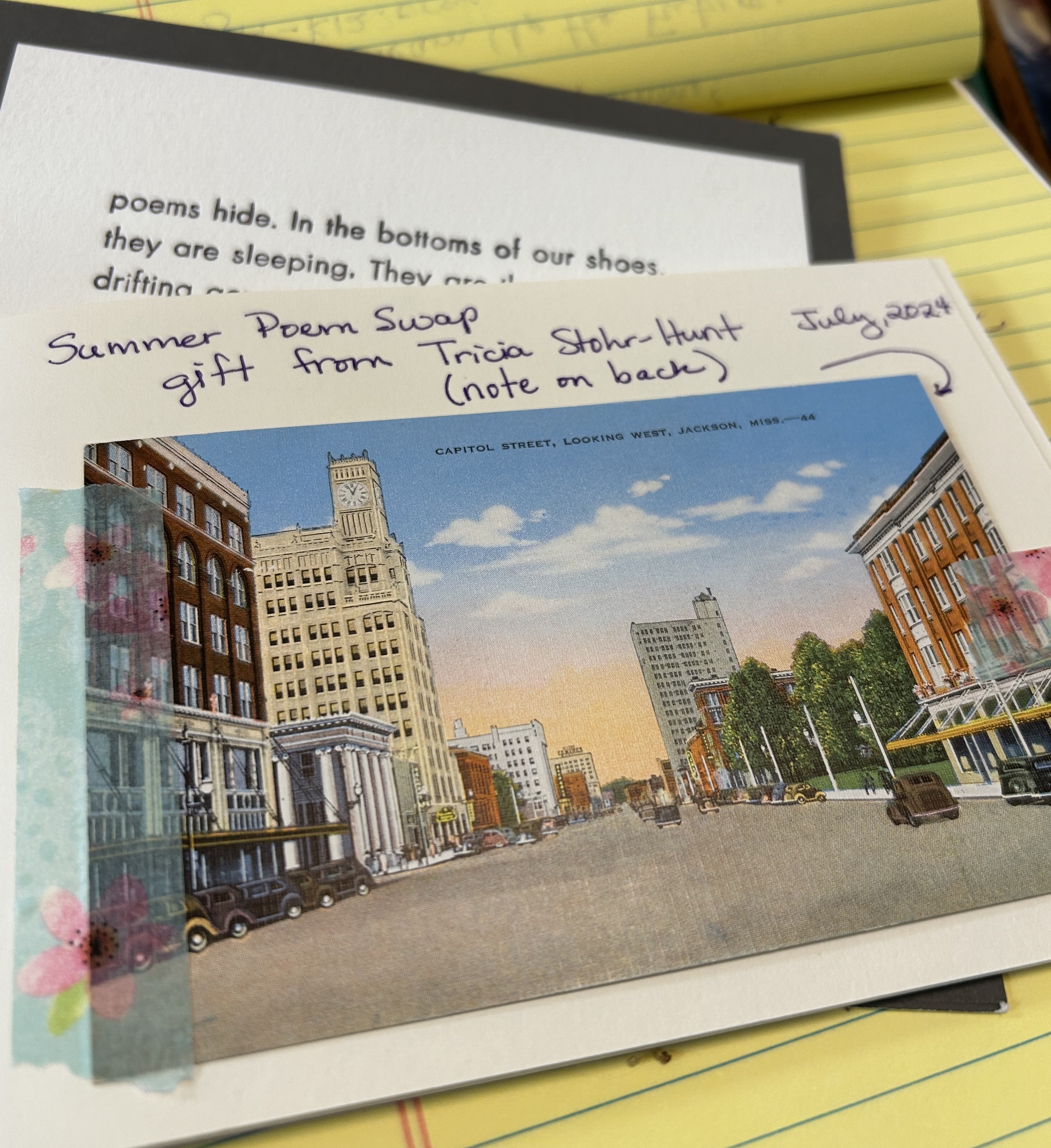
I am always touched when someone from the Poetry Friday community takes the time to get to know me and send me a personalized poem. The Summer Poetry Swap is organized by Tabatha Yeatts. I received a package from Tricia Stohr Hunt with delightful surprises. She sent a postcard of Capitol Street in downtown Jackson, MS. from 1944. My father would have been 11 years old and living a block away.
The poem she wrote has a lovely repetition. She said in her note that the “people” in the poem are me.
Musings on Mississippi
I traveled through Mississippi once in a rented car, speeding from Mobile to NOLA in the dark there were only twenty-four hours of liberty
I was in the dark about Mississippi familiar only with minutiae learned in elementary school Capital: Jackson Nickname: The Magnolia State Abbreviation: MS Fun Fact: birthplace of Elvis
Minutiae learned in elementary school tell an incomplete story I know the stereotypes the ugly bits of history but it’s the people that interest me their lives, their stories
People interest me the ones with big hearts who wear their love loud and proud love for the land love for poetry and music love for the beauty of the world for this place called home and every living thing
From Tricia Stohr-Hunt
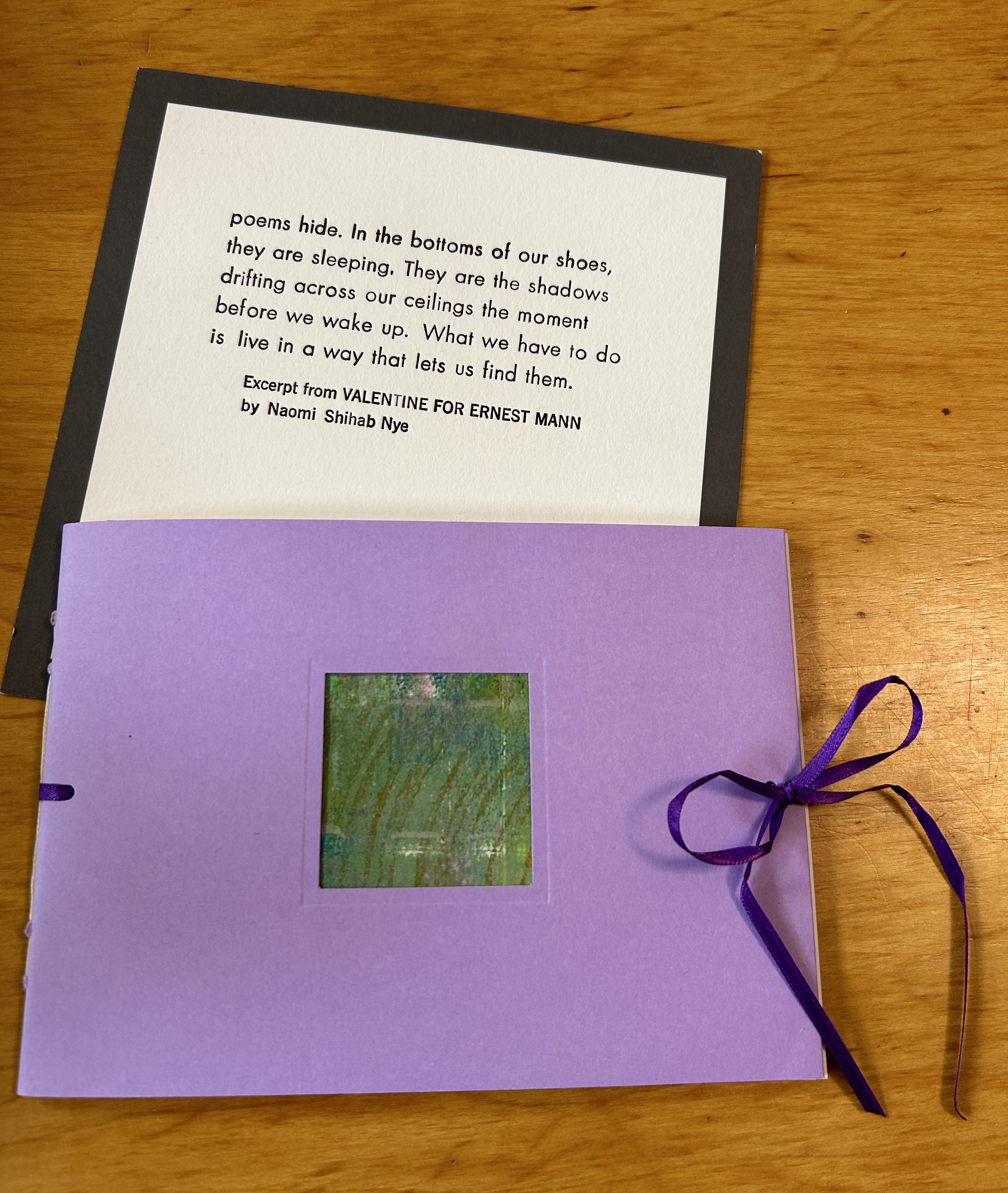
Tricia personalized her gift even more with handmade items, a letter-block print of an excerpt from Naomi Shihab Nye’s “Valentine for Ernest Mann” and a lavender folded book including a window to her original print art. Her gift was overflowing with creativity and inspiration.
Summer Poetry Swap gift from Tricia Stohr Hunt
This week I wrote with Ethical ELA’s Open Write. On Wednesday, sadly the last day for this month, Mo Daley prompted us to write a dodoitsu poem, a Japanese limerick of 7, 7, 7, 5 syllable count. My poem was dedicated to this supportive online community. I am feeling the love.
A Community of Poets
Poems drift across this room and hide within our voices. Pressing forth among like minds– Cheers to word choices. Margaret Simon, draft
The Poetry Friday Roundup this week is here. Scroll down to enter your links into the inLinkz party.
My summer is quickly coming to an end. I will be returning to teaching on August 1st (yes, it gets earlier every year). Two weeks left, but as every teacher knows, you must start working on plans and classroom arrangement much earlier. So today I am here with a praise poem from my summer.
July came in with a poem from Grateful Living. A poem I know and love. One I’ve carried in my pocket often for Poem in your Pocket Day. It’s likely one that you know as well, Kindness by Naomi Shihab Nye. In my notebook I wrote a riff on the line “You must know sorrow as the other deepest thing.”
You Must Know
Sorrow buries itself in the marrow of your bones, zaps your energy so all you can do is stop, rest, breathe slow and steady.
Then you emerge, shedding a former skin to feel Love as the deepest thing, how sorrow lights on a fence post to show you what is true. All a part of you.
July is a popular travel month. Heidi challenged the Inklings to write a postcard poem for this first Friday. “Write a short postcard poem with choice details of your vacation/holiday/getaway/escape location and activities. Conclude with “Wish you were here” or some variation!”
Unfortunately, we had to cancel a Europe trip due to my husband’s injury. I have been perusing social media and pondering the travel of my friends. This is not a healthy situation. I’m having bouts of travel envy.
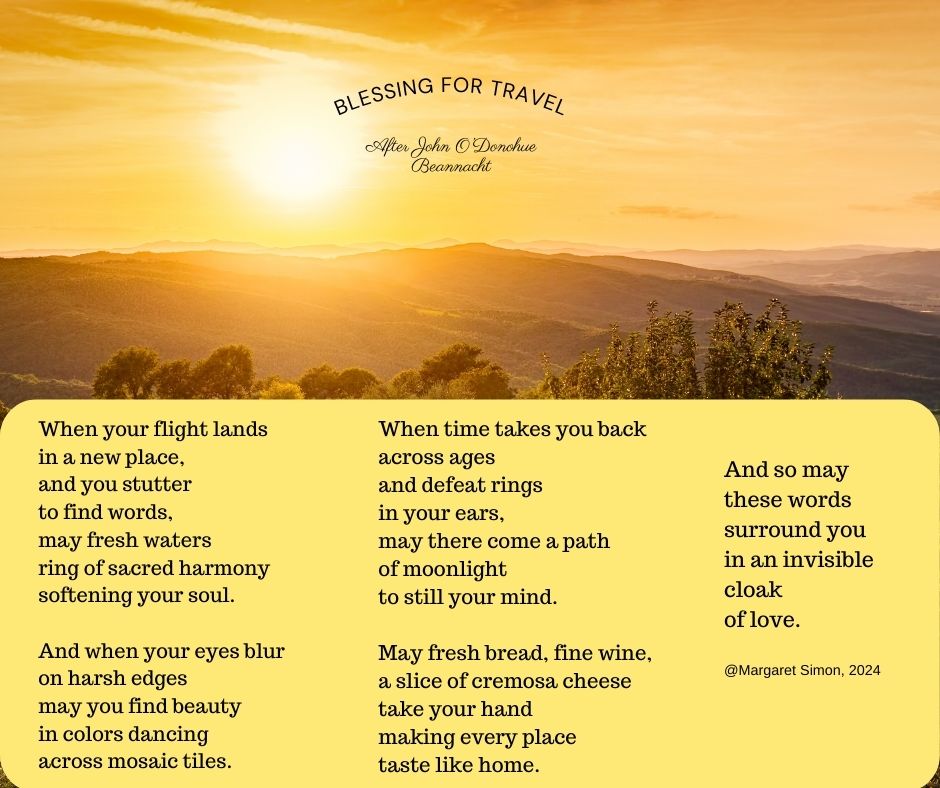
A friend recommended John O’Donohue’s interview on the On Being podcast. O’Donohue died young in 2008. His interview with Krista Tippett was inspiring. I was especially attracted to his poem “Beannacht” found in his final book: To Bless the Space Between Us: A Book of Blessings and used it as a mentor poem for my poem “Blessing for Travel”
The annual Summer Poetry Swap is coordinated by Tabatha Yeatts.
This week I received my first poetry swap poem from Rose Cappelli. Rose sent a dreamy note tablet, a Mary Oliver poem, and a cascade poem about peonies. As Rose explained, in a cascade poem, each line from the first stanza repeats as the final line of each subsequent stanza. Rose does this seamlessly.
Thank you, Rose, for the lovely cascade poem.
My mind has been on the flowers, prompted by Mary Oliver, Rose, and Maggie Smith. I subscribe to Maggie Smith’s Substack newsletter. This week she wrote about naming things.
“I love when I can accurately identify things when I see (or hear) them: a bird, a tree, a flower, a constellation, a kind of nest. (As the poet Pattiann Rogers once said in an interview, ‘naming is a form of honoring something.’)”
Maggie also writes about not knowing the name of something and how that can lead to wonder and discovery. I found a flower in my mother-in-law’s collection of pots that she nor I could identify. We could tell it was a type of hibiscus. I began by writing a list of metaphors. I am still playing with how to insert the not knowing, but wanted to share the small poem that I wrote in my notebook.
Hibiscus Moment
You are Love’s red lace, blooming beet-red bow on a woman’s flowing gown.
You open only for a day flirting like a spool of yarn to a kitten, taunting us
to feel unhinged with marvel. So much bravery in your fleeting face. (Margaret Simon, draft)
Margaret Simon lives on the Bayou Teche in New Iberia, Louisiana. She is a retired elementary gifted teacher who writes poetry and children's books. Welcome to a space of peace, poetry, and personal reflection. Walk in kindness.