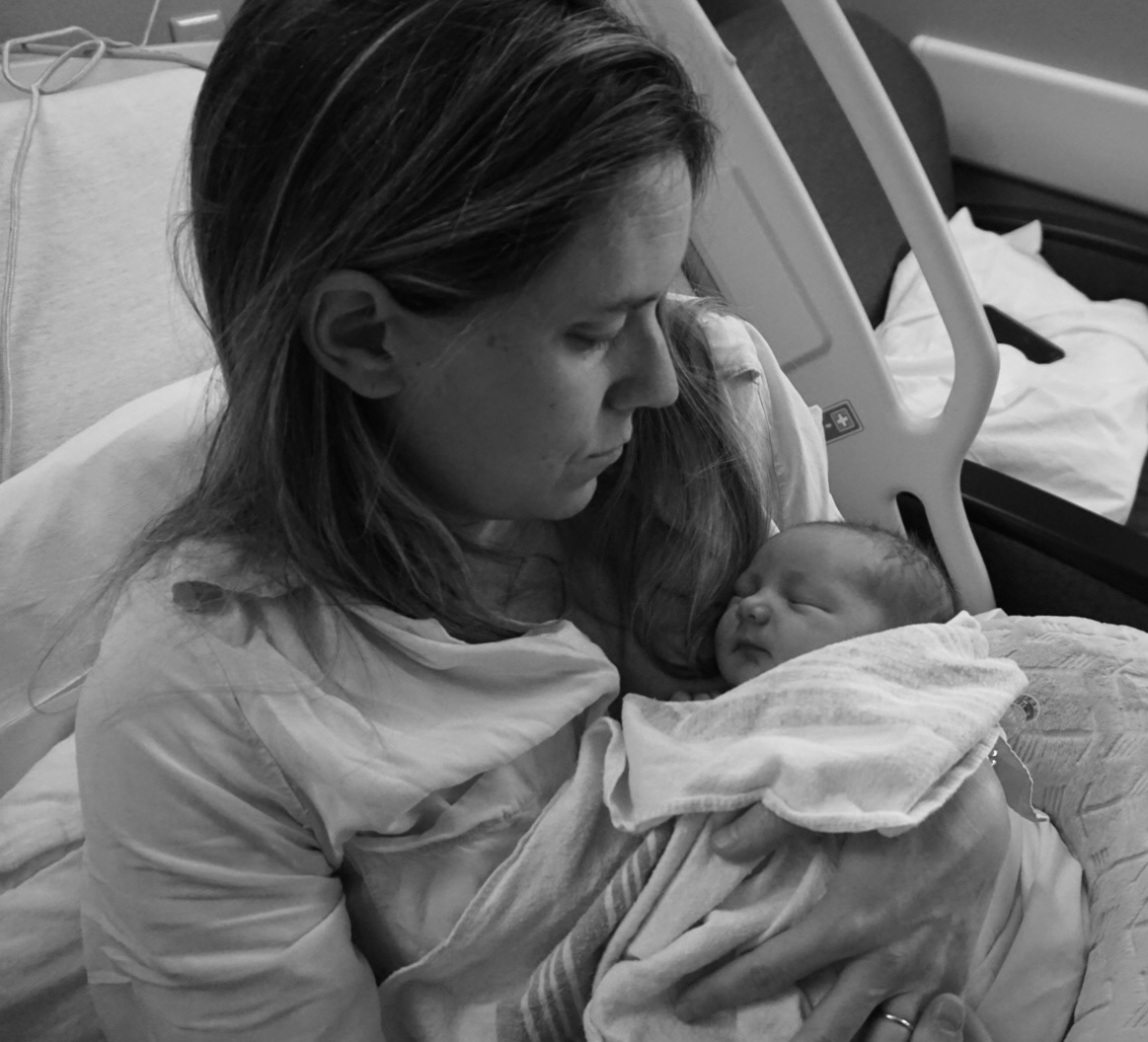
Earlier this week, Sarah Donovan once again invited teacher-writers to join an Open Write. One of her brilliant inspirations came from this poem by Joseph Bruchac. I am so grateful for my daughters, the oldest of whom will soon deliver a daughter of her own. I am pleased with how the simple form worked to express the connection I feel.
Expectant
When I place my fingers on the swell of her womb,
like combing waves in an ocean softly lapping to shore,
her skin gently moves
as our time ebbs & flows mother to daughter to daughter together in our own sea.
On Saturday I had the privilege of attending a writing workshop with our state poet laureate, John Warner Smith as part of the virtual Festival of Words. He presented the poem This is Not a Small Voice by Sonia Sanchez. He asked us to consider the power of collective voice and love in building a more perfect society. I stole borrowed some of Sanchez’s words as well as some from Michelle Obama on Twitter (responding to Biden’s election). “…build a nation worthy of our children.”
In the spirit of poetry, we raise our collective pens to toast the power of words to move mountains to reclaim a spirit of good will.
The mouths of our rivers have spilled out enough dirt and grime to soil a century. Grab your shovel, friends, hold it high and dig.
Dig for gold! Dig for diamonds! Dig for poems that move you!
It’s up to us to love the ones who hate us, to love with listening ears, to love with a fever for love,
But before we do that, kiss the face of a nation worthy of our children and our children’s children.
Let’s kiss her with all the passion of our poems. Now Move!
Margaret Simon, draft
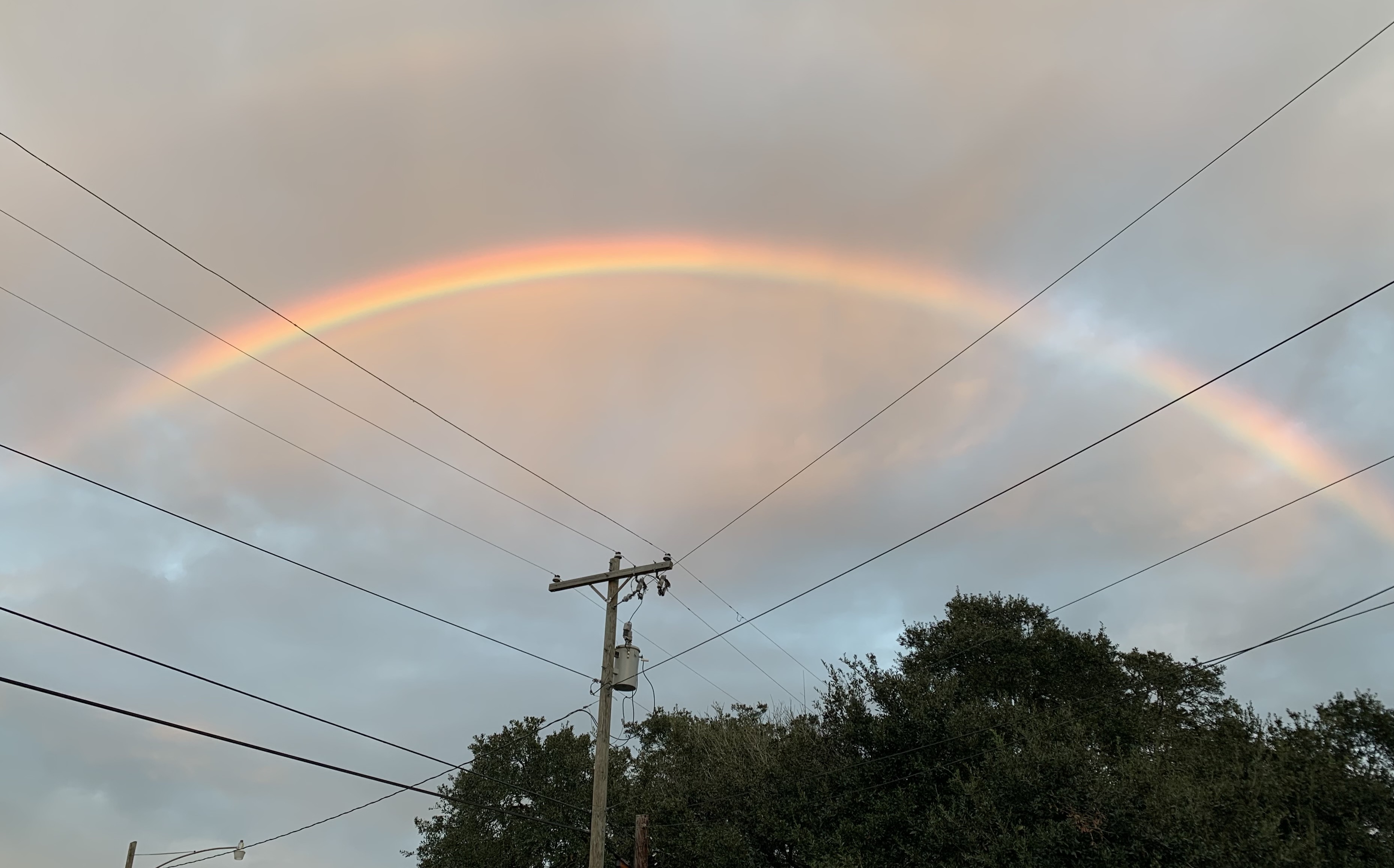
A rainbow appeared in the sky on my way home from school this week. I always stop to photograph rainbows.
This week the Sunday Night Swaggers are drafting to a challenge from Linda Mitchell, an aubade, which is a praise song to the morning. I read on Sharing our Stories a prompt for capturing sounds in your writing. To me sounds and aubade seemed to go together.
Sound is a huge influence on people’s attention.—Walter Murch
Sounds of the Morning
Is there a sound that wakes the morning? An alarm of the softest hum, shrill tweet of a passing bird, a gurgle from the coffee pot?
Will you wake from your garden And look for me?
Will I kneel down in prayer Or throw my head back and laugh?
Oh morning, your welcoming glaze bathes kindness over the day.
I’ve been exploring the blues poem form these last few weeks. My students and I read Finding Langston, so I pulled out some Langston Hughes poems. I grew up in Mississippi and something about the form feels like home to me. You can read more about blues poems here.
We’ve had a few hurricanes this year. Of course, the year 2020 is cursed as you know, but even for a curse, five hurricanes have threatened our state of Louisiana. Five! One of them, Delta, came pretty close to us here in bayou country. So with blues and hurricanes on my mind, I looked at this picture on my phone of a great white egret in the bayou a few days after Hurricane Delta. What do egrets do during a hurricane?
Bayou Teche, Great White Egret October 14, 2020
Egret Blues
It’s a tryin’ time to be a symbol of peace. Tryin’ during this time to be peace, full of a sad song in the air. There’s a sad song swirling in the air. Tropical winds just don’t care.
That hurricane down south in the gulf, A storm makes peaceful turn to rough. I’m walkin’ this line waitin’ for a sign, a sign of weather’s high-pitched whine I can’t keep from cryin’.
Egret blues echo in my Lord’s sunrise Lord’s sunrise blurs my sideways eyes I’m catchin’ the tailwind, ready to fly Ready to fly through the bright new sky A horizon of Peace by and by.
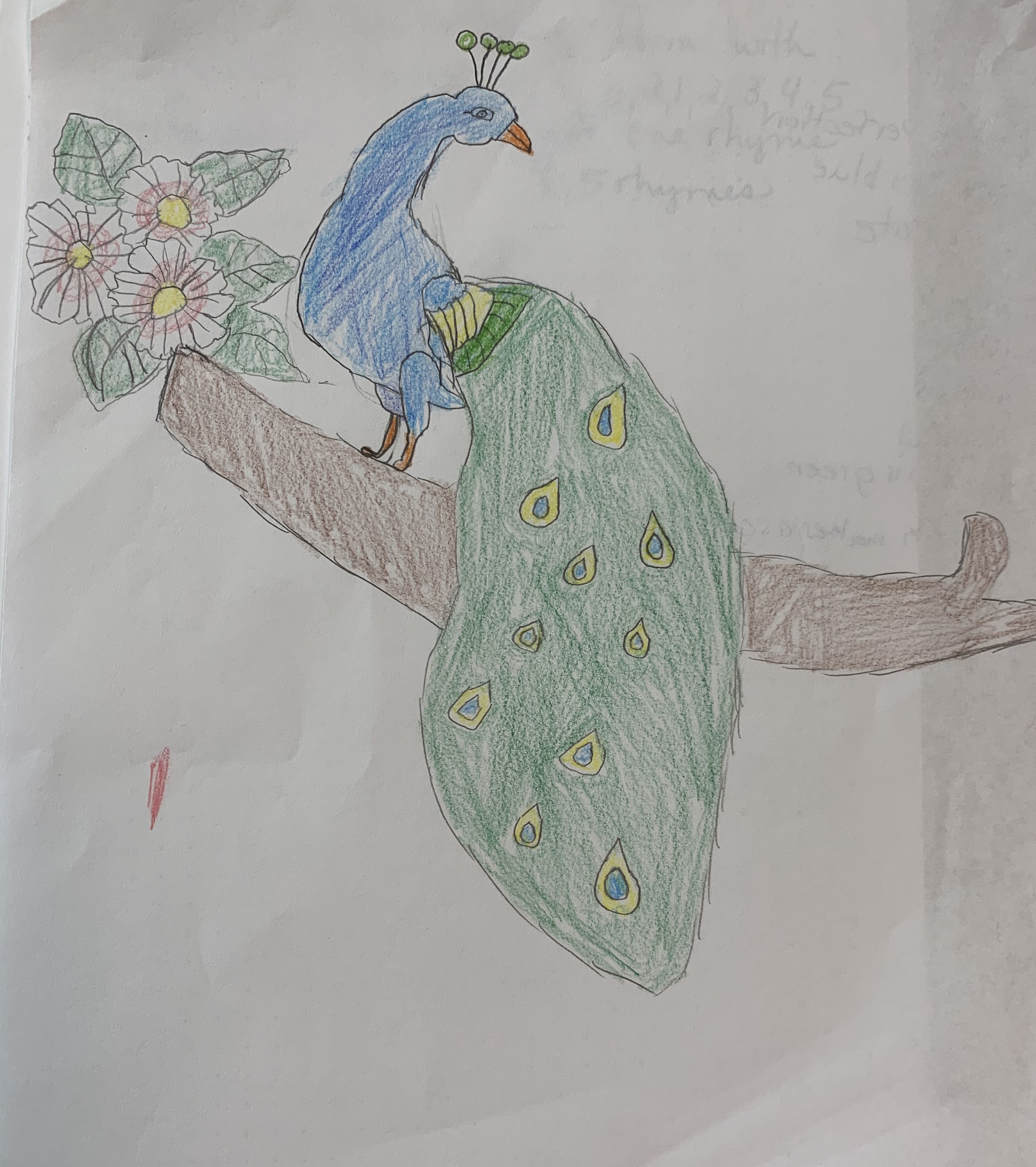
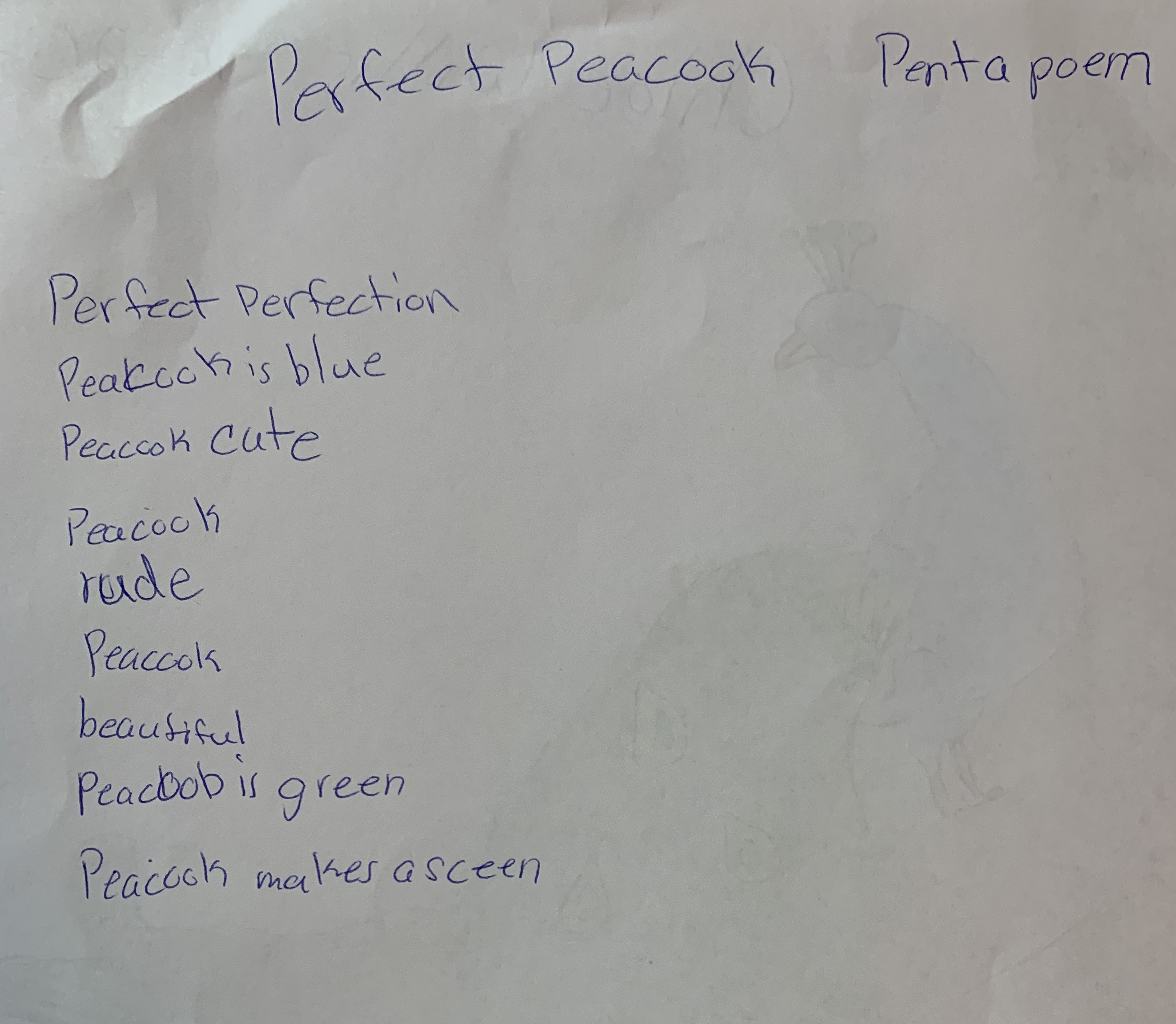
I enjoy playing with a new form, and this week I had a few to try out. One was invented by my very own student Chloe. This has happened only a few times in my teaching career when students become so comfortable with poetry that they venture into creating a new form. Chloe was writing to a prompt from Write Out, a collaboration between the National Writing Project and the National Park Service. The prompt asked students to draw a bird and write a journal entry for a day in the city. Chloe decided to draw a peacock. Then she wrote a very P heavy peacock poem. The aha came when she realized there was a distinct rhythm to her words. Voila! A new form!
Her form uses the syllable count of 5, 4, 3, 2, 1, 2, 3, 4, 5. We talked about the number five and decided that Penta-poem (more P words) had a nice ring to it. There is an optional rhyme scheme.
Peacock by Chloe, 5th gradePeacock Penta poem by Chloe, 5th grade
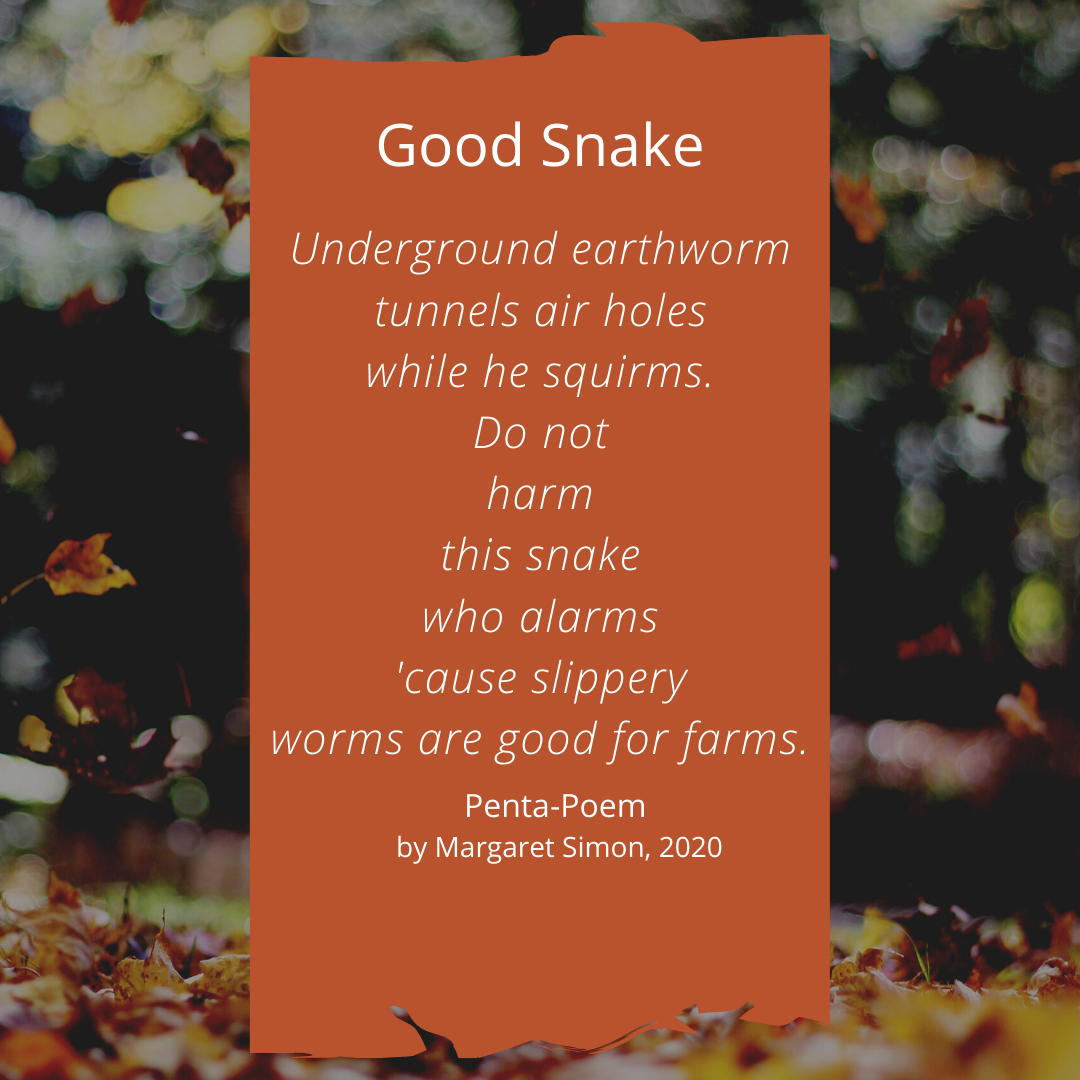
I used another Write Out prompt to play with Chloe’s form. This prompt asked us to write from the perspective of an underground creature.
I was introduced to a few other new-to-me forms on Ethical ELA Open Write this week. Anna J. Small Roseboro presented “Take a Word for a Walk” like the 5-finger exercises that pianists use. Writing to a daily prompt is exercise for the poet. Read Anna’s prompt here.
Why Worry?
I worry that I’m not good enough to worry about myself when I give in, worry for the sake of all my silly worry lists waiting for nothing but for worry.
Poetry Friday round-up is with Janice Scully at Salt City Verse.
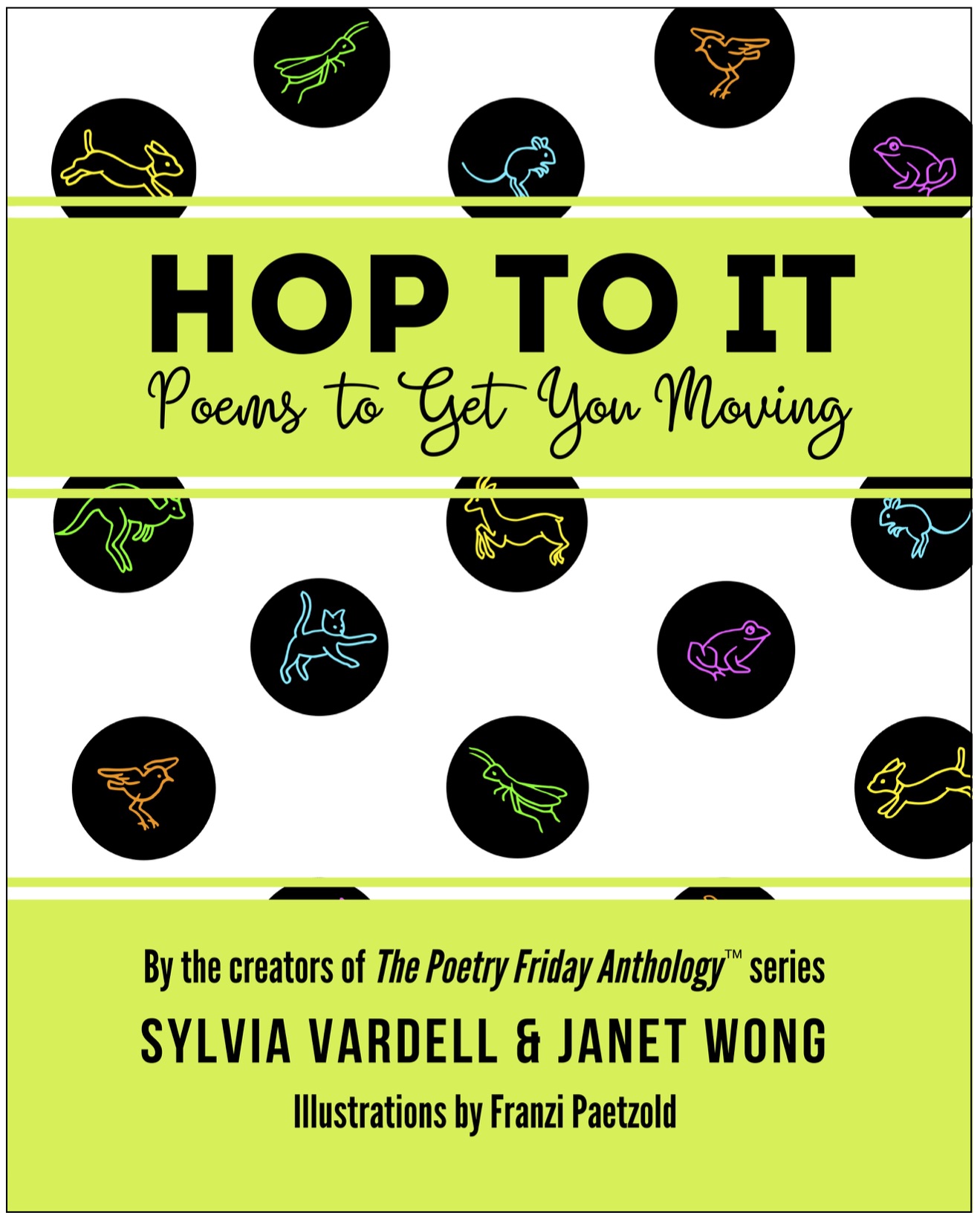
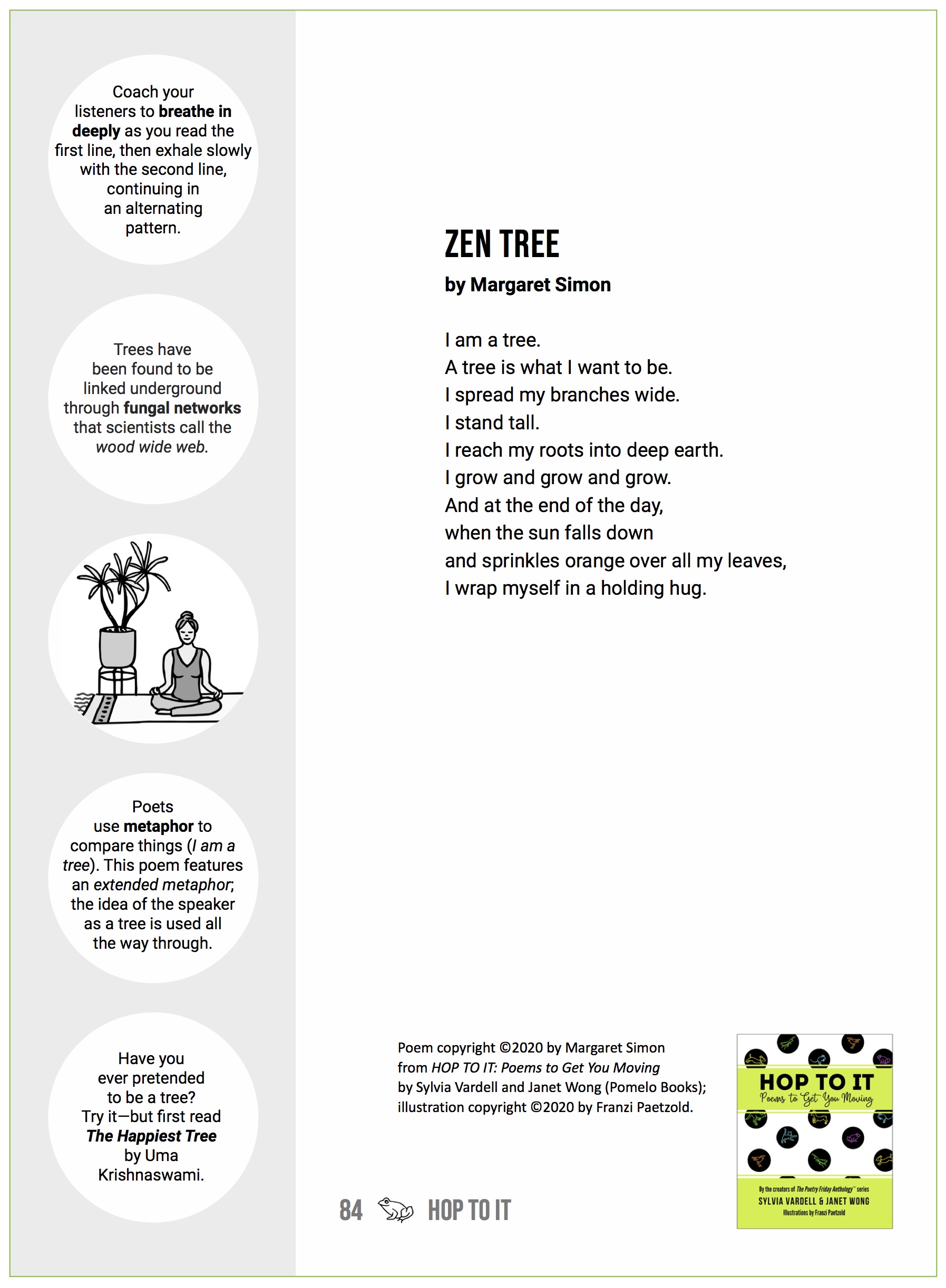
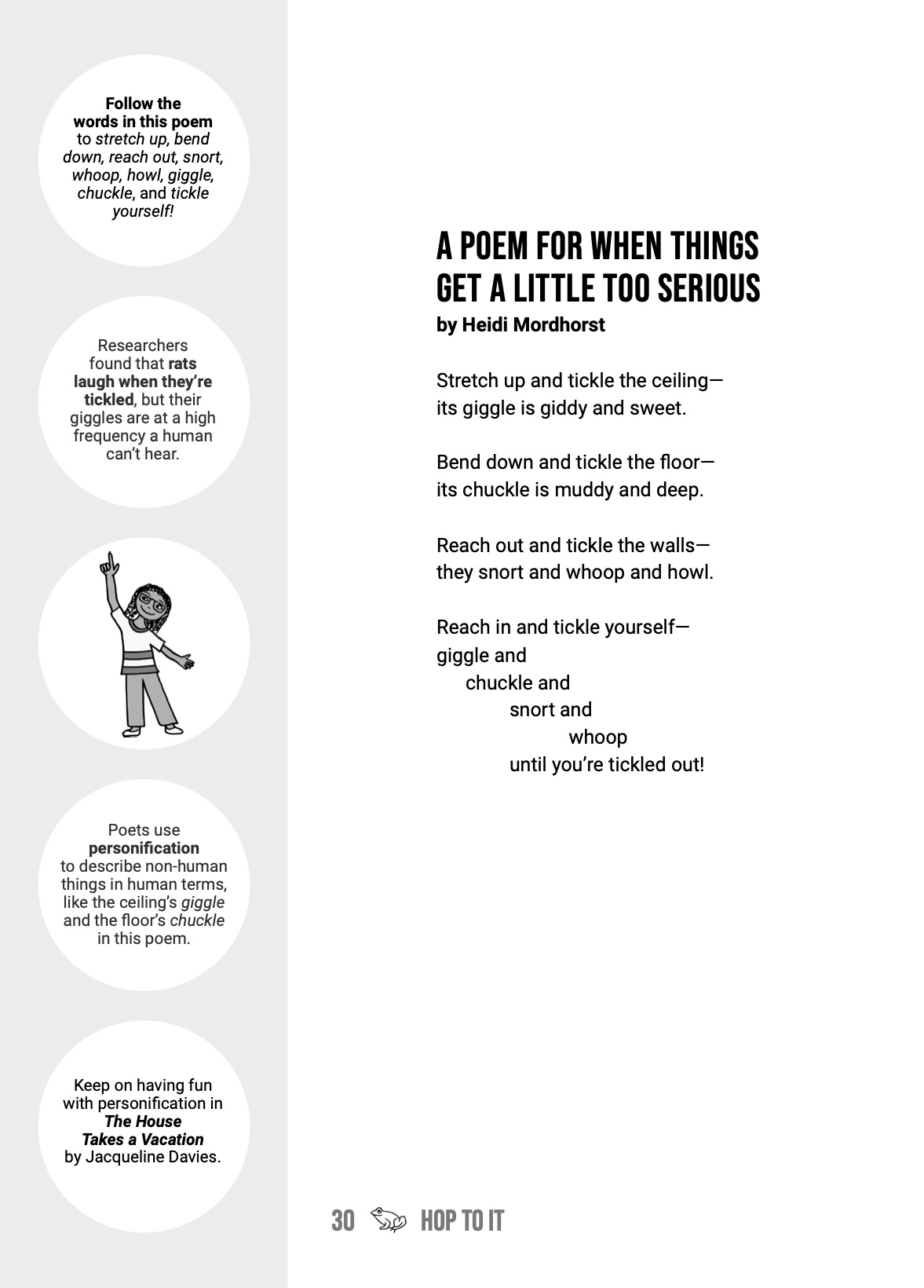
Today I am thrilled to be a stop on the blog tour for Hop To It: Poems to Get You Moving, the latest anthology from the dynamic duo, Sylvia Vardell and Janet Wong of Pomelo Books. The call went out earlier this year for poems that children can experience with their bodies. When the pandemic hit, Sylvia and Janet, who are known for responding to world events with poems, gathered pandemic poetry as well. This book is an inspiration for poets, teachers, and children.
I have written a collection of mindfulness poems that have yet to find a home, so I submitted a few to Sylvia and Janet, who selected Zen Tree. I absolutely love how the side bar bubbles give more information as well as a paired poem. This added touch is what makes Pomelo Books unique and teacher-friendly.
Heidi Mordhorst and Catherine Flynn, two friends from my Sunday Night Swaggers writing group, also have poems included. Catherine’s birthday is today, so hop over to her post to wish her Happy Birthday and to read her Mental Floss poem. Heidi gave me permission to share hers here. We are bouncing, flossing, tickling, and breathing along with 90 poets. What an amazing party!
Next stop Poetry for Children, blogspot for Sylvia Vardell, for more fun news about this book.
Pablo Neruda was the master at writing odes, skinny poems of praise that would go on and on, metaphor after metaphor, describing the most ordinary thing. With my student Chloe, we read Neruda’s Ode to My Socks. We discussed metaphor. Then I asked her to write a skinny ode about something she cares about. Gymnastics came to mind right away. She made the connection between the uneven bars and a tree, and off she went.
Ode to the Uneven Bars
A high twig it holds me. I’m a feather. Cartwheels on air that bring me higher, my hands are explorers that discovered a path to the wonderful world of magic.
I hold up my invisible hands that reach from island to island. My hands are telescopes that help me see the world. My arms wrapping around trees, my hands out of control going everywhere. Suddenly they fly high, higher than the trees that wait for me.
Poetry Friday round-up is with Tabatha at The Opposite of Indifference
I have become enamored of the duplex poetry form, a modern take on a ghazal + sonnet + blues poem invented by Jericho Brown, the Pulitzer Prize Poetry Winner for 2020. I’ve read the description in this article over and over, and every time I see something new. In other words, it’s complicated.
Here are the boundaries:
Write a ghazal that is also a sonnet that is also a blues poem of 14 lines, giving each line 9 to 11 syllables.
The first line is echoed in the last line.
The second line of the poem should change our impression of the first line in an unexpected way.
The second line is echoed and becomes the third line.
The fourth line of the poem should change our impression of the third line in an unexpected way.
This continues until the penultimate line becomes the first line of the couplet that leads to the final (and first) line.
For the variations of repeated lines, it is useful to think of the a a’ b scheme of the blues form.
Jericho Brown
I decided to challenge my writing group, The Sunday Night Swaggers, with the form. Challenges help to get us moving. (I hope my partners aren’t throwing eggs at this blog post.) I enjoyed this process. The repetition with the permission to vary it led to new discoveries.
Last week I posted a poem I wrote for my mother-in-law, a work commissioned by her for a local writing festival fundraiser. I commissioned a poem for myself and selected Bonny McDonald to write it for me.
Bonny and I have lost touch over the years, so I enjoyed our email exchanges that put us back into that comfortable place of friendship. You know the kind. When you feel like you were never really separated.
Bonny didn’t just take the questionnaire that was given by the Festival of Words organization. No, she emailed me more questions like What makes you think of your ancestors, and what messages do you get or teachings do you carry in your heart from those who came before you in your family?
My answers to that question and to “Who is your favorite poet lately?” (Jericho Brown) led to this wonderful duplex poem just for me. I cried when she read it at the Zoom event.
Namesake
A duplex for Margaret Simon, inspired by the portrait of her grandmother, Margaret Shields Liles
The mother of your mother is with you Margaret, still, a figure in a painting
Margaret’s figure sits still in the painting Her violin poised to spring up for a tune
A tune fit for a violin springs up For the child of your child in your lap
Oh child of my child, a song for you I wrote a few verses to leave with you
Now to leave them is what’s left to do A note resonates with the lift of the bow
A note resonates a little while Harmonics hold to a foundation
Your grandchildren hold you to the place where The mother of your mother is with you
Bonny McDonald, all rights reserved
This portrait of my grandmother Margaret hangs in my dining room.
Last night I participated in a poetry reading Words for You with the Festival of Words. It was a fundraiser event for the festival. We usually find sponsors and read in a day long poetry event in downtown Lafayette, but this year fundraising, as everything, looks different. Louisiana writers volunteered to be commissioned to write a poem. Each poet wrote a special, unique poem for the person who selected them. I was chosen by my mother-in-law, Anne Simon.
I was touched by a poem by Li-Young Lee “From Blossoms” and used it to form a poem for “Minga” (her grandma name my oldest child gave her). Just a few words about this amazing woman. She is a retired district judge. She’s the mother of three, grandmother to six, and great grandmother to 2 with another on the way. She is fond of birds and flowers, tennis and basketball, and foreign travel. She’s taken me along on a trip to Greece when she turned 80 and Africa for her 85th birthday.
I hope that my poem honors who she is in some small way. Writing for someone you know well is not as easy at it may seem.
Desert Rose for Anne Simon after Li-Young Lee “From Blossoms”
From a broad-base bonsai trunk, trumpet-like blossoms pop festival-red, that desert rose Julie bought at Lowe’s when Love was a potted plant.
From desert soil “complex, yet refined” a pearl in an ocean of sand, your hand taps to test its dampness. You are judicial
even in your watering. The flowers stand up and notice your kindness. O, to take what we love inside the porch, a safari, to see not only the rose, but the whole Serengeti.
There are days we talk as if death will not separate us; Your voice, my heartbeat from love to love to love, from rose to soil to deepest esteem, the deepest kind of esteem.
Margaret Simon lives on the Bayou Teche in New Iberia, Louisiana. She is a retired elementary gifted teacher who writes poetry and children's books. Welcome to a space of peace, poetry, and personal reflection. Walk in kindness.