Feeds:
Posts
Comments

Archive for the ‘Teaching’ Category

Swan Song, Creative Commons

Swan Song, Creative Commons

I grew up with music in my home. My mother is a pianist. I’m sure she played Claude Debussy’s Clare de Lune. When I went to Google yesterday, I was pleased to find out it was Debussy’s 151st birthday. The link took me to a YouTube video of nature pictures with the harp playing Clare de Lune. It was one of those, let’s-write-to-this inspiration moments. I had planned to pass out pictures from a nature calendar. This was better, music and beautiful nature pictures. I wrote with my students, so I’ll post my poem here. Student work will come later as they do some polishing and make the plunge into posting on a blog.

Hills and mountains
reflect in still water;
Sun bursts through clouds;
A rainbow circles the sky;
And I travel there
with you.

I ask, Do you love me?

How high? you say.

Higher than the mountains?

Higher than the clouds.

Higher than the moon?

Higher than the stars at night.

Higher, higher, still.

Blue Moon before sunrise. Photo by Margaret Simon

Blue Moon before sunrise. Photo by Margaret Simon

Poetry Friday is hosted today by Betsy at I Think in Poems.

Poetry Friday is hosted today by Betsy at I Think in Poems.

Read Full Post »

Join the Tuesday Slice of Life

Join the Tuesday Slice of Life

As the school year begins and gains speed, the Habit of Community makes me think of the school community and our classroom communities. Ed Bacon’s book 8 Habits of Love ends with this habit. All seven habits (Generosity, Stillness, Truth, Candor, Play, Forgiveness, and Compassion) lead to this final one. He begins the last chapter with the epigraph from John Donne, “No man is an island, entire of itself.”

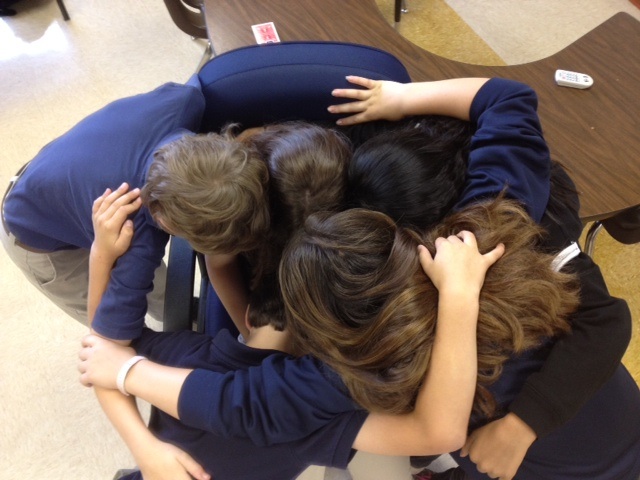
Class group hug

Class group hug

The Habit of Community lets us know that we are not, in fact, alone. Each of the other Habits of Love ultimately leads to this most critical, life-affirming habit. –Ed Bacon

Life-affirming, that is the reason, the meaning, of community. We are all in this together. Community is designed to help us through the darkness and to celebrate the light. Tragedies put our communities to the test. In most cases, the Habit of Community saves its loved ones from fear and leads them to healing.

I pray that my classroom community will not be tested by tragedy, but everyday there are failures to be reassured and successes to be celebrated. We have a responsibility to encourage a sense of community so that our students feel safe to be who they are. They learn empathy and generosity by our modeling.

True Community encourages everyone to clarify their own values without having to agree with the group. There are few experiences that bring more energy to the soul than belonging to a durable Community without the pressure of having to agree. –Ed Bacon

One thing that stands out to me about the Habit of Community is that we have to open up ourselves to vulnerability in order for others to connect to us. Recently, a friend’s son had his first child. The baby was born early and had some difficulties. He posted daily on Facebook about the progress of his son and his wife’s recovery. I found myself looking for his updates every day, and I know that the support of all of us reading them helped him get through this difficult time. They are all home now and becoming the family they were meant to be. Somehow, though, I feel blessed from having shared in this journey.

We now have so many more ways to connect with our wider community. If we can use the social media to spread the Habits of Love rather than fear, to encourage the life-light in each person, to be there for each other, we can spread the energy of peace and health to the world. We can inspire change. We can be a community.

I want to take this opportunity to thank the community of Two Writing Teachers Slice of Life Tuesdays. We are all teachers together on a journey to provide the best for our students. We are a supportive, encouraging, and loving community, and I am proud to be a part.

In what ways will you build community in your classroom? A community of belonging, a community of trust, a community of learning?

Read Full Post »

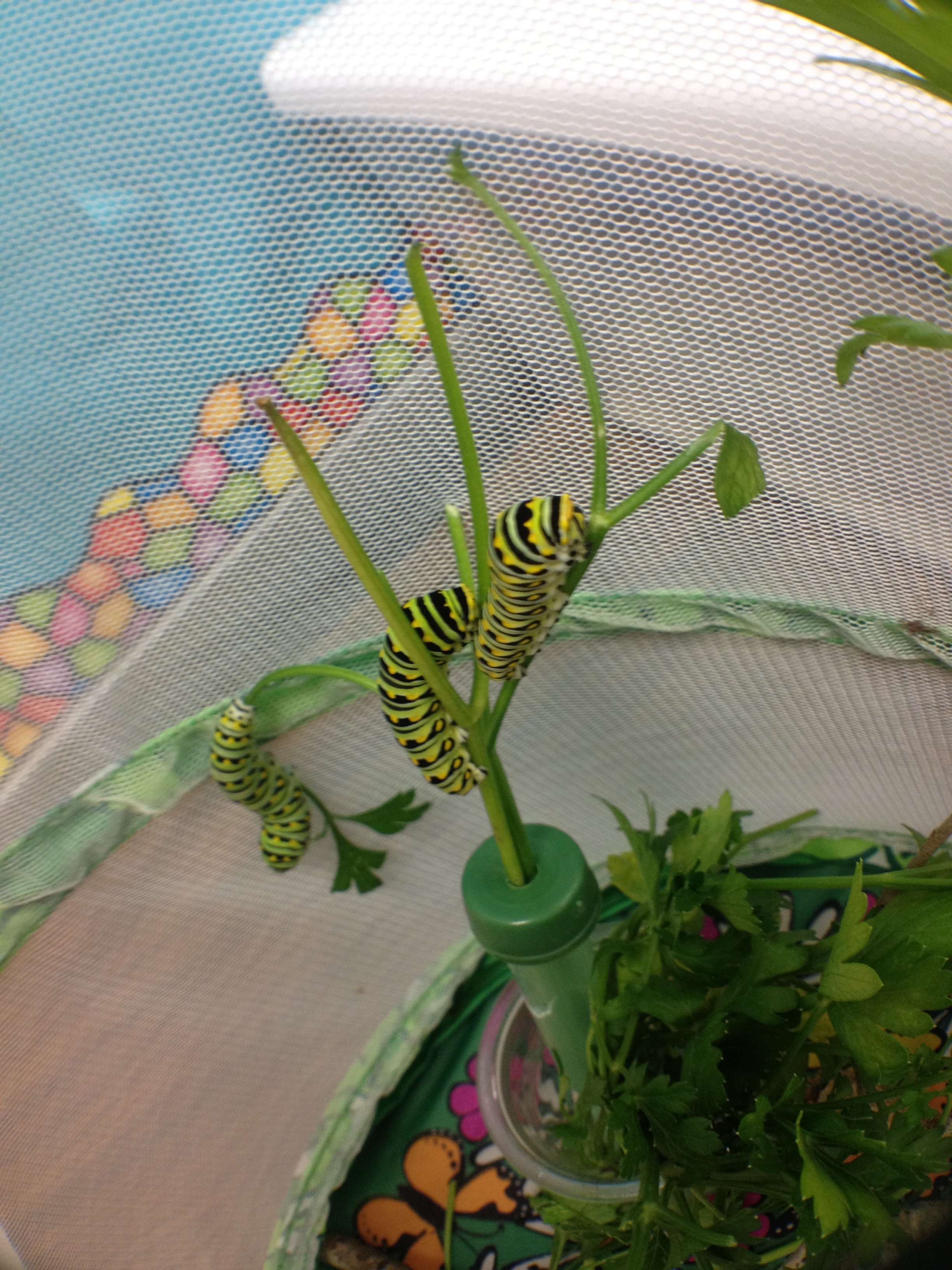
Three caterpillars fascinating to observe-- Future swallowtails.

Three caterpillars
fascinating to observe–
Future swallowtails.

A few days ago, a friend posted a picture on Facebook of these amazing creatures devouring his parsley plants. I asked if I could have a few for my classroom. I picked them up yesterday and was a big hit in the hallway walking in. I will be teaching math to a small group of second and third graders,so we will measure and graph their growth and then watch and wait. This is as exciting to me as it is to them. I’ll keep you posted. Maybe we’ll write caterpillar and butterfly poems, too.

Have you ever been stuck or needed something to accelerate you on the road to a poem? This happens to me quite often. One activity I like to try is to steal a line. Sometimes I borrow lines from poets I like, but this time I was in a bookstore. So I grabbed a favorite book, Little Women, and found this, “It seems so long to wait, so hard to do. I want to fly away at once, as those swallows fly, and go in at that splendid gate. I want to be with them in flight.”

I want to hold air as close as a summer blanket,
cottonball soft puffs of a cloud,
floating
for a moment,
to touch its warm belly
and fly.
Who will come with me?
Let’s form a V,
honk like geese,
announce our arrival.
It seems so long to wait
to go in at that splendid gate.
–Margaret Simon

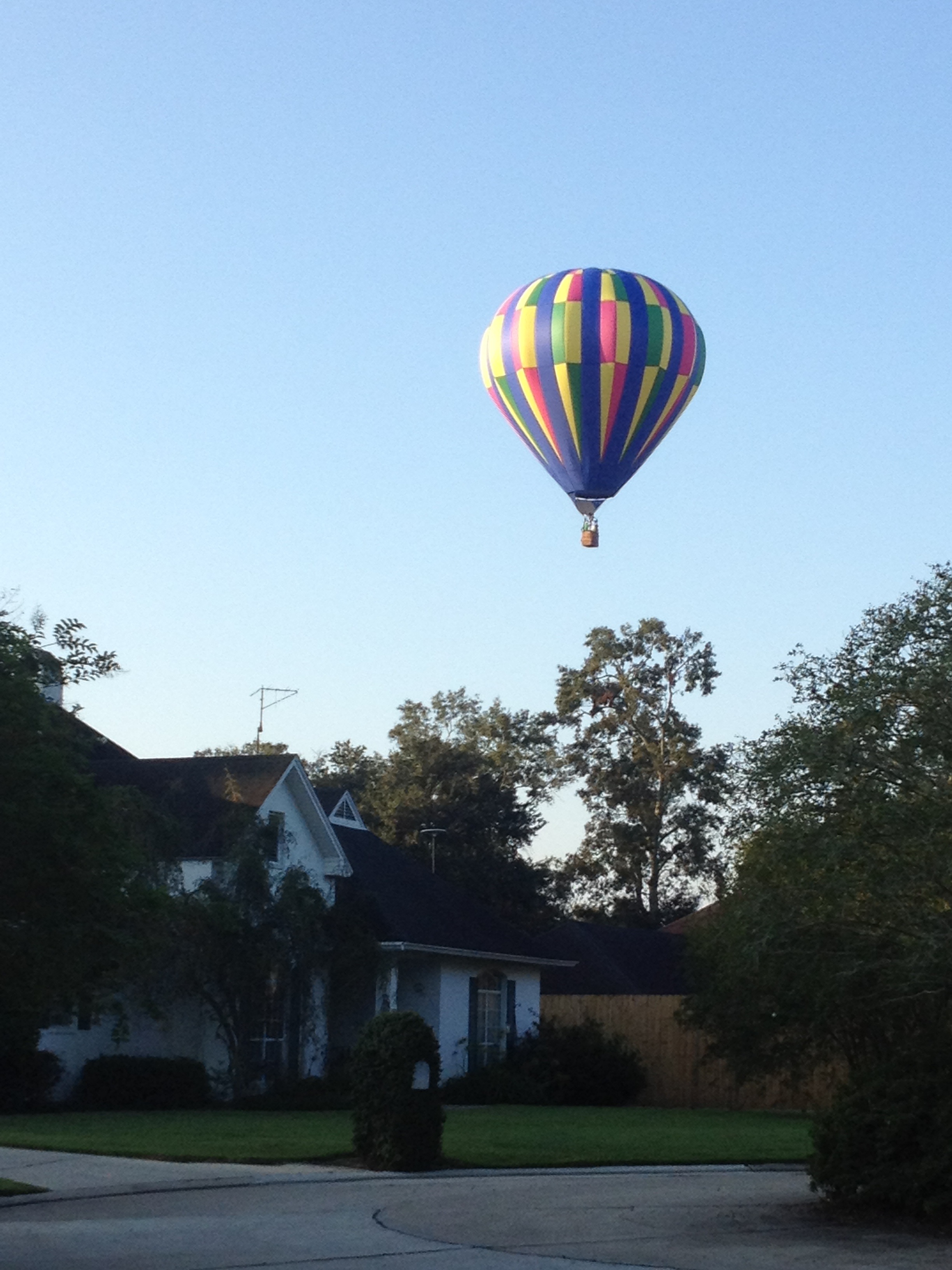
clear blue balloon
Speaking of flying, you can read about a once-in-a-lifetime hot-air balloon ride here.

Flying Angel over Duperier Street Bridge, an original painting by Margaret Simon

Flying Angel over Duperier Street Bridge,
an original painting by Margaret Simon

Poetry Friday is hosted today by Steps and Staircases.

Poetry Friday is hosted today by Steps and Staircases.

Read Full Post »

Join the Chalk-a-bration over at Teaching Young Writers

Join the Chalk-a-bration over at Teaching Young Writers

It’s July 31st, the last day of July and time for a Chalkabration. That means writing poetry in chalk, or chalketry. I knew it was coming up, so instead of unpacking boxes, arranging shelves, or covering a bulletin board as I have been doing for days to get ready for back-to-school, I crossed the hall and borrowed three children from a colleague’s classroom. Her children are usually happy to comply, but amazingly, I was able to get all three of them to write a poem (or two).

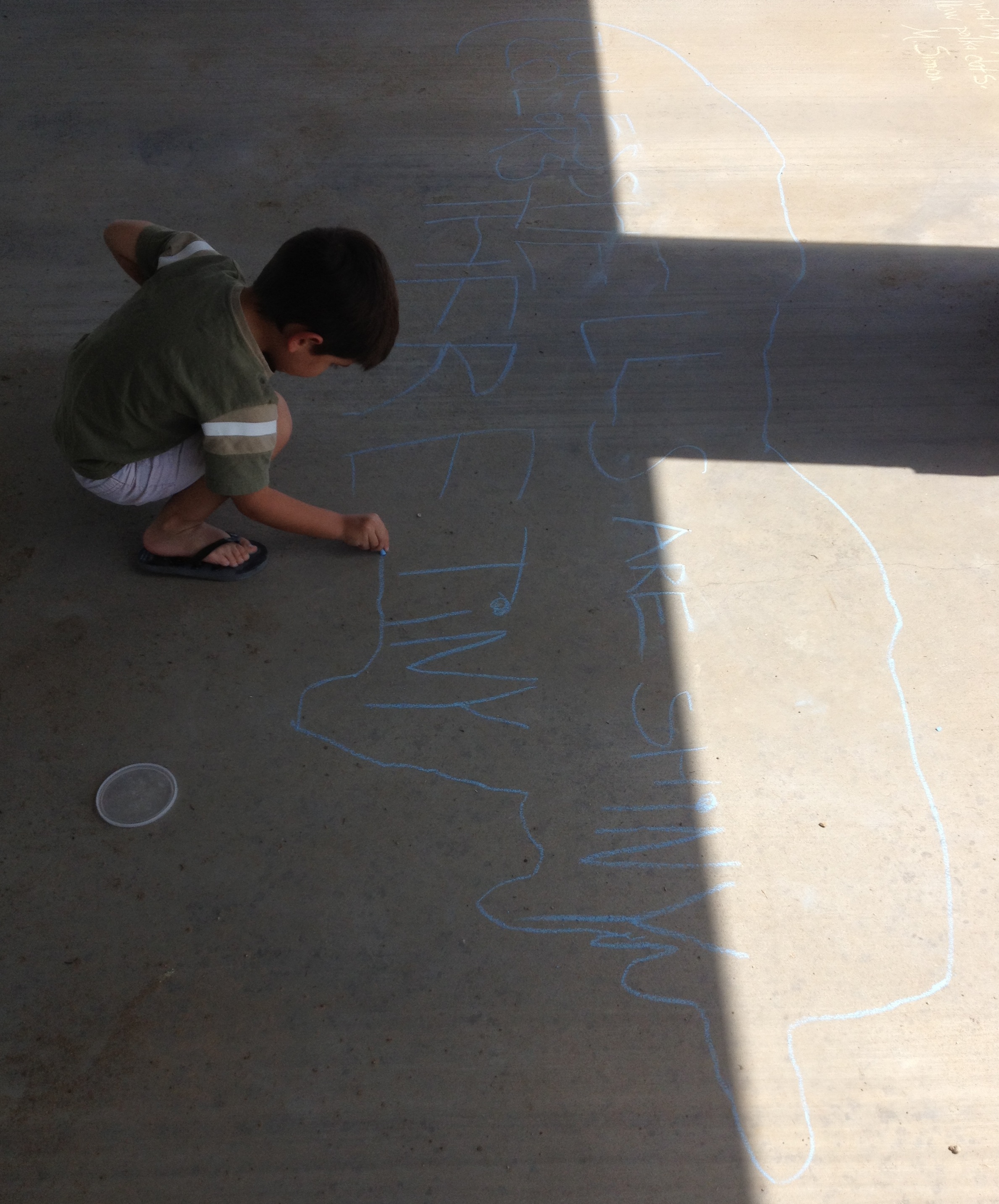
The 5-year old, Jacob, is entering kindergarten this year. He is very bright and can read already, but he didn’t know what a poem was. So I pulled out “Fancy Nancy Poet Extraordinaire.” This is a great book for teaching about poetry with lots of fancy words. Funny me, I would stop and explain the meaning of a word only to find Nancy would explain it, too, and often better than I did. She even introduced the word ode.

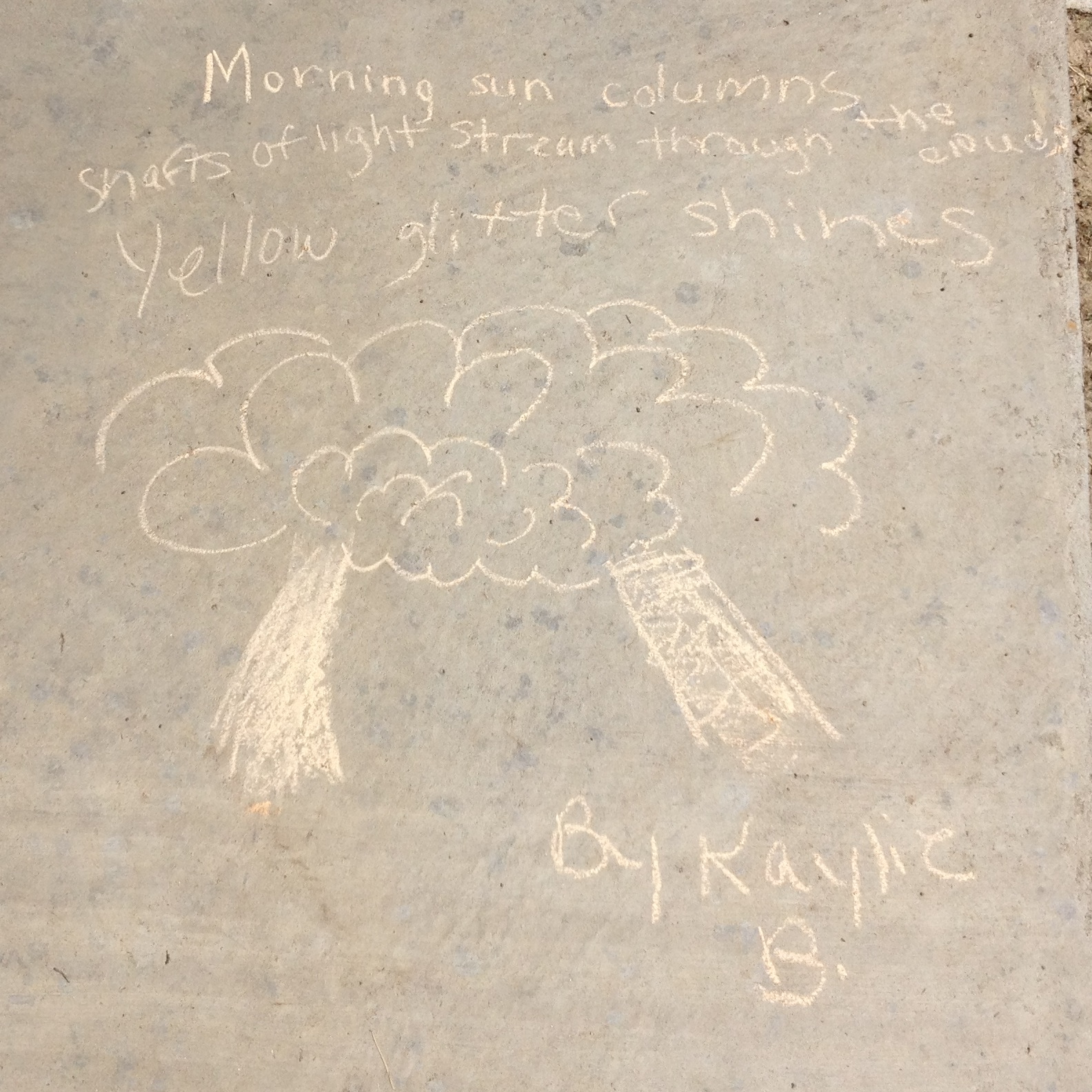
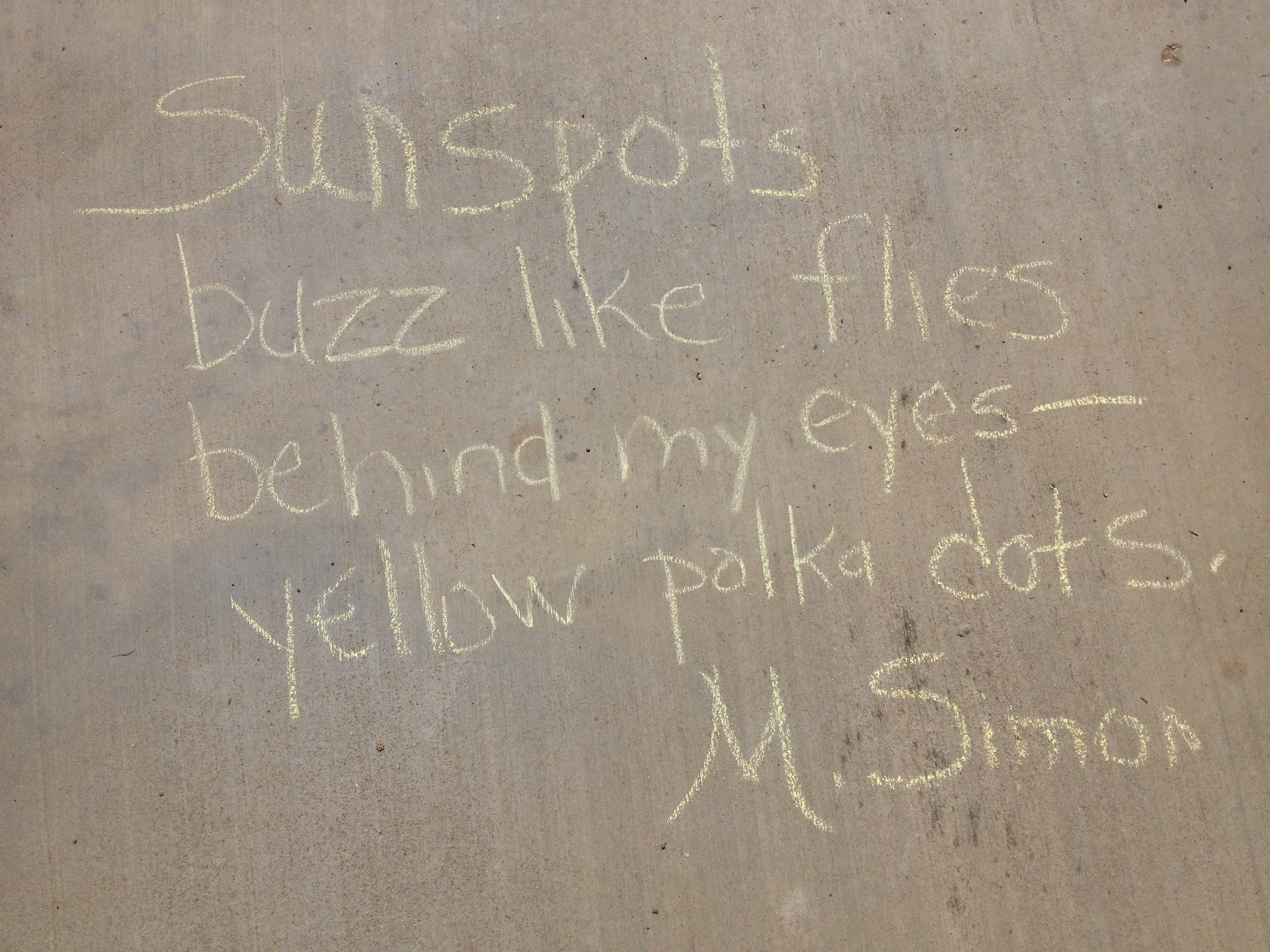
On finishing the book, I pulled out some old loose leaf paper and managed to locate pencils among the mess of supplies, and we set about writing poems. I did what I always do and wrote with them. Kaylie (entering 7th grade) and I decided to write about the sun. Emily (3rd grade) wrote an acrostic with the word poem. She was trying to help Jacob write an acrostic, too, but he got frustrated and moved to Kaylie for help. She began brainstorming words with him. (I have taught her well!)

Then I said, “Jacob, what do you want to write about?”
He replied, “Teenage Ninja Turtles.”
“Ok, what do you like about turtles?”
“Turtles’ shells are shiny.”
“Great first line!”
“I like the colors!”
“Write that for your second line.”
He wrote, “I COLORS”
“Great job!”
“Let’s think, what words rhyme with shiny?”
Jacob liked the word tiny.
The last line became “They’re tiny.”

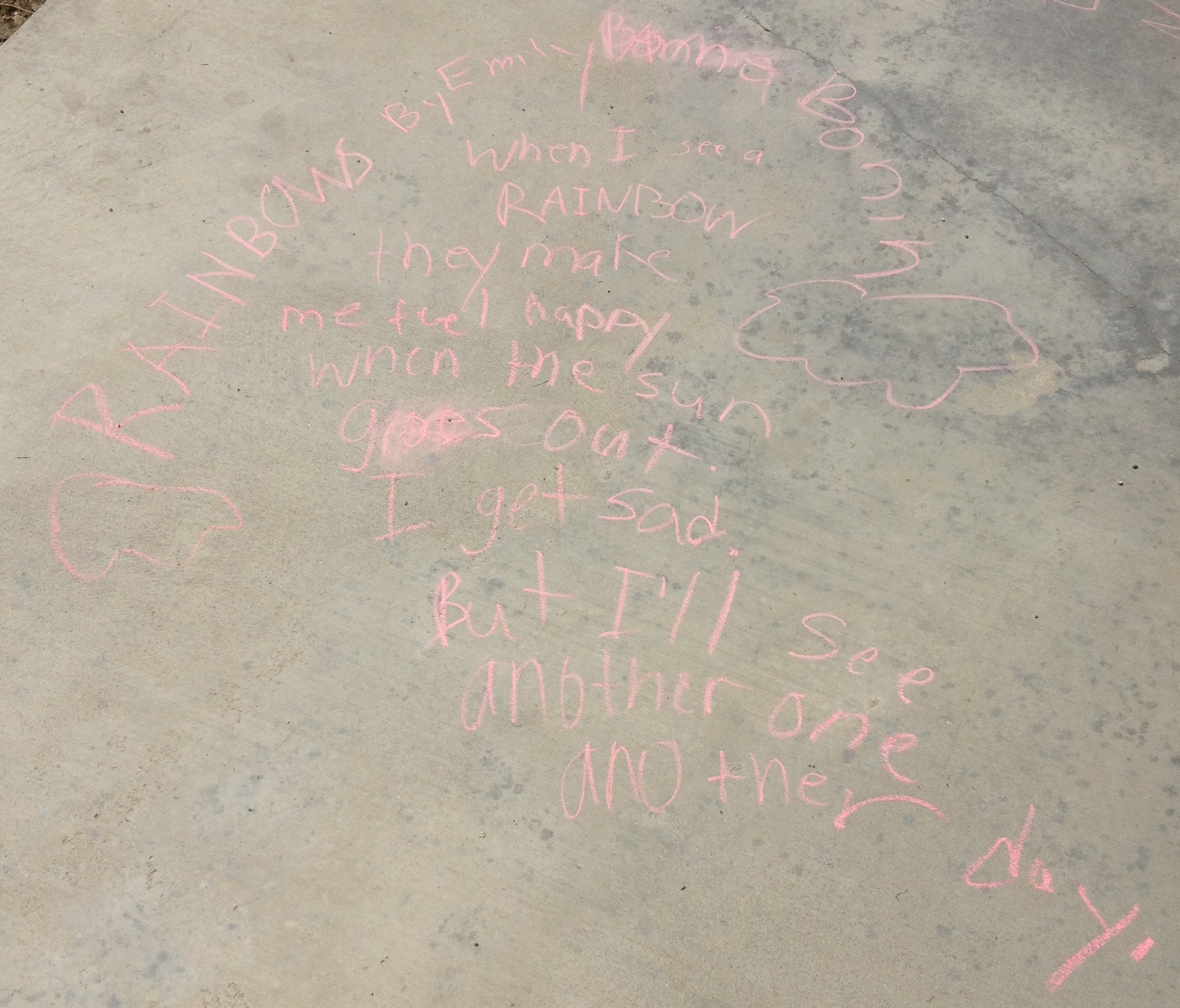
While Kaylie and I were helping Jacob write his poem, Emily was writing. She wrote another poem. This one about rainbows. I love waving the magic wand of poetry over children. The world is a better place and certainly more fun! Thanks, Erica, for loaning me your delightful children for this summer Chalkabration.

Turtles' shells are shiny. I like the colors. They're tiny.

Turtles’ shells are shiny.
I like the colors.
They’re tiny.

Rainbows When I see a rainbow, they make me feel happy. When the sun goes out, I get sad.  But I'll see another one again another day.

Rainbows
When I see a rainbow,
they make me feel happy.
When the sun goes out,
I get sad. But I’ll see another one
again another day.

Haiku to the Sun morning sun columns shafts of light streaming through the clouds yellow glitter shines

Haiku to the Sun
morning sun columns
shafts of light streaming through the clouds
yellow glitter shines

Sunspots buzz like flies behind my eyes yellow polka dots.

Sunspots
buzz like flies
behind my eyes
yellow polka dots.

Read Full Post »

Chalk-u

Join the Chalk-a-bration over at Teaching Young Writers

Join the Chalk-a-bration over at Teaching Young Writers

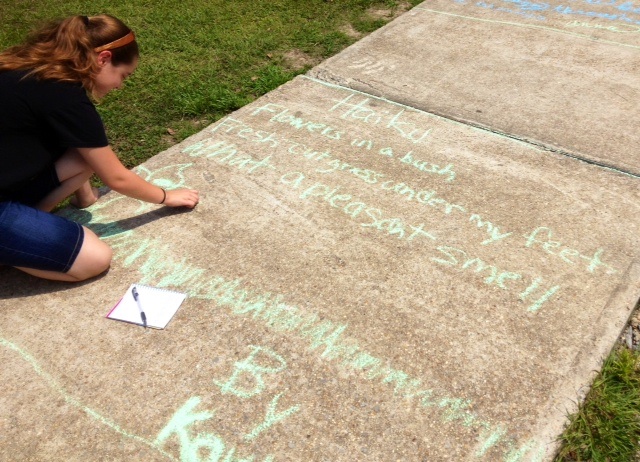
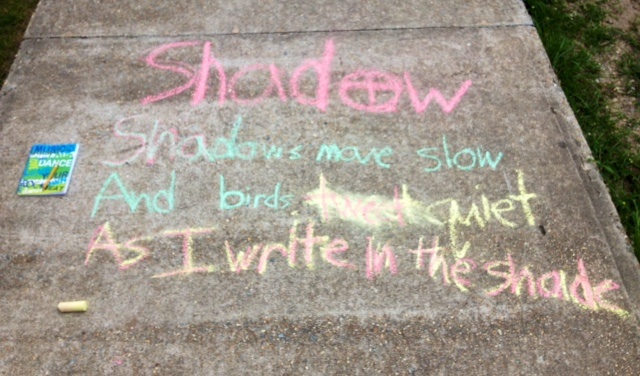
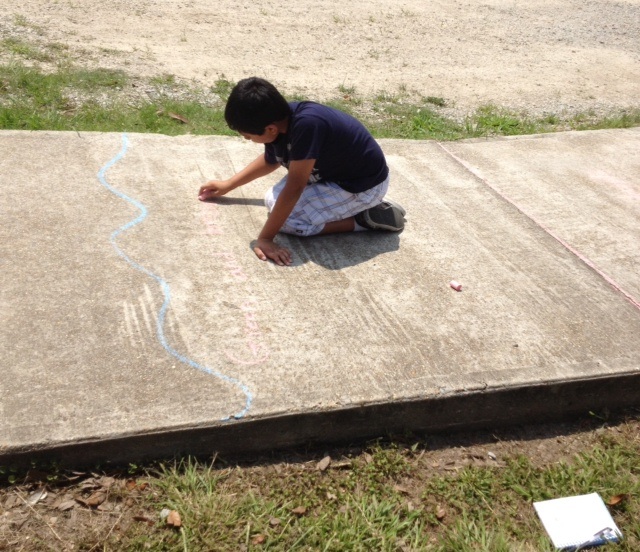
Betsy, a kindergarten teacher and fellow blogger, is hosting a round up of chalketry, poetry in chalk, at her monthly Chalkabration. On the last day of Write your Way youth writing camp a few weeks ago, we wrote haiku in chalk or chalku for the parents to read as they walked to the classroom for Author’s Chair. Here’s a sampling.

Flowers in a bush Fresh cut grass under my feet What a pleasant smell! by Kaylie

Flowers in a bush
Fresh cut grass under my feet
What a pleasant smell!
by Kaylie

Roses are in bloom
Bees buzz around the garden
All is peaceful
–Anna

Shadows dapple, splayed
beneath the crooked oak’s arms
Swaying though untouched
–Collin

Trees blow in the wind
Growing and growing until
They all pass away
–Jered

Shadows move slow and birds tweet quiet I write in the shade. Kylon

Shadows move slow
and birds tweet quiet
I write in the shade.
Kylon

A shady oak tree.
The perfect place on a hot day
A cool breeze blowing its leaves
By Lily

chalku rayn

Read Full Post »

Join the Tuesday Slice of Life

Join the Tuesday Slice of Life

Dickinsontruth

In Ed Bacon’s book, The 8 Habits of Love, through anecdotes from his own life and the lives of others, he outlines 8 habits for us to live in love rather than through fear. The third habit is the Habit of Truth. In this chapter, these words were speaking to me.

The Habit of Truth can help us ascertain which choices are truly ours–and which come from someone else’s script for us that we may be following out of fear.

Truth is not static; it represents constantly developing ideas and insights about ourselves and the world.

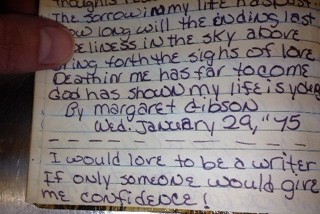
When I was 14, all I wanted to be was a writer. I found a page in my diary along with a bad poem,”I want to be a writer.” Here is a picture of a page in my diary.

"I would love to be a writer if only someone would give me confidence!"

“I would love to be a writer if only someone would give me confidence!”

When I was 15, I volunteered at a camp for underprivileged children called “Operation Life Enrichment.” Here I spent time with children who had few advantages. I read with them, went swimming with them, and loved them. I knew I wanted to be a teacher.

I knew at a young age what I wanted to do and be. I have kept them both a part of my life. But sometimes there are those people who come along and try to change your path. I think teachers and writers both are susceptible to other people’s expectations of who they should be.

A few years ago, I had a difficult situation in a teaching position. My administrator saw a weakness in me in the area of math. Well, yes, this is true. I am most passionate about teaching reading and writing. Math is not my thing and never will be. Sorry. No amount of remedial education will change this truth about me. I was devastated, however, that my position depended on it. If I didn’t go back to school, I did not have a job. I could’ve done it, but my instincts told me it was wrong. I cried on the shoulder of my husband.

He asked me, “What do you want to do?” What a great question! He was honoring ME. What I wanted was important!

I responded, “I want to teach writing.” That began my search for a new position. None of this was easy, but I was driven by the Habit of Truth. I had to be true to myself. With my masters in gifted, I was able to get an elementary gifted teaching position. And I do occasionally have to teach math. But they also write.

During this time, a friend gave me a poem. This poem saved me. Mary Oliver’s Wild Geese.

Mary Oliver told me I didn’t have to be good. I had to let the soft animal of my body love what it loves. I go back to this poem often remembering that I am responsible for being true to myself in the family of things.

Our Truth is not always an easy choice to make. Truth is not always evident either. It is constantly unfolding. We must listen to the voice of Truth in order to live a vital and honest life, a happy life.

What is your Truth? When have you had a difficult time choosing for yourself over what others expect of you?

Read Full Post »

Poetry Friday is here!

Poetry Friday is here!

Today, I am hosting the Poetry Friday blog roundup. Please post your link in the comments. I thought when I signed up for this date that it would be a quiet summer Friday, but it is actually the last day of a writing camp for students. I will check in periodically and post links as they come in.
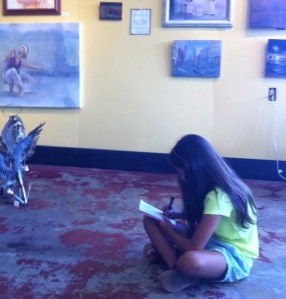
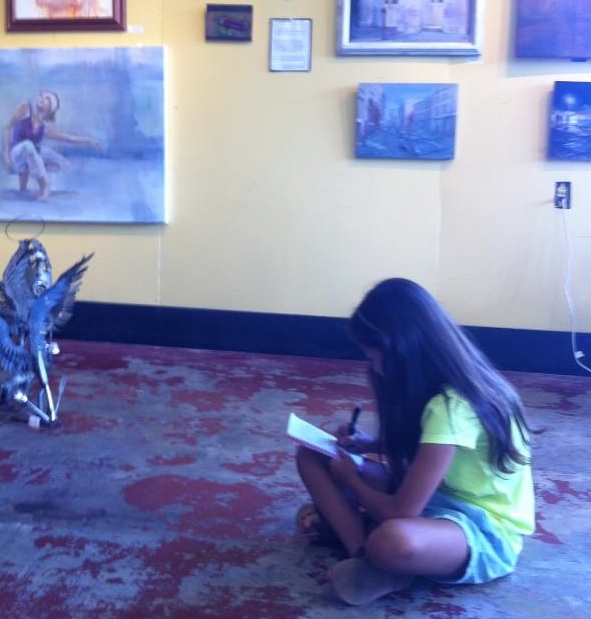
Writing in the gallery

Writing in the gallery

Leading a writing camp is one of the highlights of my summer. This year we have 9 students ranging from entering 4th through 10th grade. Each of them is in a different place in their writing, yet each has a unique voice. My partner teacher, Stephanie Judice, and I also come from different places. I teach elementary, and she teaches high school. I write poetry. She writes fiction. A perfect match. Every morning, I led the poetry writing, and she led the fiction. Worked out well.

Our favorite day is always Wednesday, the writing marathon. The writing marathon was invented by Richard Louth of the Southeastern Writing Project. He was inspired by Natalie Goldberg’s Writing Down the Bones in which she talks about writing in restaurants. She encourages writers to find a space and write continuously for a period of time. So on a writing marathon, the rules are 1) declare yourself a writer; 2) travel from place to place, write in that place, and if appropriate, order something; and 3) share and thank each other. (No criticism or comment, just thank you.)

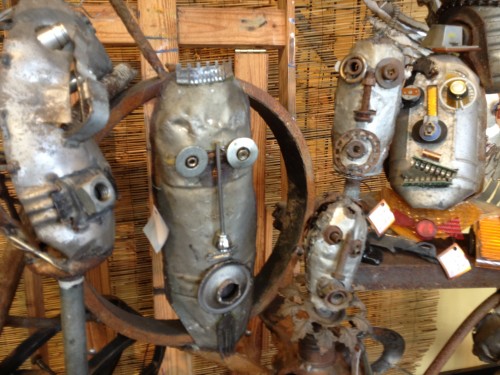
One of our stops on the writing marathon was the A&E Gallery, a collaborative gallery of a variety of artists owned by Paul Schexnayder. We did two writing periods at the gallery. During the first one, I asked the students to walk all around the space and to collect words that came into their minds as they walked. After collecting words, we found a spot to sit and write. The second prompt was an ekphrastic poem about one particular piece of art. I am sharing the poem I wrote from the gallery walk and a student’s poem from a group of metal faces.

Mermaids float above her majesty, the sea
swirling waves as a potter’s wheel
forming a lily-lined path
to the land of mortals.

On the shore, rusted beauty emerges
from layers of water–a mint for the gatherers of things.

Look with your soul,
feel the release of imagination.
Find your buried hope.
The music in you awaits!

–All rights reserved, Margaret Simon
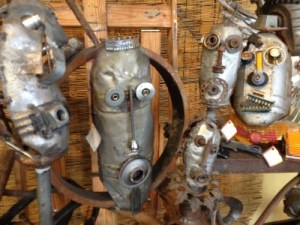
metal-faces-500x375

Metal Faces
Their open metal mouths,
staring into me,
looking past my casual writer’s appearance.
Can they see my conscience?
They read me as if
I were the art on display.
Their wide eyes,
penetrating my heart,
are full of distaste.
Like judges,
and I have earned myself
a low score.
Their scraps
that they call facial features
bore into me,
like they know everything.
And, perhaps they do,
but it doesn’t show.
All they can do
is watch me,
beg for me to stay
when I’m passing by,
so they can look into my soul.

–Kaylie, 12 years old

Go nuts with Charles at Father Goose with a tribute to Jama Rattigan.

At Random Noodling, a Robert Frost poem “Questioning Face.”

Kurious Kitty has some Flag Day poetry.

At KK Kwotes, find Albert Camus.

At NC Teacher Stuff, find a short poem about fathers by William Hamilton Hayne.

Keri is discovering a children’s bookstore in Vancouver, BC.

Matt Forrest has a poem for his daughter.

Jama is featuring a bilingual poetry collection called Laughing Tomatoes and other Spring Poems/Jitomates Risuenos y ostros poemas de primavera by Francisco X. Alarcón and Maya Christina Gonzalez.

Laura Salas has a rodeo poem by Nancy Bo Flood.

Mary Lee is here with a feast of verse novels.

Ruth has a turtle-y post.

Tabatha is thinking about plagiarism.

The Teaching Authors share online resources and April has a poem about giving up privacy in exchange for a free app.

Renee at No Water River has another wonderful video featuring Margarita Engle sharing her verse picture book When you Wander: A Search and Rescue Dog Story.

Linda at Teacher Dance has a poem she heard at a teaching workshop.

Today at The Poem Farm, Amy has a little goodbye poem from a teacher’s point of view along with a Poetry Peek from kindergarten teacher Erin Jarnot and her students from Elma Primary.

Julie is back this week with an original poem called “Anniversary” and some musings about translation and mistranslation.

Bridget Magee is here with an original poem, “Summer Hazard” about one of the perils of living in the desert.

Over at Today’s Little Ditty, Michelle has a dream poem written by her dad in honor of Father’s Day.

Robyn Hood Black is here with Full Hearts, Empty Nests, and Emily Dickinson.

MM Socks has an original poem today Woodrow’s Shadow.

Doraine Bennett has Winslow Homer and J.G. Whittier.

Irene Latham has a menagerie of Valerie Worth poems.

A traveling poem over at The Florian Cafe this Friday morning.

Author Amok is celebrating with a picnic-full of third graders’ food poems. Chocolate pie, anyone? We can’t end school without some teacherly wisdom. I’m also featuring a portion of poet Joseph Ross’s beautiful post “The Gifts of Teaching.”

Karen Edmisten has a Billy Collins poem to share.

Cathy has an original cat poem.

Lorie Ann Grover offers a haiku today, Whispered through Steam.

Joy at Poems for Kids Joy has an original poem about her flag for Flag Day.

Here’s Becky with Math Poetry.

All About Books with Janet has a doggy poem “I Didn’t Do It” written by Patricia MacLachlan and Emily MacLachlan Charest and illustrated by Katy Schneider.

For some hippity-hoppity froggy fun, go to Reading to the Core.

Little Willow posted Afterthoughts by Edwin Arlington Robinson at her blog Bildungsroman.

Read Full Post »
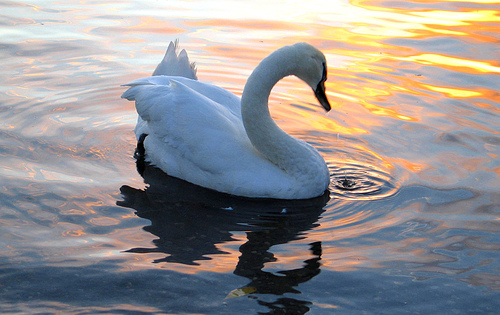
Poetry Friday is hosted this week at Jama's Alphabet Soup.

Poetry Friday is hosted this week at Jama’s Alphabet Soup.

The end of the school year is always bittersweet. This year was especially so. One of my students finished sixth grade which means she is moving on to middle school. We have been together since she was in third grade. I love all my students, but sometimes one comes along who connects a little deeper. We become more than teacher and student. Kaylie is one of those students. Kaylie loves what I love. We shared books and favorite authors. We became writing partners. She read and commented on my writing as much as I did hers.

Kaylie’s mother wrote me a note saying that Kaylie was crying about leaving. She told Kaylie that I was like a mother bird that has prepared her birds to fly. It was time for her to fly. Kaylie stopped crying and said, “That was a great metaphor, Mom.”

I am so grateful for this special relationship. Kaylie wrote a poem for me. She put it in a book she made on Snapfish including pictures of us through the years. (Yes, I cried.) I wrote a response to her using her form. I put it into an accordion book, also with pictures. Call and response, so to speak. These poems are very personal, so I hesitated printing them here. But sometimes the deeply personal touches a universal theme.

What if
By Kaylie
What if you asked me-
just wondering-
If you wanted me to write
about our four years together?
What if you wanted me
to put that into a poem
Like the one you’re reading now?
Would I write about peanut butter,
nonsense talking sticking in my mouth
like the real stuff?
Or, that dreaded summer reading?
Would I tell you that I hated that?
Would I remember Daisy and Poncho,
the most beautiful spider story
I have ever heard?
Hmm…let me think…
I would definitely have to mention
all that writing: stories, poetry,
every letter, every word from my pen
inspired by you.
I would try not to talk about the tears
that shed when I left, though.
No.
I will only think of what you showed me,
and how I will use it in my life.
If you told me to write a poem about all of that,
just to remind you of me now and then,
I think this poem
would do just that.

By Kaylie

What if?
What if you wanted me to write a poem
about our four years together?
Four years, really? Hard to believe.
No wonder you are so much a part of my life.

I know you. You know me.
Greater than a teacher and student,
yet not a mother and daughter.
(Even though I caught myself sometimes calling you my daughter.)
My poem would have to say how
teaching you was easy, fun, delightful.
I watched you blossom from a tiny, shy seed
to a dancing flower singing,

“Anything you can do, I can do better.”

And yes, you can. You can be
whatever you want to be.
Be who you are.

You are a writing teacher’s dream,
but more than that…
You trusted me with your heart,
your mind, your creativity.

If you wanted me to write a poem about our time together,
I would write through tears,
wipe them away
and say
You are ready
to fly,
sweet bird.
Your wings will
soar!
–Margaret Simon, all rights reserved

Read Full Post »

We are still writing poems in my classroom even though April is over and May is here. This week we worked on poems for our mothers. If you are a mother of one of my students, stop reading now and save it for after Mother’s Day. You don’t want to spoil the surprise.

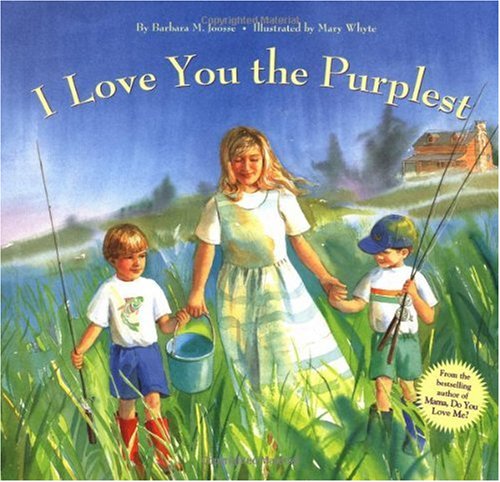
love you purplestI love the beautiful picture book, I Love You the Purplest by Barbara M. Joosse. The watercolor images by Mary Whyte are amazing. The story is sweet about a mother going fishing with her two boys. The boys want to know which one she loves best, and the mother cleverly answers, “Julian, I love you the bluest. I love you the color of a dragon fly at the tip of its wing.” The other boy, Max, she loves the reddest, the color of the sky before it blazes into night.

After reading the book to my students, we talked about colors and what they can symbolize. Each student selected a color and made a list of possible things to use in a poem. There are some great resources for this lesson on Writing Fix. You can find a list of color metaphors as well as a printable form.

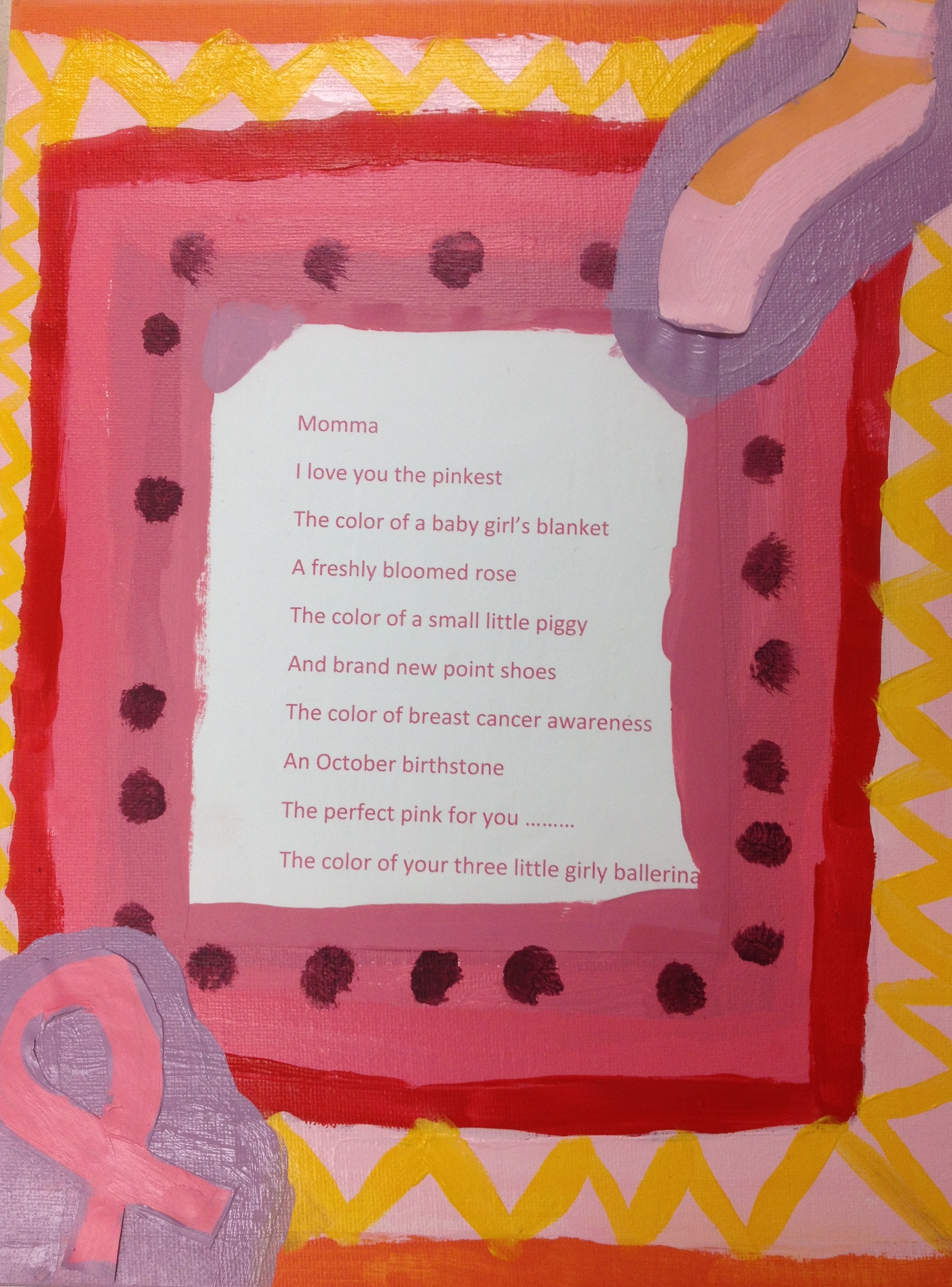
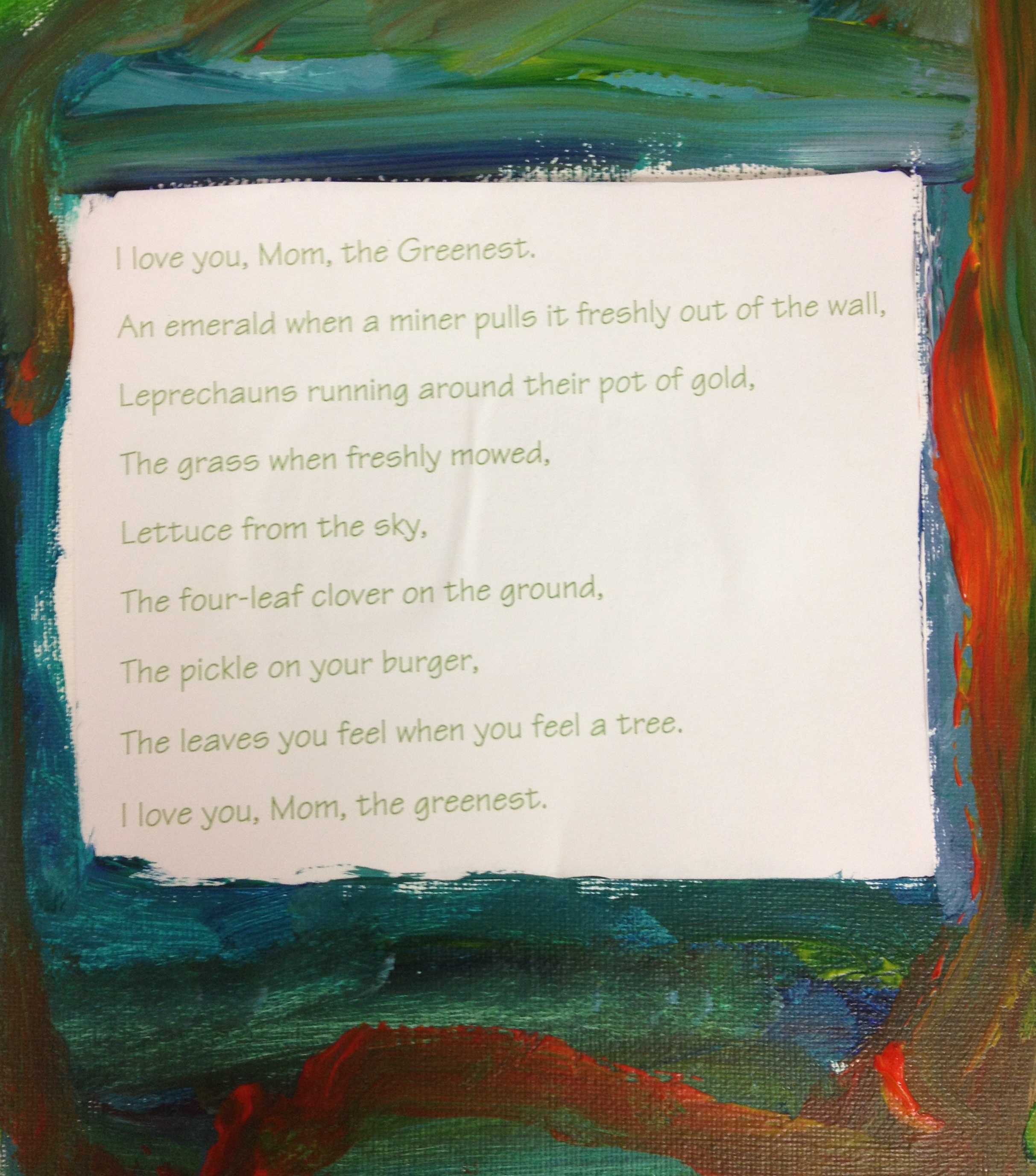
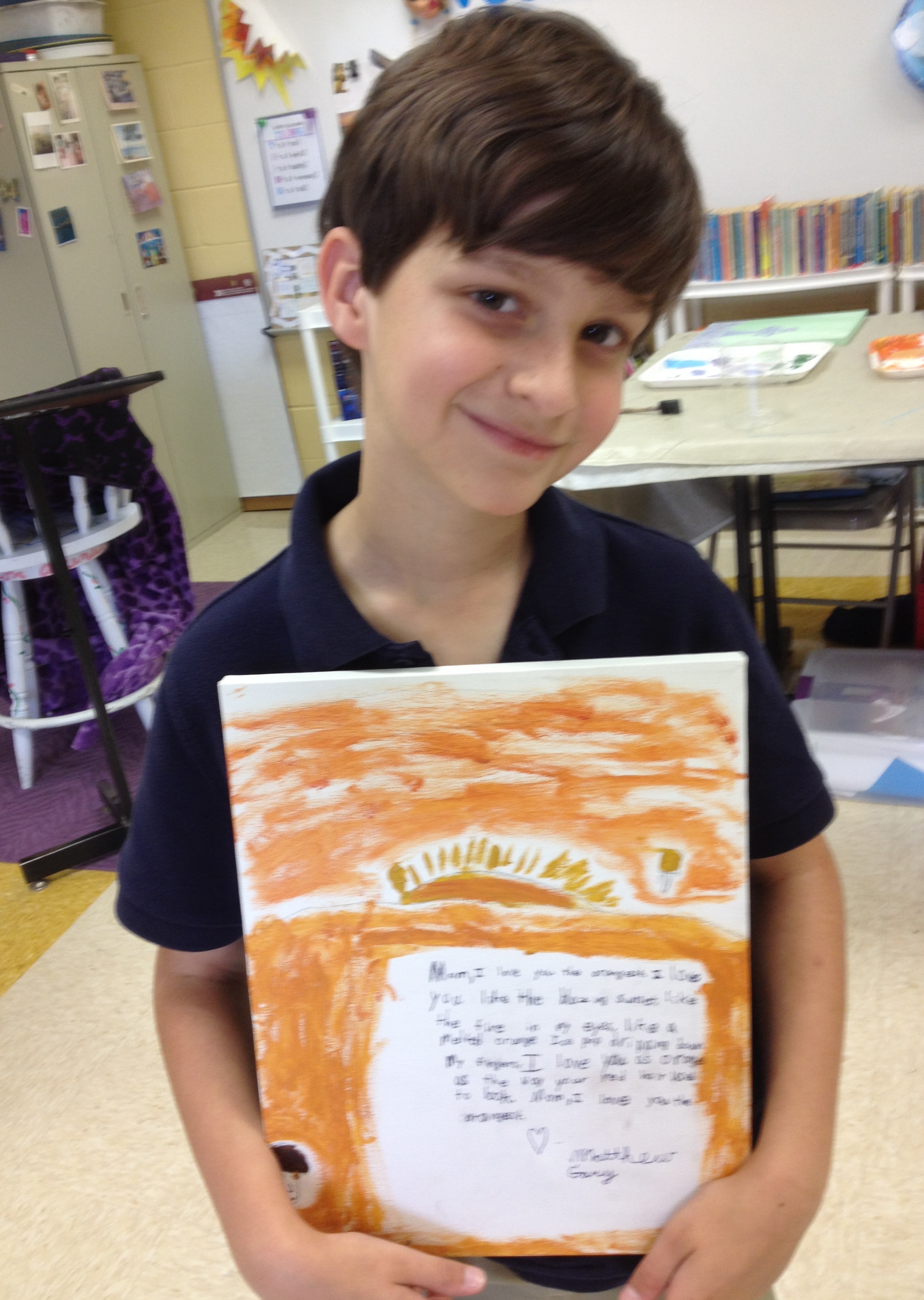
Specifically for the Mother’s Day poem, I asked the students to write about their mothers. They wrote some great poems. They typed and printed and painted a background for their poems on a canvas board. I think many mothers will be brought to tears by these gifts of love.

Emily purplest

Rhyan pinkest

Momma,
I love you the pinkest
The color of a baby girl’s blanket
A freshly bloomed rose
The color of a small little piggy
And brand new point shoes
The color of breast cancer awareness
An October birthstone
The perfect pink for you ………
The color of your three little girly ballerinas
–Rhyan, 6th grade

Tobie greenest

I love you, Mom, the Greenest.
An emerald when a miner pulls it freshly out of the wall,
Leprechauns running around their pot of gold,
The grass when freshly mowed,
Lettuce from the sky,
The four-leaf clover on the ground,
The pickle on your burger,
The leaves you feel when you feel a tree.
I love you, Mom, the greenest.
–Tobie, 2nd grade

Matthew orangest

Mom, I love you the orangest.
I love you like the blazing sunset,
like the fire in my eyes,
like a melted orange ice pop,
dripping down my fingers.
I love you as orange as the way
your red hair used to look.
Mom, I love you the orangest.
Matthew, 3rd grade

For more Mother’s Day poems, go to our kidblog site. My students love comments.

Poetry Friday is hosted this week by Elizabeth Steinglass.

Poetry Friday is hosted this week by Elizabeth Steinglass.

Read Full Post »
Slice of Life Tuesday

Slice of Life Tuesday

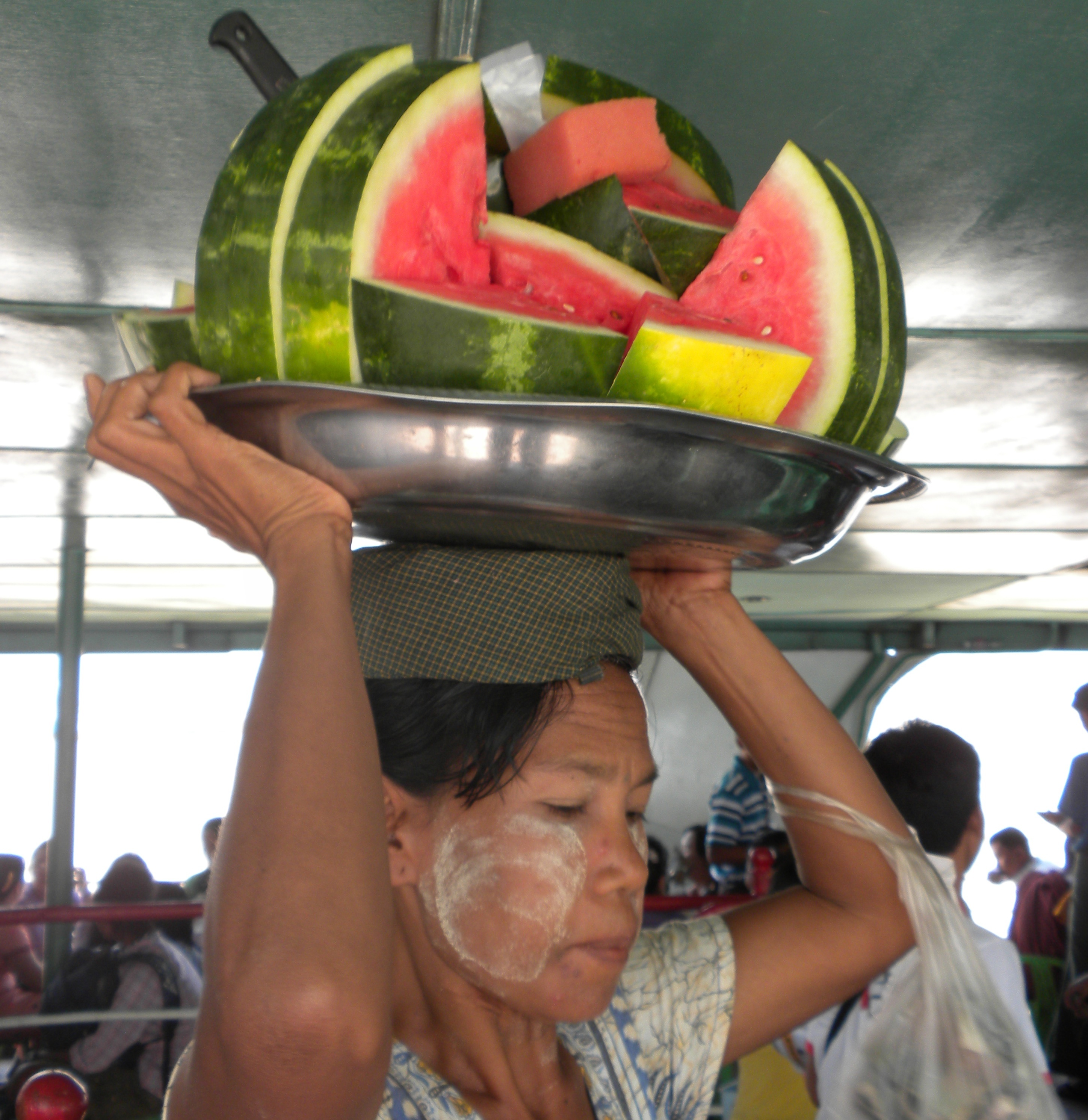
I have an incredible mother-in-law who loves to travel. The more exotic, the better. This spring she traveled to Burma (now known as Myanmar). When she returned, she visited my classes to take them on a virtual field trip through Burma.

My mother-in-law’s grandmother name is Minga, so I told the children they could call her Minga. (Some of them called her Miss Minga to be respectful.) Minga came dressed in costume. She wore a traditional Burmese skirt which was merely a piece of woven colorful cloth wrapped around her waist and tied on. She didn’t wear shoes. In Burma, the people take off their shoes anytime they enter a building. The kids thought this was so cool that they tried to take their shoes off, too. Minga carried a bright red parasol and wore a pasty sunscreen substance on her face as the Burmese women wear.

When she came in the classroom, she bowed and said, “Minga la ba.” This means hello, goodbye, good afternoon, everything in the way of greeting. We thought this was so funny that Minga’s grandmother name is a greeting in Burma.

Minga told the children about the many differences in the culture across the globe. She also talked about how they were similar. She had a photograph of children playing a game like the game Qwirkle that we had only recently been playing in our classroom.

She shared the cake-like substance that they put on their faces as well as some sweets. She showed the students the process for making the sweet candy, from climbing the tree to get the fruit, to grinding using a mortar and pestle.

The students were full of wonder and questions. They enjoyed being able to try to carry a basket on their heads. They realized that we have a great many luxuries, even our bathrooms and electricity. It was invaluable for my students to be able to experience this foreign culture first hand.

A picture gallery

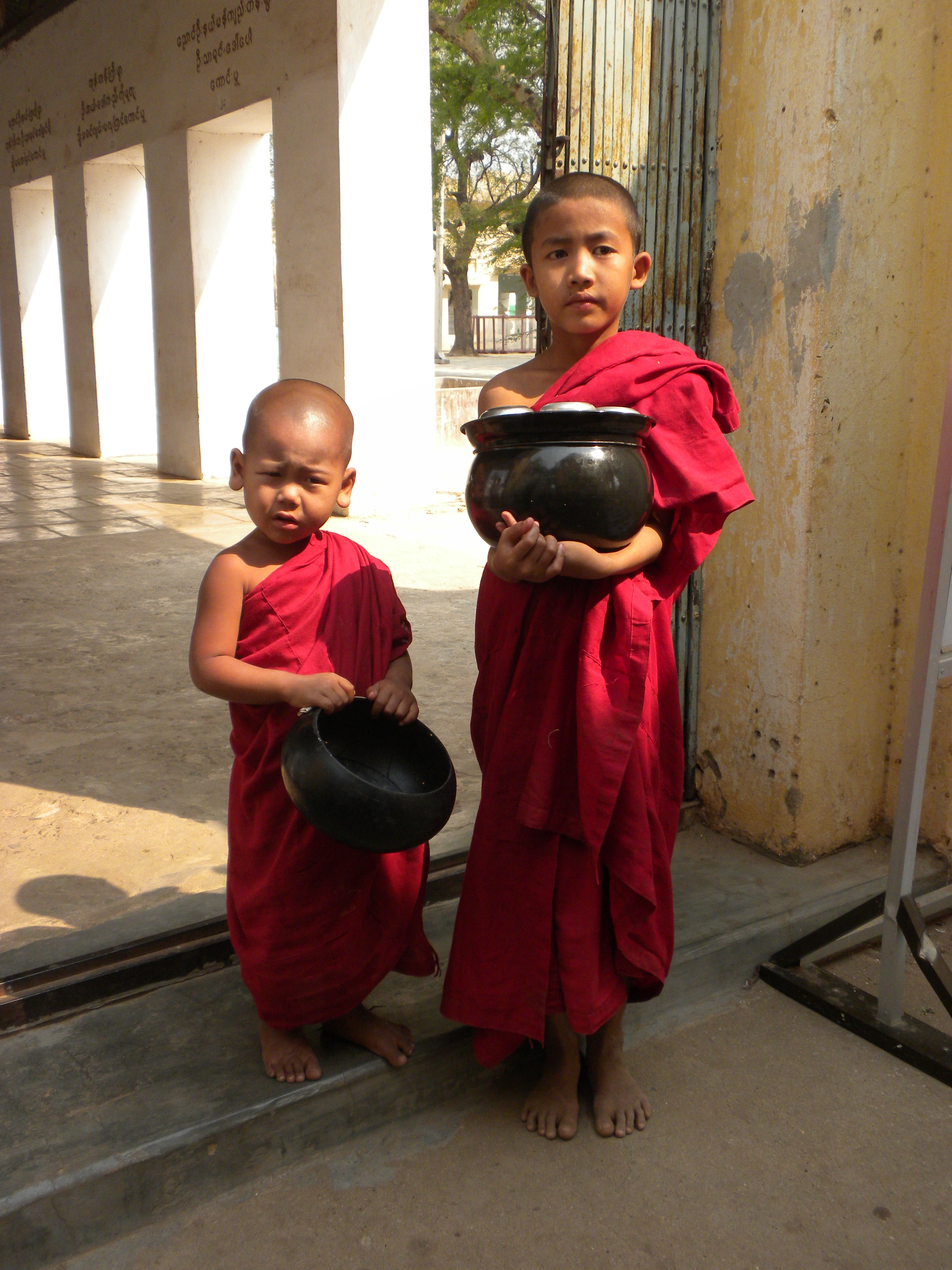
Boys go to monk school in the summer and must beg for their food.

Boys go to monk school in the summer and must beg for their food.

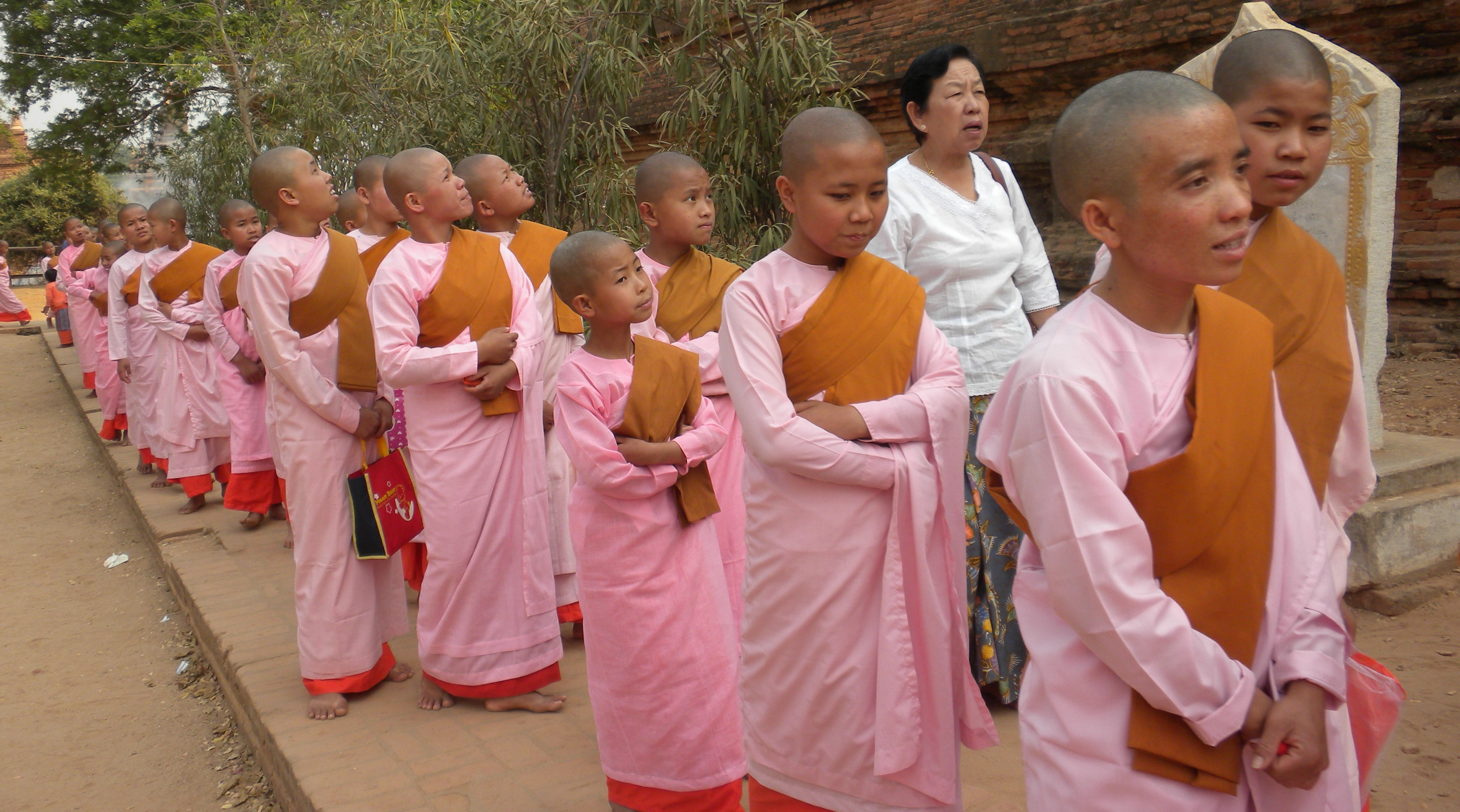
Girls shave their heads to attend a nun school.

Girls shave their heads to attend a nun school.

Women carry foods and other things on their heads.

Women carry foods and other things on their heads.

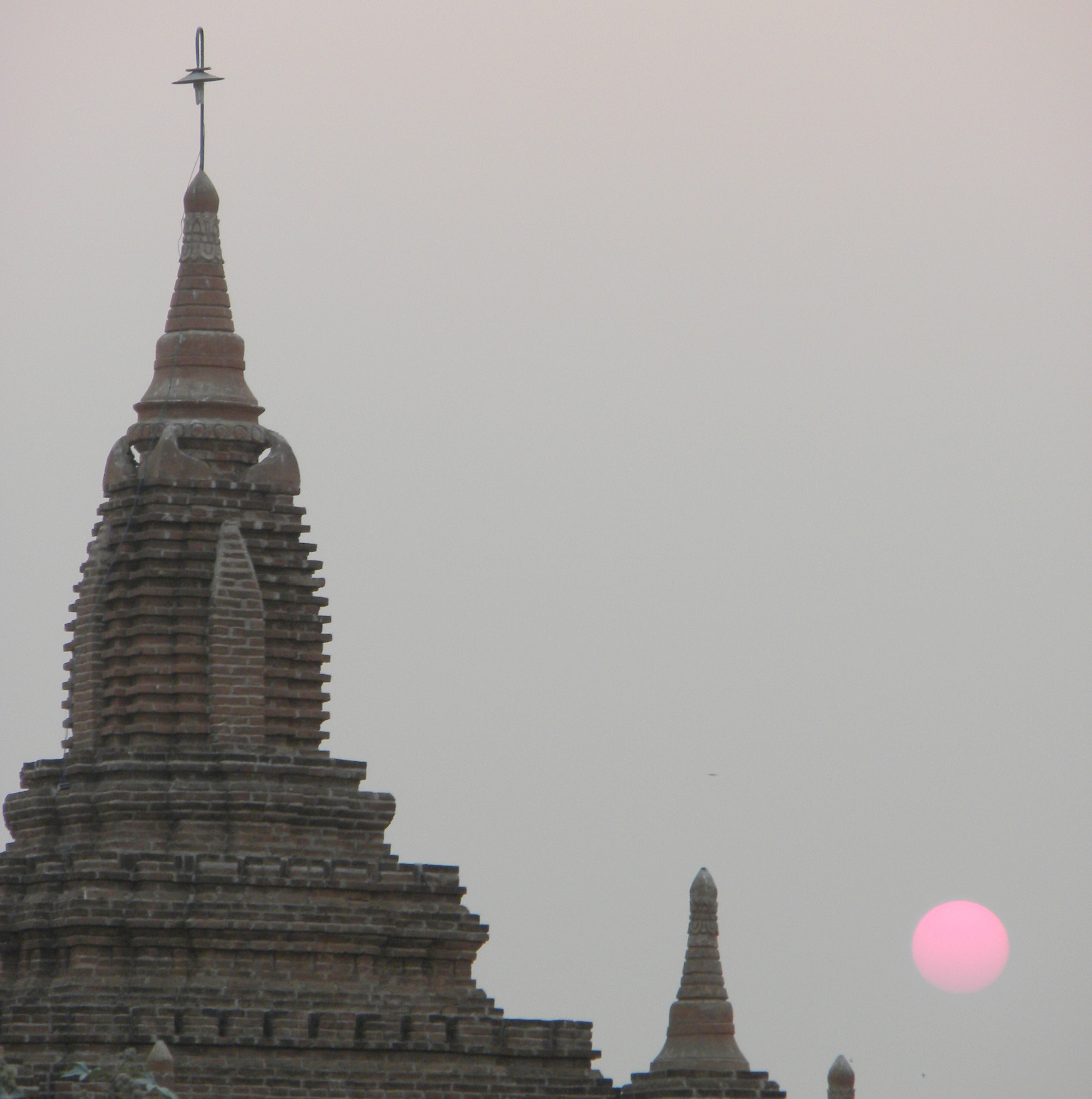
A pagoda, a Buddhist holy temple, at sunset.

A pagoda, a Buddhist holy temple, at sunset.

Read Full Post »

« Newer Posts - Older Posts »