Feeds:
Posts
Comments

Archive for the ‘Writing’ Category

Find more celebration posts at Ruth’s blog.

Eleanor Roosevelt once said, “Do the thing that scares you.”  Armed with years of experience and a strong conviction that writing teachers should write, I did the thing that most scares me…teaching teachers.

I led a weeklong teachers writing institute.  In March I set up a meeting with the curriculum coordinator for elementary schools in our district.  I pitched my idea.  While she was enthusiastic, I never heard back from her.  So I got the guts to send an email inquiry.  Yes, she was still interested, but I needed to meet with the middle school coordinator.  Nearing the end of the school year, I had approval and sent out the flyer.  Surprising to me, the workshop filled quickly.

Since today is about celebrating, I will not go into my disappointments.  I just want to capture the shining stars and bask a bit in their glow.

  • A new teacher, second career, only man in the class said his 17 year old daughter waited each day to read what he wrote.  His father told him to submit his essay to Reader’s Digest.  He is entering his first year of teaching confident that he is a writer.
  • A colleague from the gifted program told me I was a natural.  She said, “You seem so relaxed.  You make us feel comfortable.”  She could not see or feel the nerves churning inside.
  • Following Katherine Bomer’s book, The Journey is Everything, became a guidebook to writing a final essay.  Most teachers wrote an essay they were proud of.  We read and celebrated the writers we had found together.
  • Catherine Flynn joined us by Skype to teach us about visual literacy. (The idea to connect with her came from this post.)  Teachers took notes and talked about ways they could use art with their students.  Thanks, Catherine.
  • On the last day, tears were shed as we got into the deep trenches that writing can take us.  Sharing your own words is an act of faith.  We had become a community of writers.

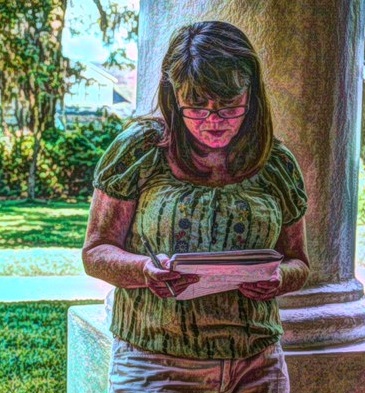
Writing and sharing on our writing marathon in downtown New Iberia.

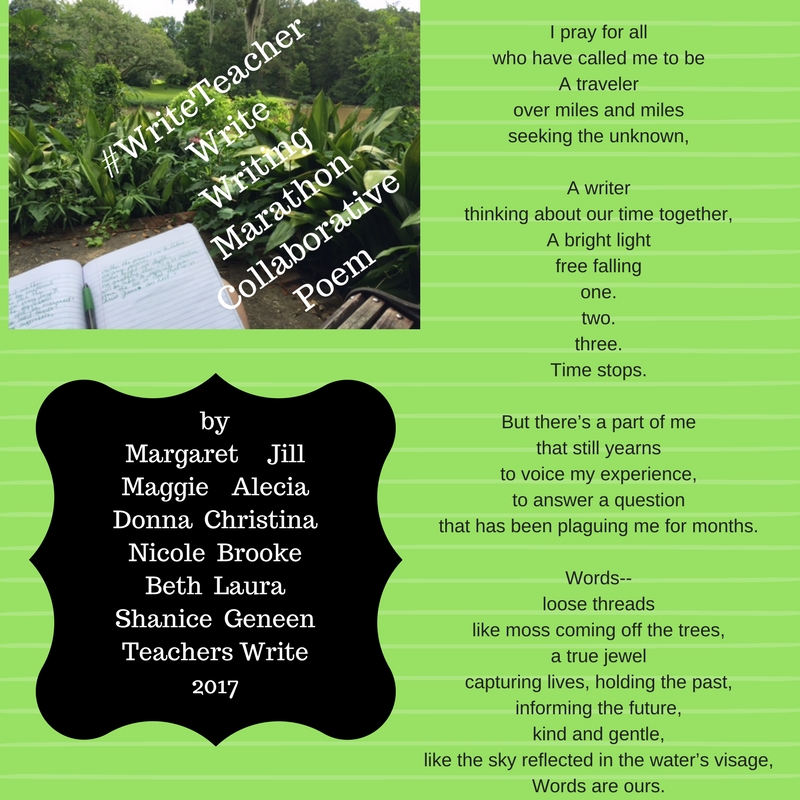
I gathered words and phrases from our writing marathon into a collaborative poem.


Read Full Post »

Poetry Friday is Carol at Beyond Literacy Link


While I was vacationing for the 4th of July in Santa Fe, NM, my Voxer Good2Great friend, Jen Hayhurst tagged me in a post about her #ProjectPoetry.  I wrote about the project on my Slice of Life post on Tuesday. 

I have this self-assigned goal of writing a poem a day.  That gets tough when you have a husband who wants to walk all over New Mexico.  My writing muscles had to give way to my walking muscles.  Nevertheless, I took some pictures that planted some ideas in my brain.  Once home I had time to sit.  Sit with the images and process a poem.  Jen’s goals for writing poems are to synthesize experience and ignite curiosity.  This is what poetry should be, in our lives as well as in our classrooms.

Last night I watched Kylene Beers and Bob Probst do a Facebook live video about their book, Disrupting Thinking. When someone asked if poetry should be the first unit taught in the school year, Kylene answered, “Poetry is not a unit. Poetry is something we breath in.  We should breathe in poetry every day.”

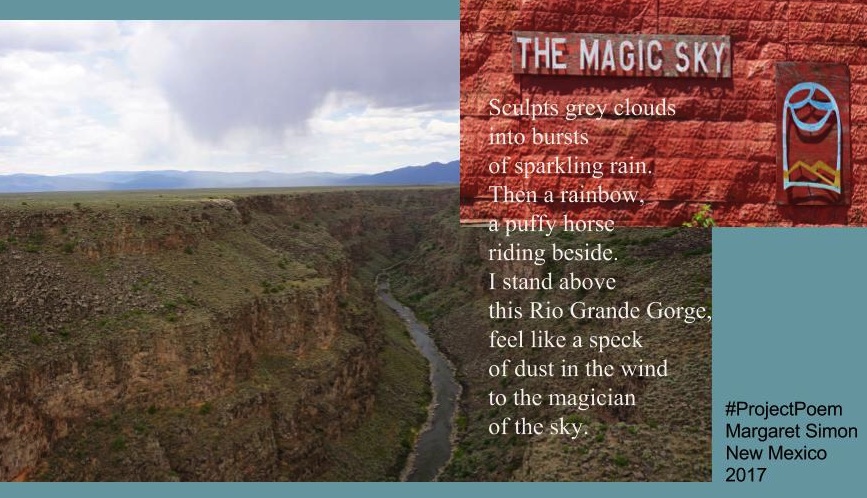
Take a deep breath and look at the amazing sky.  I was astounded and mesmerized by the huge sky of New Mexico.  It seemed somehow bigger and brighter and mightier there.  Maybe because I was paying attention.  Maybe because there was something to be learned.  Maybe just to be captured in a poem.

The Magic Sky
Sculpts grey clouds
into bursts
of sparkling rain.

Then a rainbow,
a puffy horse
riding beside.

I stand above
this Rio Grande Gorge,
feel like a speck
of dust in the wind
to the magician
of the sky.

–Margaret Simon

Next Friday is National Mac and Cheese Day.  Who knew there was such a thing?  So Poetry Friday folks are planning to write about Mac-n-Cheese.  Join in the yummy fun.

Read Full Post »

Find other posts at Writer on a Horse

Pat is gathering our monthly Spiritual Thursday posts around the theme of stepping out of your comfort zone.  For years I have taught young writers’ camps in the summer. But this year I was inspired by Katherine Bomer’s presentation at NCTE last November to try teaching teachers. Katherine’s teacher/students presented about how personal writing led them to be better teachers of writing. I’ve long held this belief for myself, but decided to get out of my comfort zone and share my understanding with other teachers in my own district.

The Teachers Writing Institute begins on Monday. I’m squirming in my seat. What have I gotten myself into? At first I thought no one would sign up, but on the first day the email went out, eleven teachers signed up. We increased the number of participants from 15 to 20.  Now I have a full class of 20 teachers who want to experience their own writing and learn new strategies for teaching.  So, on Monday, I will face 20 expectant teachers. My palms are sweaty. My heart is racing. Can I really do this? Can I make these teachers feel like writers? Can I give them the confidence they need to go back into the classroom and offer freedom and choice in writing to their students?

With Katherine’s book The Journey is Everything and her generous spirit in email exchanges, along with Voxer friends’ advice, a long list of writing prompts, and a stack of mentors, I am as ready as I’ll ever be. I want to hold onto these thoughts:

  • We are all teachers.  We are in this together.
  • Writing is a brave act.  Sharing writing is even braver.
  • You have everything you need.
  • There is a higher source of power (Yahweh God, Holy Spirit) open to me.
  • Nothing and no one is perfect.
  • Let the work of writing together be the focus.

And it won’t hurt if I know you are praying for me.  Thanks!

Read Full Post »

Join the Two Writing Teachers blog for the Slice of Life Challenge.
An invitation to #ProjectPoem

Jenn Hayhurst tagged me in a post on Facebook asking me to join in a project she is playing with this summer: #ProjectPoem. The premise is that teachers of writing should write, a mantra of mine adapted from the work of Donald Graves. She is asking teachers to synthesize experience into poetic form in 140 characters.

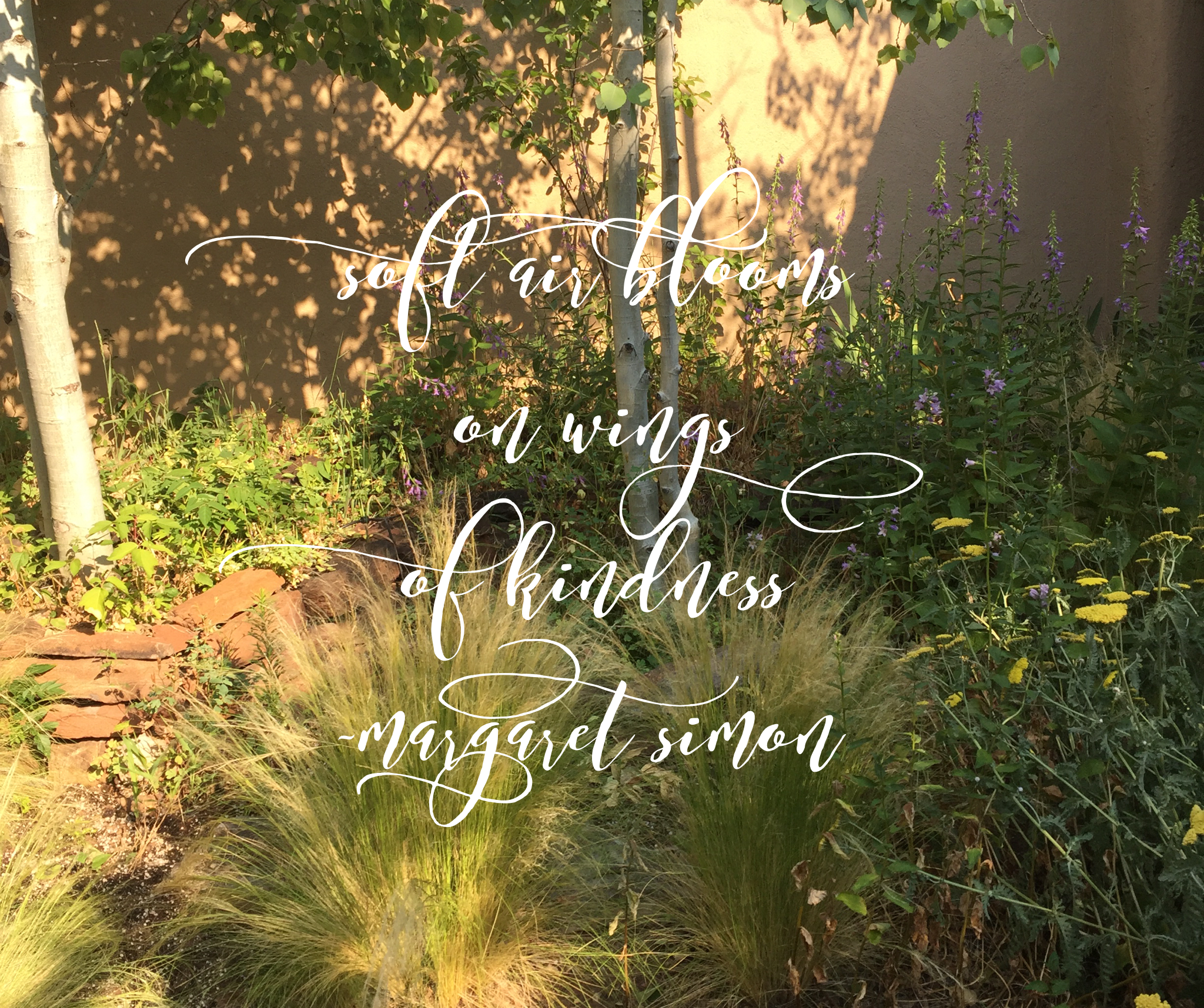
I joined in with the image below. I am on vacation in Santa Fe, NM and staying at a lovely casita. The patio is private, quiet, and inviting. The picture is a side garden of Aspen trees.

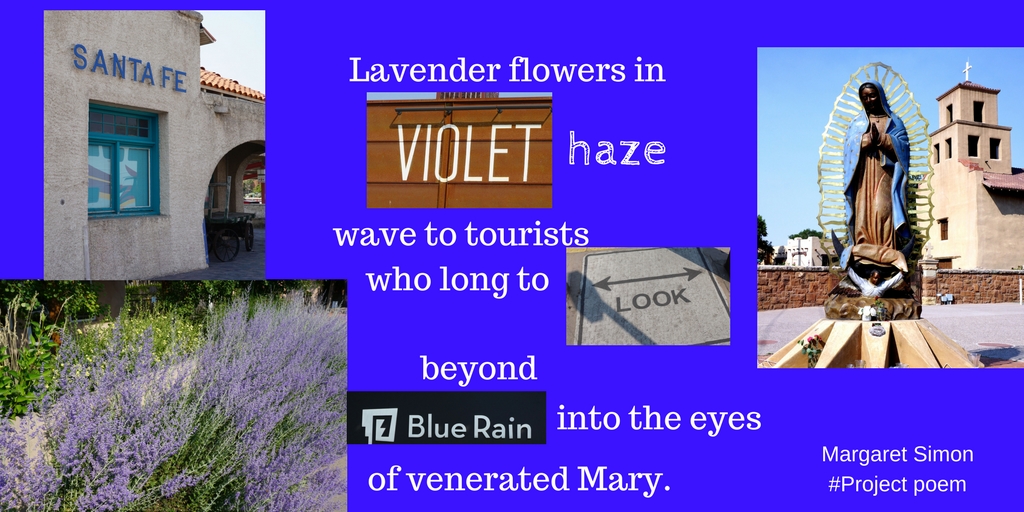
My writing friend, Linda Mitchell, recently visited Seattle. There she collected words and made collage poems from them. I took inspiration from her to capture the feeling in Santa Fe. There was a procession to return an old statue of Mary to the Cathedral of Saint Frances. The people here are serious about their worship of Mary.

Consider joining in the summer writing fun by tweeting your poem to #ProjectPoem and tagging me @MargaretGSimon and Jenn @hayhurst3.  I made the first image using the app WordSwag, the second in Canva.

Read Full Post »

Poetry Friday is with Dianne at Random Noodling

I think one of the most enjoyable things about writing poetry is playing with words. I’ve been known to have multiple tabs open on my computer to dictionary and thesaurus sites as well as research sites. I’ll Google a word and get lost in the direction it takes me.

This week one of my self-assigned poetry writing activities was to play with the juxtaposition of words. Inspired by activities in the book Rip the Page: Adventures in Creative Writing, I filled a few pages in my notebook with “words that need a friend.”

Then I wondered what I should do with these lists. I found more inspiration from Naomi Shihab Nye’s book A Maze Me. The poem “Where are You?” included this line that I borrowed, “I’m tucked inside each fresh paper page.” My friend Dani calls this “Taking a line for a walk” from her recent institute with the Montana Writing Project.

By giving myself the discipline of writing a poem every day, I am finding new and innovative ways to encourage my students’ writing when school begins again.

Pixabay photo

A Poem is Waiting

I’m tucked inside
each fresh paper page–
feathery poems
softly drizzled on Tuesday,
a perfumed whir,
blink in the sunshine
of your imagination.

A poem is salty chatter
of newly hatched chick-a-dees
twittering in the nest of cloud-joy.

A poem is a twister of whispers
rising on the weather front
of waving slurps of watermelon.

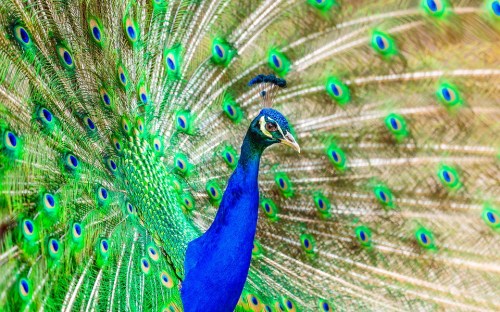
A poem is a show-off peacock
emerging from the bush
of brain bellows,
a scented thunder
from afternoon rain

sprinkling my face,
touching my hand,
this page.
Open gently.

–Margaret Simon

Read Full Post »

Join the Two Writing Teachers blog for the Slice of Life Challenge.

spring-2213359_960_720

As a writer, I never know where inspiration will come from or where it will lead.  I feel I must be open to it and respond.  Sometimes those responses go in a strange, unknown direction.

The poem I am sharing today originated from two different prompts.  The first was from Poets and Writers weekly email writing prompt, The Time is Now.  The poetry prompt led me to this article about a fashion exhibit on Mars at the Metropolitan Museum of Art. From the article, I collected unusual phrases like “the shape of a doll’s dress” and “nonverbal, abstract images inside of me.” The article was written about unusual fashion design; however, the words became organic and drew me in. My collection grew.

I didn’t know what I was going to do with this collection of lines. The Poets and Writers prompt instructed me to start with one of Leanne Shapton’s lines and let my imagination take over.

A few days later I read a prompt in The Practice of Poetry. This prompt asked me to use someone else’s words interspersed with my own in a “collaborate cut-up” poem. I didn’t literally cut-up the article, but now I had a way to use my collection of lines. The combination of writing exercises took me into a direction I didn’t manipulate or expect. Don’t you love it when that happens?

Blissful Containment

Pull a sweater over your head
in the dark and the dark gets darker.
Towel over your shoulders
adds warmth and a sense of caring.
This feels prenatal–like a cocoon.
Certainly, you will survive the tornado.

Croquembouche of exposure and erasure
embraces your delicate sweetness.
With a pillowcase
to hold all your precious jewels,
You will be saved
in an A-line skirt with a Peter Pan collar.

We are all organic and alive,
reactive like the center of the earth.
The beginning of softness
enters with our belly breaths.
Palettes of mud
feed our drying souls.

Our earth mother knows us well
nurturing our natural and childlike shapes.
Her transmission of spirit
sneezes us into existence.
We won’t remember.
We don’t have to.

–Margaret Simon (with lines from Leanne Shapton’s “Rei Kawakubo, Interpreter of Dreams”)

Read Full Post »

Join the Two Writing Teachers blog for the Slice of Life Challenge.

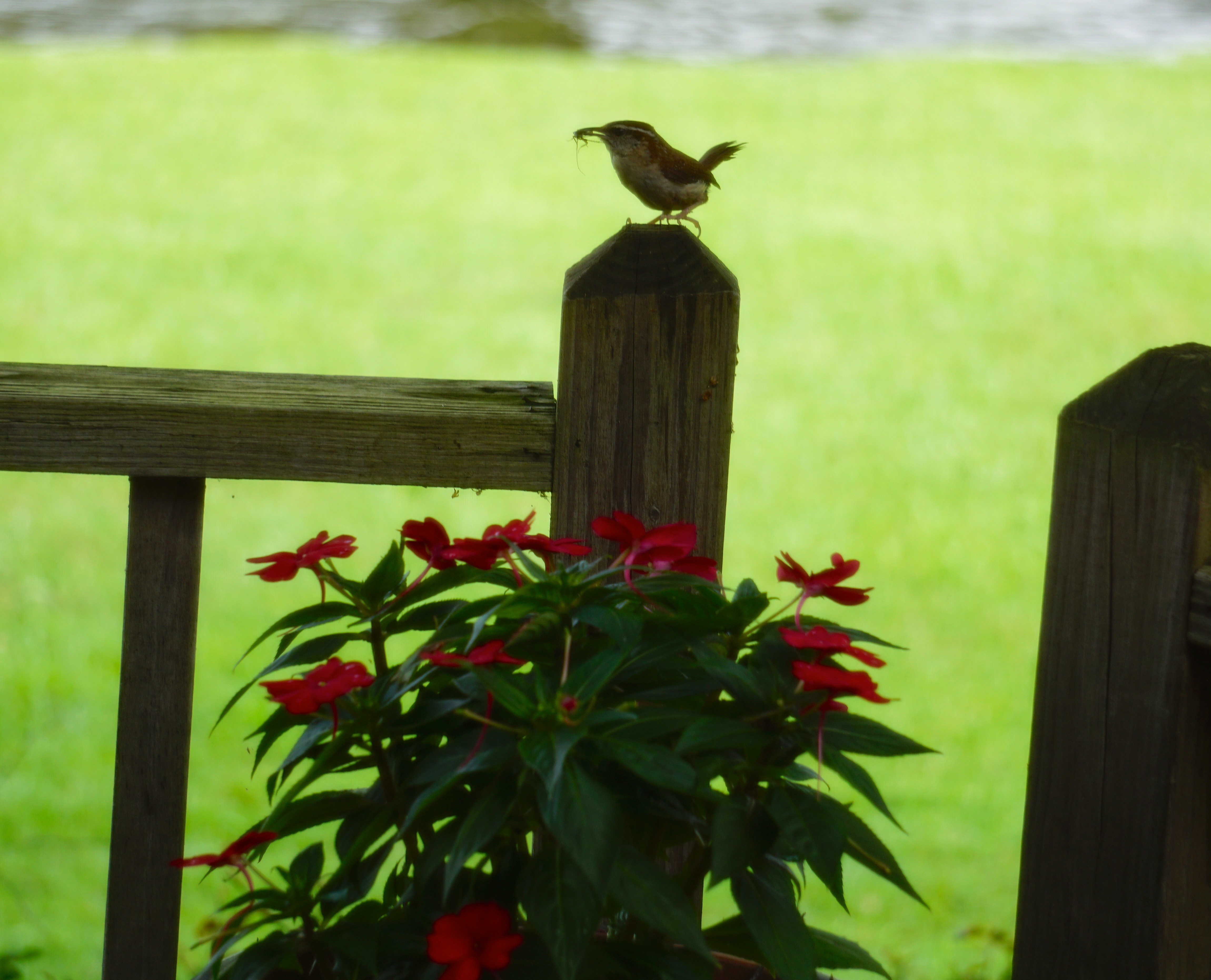
Carolina wren carries food to her babies.

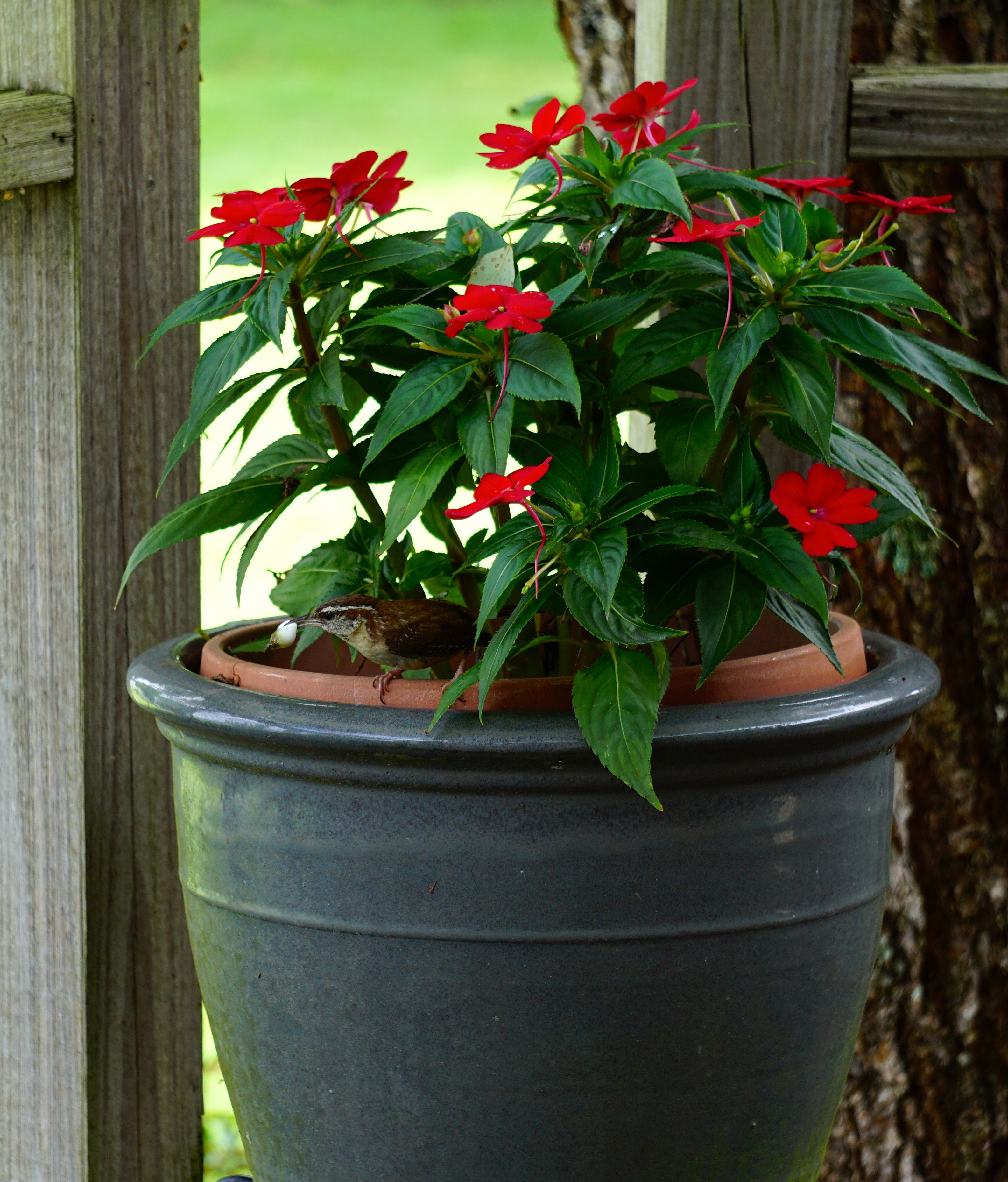
Sitting on the back porch at the lake, we noticed a small bird coming and going, in and out of the flower pot of red vinca.

“I wonder if there’s a nest in there,” said Mom while sipping her morning coffee. “When I watered it yesterday, I noticed a big hole, but I didn’t think anything of it.”

A little while later when I didn’t see the adult bird around, I peeked into the pot.  When I moved a stem of the flower, I saw movement and then three wide-open yellow beaks, hoping I had a juicy insect to drop in.

With excitement, I ran inside to announce to everyone that there indeed was a nest and there were baby chicks in it.

Last summer on my yearly visit we watched goslings of a Canada Geese couple.

My visits to the lake are spent hanging out on the back porch talking with my family.  Nature moves around us every day, and we never seem to have the time to really pay attention.  This nest of Carolina wrens (it took some internet research, a bird book, and consulting a bird expert to know what kind they were) entertained us and helped us focus on what’s really important: life, love, and family nesting.

Can you see the mama bird? Babies are right underneath.

Read Full Post »

Poetry Friday is with Carol at Carol’s Corner.

My writing group has decided to explore a book on writing poetry this summer. We chose The Practice of Poetry edited by Robin Behn and Chase Twichell.

I have been thumbing through and randomly choosing an exercise to try. On pages 51-53, Susan Mitchell’s exercise is titled “Experience Falls Through Language Like Water Through a Sieve.”

We write poems about what we can’t articulate, but feel pressured to say, which is why poems use language in unusual ways…And often, metaphor and simile may be a poet’s only means for capturing experience in its rich complexity.
Susan Mitchell in The Practice of Poetry, pages 51-52

She explains that when we use metaphor, we often write ahead of our understanding. When I write poems, I connect to a deeper part of myself, one who I don’t know as well, one who reveals more of myself to me.

In this exercise, I read one of the suggested poems Milkweed by Philip Levine and decided to use its form to inform my own.

Remember how
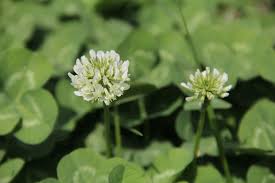
we sat in a field of clover
picking handfuls of white bursts
tying stem to stem
to make crowns, bracelets,
necklaces. We’d promenade
among the pine trees
overlooking Purple Creek,
curtsy,
loop our arms,
do-see-do
through those carefree
days of summer
that meant nothing
to anyone, even us.

Yesterday I walked my dog
through a field of clover.
While he stopped to sniff
and leave his scent, I watched
the clustering blossoms
sway and bow
to the coming
of a summer shower.

–Margaret Simon, after Philip Levine, all rights reserved

Read Full Post »

Join the Two Writing Teachers blog for the Slice of Life Challenge.

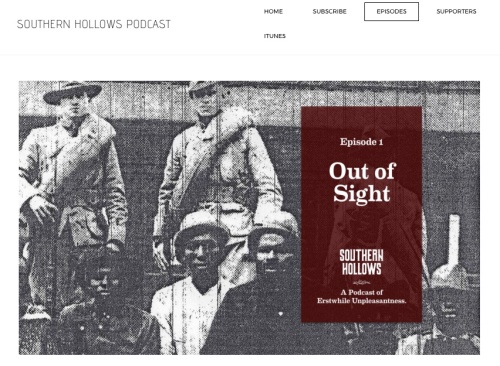
southern hollows podcast

When I imagine a southern hollow, my mind takes me to a sunken clearing in the mountains or the woods… a good spot to build a bright campfire — and tell a story. But the more I explore the history of my part of the world, the more I come across a new kind of southern hollows: men and women missing that bit of conscience or soul or whatever you want to call it that lets us see, and feel, somebody else’s humanity. And though many of the stories are little known, they often have shaped history, and are definitely stories we ought to remember. –Stinson Liles

My cousin Stinson grew up in Jackson, MS later than me. After college he moved to Memphis, TN. He lives there now with his wife and two teenagers and runs his own advertising agency. I was taken by surprise about a month ago when I saw in a Facebook post that he was embarking on a podcasting adventure called Southern Hollows. You will read about how this came to be in my interview with Stinson, but until you listen, you will not know the deep, unique voice he inherited from my uncle, a strong tenor the memory of whose solo of Oh, Holy Night still gives me chills today.  Not only is Stinson’s voice appropriate for the telling of these stories, his writing is intriguing and inspiring.

When did you come up with the idea of starting Southern Hollows?

History and non-fiction are my favorite to read, and for a long time I’ve thought about a book project—writing one—and even had some outlines going. I’ve been listening to more and more podcasts as the number of them have grown – and have discovered some great history ones. As I listen, I constantly have found myself thinking of stories that would be great topics for these shows. Then, after the election, when I needed a hiatus from current events for a while, I set out to find more shows like these and realized there wasn’t anything out there that combined those two approaches – covering formative periods of American History in a more thoughtfully written way with some slightly higher production values. There are lots of people out there doing interviews and conversations — but not many who are wrapping historical moments up in an impactful tight little story package. So that’s when I got the idea, late last year, for Southern Hollows. 

And why?

So that’s an interesting one that I’ve even asked myself. I’m not sure why I’ve become increasingly interested in Reconstruction and Native American removal and all these times when we as a country weren’t our best selves. As I got going on the podcast, (my wife) Patty asked the same question. She said the listeners need to know what it is and why it is. So I went back and added the intro (found in the quote above).

To tell you the truth, I think we’re at a moment when we have a lot of trouble with history. Confederate monuments, voting protections… I’m not sure why we are so eager to intentionally misunderstand the past. We as Southerners, especially, have trouble knowing what to do with it. As humans, we all need ancestral lore. But when our ancestral lore is slavery and Jim Crow, we only have two choices – confront it or reject it. I think it’s hard to say segregation and the Civil War and the Night Riders were abominations because that means Grandpa was an abomination and – even harder – we lose our ancestral lore. We become unmoored from our own identities. We take on guilt not only for loving our family heritage, but for loving sausage gravy or linen suits or Great Aunt Gussie’s quilt. You’ve got to be very intentional to separate them, and I don’t know that a lot of people can or do.

And when we don’t allow ourselves to see and feel the horrors of our ancestors, we run the risk of repeating our worst history.

While Southern Hollows is a history hobby project for me, it’s also got some importance, I think. I hope we all can benefit from a white Southerner owning and sharing these stories of inhumanity.

How do you research the stories?

Since the goal is to do two a month, I can’t do the kind of primary research I’d like. So my general approach is to find a story that fits the bill, then read a well-researched book or two that aggregates a lot of the primary research. I try to give lots of credit to those authors, and even share links to their books.

How is writing a podcast different from other types of writing? Or how is it the same?

It’s funny you ask, because I didn’t think it would be that much different, but it turns out is very different. For obvious reasons, it’s a lot more like writing a script than an essay. I love to write in long complex sentences – those Winston Churchill type structures that a lot of times don’t resolve until the end. But while that kind of writing is useful in a history text, it’s both confusing and unnatural when spoken. So I’m writing them more and more with a storyteller’s ear, with fragments and interjections and lots of em dashes. I don’t want to lose the polish and intensity of the content that makes it different, but I don’t want the distraction of an overly academic or inauthentic voice.

Any advice for teachers for using podcasting in the classroom?

Part of the vision for Southern Hollows emerges from the evidence that people allow themselves to be desensitized to inhumanity – laying it out there naked is the work.

As long as students are old enough to be exposed to inhumanities like lynching (and the holocaust and other comparable historical human tragedy) I think mine would be appropriate.

As a marketing executive, incidentally, I read a lot about podcasting as an emerging advertising medium, and one of the key reasons is that millennials (and younger) have grown up consuming multiple media simultaneously. It’s why they get bored with documentaries and have huge trouble with books. Podcasts are a medium being embraced by younger people because they can listen as they do other stuff. It’s the preferred way to consume information-rich content. 

I highly recommend Stinson’s podcasts for many reasons.  The stories are interesting.  The content is forgotten or lost history.  And the style of Stinson’s writing and speaking are well-crafted.  You can subscribe to Southern Hollows on Stitcher and iTunes or directly from Southern Hollows website. 

Read Full Post »
Please use this button on your site for DigiLit Sunday posts

I know, it’s summer and who wants to think about problems during summer?  I didn’t expect to, but I do enjoy having more time to read.  I’ve been reading Dynamic Teaching for Dynamic Reading by Vicki Vinton.  This book was chosen for the CyberPD book for July. To follow the discussions around this book, tune in to #cyberpd and Michelle Nero’s blog Literacy Learning Zone. 

In Dynamic Teaching, Vicki sets us up to think more about the complexity of and the authentic purpose for reading. She leads us into the problem solving process for students when reading.


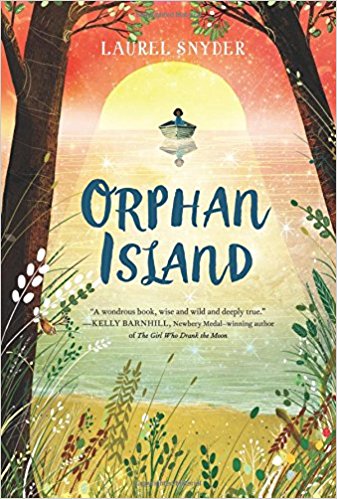
It’s one thing to read theory in a professional book, but quite another to see the theory play out in your own life.  I started reading Orphan Island by Laurel Snyder.  This book is intended for middle grade students, the students I teach. Immediately in the first chapter, I have to enter into the process of solving a problem.

Jinny heard the bell.  She threw down her book, rose from the stale comfort of the old brown sofa, and scrambled to the door.  When she burst from the cabin into the evening air, Jinny ran.

I can assume from the title of the book that Jinny is an orphan.  This first paragraph makes me think she is at camp.  A bell rings, and she runs from the cabin.  As I continue to read, though, I find clues that she is not at any camp I’ve ever known.

My purpose for reading is heightened.  I have to figure out why Jinny is at this camp.  Who else is there?  What happened to her parents?  Reading only this first chapter, I am full of questions.

It is time to honor this process of problem finding and problem solving with our students.  How could I set my students up to do this?

  • What do you think is happening?
  •  What are your questions?
  • Why do you want to keep reading?

My summer reading has taken on a different dimension.  I’m not only reading for understanding, but I am reading to find the problem.  Where can I apply this problem to my teaching?  How do my students find problems?  How do I present problems that will interest them enough to solve?

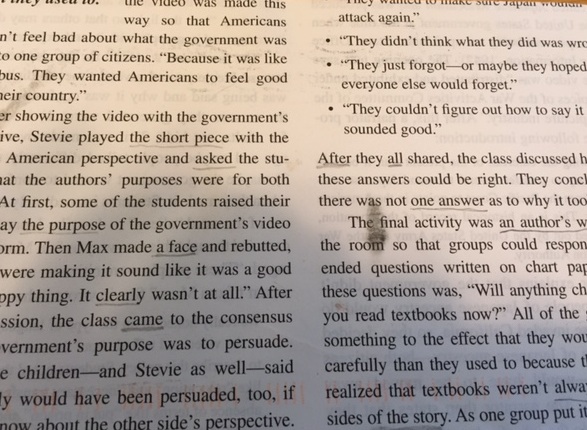
I have found a problem that interests me.  In fact, it came in the mail.  I think it’s from someone in the CLMOOC postcard exchange, but that in itself is a mystery. I received a postcard with a snippet of text glued to the back.  The instructions are to create a poem out of the text, black-out style.

As you may be able to see, I’ve started underlining words in pencil.  I haven’t committed to any of them yet.  The fact that I have to black-out and send the postcard back with some sort of meaningful text selected has heightened this problem from one of mere play to a serious thoughtful process.   How can I take this experience and apply it in my classroom?  I want my students to both play with language and see the serious potential of making meaning with words.  Wouldn’t it be interesting to send a postcard to each of my students with these same instructions?

Problem seeking leads to problem finding to problem solving.  This is the way of language in reading and in writing.  I invite you to contemplate problems in your own literacy learning and teaching and link up your blog post below.


Read Full Post »

« Newer Posts - Older Posts »