Feeds:
Posts
Comments

Archive for the ‘Writing’ Category

Find more celebration posts at Ruth’s blog.

Thursday, Feb. 1st was World Read Aloud Day.  Back in November, Kate Messner posted a long list of authors willing to do free Skype visits.  I selected and contacted Sarah Albee, author of Bugged, Poop Happened, and Poison, amazing and engaging nonfiction books.

Each of my students in my morning class composed a question and were promised a chance to personally ask their question.

Argh!  Tech problems!

A quick call to the tech director, and he took over the computer and was able to solve the problem just in the nick of time.  My students were able to ask their questions, and Sarah expertly answered each one.

Even Erin’s question, “Do you know what a narwhal is?” did not stump this nonfiction research expert.  Sarah pointed Erin to a page in Poison in which she refers to the practice of using narwhal horns to simulate unicorn horns.

My students marveled in the length of time it takes to research, write, and publish a book.  Dawson, who is reading Bugged, asked what her favorite insect is.  Would you be surprised to know it’s an ant?!

Dawson later announced that it was the first time he had ever met anyone famous.  In a more perfect world where technology was flawless, I would Skype more often with “famous” people.  Authors are my heroes, and they are becoming my students’ heroes as well.

Read Full Post »

Join the Two Writing Teachers blog for the Slice of Life Challenge.


Last week my students and I read together a Scope magazine article titled, “Escape from Alcatraz.”  The title alone was enough to interest my students as well as the images of three fugitives believed to have escaped the highest security prison that ever existed.

Armed with the article and a video from MythBusters, I asked my students to make up their own minds about whether or not the fugitives escaped.  Students worked on rough drafts and by Wednesday were poised at the computers to type up their essays.

Alcatraz_Island_photo_D_Ramey_Logan

Photo from Wikipedia by D. Ramey Logan.

They were still bothered, however, because they didn’t know the truth.  Did the three men escape or not?  Searching for images to put into their blog posts, a student came upon a recent news report, recent as in “3 hours ago.”  We all eagerly gathered around the computer, reading over his shoulders.

A letter allegedly written by one of the escapees recently came to light. CBS San Francisco exclusively obtained it from a source.

“My name is John Anglin. I escape from Alcatraz in June 1962 with my brother Clarence and Frank Morris. I’m 83 years old and in bad shape. I have cancer. Yes we all made it that night but barely!”   

CBS News Jan. 24, 2018


What happens to an essay that has been written and worked on in conferences when new evidence emerges?

Different students responded in different ways.  One student placed the link to the article into his post.  Another changed his whole essay and threw away the rough draft.  Others adjusted and added to what they had already written. And some were not convinced by the evidence.  They kept their original theory.

In a recent blog post by Kate Roberts on The Educator Collaborative, Kate asks these questions: “Is it ever worthwhile to read as a community, to read a text someone else chooses for you, one that you would never read on your own? ”

Like Kate Roberts and many reading workshop gurus, I believe strongly in choice.  But when it comes to nonfiction, experiencing the text as a whole class is engaging and exciting.  Nonfiction encourages more research.  Students push each other, ask questions, and engage in a deeper way when reading nonfiction together.

This week we are reading aloud Poison by Sarah Albee to prepare for a Skype visit with her on Thursday, World Read Aloud Day.  I look forward to discovering where this will lead us.  Keeping kids engaged, wondering, and curious is what teaching is all about.


Read Full Post »

Find more celebration posts at Ruth’s blog.


Early morning on Friday, I read Poetry Friday blog posts.  I read Irene Latham’s post here.  Her prompt suggestion came from a book that I have on my shelf, PoemCrazy by Susan Goldsmith Wooldridge, Chapter 31 “bring me magic.”

Inspired, I grabbed some packs of microwave popcorn and headed to school for Popcorn Poetry Friday!

Even a juice spill couldn’t dampen our poetry spirits.  The prompt calls for a walk outside, but we passed around the object inspiration box I had in the closet.  Each student picked an object to write about.

The instructions: 1. Choose an object; give it a name. 2. What does it look like? 3. Ask the object for a quality or deeper wisdom.

I believe this was the first prompt I’ve used this year that was successful for each student.  I typed each poem into a Google doc and on a whim, sent it to Irene.  Within our two hour class time, she responded.   She wrote a comment of encouragement on each student’s poem.  What a gift! They were thrilled.  Their teacher was thrilled.  Thanks, Irene, for your generosity and kindness.

Austin

Colorful butterfly
inspires the caterpillar
to rise up and fly.
Bring me your inspirational, stress-free life.

Lynzee

Black crayola paintbrush
dark as velvet,
give me your way of bringing color
to any situation
no matter how grey.

Mason

Bald eagle
white and burgundy,
bring me the ability
to soar faster than anyone
even if I mess up.

Andrew

Colorful feather
like the paintings of an artist,
give me a creative mind
like Pablo Picasso.

Trace

A turtle
that swims through the water
as wind does through the air,
bring me hope and peace
in ways as the water flows
through the currents of life.

Dawson

Dear little angel,
give me hope in time of anger and war.
Dear little angel,
enlighten me
with your sparkles and light
that shine so bright
every day and night.

Faith

Discarded flower necklace
connected by the same chain,
bring me your connection.

Like my family
all connected,
bring me gratitude.

Deep inside
a core of happiness,
bring me
your joyfulness.

Erin

Sandy hope
washed up on the shore
of value,
bring me confidence.

Erin extended the writing project and wrote a poem for each of us in the class.  Another amazing gift!  Poetry builds community.


Read Full Post »

Poetry Friday round-up is with Kay at A Journey Through the Pages.


I’ve had a lot of time lately to look out the window.  A hard freeze blew through the deep south, and gifted me with time alone at home on the bayou.  The winter bitter winds do not scare away the water wading birds.  They must be covered in some powerful down.  I’ve watched a particular blue heron, an occasional great white egret, and this morning, a family of wood ducks.

Watching the bayou inspires me to write poetry.  If you come by my blog often, you know this is my ongoing topic.  My blog title, Reflections on the Teche, is informed by the Bayou Teche (pronounced “Tesh”)

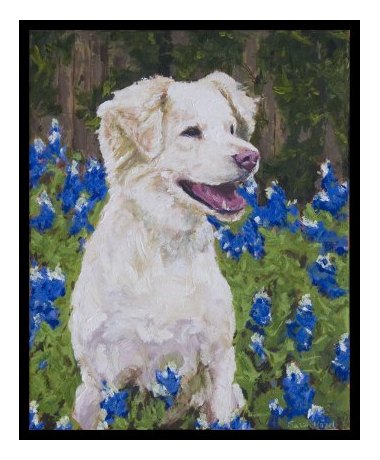
Taking a picture of a blue heron is nearly impossible.  They respond to any human activity with flight.  I painted a portrait of one a few years ago after a photo by Ralph Fletcher.  This painting now hangs in my parents’ dining room.

Blue heron painting by Margaret Simon


Heron Watching

I stand still
at the window
watching.

Take in slow breath.
No need to pray
when seeing this heron.

He perches,
head down,
beak pointed to

water’s surface
where the sun glimmers
like waves in old glass.

Is it a minnow,
mosquito, moth?
I focus on the horizon,

wonder
what his patience
invites me to see?

Margaret Simon, 2018

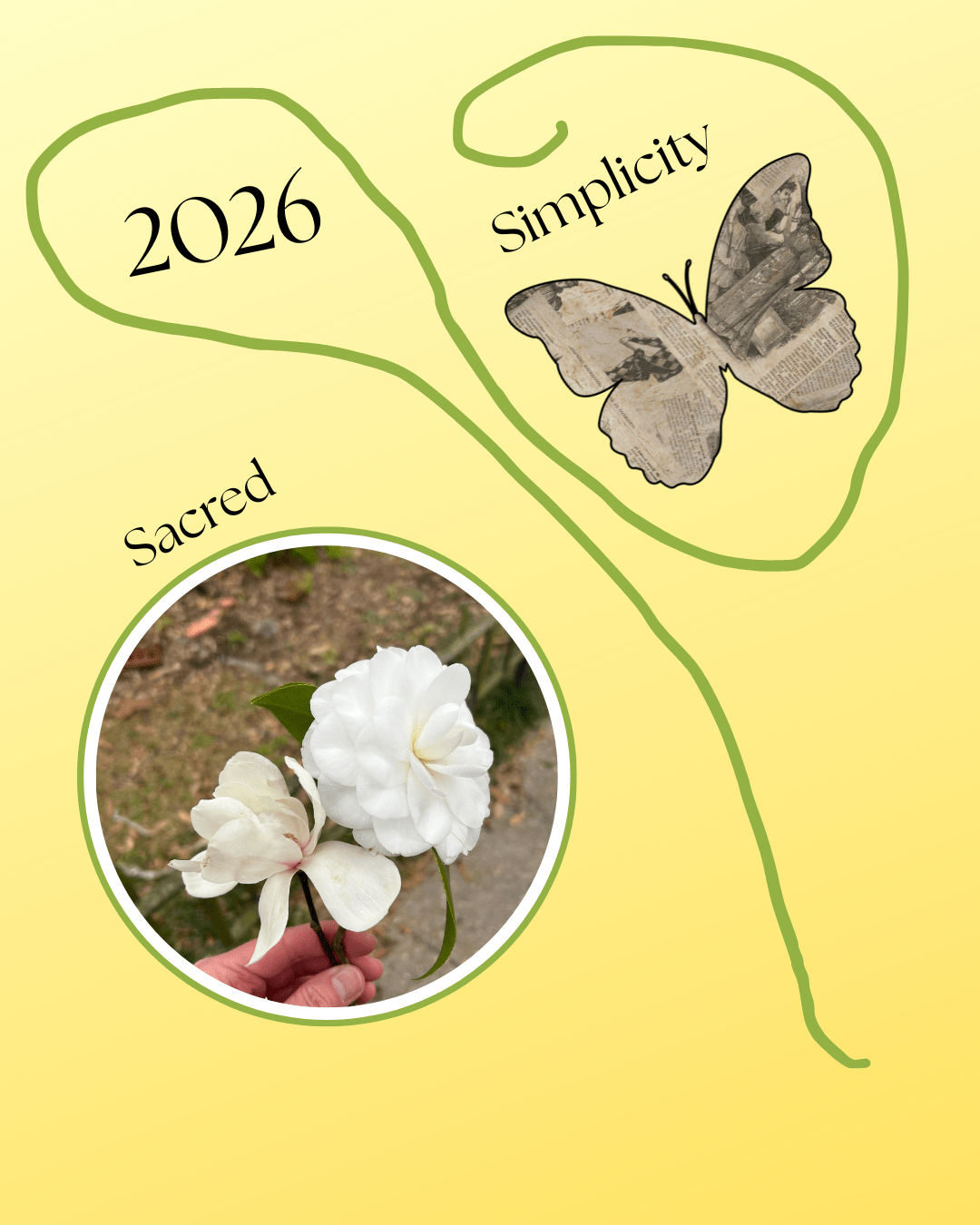
My One Little Word for my writing life is Present.  I want to show up to the page every day.  I wrote a post for TeachWrite Chat Blog here. I made a Canva image of my goals for being present thinking of the heron in my backyard and his lessons of patience.


Read Full Post »

Join the Two Writing Teachers blog for the Slice of Life Challenge.

I am a co-moderator with the #TeachWrite chat on Twitter. (Note the graphic on the side bar.) One of my colleagues in this endeavor is Michelle Haseltine.  Michelle put a photo on Facebook of a journal page from one of her students.  The page was filled with the outline of a jar and words and sketches were drawn inside the jar.

I took this idea and presented it to my students with a Brene’ Brown twist from Braving the Wilderness. 

We all have times when we feel lonely.  Have you ever felt alone in a crowd?  Like you just don’t fit in? There’s no one around who sees you or that you connect with.

We all have these times.  But when we do, we can take with us a jar of things that make us feel joy, make us feel safe.  What would be in your jar?

One student jumped up from her seat to draw a jar on the board.  She labelled it “Our Happy Place Jar.”  Her instructions were for everyone to draw one thing from their jar onto our shared jar.  (I love it when kids respond to the lesson with such leadership and participation.)

My students drew a variety of jars.  Some were filled with specific things from our class, Slice of Life, read aloud, computer (blogging), friends.  Others find joy in nature or family or funny memes.  Whatever their choices, they engaged with the idea and filled their jars.

Near the end of the week, Chloe announced, “Even if I have to throw away this journal, I will tear out this page and save it forever!”  That’s what I call Joy!

Mrs. Simon’s Sea

We are fish,
fish swimming through a treacherous sea,

a book,
open and full,

a nest,
a place of warmth,

a pencil and paper
for expression,

and a poem.

by Lynzee, 3rd grade

Austin’s Double E Jar

Andrew’s Rainbow Jar

Read Full Post »

Join the Two Writing Teachers blog for the Slice of Life Challenge.


Music has always been a part of my life.  From very young listening to my mother play the piano to teenage years hearing my brother through the walls between our rooms.  The musical talent was passed on through the lefties in our family, my mother and my brother.

I took piano lessons until I entered college.  In high school and beyond even to today, I’ve sung alto in multiple choirs. So you could say music is part of me, but I’ve never felt very musical when it came to playing an instrument.

At NCTE this year, I sat in a circle of ukulele players.  Jan Burkins placed her instrument in my hands and taught me three easy chords.  She said, “You could do this!”

I asked Santa (my husband) for a ukulele for Christmas.  He loved the idea.  He researched and visited local music stores to find the just right one. I started practicing early Christmas morning. I’ve practiced every day since.


I cut my fingernails on my left hand.  Those fingers are sore and numb from pressing hard on the strings.  They say this gets better with time. I am determined not to give up because of a little pain.  My husband, the runner, says you have to move past the pain.

I haven’t been able to sing and play at the same time which is my end goal.  I do have an awesome teacher, though.  Her name is Cynthia Lin.  She’s patient and kind and takes it slow.

I’ve decided to take on the word EXPLORE for my One Little Word for 2018.  No better way to begin my exploration than to learn to play an instrument.  I will be exploring chords, strumming, and patience.

This photo is a bridge over the Mississippi River near New Orleans.

Read Full Post »

Click over to Buffy’s Blog for more Poetry Friday.


I know the importance of reading nonfiction texts with my students; however, I am not a fan of assigning an essay after every reading, especially in December.  I wanted my students to think critically about the text, to absorb it fully, and to demonstrate comprehension.  So I turned to the found poem.

To write a found poem, the writer must make decisions about which text to keep and connect to.  This requires critical thinking skills. For a found poem to work, the words and phrases need to be placed creatively.

We read “Shattered Sky”, a narrative nonfiction story in the November issue of Scope magazine published by Scholastic.  In this story, my students read about a little known disaster in Halifax Harbor in 1917, one hundred years ago.  They were fascinated.  The author of the text, Kristin Lewis used craft moves to heighten the emotions of the story.  I instructed my students to underline phrases and words that brought about an emotional response.

When we had written and were sharing our writing, Faith said, “I am amazed at how different everyone’s poem is.”  And she was right.  Each one was different.  Each student had found a unique voice.  Each poem reflected a different aspect of the article.

When Andrew posted his poem on our blog, he titled it “I like this poem, so you should.”  Mason thought it was the best poem he’d ever written.

This exercise of finding a poem gave my students confidence to recognize craft moves as well as create a unique piece of nonfiction poetry.


Poem for Halifax

December 6th
They ring a bell
The image they see
They want to repel

Children getting ready, grabbing their schoolbooks,
Fathers, ready to work, grab their coats, off the hook.
Dartmouth and Halifax, buzzing with activity,
while mothers make oatmeal, hot and ready.

Two boats, Mont-Blanc and the Imo
With explosives and munitions, ready to blow.
There was no saving them, as far as we know.
Neither ship changed course and tore into the other and
put on a dangerous light show

Orange and blue fire ignited the boats
People rushed to rescue, thought they could help.
They succeeded but some retreated up.

Andrew, 5th grade

Shattered

The water had a thin mist of terror of WWI

The chimney swirled of smoke and ash

The people of Halifax were doing their everyday things

From eating to cooking and going to work

Then a sudden rumble and crackle of the two ships of cargo collide

They rush outside as every thing burst into flames and then boom

A sad tragedy will forever live in our hearts.

Mason, 5th grade

See more found poems at our Kidblog site.

Read Full Post »

Slice of Hans the Christmas Frog

Slice of Life Challenge

Join the Two Writing Teachers blog for the Slice of Life Challenge.


Every family has their traditions at holiday time.  When I was growing up, my brother laid out a stick manger scene and would move the “three wise men” sticks every day of the twelve days until Epiphany.

Children bring joy to our traditions.  Our youngest daughter is now 27 years old, but we still display “Hans the frog” in the front yard.  When Martha was three years old, she announced with complete confidence that the frog residing in the back flower bed was Hans.  Thus our family totem became a frog.  A few years later, my husband who is quite handy with wood created an over-sized frog in a Santa hat.  He took the design from a child’s coloring book. I can remember him painstakingly transferring the design to graph paper.  IMG_1042

Hans has decorated our yard for Christmas every year for close to 25 years.  It’s just not Christmas without him.

Our children are grown up adults now, so Jeff asked me if he should put up the frog.  “Maybe I can just bolt it to the wall on the front porch?”

“No way!” I exclaimed.  “The magnificence of the frog is the shadow it casts on the castle.”

So here he is, in all his silly magnificence…the giant shadow of Hans the Santa-frog!


IMG_1039

I’m sure your family has a silly holiday tradition.  Please share in the comments.

Read Full Post »

Click over to Random Noodling for more of Poetry Friday.


I received a snow poem from Liz Steinglass. I’m not sure how well you can see it, but she cut up the letters in the word snow and made snow letters.  Each stanza begins with snow fall and a line of imagery.  Beautiful!

I thought about how I could share this with my students.  We rarely get snow, but last Friday was one of those rare occasions, so what better way to celebrate than with snow poetry and making paper snowflakes.  Liz also sent stencils and patterns for snowflakes.  We are still working on a display in the classroom.

Thanks, Liz, for helping us celebrate winter, snow, and words on the page.

paper snowflake

Student-made snowflake with an original pattern. Notice the heart shapes.

snow haiku 2

#haikuforhealing  photo and poem by Margaret Simon, 2017


Read Full Post »

Join the Two Writing Teachers blog for the Slice of Life Challenge.

Not every student is made to be a mentor.  A common thought about gifted kids is to encourage them to mentor other students.  As a teacher of gifted, I’ve seen students who work well with other students and I’ve seen those who don’t.  I feel it is important to know a student well before pushing him/her to help other students.

I haven’t taught Chloe long, but I knew she would make a great mentor. She is confident without being condescending.  She’s enthusiastic about whatever we are doing in class and spreads that enthusiasm.  So when I asked her if she wanted to teach her regular class about color poems, she literally jumped up and down.

At NCTE I grabbed an Advanced Reader’s Copy of Polly Diamond and the Magic Book by Alice Kuipers and Diana Toledano. I also picked up a teacher’s guide which led me to the color poem pattern from Read, Write, Think.  (Polly writes a color poem that her teacher loves.) Chloe wanted to write a color poem like Polly.

First she chose her favorite color, pink, and made a list of pink things.  We talked about figurative language and how she could use it in her poem.  Chloe wrote this poem:

Pink is cotton candy.

Pink is a horn of a unicorn.

Pink is my blanket.

Pink is a flower.

Pink tastes like bubble gum.

Pink smells like a rose.

Pink sounds like a violin.

Pink feels like a pillow.

Pink looks like my mom’s lips.

Pink makes me beautiful.

Pink is magnificent!

When Chloe shared her poem with her classmates, they were ready to write their own.  Having a form helped.  Her friends selected their own favorite colors and used the form to guide their writing in their writing notebooks.  As she walked from group to group, Chloe checked in to see what they needed help with.  She was patient and helpful.  Her classmates were focused and serious about their writing.  Chloe was a proud teacher.

Writing is hard work!


by second grader Kelsie.


Read Full Post »

« Newer Posts - Older Posts »