My birthday is in August. August is the first month of school when everything is getting put into place, so when the birthday buddy list was circulated, my birthday had passed. I never gave it a thought.
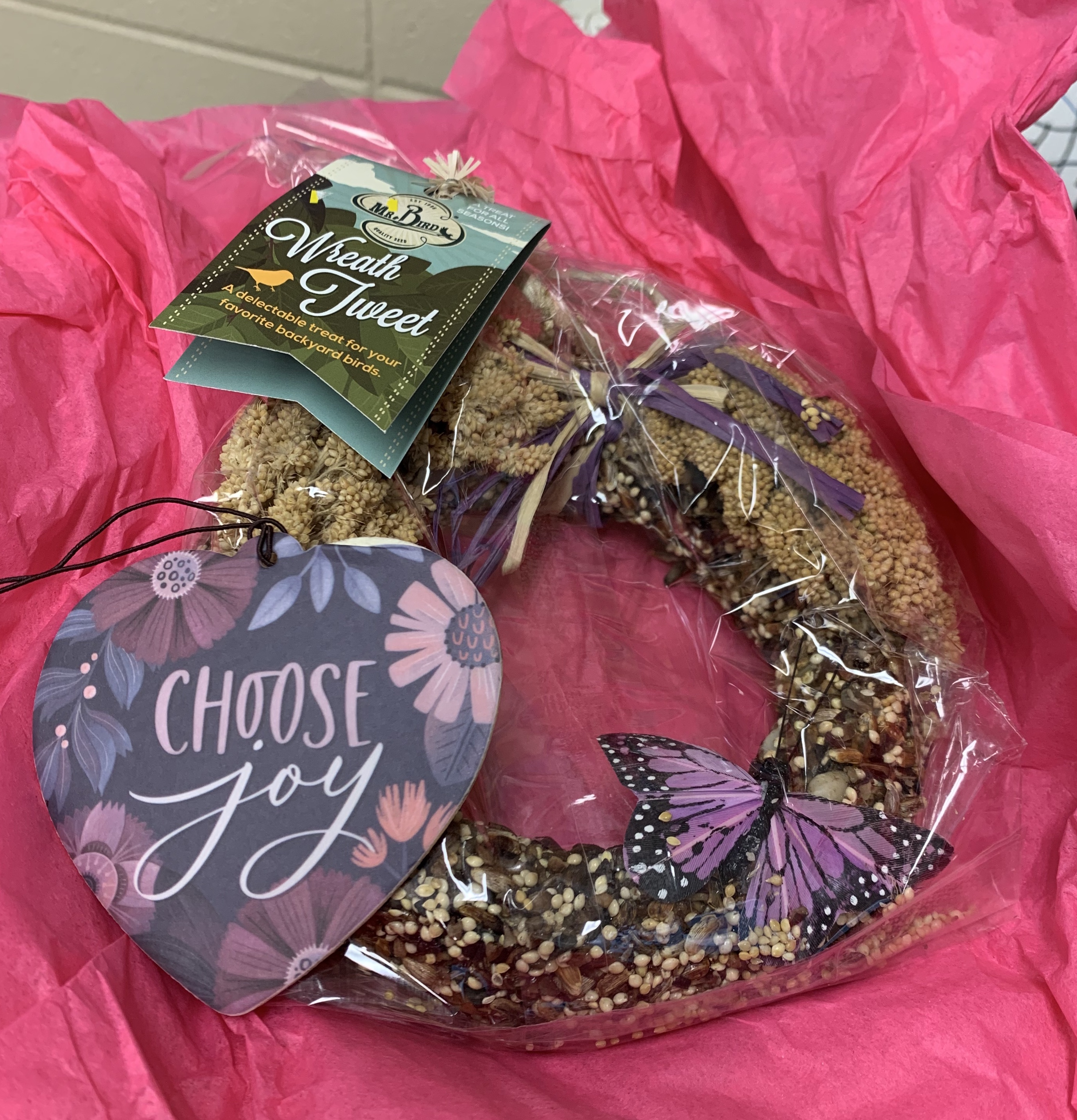
Until Monday when a special gift was delivered to me from a third grade teacher. On the note, she wrote “Happy Birthday from your Birthday Buddy! Since your birthday had passed when I received your name, I got to choose today to celebrate you!”
Not only was the thought of a nonbirthday-birthday fun for me, the gift was just right, a bird seed wreath to hang near a window to watch the birds come to eat. Thoughtful, kind, and all about me!
On Monday, I shared Allan Wolf’s poem “Living the Poet’s Life.” Each line begins with “A poem can be…” Allan is sharing videos each day of this month on his Instagram as well as YouTube.
Allan Wolf reciting “Living the Poet’s Life”
My students and I borrowed the form to write our own poems repeating the line “A poem can be…” I made my poem into a zine thank you note for my birthday buddy.
The Kidlit Progressive Poem is with Cathy Hutter, Poeturescapes.
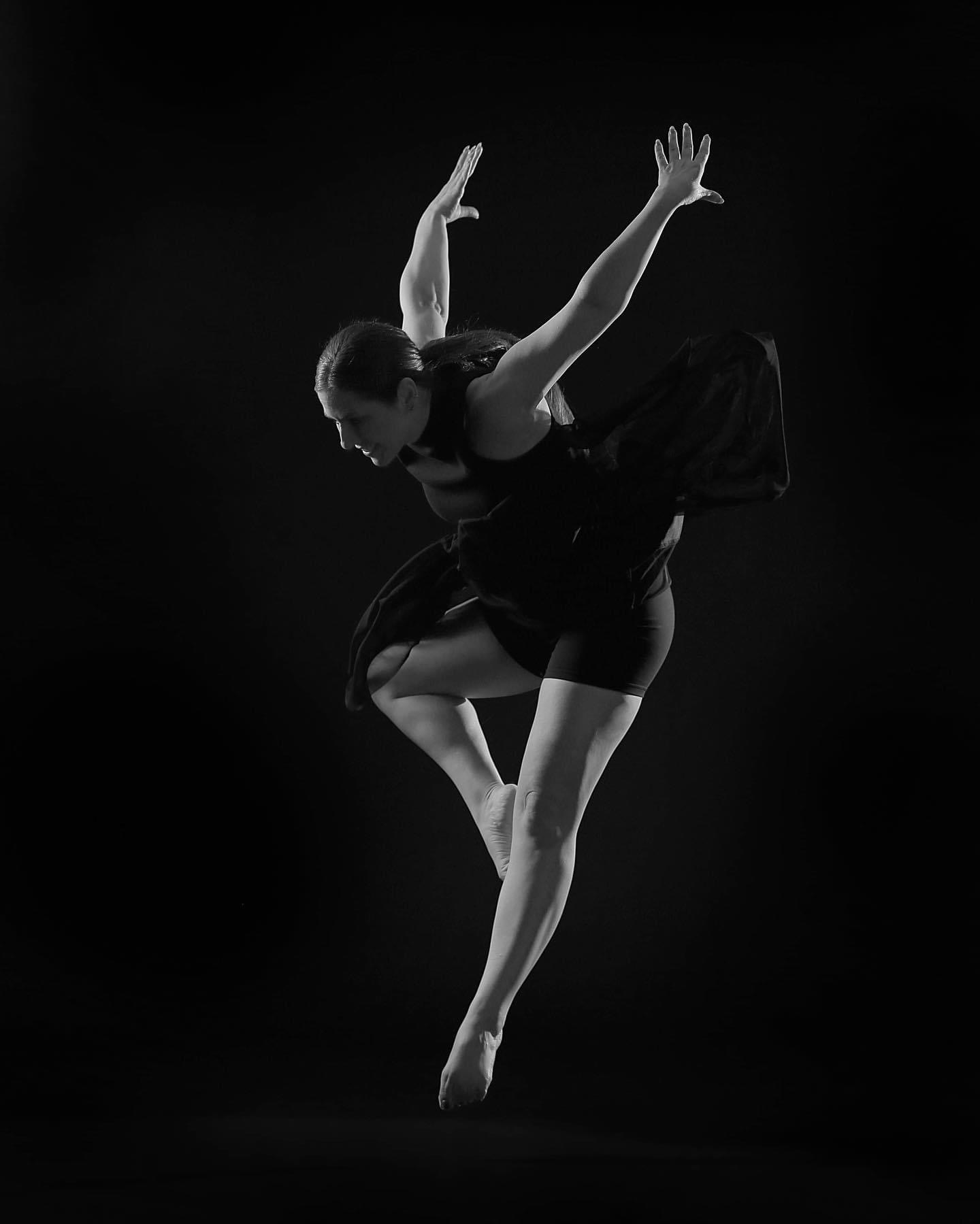
My classroom neighbor is connected with a door between our rooms. Often she or I will knock and visit. One of those visits I talked about my weekly blog post of a photo, and she showed me photographs from her dance troupe. I was moved by the seeming still life of a dancer in flight. Kim got permission from both the photographer, Jon Rabalais, and the dancer, Lacey LeBlanc, for me to post this photo as a poem prompt. I hope you are inspired as I was to write about this amazing photo. Thanks to Jon and Lacey for sharing it with us.
My poem is a bit of word play, changing nouns to verbs. I enjoyed creating my poem. Please leave a small poem in the comments and encourage other writers with your comments. Honor the artistry of dance and photography with words.
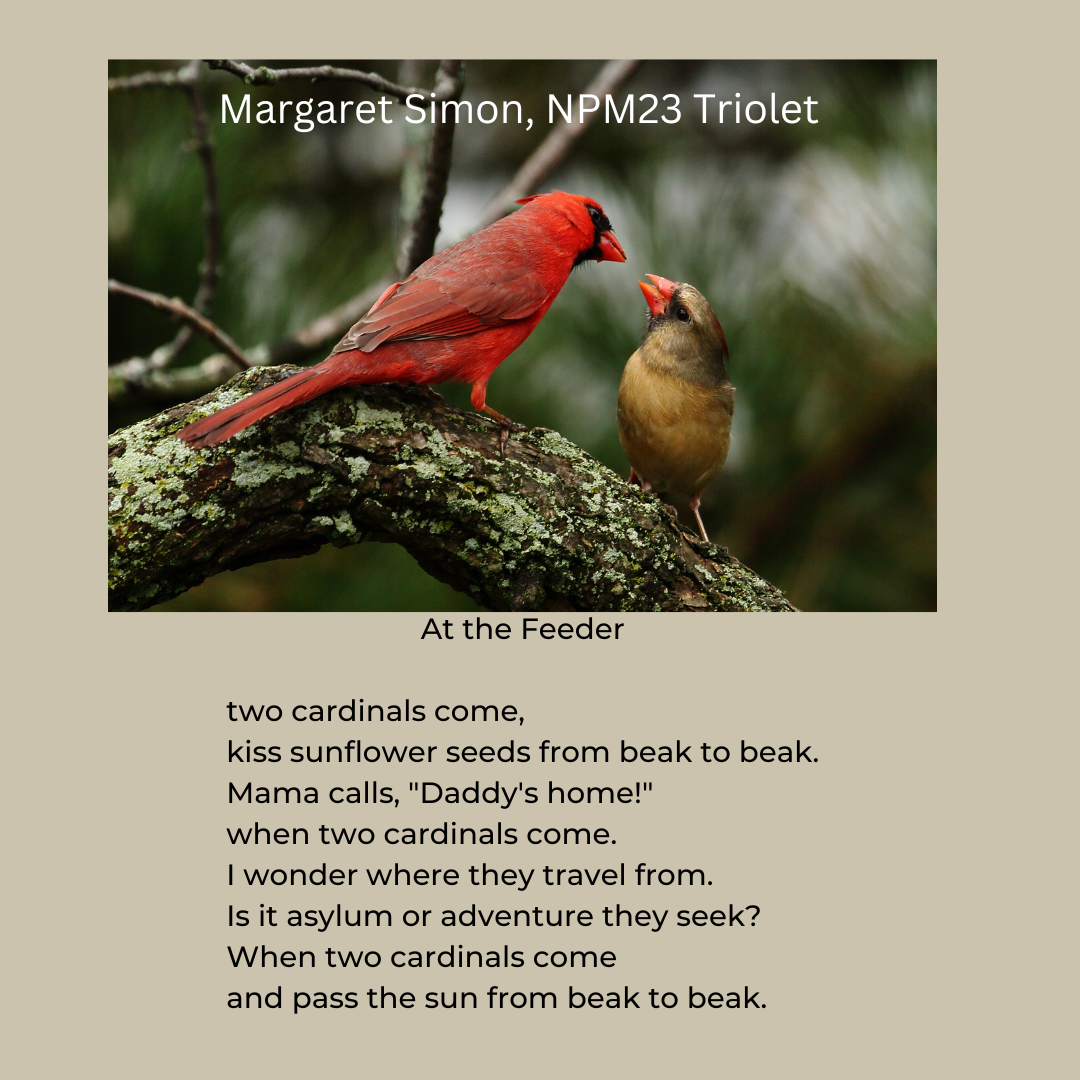
I’ve been participating in VerseLove over at Ethical ELA. Today, Fran Haley invited us to write a triolet. This is a form I find challenging because the repeated lines, while they should be easy, make it hard to create an original poem in which the flow doesn’t seemed forced.
I love nature and observing the intimacy of birds. Recently I witnessed a cardinal couple feeding. Such a sweet moment to see the male feeding the female. In case you are wondering, I intentionally changed the last line to play with metaphor.
This week was hard but good. I’ve been busy. That helps. One year ago my father died. It’s been a whole year of missing him. I’m getting better at dealing with grief. But somehow it bubbles up when I write. The Ethical ELA #VerseLove prompt today was from Allison Berryhill was to write a poem about what you missed. Check the prompt here. I recall a Ted Kooser poem about what a loved one who passed was missing on a fine spring day. I can’t find it, but if you know it, please let me know.
What you Missed the Year You’ve been Gone
Since you’ve been gone, spring sprang again with bright cypress green and pops of buttercups along the roadway.
Baby June was born on winter’s solstice. She’s blooming, too. You’d want to make raspberries on her strawberry cheeks.
Since you’ve been gone, we’ve moved Mom twice finding better and better care for her. We think you’d approve
because I walked beside a woman with a dog who told me about her mother. We talked and talked
then she said her name was Beverly like your favorite niece whose southern drawl comforted like a soft pillow.
I miss you on days like this, when the birds sing opera, the sun hides behind the clouds. I kiss your great grandson.
He’s forgotten you died and says, “Where’s Pop?” I haven’t forgotten, but I think I see you in his smile.
Today’s Poetry Friday Round up is with Jone, a gentle creative who always holds others up on her strong shoulders. Today she is gathering classic found poems. I forgot to do one. I have a good excuse. I’m presenting today at the Fay B. Kaigler Book Festival in Hattiesburg, MS with my friend and fellow children’s book author Leslie Helakoski. But I don’t like missing out, so I may try to get to it sometime this weekend. At Mary Lee’s post, I found a link to a poem video done by Jone’s student, Kimberly Taylor. It’s an amazingly powerful interpretation of Mary Lee’s poem Dandelions.
Leslie wrote a book entitled “Are Your Stars Like My Stars?” It’s a beautiful book about diversity in perspective using a patterned phrase i.e.”Is your blue like my blue?” I read the book to my students and had them write their own poem based on the pattern. Using blank books, they turned their poems into books. I’ll be sharing these with our session participants today. I wanted to feature Adelyn’s poem today. When she wrote it, it brought tears to my eyes because at such a young age of 10, she sees with more wisdom than many adults. And this gives me hope. Poetry gives me hope. Children’s book authors give me hope. You give me hope.
Do You Like What I Like?
Staring at the stars in cozy blankets, porch bound. Are your stars like mine? A fluff in my arms, a fuzz in my head. Do you sleep like me?
Hugging them tight, don’t want to let go. Do you love like I do?
When you’re sitting down, about to eat your food, whether it’s makizushi, chimichurri or gumbo. Think, do I do what you do?
I have trouble counting by eights but love doing equations. Do you do math like I do?
I read some advanced books and read lots of chapter books. Do you read like I do?
Sometimes when I get yelled at or I try to tell someone something and they don’t listen, I get overwhelmed and sometimes cry. Are your feelings like my feelings?
I have dirty blonde hair and blue eyes and freckles. Are your features like my features?
I like the winter but summer not that much. Do you like seasons like I do?
When you lay down in bed, getting ready to sleep, do you ever think of these things like I do?
Do you ever think about how different other people could be and think about how different you are from others?
We are all different and that’s okay. As long as you are, YOURSELF
I’ve been following a number of different poetry projects this month. My friend and fellow Inkling Catherine Flynn is using a form she is modeling after a book Q is for Duck to write short poems about Hope. We can all use more hope these days, so today I am borrowing her form.
I’m traveling today in Mississippi from Jackson where I grew up and my mother and brother still live to Hattiesburg for the Fay Kaigler Book Festival where I’ll be presenting on Friday. I won’t have much time to respond to poem posts, but I invite you to drive along the southern highways and see the buttercups in bloom. Write your own poem in whatever form you choose in the comments. Support other writers with encouraging responses.
B is for Hope
because
buttercups bloom along the roadside, opening pink palms to a foggy morning inviting me to … presence.
Margaret Simon, draft
The Progressive Poem is with Dave Roller, Leap Of Dave.
To celebrate National Poetry Month, #AuthorsTakeAction2023 is organizing a community poetry project for kids.
Children’s poets and authors from all over the country are offering poetry prompts and inviting teachers and children to write poems on the topic of climate change.
My poem prompt is a Things to Do Poem. This is a form I used in my book Bayou Song: Exploration of the South Louisiana Landscape. The alligator snapping turtle is not endangered as far as I know, but it is a celebrated Louisiana critter.
To begin, select a bird or animal that is endangered in your area. I did a Google search for my state “Endangered animals in Louisiana.” I was amazed to find out that Kemp’s Ridley sea turtles had hatched near New Orleans. And I also thought they were very cute to draw.
My friend Julie Burchstead sent me instructions for a crayon resist art project.
With a pencil, draw your chosen bird or animal on watercolor paper. Create a contour drawing with no shading. It will look like a coloring book page.
2. After drawing, outline the pencil lines in Sharpie marker. (The marker must be permanent or the ink will smear.)
3. Color with crayon or Cray-pas. Julie says, “Note: The crayon must be applied darkly (thick). If it is too light, there will not be enough wax to resist the wash, and the crayon work will be lost. Any areas that must remain white, must be colored white with crayon. ”
4. Using watercolor paint, select a single color of paint. Pool a few drops of clean water into the chosen color with a wide brush. (Do not use the skinny one that comes with the kit.) Wash (spread) the paint over the whole image. Where there is crayon, the wax will resist the paint.
5. Create a list poem using action words to begin each phrase. You may personify your chosen animal.
Things to Do if You’re a Kemp’s Ridley Sea Turtle
Hatch for the first time in 75 years. Crawl toward the ocean. Leave tracks in sand for researchers to find. Return to your nest on the Chandeleur Islands. Find a protected sanctuary. Restore hope in Louisiana’s wetlands. by Margaret Simon
Here are a few student examples:
Things to do if you’re an Eagle
Fly in the air. Attack little fish. Snag on meat. Glide over the ocean. Soar over 10,000 feet! Symbolize our nation.
by Brayden, 3rd grade
Things to Do if You’re a Grasshopper Sparrow
Land on a fingertip. Eat earthworms, snails, and spiders. Let your wings soar on the ground. Carry on with the wind. Find a sanctuary of protection.
Today I am juggling many hats. First, I am hosting the blog roundup for Poetry Friday. If you participate, the link up will be at the end of this post. 2. I have the next line for the annual Kidlit Progressive Poem (gentle hand-off from Donna who is wearing many hats of her own lately). 3. It’s the first Friday of the month which means a challenge from an Inkling (our writing group’s cute nickname).
The Kidlit Progressive Poem is the dream-child of Irene Latham. I am carrying the torch these days which means I round up all the volunteer writers and send them a reminder if they forget. Not a terrible job, really. So far, it all seems to come together in an amazing poem by the end of the month. You can follow the progression by clicking on the links on the side bar. Six days of April means six lines. I feel like I’m cheating because the line came to me immediately. Repetition is good in a poem and so are similes. Here is the poem with my line added in italics.
Suddenly everything fell into place like raindrops hitting soil and sinking in.
When morning first poked me, I’d wished it away my mind in the mist, muddled, confused.
Was this a dream, or reality, rousing my response? The sun surged, urging me to join in its rising,
Rising like a crystal ball reflecting on morning dew.
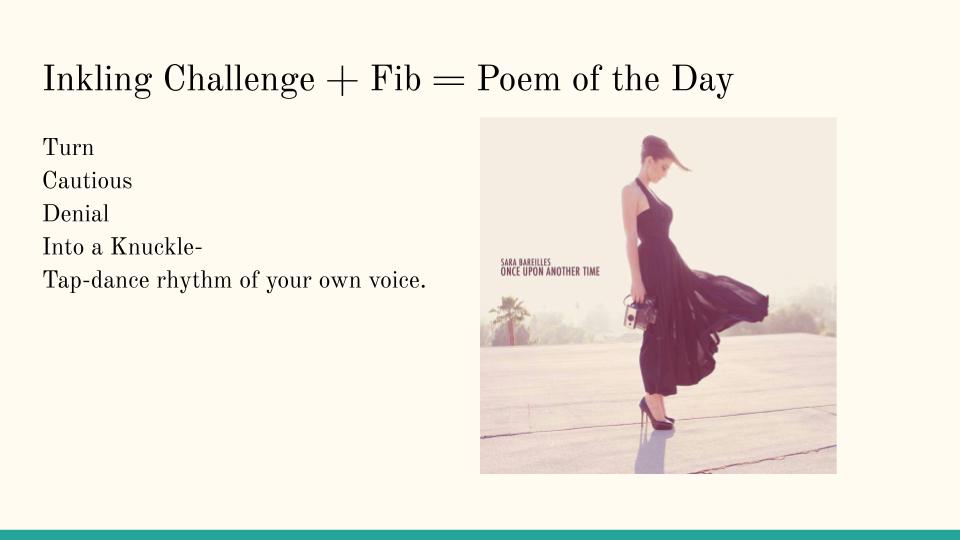
The Inkling challenge this month comes from Mary Lee Hahn. She decided to choose random words as a prompt for a poem. The words were knuckle, denial, turn, cautious.
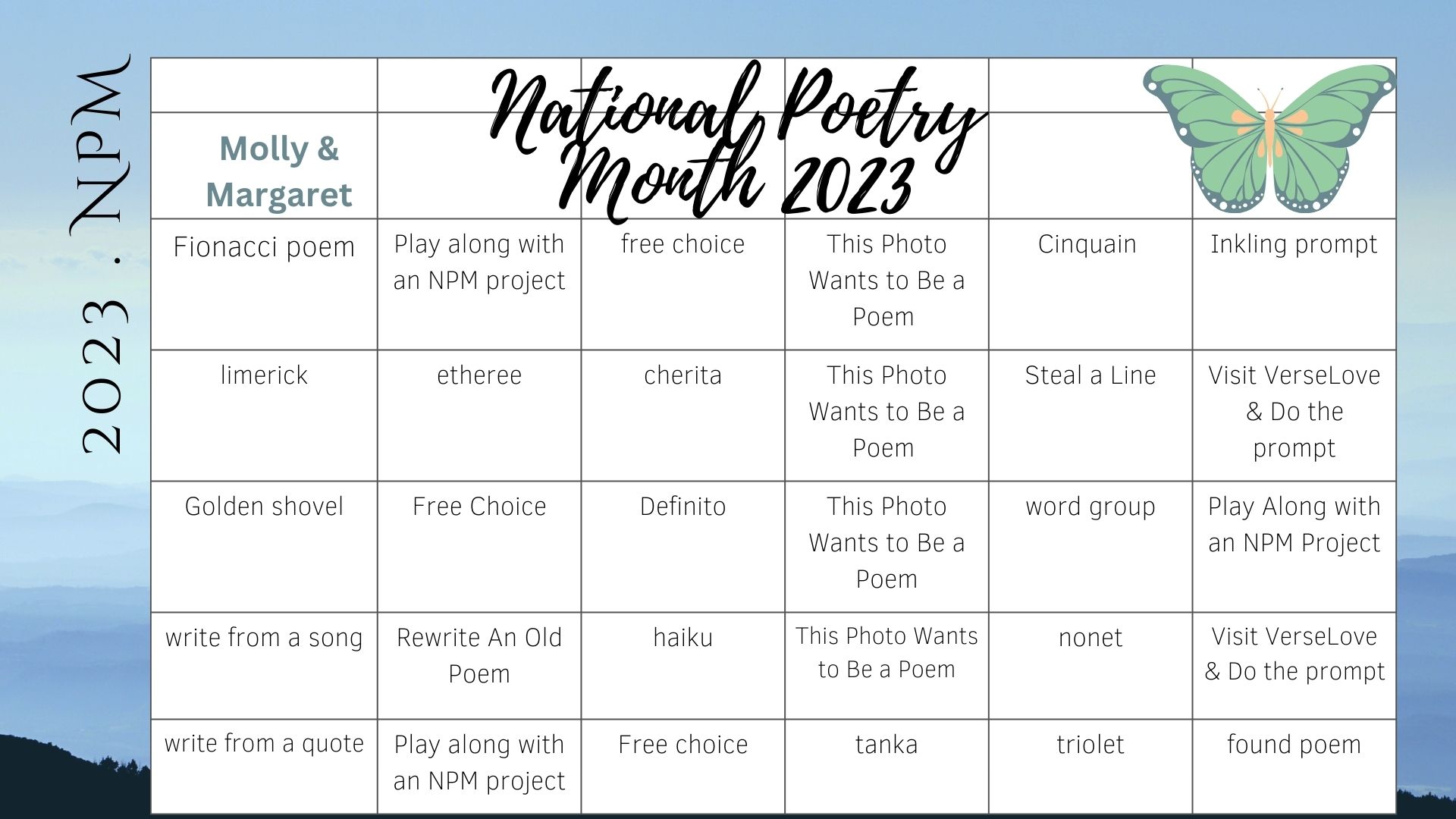
Molly Hogan, fellow Inkling, and I are using a calendar grid for National Poetry Month. Here’s a copy of our calendar which you are welcome to use if you need ideas. I chose to write a Fib poem, a form that uses the Fibonacci Series for syllable counts: 1, 1, 2, 3, 5, 8. (I just realized I didn’t repeat the one syllable line. Fudge it. Too late to revise now.)
On Palm Sunday we sang an anthem in the choir “Lamb of God” by Twila Paris, choral setting by Lloyd Larson. In practice before church, I made the same mistake twice. (For this recording I think I finally said it correctly: I’m the alto voice you hear.)
My choir known as the Heavenly Choir at the Church of the Epiphany, April 2, 2023. “Lamb of God”
The lyrics include “I was so lost, I should have died, but you have brought me to your side to be led by your staff and rod and to become a lamb of God.” I kept mindlessly saying held by your staff and rod. After making this same mistake a third time, I wondered why my mind replaced led with held.
My spiritual journey has been long now. I tuned into my Episcopal upbringing while I was in high school. I attended youth retreats and memorized the words to “Let There be Peace on Earth and Let it Begin with Me.” Even at age 15 I felt the weight of the world on my shoulders.
Over the last decade or so, our larger national church has been controversial. Things have settled a bit, but I am hurt by the numbers of people who have left our church over issues of equality. Where was their faith? In the Baptismal Covenant we agree to “respect the dignity of every human being.”
In my spiritual journey, I am Held by God in dignity with grace that is freely given, given because I was simply born. Amazing, really. Traditionally on Maundy Thursday, we have a foot washing ceremony at the evening service. I imagine what it would have felt like to have Jesus wash my feet.
Footwashing
He held my foot as cradling an infant with tender touch caressed a cloth over and under soiled skin I should have been embarrassed but I felt no shame. only love.
Margaret Simon, draft
The Kidlit Progressive Poem is with Donna Smith today. It will be here tomorrow for Good Friday/ Poetry Friday.
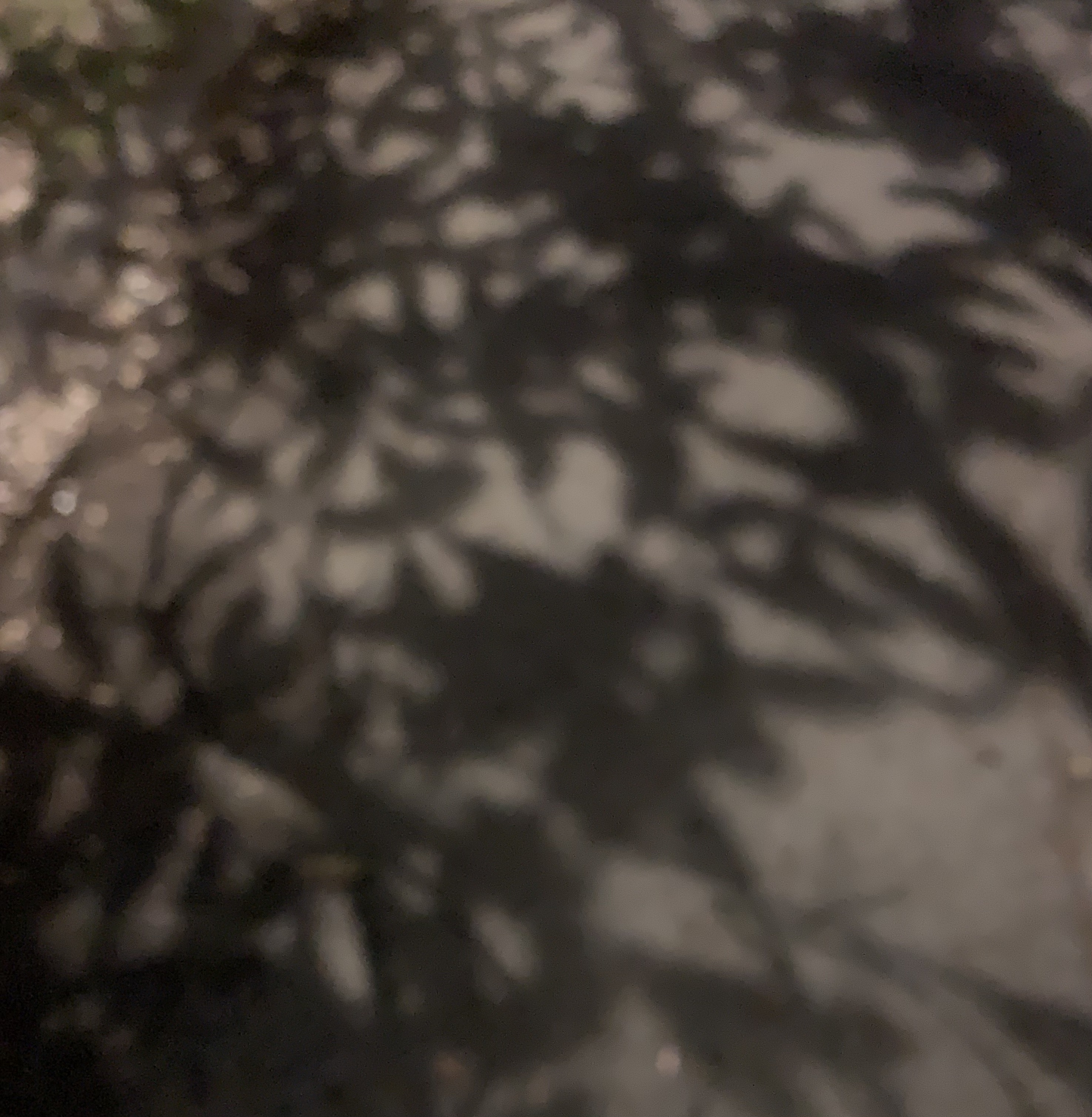
For National Poetry Month, Molly Hogan and I committed to a flexible schedule of writing different forms of poetry, but I insisted on a weekly space for writing to a photograph. While out on my walks these days, I may open the Notes app and hit the microphone to dictate a poem. Yesterday while I walked, I contemplated the Ethical ELA prompt from Jennifer Jowett to write from an ungrammatical stance making nouns into verbs. See her prompt here. I observed the trees along my path, and spoke the words, “When I tree.” Then I saw the shadows from an overhead street light. Shadows are intriguing. I took this photo.
Shadows, by Margaret Simon
Broken Dawn
When I tree, bayou-bell’s song echoes in me. Yellow twinkle of sweet olive scents my breath. Legs ache from last night’s climb. Turn to eastern broken dawn.
Margaret Simon, draft
Please leave a small poem in the comments and respond to other writers with encouraging words. Are you poeming daily this month? Here is a safe place to play with words.
Margaret Simon lives on the Bayou Teche in New Iberia, Louisiana. She is a retired elementary gifted teacher who writes poetry and children's books. Welcome to a space of peace, poetry, and personal reflection. Walk in kindness.









 Reflections on the Teche