The weeks are beginning to speed up now that I am back at school. I have to rise early to have time for a walk, and today I was rewarded by the full moon setting.
Full Moon Setting September 2
Almost every morning since the pandemic started I vox with my friend Julieanne Harmatz. We met at NCTE years ago and have been friends ever since. Julianne lives in L.A., not LA (Louisiana). We often cross time zones with our messages. This morning I sent this picture to her, and she responded with the first line of this poem.
I have the same moon reflecting off the ocean in between the palm trees connecting me to you.
Margaret Simon, draft
I invite you to write a small poem in the comments. Leave an encouraging comment for other writers. Experiment with words. Find a line; follow its lead.
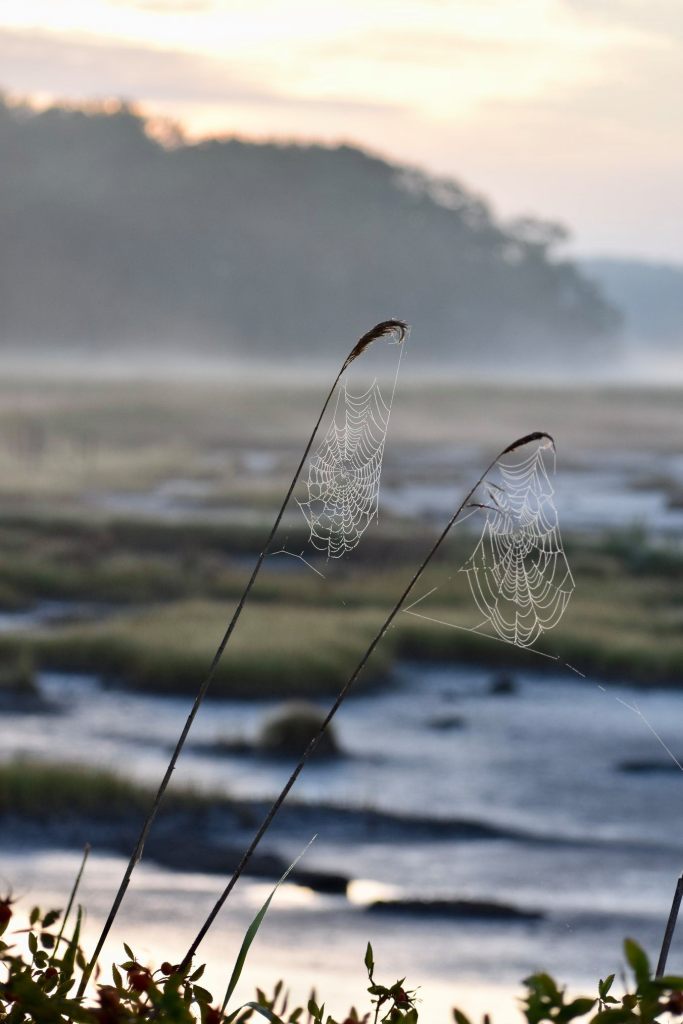
This week I feature another amazing photo by Molly Hogan. I know we’ve written about webs before, but this one caught my eye for its uniqueness. Find a detail to focus and meditate on, the punctum (See the quote below). Write a poem about this detail. Could our individual poems be put together to create the complete photograph?
In Roland Barthes’s 1981 book Camera Lucida, he introduces the concept of a photograph’s punctum, which can be defined as the sensory, intensely subjective effect of a photograph on the viewer, or as he puts it: “that accident which pricks me (but also bruises me, is poignant to me).” Barthes contrasts the punctum with the studium, which is the more general approach to a photograph informed by historical and cultural experiences. Choose a personal photograph and meditate on the specific conditions, feelings, and circumstances behind it. What do you feel and know from looking at it? Then, identify the precise detail in the photograph you are drawn to—what is it exactly? Using your senses, write a poem that centers and delves into the punctum, the precise detail. What does a detail reveal about the whole?
I chose to focus on the fulcrum that binds the web to the marsh grass.
Silk arrow, a fulcrum balance for delicate lace.
Margaret Simon, draft
Due to the aftermath (no power or internet) of Hurricane Laura, I am posting this for Poetry Friday. We fared well through the storm and have recovered for the most part. Please keep our friends in Lake Charles, LA in your prayers.
Thank you to Two Writing Teachers for creating an amazing community of writers and a safe, welcoming space to write and share.
I recently read Anna Quindlen’s Nanaville. I could have written it. Replace her son with my daughter and give Arthur the name Leo, and we are the same! Her grandson Arthur is learning Mandarin and English while Leo is learning Spanish (from his babysitter) and English. Quindlen’s book has inspired me to capture “Small Moments” about my grandchildren.
Leo calls milk “che-che” which is Leo for Spanish leche. He calls water for drinking agua while wawer means bath or swimming pool. Sometimes we assume a word is one he learned in Spanish because we don’t know what he is saying.
Leo is becoming himself and asserting his own language. He has decided to call me “Gon.” This, I guess comes from “grandma”, but it’s not very cute. He says it as a command like “no” or “mine.” We have been trying to get him to call me Ma mère because his grandfather wants to be Grandpère. Grandpère has become the sweetest soft sound of “Pee-père.” Leo has made the connection now, so following his command “Gon!” comes sweet eyes and “Ma mère.”
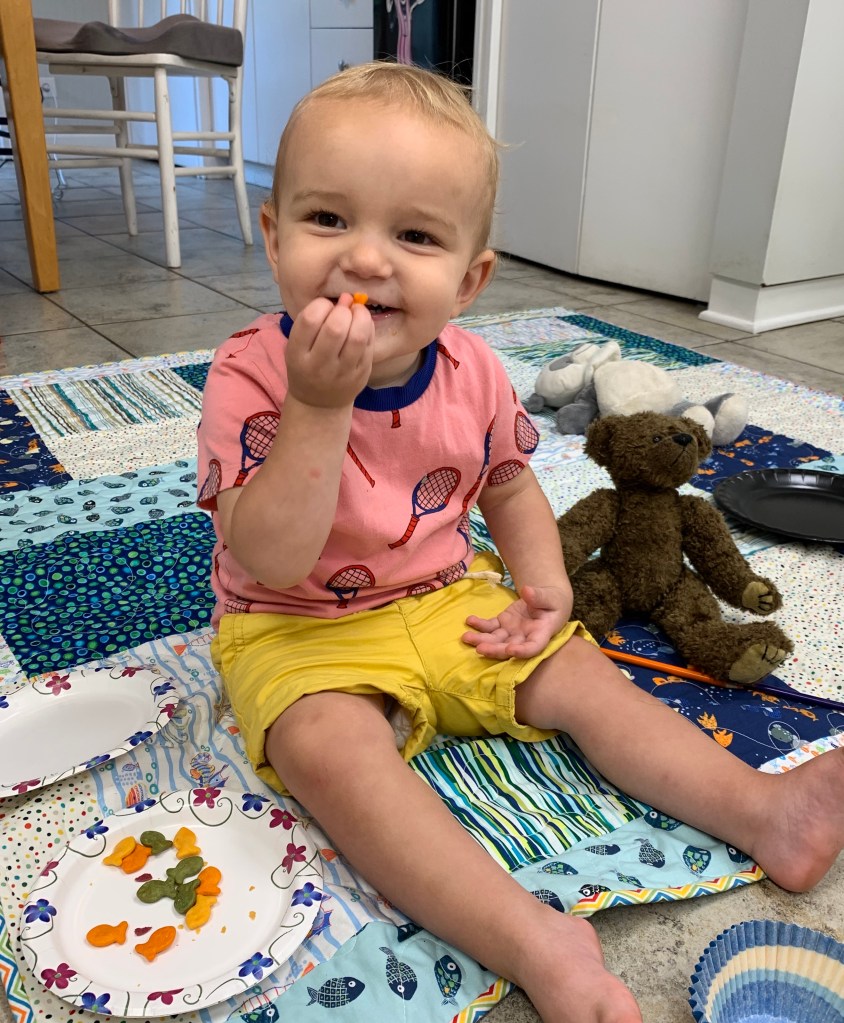
In addition to language, I am fascinated by how Leo plays. On Saturday a friend stopped by and brought me two quilts she had made for the boys. Leo chose the one with fish and gators on it. We laid it out on the kitchen floor, and I opened a drawer full of paper products: plates, napkins, and cupcake holders. He went back and forth from the quilt to the drawer to create a picnic. Here is a picture of him with a paper plate of goldfish, a favorite snack. “Shish.”
The thing about language is that it it the ultimate transactional process. If you watch children acquire language, you can see them not only speaking but arranging the known world. We ask them questions we know they know the answers to–What color is the ball? Where do frogs live?–so that they can practice the arrangement. It’s also pretty thrilling to be part of the process, and for a grandparent it’s tantamount to learning a new dialect.
Anna Quindlen, Nanaville
We ask Leo questions all day long. And he labels things. He also makes connections. He will point to the bayou and say “wawer” and follow it with “boat!” Then he waves because that is what we do. Watch for boats and wave to them. He sees a man wearing khaki pants and a hat cutting the grass and says “Pee-père.”
One of my favorite connections he’s made is the portal we use to call my parents. He says, “Pop!” He’s getting to know my parents in a different way using technology, but they are a part of his life and his vocabulary.
At 11 months, Thomas, Leo’s cousin (my second daughter’s son) is experimenting with his body, crawling at lightning speed and climbing stairs equally as fast. I could have sworn last week when I kept Thomas overnight, he echoed, “Night night.” I recall that his mother spoke early.
As a grandmother, I have the luxury of time with and time without my grandsons. I can pay attention to these milestones. Make note of them. Marvel at them. I am an observer. On the sidelines to the great miracle that is language and love.
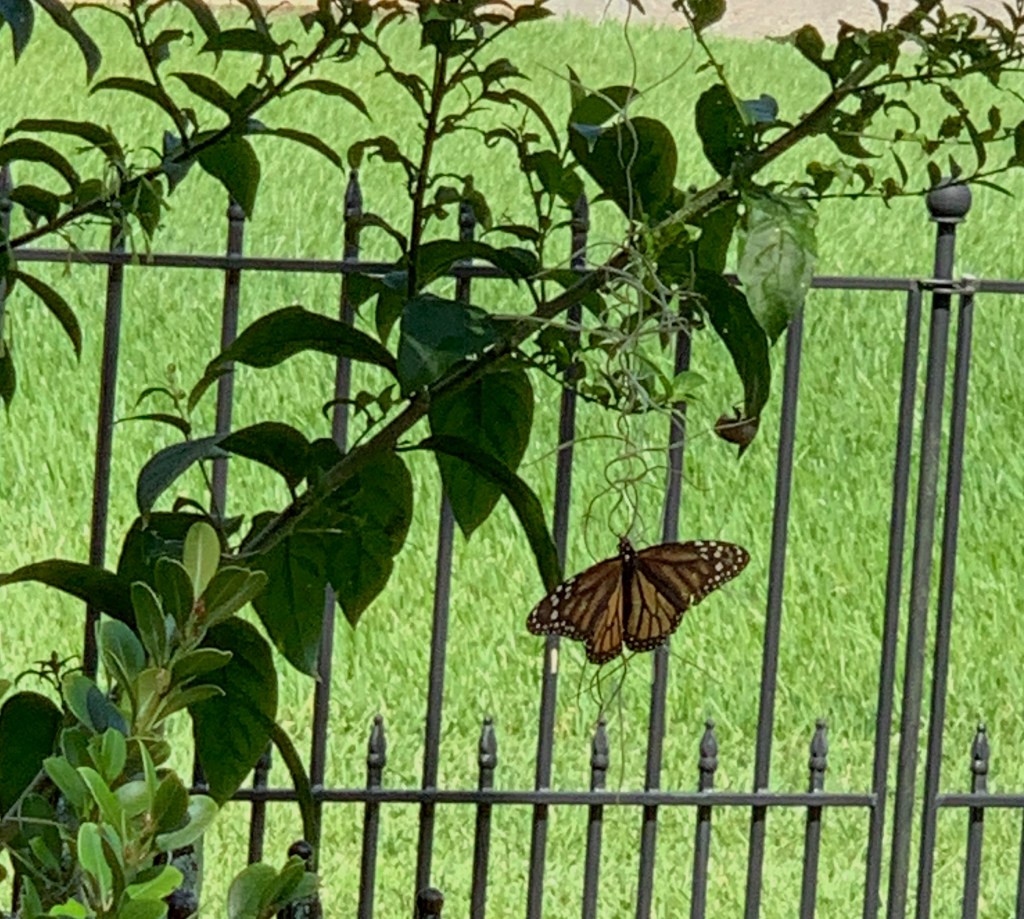
Earlier this week, I witnessed a female monarch laying eggs in my milkweed. She was an unexpected, yet welcomed visitor. I watched while she flitted from leaf to leaf. I have gathered 10 of the leaves into a net habitat to wait and watch.
My writing partner Catherine Flynn wrote an etheree today on her site, Reading to the Core. Here is the definition of the form:
An etheree is a poem of ten lines in which each line contains one more syllable than the last. Beginning with one syllable and ending with ten, this unrhymed form is named for its creator, 20th century American poet Etheree Taylor Armstrong.
Pearl on milkweed, seed for monarch, still and quiet August: Promised ingredient to Mother Earth’s recipe for autumn migration glory. Like watching the birth of a grandchild, I’m mere observer of this miracle.
Margaret Simon, 2020
For my birthday last week, Catherine sent me this sweet golden shovel. I’ve met many kind people in the Poetry Friday community, and Catherine is one of the best. We’ve been in a writing group for five years. We meet by Zoom (even before the pandemic) every other week. I am blessed to have such a kind and loving writing partner. Thanks, Catherine. The feeling is mutual.
“…all that might be gained from opening one’s heart wider. Rebecca Mead, My Life in Middlemarch
How fortunate am I that of all the people in the world that I might have met, I met you, a kindred spirit, destined to be friends. So much to give, so much to be gained by writing together, learning from you, opening my eyes to new vistas, so different from ones I know, reaching my heart, helping it grow wider.
Welcome to This Photo Wants to be a Poem, a weekly poetry prompt modeled after Laura Purdie Salas’s 15 Words or Less. We invite you to write a small poem in the comments and write encouraging comments to other writers. No judgements here. Just playing with words.
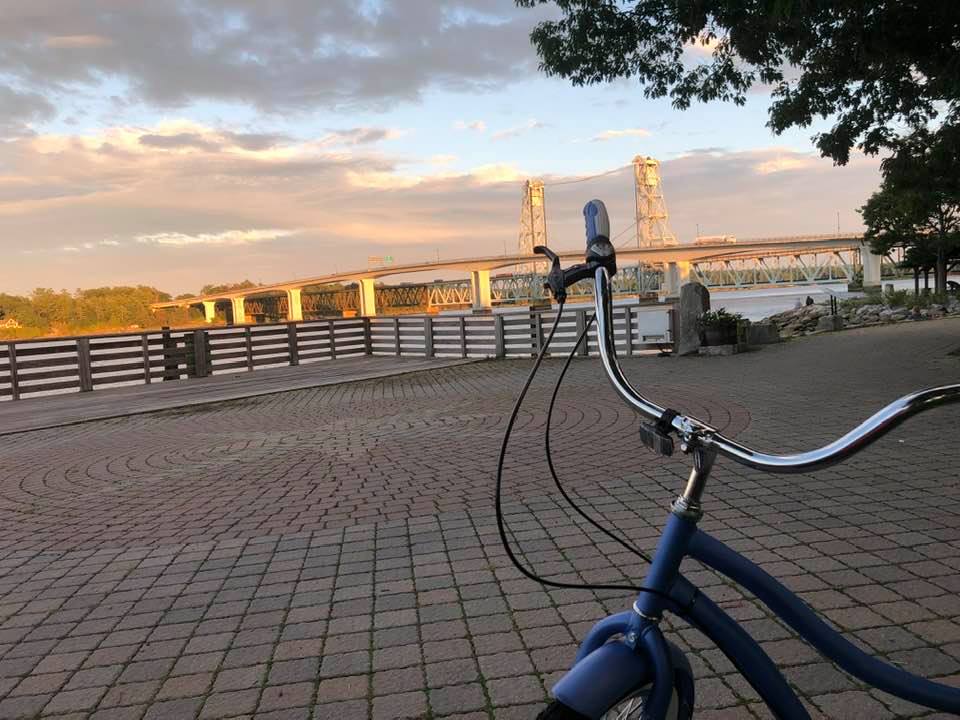
Today’s photo comes from poet Donna Smith. She lives in Maine and recently biked near the Kennebec River. Maine is a place I’ve never been, but I imagine summer is for outdoors. Not like in Louisiana where you can only tolerate short bursts outside. Donna has returned to Maine after spending some time in Pennsylvania. She is happy to be back. On Facebook she draws a squiggle and writes a poem each day. Here’s a recent one:
The Stairs
The stairs go up The stairs go down They also turn and Turn around They go from here And end up there Just when you think You know just where The stairs will lead You to a place You’ve never set your foot or face But don’t despair Don’t cry or mope The stairs mean that There’s always hope Hope for a place Of peace and love Of open doors And blue above I know it’s there And you can, too Step up, step down Keep stepping true. Then all at once You will arrive The steps lead you To full alive.
By Donna JT Smith, 8/18/2020
“Me and my bike relaxing by the Kennebec on a beautiful summer evening.” by Donna Smith
Thank you to Two Writing Teachers for creating an amazing community of writers and a safe, welcoming space to write and share.
Temperatures are high in these parts, and the virus doesn’t care. I haven’t seen my parents in person since Christmas. My mother sent me a Portal that works like Facetime through Facebook Messenger. The screen props up on the counter in the kitchen. Every time Leo (20 months) comes over, he points to it and says “Pop!” That’s my dad. That’s how he knows them, through the Portal.
My father has not been big on social media, but in the last month, he’s posting almost daily reports, “Reports from an independent retirement home.” They have been on lockdown for two weeks and were finally released on Saturday (Covid tests negative) to go downstairs for meals again. Here is one of my dad’s posts.
What does one look forward to when you are in quarantine? It’s different I imagine for everyone. As days go by, the options diminish. It gets down to such things as the next nap, the next meal, the next unexpected package, even the mail. Then there’s TV, which ends up being a search for the never found good program. My solace is a good book, which often ends up being the next nap. And so the circle goes on and on. The challenge becomes the acknowledgment that where you are is where you are and you’d better adjust to it. Part of the adjustment is to occasionally posting my thoughts. I hope you don’t mind.
John Gibson
Dad doesn’t know it, but I’m collecting his posts. I started doing this thinking I’d make a found poem, but now I like the way they speak themselves, full of his unique voice.
Andy Schoenborn posted the #OpenWrite prompt on Monday’s Ethical ELA. (Click the link to see the full prompt and read some amazing poetic responses.) Here is my poem draft:
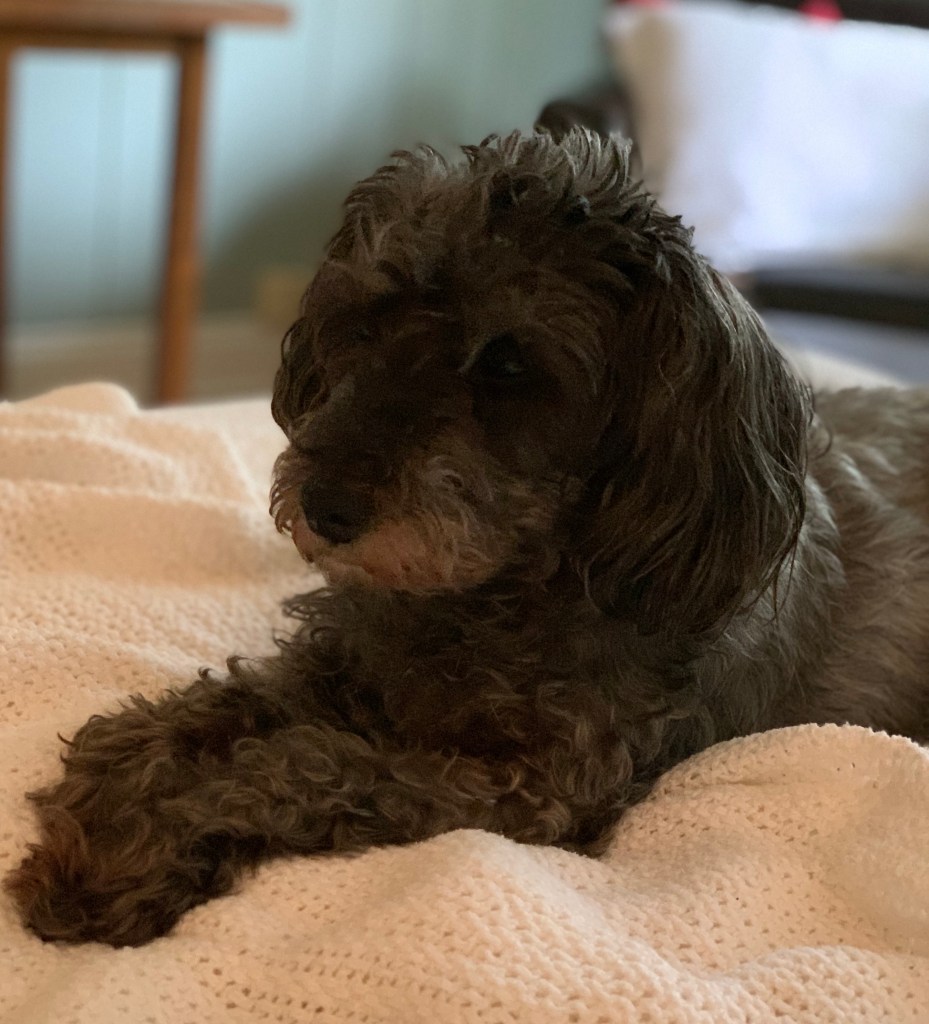
My dog, Charlie
Weather Report
The dog lies at my feet on the cold floor because Heat is unbearable at 91 in dog years, the age of Mac in human years, when the virus took him.
Heat doesn’t care if you are young or old or if you have people who love you. I see my parents through a screen. Their weather changes daily with temperature checks, sticks up the nose. (It was reported that my dad yelled from the pain.) Funny if we didn’t care so much about isolation, the comfort of a friend to eat ice cream with.
Hurricanes come in late summer when we’ve let our guard down, when masks fall to our chins, when we just want to hug because another person, human, grandmother, friend has died.
The weather channel broadcasts 24 hours a map covered in red.
On Tuesday I treated myself to a virtual writing marathon sponsored by the National Writing Project. #WriteAcrossAmerica. I showed up for the last stop on a journey across the country. I’m sorry I missed out on all the other stops. This last one was in New Orleans where the writing marathon originated.
Years ago I would spend some time each summer at the New Orleans Writing Marathon organized by the Southeastern Louisiana Writing Project. Three to four days of walking the French Quarter and writing led to lifelong friendships and a few memorable writing pieces.
Unfortunately, the virtual marathon happened in my own house through a screen, but because of the miracle of technology, I was able to connect with new friends and see some old ones. We had three writing sessions and shared in small break out rooms.
The third writing session led me to this poem, still quite drafty. I was just getting my writing muscle to work and the whole thing was over, not a marathon at all, but a quick 75 minute sprint.
Muses
Muses have a lost sense of time. They live in the back of Napoleon’s Bar drinking Pim’s Cups.
I’ve asked them to visit me here on the bayou steeped in cafe au lait brown buzzing with cicada song.
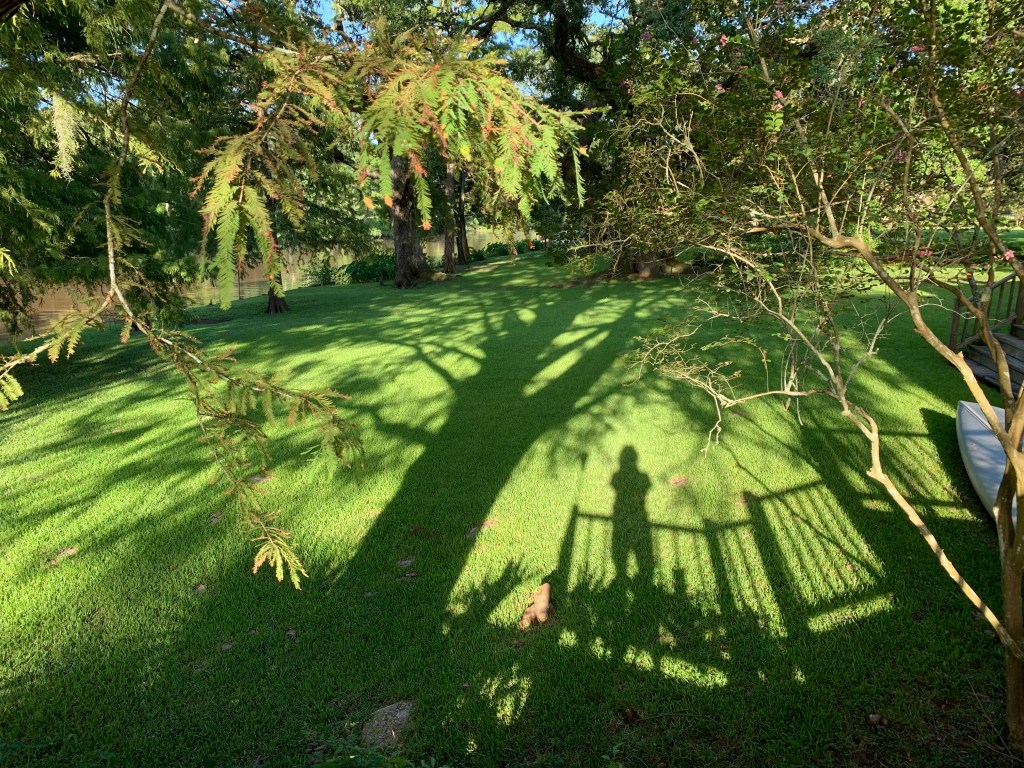
They come in the long shadows of a summer afternoon. or in the fractal face of a sunflower in bloom.
Muses mock me with their silver linings, here then there, then nowhere, hiding in plain sight.
Welcome to This Photo Wants to be a Poem, a weekly poetry prompt modeled after Laura Purdie Salas’s 15 Words or Less. We invite you to write a small poem in the comments and write encouraging comments to other writers. No judgements here. Just playing with words.
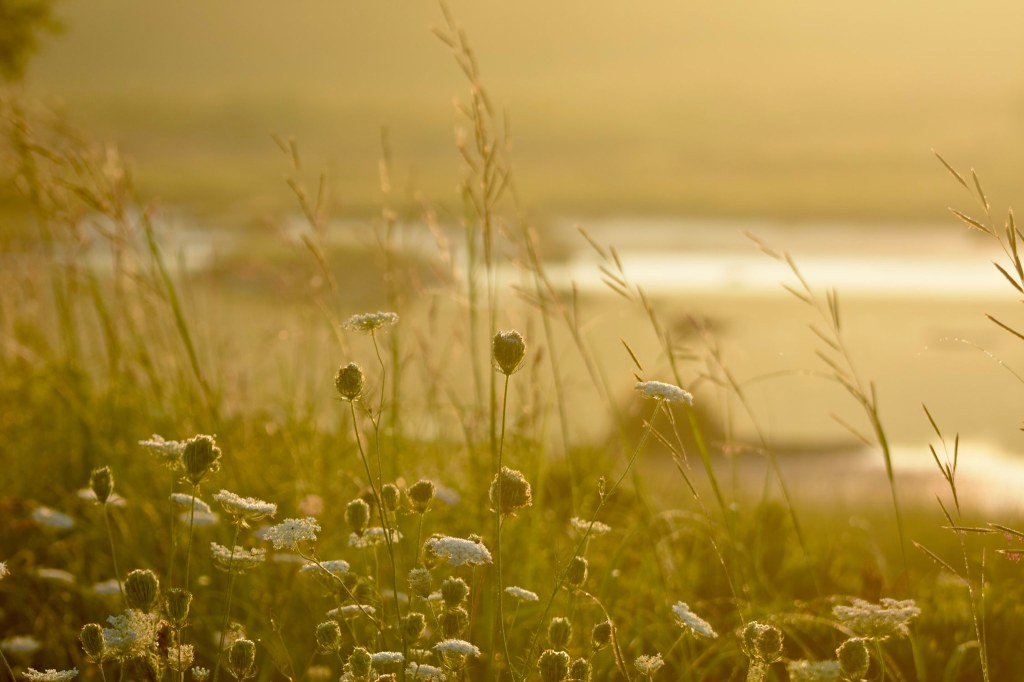
Today’s photo comes from teacher/poet/photographer Molly Hogan. She lives in Maine and recently photographed the marsh. This photo with its sepia tones attracted me. The soothing sway of nature keeps me sane these days, and I am grateful for Molly and others who post such wonderful natural landscapes.
Marsh by Molly Hogan
In this yellow light, an elegant ballet of marsh grasses shine.
Today is my 38th wedding anniversary. Yesterday I was buying a last minute card for my husband, and I told the clerk, “I almost forgot; tomorrow is my 38th wedding anniversary.”
She smiled under her mask and behind plexiglass and said, “That’s so nice.” Something in her voice made me hear her longing for love in her own life.
I replied, “It is nice when you find the right one.”
I’ve been blessed I found him so early in my life. I was not yet 21 when I walked down a long, candlelit aisle knowing with confidence I was doing the best thing I could ever do. And I was so right!
On Sundays we change the sheets. Sometimes he’ll put them back on the bed before I know it, a sweet surprise. And sometimes we make the bed together. I am reminded of this love poem by Li-Young Lee from Behind My Eyes. Li-Young Lee turns this chore into a love song.
to hold :: li-young lee
So we’re dust. In the meantime, my wife and I make the bed. Holding opposite edges of the sheet, we raise it, billowing, then pull it tight, measuring by eye as it falls into alignment between us. We tug, fold, tuck. And if I’m lucky, she’ll remember a recent dream and tell me.
One day we’ll lie down and not get up. One day, all we guard will be surrendered.
Until then, we’ll go on learning to recognize what we love, and what it takes to tend what isn’t for our having. So often, fear has led me to abandon what I know I must relinquish in time. But for the moment, I’ll listen to her dream, and she to mine, our mutual hearing calling more and more detail into the light of a joint and fragile keeping.
I am rounding up Spiritual Thursday posts with inLinkz at the end of this post.
Sometimes when I try to write, I do lots of other things. My mind wanders and wanders, like a butterfly trying to light upon the perfect flower. I really don’t recall where my mind was when I suggested the topic of Spiritual Art for this month’s Spiritual Journey posts. It was probably way back in January when our lives were rocking along at a normal pace in a normal way.
I have to admit this extended time of isolation has been easy for this introvert. I do not mind quiet time. I am rarely bored, but the losses are getting too close for comfort. Our local newspaper logs an average of 10 obituaries a day. We are facing a delay to the start of school. The news goes from bad to worse. Finding some art to bury my head into would be welcome.
In my sorting and shifting to find more distraction, I opened the latest Smithsonian Magazine and found this image.
Nicola Muirhead created this image by putting dishwashing liquid on a Polaroid photograph of her husband and her hands touching. She described her process, “Contact and physical connection are, of course, two of the most dangerous things you can do during the pandemic with someone outside your household. I have been so grateful to have my partner, Faraz, with me during this time, and we are able to hug and kiss and touch. Still, sometimes even touching your loved one can be filled with anxiety. When he goes out for the shopping or I for a walk, and return home, there is always the fear of carrying back the coronavirus. These are the thoughts I have had during the pandemic—adding to the anxiety of lockdown. This Polaroid was washed and then disinfected with bleach. I used dishing washing soap around the edges of the frame to draw the viewer into the hands touching, distorting everything else around it. (Nicola Muirhead)“
Art can help us know more about ourselves. Observing this art, I found myself wanting to be the hand feeling the loving touch of another. Touch is what I miss most. I see my children (grown adults), but I don’t touch them. I spend time with my mother-in-law outside at a distance. I connect with my parents through Facetime. My mother commented that if I came to visit, I would be able to see her outside at a distance with a mask, but she doesn’t want that. She wants to hug me. I get it. We are starving for those simple hugs, the touch of the hand, the gesture of love.
Nicola Muirhead applied the chemicals that now define our days, bleach, hand sanitizer, dishwashing liquid, to every day photographs. What happens when we apply disinfectant to our relationships, to our spiritual life? This pandemic will change us; it has changed us. Perhaps we will learn the value of connectedness. Perhaps we will be more resilient. And perhaps we will find a resurrection.
Margaret Simon lives on the Bayou Teche in New Iberia, Louisiana. She is a retired elementary gifted teacher who writes poetry and children's books. Welcome to a space of peace, poetry, and personal reflection. Walk in kindness.