Feeds:
Posts
Comments

Join the Two Writing Teachers blog for the Slice of Life Challenge.

Once again this year I have joined Laura Shovan’s February writing challenge.  Her birthday is this month, and she celebrates by inspiring others to write a poem every day.  I thought this was maybe my third year of doing this challenge, but the other day one of those Facebook memories came up and reminded me that I’ve done this for 5 years.  That’s a lot of poems!

This year’s challenge is writing ekphrasis which is poetry about art.  Every day a participant posts a work of art for us to respond to.  I’ve managed to write each day since the warm-ups started.

I’ve set up rules for myself.  When I see the image on Facebook, I save it and place it in a Google doc.  Then I do not allow myself to read other people’s poems until I’ve written mine. (I cheat on this one.) I write and revise quickly, no overthinking the process, and copy and paste my poem into the Facebook post as a comment.  I comment on at least 3 other poets.  The group has grown to over 100 people, so it’s just not feasible to comment on them all.

Ekphrasis is a good way to inspire poetry because there is no form attached.  You can write in any way you choose, form or free verse, short or long.  You can write a mask poem from the painting/sculpture’s point of view.  You can be on the outside looking in or on the inside looking out.

The flexibility of form appeals to me.  Some days the poems come easily and others I have to let sit a while.  Sometimes I research the artist.  When a sculpture by Rodin came up, I researched and found a quote to work from.  Sometimes I research the topic. I collect words and then write.

Writing a poem a day is a challenge.  But when you are participating in a group of kind responders, the writing is worthwhile and rewarding.  We need each other.  We need to feel a part of something bigger. We need affirmation and acceptance.

One of the most profound for me was Laura’s son Jay’s self-portrait.  Here is the portrait by Jay Shovan and my poem.

Unfinished portrait by Jay Shovan

Unfinished

Deep brown eyes
stare at me,
look through me,
hold me still.

Slashed and dripped
with strokes of green,
baby blue, white
on flesh, each brush
from the palate played

like a piper in a parade
leading me to you,
but all I see now
are your eyes

drawing me into a window
of my own soul. These
are my eyes.

–Margaret Simon, (c) draft 2018

On the more whimsical side was this funny spoon sculpture by Raul Zuniga circa 1971.

Owls three
Smiley, Cranky, and Boastful
perched on a branch of a safety pin.
Bring me your wise ole thoughts
Find me a place to perch
Help me be the Who
I am meant to be.

–Margaret Simon, (c) draft 2018

Find more celebration posts at Ruth’s blog.

Thursday, Feb. 1st was World Read Aloud Day.  Back in November, Kate Messner posted a long list of authors willing to do free Skype visits.  I selected and contacted Sarah Albee, author of Bugged, Poop Happened, and Poison, amazing and engaging nonfiction books.

Each of my students in my morning class composed a question and were promised a chance to personally ask their question.

Argh!  Tech problems!

A quick call to the tech director, and he took over the computer and was able to solve the problem just in the nick of time.  My students were able to ask their questions, and Sarah expertly answered each one.

Even Erin’s question, “Do you know what a narwhal is?” did not stump this nonfiction research expert.  Sarah pointed Erin to a page in Poison in which she refers to the practice of using narwhal horns to simulate unicorn horns.

My students marveled in the length of time it takes to research, write, and publish a book.  Dawson, who is reading Bugged, asked what her favorite insect is.  Would you be surprised to know it’s an ant?!

Dawson later announced that it was the first time he had ever met anyone famous.  In a more perfect world where technology was flawless, I would Skype more often with “famous” people.  Authors are my heroes, and they are becoming my students’ heroes as well.

Poetry Friday round-up is with Donna at Mainely Write


This week there was a big moon event: the second full moon in January called the blue moon as well as a lunar eclipse that caused the moon to appear reddish and the fact that the moon was closer to the Earth than usual making it a super moon, thus blue blood super moon.

What better reason do we need for writing poems?

Prompted by NASA images and Laura Purdie Salas’s book If You Were the Moon, my students and I wrote moon metaphor poems.


Lynzee watched and wrote as slides of moon photos rolled across the screen.

Super Blue Blood Moon

Two birds, side by side,
front row seat
for what happened
in the early hours of the morning.

Birds flying in front of the moon
like sparkles on a disco ball,
they see, too, what happened.

Plane flying, too,
over the skies of Britain
like the moon’s huge moving tattoo.

Lynzee, 3rd grade

Chloe is new to writing poetry.  She’s a second grader.  She seems to be grasping the idea of metaphor in her poem.  She was so proud of her poem, she typed it in all caps.

THE MOON IS BRIGHT LIKE A STAR

IT IS NOT A STAR BUT IT IS FAR

THE MOON IS A BABY FOR EARTH

Chloe, 2nd grade

Madison is becoming quite a poet.  Her poem is one I used in other classes to model the use of metaphor.

Peppermint Moon

Red Splashing Shadow
Take a White Pearl
In The Sky

Peppermint Swirling
Shadow,
Flaming From
Embers
To White and Red Tongues,
Licking the Dark Coals
Of the Night

 A Flame
Red and White
Sends Embers Scattering Across
The Deep Black, Overhead
But A Golden Flame Rises,
A Bonfire To Cast
Shadow Around
The Gem.

A White Diamond Revealed,
A Golden Bonfire Raging
It Is Time For The Moon
To Rest,
Forever The White Diamond
Of the Night Sky.

Madison, 4th grade

Eclipsed moon hides in the trees.

And here is a draft of a poem I wrote alongside my students.  I wrote two poems and combined them to make draft #3.

We all see the same moon.
All over the world,
Prague, Athens, Rome,
yellow, red, blue
sphere in the night sky.

I walked early this morning
watching the eclipse
of the full supermoon.
Minute by minute,
pieces fell from sight
like a giant hand
turning off the light.

In the shadow of a church steeple,
over desert hills,
setting behind our Lady Liberty,
a super moon eclipsed by our own
planet Earth.

As the moon set below the trees,
I thought of you
far away
seeing the same moon
in the same sky.

Margaret Simon, (draft) 2018

Yesterday I posted “Moon Wisdom” for Spiritual Journey (first) Thursday which included a poem by me around a painting by Michelle Kogan.

My post for #TeachWrite Chat this month is about sustaining a writing life by joining Poetry Friday.  See the post here. 

For more Spiritual Thursday posts, click over to Donna’s blog, Mainly Write.

The moon and the stars to rule by night: for his mercy endures forever.
Psalm 136:9

I went out on a walk Wednesday morning in search of the moon.  I chased it through the neighborhood trying to capture the eclipse on my phone.  The pictures, of course, do not do it justice.


Partial eclipse

Eclipsed moon hides in the trees.

I thought about how this phenomenon fascinates us as Earthlings.  We travel through each day without realizing that the planet is moving and turning and changing, constantly.  We are reminded of our minuteness when a super moon appears in the sky, when that moon is eclipsed by the place we walk upon.

But smallness means nothing to God.  God cares for every particle, every sparrow, every hair upon your head.  Like an eclipse, this goodness and love is hard to imagine, difficult to believe.  So we keep testing it.  Who am I to eat the crumbs under your table, Lord?

The rose on my kitchen table does not wait for me to notice before it blooms. With all my faults, my worries, my stupid pettiness, I am loved and revered as the rose.  God’s love is unconditional and waiting.  All we need to do is say, Yes, Thanks, Wow!*


  • Help, Thanks, Wow is the title of a book by Anne Lamott.

Join the Two Writing Teachers blog for the Slice of Life Challenge.


Last week my students and I read together a Scope magazine article titled, “Escape from Alcatraz.”  The title alone was enough to interest my students as well as the images of three fugitives believed to have escaped the highest security prison that ever existed.

Armed with the article and a video from MythBusters, I asked my students to make up their own minds about whether or not the fugitives escaped.  Students worked on rough drafts and by Wednesday were poised at the computers to type up their essays.

Alcatraz_Island_photo_D_Ramey_Logan

Photo from Wikipedia by D. Ramey Logan.

They were still bothered, however, because they didn’t know the truth.  Did the three men escape or not?  Searching for images to put into their blog posts, a student came upon a recent news report, recent as in “3 hours ago.”  We all eagerly gathered around the computer, reading over his shoulders.

A letter allegedly written by one of the escapees recently came to light. CBS San Francisco exclusively obtained it from a source.

“My name is John Anglin. I escape from Alcatraz in June 1962 with my brother Clarence and Frank Morris. I’m 83 years old and in bad shape. I have cancer. Yes we all made it that night but barely!”   

CBS News Jan. 24, 2018


What happens to an essay that has been written and worked on in conferences when new evidence emerges?

Different students responded in different ways.  One student placed the link to the article into his post.  Another changed his whole essay and threw away the rough draft.  Others adjusted and added to what they had already written. And some were not convinced by the evidence.  They kept their original theory.

In a recent blog post by Kate Roberts on The Educator Collaborative, Kate asks these questions: “Is it ever worthwhile to read as a community, to read a text someone else chooses for you, one that you would never read on your own? ”

Like Kate Roberts and many reading workshop gurus, I believe strongly in choice.  But when it comes to nonfiction, experiencing the text as a whole class is engaging and exciting.  Nonfiction encourages more research.  Students push each other, ask questions, and engage in a deeper way when reading nonfiction together.

This week we are reading aloud Poison by Sarah Albee to prepare for a Skype visit with her on Thursday, World Read Aloud Day.  I look forward to discovering where this will lead us.  Keeping kids engaged, wondering, and curious is what teaching is all about.


Find more celebration posts at Ruth’s blog.


Early morning on Friday, I read Poetry Friday blog posts.  I read Irene Latham’s post here.  Her prompt suggestion came from a book that I have on my shelf, PoemCrazy by Susan Goldsmith Wooldridge, Chapter 31 “bring me magic.”

Inspired, I grabbed some packs of microwave popcorn and headed to school for Popcorn Poetry Friday!

Even a juice spill couldn’t dampen our poetry spirits.  The prompt calls for a walk outside, but we passed around the object inspiration box I had in the closet.  Each student picked an object to write about.

The instructions: 1. Choose an object; give it a name. 2. What does it look like? 3. Ask the object for a quality or deeper wisdom.

I believe this was the first prompt I’ve used this year that was successful for each student.  I typed each poem into a Google doc and on a whim, sent it to Irene.  Within our two hour class time, she responded.   She wrote a comment of encouragement on each student’s poem.  What a gift! They were thrilled.  Their teacher was thrilled.  Thanks, Irene, for your generosity and kindness.

Austin

Colorful butterfly
inspires the caterpillar
to rise up and fly.
Bring me your inspirational, stress-free life.

Lynzee

Black crayola paintbrush
dark as velvet,
give me your way of bringing color
to any situation
no matter how grey.

Mason

Bald eagle
white and burgundy,
bring me the ability
to soar faster than anyone
even if I mess up.

Andrew

Colorful feather
like the paintings of an artist,
give me a creative mind
like Pablo Picasso.

Trace

A turtle
that swims through the water
as wind does through the air,
bring me hope and peace
in ways as the water flows
through the currents of life.

Dawson

Dear little angel,
give me hope in time of anger and war.
Dear little angel,
enlighten me
with your sparkles and light
that shine so bright
every day and night.

Faith

Discarded flower necklace
connected by the same chain,
bring me your connection.

Like my family
all connected,
bring me gratitude.

Deep inside
a core of happiness,
bring me
your joyfulness.

Erin

Sandy hope
washed up on the shore
of value,
bring me confidence.

Erin extended the writing project and wrote a poem for each of us in the class.  Another amazing gift!  Poetry builds community.


Poetry Friday round-up is with Carol at Beyond Literacy Link.


I love to celebrate birthdays in my classroom.  Last week I asked Dawson what he wanted for his birthday celebration, expecting an answer like cupcakes, and he said, “Chalkabration!”  Dawson’s only experienced one chalkabration, but he loved it.

In order to have a chalkabration, we have to write small poems.  I put 5 different form choices on the board: haiku, 15 words or less, zeno, cinquain, diamante, and acrostic. The topic, of course, was ice and snow since we returned this week from a week hiatus due to an ice storm. More than ever before, my students had the experience needed to write about this topic.

Sometimes, my kids blow me away with their poetry.  Austin was not willing to share in the classroom, but he did chalk his poem.  Austin’s been reading books by Jason Reynolds.  I feel like he channeled Jason in his poem.

In every person, their wounds may be bad.
Cold and solid, you can
Either sit and freeze or wake up and melt.

Austin, 6th grade


Cold winter nights Old melting ice Long icicles hanging from rooftops Dangling from trees are the frozen leaves. by Faith


This is my zeno poem. Zeno is a form invented by J Patrick Lewis with a syllable count of 8,4,2,1,4,2,1,4,2,1. Each one syllable rhymes.

Conditions in the clouds above
temperatures of
cold air
low
condensed to form
flutter
flow
tiny icy
crystals
snow

–Margaret Simon

Find more celebration posts at Ruth’s blog.


Not much happened this week.
A layer of ice.
Schools closed.

I stoked the fire.
Carefully added a log or two.
Then let it go out.

Crochet needle looped and looped
a neck warmer for a friend,
prayers for an injured boy.

Ukulele picking.
Hallelujah
From G to E-minor
cramped and challenged
this weak left hand.

Read a book
about Love,
And the face staring back
in the bathroom mirror–
this, too, is love.*

A book about a Fall,
I didn’t look up
I didn’t look down
I just kept on climbing
one step at a time.*

Cooked and cared for
my mother-in-law
recovering from surgery.
“I’m fine,” she insisted.
She’s fine, I know.

Wrote a poem
with only a few words,
lifted it up like a paper airplane,
and sent it out into the world.

* Matt de la Peña Love

* Dan Santat After the Fall


Poetry Friday round-up is with Kay at A Journey Through the Pages.


I’ve had a lot of time lately to look out the window.  A hard freeze blew through the deep south, and gifted me with time alone at home on the bayou.  The winter bitter winds do not scare away the water wading birds.  They must be covered in some powerful down.  I’ve watched a particular blue heron, an occasional great white egret, and this morning, a family of wood ducks.

Watching the bayou inspires me to write poetry.  If you come by my blog often, you know this is my ongoing topic.  My blog title, Reflections on the Teche, is informed by the Bayou Teche (pronounced “Tesh”)

Taking a picture of a blue heron is nearly impossible.  They respond to any human activity with flight.  I painted a portrait of one a few years ago after a photo by Ralph Fletcher.  This painting now hangs in my parents’ dining room.

Blue heron painting by Margaret Simon


Heron Watching

I stand still
at the window
watching.

Take in slow breath.
No need to pray
when seeing this heron.

He perches,
head down,
beak pointed to

water’s surface
where the sun glimmers
like waves in old glass.

Is it a minnow,
mosquito, moth?
I focus on the horizon,

wonder
what his patience
invites me to see?

Margaret Simon, 2018

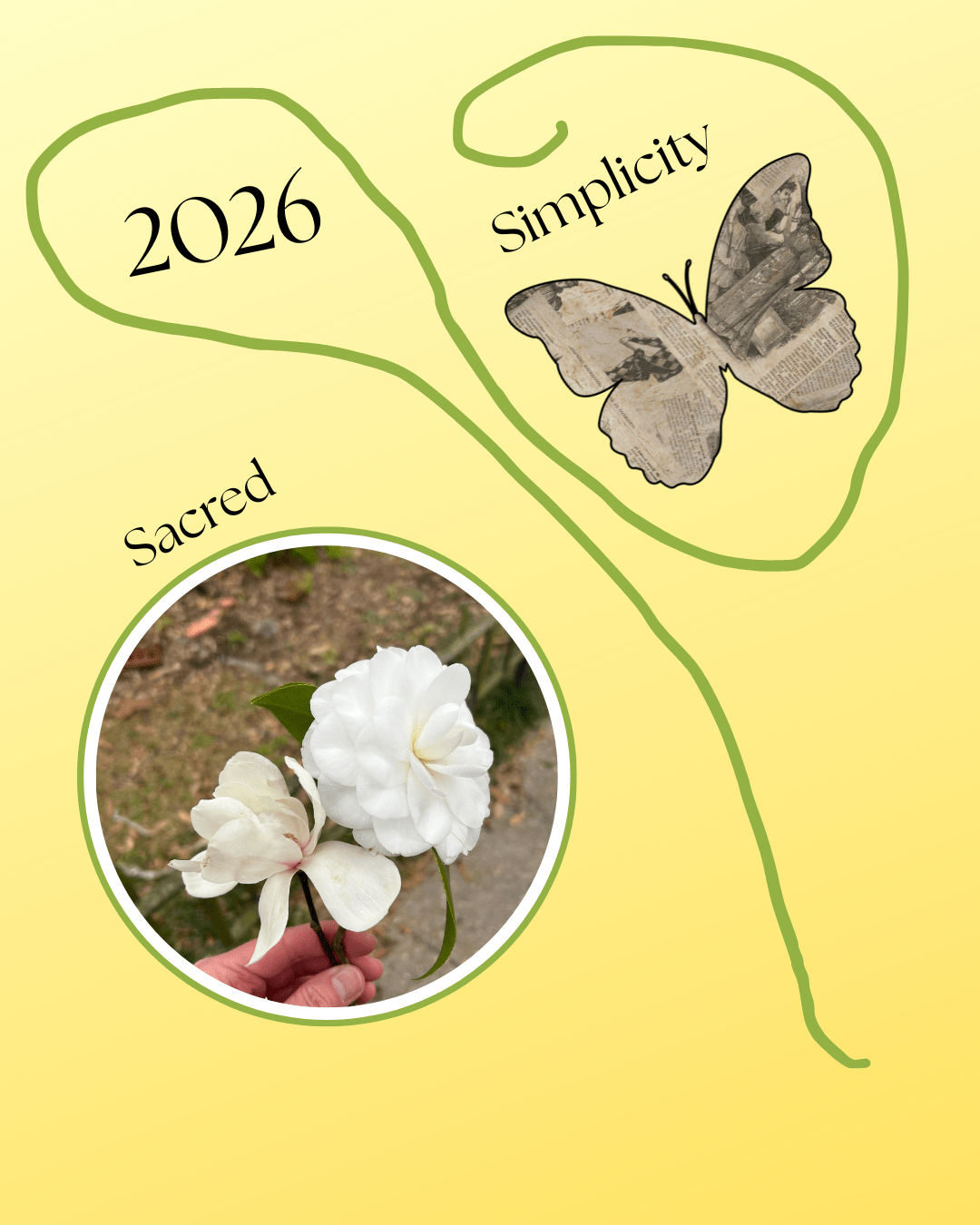
My One Little Word for my writing life is Present.  I want to show up to the page every day.  I wrote a post for TeachWrite Chat Blog here. I made a Canva image of my goals for being present thinking of the heron in my backyard and his lessons of patience.


Slice of a Joy Jar

Join the Two Writing Teachers blog for the Slice of Life Challenge.

I am a co-moderator with the #TeachWrite chat on Twitter. (Note the graphic on the side bar.) One of my colleagues in this endeavor is Michelle Haseltine.  Michelle put a photo on Facebook of a journal page from one of her students.  The page was filled with the outline of a jar and words and sketches were drawn inside the jar.

I took this idea and presented it to my students with a Brene’ Brown twist from Braving the Wilderness. 

We all have times when we feel lonely.  Have you ever felt alone in a crowd?  Like you just don’t fit in? There’s no one around who sees you or that you connect with.

We all have these times.  But when we do, we can take with us a jar of things that make us feel joy, make us feel safe.  What would be in your jar?

One student jumped up from her seat to draw a jar on the board.  She labelled it “Our Happy Place Jar.”  Her instructions were for everyone to draw one thing from their jar onto our shared jar.  (I love it when kids respond to the lesson with such leadership and participation.)

My students drew a variety of jars.  Some were filled with specific things from our class, Slice of Life, read aloud, computer (blogging), friends.  Others find joy in nature or family or funny memes.  Whatever their choices, they engaged with the idea and filled their jars.

Near the end of the week, Chloe announced, “Even if I have to throw away this journal, I will tear out this page and save it forever!”  That’s what I call Joy!

Mrs. Simon’s Sea

We are fish,
fish swimming through a treacherous sea,

a book,
open and full,

a nest,
a place of warmth,

a pencil and paper
for expression,

and a poem.

by Lynzee, 3rd grade

Austin’s Double E Jar

Andrew’s Rainbow Jar