Feeds:
Posts
Comments

Poetry Friday is Carol at Beyond Literacy Link


While I was vacationing for the 4th of July in Santa Fe, NM, my Voxer Good2Great friend, Jen Hayhurst tagged me in a post about her #ProjectPoetry.  I wrote about the project on my Slice of Life post on Tuesday. 

I have this self-assigned goal of writing a poem a day.  That gets tough when you have a husband who wants to walk all over New Mexico.  My writing muscles had to give way to my walking muscles.  Nevertheless, I took some pictures that planted some ideas in my brain.  Once home I had time to sit.  Sit with the images and process a poem.  Jen’s goals for writing poems are to synthesize experience and ignite curiosity.  This is what poetry should be, in our lives as well as in our classrooms.

Last night I watched Kylene Beers and Bob Probst do a Facebook live video about their book, Disrupting Thinking. When someone asked if poetry should be the first unit taught in the school year, Kylene answered, “Poetry is not a unit. Poetry is something we breath in.  We should breathe in poetry every day.”

Take a deep breath and look at the amazing sky.  I was astounded and mesmerized by the huge sky of New Mexico.  It seemed somehow bigger and brighter and mightier there.  Maybe because I was paying attention.  Maybe because there was something to be learned.  Maybe just to be captured in a poem.

The Magic Sky
Sculpts grey clouds
into bursts
of sparkling rain.

Then a rainbow,
a puffy horse
riding beside.

I stand above
this Rio Grande Gorge,
feel like a speck
of dust in the wind
to the magician
of the sky.

–Margaret Simon

Next Friday is National Mac and Cheese Day.  Who knew there was such a thing?  So Poetry Friday folks are planning to write about Mac-n-Cheese.  Join in the yummy fun.

Find other posts at Writer on a Horse

Pat is gathering our monthly Spiritual Thursday posts around the theme of stepping out of your comfort zone.  For years I have taught young writers’ camps in the summer. But this year I was inspired by Katherine Bomer’s presentation at NCTE last November to try teaching teachers. Katherine’s teacher/students presented about how personal writing led them to be better teachers of writing. I’ve long held this belief for myself, but decided to get out of my comfort zone and share my understanding with other teachers in my own district.

The Teachers Writing Institute begins on Monday. I’m squirming in my seat. What have I gotten myself into? At first I thought no one would sign up, but on the first day the email went out, eleven teachers signed up. We increased the number of participants from 15 to 20.  Now I have a full class of 20 teachers who want to experience their own writing and learn new strategies for teaching.  So, on Monday, I will face 20 expectant teachers. My palms are sweaty. My heart is racing. Can I really do this? Can I make these teachers feel like writers? Can I give them the confidence they need to go back into the classroom and offer freedom and choice in writing to their students?

With Katherine’s book The Journey is Everything and her generous spirit in email exchanges, along with Voxer friends’ advice, a long list of writing prompts, and a stack of mentors, I am as ready as I’ll ever be. I want to hold onto these thoughts:

  • We are all teachers.  We are in this together.
  • Writing is a brave act.  Sharing writing is even braver.
  • You have everything you need.
  • There is a higher source of power (Yahweh God, Holy Spirit) open to me.
  • Nothing and no one is perfect.
  • Let the work of writing together be the focus.

And it won’t hurt if I know you are praying for me.  Thanks!

Join the Two Writing Teachers blog for the Slice of Life Challenge.

An invitation to #ProjectPoem

Jenn Hayhurst tagged me in a post on Facebook asking me to join in a project she is playing with this summer: #ProjectPoem. The premise is that teachers of writing should write, a mantra of mine adapted from the work of Donald Graves. She is asking teachers to synthesize experience into poetic form in 140 characters.

I joined in with the image below. I am on vacation in Santa Fe, NM and staying at a lovely casita. The patio is private, quiet, and inviting. The picture is a side garden of Aspen trees.

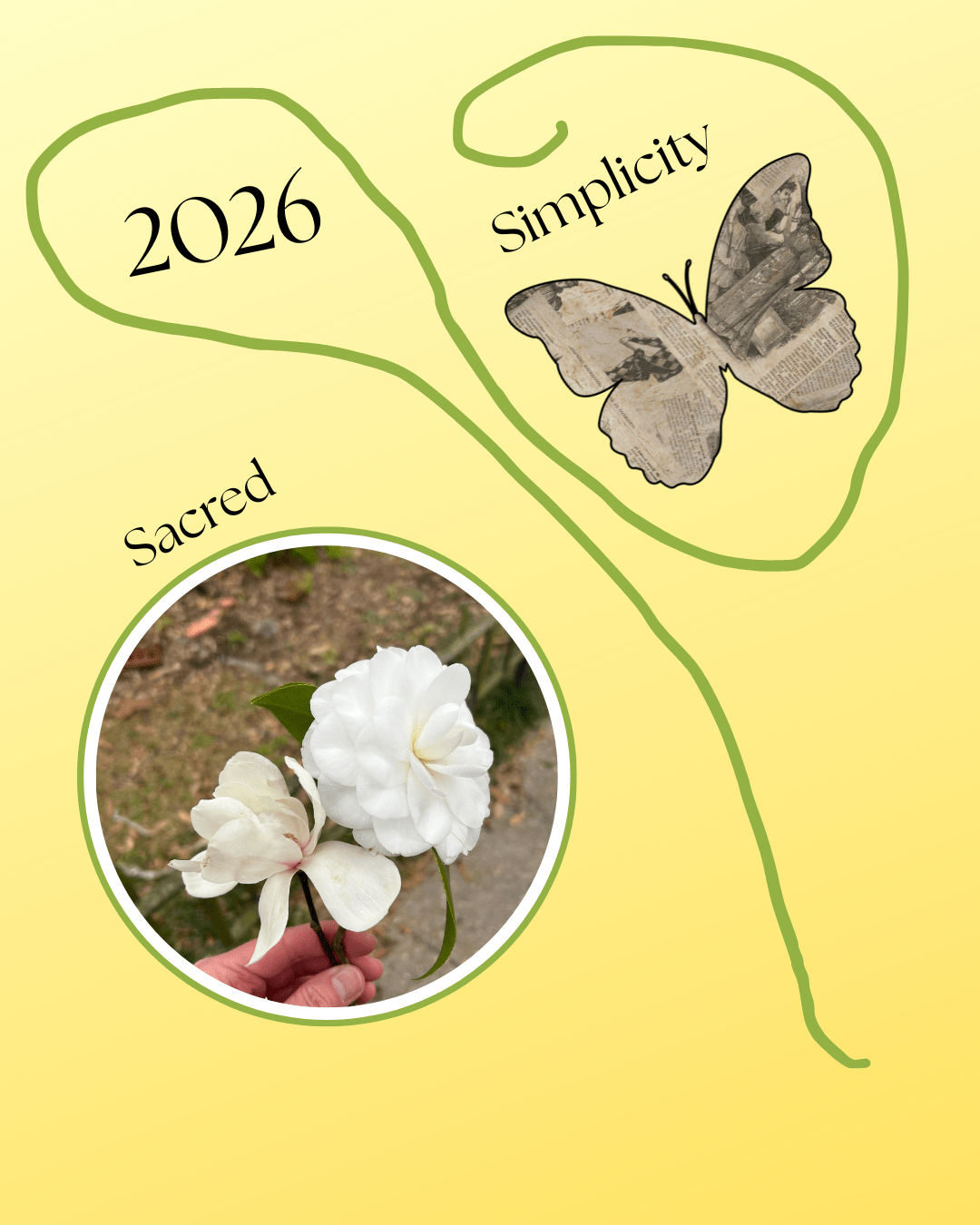
My writing friend, Linda Mitchell, recently visited Seattle. There she collected words and made collage poems from them. I took inspiration from her to capture the feeling in Santa Fe. There was a procession to return an old statue of Mary to the Cathedral of Saint Frances. The people here are serious about their worship of Mary.

Consider joining in the summer writing fun by tweeting your poem to #ProjectPoem and tagging me @MargaretGSimon and Jenn @hayhurst3.  I made the first image using the app WordSwag, the second in Canva.

Poetry Friday is with Dianne at Random Noodling

I think one of the most enjoyable things about writing poetry is playing with words. I’ve been known to have multiple tabs open on my computer to dictionary and thesaurus sites as well as research sites. I’ll Google a word and get lost in the direction it takes me.

This week one of my self-assigned poetry writing activities was to play with the juxtaposition of words. Inspired by activities in the book Rip the Page: Adventures in Creative Writing, I filled a few pages in my notebook with “words that need a friend.”

Then I wondered what I should do with these lists. I found more inspiration from Naomi Shihab Nye’s book A Maze Me. The poem “Where are You?” included this line that I borrowed, “I’m tucked inside each fresh paper page.” My friend Dani calls this “Taking a line for a walk” from her recent institute with the Montana Writing Project.

By giving myself the discipline of writing a poem every day, I am finding new and innovative ways to encourage my students’ writing when school begins again.

Pixabay photo

A Poem is Waiting

I’m tucked inside
each fresh paper page–
feathery poems
softly drizzled on Tuesday,
a perfumed whir,
blink in the sunshine
of your imagination.

A poem is salty chatter
of newly hatched chick-a-dees
twittering in the nest of cloud-joy.

A poem is a twister of whispers
rising on the weather front
of waving slurps of watermelon.

A poem is a show-off peacock
emerging from the bush
of brain bellows,
a scented thunder
from afternoon rain

sprinkling my face,
touching my hand,
this page.
Open gently.

–Margaret Simon

Join the Two Writing Teachers blog for the Slice of Life Challenge.

spring-2213359_960_720

As a writer, I never know where inspiration will come from or where it will lead.  I feel I must be open to it and respond.  Sometimes those responses go in a strange, unknown direction.

The poem I am sharing today originated from two different prompts.  The first was from Poets and Writers weekly email writing prompt, The Time is Now.  The poetry prompt led me to this article about a fashion exhibit on Mars at the Metropolitan Museum of Art. From the article, I collected unusual phrases like “the shape of a doll’s dress” and “nonverbal, abstract images inside of me.” The article was written about unusual fashion design; however, the words became organic and drew me in. My collection grew.

I didn’t know what I was going to do with this collection of lines. The Poets and Writers prompt instructed me to start with one of Leanne Shapton’s lines and let my imagination take over.

A few days later I read a prompt in The Practice of Poetry. This prompt asked me to use someone else’s words interspersed with my own in a “collaborate cut-up” poem. I didn’t literally cut-up the article, but now I had a way to use my collection of lines. The combination of writing exercises took me into a direction I didn’t manipulate or expect. Don’t you love it when that happens?

Blissful Containment

Pull a sweater over your head
in the dark and the dark gets darker.
Towel over your shoulders
adds warmth and a sense of caring.
This feels prenatal–like a cocoon.
Certainly, you will survive the tornado.

Croquembouche of exposure and erasure
embraces your delicate sweetness.
With a pillowcase
to hold all your precious jewels,
You will be saved
in an A-line skirt with a Peter Pan collar.

We are all organic and alive,
reactive like the center of the earth.
The beginning of softness
enters with our belly breaths.
Palettes of mud
feed our drying souls.

Our earth mother knows us well
nurturing our natural and childlike shapes.
Her transmission of spirit
sneezes us into existence.
We won’t remember.
We don’t have to.

–Margaret Simon (with lines from Leanne Shapton’s “Rei Kawakubo, Interpreter of Dreams”)

Find more celebration posts at Ruth’s blog.


For the last several years, I have participated in Tabatha Yeatts’ Summer Poetry Swap.  I sent my gift and poem off last week to a poet-friend and promptly forgot that I would receive one, too.

Surprise in the mail is so exciting!  I recognized the signature as the famous Tricia Stohr-Hunt of Miss Rumphius Effect, a fabulous site of poetry love.  What I love about this poem is the extent Tricia had to research.  She learned so much about bayouland.

I’ve been stupid for a long time not knowing the Miss Rumphius Effect reference.  Until today and Ruth’s Celebrate post: “One of my favorite picture books (as if I could select a favorite) is Miss Rumphius. In it, Miss Rumphius is challenged by her grandfather–
You must do something to make the world more beautiful.” Now I know that Tricia’s call is to make the world more beautiful with poetry.  That is what she does.  Thanks, Miss Rumphius (Tricia) for your gift to the world of poetry.


What does a Yankee know of the bayou?

The science teacher knows
coastal wetlands,
the evolution of the Mississippi delta,
the brackish, slow moving water.
The naturalist knows
the Bald cypress and tupelo,
the pelican and egret,
the alligators.
The historian knows
the Chitimacha and Acadians,
West African slaves,
pirates and riverboats,
the reach of the Civil War.
The Yankee poet knows
the bayou only in her dreams,
so when putting pen to paper
meanders like the Teche,
through moss-draped live oaks,
and sun-kissed swamps.

–Tricia Stohr-Hunt, 2017 all rights reserved

Bookmark “In my book, you’re pure poetry.”

Poetry Friday is with Heidi at My Juicy Little Universe

Photo from Flickr: Kelly Colgan Azar

When I was home last weekend with my parents and my sister’s family, we watched a Carolina wren feed a nest of babies inside a flower pot.  I posted about this miracle of nature here.  ( I even made a short video of the nesting chicks.)

My summer discipline includes writing a poem every day. In the Practice of Poetry, Deborah Digges offers an exercise titled “Evolutions” that can be traced back to Philip Levine.  “When you can’t write, try writing about an animal.” This exercise takes some research.  Having the internet at my fingertips helped me find information about Carolina wrens.

This exercise came with warnings: “be careful not to sentimentalize, to usurp the animal you have chosen by turning it into a flaccid symbol for human emotions…The animal is itself.”  I tend to over-sentimentalize, so I tried to focus on the behaviors of the birds.  After some work and a few writing partner critiques, I feel good about this one.


Join the Two Writing Teachers blog for the Slice of Life Challenge.

Carolina wren carries food to her babies.

Sitting on the back porch at the lake, we noticed a small bird coming and going, in and out of the flower pot of red vinca.

“I wonder if there’s a nest in there,” said Mom while sipping her morning coffee. “When I watered it yesterday, I noticed a big hole, but I didn’t think anything of it.”

A little while later when I didn’t see the adult bird around, I peeked into the pot.  When I moved a stem of the flower, I saw movement and then three wide-open yellow beaks, hoping I had a juicy insect to drop in.

With excitement, I ran inside to announce to everyone that there indeed was a nest and there were baby chicks in it.

Last summer on my yearly visit we watched goslings of a Canada Geese couple.

My visits to the lake are spent hanging out on the back porch talking with my family.  Nature moves around us every day, and we never seem to have the time to really pay attention.  This nest of Carolina wrens (it took some internet research, a bird book, and consulting a bird expert to know what kind they were) entertained us and helped us focus on what’s really important: life, love, and family nesting.

Can you see the mama bird? Babies are right underneath.

DigiLitSunday will be back on July 9, 2017. In the meantime, take time to enjoy the sunsets.

Poetry Friday is with Carol at Carol’s Corner.

My writing group has decided to explore a book on writing poetry this summer. We chose The Practice of Poetry edited by Robin Behn and Chase Twichell.

I have been thumbing through and randomly choosing an exercise to try. On pages 51-53, Susan Mitchell’s exercise is titled “Experience Falls Through Language Like Water Through a Sieve.”

We write poems about what we can’t articulate, but feel pressured to say, which is why poems use language in unusual ways…And often, metaphor and simile may be a poet’s only means for capturing experience in its rich complexity.
Susan Mitchell in The Practice of Poetry, pages 51-52

She explains that when we use metaphor, we often write ahead of our understanding. When I write poems, I connect to a deeper part of myself, one who I don’t know as well, one who reveals more of myself to me.

In this exercise, I read one of the suggested poems Milkweed by Philip Levine and decided to use its form to inform my own.

Remember how
we sat in a field of clover
picking handfuls of white bursts
tying stem to stem
to make crowns, bracelets,
necklaces. We’d promenade
among the pine trees
overlooking Purple Creek,
curtsy,
loop our arms,
do-see-do
through those carefree
days of summer
that meant nothing
to anyone, even us.

Yesterday I walked my dog
through a field of clover.
While he stopped to sniff
and leave his scent, I watched
the clustering blossoms
sway and bow
to the coming
of a summer shower.

–Margaret Simon, after Philip Levine, all rights reserved