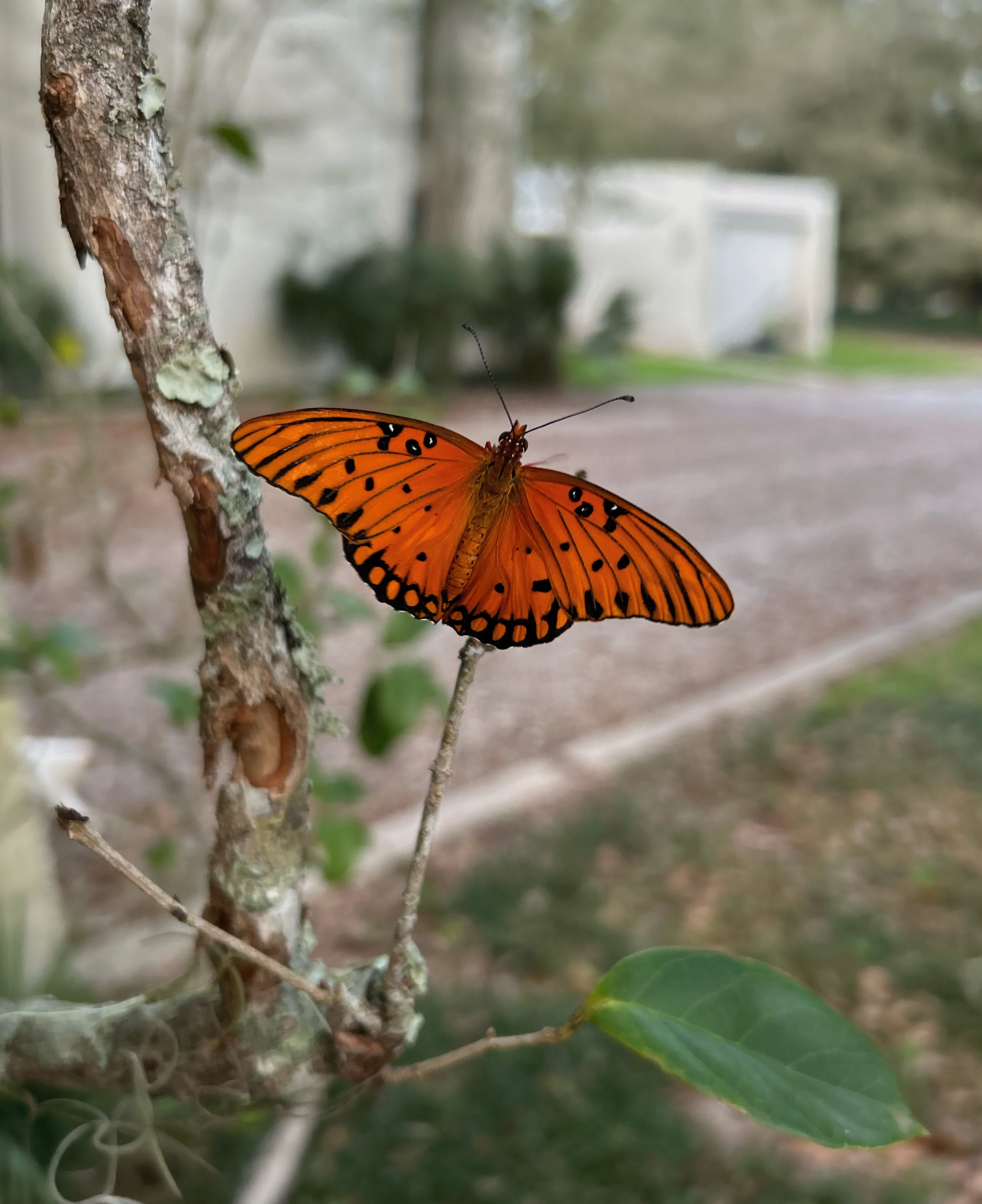
I’ve been raising Gulf Fritillaries in a butterfly enclosure. One day this week we came into the classroom to find one butterfly and within minutes, like magic, there were three. Unlike monarchs, these seem to just pop out in seconds. We haven’t witness the emerging yet.
I am participating in Mary Lee Hahn’s #haikuforhealing on Instagram. This is a way to put beauty out into the world. Join me and my students today writing about the miracles of nature.
Open your wings Flutter in sacred silence Then let go and fly
With my fifth and sixth grade students, I am reading Out of the Dust by Karen Hesse. I’m amazed at the parallels of the Dust Bowl to our current climate crisis in Louisiana, but that is a post for another time. Today I am determined to focus on beauty.
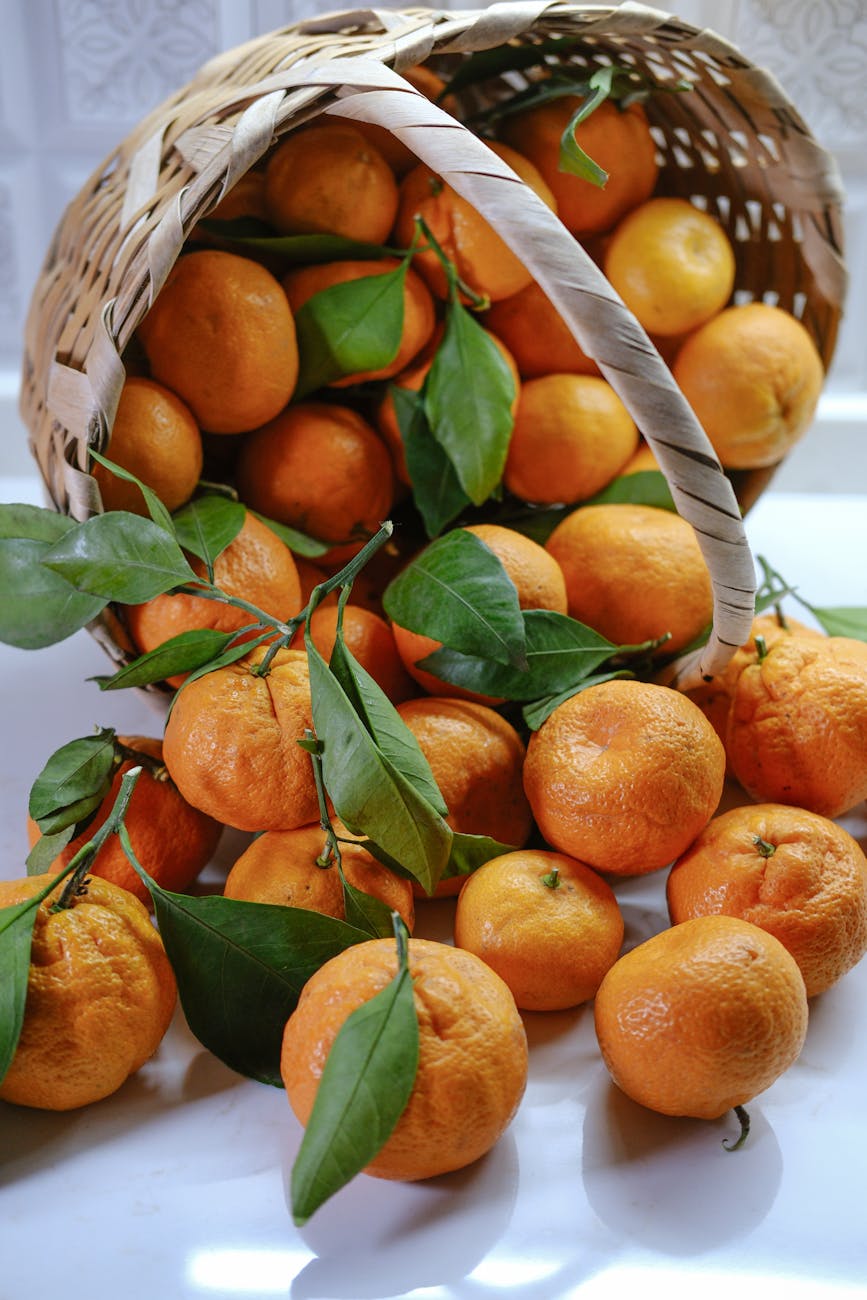
The poem Apple Blossoms was our mentor text. I wrote alongside my students about our favorite fruits. Mine is currently overflowing on a tree in our backyard, the satsuma.
after Karen Hesse “Apple Blossoms” Out of the Dust
Not just an orange, you are the ultimate citrus, hanging like golden ornaments on our tree near the fence where butterflies play and spiders web.
Your easy-to-peel goodness makes anticipation grow in fall, until by Halloween, the tree is full, overflowing, drooping, dripping inviting me to basket a gift for you to share juicy sweetness and smile!
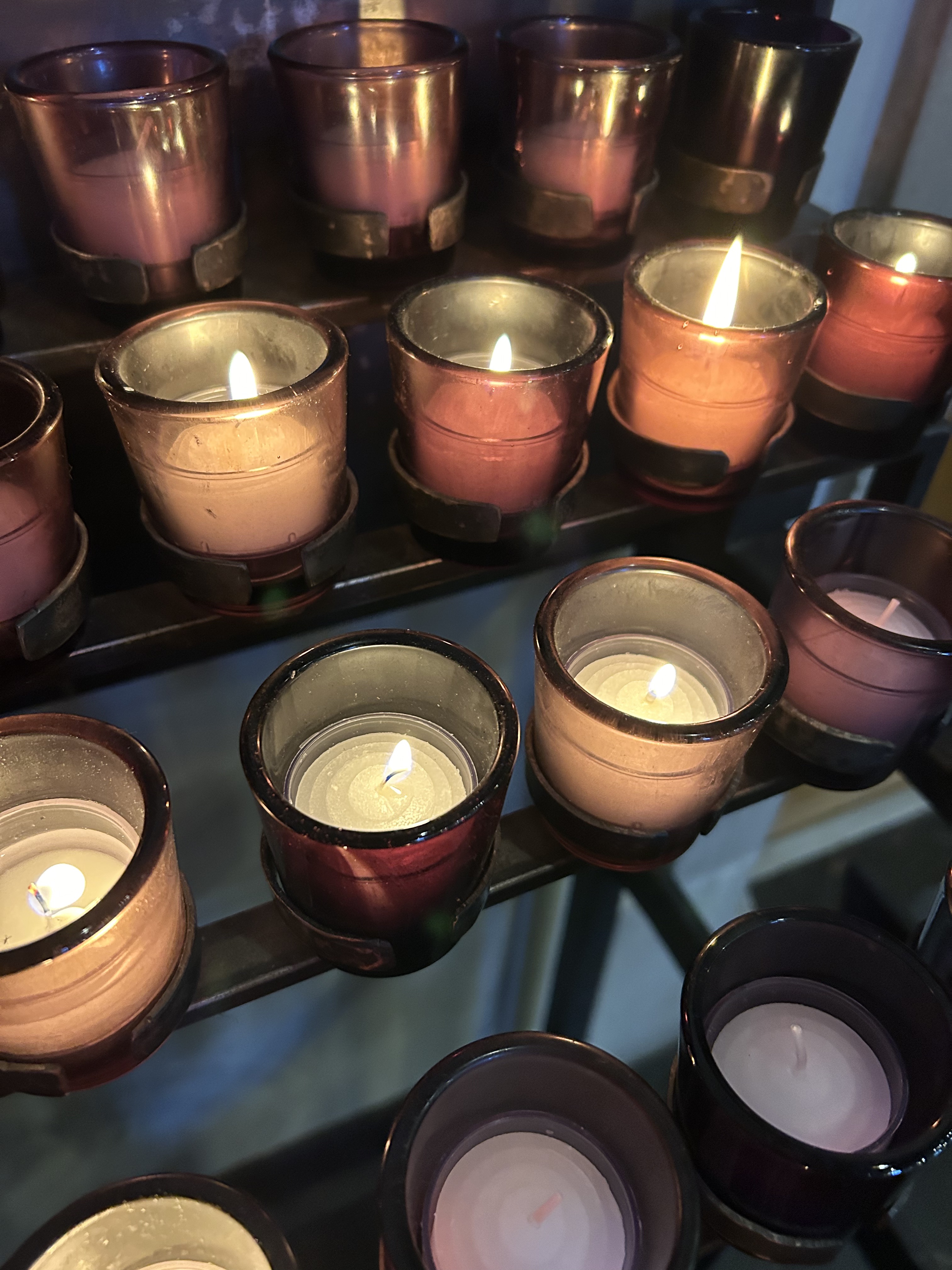
Prayer candles in St. James Episcopal Church, 2024 by Margaret Simon
I was in my childhood home church on Sunday. While the scent of incense lingered, I walked over to the columbarium to say hello to my dad. I saw the metal rack of votive candles. I decided to light a candle for my mother, in hospice care at the end stages of Alzheimer’s, and one for my daughter’s mother-in-law who is battling cancer. To light a candle for someone symbolizes the prayer intention. Do we need this symbols? I believe we can pray without them, of course, but something in me was comforted by the act of lighting.
I invite you to consider holy moments, whether they be in church or out in nature, perhaps even in the quiet of your day. We can set intentions and practice mindfulness. What are your intentions today? Write a small poem in the comments and encourage others who write with us.
Instead of empty… fill Instead of fallow… fertile Instead of loss… love Instead of lies… truth Instead of hopelessness… faith
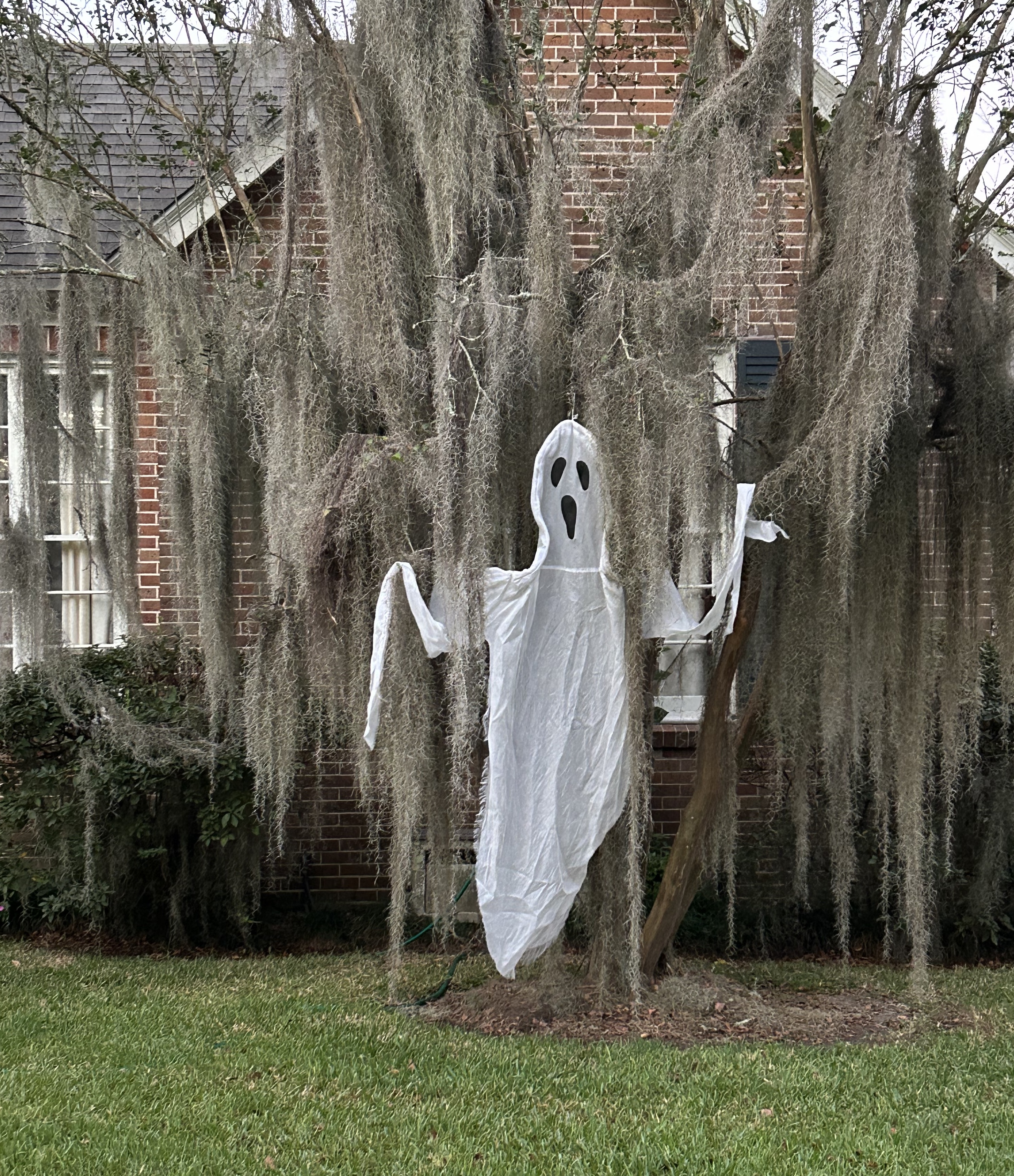
If you have a tree covered in moss, then you must hang a ghost there.
I’ve taken a number of pictures of Halloween decorations thinking about the photo for this week. This one is the winner. In my neck of the woods (South Louisiana), moss covered trees are common. My husband grew up calling it “spooky moss”. It is the common Spanish moss, and on some trees, the stuff practically takes over the tree, even though I’ve read that moss is a bromeliad in the pineapple family and does not harm the tree.
“Many homeowners think that Spanish moss kills their trees. This is not the case because the moss is not parasitic. The only thing Spanish moss uses trees for is support.” University of Florida.
Yesterday as we were writing metaphors for artifacts in nature (#WriteOut), Avalyn created this form: The (A, An) object in nature is/is like … describe how it is like end with a connection to life
I tried the form when writing about milkweed seeds. I combined it with a prompt from Ethical ELA to write with words from paint chips here.
A milkweed seed is a great white egret showing off its lacy wings to the mirrored pool in the sky. Margaret Simon, draft
Spanish moss are stalactites hanging on a crepe myrtle hosting ghostly terrormites. Margaret Simon, draft
Now it’s your turn. You can try Avalyn’s form or use your own. Please encourage other writers with your responses. Happy Halloween!
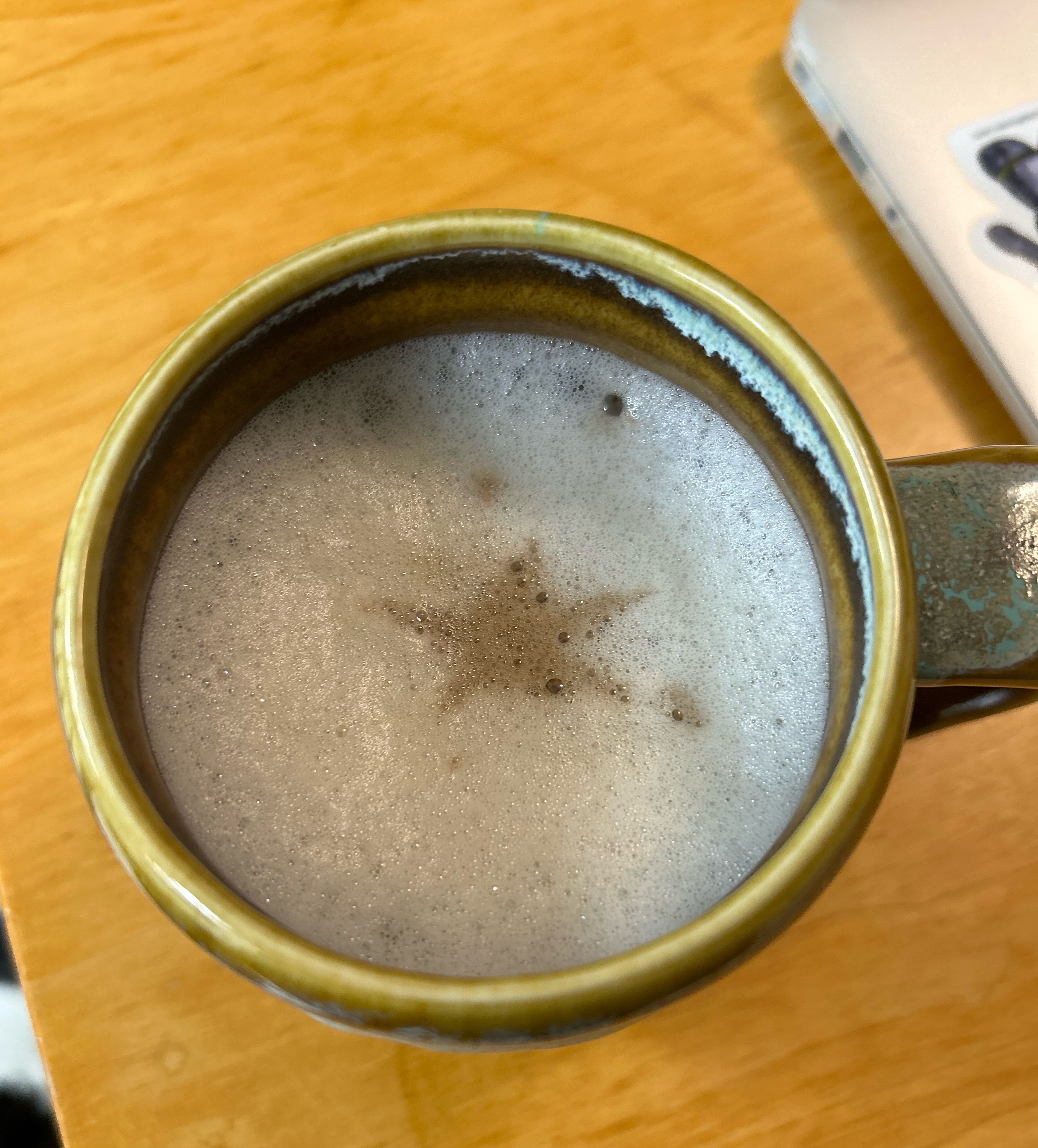
When a star appears, I pay attention– watch how it spreads within the crystals of milk reminding me to notice daily miracles. Margaret Simon, draft
Today’s photo prompt is brought to you by my morning coffee. I am no barrister, but I do enjoy heating and frothing oat milk for my morning cuppa. I’ve been to coffee shops and received the gift of a design in the top froth, but this was a pure accident. Not a miracle of great proportions, but a simple reminder to pay attention. As I’ve returned to a daily routine of waking early to get ready for a day at school, I needed this reminder. Find joy. Find delight in the simple things. Know you are loved.
Please write a small poem about a small noticing, a waking up of your mind to something you needed to see. Encourage other writers with your comments.
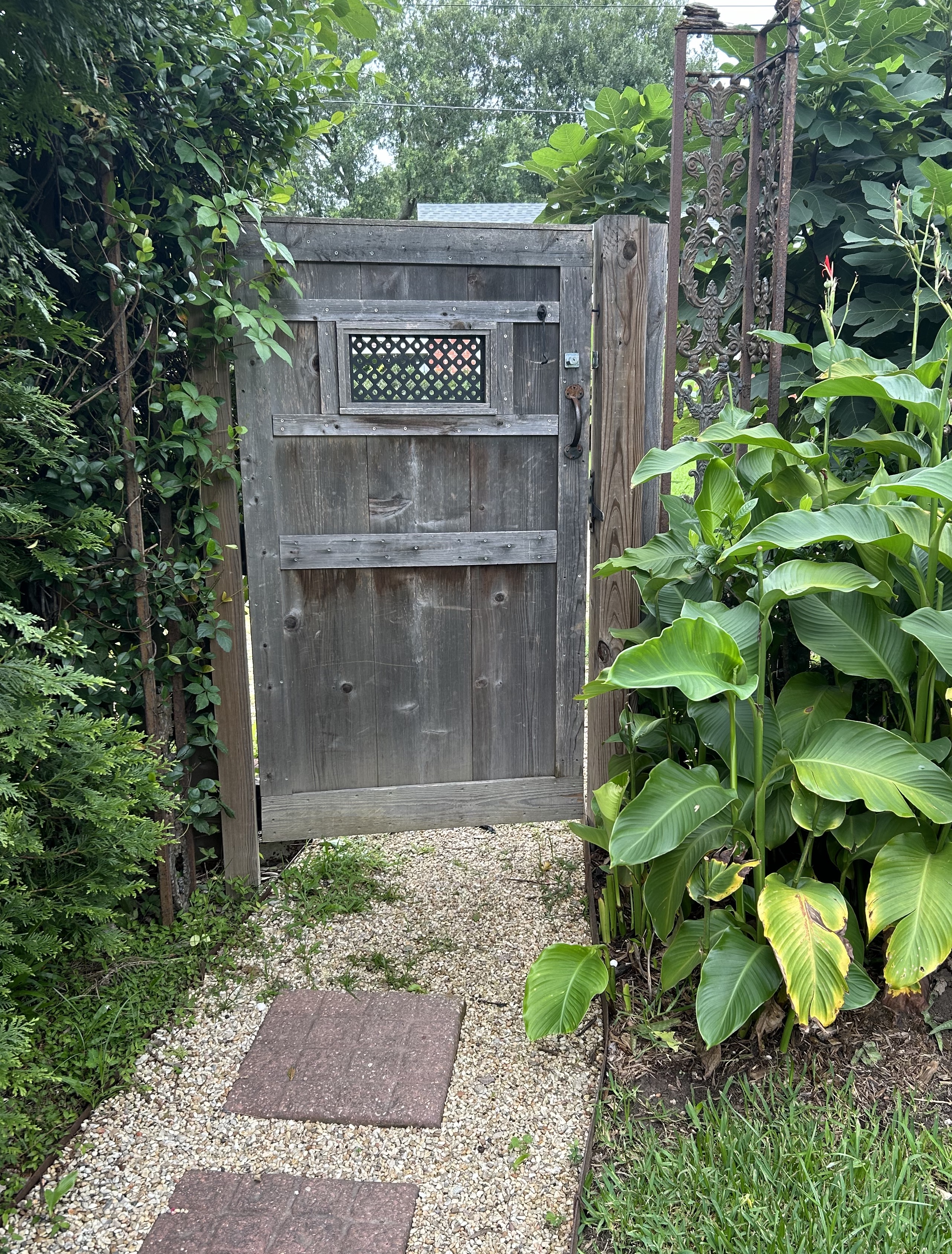
This photo is a gate in my daughter’s yard. There is so much lush vegetation around that passing through feels like an adventure, a mystery. When the jasmine is in bloom, the scent itself will entice you to wonder. Join me today on a writing adventure. Leave a small poem in the comments and respond to others with encouraging words.
First day of school-- open the waiting gate create your own path. Margaret Simon, draft
We were given a fig tree and planted it this spring. We are now harvesting figs! One at a time. My husband joked that we were having our first annual Simon Fig Festival. I served the single fig cut into 4 pieces for our dessert last night. A small, but successful harvest.
Ethical ELA is holding Open Write this week. The first prompt came from Denise Krebs. She reminded me of a form that Jane Yolen created called the septercet. Each stanza has seven syllables and there are 3 lines per stanza. I wrote a septercet about my first fig.
Do you see rain and complain? Everything wet in your path– Grass and mud slide to the street.
I watch this single fig-fruit turn from green to peachy-red making rain into sweet juice.
You can decide the mood here. Rain or shine, weed or flower Fig tree loves enough of both.
@Margaret Simon, draft
You can choose to write a septercet about your own favorite fruit of summer. Leave a small poem in the comments and write encouraging responses to other writers.
Franciscan monk feeds the pigeons, Dubrovnik by Molly Hogan
My fellow Inkling (writing group) poet-teacher Molly Hogan went on a fabulous trip to Croatia, Slovenia, and Ireland. She blessed me and all her Facebook friends with lots of amazing photos. I was compelled by this photo. It takes me back to my favorite musical of all time, The Sound of Music. It also reminds me of a kind monk I knew growing up. He was my father’s best friend. His Benedictine name was Brother Anselm. He was witty and wise and an incredible organist.
My poem is a narrative free verse. I wanted to tell a story. I have fond memories of visiting Bill (Brother Anselm) at his monastery in St. Benedict, Louisiana.
Consider writing with me today. Leave a small poem in the comments. Remember this is a drafting space, so kindly write encouraging responses to other writers.
Brother Anselm
Walking into the woods surrounding the Abbey, Brother Anselm and I spoke freely. Our walk was a prayer.
We talked of nothing in particular as his brown robes swished and swayed, a comforting blanket of humble access to a stream of still water.
He reminded me that the holy is not always quiet. Our voices echoed among the tall pines, laughter shaking the ground.
He told me that time was our friend. Use it wisely and with intention. Bless the forest with reverent presence and God will grant you peace.
Great Blue Heron on Purple Creek, Ridgeland, Ms. by Margaret Simon
On a recent visit to Mississippi, I caught this flight of a great blue heron on my phone camera. The wingspan of these birds amazes me. They fly low across the water and perch near the water’s edge to forage for minnows and other small aquatics. This photo reminds me of a drawing my father did of a heron over the water.
Heron in Flight by John Gibson
I invite you to write today using these photos as inspiration. Leave a small poem in the comments and support other writers with your responses.
The Flight of the Great Blue Heron
Poised dawn glider Horizon solitude Regal wave to God
Last Friday as I read different Poetry Friday posts, I noticed the trinet form. Rose Cappelli wrote one about peonies. I have not tried this form yet, so I decided to offer it today. The form is 7 lines, 2 words in lines 1, 2, 5, 6, and 7, 6 words in lines 3 & 4.
I went on a swamp tour yesterday and dragonflies were flitting all around. Then I saw Julie Burchstead’s beautiful Facebook photo of this one, perfectly posed for a picture. Dragonflies are common insects. I found this on a dragonfly website:
“Dragonflies are similar to damselflies, but adults hold their wings away from, and perpendicular to the body when at rest. Their two sets of wings work independently, allowing dragonflies to maneuver through the air effortlessly. Their huge eyes give them incredible vision in almost every directions except directly behind them.” If you want to use some facts in your own poem, go here.
Dragonfly wings aerial lift flittering over stillness in sacred swamp summer days echoing of cicada song daring us to reflect light–shine!
Margaret Simon, draft
Please leave your own poems in the comments and respond to other writers with encouragement. Happy Summer!
Margaret Simon lives on the Bayou Teche in New Iberia, Louisiana. She is a retired elementary gifted teacher who writes poetry and children's books. Welcome to a space of peace, poetry, and personal reflection. Walk in kindness.