At the end of every month, the Poetry Sisters put out a challenge for their group as well as any others who may want to give it a shot.
Today’s call came from Mary Lee Hahn. She borrowed the prompt from Colby Sharp’s collection The Creativity Project. “It was all my fault.”
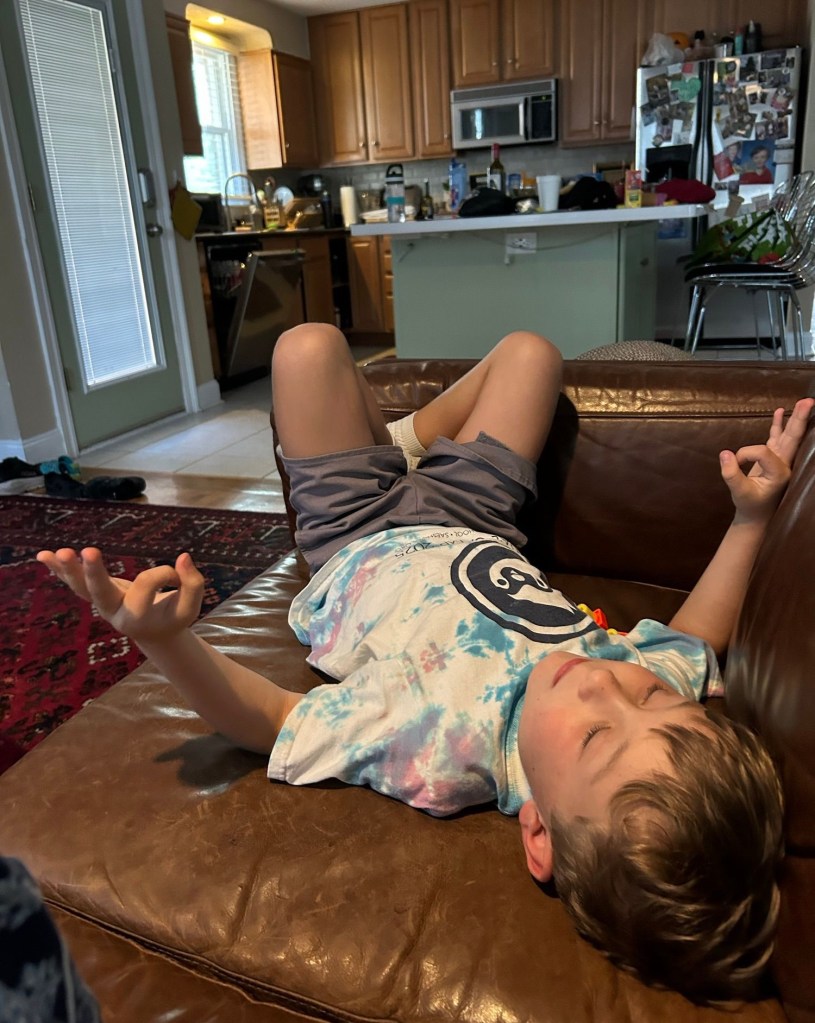
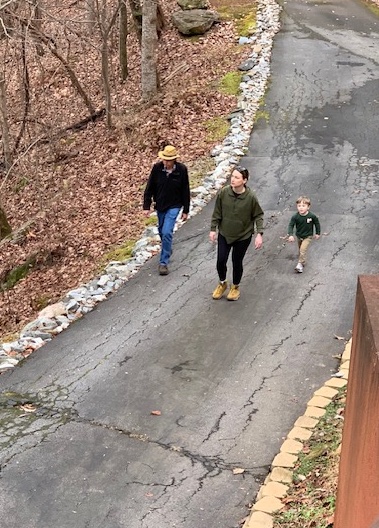
There are hard things as well as joyful things when taking responsibility for a seven year old. My daughter is on a work trip, so I am responsible for getting Thomas up, fed, dressed, and to school by 7:35 sharp each morning. I wished I could have written a note to his teacher. “This is Just to say…”
Dearest First Grade Teacher,
This is just to say it’s all my fault he has no water bottle today, his hair is misaligned, his shirt untucked.
We were in a rush, you see. The dogs needed feeding, homework reading, and of course, the nerf gun reloading.
Please forgive me if he is a little off his rhythm. We did text his mom “I love you” and I pecked a kiss in carpool line.
We are both doing the best we can.
Sincerely, Mamére
Thomas trying to remember what happened in school. Om!
Poetry Friday is being gathered today by Mona Voelkel.
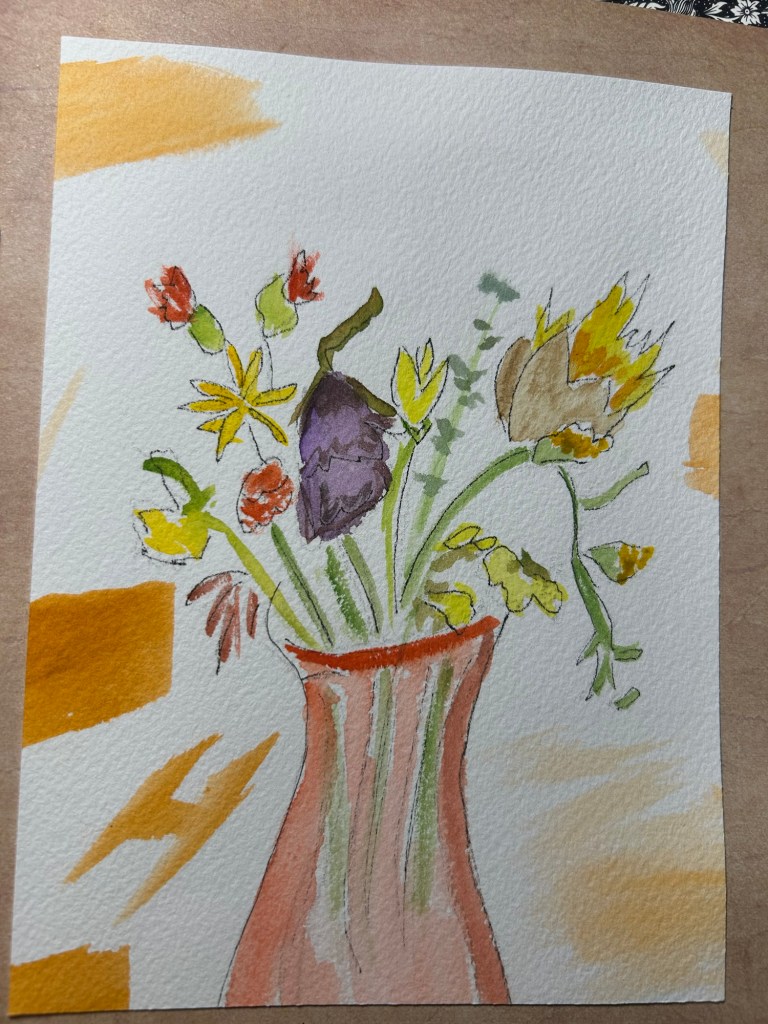
Last week I attended an artist roundup at the Acadiana Center for the Arts. It was a free event for any artist in the community. This roundup was centered around still life drawing. In the large gathering room, there were supplies and circles of chairs around a variety of still life models/set-ups. I chose to sit between two friends, so I could feel safe among so many different artists. I walked around the room to see what others had done, but the intent was an open space for creatives to meet and talk and practice, not to compare yourself to others.
I’ve been dabbling in watercolor. I was pleased with the vase of flowers, so I cut it out of the whole painting. I decided to use this experience to write a haiku sonnet with the Poetry Sisters.
Still Life by Margaret Simon
Each artist sees with different eye-angles, not one best view.
She paints in color while another scratches pastels or charcoal.
No ring leaders here. A circle of practicing, finding our flow.
I choose the vase of dead flowers leaning, colors faded depth.
Judgement left outside the door open easy to joy-play.
Margaret Simon, draft
I encourage you to go to the Poetry Friday roundup to see how other poets wrote haiku sonnets. It’s a fun form to use.
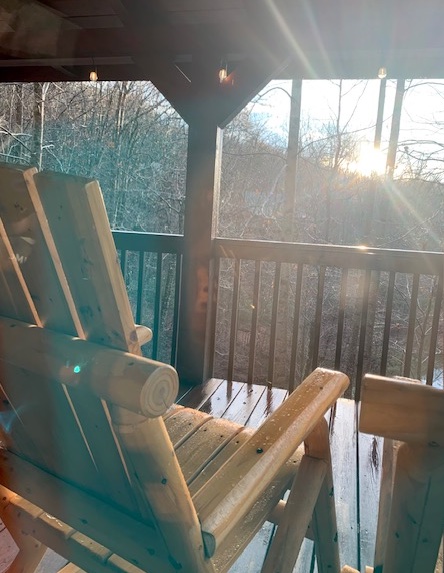
I am in a comfortable space on Heidi Mordhorst’s front porch for our long awaited Inklings retreat. We’ve been meeting on Zoom as a writing group for around 10 years and this is the first time we’ve been together in person. Heidi’s front porch welcomes the morning sun and is a perfect place to sit with coffee and type a PF post.
I don’t always participate in the Poetry Sisters’ challenge; however, this month’s prompt is a favorite of mine, Pádraig Ó Tuama’s Pantoum.
July Sings, Sizzles
Cicada song sizzles with rising heat. My neck sweats, wet like a glass of iced tea. I feel my body slowing down. Even the birds stop singing by ten.
My neck’s wet like a glass sweats. Shade just an illusion of cool. Even the birds stop singing by ten. Yet, today I release another butterfly.
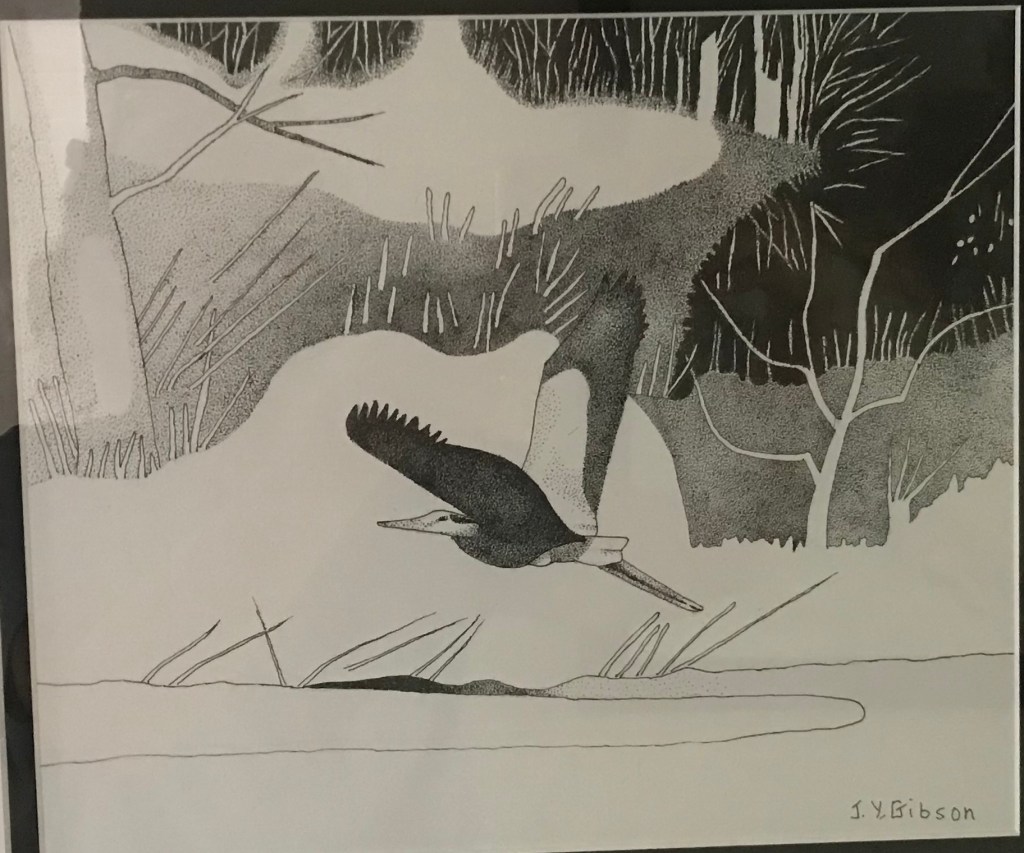
Shade, an illusion of cool, waits for grief like the great blue heron he drew. So today I release another butterfly. I had a dream he returned like the sun.
Grief is the great blue heron he watched. I feel my own body slowing down. I had a dream he returned as my son. Cicada song rising with the heat.
Thank you to Two Writing Teachers for creating an amazing community of writers and a safe, welcoming space to write and share.
Poetry Friday is hosted today by Marcie Flinchum Atkins, who has a new book coming out on Tuesday, When Twilight Comes.
For the last Friday of the month, the Poetry Sisters offer a challenge. I wanted to give it a try. The form is Ovillejo, a Spanish form described here.
In Pádraig Ó Tuama’s Substack this week, he posted a poem from Rainer Maria Rilke that began with the line “God speaks to each of us as he makes us.” I love this idea of God, intimate and personal. To get started on the Ovillejo, I borrowed this line. As I worked with the syllable count and rhyme, it changed somewhat.
Belonging
After Rainer Maria Rilke
God speaks fondly to each of us, makes each of us.
Birds respond to God’s call with song— You belong.
Set the paddle deep into water, my daughter.
Stop messing with what doesn’t matter. Sit with God and speak in silence. God knows your peculiar cadence.
Like each of us, you belong, my daughter.
Margaret Simon, draft
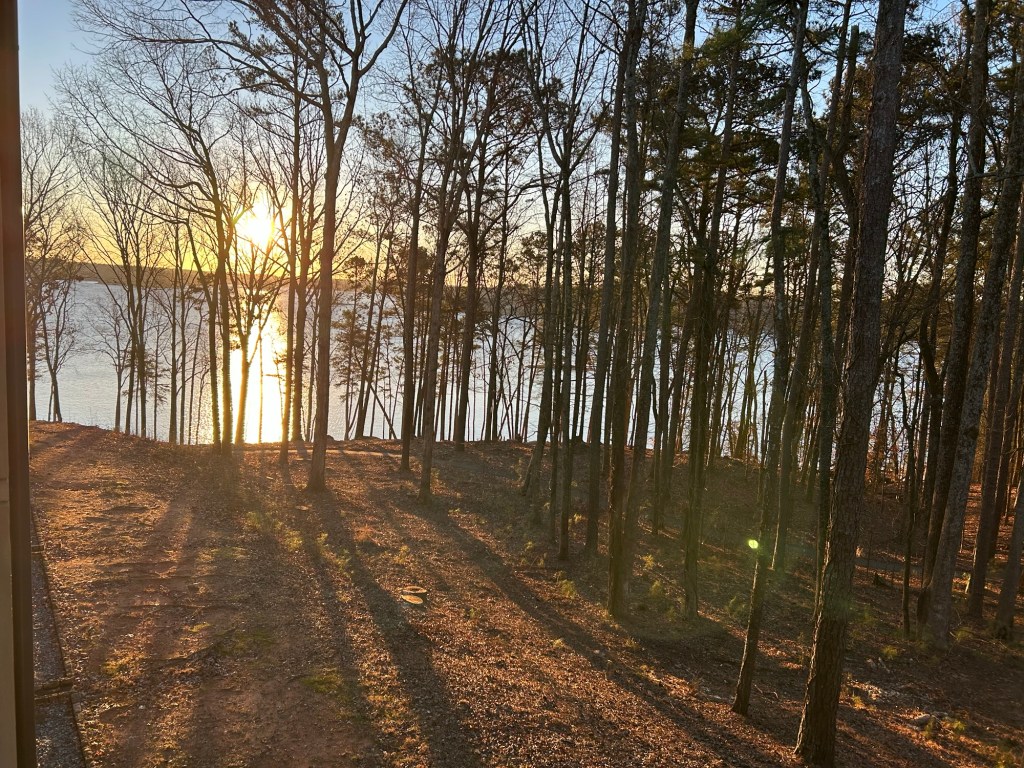
Twilight on Lake Lanier, Georgia
Our host, Marcie, asked us to post a favorite picture and poem of twilight to celebrate her new book. When I searched my blog history for a twilight poem, I found last year’s Kidlit Progressive Poem.
April Runs Over
Open an April window let sunlight paint the air stippling every dogwood dappling daffodils with flair
Race to the garden where woodpeckers drum as hummingbirds thrum in the blossoming Sweetgum
Sing as you set up the easels dabble in the paints echo the colors of lilac and phlox commune without constraints
Breathe deeply the gifts of lilacs rejoice in earth’s sweet offerings feel renewed-give thanks at day’s end remember long-ago springs
Bask in a royal spring meadow romp like a golden-doodle pup! startle the sleeping grasshoppers delight in each flowering shrub…
Drinking in orange-blossom twilight relax to the rhythm of stars dotting sky as a passing Whip-poor-will gulps bugs We follow a moonlit path that calls us
Grab your dripping brushes! Our celestial canvas awaits There we swirl, red, white, and blue Behold what magic our montage creates!
Such marvelous palettes the earth bestows When rain greens our hopes, watch them grow, watch them grow!
This month the Poetry Sisters challenge was to write a tricube. The tricube form is 3 syllables, 3 lines, 3 stanzas.
Molly Hogan sent me the list of prompts from the MoSt Poetry Center. The prompt I used was this:
“Write a poem of presence, in terms of being in a particular place and time, or of having a dynamic demeanor (such as in “stage presence”) or a feeling of an unseen spirit. Here’s an example by Arthur Sze, our new U. S. Poet Laureate:
Every year as I begin to set intentions, I get the universal message of presence. I feel presence is essential to peace of mind, but it is difficult to find.
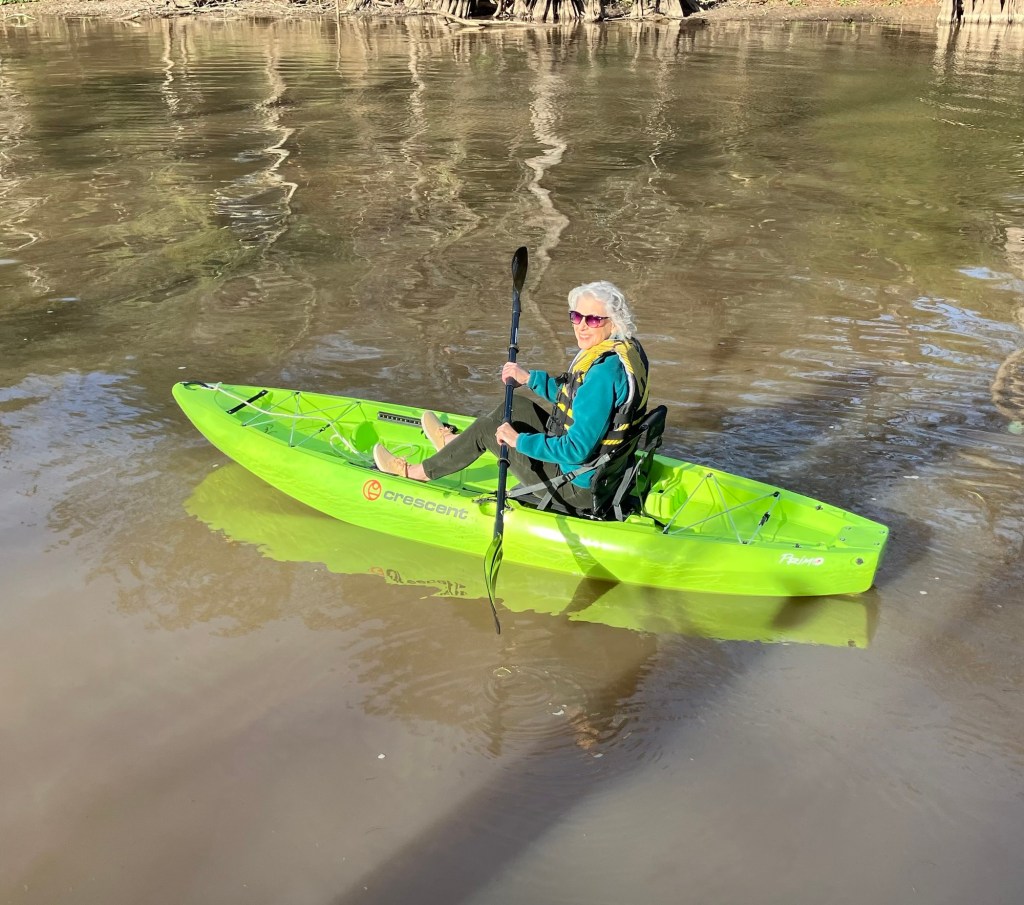
I have a new kayak. Taking the kayak out took some initiative and help from my husband hero. Jeff had the grandkids in the canoe. When I wanted to try to get the kayak out of the water by myself, my grandson Leo said, “Prove it.” That was all the challenge I needed to pull the 60 pound vessel onto the dock. I did it.
First kayak adventure in “Chrysalis.”
Here after Arthur Sze
Be here now Here frog croaks Here wren calls
Be here now Here stalk grows Here tea steams
Be here now Here oar strokes Here strength comes
Margaret Simon
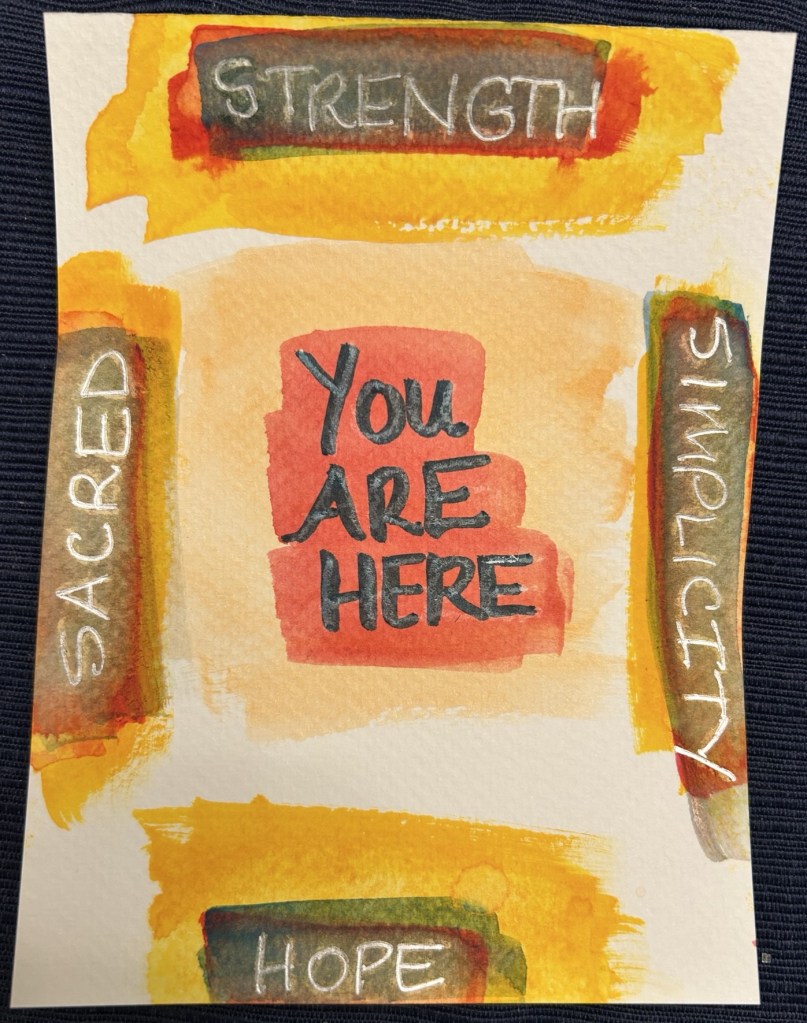
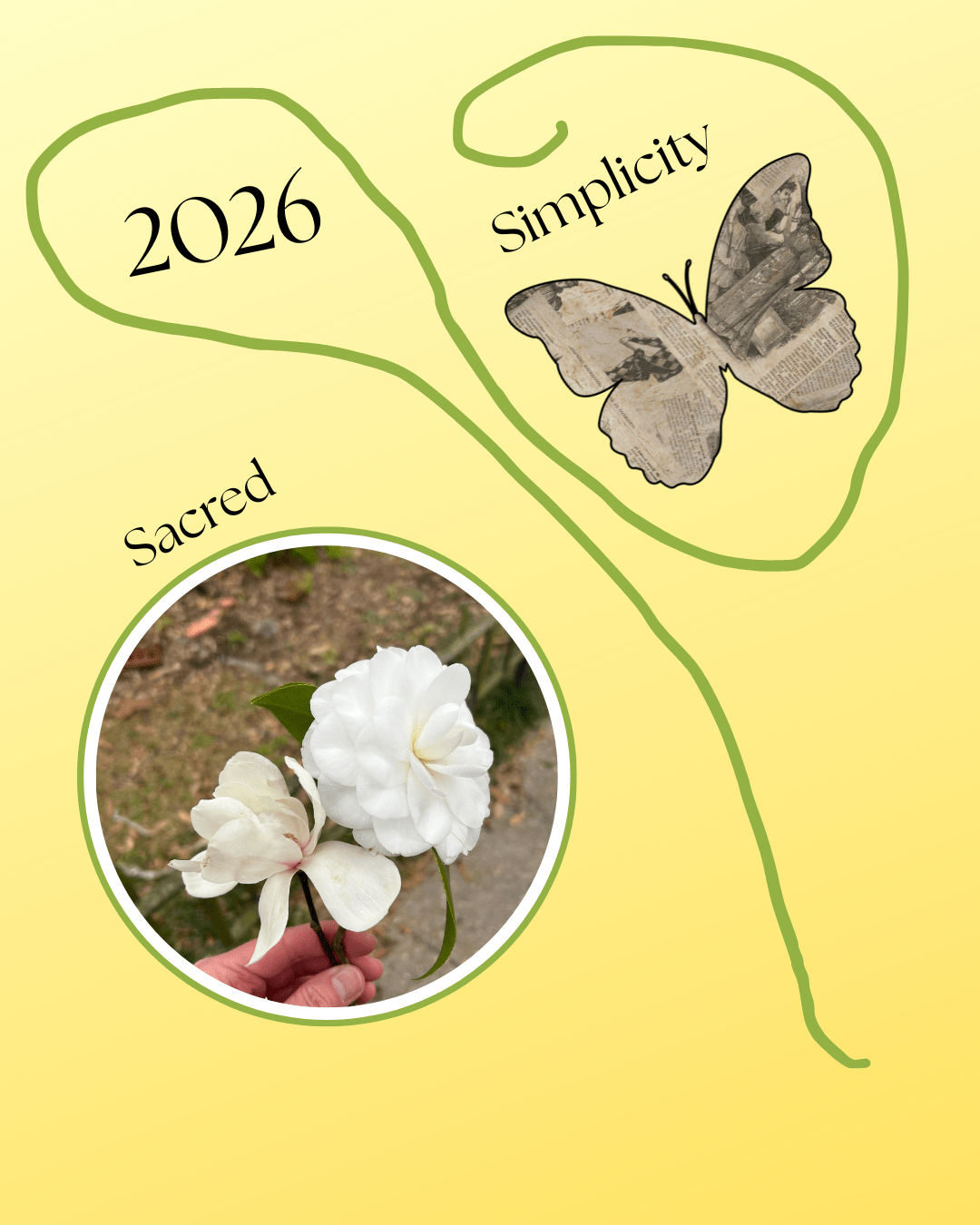
I want to thank Tabatha Yeatts who offered on Poetry Friday last week to do an art piece for our 2026 words. I took her up on the offer. I’m touched and amazed at how this speaks to my intention for the year as well as the tricube I wrote.
This month’s Poetry Sisters challenge was to write a poem form called a raccontino, a poem of any number of couplets in which the odd-numbered lines (along with the title) tell a story. Even-numbered lines rhyme. This was a totally new form to me, so I looked for inspiration in an obituary, of all things. I liked how the woman was described as leaving a legacy of kindness. Who among us would not want to leave that kind of legacy?
She Leaves laughter and abiding love, a generous spirit echoing silly songs.
Her family holds her legacy. When every heart longs
to be of some use, of a place she belongs,
there is only kindness that lasts, healing all wrongs.
I don’t often join the Poetry Sisters challenge, but I felt this month’s was within my reach: a tanku which is a tanka in conversation with a haiku. I recently attended a workshop, Write Bites with Georgia Heard and Ralph Fletcher. Georgia’s writing prompt was to write about a word. One suggestion she had was to have a conversation with the word. That draft led me to create a tanku around one of my two words for this year.
Believe
What do I believe? Remove my rear view finder Need a reminder– blinders to understanding, “I don’t believe you heard me.”
I say to the wind; It says, “I believe in you. That’s true, you will see.”
Poetry Friday is hosted today by Irene Latham at Live Your Poem.
This last Friday of September, the Poetry Sisters called out a challenge based on Wallace Steven’s Thirteen Ways of Looking at a Blackbird. I enjoy puzzling together ideas into poem forms. In the model poem, Stevens uses few words in each stanza to convey a single emotion or thought.
I became intrigued by the idea of looking at grandchildren, not a single one, but the idea of having a grandchild. I have three daughters, and have been blessed with 4 grandchildren, ranging in age from 5+ years to 21 months. Each of my daughters have had at least one miscarriage.
To write this poem, I started using sticky notes, I carried the collection around for a few days. It worked well for separating each one and arranging them into some logical order. Thanks to my Inklings’ honest feedback, I am ready to publish this poem here, but I’m not leaving it. I want to feel that it will grow as my grands grow and reveal more to me about this amazing journey in grandparenting.
Ways of Looking at a Grandchild
I. Grandmother Mother Daughter 3 in 1 1 in 3 Egg to egg to egg
II. Cut the cord connection broken New bond forever woken.
III. Cells divide. Divide again. Sometimes there is no heartbeat.
IV. The way a mother looks at her child with purest adoration– A bloom of a flower planted long ago.
V. Golden curls, crystal blue eyes– Precious gems to hold.
VI. Hand sign three fingers I Love You
VII. One day she’s Ariel another Anna, Batman, Spiderman— always a fierce girl wonder.
VIII. Whose eyes are these? I think I know. I’ve seen them from a portrait glow.
IX. Whispers at bedtime “Sing me the song you sing” A grandmother’s lullaby.
X. Curve our bodies together and turn pages of a book, We enter a magical place.
I was inspired by Michelle Kogan who wrote a pantoum for a hippo. I recalled the hippos of my Africa tour in 2016. I’ve been reading Margarita Engle’s verse novel Singing with Elephants. I collected lines from the verse and went to work on the pantoum form. This form is like a puzzle. Michelle fit hers together with rhyme. I didn’t use rhyme. When I googled pantoum, there doesn’t seem to be a rule about rhyme or line length. The rules show that each stanza is four lines with this pattern: (1,2,3,4) (2,5,4,6) (5,7,6,8) (7,3,8,1)
The Poetry Sisters respond to a challenge on the last Friday of the month. This month they are writing animal pantoums. Our host Tricia has more about the form and links to other Poetry Sisters posts.
The beauty of an elephant’s hum-hug, a language as common as buzzing bees, simple as spending time with kindness. Elephants embrace us with their music.
With a language as common as buzzing bees, I can catch good luck as it passes. Simple as spending time with kindness, these animals move like magical mountains.
I catch good luck as it passes: Photo from Africa is a touchstone of memory. These animals move like magical mountains with a touch of heavy gentleness.
My photo from Africa is a touchstone of memory, as simple as spending time with kindness– A touch of heavy gentleness– the beauty of an elephant’s hum-hug.
Margaret Simon, with thanks to Margarita Engle and PÁDRAIG Ó TUAMA.
I wasn’t planning to post for Poetry Friday today, but I’ve been playing with the elchen form (also known as elevenie), a challenge from the Poetry Sisters. Mary Lee shared the Wikipedia definition of the form. I wrote one last week for This Photo Wants to be a Poem.
While my family has been vacationing in the mountains of North Georgia, coincidentally the words of the day in my email inbox have worked for elchen play.
slippers warm toes on cold mornings this winter’s saving grace hygge*
Word of the day: hygge- A quality of coziness and comfortable conviviality that engenders a feeling of contentment or well-being (regarded as a defining characteristic of Danish culture).
Pack suitcase, car drive all day family voyage to mountains viator*
*Word of the Day 12/26/23 Viator traveler, wayfarer
Light still shines in your eyes sea glass blue joy luminaria*
*Luminaria is a lantern typically used at Christmas.
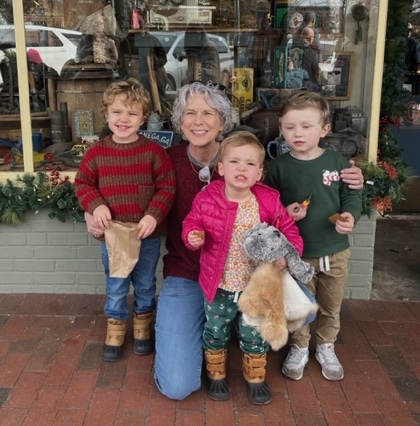
Leo (5), Mamere, Stella (3), Thomas (4)
Wayward wanders hopeful small mountain town ice cream with sprinkles gallivant*
*Word of the Day 12/29/23 Gallivant: Go around from one place to another in the pursuit of pleasure or entertainment.
Margaret Simon lives on the Bayou Teche in New Iberia, Louisiana. She is a retired elementary gifted teacher who writes poetry and children's books. Welcome to a space of peace, poetry, and personal reflection. Walk in kindness.