Some of my Inkling writing group friends have been inspired to write poems using Wordle guesses. I’ve tried a few times, but as a person who plays Wordle infrequently and always starts with the same word, the practice didn’t appeal to me.
Mary Lee’s rule is when she guesses in three words, she writes a haiku. Yesterday I got it in three tries. I wrote the words down, pearl, rival, and drill, and went about my day.
Newly retired, I’ve found the mornings to be a sanctuary. I take a walk with my dog, fix a pot of oatmeal, and eat on my back deck watching birds. Oh, the retirement life!
At the feeder, I get a variety of birds. (Tufted titmouse, chickadee, cardinal) The thing about using Wordle words forces a metaphor that may or may not work. I was finally pleased with this one, so I am sharing today. Have you tried writing Wordle poems?
A pearl of titmouse rivals chipper chickadee early morning drill Margaret Simon, draft
I bought butterfly plants in the spring. Spring turned to summer. I watered. They survived. Summer turned to fall. I watered. They survived. On first inspection, I thought my plant had a disease. What weird fungus was growing? I opened Google lens. AI generated a match. Giant swallowtail caterpillars! A little lesson from Mother Nature: Do not destroy what you do not know.
Once I figured out what the alien caterpillars were, I put the plant (rue) inside an enclosure. I am excited to watch this process. I wonder if the chrysalis will stay over winter.
This month, I am participating in the National Writing Project’s Write Out, a program supported by the National Parks. Of course, writing outside can happen anytime of the year. The resources at Write Out are exciting and easy to use. Please join in writing today by leaving a small poem in the comments. What lessons do you learn in nature?
I have lived in the same neighborhood for 21 years, and for all of that time, there was an empty lot in the cul-de-sac at the end of the street. This empty lot was my crossover space for walking from my street to a neighboring one that also follows the bayou. The crossover lot was also a picnic area with my grandkids. Together we named where the live oak drapes nearly to the ground “the forest”.
Earlier this week I walked to the forest with my grandkids. Many of the oak limbs were gone! And the rest of the trees had big white X’s on them.
“Mamére, what will happen to the trees?”
“Someone bought this lot, so they are taking down the trees to build a house.”
“So where will we play?”
Sadly, I had to explain that when someone buys their own property, they can do what they want with the trees.
I wish it weren’t true. My heart is sick over this loss.
Leo and Stella pause to pose in the old branches of the live oak in our “forest.” What is left of the tall sweet gum where we collected leaves and gum balls.This old cedar is the next to go.
The National Writing Project annual Write Out with the National Parks Service is happening now. Consider taking time outside to write and post with #writeout.
Prompted by Pádraig Ó Tuama’s invitation to write about a place you know go to, I wrote a poem for the trees.
Paradise Woods on Duperier Oaks
This one is for the trees on the empty lot, the tall sweet gum forever littering the street with spiked balls and feathery leaves, felled for a concrete driveway.
I weep as I pass the old oak whose branches, trimmed exposing bare skin and bones, once held children the “forest” where they played hide-n-seek, Catch-me-if-you-can. If I could, I’d save you now.
Old growth cedar, I apologize that the invasive sound of chain saws disrupts your silent steeple.
I praise trees, your seeds send roots, and secrets.
Trees, you are our saviors. Forgive us.
Margaret Simon, draft
Please head over to Laura Purdie Salas’s site where she features my little Wood Duck Diary and a tanka poem. Thanks, Laura!
On Monday and Tuesday, my grandchildren had Fall Break. They spent it with me. The fall mornings have been cooler, so we spent the good part of Tuesday morning outside. This photo was taken at Devil’s Pond in City Park. Stella has downy white goose feathers in her hands, and she’s pointing to turtles out in the pond. Together she and Leo are counting the turtles.
One Two Three Four Turtles in the pond. Come walk with me. Let’s feel carefree like turtles in a pond.
Margaret Simon, draft
This month is the National Writing Project’s Write Out, which encourages all of us to go outside to write. Prompts can be found on the Write Out website.
Consider writing a small poem and sharing it in the comments. Support other writers with your responses.
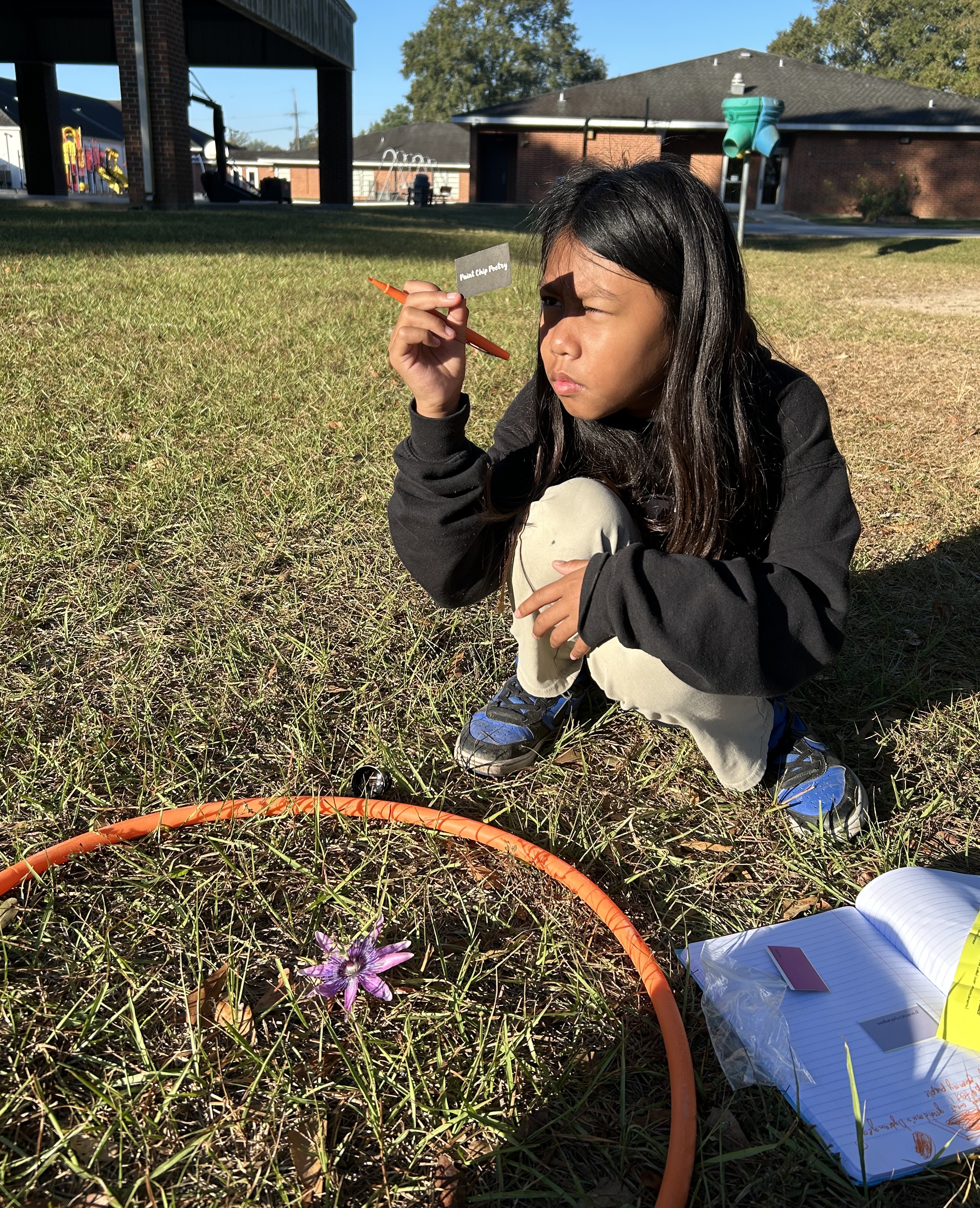
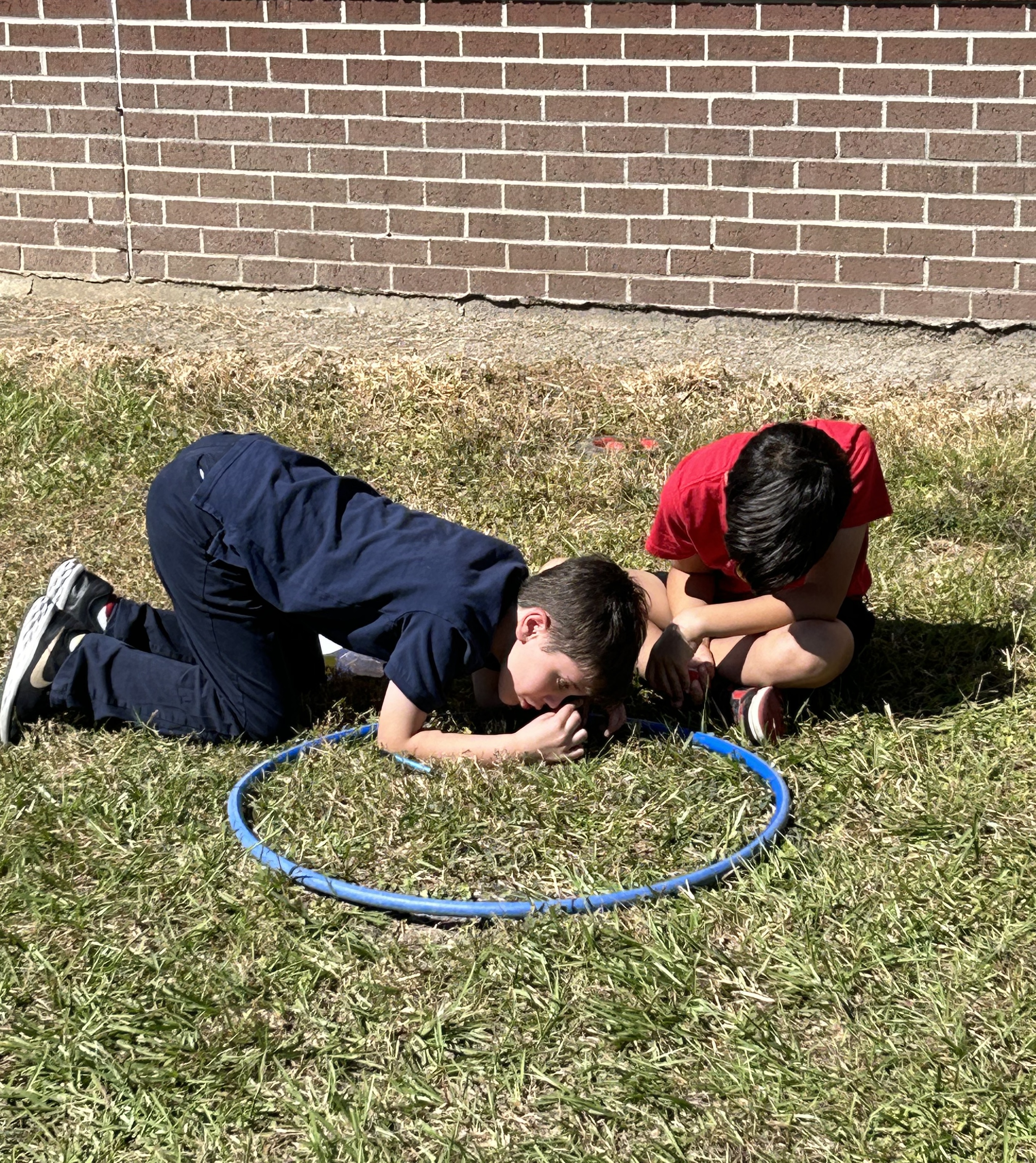
These past two weeks I’ve been trying to squeeze in Write Out opportunities for my students. Write Out is an annual event sponsored by the National Writing Project and the National Parks. This year Kate Messner was the Author Ambassador. One of her prompts asked students to take a hula hoop outside and focus on their circle when writing. Because I can’t leave well enough alone, I added paint chips and jewel loupes to the writer’s toolbox.
Our weather has been perfect the last two weeks. Cool mornings. High sun. Warm afternoons. Perfect for writing outside.
The paint chip words were just the thing to add a little twist to the poems my students and I wrote.
Purple flowers are community of the grass, some clustered some isolated in the sea glass waves.
by Adelyn, 6th grade
The grass has a shine from the blazing sun spitting out embers like a swarm of yellow jackets.
by James, 4th grade
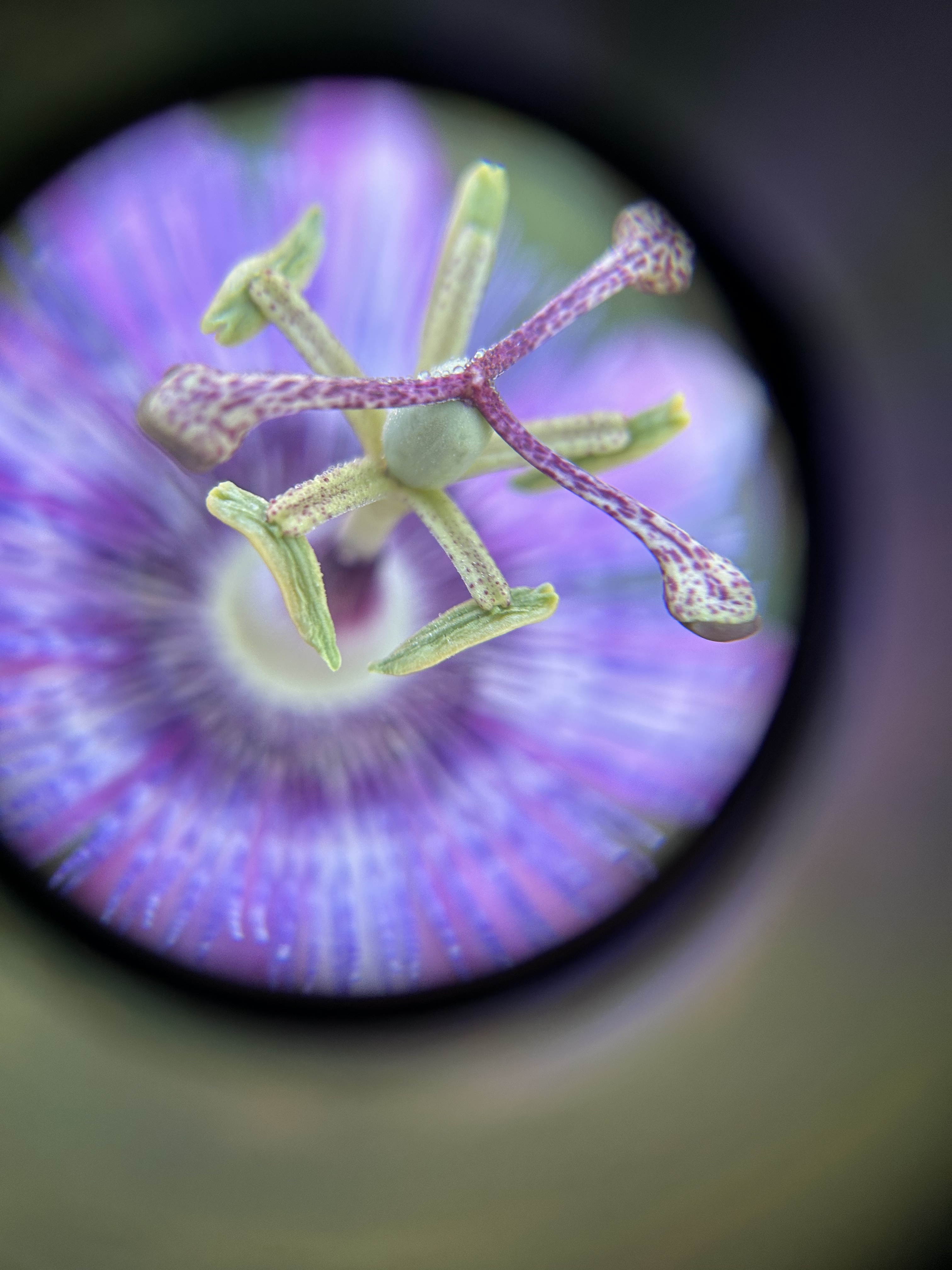
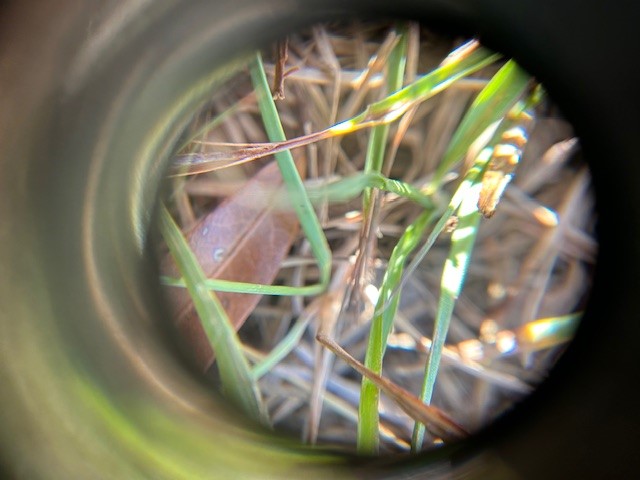
Looking through the jewel loupes helped us see intricate designs and stretched our metaphorical thinking. I love using the jewel loupe with my camera lens on my phone.
Circle of Grass The blades of grass are a kaleidoscope reflecting after the fire in a tangerine dream. by Margaret Simon, draft
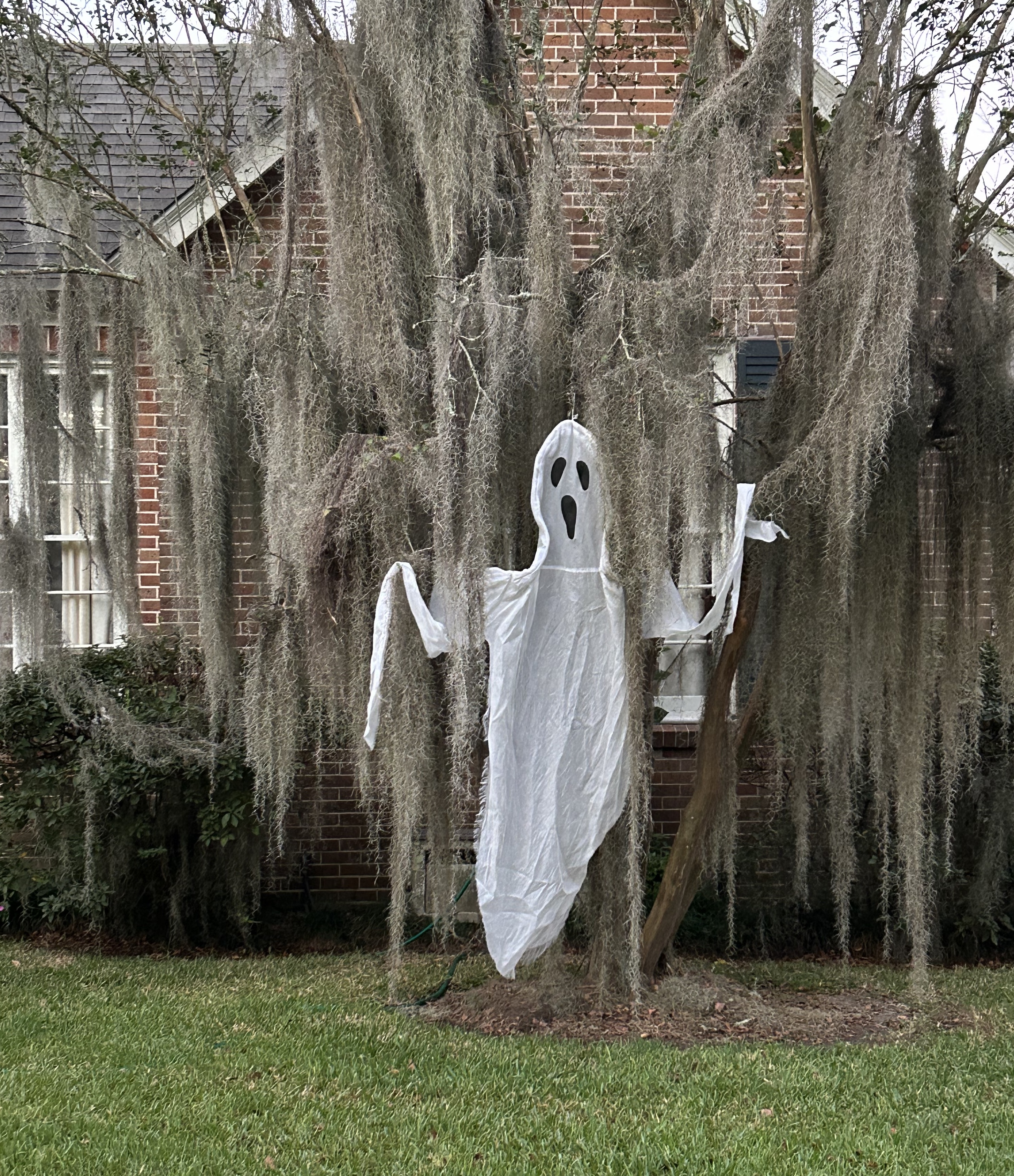
If you have a tree covered in moss, then you must hang a ghost there.
I’ve taken a number of pictures of Halloween decorations thinking about the photo for this week. This one is the winner. In my neck of the woods (South Louisiana), moss covered trees are common. My husband grew up calling it “spooky moss”. It is the common Spanish moss, and on some trees, the stuff practically takes over the tree, even though I’ve read that moss is a bromeliad in the pineapple family and does not harm the tree.
“Many homeowners think that Spanish moss kills their trees. This is not the case because the moss is not parasitic. The only thing Spanish moss uses trees for is support.” University of Florida.
Yesterday as we were writing metaphors for artifacts in nature (#WriteOut), Avalyn created this form: The (A, An) object in nature is/is like … describe how it is like end with a connection to life
I tried the form when writing about milkweed seeds. I combined it with a prompt from Ethical ELA to write with words from paint chips here.
A milkweed seed is a great white egret showing off its lacy wings to the mirrored pool in the sky. Margaret Simon, draft
Spanish moss are stalactites hanging on a crepe myrtle hosting ghostly terrormites. Margaret Simon, draft
Now it’s your turn. You can try Avalyn’s form or use your own. Please encourage other writers with your responses. Happy Halloween!
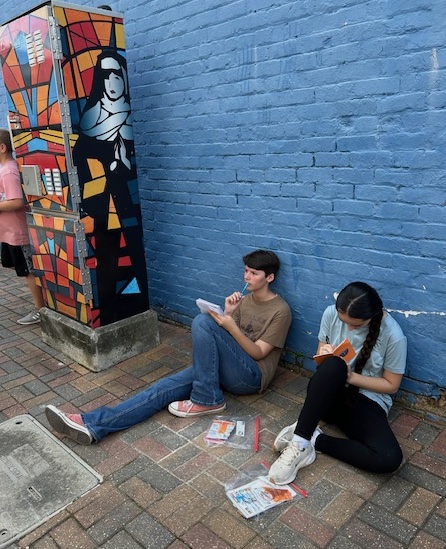
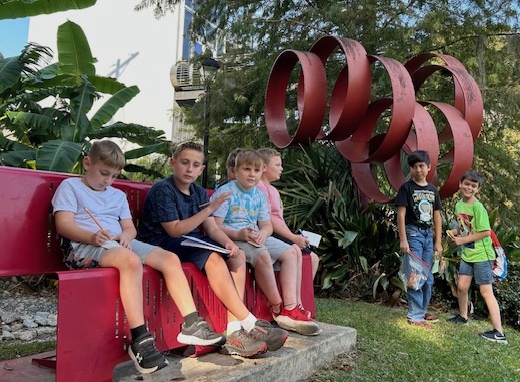
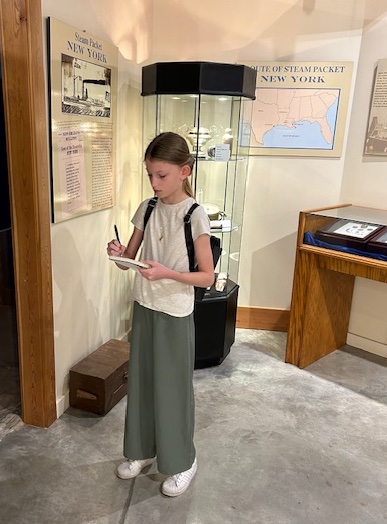
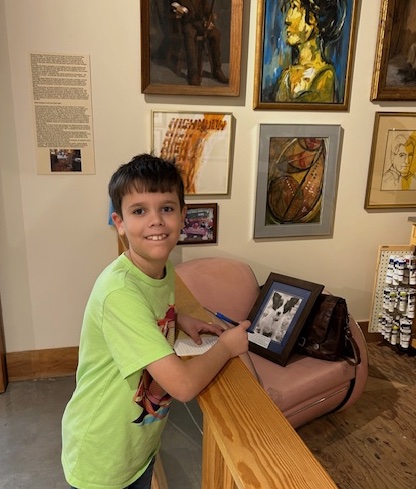
What a wonderful first week of NWP’s Write Out! On Tuesday, our schools were on fall break, but two other teachers and I decided to create a Write Out Field Trip. Twenty-seven kids attended from K-8th grade. Our local Bayou Teche Museum graciously opened its doors for us. We wrote at 4 different places, the museum, a sculpture garden, Bayou Teche kayak dock, and Church Alley.
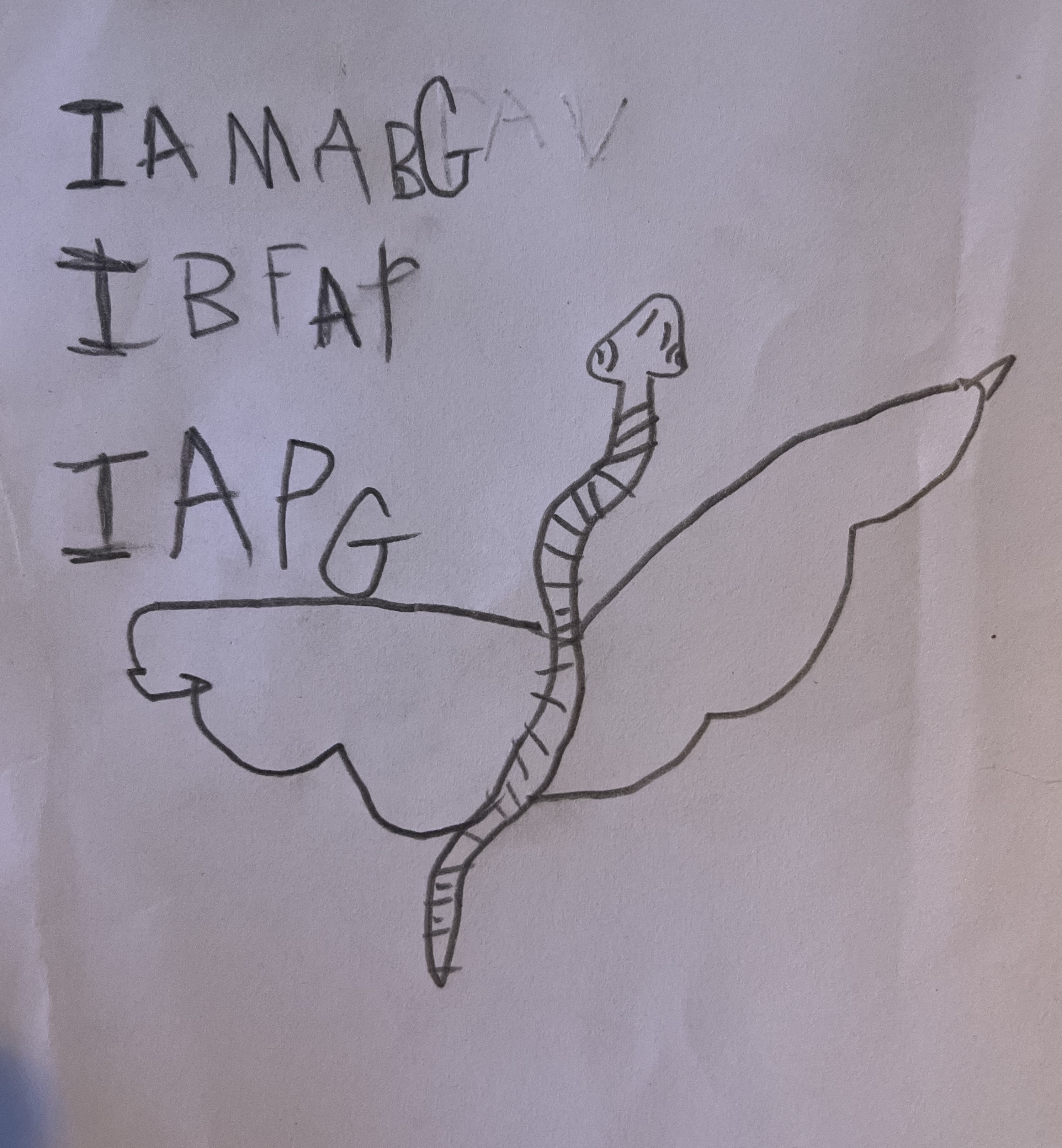
Because he was on fall break, too, my grandson Leo joined us. He is at the earliest stages of reading and writing. He loves to draw, but by our third stop, he wanted to be a writer.
I am a brave dragon. I breathe fire. I am a poisonous dragon. by Leo, Kindergarten
A proud Mamére moment!
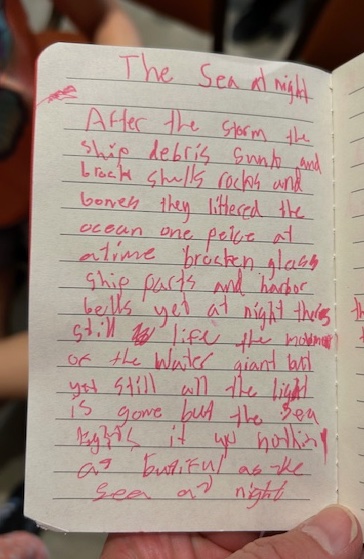
My colleague Beth’s granddaughter, 4th grade, wanted to read all her poems at the read around. Here’s her notebook with a poem about a museum exhibit of a shipwreck.
The Sea at Night
After the storm, the ship debris sunk and broke shells, rocks, and bones. They littered the ocean one piece at a time, broken glass ship parts and harbor bells. Yet at night there’s still life– the movement of the water, giant but yet still. All the light is gone but the sea lights it up. Nothing as beautiful as the sea at night. by Annie, 4th grade
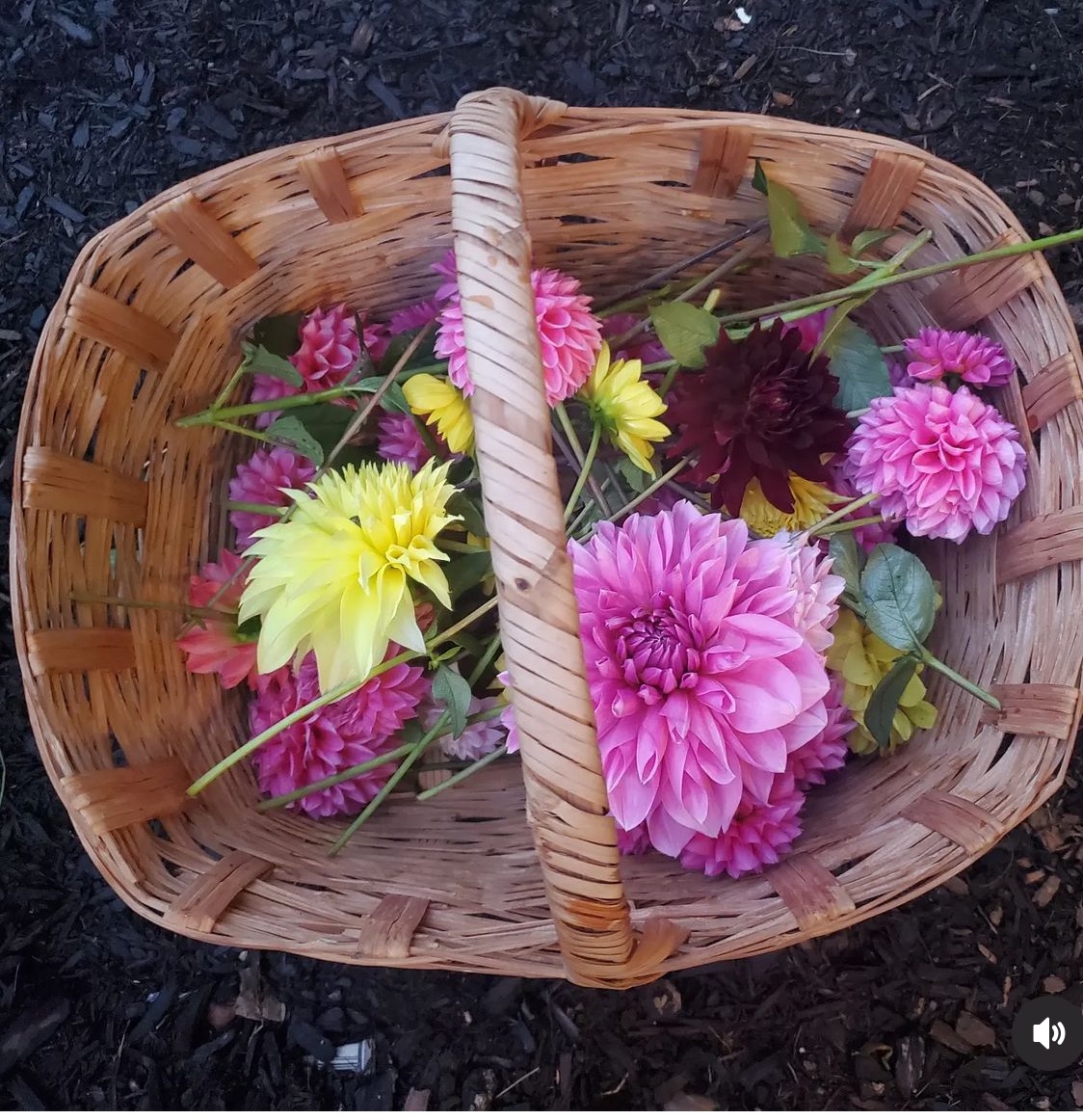
The air turned cool overnight. The cats are hunkered next to the door. My friend in upstate New York, Amy Ludwig VanDerwater, posted a photo of a basket of dahlias. She gathered them to place in a vase since the cold front would surely wilt them.
We wait and wait for the air to turn cool. Then when it does, we gather flowers, fruit, caterpillars to save. Yesterday I released 3 new monarchs into the air. Today they are blown south by the cold front. Seasons change. Sometimes gradually. Sometimes suddenly. Write a small poem today about this changing time. What does it mean to you?
This week is the first week of the National Writing Project Write Out, so if you can, go outside. Let nature speak to you. Catch a poem.
Daisy’s cousin Asteraceae family name Heat loving plants Light of morning sun Invite them inside A guest for the dining table Margaret Simon, draft
Thank you to Two Writing Teachers for creating an amazing community of writers and a safe, welcoming space to write and share.
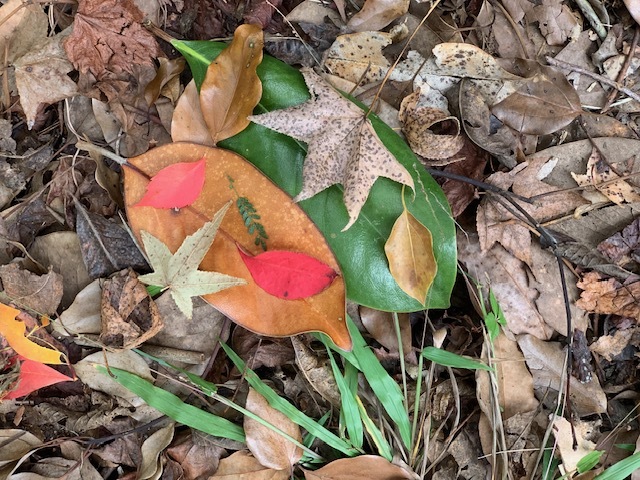
Nature art by Marifaye
Write Out is a National Writing Project event that takes place for 2 weeks in October. Using the concept of getting kids out in nature and writing, I planned a field trip for our district’s gifted students to Palmetto Island State Park in Vermillion Parish. We arranged for a park ranger to lead the kids on a hike, but we wanted to do something creative.
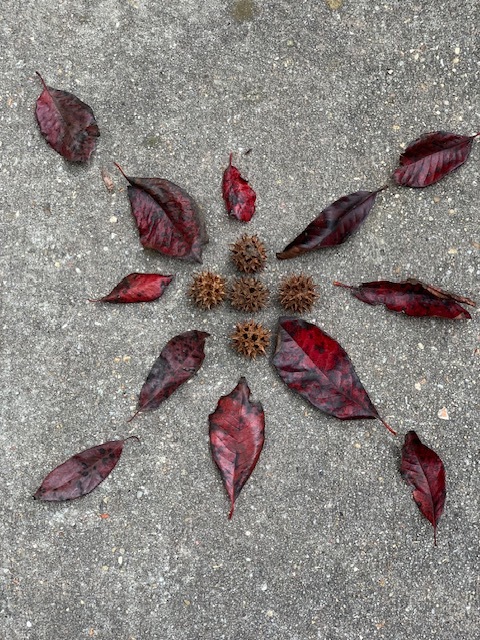
Prior to the field trip my colleague and friend Beth called with an idea–Andy Goldsworthy art. Andy Goldsworthy creates designs with things he finds in nature. His idea is don’t take anything in and don’t take anything out. Whatever he creates, he photographs and leaves it to melt, decay, fly away, whatever may be. A wonderful teaching video can be found here.
The park worked out perfectly for this project. Our students, as well as the parent chaperones, spent time looking at fallen leaves, seed pods, acorns, etc. through a creative lens. Every child that I talked to was proud of the artwork they created.
Back at school on Monday, my students turned to poetry to express their thoughts about their creations.
Green and brown leaves
With a yellow leaf on top
And little red leaves and a very tiny fern
Shaped so perfect
To make the right art
Everything in nature is beautiful
Marifaye, 4th grade
Creating something, looks like a portal,
Even if destroyed, it remains immortal,
Standing strong through the test of time,
Eventually destroyed, fell out of its prime.
Max, 5th grade
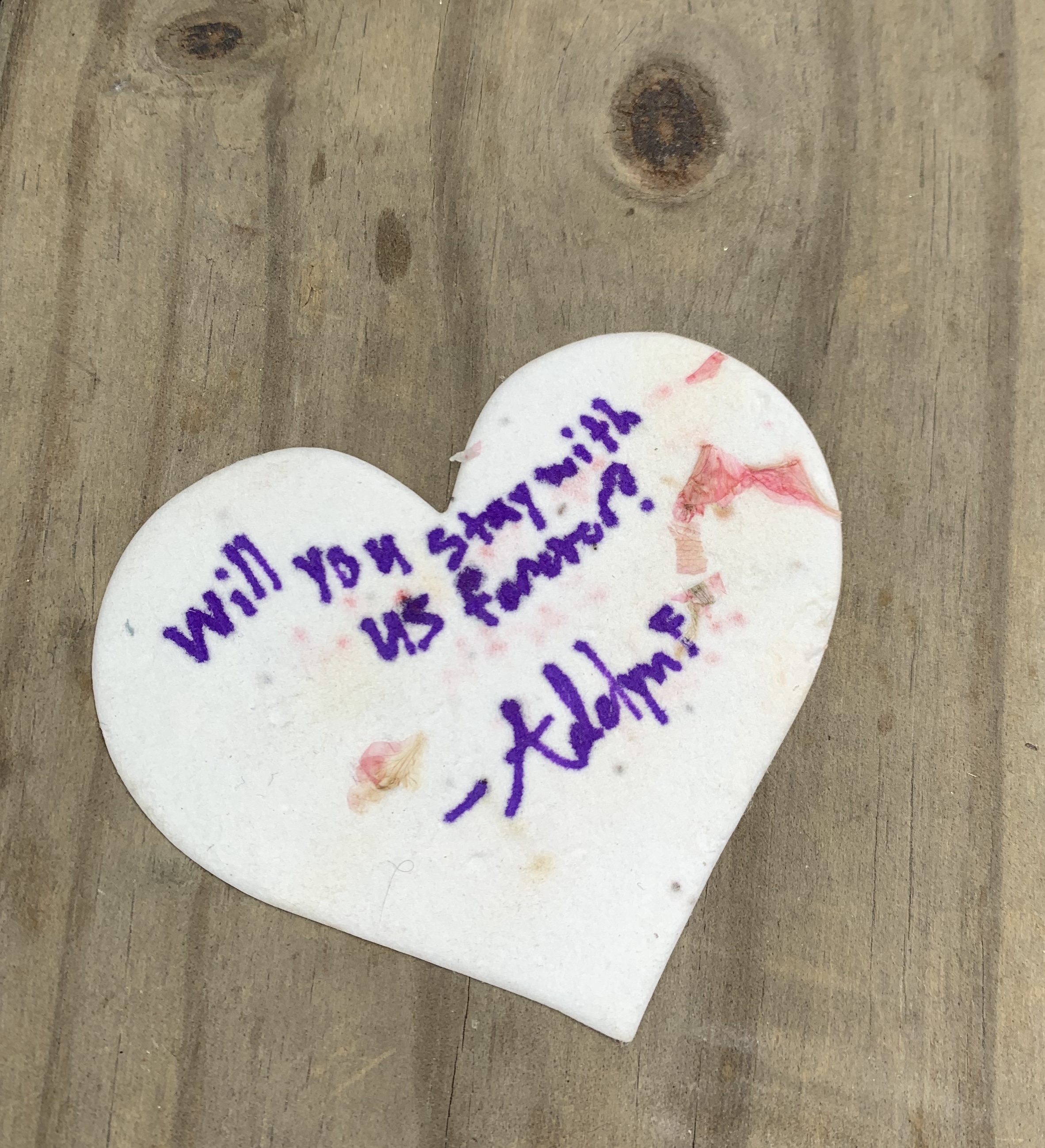
Working with Georgia Heard’s idea of messages to the earth, each student wrote a 6 word message on seed paper. They took these hearts home to plant.
In my humble opinion, I think these kids will look at nature as art, a palette for creativity. They will see with artists’ eyes, finding an arm in a seed pod, a mirror in a leaf, and a kingdom in a circle of sand.
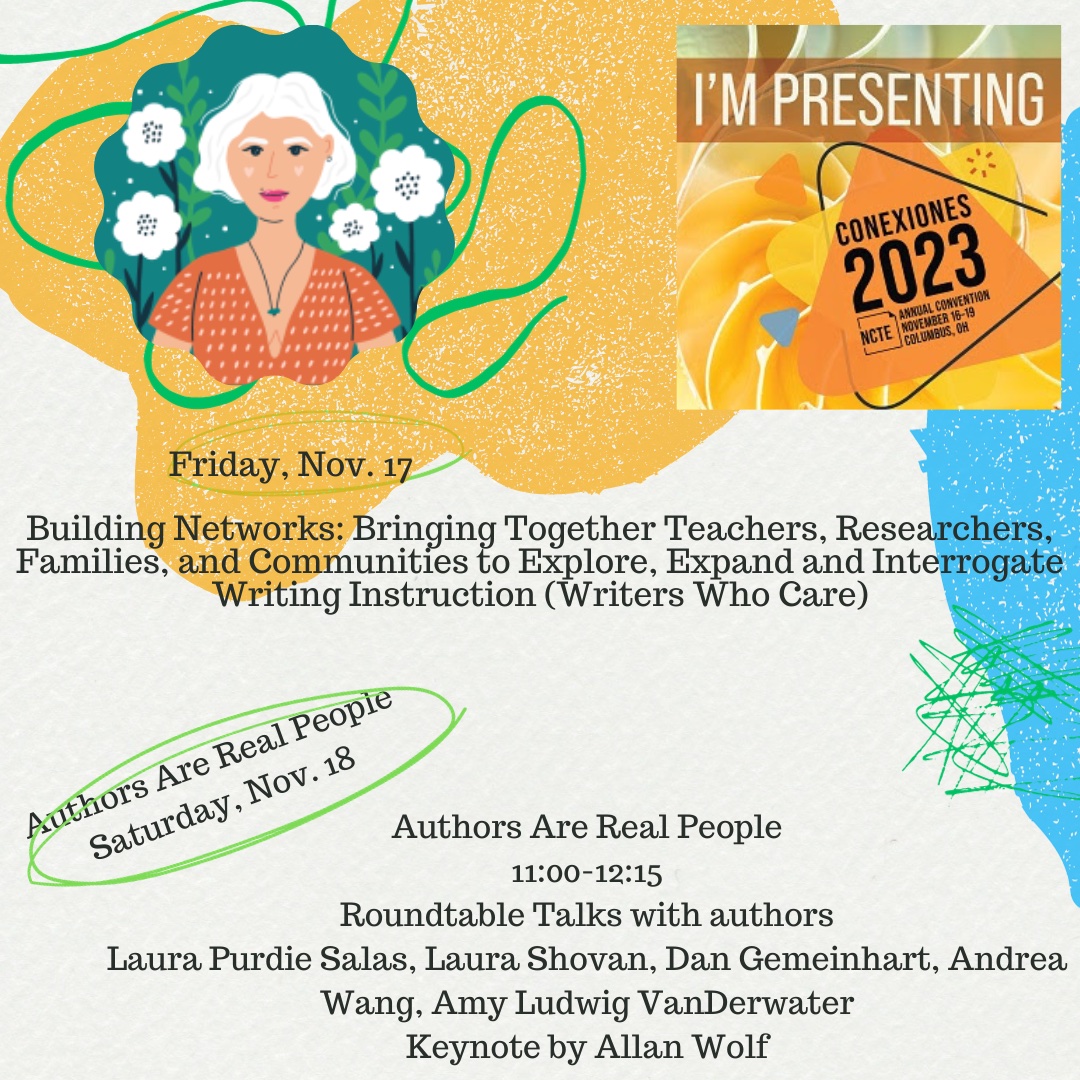
This week I am heading to Columbus, Ohio for NCTE. I hope I see you there!
The National Writing Project’s Write Out ended last Friday with the National Day on Writing. All the wonderful content is still available, and my students aren’t ready to stop writing. Yesterday we perused the site and found information about Phillis Wheatley from the Boston National Historic Park. When I was researching to write poems for my forthcoming book Were You There: Biography of Emma Wakefield Piallet, I used a line of Phillis Wheatley to write a golden shovel. I shared the mentor text with my students.
They were fascinated to try writing golden shovels, so we found a poem written by Phillis Wheatley on Poetry Foundation. We read “A Hymn to the Evening.”
Soon as the sun forsook the eastern main The pealing thunder shook the heav’nly plain; Majestic grandeur! From the zephyr’s wing, Exhales the incense of the blooming spring. Soft purl the streams, the birds renew their notes, And through the air their mingled music floats. Through all the heav’ns what beauteous dies are spread! But the west glories in the deepest red:
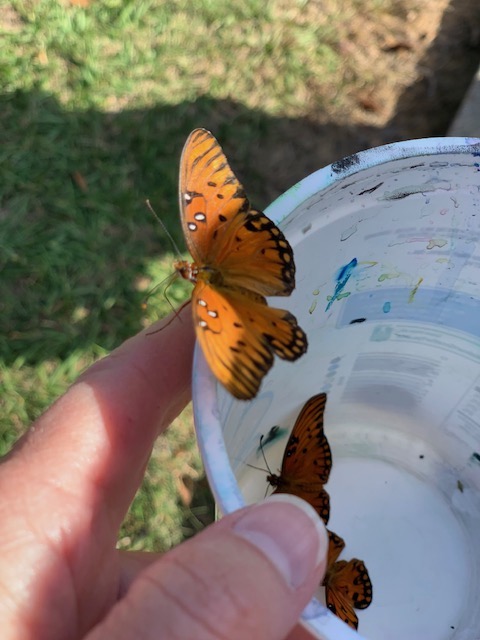
Thursday was a special day in our small room. The butterfly whose chrysalis lay on the zipper finally emerged. We were excited because it meant we could finally open the enclosure to release them all. We had four that I had been feeding with mandarin oranges from the cafeteria.
We had the privilege of watching their daily antics and marveling at their beauty. The butterflies were Gulf fritillaries. And flit they did. This breed was less tame than the monarchs we have raised before. They did not light easily on a finger. We had some exciting moments trying to catch them all. But we did and together released them into the butterfly garden. Luckily one of them hung around for a photo.
My mind and my golden shovel poem were both on this miracle of Mother Nature.
A Hymn for the Gulf Fritillary after Phillis Wheatley “A Hymn to the Evening”
Fritillary soft petals purl from enclosure to the spread of wings, flitting over streams, freedom like the birds who renew, survive and thrive singing their tender, sweet notes.
Margaret Simon lives on the Bayou Teche in New Iberia, Louisiana. She is a retired elementary gifted teacher who writes poetry and children's books. Welcome to a space of peace, poetry, and personal reflection. Walk in kindness.






 Reflections on the Teche