Feeds:
Posts
Comments

Archive for the ‘Digital Learning’ Category

Please use this button on your site for DigiLit Sunday posts

Please use this button on your site for DigiLit Sunday posts

wonderopolis logo

Wonderopolis is a wonderful site for nonfiction reading. Last year I used the site once a week with my students. I picked out the “Wonder,” and created a Wonder worksheet for the week that included other language activities. While this method worked well for me as a teacher, it wasn’t so great for my students. They enjoyed the site, but they hated the other activities. And why not, they were teacher-created. They became a burden to them rather than a learning tool.

This summer I was thinking about how to change this plan and still take advantage of the Wonderopolis site. I read this post by Tara Smith. She talked about choice. She gave her students a form to fill in with a Wonder of their own choice. What a great idea!

Last week I started classes with my gifted students. I introduced the idea of Wonder Wednesday and choosing their own Wonders. For my birthday (on Tuesday), Lani had given me a small rubik’s cube. One of my boys, Tobie, couldn’t stop playing with it. He decided his Wonder would be about how to do a rubik’s cube. He found the question on Wonderopolis! Then he watched a video. He got other students excited about learning. (I could say he distracted others with his enthusiasm.)

cube-427897_640

After watching the excitement spread, I decided to give my students the option to present their Wonder learning using technology. I will present different tools in the coming weeks: Piktochart, Canva, Emaze, Powtoon, Animoto. One presentation each nine weeks will be required.

Teaching a variety of grade levels has its challenges. Wonderopolis has given me a way to differentiate nonfiction reading, empower students through presentation, and generate enthusiasm for learning. Here is a link to my student form.

Please join the DigiLit Sunday Round-up with your link.

Read Full Post »

Please use this button on your site for DigiLit Sunday posts

Please use this button on your site for DigiLit Sunday posts

I don’t think Sunday morning is the time to launch into a research project, but when I typed “Graphic Intelligence” into the title line, I wondered, “Is this a real thing?” A quick search in Google turned up a book with the title, “Graphic Intelligence: Possibilities for Assessment and Instruction” by Barrie Bennett. Looks like this is a book all about graphic organizers from the least complex to the most.

My use of the term is not related to graphic organizers. What I am questioning early this morning is the presence of an intelligence for graphics. Not the use of a graphic organizer. In my field of gifted education, I am always trying to think outside the box, away from constraints like graphic organizers and more toward creativity. Creative problem solving leads students to deeper thinking at a higher intelligence level. The revised version of Bloom’s taxonomy puts Creativity on the top rung. Create means to put elements together to form a coherent whole; reorganize into a new pattern or structure.

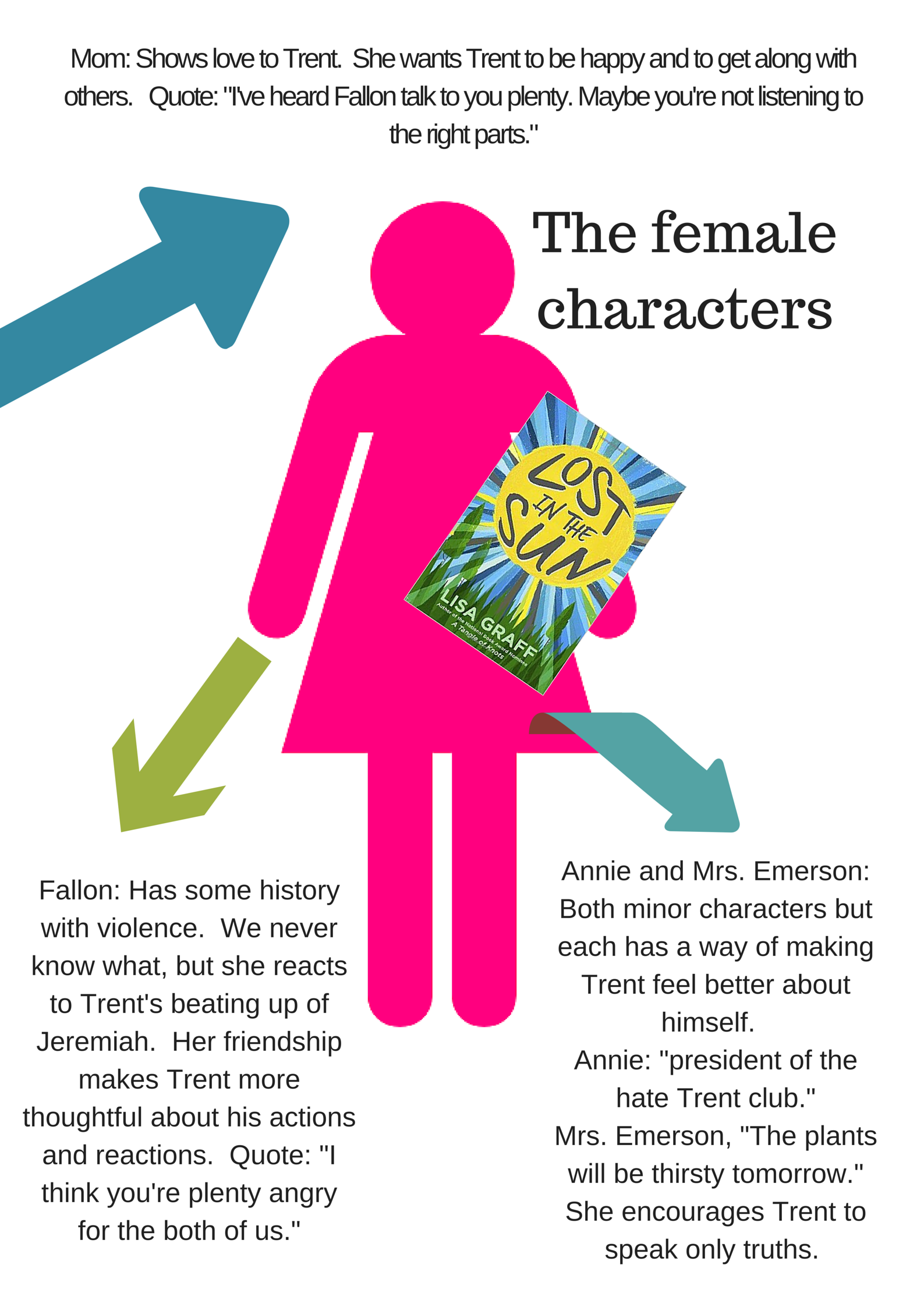
As I continue to explore writing about reading with an online group of teachers, I decided to try out using Canva to express my thoughts. Canva is a poster-making app. The site provides numurous images (many of which cost $1 to use). You can also upload your own image. I decided to use simple images and arrows. I don’t think my canva is a particulary brilliant construction, but I noted during the process that I had to synthesize my thoughts about the characters.

I could have used the well-used and time-tested Venn Diagram to compare the female characters. But if I give my students this tool, they don’t have to think beyond the comparison aspects. If I ask them to define characters in a new way using a graphic of their own making, I have now added the element of creativity to the assignment.

When I start working with my students in the next few weeks, I will show them the graphics I have made for response to reading. I hope to encourage and motivate them to try creative graphics to represent their thoughts about reading.

The female characters (1) copy

Please add your links to digital literacy posts with the button below:

Read Full Post »

Please use this button on your site for DigiLit Sunday posts

Please use this button on your site for DigiLit Sunday posts

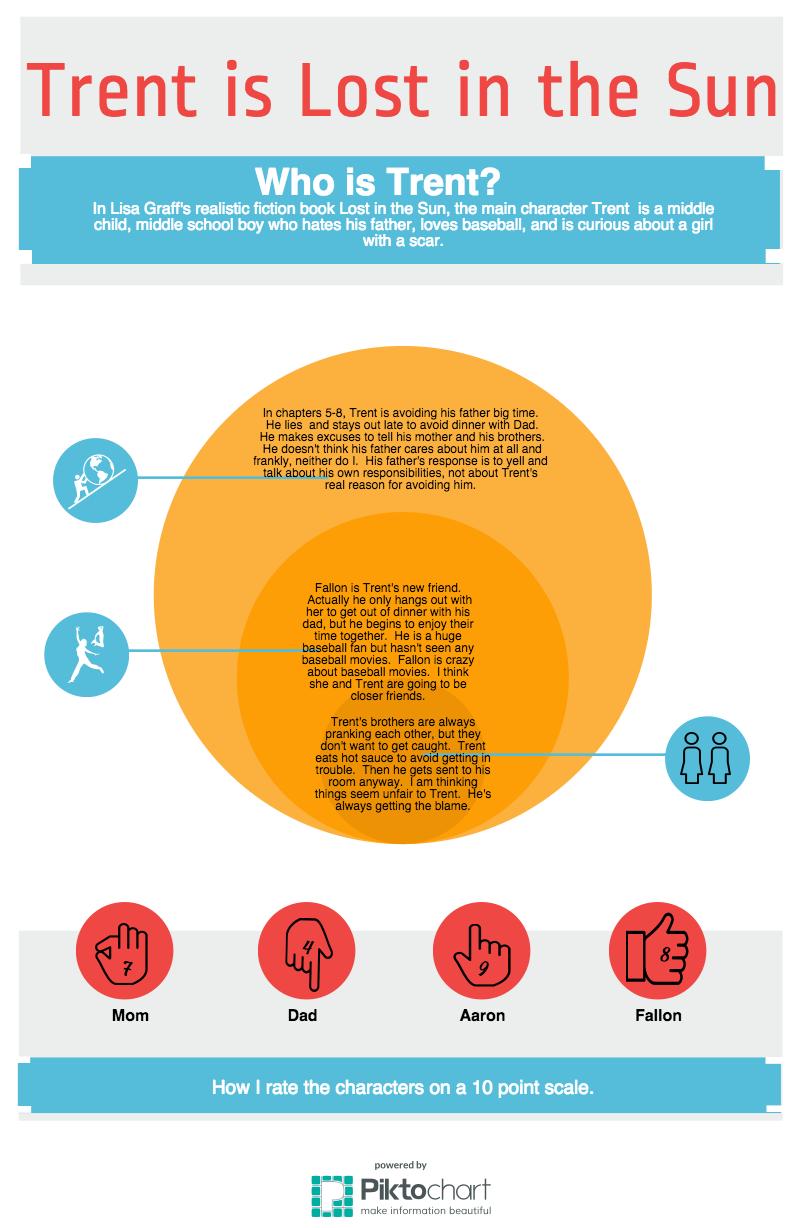
Once again I am playing around with apps to use with my students. For my reader response this week with my virtual book club, I tried using Piktochart. I have mixed feelings about the results.

Piktochart is designed for business presentations that include data. Data is not my thing. Reading and writing is. So how could I re-use this program to fit in with digital literacy?

I chose a report template from the few free ones provided. Adding in a text box was cumbersome. We have gotten so accustomed to apps reading our minds. The text box never appeared where I wanted it to go, so I struggled to move it and arrange it. I don’t think students would have as much difficulty. They tend to be more savy with a mouse.

The part I did like about this process was the motivation to graphically design the ideas. Design is becoming a big part of digital media. If we tap into design with our students, I believe we add another element to their learning and processing. Making a product to represent their response to reading is a way to authentically create digital media. I may be wrong, but I think it would take some of the chore out of reader response. I still believe strongly in choice, so Piktochart will go on my list of choices for responding to reading.

Lost in the Sun- Trent

Link up your digital literacy posts:

Read Full Post »

Poetry Friday round up at Keri's farm.

Poetry Friday round up at Keri’s farm.

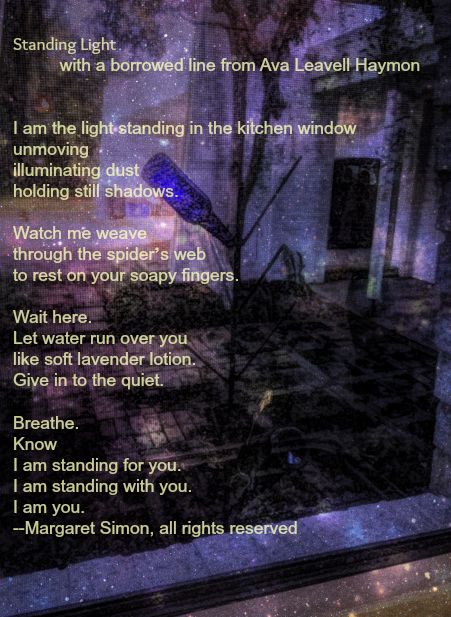
Poetry Friday is here. I always feel a sense of excitement and anxiety working on a post for PF. Today’s poem has been through a morphing of sorts. I started it in my notebook writing with my young writers camp. We stopped into our local independent bookstore, Books Along the Teche. My prompt was to steal a line from a favorite book to write from.

Ava Leavell Haymon is(was) the Louisiana poet laureate. Her latest poetry book, Eldest Daugther, was sitting near the front of our bookstore watching me and my students. I opened her up and found a line. “I am the light, standing in the kitchen window.”

I love to watch the light change from my kitchen window. This morning it illuminated a blue bottle on my outdoor bottle tree. Using PicMonkey, I altered the image and typed in my poem.

kitchen window

Read Full Post »

Please use this button on your site for DigiLit Sunday posts

Please use this button on your site for DigiLit Sunday posts

A few weeks ago I wrote about a virtual book club I joined led by Julianne Harmatz. We read A Handful of Stars and wrote using Google docs. The model worked well, so subgroups have broken off to read other books. My group is reading Lost in the Sun by Lisa Graff. Resources are popping up for teaching reading that I have not tuned in before. Something about doing what you ask students to do makes the teaching more authentic. If I write a page full of sketch notes about a book and show my students, they see that this is a practice of a reader, not an assignment by a teacher. Julianne started a padlet, and we are still adding to it. This padlet will be a go-to for me this year. I hope others will continue to add to it and build more and more resources for writing about reading. Using Google docs for teaching is new to me. It’s so easy and natural, like writing a note to a friend. In the document, we notice and note things about our reading. Everyone responds differently, and that is the beauty of it. Because I teach individual students in gifted, the accessability of a Google doc will allow them to communicate about reading beyond the walls of our classroom and our school. Using the #WabtR, we can continue the conversation and perhaps match up students book by book. The possibilities are exciting. If you are interesting in joining in on this virtual book club fun, let me know. Link up your digital literacy posts:

Read Full Post »

Please use this button on your site for DigiLit Sunday posts

Please use this button on your site for DigiLit Sunday posts

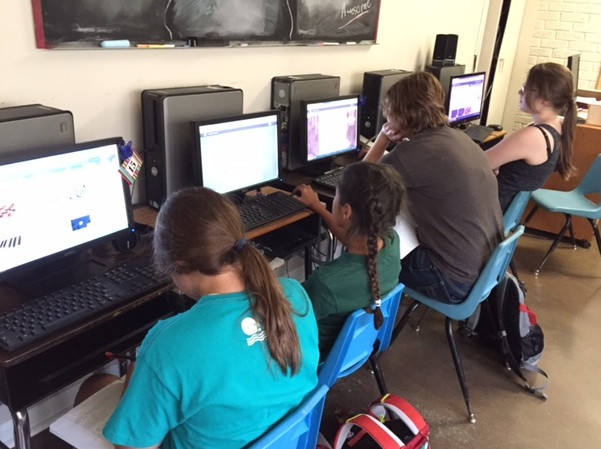
computer lab

This week I coached a writing camp. Usually space is important to me. The space we met in and wrote in was an art space, open and inviting, with pieces of folk art all around. The space felt comfortable and inspiring, not the case with the computer lab.

The computer lab was like a cave, long and dark. The AC didn’t work well, so it was warm. However, none of this mattered because once the kids got online and logged into our kidblog site, the space became as quiet as a bee hive, everyone buzzing and busy writing and commenting. When I asked the students about their favorite part of camp, the blog was high on the list. Online space is important, too.

I have not focused this week on the Clmooc make #4. The instructions were: “For this make cycle, we invite you to document, analyze and reflect on the variety of systems that influence your life personally and/or professionally. Use your creativity to document an existing system, access your ingenuity to improve an existing system or use your imagination to develop a unique new system and design a novel way to explain it.”

I decided to go back to my inquiry question, “How can I create an environment for student writing that encourages individual expression while covering necessary benchmarks?” I realized that the very act of content standards and testing is a system. So I am essentially asking about how I can hack the system. But I have to begin with research. Look at this Piktochart created by Christy Ball.

passion projects

I am only on step three, doing the research. There is no rush here. Inquiry is like that. By its nature it’s slow and should be. If I rush into it, I risk losing focus and not valuing the question.

I started a padlet. Not much there yet. So far I am focusing on creativity. That is what I feel is most missing from standards and from testing. We are creating little boxes for students to fit in to. In reality, creativity is the thing that will lead to innovation and problem solving. How can I create a creative environment for my students? How can I value creativity and project-based learning while adhering to standards? Please inquire with me. You can add comments, write your own blog post, and/or add to the padlet.

Read Full Post »

Please use this button on your site for DigiLit Sunday posts

Please use this button on your site for DigiLit Sunday posts

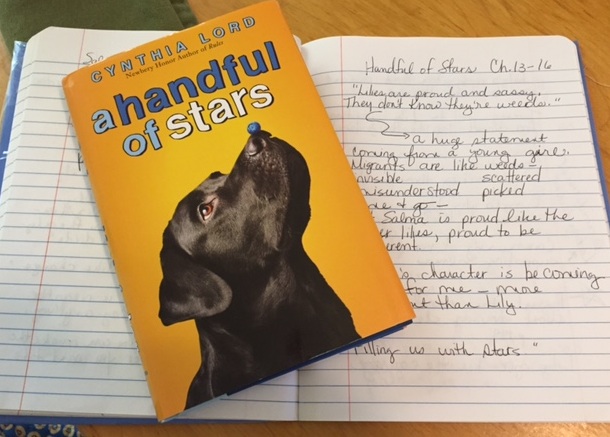
HOS journal

Twenty years ago this summer I became a fellow with the National Writing Project summer institute. That summer completely changed my ideas about teaching. In the institute, teachers were teaching teachers. There was not one guru in the room imparting knowledge. The writing workshop of Donald Graves became my own. We were all learners and teachers, collaborating, writing, coaching.

I kept this model for teaching writing all these years, but I hadn’t thought about applying it to reading. This week I have participated with an amazing group of teachers in a cyber book club around Cynthia Lord’s Handful of Stars. I was not intimidated about joining in because I had already read the book once. Also, my friend Julianne Harmatz was spearheading the project, and I wanted to support her efforts. I had no idea that it would change my entire philosophy about teaching reading.

Because I teach elementary gifted students at varying grade levels, I have to create an individualized plan for my students. A few years ago I read Aimee Buckner’s Notebook Know How and implemented reader response notebooks into my curriculum. I have gone from requiring three responses a week to requiring only one. After this week, I think I know what has been missing. Note-taking.

As I was reading Handful of Stars, in order to be ready to write my response for the group, I took notes. I found myself writing down quotes. Quotes that spoke to me. Quotes of wisdom. Quotes that showed a change in the character. Here is a sample of my writing from a quote.

“People want us to come and work, but they want us to be invisible.” Whoa! Similar to the quote above about change. Being invisible is how so many racial and socio-economic prejudices play out. Maybe if we ignore them and go our own way, no one will really notice. Like that damned flag. We need to be having these conversations, as tough as they may be. We need to make the invisible, visible. All lives matter!

I was surprised at what this quote bubbled up in me. Writing fleshes out and helps you understand more fully yourself and your response to text. This is a powerful realization for me. I have felt that my reader response assignments have been just that, assignments. Now that I have experienced writing about reading in such a supportive environment, my passion for noticing and noting has grown. I will be more intentional about the note taking during reading.

All of us in this group of teachers have experienced revelations such as these. I learned about tools such as a pressure map for the main character and a what I know/what I wonder chart. I have new tools in my tool box and a fresh outlook on reading workshop.

Julianne created a game for finding quotes in a book using an Uno card game. Take a look at it here.

Our group will be having a Twitter chat on Tuesday at 7:30 PM Eastern using #WabtR. Join us and see what new thinking arises. Working with a group of like-minded and dedicated teachers has fueled me this summer. I have so many new Star Friends!

Link up your Digital Literacy posts here.

Read Full Post »

Please use this button on your site for DigiLit Sunday posts

Please use this button on your site for DigiLit Sunday posts

Six Words

The National Writing Projects’ summer collaborative learning began this week.  So much is going on, it’s hard to believe we are just one week into the CLMOOC.  Read the reflections here. 

If you are here for the first time, I want to invite you to join the DigiLit Sunday community.  Each week we post about digital literacy.  The link up will be at the end of this post.  Leave your link so we can learn together and support each other in this wild digital world.

Clmooc has taught me that there is too much out there.  I get stimulation overload.  I don’t know how the camp counselors can keep up.  They seem to be incredible multi-taskers.

To manage my own participation, I’ve selected only a few games to play.  The theme this week was introducing yourself by not introducing yourself.  Not exactly.  It was more a call to remix the typical introduction.  We also explored what un-introduction really means and says about a person.

Above I’ve posted a slide I created in a Google slide share by Sheri Edwards.

What six concepts shape you as you shape them? Challenge: Consider your beliefs. Using six words, arrange them as phrases read horizontally and vertically to express an essence of your identity.

This week I’ve been attracted to activities that revolved around words.  I posted an unintro poem for Poetry Friday.

I played with images, too.  Here’s a remix of a free graphic of Saturn.

Image made on LunaPic with free graphic of Saturn.

Image made on LunaPic with free graphic of Saturn.

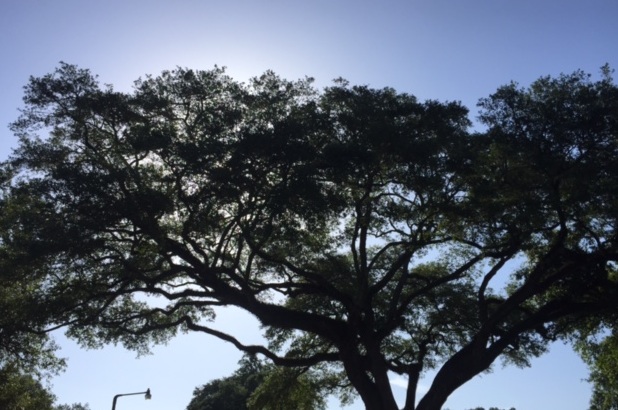
Kim Douillard offers a photo challenge each week.  This week the challenge was #sky.  Where I live the sky is often covered by the magnificent spread of live oaks.  The oaks guard the sky and protect us.  The hot sun is shaded and tamed.  My image is not altered because this is what it is.  Mother oak.

sky with tree

There have been questions about invitations and how we welcome others into the community.  I have not struggled with feeling welcome.  This is a large group.  We are all individuals playing around with technology and creativity.  We express ourselves in unique and fun ways.  I am looking forward to the weeks to come.  I’ll play and stretch and find new friends, but I’ll also tuck away new ideas for my teaching.

How can unintroductions work with my students?  If anything they will add an element of fun and creativity.  But at best, my students, like me, will discover a little more about who they are and how they best interact in this cyber-world.

Read Full Post »

Poetry Friday round up is hosted by Carol.

Poetry Friday round up is hosted by Carol.

I have joined the summer PD of CLMooc. Feeling my way through, I have found that poetry inspires many. Poetry is a way we can express our identity. The first make cycle prompted us to “unintroduce” ourselves. Some have taken the prompt to unidentify yourself and made poetry. One participant made a black out poem of the initial email. Another instigated a poem in response to Charleston.  This community is responsive, reflective, and real.

Michelle Stein posted this prompt:
“Please follow this link and add your verse if you feel so inclined. My unmake follows these steps. Please do the same when adding your verse.
1. Randomly choose a word for each letter in your name.
2. Add a verse to this narrative poem, using each word you have chosen as the focus of a sentence.
3. Revel in the awesomesauce that is CLMOOC.”

Being one who is attracted to poetic prompts, I gave this one a try. I made a private deal with myself that I would use the first word that came to mind. This created a random word list.

Margaret

Mystic
Appetite (I must be hungry, as usual.)
Reservoir
Give
Astrology
Ring
Even
Trial

In the mystical distance,
an appetite for goodness makes
the reservoir of kindness grow.
Give your heart to life.

Astrology tells us that stars are wise.
Those rings of Saturn resonate light.
Even the universe proclaims pure joy.
No matter the trial, I show up. Ready.

Image made on LunaPic with pixabay free graphic of Saturn.

Image made on LunaPic with free graphic of Saturn.

Read Full Post »

Please use this button on your site for DigiLit Sunday posts

Please use this button on your site for DigiLit Sunday posts

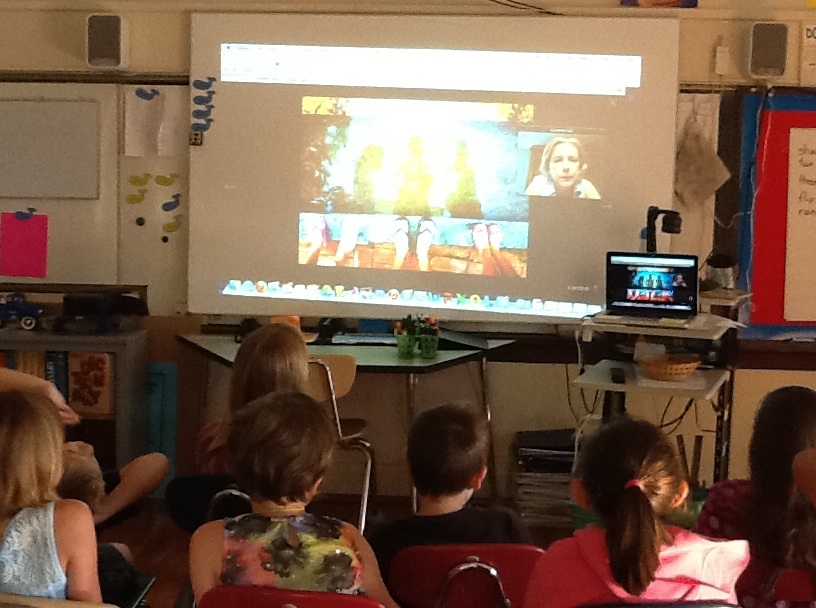
skyping with spark kids

Technology allows us, invites us even, to collaborate more and more. No longer am I a lonely teacher behind closed doors of a classroom. Through my PLN (Professional Learning Network) on Twitter and Facebook, I have met colleagues. Teachers are doing the every day thing in innovative ways. Months ago, Leigh Anne Eck tweeted me about helping with her high ability camp. She was teaching poetry. I Skyped with a group of 2nd and 3rd graders this week. What fun! I didn’t have to care at all about the boy who wiggled all around in his seat and started drumming with his pencil. That’s my kind of teaching. I was on screen far away in my own living room.

Leigh Anne shared the student work and her thoughts about the collaboration on her site A Day in the Life.

The haiku lesson itself was a collaboration because I used another colleague’s poetry project. Linda Baie blogs at Teacher Dance. We’ve never met face to face, but every week we are in contact through our blog posts. She’s one of my top commenters. Her poetry project in April was to write a haiku each day. She catalogued them on her site.

I am encouraged by this collaboration to look for ways to use Skype more in my class during the year. We’ve had author visits. These are great, but what about connecting with other teachers and students? We could Skype a whole hour lesson and share our writing together across the miles.

This next school year, I will have two 6th grade girls at two different schools. I am wondering how I can use collaboration to make their world bigger and more meaningful. Through Kidblogs, we could create a site just for them. If you know you will have high ability sixth graders next year, maybe we could collaborate on a book or writing prompt. Let me know in the comments.

In what ways are you collaborating using technology? What ways do you plan to collaborate? Link up your blog post and/or tweet out your response to #digilitchallenge and @MargaretGSimon.

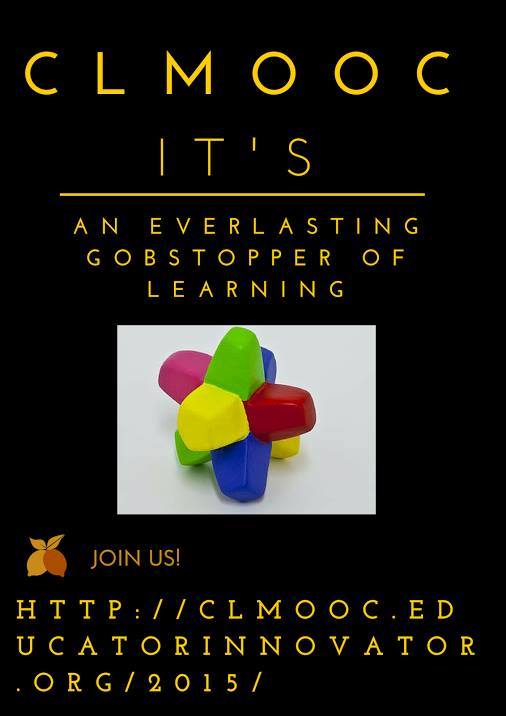
For the next month, DigiLit Sunday will be on vacation. Please consider joining CLMOOC.

Sign up for CLMOOC running June 28- August 2, 2015.

Sign up for CLMOOC running June 28- August 2, 2015.

Read Full Post »

« Newer Posts - Older Posts »