Feeds:
Posts
Comments

Archive for the ‘Digital Learning’ Category

Please use this button on your site for DigiLit Sunday posts
Find more celebration posts at Ruth’s blog.

Some weeks call for combination posts. Today I am celebrating story in my DigiLitSunday post.

I am privileged to be in a family of writers. After her retirement as a district judge, my mother-in-law started writing crime novels. In each of her books, she fictionalizes actual cases that came across her bench in the courtroom. Sunday I am hosting a book signing for her third book, Blood of the Believers.
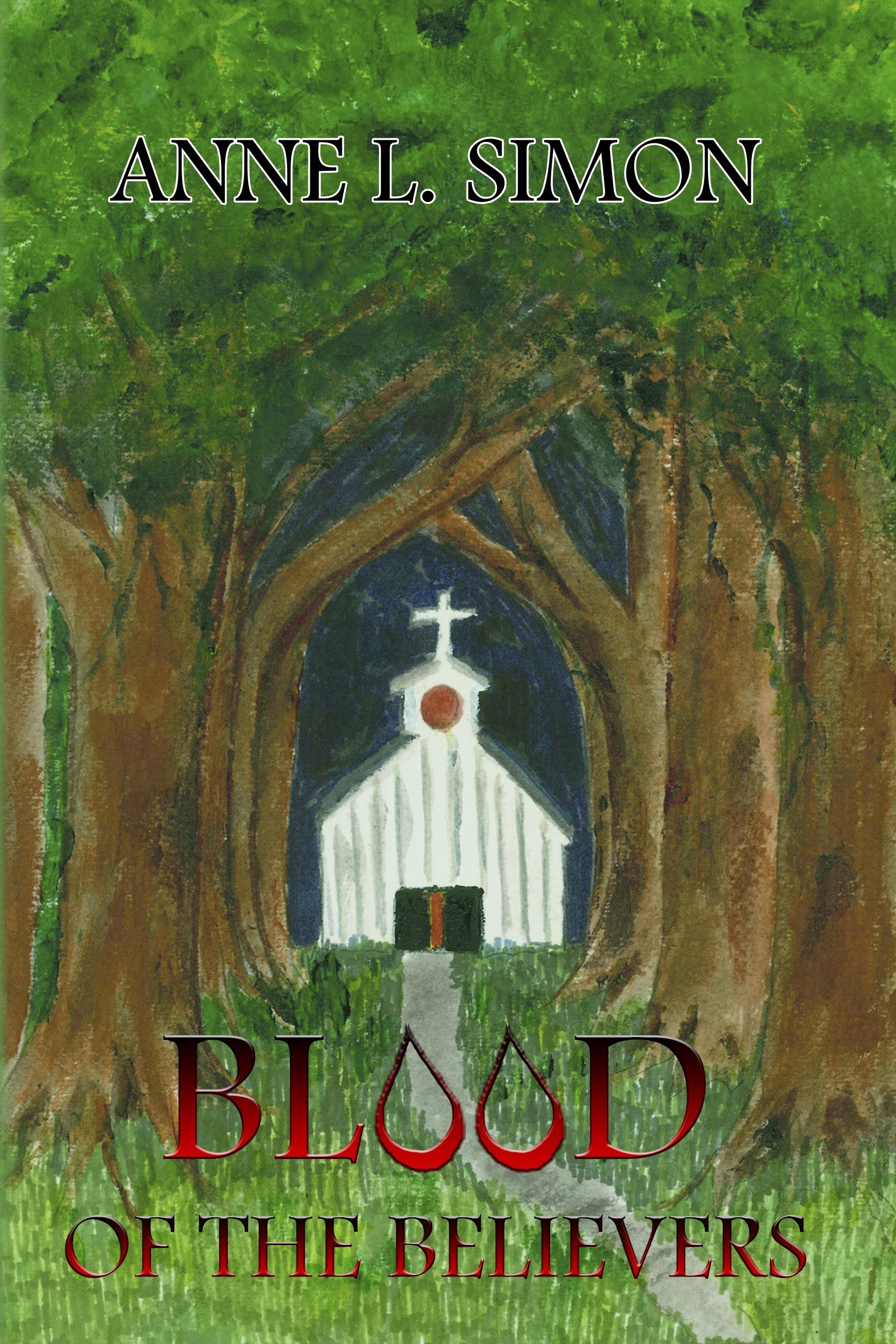

In this book, Detective Ted D’Aquin is struggling with the disappearance of his wife. But after a year and a half of leave from the St. Martinville Sheriff’s office, he returns to investigate two homicides. I know from my mother-in-law, Anne Simon, the parts of the cases that are real and which ones she made up. Sometimes real life can be crazier than fiction.

Reading her latest book, I could hear her voice. Even though she was writing as a male character, some of her ways of saying things came through. The average reader may not recognize these idiosyncrasies that our family lovingly calls “Minga-isms.” (Minga is her grandmother name.)

My father has published his first novel, Into the Silence. He’s been writing this book since 1975 when I was still a young teen. I encouraged him to get it published with my friends at Border Press. He will have a book signing in my home town of Jackson, MS at Lemuria Books on June 16th at 5:00.  Diane Moore wrote a glowing review on her blog, A Word’s Worth. 
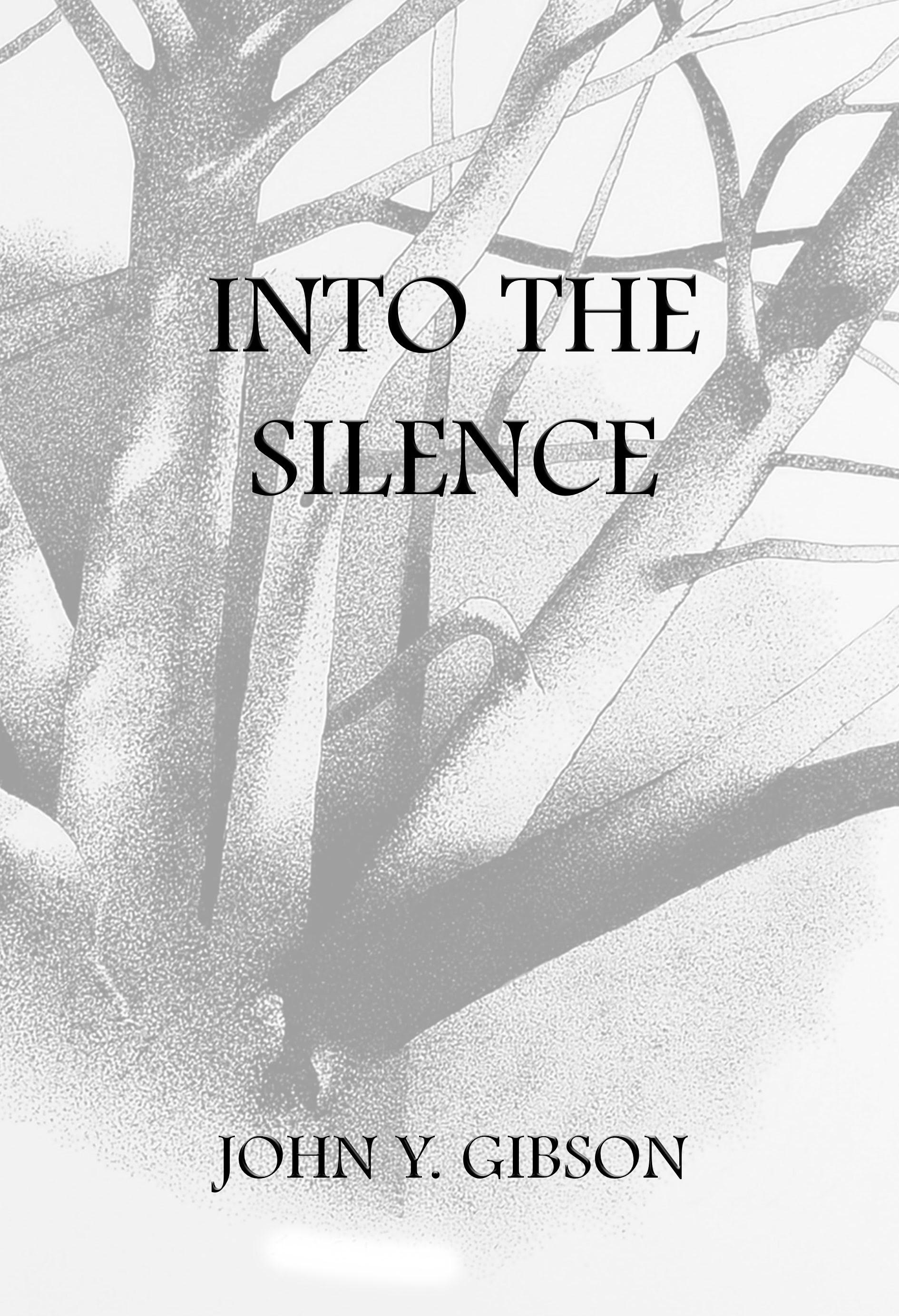
When I was home last weekend, I got one of the hot-off-the-presses copies. I read furiously, couldn’t put it down. The protagonist is Todd Sutherland, a cardiologist, but to me, he is my father. Dad admits that he wanted to be a cardiologist. He was a radiologist by profession. Interspersed in the story of how Todd falls in love with one of his patients and is faced with her certain death are parts of my father’s life story, the death of his own father to Parkinson’s and his intense study of shamanism, Greek literature, and theology. The fictional story is intriguing, but I will hold on to the parts of my dad that live on in this story.

Why do we write? For both my mother-in-law Anne and my father John, they write to reveal the deepest parts of themselves while creating a strong compelling story. I am blessed to be among such mentors.

If you have stories about stories, please leave a link below. Click to read more DigiLitSunday posts.

Read Full Post »

Please use this button on your site for DigiLit Sunday posts

My email inbox is filled with ways for me to improve myself from reading recommendations to Enneathought (how to improve my personality and spirituality) to Choice Literacy.  It was this month’s Choice Literacy email that caught my eye and my idea for this week’s DigiLit topic.

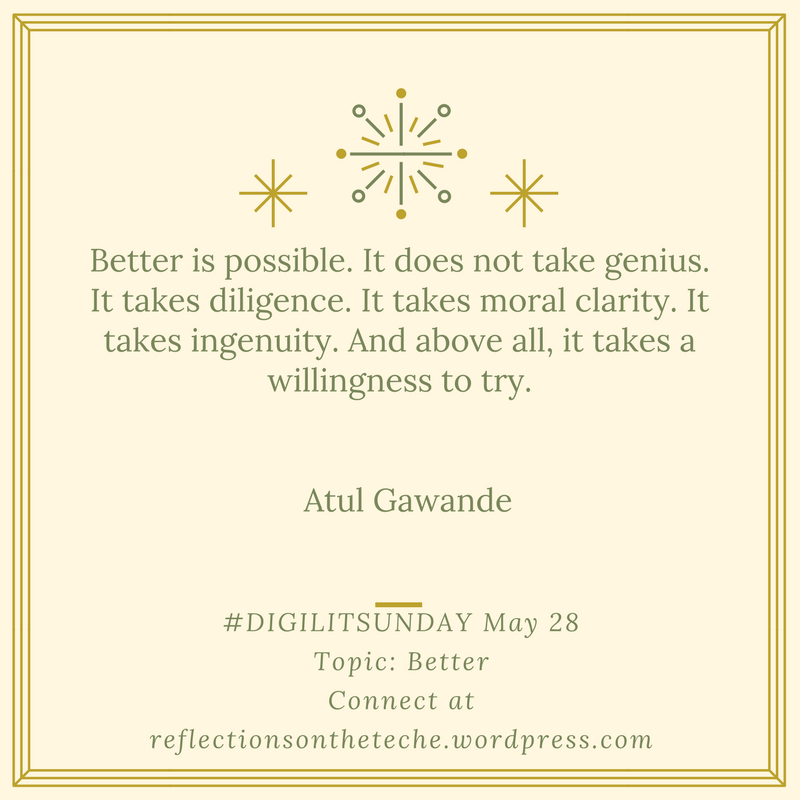
This quote from Atul Gawande was the epigraph to Matt Renwick’s letter.   Quoting from the Gawande’s book Better: A Surgeon’s Notes on Performance, Matt outlines 3 ways for us to be better as teachers.

  1. Don’t complain
  2. Write something
  3. Change

These three directives immediately resonated with me.  This school year has ended, and I was having lunch with a colleague in our gifted department.  She said, “We have to do better next year.”

We then began a long discussion of how we could.  One way is we are going to meet together even if we don’t get paid.  As the years have gone by, the education budget has gotten smaller and smaller.  We were once able to meet weekly to plan for the next year and get a stipend.  Does the stipend matter?  Not when we are talking about doing our best for the kids.  We will meet anyway.

I am reading Dynamic Teaching for Deeper Reading by Vicki Vinton.  Vicki challenges our current thinking about the teaching of reading.  She calls for a change to embrace reading as the complex act that it is and teach the whole child-reader. I am convinced this book will not only improve my teaching, it will improve me.

The only way to make sense of change is to plunge into it, move with it, and join the dance. –Alan Watts

Summer break is a time to rejuvenate and renew what we believe about our own lives as well as our selves as teachers.  This year was my thirtieth year in education. Yet, I’m not best yet.  I continue to talk, write, and change to meet my own needs and those of my students.  Won’t you join me in doing the same?

Please add your links below.  Click to see more posts about Better.


Read Full Post »

Please use this button on your site for DigiLit Sunday posts

I didn’t tweet out a topic for DigiLit this week because I’m in an end-of-the-year funk. In some ways I’m ready for this school year to close. I’m tired. I want to have time to relax, read, write, visit my parents, etc.

However, this time of year sends me into a sadness that I don’t really understand. The classrooms around me are loud. The teachers are out in the halls talking. Announcements over the intercom are warnings about the things we teachers need to turn in. Learning, questioning, quiet reading have all stopped. This week brings award ceremonies, splash days, and early dismissals. It’s time to pack up and put everything away for the yearly floor waxing.

“The classroom is so empty!”

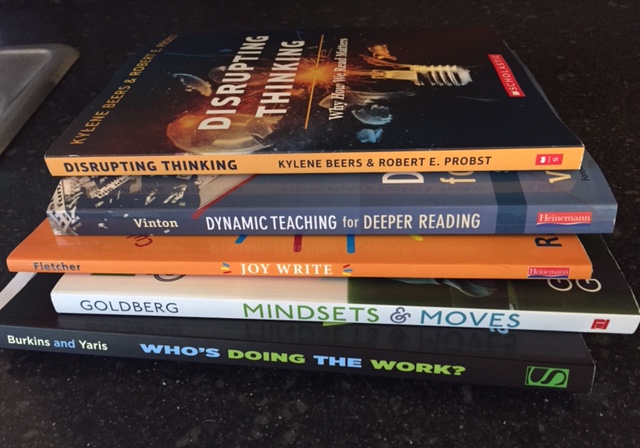
While I was packing up, I filled a bag with books to take home. Some are middle grade books I haven’t read, a few poetry books to inspire my writing, and professional books I haven’t gotten around to reading yet.

Cathy Mere and Michelle Nero lead a Cyber PD each summer. I didn’t join in last summer because I was traveling a lot. But this summer I’m ready. They are asking teacher bloggers to share their professional book stacks on the Google+ #cyberpd page.

Michelle’s post here explains how to participate. They will announce the chosen book on June 3. The reading and posting will happen in July.

If you are writing a post today, please link up. If you are reading my post, please click the link to read more #DigiLitSunday posts.

Read Full Post »

Please use this button on your site for DigiLit Sunday posts

The end of the school year came too quickly this year. The Two Writing teachers blog series, however, helped prepare me for the inevitable- summer writing slide. Kidblog.org published this blog post of mine around summer writing.

The gifted program in my district has always recognized the need for summer reading.  We carefully choose a list of books and send home a required reading packet.  Last year we tweaked the requirements and the kids actually responded that they enjoyed doing the work.  The packet was designed around choice and activities that were interesting and motivating.

What about summer writing slide?  My students actively write every day of their time with me.  Will they keep writing over the summer?  Not likely.  So I took it upon myself to encourage summer writing.

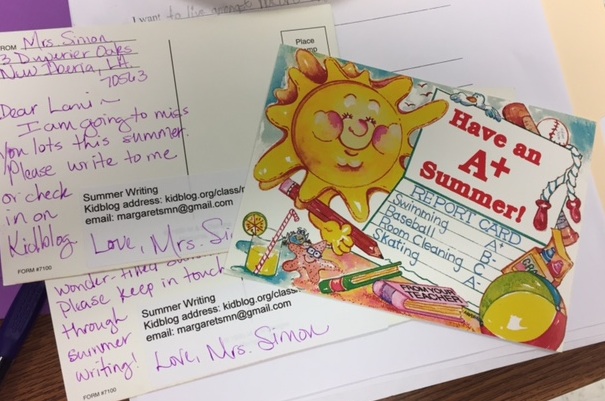
I found a stack of summer postcards in my endless supplies of teacher stuff.  On each card, I placed a label with our kidblog site address, my home address, and my email address, three different ways my students could keep in touch over the summer.

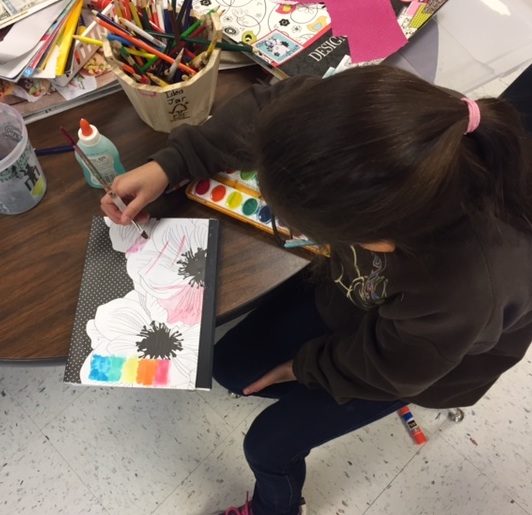
Friday was our last official day together as these last two weeks are full of end of the year activities.  I brought out marbleized journals.  We start the school year decorating a journal for the year, so why not close the year with decorating a summer writing journal?

Have you started thinking about summer slide?  What are your plans?  Share your blog posts in the link below.


Read Full Post »

Please use this button on your site for DigiLit Sunday posts

On Monday evening, I participated in #Wonderchat on Twitter.  The topic was led by Dr. Mary Howard: Instilling a Sense of Professional Wonder. If you are here reading this post, you are likely a person who wonders, reads, researches, and is always learning.

We are nearing the end of the school year and yet, I am still filled with professional wonderings. Three new books have arrived in the last few weeks, Dynamic Teaching for Deeper Reading by Vicki Vinton, Disrupting Thinking by Kylene Beers and Bob Probst, and Joy Write by Ralph Fletcher.

If anyone is interested in a summer book study of one of the books above, let me know in the comments. Wouldn’t it be more fun to read if you have someone to discuss it with? Google docs work well for housing a book study.

Why do I keep buying professional books? You’d think I would know what I was doing after 30 years of teaching. But I am still learning. I want to continue to question what I do and why I do it. I think that is the definition of a professional. When I stop wondering about teaching, I should stop teaching.

During the #Wonderchat, Sarah Eaton posted a padlet for teacher wonders. I remade the padlet wall to house our posts today. (A test run for using padlet for the round up.) Double click inside the padlet to add to it. In addition to voicing our professional wonders here, perhaps we can also post ideas and links to further research. Be sure to put your name and a link to your post, so we can continue the conversation.


Read Full Post »

Please use this button on your site for DigiLit Sunday posts


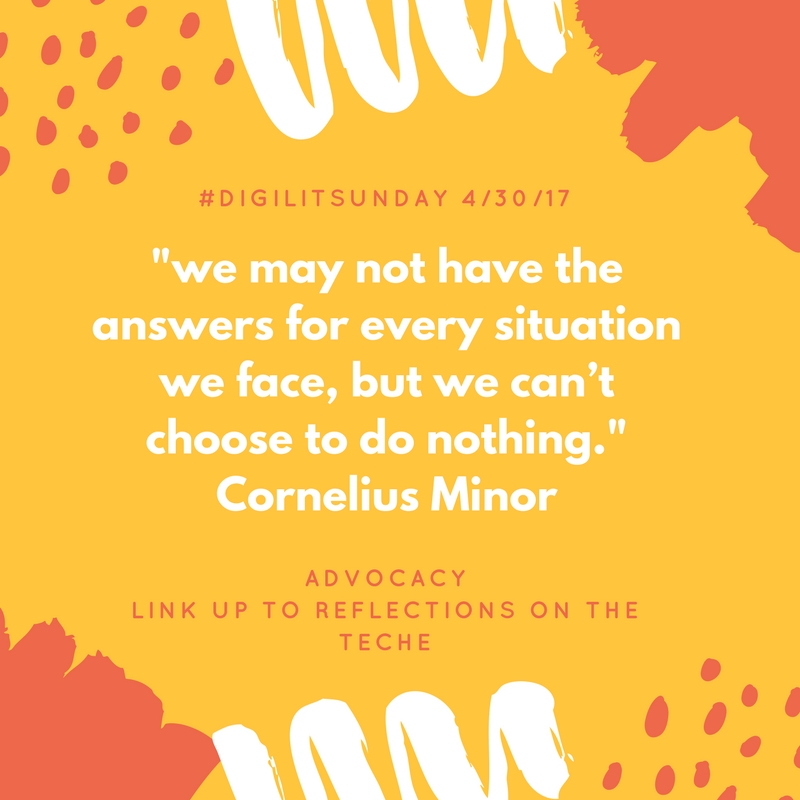
Cornelius Minor is one of those people who tells it like it is, and you say to yourself, “Oh, yeah.”  I was first impressed by him at NCTE16 in Atlanta when he spoke about the influence of Donald Graves at the Heinemann breakfast.  I captured a quote from him that morning, “We do not teach for mastery. We teach for revolution.”

Cornelius is the kind of man you could walk up to and on the first meeting hug him. He represents what I want to be.  Someone who speaks up.  Someone who loves with all that he has.

This weekend I listened to a podcast with Cornelius on the Heinemann website.  Please take some time to listen.  He speaks of being an advocate for a student who needed him.  In his voice, you can hear his determination as well as his kindness.

I think sometimes we teachers shy away from advocacy for our students for many reasons.  The main one is fear.  Fear of repercussions.  Fear for our own reputation. Fear of failure (or firing).

At that same breakfast we were asked to create our own credo for teaching writing.  (Here is the podcast of that morning.) The statement I wrote encompasses my thoughts about advocacy.  We must listen to our students.  We have to listen without judgement.  Listen to be the best advocate we can be for them.


On Thursday evening, Cornelius Minor will be a guest on the Good2Great chat on Twitter.

To join our conversation, please leave a link to your blog post below. To read more posts about advocacy, click the link.

Read Full Post »

Please use this button on your site for DigiLit Sunday posts

I’m one of these people who believes that every day should be Mother’s Day or Teacher Appreciation Day or Earth Day.  But these annual celebrations serve a purpose.  They remind us that we need to stop and think about Mom or your teacher or the Earth.

As a teacher, part of my responsibility is to teach the truth.  I believe in Science.  Scientists are trained, dedicated people who care deeply about the world.  I know them.  They do not make things up.  One sign I saw online from the March for Science said, “Sometimes the truth is inconvenient.”  That does not mean that it is to be denied or disregarded.

In my area of the Earth, wetlands are disappearing at a rate of a football field an hour according to the US Geological Survey. Because of science, data, environmental agencies, and yes, federal funding, this trend is turning toward the positive.  When we pay attention, change can happen for the better.  We need our wetlands.

In Louisiana, wetlands have come into the limelight.  Educational programs help teach our students about their own home.  Education about the environment can begin in your own backyard.

Next week I am taking a student to meet with a water testing chemist just down the street from our school.  A few months ago, my students met with a naturalist about an oak tree in our area.  They learned about the importance of preserving our oaks.

I did not join the local March for Science, but I am being intentional about how and what I teach my students.  They are the future stewards of our Earth.  It is our responsibility to make them care.

I am writing poetry every day for National Poetry Month.  Today I wrote an ode to the Earth.  I used pictures from my files to create an Animoto video.

https://animoto.com/play/up5iJ1fieqCgp4gBWcu0DQ


If you are joining the conversation, please add your link below.


Read Full Post »

Please use this button on your site for DigiLit Sunday posts

In my classes this week, I introduced the ABCs of poetry. We have written a poem everyday using a different poetic form. My partner for two of these exercises was Read, Write, Think. This amazing site full of lessons for teaching reading and writing also includes student interactives.

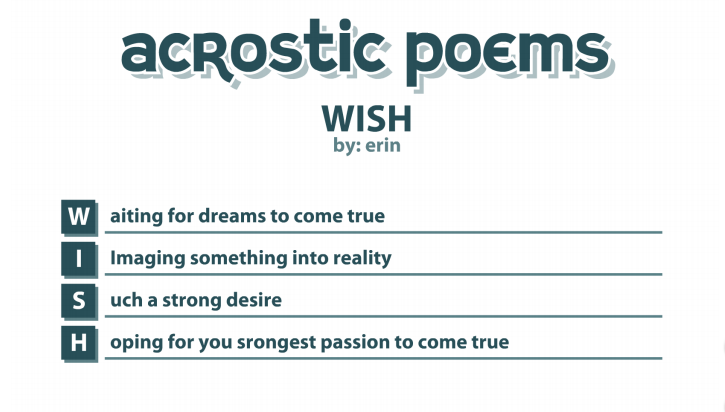
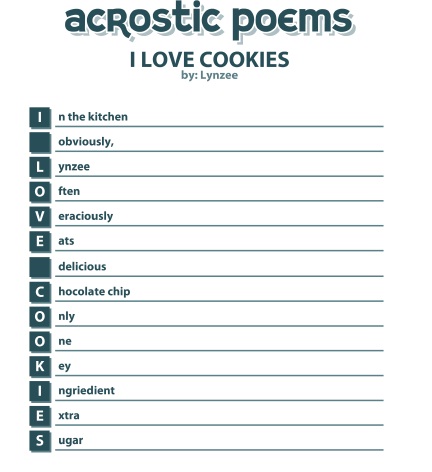
For the letter A, we used this one for Acrostics. My students had free choice for the words they chose to write about. The interactive allows for brainstorming and also gives word suggestions. The final form appears as a downloadable pdf. I taught my students how to take a screenshot of the pdf, paste it into paint, and save as a jpeg. They uploaded their jpeg images into our Kidblog site.

Two very different poems above. Erin is a fifth grader. She’s been going through a rough time lately, so I gave her a wishing rock inside a prayer pouch that I had crocheted. Her poem grew from her strong desire to have her dreams come true.

Lynzee was writing from the moment. I had brought in left over cookies from a writing group meeting. She chose chocolate chip and this moment became the subject of her poem. Don’t you love the word voraciously? She is such an avid reader that her vocabulary is advanced. She loves using new words, and I enjoy our conversations about them.

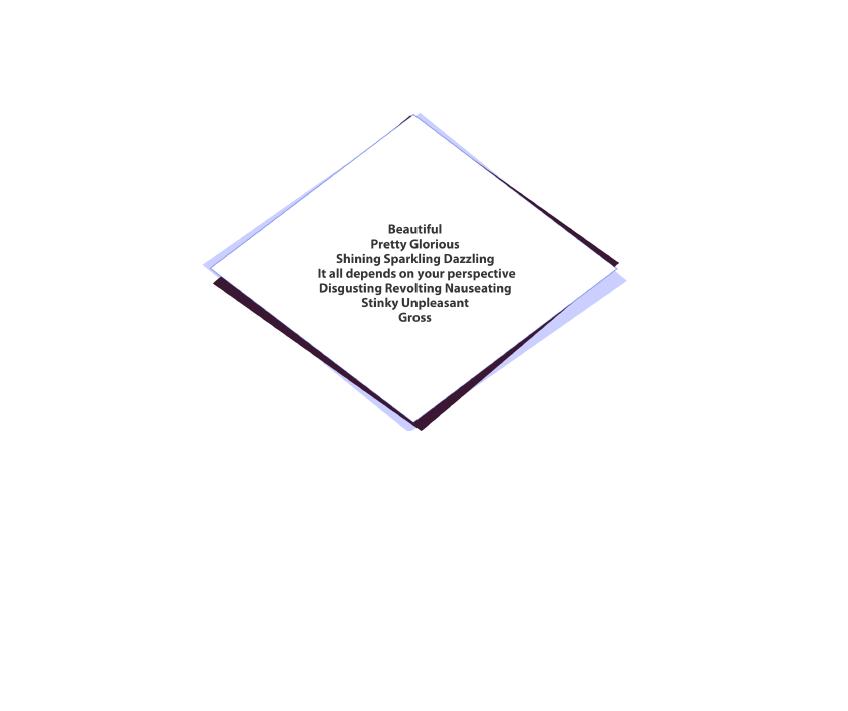
Another interactive we used this week was for diamante poems. In this form, my students selected antonyms or nouns that had near opposite meanings. Like acrostic, this form allows students to explore word meanings. They looked for words that were specific to their chosen noun.

Lani, 5th grade, wrote honestly about her feelings around life and death. Andrew was reading a book entitled “Gross Science” so his poem explored the difference between beautiful and gross. We talked about how each one depends on a person’s perspective.

I hope you will consider playing with language by using these interactives from Read, Write, Think. Happy National Poetry Month!

If you are writing a DigiLitSunday post, link up below.

Read Full Post »

Please use this button on your site for DigiLit Sunday posts

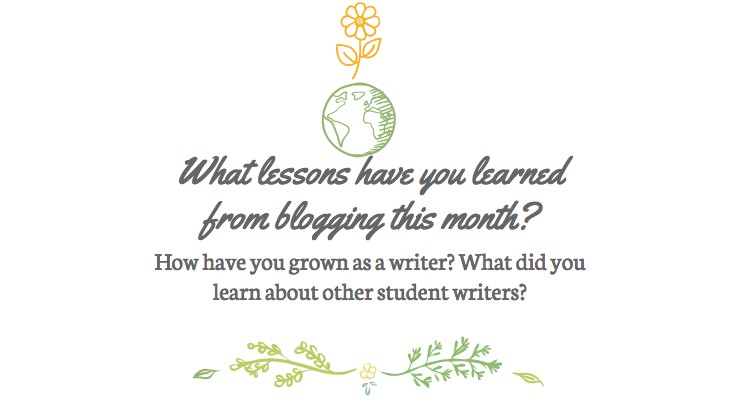
Do your students ever ask, “Why are we doing this?” Friday we celebrated the completion of the March Slice of Life Story Challenge. Kathleen from Two Writing Teachers shared a Google Slide Show in which she posed these questions to student bloggers:

I discussed these questions with each of my class groups. Sometimes I wonder if my students really understand why we do this. I can see the benefits daily. Each day, they try to do better, write more, and add more craft into their writing. But it’s more than that. They grow as human beings, too. They share a piece of who they are and who they are becoming.

Noah said, “I learned that when you write on the blog, you are showing other people who you are.”

Sometimes these are hard lessons. These kids are at an age where they are still figuring it all out. They try stuff. They write things that may not be true to who they are or want to be. This blog space becomes a safe place for them to express whatever is on their minds.

Erin said she has learned to be more open. Kaiden has expressed emotions through figurative language. And even Tobie said he learned he wasn’t so bad at poetry.

With all the balking about writing every day and even the multiple posts of things like Google tricks, writer’s block, and “Idontevenknowwhywearedoingthis” posts, my students grew as writers and as people making their way in the world. I am grateful to the Two Writing Teachers, especially Kathleen and Lanny who led the classroom challenge. Another year down and many lessons learned.

I am sharing Kaiden’s clever poem about writer’s block.

A vacuous screen

filled with a picture

of a polar bear

in a snowstorm.

Snow swirling,

chills sinking

into your skin

in this winter wonderland.

Place your links for DigiLitSunday below:


Read Full Post »


Slice of Life Challenge

Join the Two Writing Teachers blog for the Slice of Life Challenge.


Please use this button on your site for DigiLit Sunday posts

In my teaching, reflection is important to me.  Not on purpose, really, but as part of my nature. I mull over things.  I wonder out loud and silently.  I talk with colleagues.  I also participate in a Good2Great Voxer chat.

Good2Great teachers are continuously reflecting.  We are always engaging in conversations about our teaching practice. One evening last week, Trevor Bryan and I got into a conversation about the writing process.  He made me think when he said, “The writing process is a creative process, and in the creative process, artists and writers are always making bad work.  Something that doesn’t work is part of the creative process.”

My burning question was born from this conversation.  “How do we honor the process of writing?”

Blogging is a huge part of the writing process in my classroom.  I’ve contended that by writing every day on a blog, my students’ writing grows and improves.  I still believe that, but I’m not sure I honor the mulling, the brainstorming, the idea gathering.  I have stressed to my students that they are writing for an audience.

Jacob decided to write about the movie Moana for his Slice.  When I read his post, he was telling the story of the movie…the whole movie.  He said, “This is only one third of the movie.  I can make more posts.”

Of course he could, but would anyone want to read multiple long posts retelling the Moana story?  I posed that question to him and immediately felt a pang in my gut.  I wasn’t honoring the process.  I was thinking only of the product.  I realized that maybe by writing this whole story, Jacob would learn about writing dialogue.  He would learn about a story arc.  And he wasn’t writing from a book he read.  He was writing from a movie he watched.  He would have to create the actions with his words.

How often do we stifle our young writers?  I know they need to practice.  They need to write often.  But who am I to tell them they must produce a worthy product every time?  As a writer, do I?  Not at all.

Sometimes students do not need to write for an audience.  I will continue to reflect on this question and watch myself more carefully.  Honoring the process is as important, if not more important, that celebrating the product.


If you are joining the DigiLit conversation today, please link up.

Read Full Post »

« Newer Posts - Older Posts »