Photo by Juan German, provided by Janet Fagal. East side Onondaga Lake in Syracuse, N.Y. 2002.
Today’s photo is obviously more professional than the ones I usually post from my own iPhone. Janet Fagel sent this photo from a photographer friend. Such a rich photo to focus on. Being in New York, it is most likely sunrise. I see some paw prints in the snow. The tree’s shape is intriguing. What will you find here?
I’m still on my elfchen a day kick, but feel free to write any small poem form (or free verse) that comes to you. The important thing is to write and share and respond.
Willow unburdened, bent leans to light reaching for its offer Life
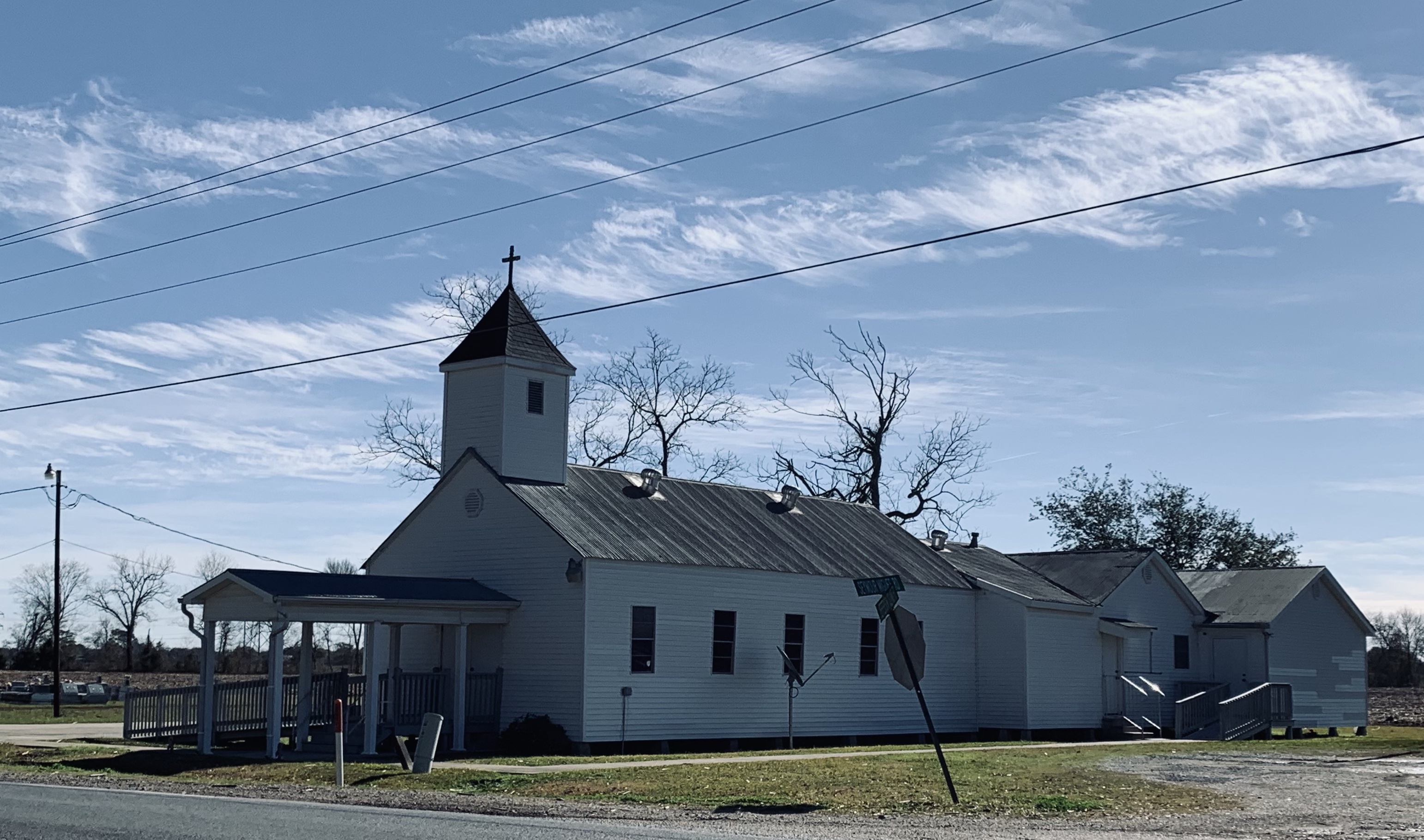
I have driven past this church for 16 years. It resides on the same country road as one of my schools. On the left is a small cemetery. Sometime this year I noticed a carpenter I know (I’ve nicknamed him Saint because he is selfless and kind.) doing work on this church. I assume it is an active congregation, but for me, it is the safe haven for our school’s safety plan in case we have to evacuate. We would meet a bus here that would take us to a high school down the road. Does this little building know its job? I’ve been wanting to take this photo for a long time and finally stopped last week. Notice the crooked stop sign, the high cirrus clouds, the simple steeple. Where does your mind go? Please write a small poem today and share it in the comments. Kindly respond to other writers.
I found out about the Stafford Challenge yesterday on Barb Elder’s blog post. I signed up. There is a Zoom gathering tonight with Kim Stafford. I had the pleasure of writing with Kim years ago at a writing marathon. His father William Stafford inspires writers everywhere to practice a daily poem. Whether you join or not, I think this is a good commitment to daily writing.
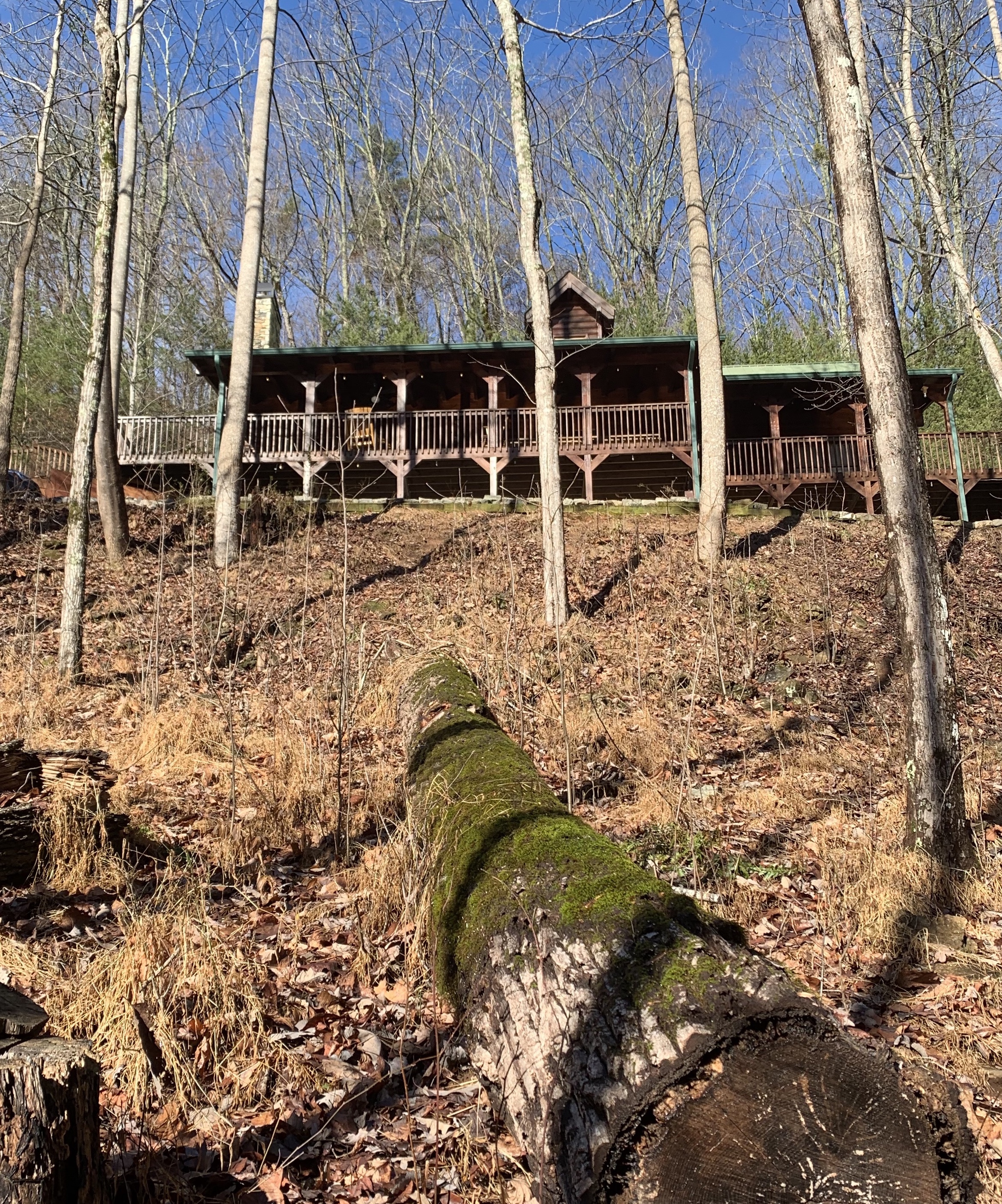
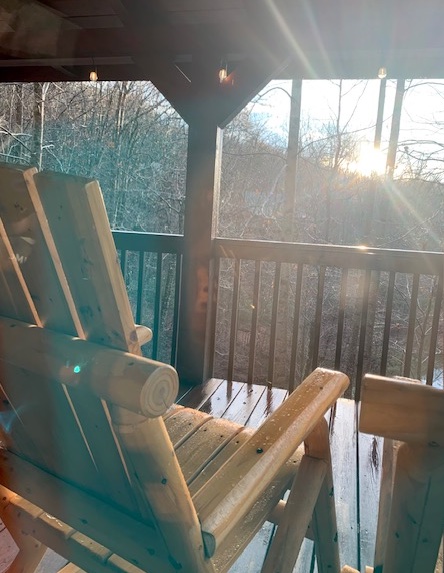
Instead of Christmas presents, we gave our children and their families a house in the Appalachian mountains of North Georgia. This is a view of the house from the lake below. I don’t think I could have picked a more perfect spot. Today it becomes an image for inspiration. You may focus on the green moss on the log, the act of looking up, or the idea of a perfect place to rest. Happy New Year! I hope it brings you joy and renewal.
I am still ruminating on my One Little Word for 2024. It may or may not be the word at the end of this poem. I’ve been having fun playing with the elfchen (elevenie) form. The basis is 1 word, 2 words, 3 words, 4 words, 1 word. The magic of the form seems to happen when writing about the first word leads to a conclusion in the last word.
Tomorrow I will host Spiritual Thursday. We are writing about our One Little Word choices. Please join us.
Mountain House
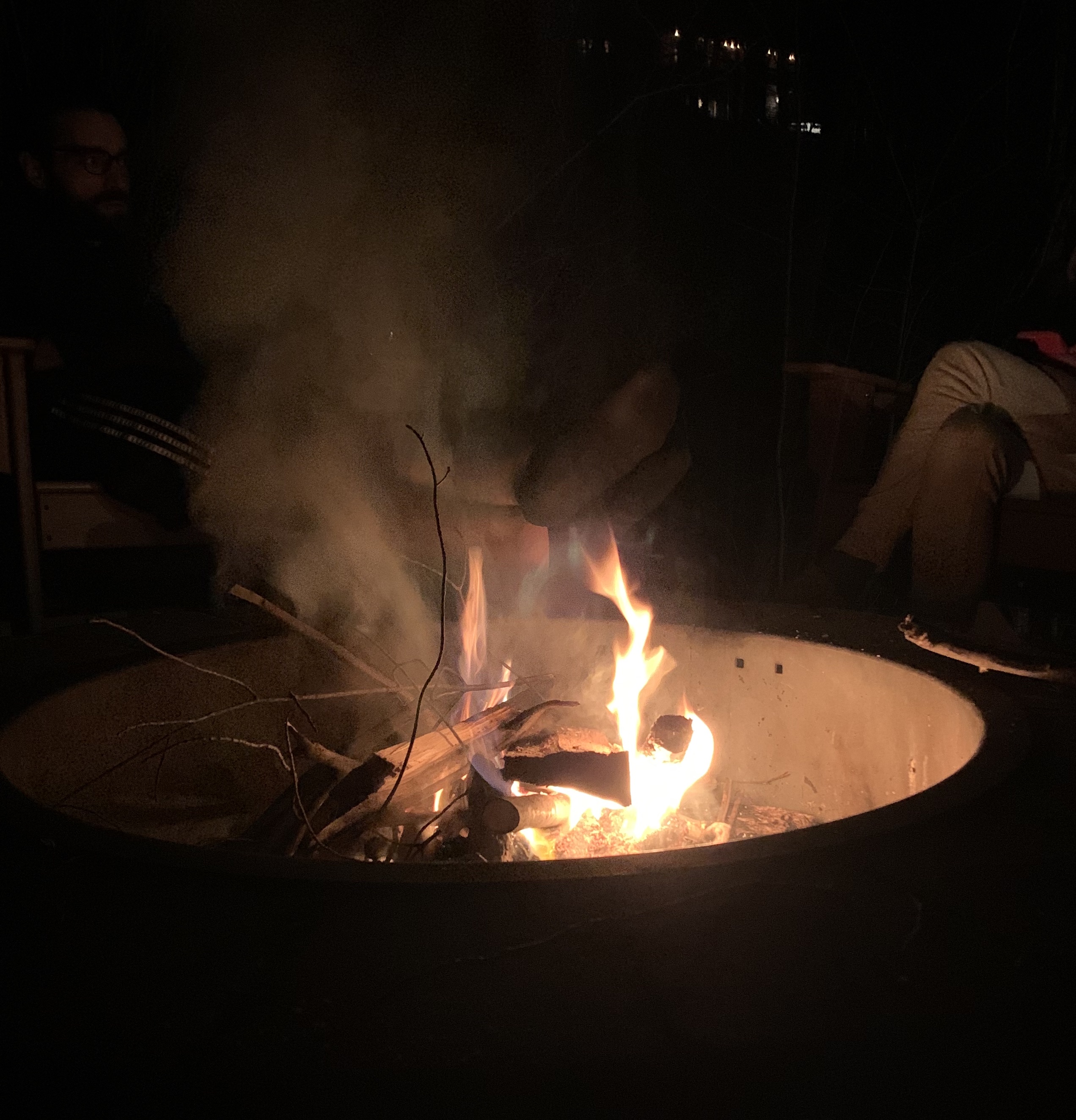
Wood chopped, stacked the fire pit where secrets are shared– Connection
I wasn’t planning to post for Poetry Friday today, but I’ve been playing with the elchen form (also known as elevenie), a challenge from the Poetry Sisters. Mary Lee shared the Wikipedia definition of the form. I wrote one last week for This Photo Wants to be a Poem.
While my family has been vacationing in the mountains of North Georgia, coincidentally the words of the day in my email inbox have worked for elchen play.
slippers warm toes on cold mornings this winter’s saving grace hygge*
Word of the day: hygge- A quality of coziness and comfortable conviviality that engenders a feeling of contentment or well-being (regarded as a defining characteristic of Danish culture).
Pack suitcase, car drive all day family voyage to mountains viator*
*Word of the Day 12/26/23 Viator traveler, wayfarer
Light still shines in your eyes sea glass blue joy luminaria*
*Luminaria is a lantern typically used at Christmas.
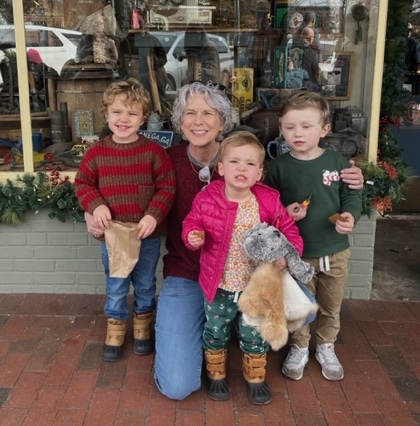
Leo (5), Mamere, Stella (3), Thomas (4)
Wayward wanders hopeful small mountain town ice cream with sprinkles gallivant*
*Word of the Day 12/29/23 Gallivant: Go around from one place to another in the pursuit of pleasure or entertainment.
Thank you to Two Writing Teachers for creating an amazing community of writers and a safe, welcoming space to write and share.
Georgia Heard won the NCTE Award for Excellence in Poetry. She and Rebecca Kai Dotlich wrote Welcome to the Wonder House, an anthology of poems of wonder. At NCTE in November, I attended Georgia’s workshop. She had us group together to write a collaborative poem based on the question, “What does wonder mean to you?” I shared that workshop here.
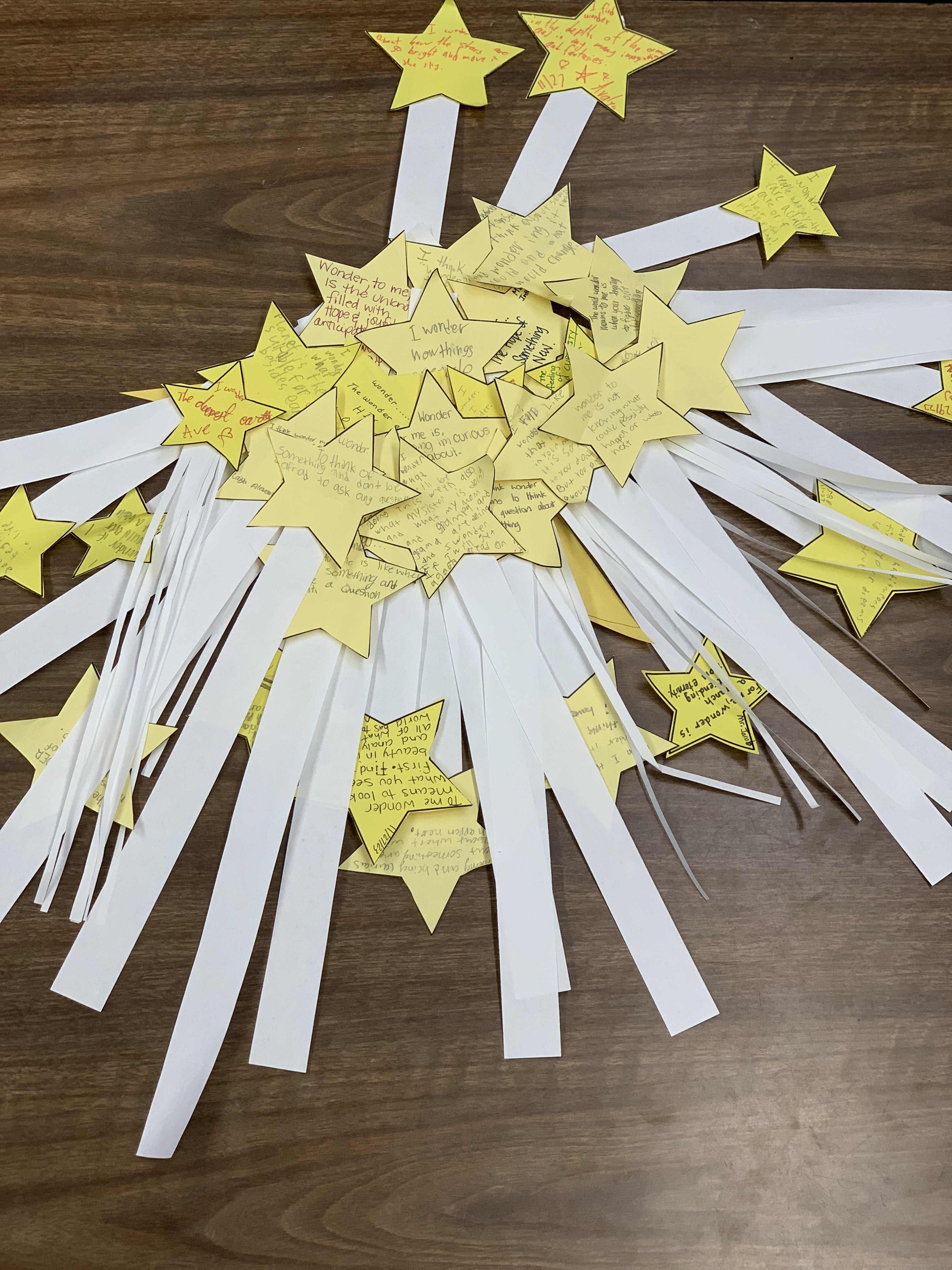
I took this question and created a door decoration for my classroom at Coteau (one of my two schools) inviting teachers and students to add a star. My student John-Robert presented the idea to his classmates, and they added stars to the door. On Friday, our last day before winter break, John-Robert gathered all the stars and create a found poem.
The Word Wonder
Could it mean dreams? Could it mean eternity? Could it mean imagination? Could it mean caring? Could it mean hope? Could it mean earth? Could it mean sight? Could it mean beyond? Could it mean love?
What could wonder mean?
If it could talk, what would it say? Would it wonder things ? Would it have dreams ? And would it be like you and me?
The word wonder
Could it mean heart? Could it mean curious? Could it mean beginning? Could it mean endless? Could it mean questions? Could it mean change? Could it mean wonder? Could it mean me? Could it mean brightness?
What could wonder mean?
Could it mean all these things? Wonder would be me and you, wouldn’t it? It would truly be and belong to you and me While it makes all our dreams come true.
Wonder–the hope of something new, the feeling of awe and curiosity like seeing a breath-taking sunset. I find wonder in the depths of the ocean and in my imagination and fantasies.
Collaborative-found poem by Coteau Elementary (compiled by John-Robert, 6th grade)
After John-Robert wrote the poem, he clustered all the responses together into a new design, a new poem, a poem of Wonder.
I hope your winter holidays are filled with joy and wonder.
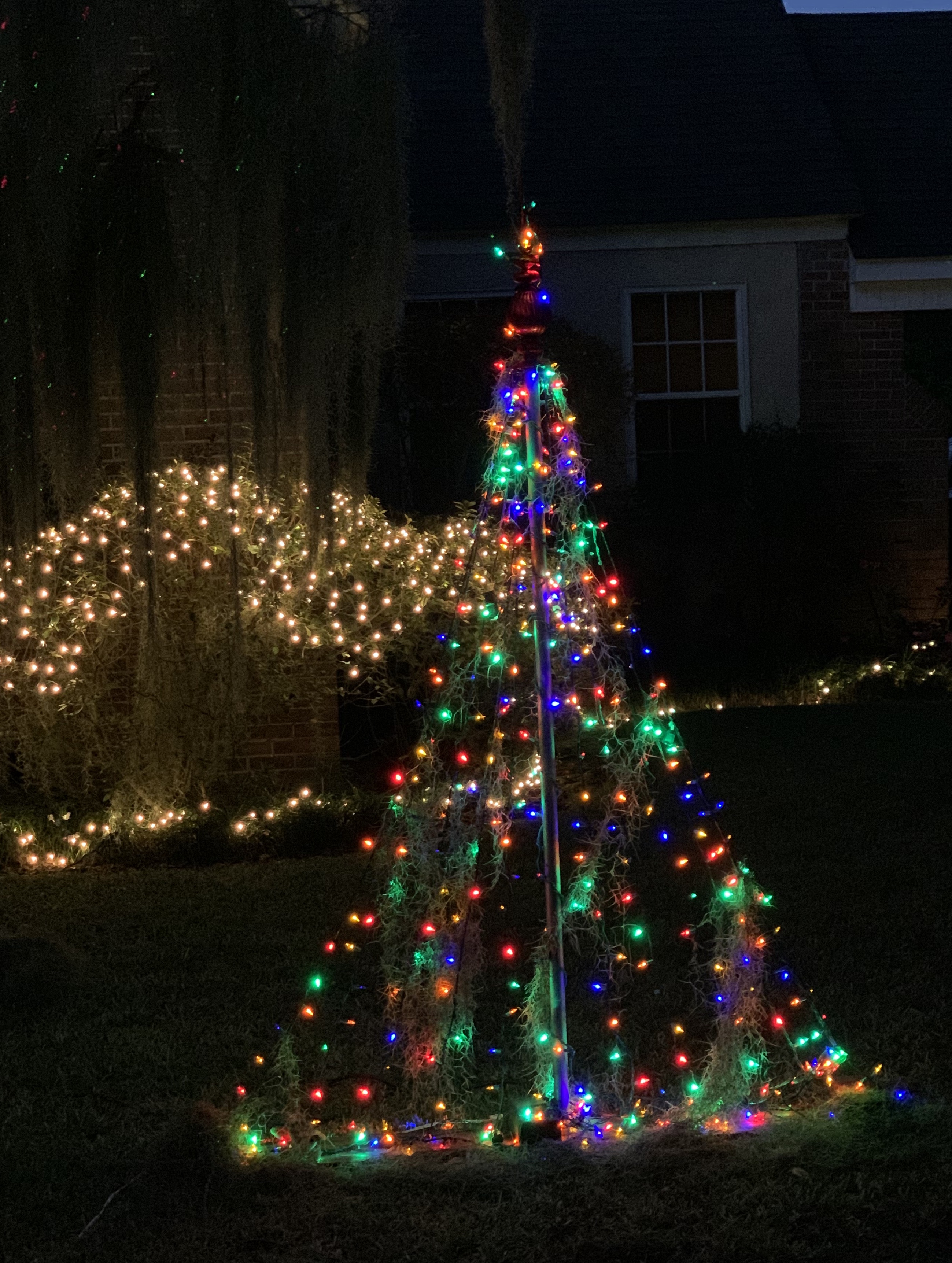
Today’s photo is a sign of the season, a lit up Christmas tree yard decoration in my neighborhood. I’m an early morning walker and the combination of the darkness and the cold drew my eye to this yard filled with lights. I know the couple who live there, so I was also comforted by their presence, too, inwardly thanking them for this photo opp.
Moss tree with twinkle lights by Margaret Simon
Recently I learned about a new-to-me poetry form, elfchen, from Mary Lee. It’s a fun form to play with, similar to a cinquain, yet each line answers a question. Another word for this form is the elevenie. Being a fan of the number 11 (my birthday and my father’s fall on the 11th), I wanted to give the form a test run.
Row
Words
Content
1
1
A thought, an object, a colour, a smell or the like
2
2
What does the word from the first row do?
3
3
Where or how is the word of row 1?
4
4
What do you mean?
5
1
Conclusion: What results from all this? What is the outcome?
From Wikipedia
Moss Ghost Tree
lights colorfully twinkle brighten winter’s darkness with a firefly-tree delight
Margaret Simon, draft
How are you handling this winter’s solstice? Do you put up lights in your yard? Take this invitation to write about your own traditions for this time of year. Leave a small poem in the comments and encourage other writers with your responses. Thanks for your dedication to this weekly practice.
I will not be posting next Wednesday. I’m taking a family trip to North Georgia. This Photo will be back in the New Year. Have a Happy Holiday!
Thank you to Two Writing Teachers for creating an amazing community of writers and a safe, welcoming space to write and share.
I have a morning routine as most people do. I wish I could just sit down with my coffee to write for a while, but my time is limited before I get out of for a walk and then get ready for my school day. Usually I read the New York Times newsletter from my email. I don’t always read all of it because news is generally not good and could start my day with a somber tone. I skip and skim down to the links to the games of the day; my favorites are Wordle and Connections.
A few weeks ago my skimming began to sound in my mind’s ear like a found poem. This poem was created by lines from the December 3rd newsletter. I did not change any of the words or the order they appeared.
News Flash Found Poem (December 3, 2023)
Mothers are grappling with anxiety after watching 10 migrants die at sea, a man in Paris with a knife and a hammer.
Kill all the deer; A great step toward survival.
Scholars want to show society there is value in the humanities.
Will it be a permanent cease fire or AI or fertility that saves us?
Magicians see thousands of donuts, an exuberant document of the human condition.
We have become our data simultaneously loading more and more of our lives into systems with little control over the outcome.
Kim Douillard lives near San Diego, California. She teaches first graders using art and writing. I’m sure she is a kid at heart after I saw this image on Instagram. A beach snowman? Muddy monster? With a stick as a nose and seashell eyes, I found it/him/her engaging. Today I will introduce Cousin It to my students and hope their imaginations will ignite and find a poem. Where does your imagination go? Write a small poem and share it in the comments. We are a caring community of writers. Respond to others with encouraging words.
I gave myself the challenge of writing a triolet this morning. I find that working in form can draw out something new, maybe even weird, that’s been buried under the surface of my judgement.
Champion
In the shape of soil and mud lives a creature of the night who transforms as we should from a shape of soil and mud to survivors of the flood holding roots in hope of flight we bear the shape of soil and mud living creatures day and night.
Have you ever had that student? The one who sits in the back of the class, holds herself in tight, rarely, if ever, raises her hand to share a poem with the class. The closet poet.
That’s not me because I believe in writing with my students and sharing my vulnerable poet self so they feel safe sharing theirs. And most of the time, it helps. I’ll share, then the shy ones will look at me with their longing eyes asking “Is it OK?” They know that poetry is a little piece of themselves. It’s bleeding on paper as someone famous said.
I wasn’t going to post for Poetry Friday. Life is just so full of family and busy that I can’t get caught up. But when I read A’s poem, I felt compelled to share it and how she came to write it.
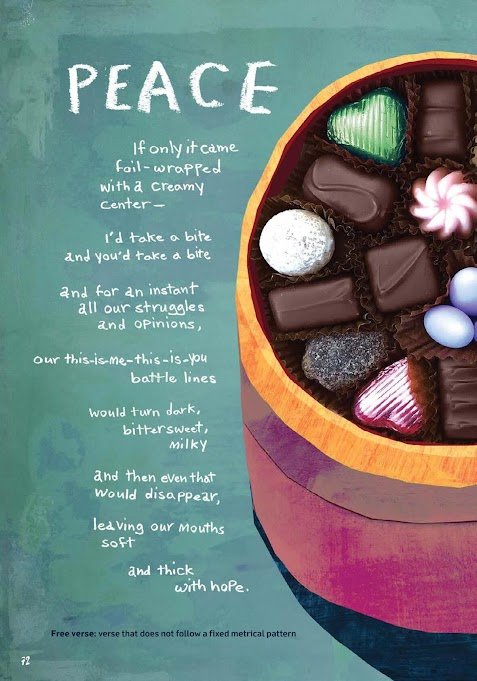
I presented Irene Latham’s poem “Peace” from Dictionary for a Better World. Irene shared it in her newsletter here. This poem came at the perfect time in my lesson planning because we talked about symbolism this week. Irene so effectively used chocolate as a symbol of peace. There were so many wonderful craft moves to notice. Then I set my students loose to write. I invited them to create their own metaphor for peace and to borrow the phrase, “If only”.
A’s words both broke my heart and then healed it. At the age of 10, she expresses her internal life of anxiety and hope in a mature way. And yes, there were tears. I am privileged to be her teacher, her friend.
From the Tide, To the Moon (A letter from a friend to a friend)
If only we all could just look up in the sky and see that things aren’t that bad. We aren’t that different. We’re all human.
If only the stars could join us and show us peace in the world.
If the moon could tell the tide to think for itself. To flow on its own.
And when you tell me when to make decisions, me when to make a choice and what choice I should make, think about how different we are from the tide and the moon.
You aren’t the moon, So beautiful that we stare up at it. I am not the tide, That flows without ecstasy.
Not a moment of freedom. No justice for the torrent. Leave me be. Leave me to my space. Leave me to my freedom.
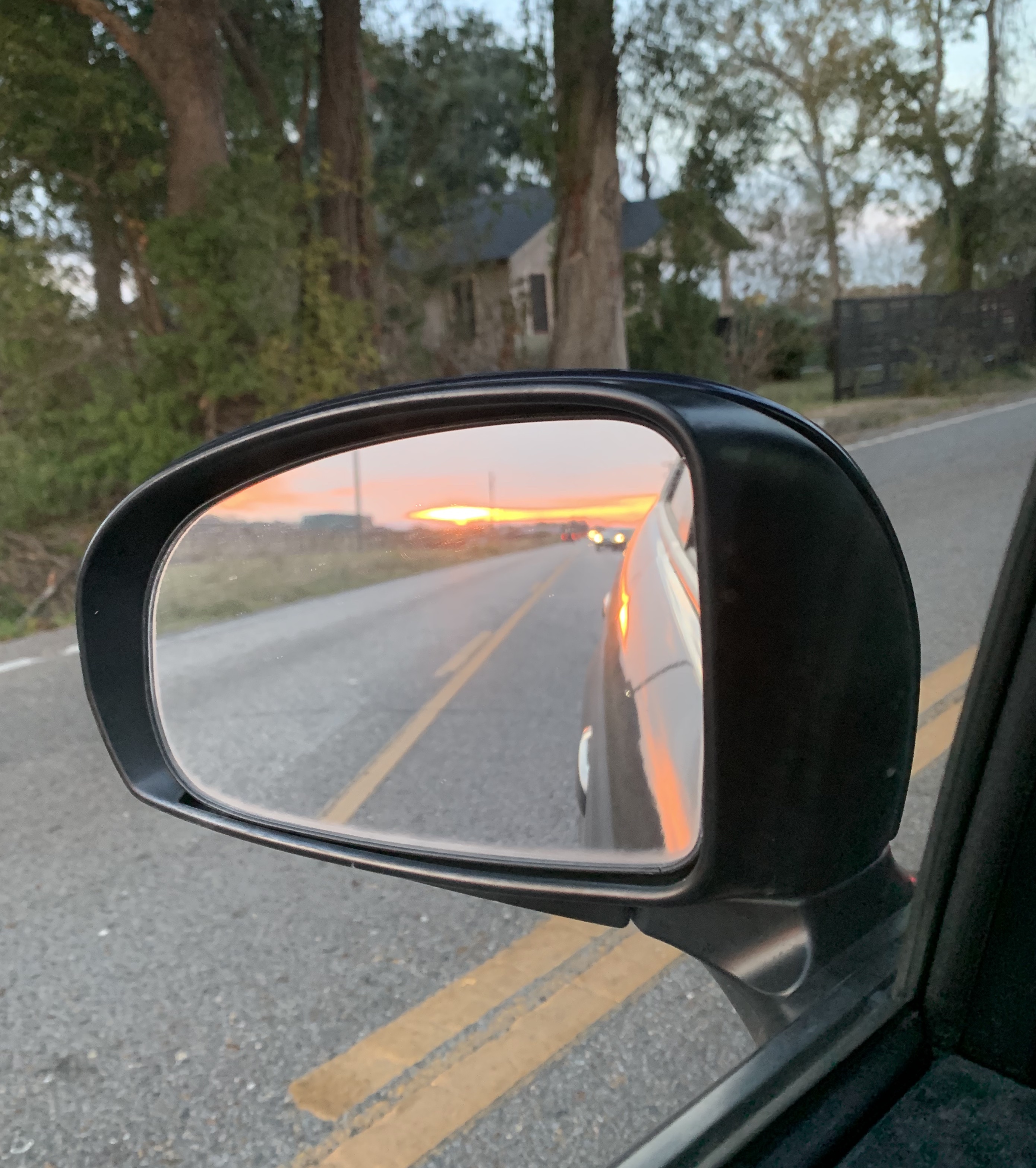
December is a time of diminishing light. Days are getting shorter. Sunrise is later in the morning. Sunset is earlier in the afternoon. The change of light leads us to winter solstice with more darkness, cooler temperatures. Do you feel the change? Does your mood change? What does diminishing light in the rear view mirror symbolize to you?
Rear view window on a country road (Coteau Road)
Driving on the Coteau Road rushing toward my day,
I looked in the rear view mirror, noticing the rising light.
Beacon to feel the past push me toward future with healing hope.
Margaret Simon, draft
My poetry writing happens early in the morning when the hum of the heater makes me want to pull the covers up and sleep. For This Photo, I draft directly into the post. I accept whatever comes. I hope you will give yourself a moment of meditation and write a small poem draft in the comments. Meet yourself where you are, without judgement. Leave your draft in the comments and encourage each other as writers who give a piece of themselves to the page.
Margaret Simon lives on the Bayou Teche in New Iberia, Louisiana. She is a retired elementary gifted teacher who writes poetry and children's books. Welcome to a space of peace, poetry, and personal reflection. Walk in kindness.